Exploring Neolithic China: The Foundational Era of the Yangshao and Longshan Cultures
Welcome to ArchaeologyHub.org’s deep dive into the Neolithic foundations of East Asian civilization, specifically the transformative Yangshao (c. 5000–3000 BCE) and Longshan (c. 3000–1900 BCE) cultures. These societies along the Yellow River and beyond pioneered early agriculture, distinctive painted pottery, and sophisticated social stratification. This subcategory offers a granular, artifact-focused examination of how these cultures shaped the trajectory of Chinese history. Expect to explore settlement patterns, ritual practices, technological innovations, and the crucial transition from egalitarian villages to proto-urban centers—all supported by archaeological evidence and interpretive analyses.
🏺 Yangshao Culture: Painted Pottery and Early Agricultural Life
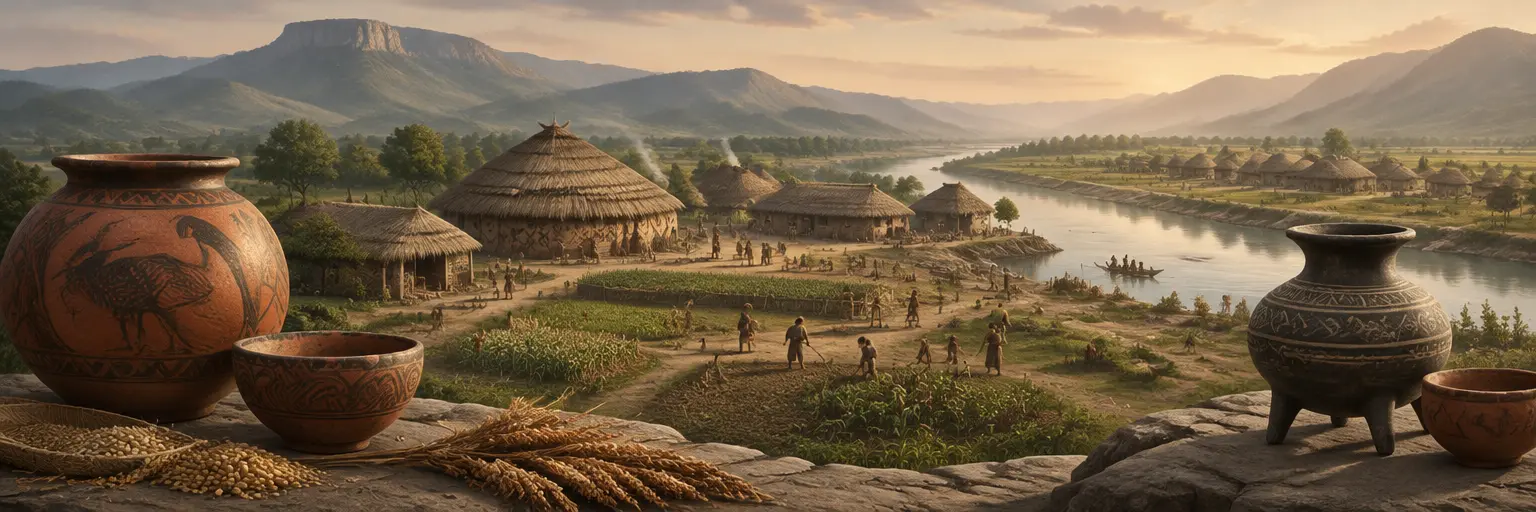
The Yangshao culture represents one of the earliest well-documented Neolithic societies in China, renowned for its polychrome pottery featuring geometric and anthropomorphic designs. The Banpo site near Xi’an provides a vivid snapshot of village life with semi-subterranean dwellings, storage pits, and communal cemeteries. Here, you will find detailed artifact profiles of painted basins, pointed-bottom bottles, and millet-grinding tools that illustrate a settled agrarian lifestyle centered on foxtail millet and pig domestication.
Archaeological interpretation reveals a relatively egalitarian social structure, yet with emerging distinctions in burial goods and pottery craftsmanship. The Miaodigou phase (c. 4000–3000 BCE) showcases expanded trade networks, evidenced by jade ornaments and exotic raw materials. Expect to learn how radiocarbon dating and stratigraphy at sites like Jiangzhai and Beishouling refine our understanding of regional variations and cultural exchange across the Yellow River basin.
🏛️ Longshan Culture: Black Pottery, Walled Settlements, and Social Complexity
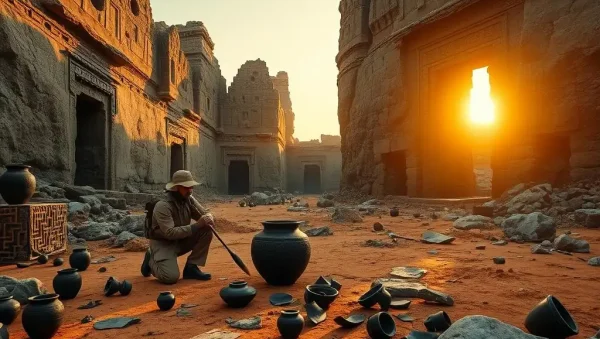
The Longshan culture marks a dramatic leap in social complexity, famous for its eggshell-thin black pottery (black wares) produced using fast potter’s wheels—a technological breakthrough that enabled unprecedented precision and standardization. This subcategory explores the rise of walled townships such as Chengziya and Liangchengzhen, which enclosed residential zones, craft workshops, and ritual platforms, indicating centralized authority and defensive needs. The presence of scapulimancy (oracle bones) suggests early divination practices linked to elite decision-making.
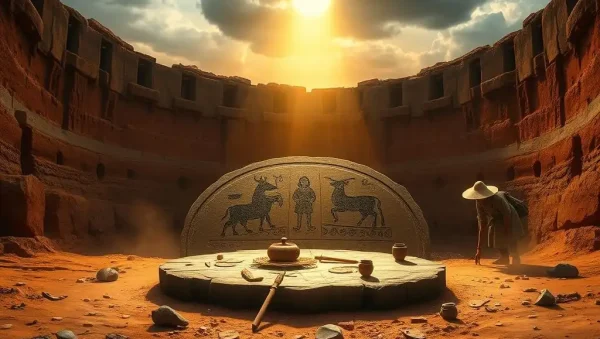
Longshan society witnessed increased social stratification, with elite burials containing jade cong tubes, ceramic goblets, and pig mandibles, contrasting sharply with simpler graves. You will delve into evidence of copper metallurgy emerging at sites like Taosi, signaling the transition toward the Bronze Age. Interpretive analyses focus on how climate shifts and resource competition drove settlement hierarchies, interregional conflict, and the eventual emergence of dynastic states—making Longshan a pivotal bridge to historical China.
📜 Material Culture & Artifact Analysis: From Painted Bowls to Jade Rituals
This section provides an encyclopedia of iconic artifacts from both cultures, each with high-resolution imagery and contextual descriptions. For Yangshao, learn about the human-face fish motif on basins from Banpo, likely embodying shamanistic or clan symbols. For Longshan, examine the black eggshell pottery’s manufacturing process—coiling, burnishing, and carbon-impregnation—that produced wheel-thrown vessels of astonishing thinness (less than 1 mm in some cases). Jade artifacts, such as cong and bi, are dissected for their astronomical and cosmological meanings.
Beyond aesthetics, artifact analysis includes use-wear studies and petrographic analysis to identify production techniques, raw material origin, and function. For instance, pointed-bottom bottles were used for water transport, while tripod li vessels facilitated cooking over open fires. This subcategory also covers experimental archaeology, where modern potters replicate ancient techniques to test hypotheses about kiln temperatures, which ranged from 800–1000°C for Yangshao pigments to higher ranges for Longshan black wares.
🏡 Settlement Patterns & Architecture: From Pit Houses to Ramparted Towns
Explore the spatial organization of Neolithic communities, starting with Yangshao’s circular or square pit-houses, sometimes with plastered floors and partitioned interiors. Villages were typically surrounded by earthen ditches, which served as drainage and rudimentary defense. Longshan introduces rammed-earth fortification walls—some extending over a kilometer in perimeter—as seen at Hougang. These walls enshrined residential zones, specialized craft areas (pottery kilns, stone tool workshops), and community building stages.
Interpretive sections analyze how settlement layout reflects social organization: central plazas for communal gatherings in Yangshao versus restricted access areas and high-platform foundations for elites in Longshan. The Taosi site, with its nested palace-like compounds and celestial observatory, exemplifies incipient urban planning. You will examine GIS mapping and geophysical surveys that reveal hidden subsurface structures, providing a dynamic, three-dimensional view of how these settlements evolved over centuries.
🌾 Subsistence, Environment, and Demographic Shifts
This facet focuses on the agricultural systems and environmental adaptations that sustained these cultures. Yangshao communities practiced milp agriculture—shifting cultivation of foxtail millet and broomcorn millet—supplemented by hunting, fishing, and gathering of wild plants. Longshan demonstrates more intensive farming, with evidence of irrigation channels and diversified crops including rice in is southern sites, indicating climate-mediated expansions. Zooarchaeological data reveals pig dominance, with dogs and cattle appearing later.
Paleoclimatic proxies (e.g., pollen cores, stable isotopes) show that the Holocene Climatic Optimum facilitated population growth, while subsequent aridification around 2000 BCE may have triggered conflicts and migrations. This section also discusses demographic pressures—estimated population densities rising from 1–5 persons/sq.km in Yangshao to 10–20 in Longshan—leading to territoriality, warfare, and the eventual collapse of the Longshan polities. Learn how these environmental constraints shaped ritual responses, such as animal sacrifice and burial orientations.
🤝 Trade, Exchange, and Cultural Interactions beyond the Yellow River
While centered on the Yellow River, this subcategory explores connectivity networks linking Yangshao and Longshan with distant regions. For Yangshao, evidence of Spondylus shells from coastal areas and turquoise from the highlands indicates long-distance exchange. Longshan shows more formalized trade in jade, sourced from today’s Liaoning and Zhejiang provinces, moving through down-the-line exchange networks. Ceramic stylistic similarities from the Yangtze to the Huang He suggest shared ideological horizons.
Comparative analyses examine similarities with Hongshan and Liangzhu cultures, particularly in ritual jade use, yet highlight distinct regional trajectories. The Longshan interaction sphere is a key concept—hypothesizing intensifying contacts led to cultural homogenization but also status rivalry. This section also addresses migrations of Longshan peoples into the Sichuan basin and southern coastal areas, using pottery typology and mitochondrial DNA studies to trace mobility patterns.
Frequently Asked Questions
What is the primary difference between Yangshao and Longshan pottery styles?
Yangshao pottery features vibrant painted designs—red, black, and white geometric or figural motifs—on coarse earthenware, often using slow wheels or coiling. Longshan pottery, however, is characterized by unpainted, highly burnished black ware, produced on fast wheels, resulting in extremely thin, glossy vessels. This reflects advances in kiln technology and a shift in aesthetic expression from surface decoration to form and texture.
How did social organization evolve from Yangshao to Longshan societies?
Yangshao societies were relatively egalitarian, with similary sized houses and burial goods, though some status differences appear at larger sites. Longshan shows clear ranking: larger rammed-earth houses, elite graves with exotic jade and ceramic sets, and defensive walls indicating centralized leadership. Workforce mobilization for wall construction and craft specialization implies emergent chiefdoms with inherited status.
What archaeological methods are used to date these Neolithic sites?
Primary methods include radiocarbon dating of charcoal and organic residues, calibrated to calendar years, and stratigraphy to sequence layers. For Longshan, optically stimulated luminescence dating of sediment and ceramics helps confirm chronologies. Artifact typology—especially pottery shape and decoration changes—provides relative dating across sites, while dendrochronology is occasionally applied where wood remains are preserved.
Why are the Longshan culture walled settlements significant?
The walls, some reaching 10 meters thick, signal the ability to organize labor at scale and respond to intergroup conflict. They also demarcate control over agricultural land and trade routes, marking the emergence of territorial polities. The rammed-earth technique later influences Bronze Age city walls, making Longshan a direct precursor to historical city-states and dynastic capitals.
Did Yangshao or Longshan peoples have a written language?
No complete writing system has been found; however, pottery marks—single pictographic-like symbols—appear on Longshan vessels, some resembling later oracle-bone characters. These are likely clan insignias or numerals, not phonetic script. The earliest true writing in China appears later during the Shang dynasty (c. 1200 BCE), but Longshan symbols represent a crucial protoliterate stage.