The Ge'ez Script: Origins, Development, and its Role in Aksumite Christian Literature
🌍 Explore the origins and evolution of the Ge'ez script in Aksumite literature, highlighting its pivotal role in shaping early Christian texts…
Read article
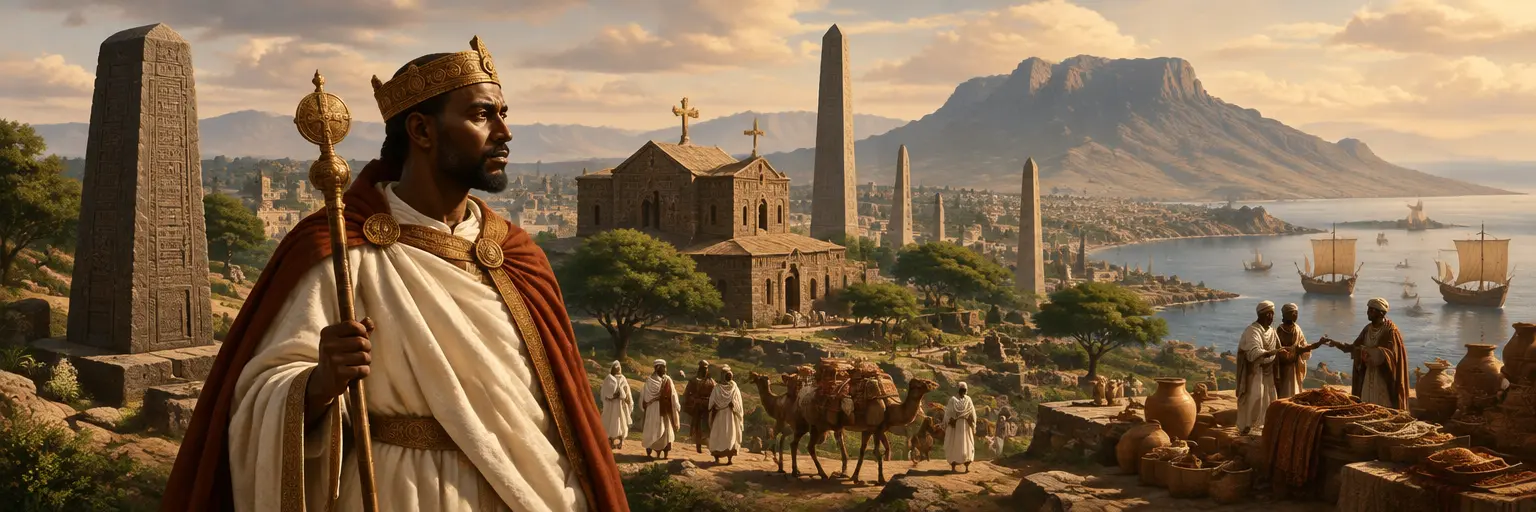
Discover the legacy of the Kingdom of Aksum, one of antiquity’s most powerful empires, where trade routes and early Christianity converged in the highlands of Ethiopia. Through the lens of archaeology, this digital resource explores monumental stelae, ancient coinage, and royal inscriptions that reveal how Aksum bridged Africa, Arabia, and the Mediterranean world. Dive into the rise of a maritime and overland trading hub that exchanged ivory, gold, and spices—while becoming one of the first states to embrace Christianity in the 4th century CE. Uncover the secrets of its enigmatic capital, the engineering of its terraced agriculture, and the cultural synthesis that shaped Ethiopian identity. Perfect for enthusiasts of ancient civilizations, this segment offers authoritative, SEO-rich insights into Aksum’s economic power, religious transformation, and enduring archaeological footprint.
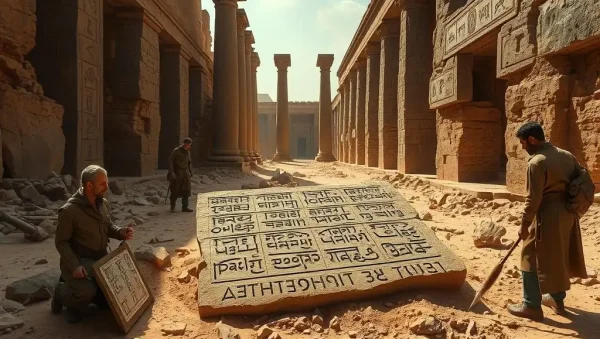
🌍 Explore the origins and evolution of the Ge'ez script in Aksumite literature, highlighting its pivotal role in shaping early Christian texts…
Read article
🌍 Discover the rich history of Aksumite trade routes analysis through archaeological artifacts, ancient ports, and exchange networks that reveal the sophistication…
Read articleWelcome to ArchaeologyHub.org’s detailed study of the Kingdom of Aksum, a formidable ancient power that flourished in the Horn of Africa from roughly the 1st to the 8th century CE. This subcategory dives deep into how Aksum became a commercial giant linking the Roman Empire, India, and Arabia, and how its adoption of Christianity transformed Ethiopian identity. Through archaeological evidence, stele inscriptions, and coinage, we unravel the empire’s economic might and spiritual legacy. Whether you are a student, enthusiast, or researcher, this page offers a structured exploration of Aksum’s trade networks, religious transitions, and enduring impact on modern Ethiopia.
Nestled in the highlands of northern Ethiopia and Eritrea, Aksum’s strategic location near the Red Sea and the Nile’s tributaries enabled it to control key caravan routes. From its capital city, also named Aksum, the kingdom expanded its influence from the 1st century CE, becoming one of the four great powers of the ancient world alongside Rome, Persia, and China. The fertile soil supported agriculture, while the nearby port of Adulis served as a gateway for exotic goods like ivory, gold, and frankincense. This geographic advantage allowed Aksum to monopolize trade between Africa, the Mediterranean, and Asia, laying the foundation for its wealth and military dominance.
Archaeological excavations at Aksum reveal a sophisticated urban center with monumental architecture, including the famous granite stelae—tall obelisks marking royal tombs. These structures, some over 30 meters high, showcase advanced engineering and a centralized state capable of mobilizing vast labor. The kingdom’s early coins, minted in gold, silver, and bronze, bear the image of the king and the crescent symbol, indicating a pre-Christian religious landscape that blended indigenous beliefs with influences from South Arabia. This period of consolidation set the stage for Aksum’s later economic and spiritual achievements, making it a cornerstone of ancient African civilization.
Aksum’s prosperity hinged on its role as an intermediary in the Indian Ocean trade. The port of Adulis handled goods from as far as Byzantium, Persia, India, and Ceylon, while caravans transported merchandise inland to the capital. Key exports included ivory, tortoiseshell, obsidian, and slaves, while imports ranged from textiles and glassware to spices and wine. The Periplus of the Erythraean Sea, a 1st-century Greek sailing manual, meticulously documents these routes, confirming Aksum’s reputation as a commercial superpower. Control over this maritime and overland network generated immense revenue, funding monumental projects and diplomatic missions.
Coinage was a crucial tool for economic integration. Aksumite kings issued their own currency, not only for domestic use but also to facilitate foreign transactions, ensuring trust and standardization. The discovery of Aksumite coins in India and Arabia demonstrates their widespread acceptance. Additionally, the kingdom maintained diplomatic relations with the Byzantine Empire, as seen in the correspondence between King Kaleb and Emperor Justinian, who sought Aksum’s help in securing silk routes. This interconnectedness not only enriched Aksum but also facilitated cultural exchanges that prepared the ground for the arrival of Christianity.
Around 330 CE, King Ezana II officially adopted Christianity, making Aksum one of the first empires to embrace the faith. This conversion was not abrupt but the result of growing contact with Christian merchants and perhaps the influence of his tutor, Frumentius, who later became the first bishop of Aksum. Ezana’s coins shifted from pagan symbols to the cross, and his inscriptions began to invoke the “Lord of Heaven.” This royal endorsement transformed a minority religion into a state-sponsored faith, aligning Aksum with the Christian Roman world and differentiating it from neighboring pagan and Jewish communities.
The new religion brought profound cultural and architectural changes. Churches were built, often reusing pagan temples as foundations, and the Ethiopian Orthodox Tewahedo Church emerged as a unique institution with its own liturgy and traditions, rooted in the Aksumite heritage. The Ark of the Covenant is said to have been brought to Aksum by Menelik I, son of the Queen of Sheba, according to Ethiopian tradition, though this is a matter of faith. Christianity also strengthened literacy, as clergy translated scriptures into Ge’ez, the ancient Ethiopian language, producing manuscripts that survive today. This religious shift cemented a distinct Ethiopian identity, which endures in the modern Orthodox Church, making Aksum the spiritual cradle of the nation.
Excavations at Aksum have unearthed a trove of artifacts that illuminate the kingdom’s rituals, economy, and governance. The famous Aksumite stelae—single-piece granite monoliths—serve as funerary markers for nobility, with intricately carved windows and doors imitating palace facades. The largest, the Obelisk of Aksum, stands 24 meters tall and was repatriated from Italy in 2005. Beneath these monuments, archaeologists have found underground tombs filled with gold jewelry, glass goblets, and imported amphorae, proving extensive trade linkages. These royal burials reflect a hierarchical society with deep beliefs in an afterlife and ancestor worship.
Coins are among the most diagnostic finds. They bear the names and portraits of kings, such as Ezana and Endubis, and often include symbols like the crescent or cross, allowing chronologies to be established. Over 1,000 Aksumite coins have been cataloged, providing a reliable timeline for historians. Also significant are inscriptions in Sabaean, Ge’ez, and Greek, which record conquests, land grants, and royal decrees. The trilingual inscription of King Sembrouthes, for instance, lists tributary peoples, while Ezana’s stele describes military campaigns against the Noba. This epigraphic evidence bridges the gap between archaeology and written history, offering a nuanced view of Aksum’s internal and external affairs.
The Kingdom of Aksum’s legacy is tangible in contemporary Ethiopia, where the city of Aksum remains a sacred pilgrimage site and a UNESCO World Heritage monument. The Ethiopian Orthodox Church traces its origins directly to Frumentius, and liturgical texts still use Ge’ez, the language codified during Aksumite times. Additionally, the kingdom’s agricultural practices, such as terraced farming and the use of the plough, continue in the highlands. Politically, the idea of a divinely chosen king, rooted in Aksumite tradition, influenced later Solomonic dynasties, offering a narrative of unbroken legitimacy that lasted into the 20th century.
On a broader scale, Aksum served as a bridge between African and Eurasian civilizations. Its trade networks introduced African goods to Asian markets and fostered cultural exchanges that predate European exploration. The kingdom’s resilience and adaptability—evident in its shift from paganism to Christianity—offer a model for understanding the dynamics of ancient statecraft. For archaeologists and historians, Aksum remains a rich field for study, with many sites still unexcavated. Continued research promises to reveal more about this remarkable empire, solidifying its place as a pivotal chapter in world history and in the story of African civilizations.
Aksum was renowned for its powerful trade empire, connecting Africa, the Middle East, and India via the Red Sea port of Adulis. It also pioneered its own coinage and became one of the first Christian states in the world, which profoundly shaped Ethiopian culture and religion.
The economy relied on agriculture in the fertile highlands and, more critically, on maritime trade. Exports like ivory, gold, and incense were exchanged for luxury goods from Rome, Persia, and India. Taxes and tributes from conquered regions also funded royal projects and military expansion.
King Ezana II converted to Christianity around 330 CE, after contact with Christian missionaries and merchants. His reign marked a dramatic shift, as he replaced pagan symbols with the cross on coins and inscriptions, establishing Christianity as the state religion.
Yes, the ancient stelae field in Aksum is preserved as a UNESCO World Heritage site. The largest standing obelisk is about 24 meters tall, though many smaller ones remain. Some were toppled or exported, but conservation efforts have restored and protected them for visitors.
Aksum is considered the cradle of Ethiopian civilization. Its adoption of Christianity, development of the Ge’ez script, and monumental architecture laid foundations for later Ethiopian culture and religion. The belief that the Ark of the Covenant resides in Aksum also elevates its spiritual importance.