
The Longshan Culture: Profile of China's Late Neolithic Black Pottery Civilization

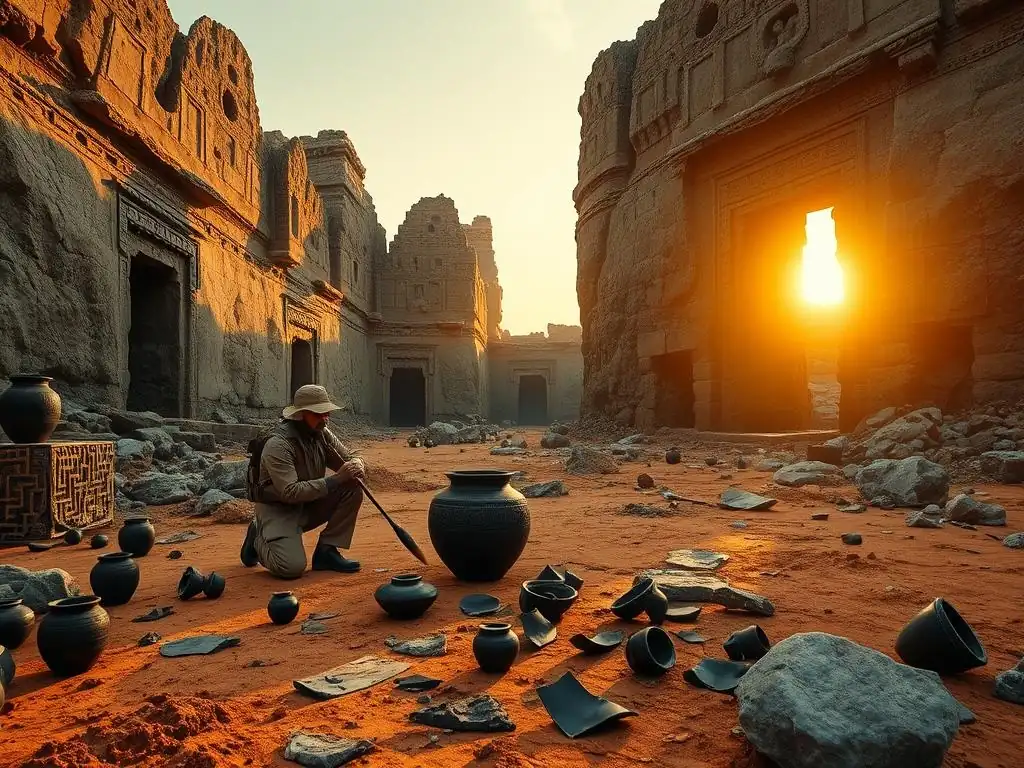
Welcome to ArchaeologyHub.org, your portal to unraveling the mysteries of the past. Prepare to journey back in time as we delve into the fascinating world of ancient civilizations. Today, we spotlight a pivotal period in Chinese history. Intrigued by the sleek, sophisticated craftsmanship of Longshan culture pottery? Uncover the secrets of this Late Neolithic civilization and its remarkable impact on China's historical landscape as we explore its unique artistry and societal structure. Dive in and begin your archaeological adventure!
- Introduction to the Longshan Culture (c. 3000-1900 BCE)
- Geographical Distribution and Key Longshan Culture Sites
- Longshan Culture Pottery: A Defining Characteristic
- Social Organization and Settlement Patterns of the Longshan People
- Ritual Practices and Belief Systems in the Longshan Culture
- Technological Innovations Beyond Pottery in the Longshan Period
- The Decline of the Longshan Culture and its Legacy
- Longshan Culture Pottery: Analysis and Interpretations
- Conclusion: The Importance of the Longshan Culture in Understanding Early Chinese Civilization
-
Frequently Asked Questions
- ### What is the Longshan Culture and where did it exist?
- ### What is the most defining characteristic of Longshan Culture pottery?
- ### When did the Longshan Culture flourish in China?
- ### What archaeological evidence suggests advanced social organization within the Longshan Culture?
- ### How can I find out more information about Longshan Culture pottery and other archaeological discoveries?
- Final Reflection: Echoes of Innovation in Ancient Clay
- Unearth Your Inner Archaeologist!
Introduction to the Longshan Culture (c. 3000-1900 BCE)
Overview of the Longshan Period in Neolithic China
The Longshan Culture, flourishing approximately between 3000 and 1900 BCE, represents a pivotal Late Neolithic period in the history of Chinese civilization. Named after Longshan Town in Shandong Province, where the first archaeological finds were made in 1928, this culture is renowned for its distinctive thin-walled, polished black pottery, which sets it apart from earlier Neolithic traditions. This era witnessed significant societal transformations, including the emergence of fortified settlements, increased social stratification, and sophisticated craft specialization, laying crucial groundwork for the subsequent Bronze Age dynasties.
During the Longshan period, communities across the North China Plain experienced a surge in complexity and innovation. Beyond its iconic Longshan culture pottery China is recognized for, the culture also saw advancements in agriculture, the beginnings of metallurgy, and the development of more elaborate ritual practices. These developments collectively signify a move towards more complex, hierarchical societies, transitioning from the relatively egalitarian village life characteristic of earlier Neolithic phases like the Yangshao Culture.
Archaeological Context: Placement within Chinese Prehistory
Archaeologically, the Longshan Culture is situated as a direct successor to the earlier Yangshao Culture (c. 5000-3000 BCE) and a precursor to the Erlitou Culture (c. 1900-1500 BCE), which is often associated with the semi-legendary Xia Dynasty. It bridges the gap between the dispersed farming communities of the Middle Neolithic and the centralized, state-level societies of the Bronze Age. This transitional role makes the Longshan period indispensable for understanding the trajectory of early Chinese civilization.
The Longshan phenomenon is not a single monolithic culture but rather a series of interconnected regional cultures sharing common traits, particularly in their material culture and settlement patterns. This "Longshanoid horizon" stretched across vast areas, from Shandong in the east to Gansu in the west, demonstrating significant cultural exchange and interaction across the North China Plain. The distinct regional expressions, while maintaining core Longshan characteristics, provide invaluable insights into the diverse pathways of cultural development in ancient China.
Geographical Distribution and Key Longshan Culture Sites
The Core Area: Shandong Province and its Significance
Shandong Province is widely recognized as the core region of the classical Longshan Culture, often referred to as the Shandong Longshan. This fertile area, situated within the Yellow River delta, provided ample resources for agricultural development and supported dense populations. The concentration of highly refined Longshan culture pottery, particularly the "eggshell-thin" black ware, at sites within Shandong underscores its significance as the cultural heartland.
Key sites like Chengziya near Jinan and Yaowangcheng in Jiao County exemplify the Shandong Longshan. Chengziya, a major walled settlement covering approximately 210,000 square meters, showcases advanced defensive architecture and evidence of a highly organized society. The meticulous excavation of these sites has provided the most characteristic examples of Longshan material culture, including the distinctive tripod vessels and tall-stemmed goblets that define Longshan black pottery.
Regional Variations of the Longshan Culture: Chengziya, Dinggong, and Yaowangcheng Sites
While Shandong is the core, the Longshan Culture manifested with regional variations across China. Chengziya, a prominent Shandong Longshan site, is notable for its massive rammed-earth walls, indicating significant communal labor and a need for defense, suggesting inter-group conflict. Archaeological findings at Chengziya include numerous examples of fine black pottery and evidence of specialized craft production.
Further examples of regional variation include the Dinggong site, also in Shandong, which is famous for a disputed pottery sherd bearing what some scholars interpret as an early form of inscribed characters, hinting at early writing systems. Yaowangcheng, another large Longshan site in Shandong, is notable for its extensive walled area and significant finds of jade artifacts and sophisticated Longshan culture pottery, suggesting a center of elite power and craft specialization. These sites illustrate the diverse yet interconnected nature of the Longshan cultural landscape.
Expansion and Influence of Longshan Material Culture
The influence of the Longshan Culture extended far beyond its Shandong heartland, creating a broad cultural horizon across much of the North China Plain and even into areas further south. This expansion is evidenced by the presence of Longshan-style artifacts, particularly Longshan black pottery and specific tool types, found at sites in Henan, Shanxi, Shaanxi, and parts of Jiangsu provinces. While these regions developed their own distinct local traditions, they absorbed and adapted many Longshan characteristics.
This widespread diffusion suggests increasing inter-regional communication, trade, and perhaps population movements during the Late Neolithic. For instance, the Wangwan III phase in Henan and the Taosi culture in Shanxi show strong Longshan influences, incorporating elements like polished black pottery and walled settlements. The material culture of the Longshan people thus played a crucial role in shaping the broader cultural landscape of prehistoric China, fostering a degree of cultural homogeneity that paved the way for later unified states.
Longshan Culture Pottery: A Defining Characteristic
The Significance of Black Pottery in Longshan Society
The most iconic and defining characteristic of the Longshan Culture is its distinctive black pottery. Unlike the painted pottery of the preceding Yangshao Culture, Longshan ceramics are celebrated for their sleek, often unadorned surfaces, remarkable thinness, and lustrous black finish. This pottery was not merely utilitarian; its exquisite craftsmanship and aesthetic refinement suggest it held significant social and symbolic value, perhaps serving as prestige goods or ritual objects within the Longshan communities.
The production of this sophisticated Longshan culture pottery China is renowned for required advanced technical knowledge and specialized skills. Its presence in elite burials and ceremonial contexts indicates that it was likely reserved for a select few, signifying status, wealth, and perhaps religious authority. The sheer effort involved in creating such delicate yet durable vessels underscores the high regard in which these ceramics were held by the Longshan people.
Techniques of Production: Wheel-Thrown Pottery and Firing Methods
The mastery of the potter's wheel was a hallmark of Longshan culture pottery production. This innovation allowed artisans to create remarkably symmetrical and thin-walled vessels with a precision unattainable through earlier hand-coiling methods. The uniformity and elegance of forms like the tall-stemmed dou goblets and tripod gui vessels are direct results of this technological leap, enabling mass production of standardized shapes.
The distinctive black color and lustrous surface were achieved through a sophisticated firing process. Longshan potters utilized enclosed kilns capable of reaching high temperatures, estimated between 1000°C and 1100°C. Towards the end of the firing process, the kilns were sealed, creating a reduction atmosphere by introducing carbon-rich smoke. This oxygen-deprived environment caused iron oxides in the clay to turn black, resulting in the characteristic dark hue and polished sheen that epitomizes Longshan black pottery.
Decorative Motifs and Styles in Longshan Black Pottery
Compared to the vibrant painted designs of the Yangshao period, Longshan culture pottery generally features a minimalist approach to decoration, often emphasizing the elegant form and the lustrous surface itself. When present, decoration typically consists of fine incised lines, cord marks, basketry impressions, or subtle geometric patterns. These motifs are often subtle, integrated into the vessel's structure rather than applied as dominant surface designs.
Common vessel forms include tall-stemmed goblets (dou), tripod pitchers (gui), tripod cooking vessels (li), and various jars and bowls. The focus on form and the smooth, highly polished surface allowed the inherent beauty of the Longshan black pottery to speak for itself. This stylistic choice reflects a sophisticated aesthetic sensibility that valued refinement and technical perfection over elaborate ornamentation, making it distinct within the panorama of Neolithic China.
The Role of Pottery in Ritual and Daily Life
Longshan culture pottery served a dual purpose, catering to both the mundane and the sacred aspects of life. Coarser, thicker-walled pottery was produced for everyday utilitarian functions such as cooking, food storage, and water transport. These vessels, while less refined, were essential for the sustenance and practical needs of the Longshan communities, demonstrating the functional diversity of their ceramic industry.
In stark contrast, the exquisite, thin-walled black pottery was primarily reserved for elite consumption, ceremonial feasts, and ritualistic practices. These highly valued vessels are frequently found as grave goods in elaborate burials, indicating their importance in ancestor worship or beliefs concerning the afterlife. The presence of specialized ritual forms, such as the elegant stemmed cups found in ceremonial contexts, underscores the integral role of Longshan culture pottery China’s Neolithic artisans created in the spiritual and social fabric of the period.
Archaeological evidence from Longshan sites strongly suggests the emergence of clear social stratification, a significant departure from earlier, more egalitarian Neolithic societies. This hierarchy is most vividly demonstrated through differential grave goods: elite burials, such as those found at Taosi in Shanxi, contain an abundance of valuable items, including jade artifacts, finely crafted Longshan culture pottery, and specialized tools, while commoner graves contain few or no offerings.
Furthermore, the scale of public works, such as the construction of massive rammed-earth walls around settlements like Chengziya and Wangchenggang, indicates a centralized leadership capable of mobilizing large workforces. The specialized production of luxury goods, like the sophisticated Longshan black pottery and intricate jade carvings, also points to the existence of craft specialists supported by an elite class, solidifying the evidence for a complex, stratified social structure within the Longshan culture.
Settlement Types: From Villages to Walled Centers
The Longshan period witnessed a significant evolution in settlement patterns, moving from small, dispersed villages to larger, more complex, and often fortified centers. Early Longshan settlements were typically unwalled villages, similar to those of the Yangshao Culture. However, as the period progressed, larger towns and even walled cities began to appear, reflecting increased population densities and possibly growing inter-community conflict.
Prominent examples of walled sites include Chengziya in Shandong, with its impressive defensive walls over 10 meters thick, and Wangchenggang in Henan, a smaller but strategically important walled town. These fortifications suggest a need for protection, perhaps from rival groups, and the concentration of populations within these defensive structures indicates a shift towards more centralized communities. The labor required for their construction implies organized leadership and a degree of social cohesion within the Longshan culture.
Longshan Agriculture: Subsistence Strategies and Crop Cultivation
The foundation of Longshan society was its highly developed agricultural system. Millet, particularly foxtail millet ( Setaria italica) and broomcorn millet ( Panicum miliaceum), remained the primary staple crops across the North China Plain, providing the caloric base for a growing population. In some southern Longshan-influenced regions, evidence of rice cultivation also appears, indicating regional adaptations in subsistence strategies.
Beyond staple grains, the Longshan people engaged in diverse subsistence activities. Animal husbandry was well-established, with pigs being the most common domesticated animal, followed by dogs, cattle, and sheep. Hunting and fishing also supplemented their diet, utilizing tools like bone harpoons and stone arrowheads. The development of more efficient stone tools, such as polished spades and sickles, allowed for increased agricultural productivity, supporting the larger, more complex settlements of the Longshan culture.
Ritual Practices and Belief Systems in the Longshan Culture
Evidence of Ancestor Worship and Shamanism
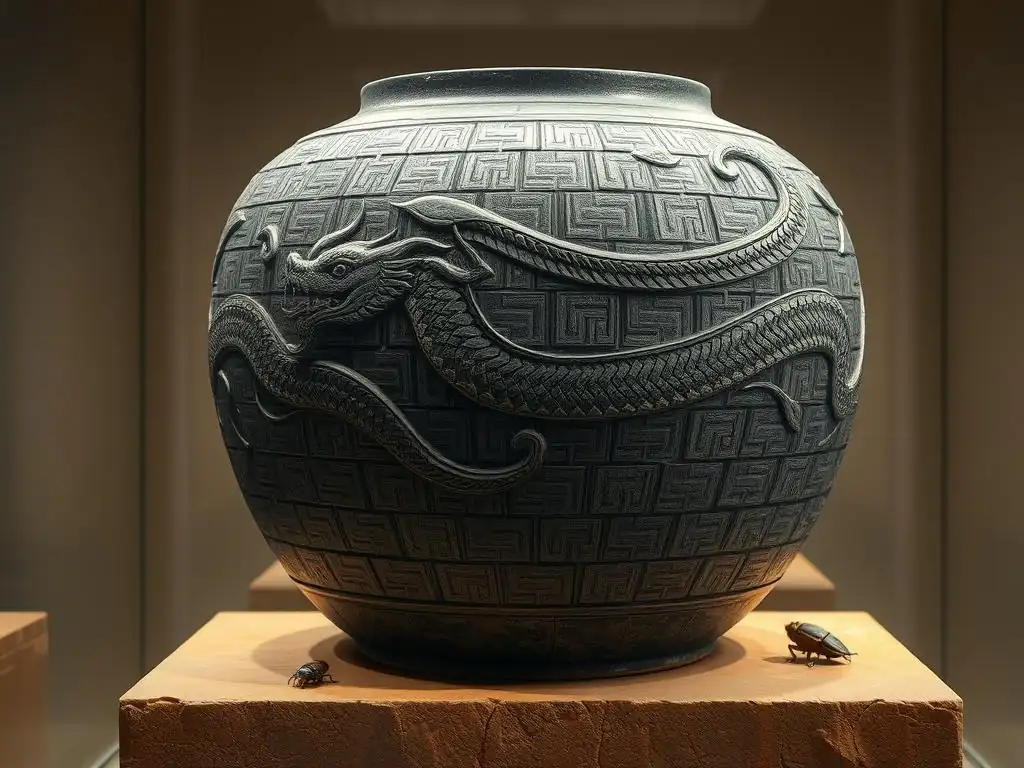
Evidence from Longshan burials and sacrificial pits points strongly towards the presence of ancestor worship and perhaps early forms of shamanistic practices. Many burials contain grave goods, ranging from utilitarian items to valuable jade and fine Longshan culture pottery, suggesting a belief in an afterlife and the continued importance of the deceased. The careful orientation of graves and the inclusion of specific offerings further support the idea of ritualistic reverence for ancestors.
Additionally, the discovery of sacrificial pits containing animal or even human remains at some Longshan sites (e.g., Taosi) suggests elaborate ritual activities, possibly linked to pleas for good harvests or protection. The presence of specialized artifacts, such as certain jade objects or unique Longshan black pottery forms, within elite burials may indicate the role of religious specialists or shamans who mediated between the human and spirit worlds, reflecting a developing spiritual landscape in ancient China.
Oracle Bone Use and Early Forms of Divination
While the sophisticated oracle bone inscriptions are a hallmark of the later Shang Dynasty, the Longshan Culture shows nascent signs of divinatory practices. Archaeological finds at some late Longshan sites, notably in Henan and Shanxi, include animal scapulae (shoulder blades) and turtle plastrons (lower shells) with evidence of burning or simple markings. These preliminary findings suggest that the practice of pyromancy, or divination by cracking bones with heat, was beginning to emerge.
Although these early bones lack the extensive inscriptions of their Shang counterparts, their presence indicates a cultural precursor to the more developed divinatory systems that would later characterize early dynastic China. This continuity in ritual practice highlights how the Longshan period laid conceptual groundwork for future religious and political traditions, demonstrating a persistent human desire to understand and influence the future.
Ritual Artifacts and their Symbolic Meanings
A wide array of artifacts from the Longshan period held significant ritual and symbolic meanings, often found in contexts beyond daily utilitarian use. The highly refined Longshan culture pottery, particularly the delicate "eggshell-thin" vessels and tall-stemmed goblets ( dou), are frequently recovered from tombs or ceremonial platforms, suggesting their use in elite feasts, offerings, or other sacred rites. Their aesthetic perfection likely enhanced their ritual efficacy.
Jade artifacts also played a crucial role in Longshan ritual life. Objects such as bi discs (perforated flat discs) and cong tubes (square outer, round inner tubes), though less common than pottery, are consistently found in elite burials. These jade items are believed to have held profound cosmological or spiritual significance, symbolizing connections to heaven or the earth, and serving as powerful emblems of status and ritual authority within the Longshan culture.
Technological Innovations Beyond Pottery in the Longshan Period
Development of Jade Carving and Craft Specialization
Beyond its renowned ceramics, the Longshan Culture also excelled in jade carving, demonstrating a sophisticated mastery over this exceptionally hard material. Longshan artisans produced a variety of jade objects, including ceremonial axes ( yue), knives, bi discs, cong tubes, and various ornaments. The intricate craftsmanship required to shape and polish jade, often with abrasive sand and water, indicates a high degree of specialized skill and dedicated workshops.
The presence of jade artifacts, particularly the larger and more elaborate pieces, predominantly in elite burials, suggests that jade was a luxury good, controlled and used by the ruling class. This specialization in jade production, alongside the advanced Longshan black pottery, highlights the increasing complexity of the economy and the emergence of distinct craft professions within the Longshan culture, moving beyond generalist household production.
Advancements in Tool Technology: Stone and Bone Implements
The Longshan period saw significant advancements in the refinement and specialization of stone and bone tools. Polished stone tools, such as axes, adzes, chisels, and knives, became more prevalent and efficient, aiding in agriculture, woodworking, and various crafts. The improved grinding and polishing techniques resulted in sharper, more durable implements, contributing to increased productivity in farming and construction.
Bone and antler were also extensively utilized for a diverse range of tools. Awls, needles, harpoons, arrowheads, and fishing hooks made from bone are commonly found at Longshan sites. These specialized implements reflect a more nuanced adaptation to different tasks and environments, showcasing the ingenuity of the Longshan people in maximizing the utility of available materials for both subsistence and craft production.
Early Evidence of Bronze Metallurgy: Knives and Awls from Selected Sites
While primarily recognized as a Neolithic culture, the Longshan period represents a crucial transitional phase where early metallurgical knowledge began to emerge in China. Rare but significant discoveries of small copper or bronze artifacts have been made at late Longshan sites, particularly in Henan and Shanxi. These include small knives, awls, and fragments of cast metal, such as those found at sites like Wangchenggang and Taosi.
These early metal objects are typically small and simple in form, indicating nascent stages of metallurgy, possibly involving pure copper or low-tin bronze. Their limited number suggests that metalworking was not yet widespread or central to the Longshan economy, but these findings are critical as they foreshadow the full-blown Bronze Age that would soon follow. The development of metal casting technology, even in its rudimentary form, marked a significant technological leap for the Longshan culture and ancient China.
The Decline of the Longshan Culture and its Legacy
Factors Contributing to the End of the Longshan Period
The decline of the Longshan Culture around 1900 BCE was likely a complex process, influenced by a combination of environmental, social, and political factors. Environmental changes, such as increasing aridity or more frequent and severe Yellow River floods, could have put significant stress on agricultural systems and led to resource scarcity. This environmental pressure might have exacerbated internal social unrest or increased competition between communities.
Evidence from archaeological sites suggests a rise in inter-group conflict during the late Longshan period, indicated by the widespread construction of massive defensive walls around settlements and the discovery of skeletal remains showing signs of violent trauma. This combination of environmental challenges and escalating warfare likely contributed to the fragmentation and eventual transformation of the distinct Longshan culture entities across the North China Plain.
Transition to the Bronze Age: The Rise of the Erlitou Culture
The Longshan Culture did not simply vanish but rather transitioned into the early Bronze Age, most notably with the emergence of the Erlitou Culture (c. 1900-1500 BCE) centered in Henan Province. Erlitou is widely considered the direct successor to the late Longshan phases in central China, inheriting many of its societal and technological advancements.
Erlitou settlements show continuity in many aspects, including settlement patterns, certain pottery forms, and early metallurgical practices. However, Erlitou distinguished itself through its sophisticated bronze casting technology, particularly the production of large ritual vessels and weaponry, which marked the true onset of the Bronze Age. The cultural and technological foundations laid by the Longshan culture were thus crucial for the development of Erlitou and the subsequent rise of China's first dynastic states.
The Enduring Influence of Longshan Culture on Later Chinese Civilizations
Despite its eventual decline as a distinct cultural entity, the Longshan Culture left an indelible mark on the trajectory of later Chinese civilization. Its contributions were foundational, including the development of complex, stratified societies, the establishment of early urban centers, and the marked increase in agricultural productivity. These advancements provided the necessary societal infrastructure for the emergence of states.
Furthermore, Longshan's legacy is evident in its unparalleled craftsmanship, particularly the highly refined Longshan culture pottery China is still celebrated for, and the sophisticated jade carving techniques. Its burgeoning ritual practices, including early forms of divination and ancestor worship, also laid conceptual groundwork for the elaborate religious and political systems of the Shang and Zhou dynasties. The Longshan period was thus a critical crucible where many defining characteristics of ancient China were forged.
Longshan Culture Pottery: Analysis and Interpretations
Examining the Evolution of Pottery Styles within the Longshan Period
The Longshan culture pottery, while maintaining its signature black, polished aesthetic, also underwent subtle but discernible stylistic evolutions throughout its long duration. Early Longshan pottery often featured slightly thicker walls and simpler forms, while later phases saw the emergence of the incredibly thin "eggshell pottery" and more complex, elegant vessel shapes like the tall-stemmed dou goblets. These chronological changes are evident across various regional Longshan traditions.
Furthermore, regional variations in pottery styles provide crucial insights into the interaction and distinct development paths of different Longshan sub-cultures across China. While the core techniques of wheel-throwing and reduction firing were shared, specific decorative motifs, vessel proportions, or clay compositions often varied by region. These stylistic nuances allow archaeologists to establish relative chronologies, trace cultural diffusion, and understand the intricate networks of exchange and influence among Longshan communities.
The Significance of Eggshell Pottery: A Technical Marvel
The "eggshell pottery" represents the pinnacle of Longshan black pottery production and stands as a true technical marvel of the Neolithic world. These vessels, often goblets ( dou) or cups, possess walls so incredibly thin—sometimes less than 0.5 millimeters—that they are astonishingly fragile yet perfectly formed. Their creation demanded exceptional skill in clay preparation, precise control on the potter's wheel, and meticulous firing techniques to prevent collapse or cracking.
The extreme thinness and exquisite finish of eggshell pottery strongly suggest that these were not everyday items but highly valued prestige goods, likely used exclusively by the elite in special ceremonies or as offerings. Their production was labor-intensive and required specialized artisans, further highlighting the advanced craft specialization and social differentiation within the Longshan culture. This pottery stands as a testament to the technical ingenuity and aesthetic sophistication of ancient China.
The differentiation in quality and type of Longshan culture pottery serves as a potent archaeological indicator of profound social and economic changes within the society. The clear distinction between coarse, utilitarian pottery for daily household use and the finely crafted, exquisite black pottery for elite consumption or ritual purposes directly reflects the growing social stratification. The production of luxury ceramics suggests a class of specialized artisans who were supported by, and served the needs of, a nascent elite.
Economically, the specialized production and apparent wide distribution of Longshan black pottery indicate a more complex system of exchange and perhaps early forms of trade networks. The raw materials might have been sourced from specific locations, and the finished products could have been exchanged over considerable distances. This suggests an economy that moved beyond simple household self-sufficiency, hinting at organized labor, resource management, and the beginnings of a more centralized economic structure in prehistoric China.
Conclusion: The Importance of the Longshan Culture in Understanding Early Chinese Civilization
Summary of Key Achievements and Contributions of the Longshan People
The Longshan Culture stands as a monumental period in the development of early Chinese civilization, marking a crucial transition from diffuse Neolithic communities to increasingly complex, stratified societies. Its key achievements include the establishment of sophisticated agricultural systems supporting larger populations, the emergence of fortified urban centers, and remarkable advancements in craft specialization, most notably exemplified by its iconic, highly refined Longshan culture pottery China is globally recognized for.
Beyond material culture, the Longshan people also developed sophisticated ritual practices, including early forms of ancestor worship and divination, which would profoundly influence later dynastic traditions. The nascent signs of metallurgy and the intricate jade carving further underscore the innovative spirit of this era. These diverse contributions collectively laid the essential foundations for the political, social, and technological structures that would define the subsequent Bronze Age dynasties of China.
Future Research Directions and Ongoing Archaeological Discoveries
Despite decades of study, the Longshan Culture remains a dynamic field of archaeological inquiry, with ongoing discoveries continually refining our understanding. Future research directions are focused on leveraging new scientific techniques, such as isotopic analysis of human and animal remains to reconstruct diet and migration patterns, and advanced remote sensing to identify previously unknown settlements. These methods promise to provide more granular insights into social organization, population dynamics, and environmental adaptations of the Longshan people.
Continued excavation of existing and newly discovered sites, particularly those exhibiting regional variations or transitional phases, is crucial for building a more complete picture of this pivotal period. Understanding the precise mechanisms of cultural diffusion, the nature of inter-group relations, and the specific factors contributing to the decline of the Longshan culture and its seamless transition into the Bronze Age remains a primary focus. The study of Longshan culture pottery China's early artisans created continues to be a cornerstone for these ongoing investigations.
Frequently Asked Questions
### What is the Longshan Culture and where did it exist?
The Longshan Culture was a late Neolithic civilization in China, primarily located in the Yellow River valley. It's known for its distinctive black pottery.
### What is the most defining characteristic of Longshan Culture pottery?
The defining characteristic is its thin-walled, highly polished black pottery. This pottery was made using advanced wheel-throwing techniques and firing processes.
### When did the Longshan Culture flourish in China?
The Longshan Culture flourished approximately from 3000 to 1900 BCE. It represents a significant phase in Chinese prehistory before the Bronze Age.
Evidence includes walled settlements, ritualistic artifacts, and signs of social stratification. These indicate a more complex and hierarchical society.
### How can I find out more information about Longshan Culture pottery and other archaeological discoveries?
Visit ArchaeologyHub.org, a digital encyclopedia dedicated to archaeological discoveries. You can explore detailed timelines, artifact profiles, and analyses of ancient civilizations, including the Longshan Culture's black pottery.
Final Reflection: Echoes of Innovation in Ancient Clay
The intricate details and sophisticated techniques of Longshan pottery, as explored throughout this article, are not merely relics of the past; they represent a testament to human ingenuity and the enduring power of cultural expression. The Longshan culture's mastery of black pottery, a pinnacle of Late Neolithic craftsmanship, continues to resonate today, reminding us of the profound impact that innovation, even in the simplest of materials, can have on shaping civilization.
The legacy of the Longshan culture extends far beyond archaeological sites and museum displays. Its influence subtly permeates modern Chinese art and design, serving as a reminder of the deep roots of creativity and the importance of preserving cultural heritage. The dedication and skill evident in each piece of Longshan pottery speak volumes about the values and aspirations of a society long past. Civilizations are born and grow and die—but they leave behind them the written word and the spoken word and the art of their hands.
- Will Durant. This quote encapsulates the enduring power of the Longshan culture's artistic legacy, a legacy etched in the very earth from which their pottery was formed.
As we reflect on the Longshan culture and its remarkable pottery, let us consider the lessons it offers us today. What can we learn from their dedication to craftsmanship, their innovative spirit, and their commitment to artistic expression? Let us strive to cultivate our own creativity and appreciate the beauty and wisdom embedded in the artifacts of the past. Embrace the spirit of innovation and let the echoes of the Longshan culture inspire you to create, to connect, and to leave your own lasting mark on the world.
Unearth Your Inner Archaeologist!
Thanks for delving into the fascinating world of the Longshan culture! We hope you’ve gained a deeper appreciation for this pivotal period in Chinese history and its beautiful black pottery. Now, it's time to get more involved:
- Visit your local museum to see if they have any Longshan pottery on display. You might be surprised by what you find!
- Research a specific aspect of the Longshan culture that piqued your interest, like their agriculture or social structures. Share your findings with a friend!
- Consider trying your hand at pottery – even a simple pinch pot can connect you to the ancient artisans of Longshan.
What single piece of Longshan pottery tells the most compelling story, in your opinion? Share your thoughts in the comments below!