Exploring Minoan Palatial Crete and the Aegean Thalassocracy
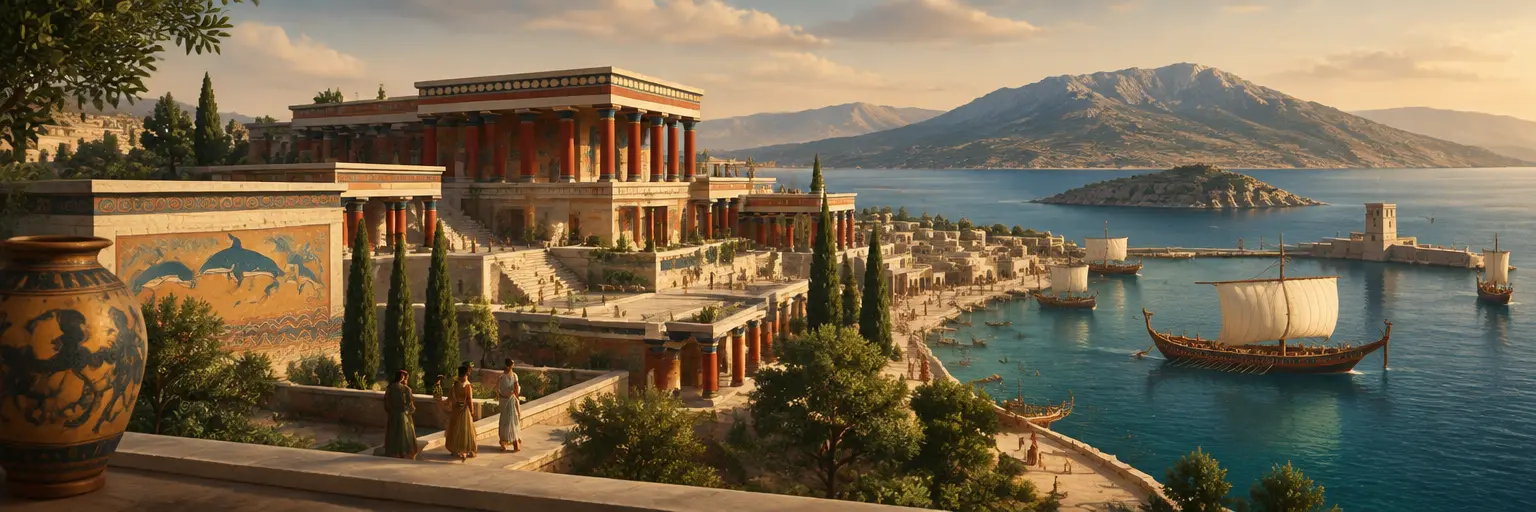
Welcome to ArchaeologyHub.org’s deep dive into the Minoan Civilization, focusing on the spectacular Palatial Crete and its enigmatic thalassocracy (sea empire). This subcategory unpacks the Bronze Age world of the Aegean, from the labyrinthine palaces of Knossos and Phaistos to the maritime networks that connected Crete with Egypt, the Levant, and the Cyclades. Here, you’ll discover how Minoan society, art, and religion shaped the Mediterranean’s first advanced urban culture, offering a rich blend of archaeological evidence, site guides, and interpretive theories for enthusiasts and scholars alike.
🏛️ The Rise of Minoan Palaces: Centers of Power and Ritual
The Minoan palaces were not merely royal residences but multifunctional hubs of administration, religion, economy, and storage. Through this subcategory, you’ll explore the architectural evolution of these sprawling complexes, complete with intricate drainage systems, frescoed halls, and central courtyards used for communal rituals. We dissect the layout of Knossos, Phaistos, and Malia, revealing how their design reflects a sophisticated understanding of urban planning and social hierarchy.
Expect detailed analyses of Linear A tablets, seal stones, and storeroom pithoi jars, which illuminate the palace’s role as a redistributive center. You’ll also encounter theories about the “Priest-King” figure, the possible functions of the “Labyrinth” myth, and the seasonal ceremonies tied to bull-leaping iconography. By examining stratigraphic layers and pottery sequences, this section connects architectural grandeur to daily life, showing how palaces controlled surplus, managed craft production, and projected elite power across the island.
⚓ Thalassocracy: Maritime Networks and Minoan Seafaring
The term thalassocracy describes Minoan dominance of the Aegean Sea, a claim supported by archaeological evidence of overseas colonies, trading posts, and shipwrecks. Here, we investigate the material culture—from Minoan pottery in Akrotiri (Thera) to frescoes depicting fleet processions—that proves their long-distance connections. This subcategory breaks down navigation techniques, vessel construction, and harbor infrastructure, such as the paved road to Kommos’ port.
You’ll find case studies on the Uluburun shipwreck (though later, it’s key for comparison) and the distribution of Minoan stone vases and metals, revealing trade routes for copper, tin, and ivory. We also explore the political implications: was Crete a unified naval empire or a loose confederation of competing ports? Through comparative analysis with Egyptian and Hittite texts, you’ll grasp how the Minoans influenced mainland Greece (Mycenae) while maintaining their distinct cultural identity.
🎨 Art, Iconography, and Religious Life in Palatial Crete
Minoan art is celebrated for its naturalism, vibrant colors, and dynamic depictions of nature—from flying fish and dolphins to saffron-gathering monkeys. In this section, we deconstruct the frescos, pottery motifs, and ivory carvings found in palatial contexts. You’ll learn how religious beliefs centered on female deities, sacred caves, and peak sanctuaries, with rituals involving ecstatic dance, libations, and animal sacrifice. The Snake Goddess figurines and the “Horns of Consecration” are decoded as symbols of regeneration and divine protection.
Expect thematic explorations of the bull-leaping fresco from Knossos, its possible athletic or ritual meaning, and the role of the taurokathapsia in Minoan society. We also examine the use of double axes (labrys), offering tables, and libation jugs to interpret palace cult rooms. By comparing iconography across palatial and non-palatial sites, you’ll see how art served both ideological legitimation for elites and communal cohesion for islanders.
🏺 Daily Life, Economy, and Craft Specialization
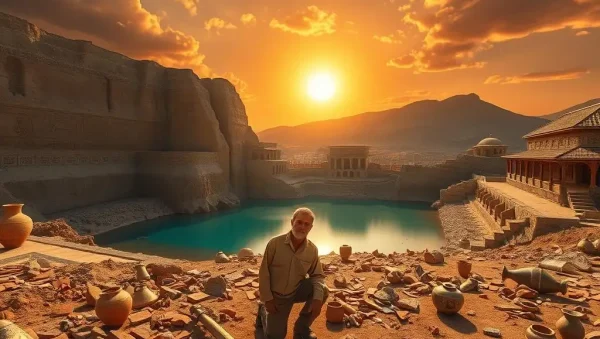
Beyond elite palaces, this subcategory covers the towns, villas, and farmsteads that formed the Minoan economic backbone. Discover how artisan quarters in palaces produced luxury goods like faience, bronze weapons, and fine pottery, while rural settlements engaged in olive oil, wine, and wool production. We provide evidence from House Tombs at Mochlos and the town of Gournia to reconstruct household activities, diet, and social roles. You’ll learn about labor division based on skeletal and tool analyses, from weavers to metalworkers.
Taxation systems are revealed through granary records and seal impressed clay documents (nodules), indicating bureaucratic control. This section also addresses earthquake resilience and urban renewal after destruction levels, showing how communities adapted. With insights from faunal remains and pollen studies, you’ll understand the Minoan ecosystem—from bee-keeping to vineyard cultivation—and how trade in these staples solidified palatial wealth and regional interdependence.
🌀 Decline and Legacy: From Destruction to Mythmaking
The collapse of Palatial Crete around 1450 BCE remains a mystery, with theories ranging from the Thera eruption’s tsunami and ashfall to internal rebellion or Mycenaean invasion. This section critically evaluates evidence from Palaikastro and Kato Zakros—destruction horizons, abandoned hoards, and later mainland-style pottery. You’ll discover how the “Final Palatial” period saw an influx of Greek-speaking overlords at Knossos, and how the once-thriving Minoan scripts disappeared. We also explore the post-palatial “Mycenaeanization” and the survival of Minoan religious cults in sanctuaries like Kato Symi.
Finally, we trace the Minoan legacy into historical memory, from Homer’s island of Krete to Arthur Evans’ early 20th-century reconstruction. This part covers the impact of Minoan art on Victorian aesthetics and modern national identities in Greece, plus how archaeological 3D modeling and new excavations continue to reshape narratives. By understanding the decline, you’ll appreciate how a civilization can vanish yet leave lasting traces in language, myth, and even Mediterranean trade networks.
Frequently Asked Questions
What exactly is a Minoan thalassocracy, and is it proven?
A thalassocracy refers to sea-based dominion. For Minoans, evidence includes overseas colonies like Akrotiri, and distribution of their pottery in Egypt and the Levant. However, no direct texts prove political unity or military control; it’s more likely maritime commercial hegemony. Current scholarship favors a network of largely independent ports rather than a single empire, but the term remains useful heuristically.
Why is the Minoan palace called a “labyrinth,” and did it have a Minotaur?
The term “labyrinth” comes from labrys (double axe), a symbol found at Knossos. The complex multi-room layout inspired the Greek myth of the Minotaur’s maze, but no evidence of a bull-headed man exists. The palace’s labyrinthine corridors likely inspired the legend after Minoan civilization fell, blending memory of bull rituals with oral storytelling.
What happened during the Thera eruption’s impact on Minoan Crete?
The Thera (Santorini) eruption around 1600 BCE caused tsunamis, ash fall, and seismic damage across Crete. It likely destroyed coastal towns and disrupted agriculture. While it didn’t immediately end palatial civilization, it weakened infrastructure, possibly leading to later Mycenaean takeover. The exact causal link is debated, with some scholars downplaying long-term collapse.
How did the Minoans influence Mycenaean Greece?
Minoans transmitted art styles, fresco techniques, and script (Linear A to Linear B) to the mainland. Mycenaean elites adopted Minoan clothing, jewelry, and religious symbols. They also imported Minoan potters and artisans. However, Mycenaeans were more militaristic and later conquered Crete, incorporating Minoan mythology into their own epics, like Theseus and the Minotaur.
Are there any famous Minoan archaeological sites open to the public today?
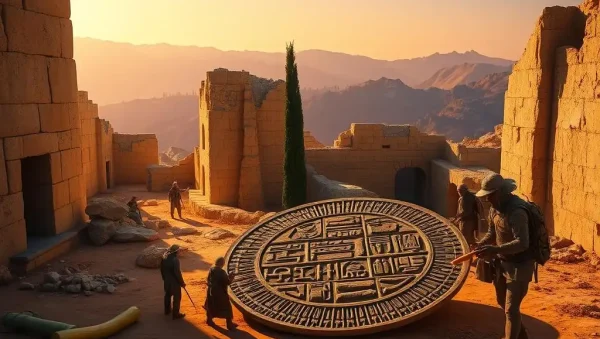
Yes. Top sites include Knossos (near Heraklion) with reconstructed palace, Phaistos for its panoramic setting, Gournia an intact town, and Agia Triada for its royal villa. The Archaeological Museum of Heraklion hosts the best artifacts, including the Phaistos Disc. Many sites have footpaths, signage, and limited accessibility; check current opening hours before visiting.