Climate Change and Environmental Degradation in the Late Bronze Age Aegean Collapse
🌍 Explore how climate change and environmental degradation contributed to the Late Bronze Age Aegean collapse, shedding light on a pivotal period…
Read article
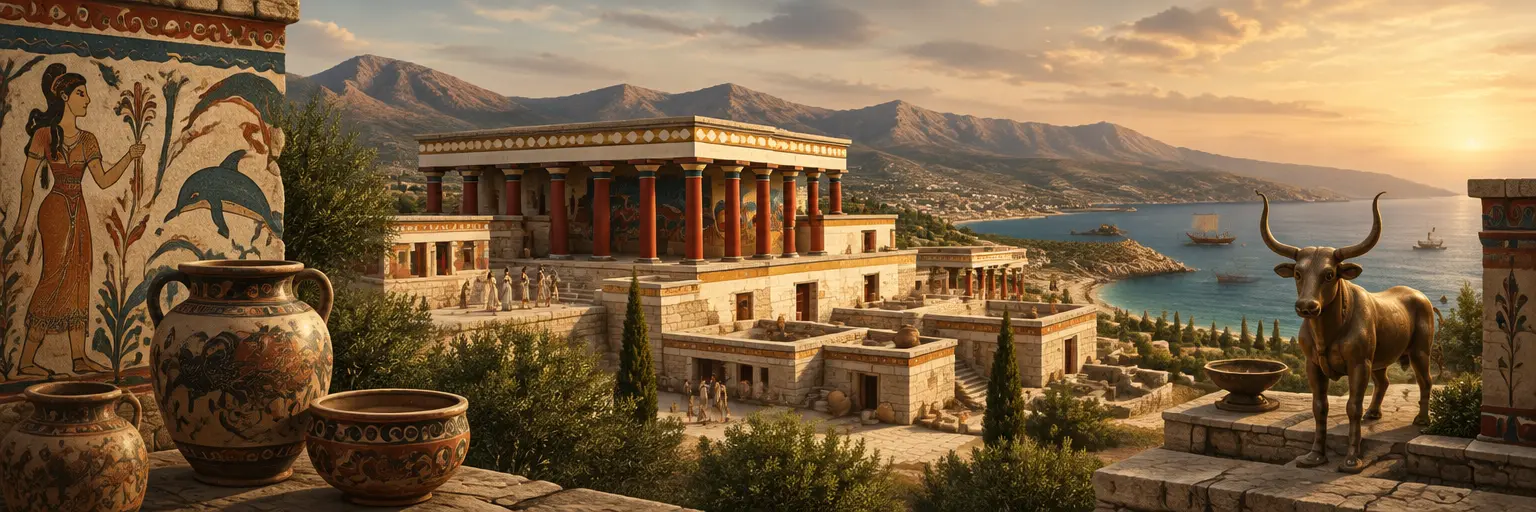
Explore the enigmatic world of the Minoan Civilization, where vibrant frescoes, labyrinthine palaces, and sophisticated sea-trade forged Europe’s first advanced society. Art was not mere decoration—it was a window into their soul, depicting nature, ceremonial rituals, and the iconic Bull-Leaping that defied modern imagination. Their religion revolved around the Mother Goddess, sacred symbols like the double axe, and cave sanctuaries, blending the divine with the earthly. Yet, despite their brilliance, the Minoans faced a mysterious decline, from the catastrophic Thera eruption to shifting trade routes and possible invasions. Uncover the archaeological evidence that traces their rise, golden age, and eventual absorption into Mycenaean culture. Perfect for history enthusiasts and archaeology buffs, this detailed analysis draws on excavation findings at Knossos, Phaistos, and Akrotiri, revealing how climate disasters and cultural resilience shaped their legacy. Dive into artifact profiles, timeline breakdowns, and interpretive studies that illuminate the artistic genius and religious complexity of the Minoans—and why their collapse remains one of antiquity’s greatest puzzles.
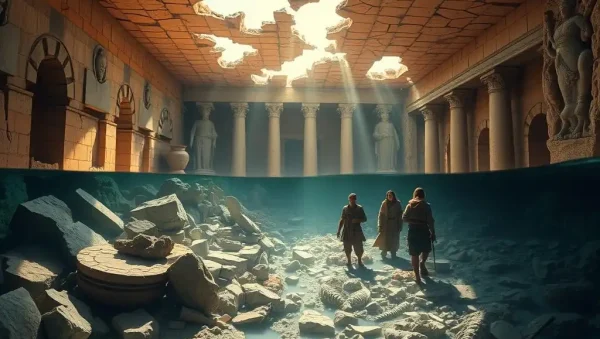
🌍 Explore how climate change and environmental degradation contributed to the Late Bronze Age Aegean collapse, shedding light on a pivotal period…
Read article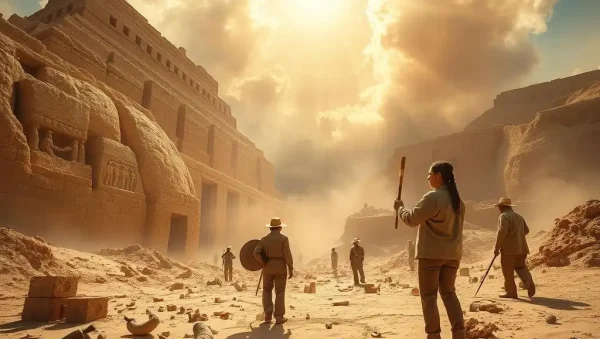
🌟 The transition from LM IB to LM IIIIIA marks a pivotal phase in Late Neolithic cultural shifts, reflecting profound political and…
Read articleWelcome to ArchaeologyHub.org’s deep dive into the Aegean Civilizations, focusing on the Minoan Civilization—its breathtaking art, complex religion, and mysterious decline. This subcategory offers a comprehensive, SEO-rich resource for students, enthusiasts, and researchers seeking authoritative content on Bronze Age Crete. From iconic frescoes to labyrinthine palaces and theories of volcanic catastrophe, you will uncover how this seafaring culture shaped Western heritage. Navigate through curated timelines, artifact analyses, and excavation narratives that bring Knossos, Phaistos, and other sites to life, all organized to enhance your historical journey.
Explore the vibrant visual language of Minoan art, renowned for its naturalism, flowing forms, and marine motifs. Expect detailed profiles of the Bull-Leaping Fresco from Knossos, the “Blue Monkey” murals, and the exquisite Kamares ware pottery with its thin-walled, polychrome designs. We analyze techniques like true fresco painting and the use of chlorite for carved stone vessels, such as the Harvester Vase. For SEO depth, key terms include Minoan fresco techniques, marine-style pottery, and glyptic art. Each artifact page links to excavation contexts, museum locations, and scholarly debates on their ritual or domestic functions, improving your research efficiency.
Beyond aesthetics, Minoan art reveals societal values—evidence of gender fluidity, athleticism, and deep connection to the sea. Our interpretive essays explain how the “Priest-King” figure, once a symbol of male authority, is now reinterpreted as a deity or worshipper, reflecting shifts in academic consensus. You will also find high-resolution images and 3D models of seal stones, which functioned as signatures and amulets. Understanding these objects helps contextualize trade networks, as similar motifs appear in Egyptian and Near Eastern artifacts, proving cultural exchange. This subcategory ensures you grasp not just the “what” but the “why” behind each creation.
Uncover the spiritual world of the Minoans, which likely centered on a mother goddess, nature worship, and fertility rites. Expect in-depth articles on the Peak Sanctuaries like Mount Juktas, where clay votive limbs and figurines were offered for healing. We examine the iconic Snake Goddess figurines from Knossos, discussing whether they depict a deity, priestess, or household idol. Ritual objects such as the labrys (double axe), horns of consecration, and libation tables are profiled with archaeological contexts and symbolic interpretations, enriching your understanding of Minoan sacred practice. Keywords like “Minoan goddess worship” and “sacred caves” are woven throughout for searchability.
Our analysis extends to the role of the Lustral Basins and Pillar Crypts in palace complexes, suggesting purification and initiation ceremonies. We explore the controversial possibility of human sacrifice at Anemospilia, presenting evidence and counterarguments. By comparing Minoan religion with contemporary Aegean and Eastern cults, you gain a comparative lens. Practical resources include a timeline of religious changes during the Neopalatial period and a glossary of symbols, ensuring clarity for novices. Moreover, we link to primary excavation reports, enabling verification of claims and fostering a research-driven approach to ancient spirituality.
Delve into the maritime economy that fueled Minoan prosperity, connecting Crete to Egypt, the Levant, and the Greek mainland. Expect articles on the port city of Kommos, with its massive ship sheds, and the distribution of Minoan pottery in Akrotiri (Thera) and Avaris (Egypt). We analyze the Linear A tablets for evidence of agricultural production—wine, oil, and wool—and the standardization of weights and measures for trade. Key phrases include “Minoan thalassocracy,” “Aegean exchange systems,” and “palace redistributive economy.” Our content highlights archaeological proxies like imported obsidian and ivory, demonstrating far-reaching connections, and explains how the palace at Knossos acted as an economic hub.
For SEO-rich depth, we include case studies of shipwrecks, such as the Uluburun wreck (nearby but contemporaneous), to illustrate cargo types. We also address the role of craft specialization, from bronze smithing to perfumed oil manufacture, and its impact on status hierarchies. You will learn about the villa system and its role as secondary collection points, challenging the monopoly of palaces. Trade disruptions, possibly linked to the Thera eruption, are evaluated as a cause for economic strain. By integrating economic data with social structure, this subcategory offers a holistic view of Minoan power, crucial for any student of ancient globalization.
Investigate the cataclysmic eruption of Santorini (Thera) around 1600 BCE, a pivotal factor in Minoan decline. Expect detailed reconstructions of the eruption’s phases, including tsunami waves, ash fall, and climatic cooling, with evidence from ice cores and seabed sediments. We discuss the destruction horizon at Knossos and other sites, distinguishing fire damage from earthquake versus volcanic causes. The “Minoan Eruption” is dated via ceramic and radiocarbon analysis, with scholarly debate on the exact year—our articles present both “high” and “low” chronologies. Keywords include “Late Bronze Age collapse,” “tsunami evidence,” and “volcanic winter.” This section also evaluates the human impact, such as famine and social unrest, using pollen and botanical data.
However, decline was multifaceted; we argue that the eruption was a trigger, not the sole cause. Post-eruption, Mycenaean influences rise, leading to Hellenization. We explore the destruction levels at Malia and Zakros, and the abandonment of palatial complexes except Knossos. The subcategory includes analyses of warrior graves and new burial customs, signaling political shifts. We also review alternative theories, like internal rebellion or environmental overexploitation, to present a balanced view. For clarity, a comparative timeline shows Minoan vs. Mycenaean phases, helping you understand the transition. This holistic examination answers the “why” and “how” of a civilization’s fading, making it a vital resource for causal analysis.
Trace the archaeology of Minoan Crete, from Arthur Evans’ monumental digs at Knossos (1899-1935) to contemporary scientific projects. Expect critical appraisals of Evans’ reconstructions, which used concrete to rebuild the palace, sparking heritage and reconstruction debates. We profile key archaeologists like Harriet Boyd-Hawes (Gournia) and Nicolaos Platon (Zakros), whose methods shaped Minoan studies. The subcategory covers the evolution of excavation techniques—from stratigraphy to geophysical surveys and DNA analysis. For SEO, include “history of Minoan archaeology,” “Evans controversy,” and “modern Cretan excavations.” This section helps you distinguish between original remains and modern interventions, vital for informed site visits.
Beyond history, we examine shifting theoretical frameworks: from Evans’ “peaceful Minoans” to recent evaluations of warfare and social coercion. We also highlight the role of philology and epigraphy in deciphering Linear A/B, noting current breakthroughs in AI-assisted pattern recognition. Your content includes interviews with leading researchers, summaries of latest field reports from Sissi and Palaikastro, and open-access dataset links. This scholarly perspective empowers you to trace how interpretations evolve. Moreover, we address the ethics of excavation, including repatriation of artifacts and local community engagement, ensuring a responsible approach. This section proves indispensable for those interested in the discipline as much as the civilization itself.
The Palace of Knossos is the best-preserved and most extensively restored, thanks to Arthur Evans’ work. However, “preserved” is nuanced—reconstruction dominates. For untouched ruins, Zakros offers the most complete layout of a palace as excavated, with undisturbed storerooms and workshops, providing a clearer view of daily life without modern intervention.
After the eruption, Minoan Crete experienced a decline, with most palaces destroyed except Knossos temporarily. Mycenaean Greeks from the mainland gradually took control, adopting Minoan writing and art. Eventually, around 1200 BCE, Knossos was destroyed too, and Crete entered a “Dark Age” with simpler settlements, marking the end of Minoan civilization.
Yes, they used Linear A, a syllabic script still undeciphered, for administrative purposes. Later, Linear B, adapted from Linear A, was used by Mycenaeans and has been deciphered, revealing Greek language. Tablets mainly record inventories of goods, proving a complex bureaucratic system, but no literary texts have survived.
Evidence is inconclusive; they likely were more egalitarian than contemporary cultures. Frescoes show women in prominent religious roles, leading to speculations of a goddess-centric religion, but political power appears male. No clear proof exists of matriarchy; instead, a bisexual or complementary system is suggested by current research on graves and iconography.
The final fall resulted from a combination of factors: the Thera eruption weakened their economy, followed by Mycenaean invasions and internal unrest. Climatic changes may have caused droughts, while trade disruptions cut resources. By 1100 BCE, palatial systems collapsed entirely, blending into the broader Late Bronze Age collapse.