Unraveling the Principate: Rome’s Imperial Zenith and Descent
Welcome to ArchaeologyHub.org’s detailed study of the Roman Empire from the Principate’s golden age under Augustus through the seismic shocks of the Third Century Crisis. Here, we peel back layers of volcanic ash, desert sand, and urban rubble to reveal how emperors, legions, and everyday citizens shaped—and nearly shattered—the Mediterranean’s greatest superpower. Expect artifact-driven narratives, excavation insights, and chronological clarity that transforms complex imperial politics into tangible archaeological evidence.
🏛️ The Augustan Blueprint: Urbanism and Imperial Propaganda
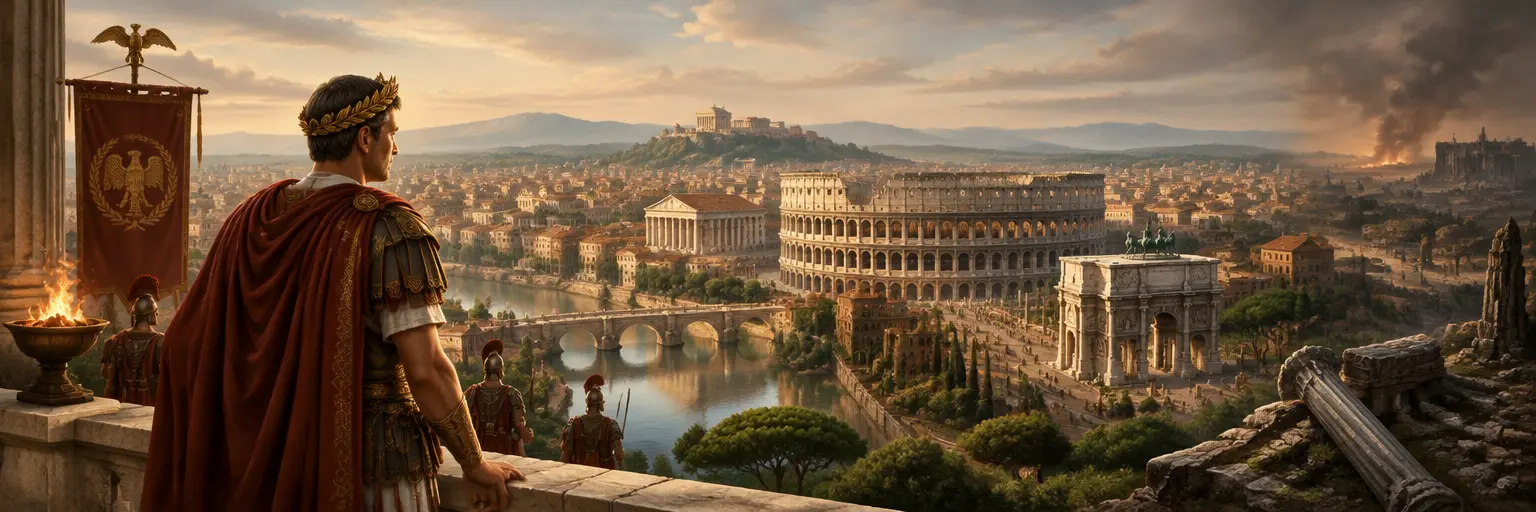
Under Augustus (27 BC–AD 14), archaeology reveals a deliberate architectural revolution. Excavations at Rome’s Forum Romanum and Campus Martius expose marble-clad temples, the Ara Pacis altar, and the Mausoleum of Augustus—each a physical manifesto of peace and dynastic legitimacy. Provincial sites like Nîmes’ Maison Carrée show how this template replicated across Gaul, blending local styles with Roman grid planning.
For visitors, expect to trace how opus caementicium (concrete) enabled vaulted market halls, aqueducts, and bath complexes that defined urban life. Stratigraphic layers at Ostia Antica reveal harbor warehouses, bakeries, and apartment blocks (insulae), proving that Augustan ideology wasn’t just monumental—it was everyday. Each artifact, from stamped brick to bronze coin, showcases a state that commodified stability for mass consumption.
⚔️ The Julio-Claudians & Flavians: Legions, Frontiers, and Disaster
From Tiberius to Domitian, military archaeology dominates this period. The Teutoburg Forest battlefield (AD 9) yields sling stones and coins that mark Rome’s failed Germanic expansion, while Masada’s siege ramp and Roman camps illustrate Judaea’s brutal suppression. Flavian projects like the Colosseum (AD 80) repurposed Nero’s Golden House, transforming tyranny into public spectacle—excavations confirm complex hypogeum machinery for gladiatorial shows.
Visitors can explore frontier forts along Hadrian’s Wall and Germanic limes, where wooden barracks, granaries, and bathhouses reveal garrison life. Ceramic samian ware and military diplomas (bronze discharge certificates) trace soldier mobility and veteran settlement. The eruption of Vesuvius (AD 79) freezes Pompeii and Herculaneum, providing an unmatched snapshot of social hierarchy—from villas with frescoed nymphaea to taverns with carbonized bread.
🏺 The Golden Age: Antonines, Trade, and Provincial Flourishing
The second century (Trajan to Commodus) marks peak territorial extent and economic integration. Underwater archaeology at Portus and Ostia uncovers colossal grain ships, while amphorae from Monte Testaccio in Rome quantify olive oil imports from Baetica and Tripolitania. Trajan’s Column and forum markets exemplify both military triumph and urban planning, with marble quarries at Dokimeion tracing elite patronage networks.
Provincial cities like Ephesus, Leptis Magna, and Palmyra showcase a fusion of Roman law with local traditions—council houses, nymphaea, and grand colonnaded streets. Excavations of villa rusticae in Britain and North Africa reveal mosaic workshops, oil presses, and slave quarters, evidencing agricultural intensification. Coins bearing empresses like Faustina Minor and Sabina illuminate women’s dynastic roles, while curse tablets and votive shrines expose religious syncretism from Mithraic caves to Isis temples.
🏚️ The Severan Dynasty & Inflated Nightmares: AD 193–235
The Severans (Septimius to Alexander) accelerated military monarchy and legal codification. The Arch of Septimius Severus in Rome and the great baths of Caracalla—whose furnaces and water-lifting wheels are still studied—demonstrate colossal scale. Excavations at Lyon’s amphitheater and Timgad’s grid in Algeria showcase frontier loyalty, while the Severan marble plan (Forma Urbis Romae) offers a unique cartographic snapshot of the capital.
However, coin debasement and inflation become archaeologically visible: antoniniani’s silver content drops from 50% to 5% under Gallienus. Hoards like Frome Hoard (UK) illustrate frantic saving, while Dura-Europos on the Euphrates reveals military houses, a synagogue, and a Christian house-church—evidence of interfaith coexistence under pressure. The Portland Vase (cameo glass) attests to luxury crafts still existing, yet fortification walls at Rome’s Aurelian Wall (begun AD 271) signal an empire turning inward.
📉 Crisis of the Third Century: Fragmentation, Resilience, and Transformation
From AD 235 to 284, over 50 emperors ruled or usurped—archaeology of this chaos emerges from Gallic Empire coinage at Cologne’s mint and Palmyrene monumental inscriptions under Queen Zenobia. The Hoard of Trier and Reichskrise layers show burnt destruction levels at border forts, while Decius’ so-called “persecution edicts” are documented in papyri from Egypt’s Oxyrhynchus. Germanic incursions left traces at Kalkriese similarly to abandoned villas in Thrace.
Yet the period also spawned innovation: Diocletian’s palace at Split (built c. AD 300) and his Edict on Maximum Prices (AD 301) reflect administrative overhaul. Chemical analysis of glass from Jalame (Israel) shows recycling as supply chains collapsed. Christians reorganized—catacombs at Rome’s Callixtus expand, foreshadowing Constantine. Excavated imperial mausolea at Mediolanum and Trier prove that even crisis produced enduring monumental legacies, bridging old Rome and medieval Byzantium.
Frequently Asked Questions
What is the most important archaeological site for understanding the Principate’s start?
The Mausoleum of Augustus and adjacent Ara Pacis in Rome are pivotal. Excavations reveal how Augustan iconography fused dynastic ambition with religious renewal, setting templates for imperial self-presentation. Stratigraphy around these monuments shows continuous modification until Late Antiquity, proving their ideological longevity.
How do archaeologists date emporer debasement in the Third Century?
Using X-ray fluorescence (XRF) and neutron activation analysis, scientists measure silver content in antoniniani from hoards like Beaurains. Comparing weight-to-financial ratio against written price edicts helps map inflation peaks. Also, die-linkage studies reconstruct mint output spikes during civil wars.
Were provincial cultures fully Romanized, or did they retain local identity?
Excavations at Palmyra and Leptis Magna show hybrid forms—Roman bathhouse layouts combined with Punic or Aramaic inscriptions and funerary busts in local dress. Grave goods and cursus honorum inscriptions indicate dual citizenship, with elites switching cultural codes for political gain, not full assimilation.
What evidence exists for the Christian and Jewish communities during the Crisis?
Community centers at Dura-Europos include a baptistery in a converted house and a synagogue with wall paintings. Catacomb inscriptions in Rome (e.g., Santa Priscilla) and Egyptian papyri document martyrs and church property. These finds prove that persecution was intermittent, not systematic, across regions.
How did the Third Century Crisis affect everyday coin users?
As antoniniani lost silver, people hoarded old denarii or used bronze imitations. For small purchases, cities issued local tokens and lead seals. Some regions reverted to barter for bulk goods. Archaeologists find clipped or countermarked coins, indicating that trust shifted to sealed documents or barter contracts.