
Daily Life in Imperial Rome: An Archaeological Reconstruction (Principate Focus)

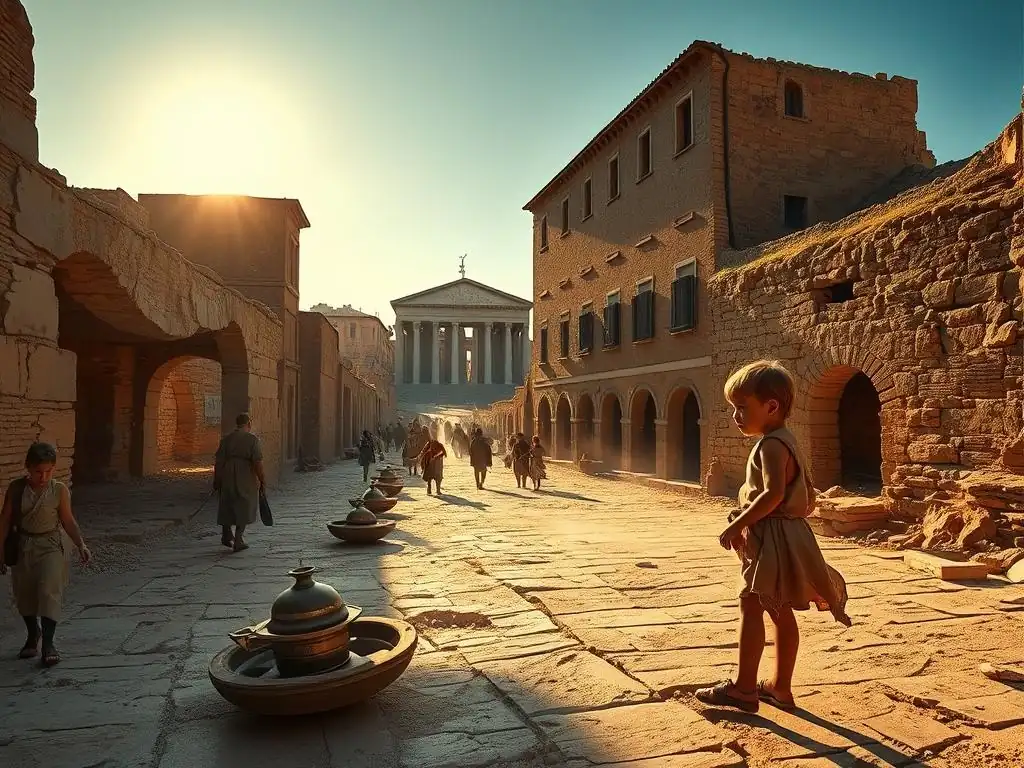
Welcome to ArchaeologyHub.org, your gateway to the past! Ever wondered what it was really like to live in ancient Rome, beyond the gladiators and emperors? Our meticulously researched article, "Daily Life in Imperial Rome: An Archaeological Reconstruction (Principate Focus)," delves into the fascinating details of everyday existence, from the food on their tables to the streets they walked. Discover the tangible realities unearthed by archaeology and uncover a world you thought you knew. What secrets will you uncover? Dive in to explore!
- Introduction: Reconstructing Everyday Life in Ancient Rome
- Housing and Domestic Life in Roman Cities
- Food and Diet in Ancient Rome
- Work and Occupations in Imperial Rome
- Leisure and Entertainment in Ancient Rome
- Religion and Ritual in Daily Roman Life
- Clothing and Personal Adornment in Imperial Rome
- Infrastructure and Public Services in Ancient Rome
- Social Stratification and Inequality in Roman Society
- Death and Burial Practices in Imperial Rome
- Conclusion: A Day in the Life of a Roman Citizen (Principate Era)
-
Frequently Asked Questions
- What were some of the most common forms of entertainment in daily life in ancient Rome during the Principate, according to ArchaeologyHub.org?
- How does ArchaeologyHub.org describe the typical diet of an average Roman citizen during the Principate?
- According to ArchaeologyHub.org, what role did public baths (thermae) play in the daily lives of Romans in the Principate?
- What insights does ArchaeologyHub.org offer into the housing conditions experienced by different social classes in ancient Rome?
- How did the paterfamilias (father of the family) influence daily life within a Roman household, as explained by ArchaeologyHub.org?
- Final Reflection: Echoes of the Eternal City
- Unearth Your Own Roman Adventure!
Introduction: Reconstructing Everyday Life in Ancient Rome
The Principate Period: A Glimpse into Roman Society
The Principate, spanning from 27 BCE to 284 CE, represents a pivotal era in Roman history, marked by relative political stability and significant imperial expansion under the rule of emperors such as Augustus, Trajan, and Hadrian. This period saw the consolidation of Roman power across a vast territory, influencing the economic, social, and cultural fabric of countless peoples. Understanding the daily life in ancient Rome during this time is crucial, as it reflects the zenith of Roman civilization before the crises of the 3rd century.
During the Principate, the Roman Empire stretched from Britannia to Mesopotamia, encompassing a diverse array of cultures, languages, and traditions. Despite this immense geographical and cultural diversity, a distinctly Roman way of life, shaped by shared institutions, laws, and infrastructure, permeated the empire. This uniformity, particularly in urban centers, allows archaeologists to draw broad conclusions about the commonalities in daily life in ancient Rome, even while acknowledging regional variations.
Archaeology and the Study of Daily Life in Imperial Rome
Archaeology serves as an indispensable tool for reconstructing the intimate details of daily life in ancient Rome, often providing insights that written historical records, typically focused on political events or elite narratives, overlook. Excavations unearth a wealth of material culture, including pottery fragments, tools, personal adornments, domestic utensils, and architectural remains, all of which offer tangible evidence of everyday activities. For instance, the analysis of amphorae reveals trade routes and dietary staples, while the layout of a Roman house speaks volumes about family structure and social customs.
Key archaeological sites have been instrumental in this endeavor. Pompeii and Herculaneum, preserved by the eruption of Vesuvius in 79 CE, offer an unparalleled snapshot of Roman urban life, complete with wall paintings, household goods, and even human remains. Ostia Antica, Rome's ancient port city, provides extensive evidence of commercial activities, apartment blocks, and public services, illustrating the bustling nature of daily life in ancient Rome for its working population. These sites, alongside countless smaller excavations across the former empire, continuously enrich our understanding of how Romans lived, worked, and interacted.
Housing and Domestic Life in Roman Cities
Insulae vs. Domus: Contrasting Roman Housing Options
Roman urban centers were characterized by a stark contrast in housing options, reflecting the profound social stratification of the Principate era. The domus, a single-family townhouse, was the dwelling of the wealthy elite.
These residences, often sprawling over hundreds of square meters, featured elaborate layouts with an atrium for receiving clients, a peristyle garden for private relaxation, and numerous richly decorated rooms adorned with frescoes and intricate mosaics. Archaeological excavations in Pompeii, such as the House of the Vettii, reveal the luxurious and private nature of these homes, designed to project the status and influence of the Roman aristocracy in their daily life in ancient Rome.
In stark contrast, the vast majority of Rome's population, particularly the plebeians, resided in insulae, multi-story apartment blocks that could reach up to five or six floors. Estimates suggest that perhaps 90% of Rome's inhabitants lived in these crowded structures.
While some ground-floor apartments might have been relatively comfortable, upper floors were often poorly constructed, cramped, and lacked basic amenities like running water, making them prone to collapse and fire. The remains of insulae in Ostia Antica provide clear archaeological evidence of these densely packed living conditions, highlighting the challenging aspects of daily life in ancient Rome for the common people.
Furnishings and Household Objects: Insights from Archaeological Finds
Archaeological digs have provided a comprehensive picture of the furnishings and household objects that equipped Roman homes, from the grand domus to the humble insula. Common furniture, primarily made of wood, included beds (often with bronze or ivory inlays for the wealthy), dining couches ( triclinia), tables, chairs, and storage chests.
While much of the wooden furniture has perished, impressions in volcanic ash at Pompeii, alongside surviving metal fittings, allow for accurate reconstructions. Everyday lighting was provided by terracotta or bronze oil lamps, hundreds of which have been recovered from various domestic contexts, indicating their pervasive use in daily life in ancient Rome.
Beyond furniture, a plethora of smaller objects illuminates the practicalities of Roman domesticity. Pottery, particularly fine ware like terra sigillata, was ubiquitous for dining, while bronze pots and ceramic amphorae were essential for cooking and storage. Personal grooming items such as bronze strigils (for cleaning), bone combs, and small glass perfume bottles are frequently found, offering glimpses into Roman hygiene and personal adornment. Even children's toys, like miniature chariots or dolls made of terracotta or bone, have been excavated, providing a poignant connection to the more intimate aspects of daily life in ancient Rome and family interactions.
Daily Routines and Family Life in Roman Homes
The daily routines within Roman homes varied significantly based on social status, yet shared a common rhythm dictated by daylight and social customs. For the elite, the day often began with the salutatio, where clients would visit their patron's domus for morning greetings and to seek favors, an integral part of the Roman social hierarchy.
Women of the household, especially in wealthy families, largely managed domestic affairs, supervised slaves, and engaged in spinning or weaving, though they had more freedom for social visits and public life than often perceived. Children, particularly boys, might attend school or be tutored at home, focusing on rhetoric, philosophy, and history.
The Roman family, or familia, was a broader concept than the modern nuclear family, often including slaves, freedmen, and dependents under the authority of the paterfamilias. This head of the household held immense legal power, though archaeological evidence suggests a degree of affection and interaction within families.
Domestic religious practices were central to daily life in ancient Rome, with small shrines ( lararia) dedicated to household gods ( Lares and Penates) often found in atria or courtyards. These shrines, frequently adorned with painted figures or small statuettes, underscore the pervasive role of religion in the private sphere and the daily rituals performed to ensure the household's well-being.
Food and Diet in Ancient Rome
Roman Agriculture and Food Production
The foundation of Roman sustenance and, by extension, daily life in ancient Rome, rested upon a highly developed agricultural system. The Roman Empire's vast agricultural output was primarily based on the Mediterranean triad: cereals (wheat and barley), olives, and grapes. Wheat was the staple grain, essential for bread, which formed the cornerstone of the Roman diet. Large estates ( latifundia), particularly in North Africa, Sicily, and Egypt, served as the "granaries of Rome," supplying the capital with massive quantities of grain, transported via intricate maritime and riverine networks.
Beyond these staples, Roman agriculture also encompassed the cultivation of a wide variety of vegetables such as cabbage, onions, garlic, and lentils, alongside fruits like figs, apples, and pomegranates. Animal husbandry provided meat (pork, goat, sheep), dairy products, and eggs, though meat consumption was generally less prevalent than plant-based foods for the majority of the population. Archaeological evidence from rural villas and farmsteads, including the remains of olive presses and wine vats, illustrates the scale and sophistication of Roman food production, which directly supported the extensive urban populations and shaped the daily life in ancient Rome.
Common Foods and Culinary Practices of the Roman Principate
The common foods consumed during the Roman Principate reflected both the availability of agricultural products and the social standing of individuals. For the vast majority, the diet was relatively simple, centered on bread, porridge ( puls), vegetables, legumes, and olive oil. Fish sauce ( garum) was an omnipresent condiment, used to flavor almost every dish, and its production sites, like those found in Pompeii or Baelo Claudia, highlight its economic significance. Wine, often diluted with water, was the standard beverage for all social classes.
Elite Roman banquets, in contrast, were elaborate affairs, featuring exotic meats (peacock, dormice, wild boar), seafood, and intricate dishes prepared with a wide array of spices imported from the East. Cookbooks like Apicius's De re coquinaria provide tantalizing glimpses into this high-end cuisine, though these recipes represent a tiny fraction of the daily life in ancient Rome for most. Archaeological finds of cooking utensils, kilns for bread baking, and large communal ovens in urban areas demonstrate the practical aspects of food preparation, both privately and commercially.
Archaeological Evidence of Roman Diets: Analyzing Food Remains
Archaeology provides direct, tangible evidence of Roman diets through the analysis of food remains. Paleobotanical studies of carbonized seeds and plant remains recovered from hearths, middens, and latrines reveal the specific crops consumed, their processing, and even seasonality. For example, excavations at Herculaneum have yielded remarkably preserved carbonized bread loaves, providing precise details about Roman baking techniques and grain types. Analysis of animal bones from domestic waste pits indicates the types of livestock consumed and the butchery practices of the time.
Furthermore, bioarchaeological analysis of human skeletal remains offers crucial insights into long-term dietary patterns and health outcomes. Isotopic analysis of bones and teeth can reveal the relative proportions of plant-based versus animal-based protein in ancient diets, as well as indications of marine resource consumption. Studies of Roman populations have shown a largely cereal-based diet, often supplemented by legumes and some meat, consistent with the archaeological record of food production. This scientific approach allows for a robust reconstruction of the nutritional aspects of daily life in ancient Rome.
Work and Occupations in Imperial Rome
The Roman Labor Market: From Skilled Craftsmen to Slaves
The Roman labor market during the Principate was incredibly diverse, encompassing a wide spectrum of occupations and social standings, reflecting the complex nature of daily life in ancient Rome. At the top were the wealthy elites who managed their vast estates and engaged in political and legal professions. Below them were the freeborn plebeians, who worked as skilled craftsmen (e.g., potters, blacksmiths, jewelers), shopkeepers, teachers, doctors, and civil servants. Inscriptions on tombstones and public monuments often detail these professions, providing a direct record of individual livelihoods.
At the base of the labor pyramid were slaves, who constituted a significant portion of the Roman workforce, perhaps up to 20-30% of the population in some urban centers. Slaves performed a vast array of tasks, from laborious work in mines and agricultural fields to highly specialized roles as tutors, clerks, or household servants. Their forced labor underpinned much of the Roman economy. While their daily lives were dictated by their masters, archaeological evidence, such as specific tools or living quarters in villas, sometimes sheds light on their working conditions and contributions to daily life in ancient Rome.
Archaeological Evidence of Roman Workshops and Industries
Archaeological excavations have uncovered numerous workshops and industrial sites throughout the Roman Empire, providing concrete evidence of the scale and organization of Roman production. In Pompeii and Ostia Antica, for example, bakeries with large milling stones and ovens, fulleries (laundries) with vats for cleaning clothes, and fulling presses are well-preserved, illustrating the daily operations of these businesses. Metalworking shops, identified by furnaces, slag, and discarded tools, indicate the production of everything from agricultural implements to weaponry.
Pottery kilns, often found in clusters, demonstrate the mass production of ceramic vessels, from common amphorae to fine tablewares like terra sigillata. The sheer volume of pottery shards found across the empire attests to the efficiency and ubiquity of this industry. Furthermore, evidence of glass production, brickmaking, and even large-scale fish-sauce factories has been found, showcasing the diverse industrial landscape. These archaeological remains provide invaluable insights into the economic backbone of daily life in ancient Rome and the specialized labor that sustained it.
Guilds and Associations: Organizing Roman Labor
Roman labor, particularly among skilled craftsmen and merchants, was often organized into guilds or collegia. These associations, though not unions in the modern sense, served multiple functions: they provided social support for their members, organized religious rites, maintained professional standards, and sometimes acted as mutual aid societies for burial expenses. Inscriptions found on public buildings and tombstones frequently mention these collegia, indicating their importance in the social fabric of daily life in ancient Rome. For example, the collegia of bakers, carpenters, or boatmen are well-documented.
Archaeological discoveries, such as the Collegium of the Augustales in Herculaneum or the Piazzale delle Corporazioni in Ostia Antica, which features mosaics depicting various trade guilds, offer direct evidence of their meeting places and activities. These sites underscore the communal aspect of Roman labor and the way these associations helped structure the daily life in ancient Rome for many freeborn workers, providing a sense of identity and belonging beyond their immediate family unit.
Leisure and Entertainment in Ancient Rome
Public baths ( thermae) were central to daily life in ancient Rome, serving as much more than just places for hygiene. They were bustling social hubs, accessible to virtually all citizens, often for a minimal fee or even free. A typical visit involved a progression through various rooms: the apodyterium (changing room), palaestra (exercise yard), frigidarium (cold plunge bath), tepidarium (warm bath), and caldarium (hot bath). Archaeological remains of grand bath complexes, such as the Baths of Caracalla or Diocletian in Rome, showcase their immense scale and elaborate decoration, including mosaics, sculptures, and vast halls.
Beyond bathing, the thermae offered a multitude of activities. Romans could exercise, get massages, read in libraries, attend lectures, or simply socialize and gossip. Vendors often sold food and drinks. The baths were a democratic space where people of different social classes could interact, illustrating a unique aspect of daily life in ancient Rome. The sheer number of public baths across the empire—Rome alone had hundreds—attests to their integral role in the daily routines and social fabric of Roman urban centers.
Gladiatorial Combat and Spectacles in the Colosseum
Gladiatorial combat and other spectacles were arguably the most iconic forms of entertainment, deeply embedded in the daily life in ancient Rome. These brutal but highly popular events took place in purpose-built amphitheatres, with the Colosseum (Flavian Amphitheatre) in Rome being the most famous example. Completed in 80 CE, it could seat an estimated 50,000 to 80,000 spectators. Beyond gladiatorial duels, these spectacles included wild beast hunts ( venationes), public executions of criminals, and even mock naval battles ( naumachiae) in earlier periods.
Archaeological excavations of the Colosseum and other amphitheatres across the empire, such as the Arena of Verona or the Amphitheatre of El Djem, reveal complex underground systems for housing animals and gladiators, as well as mechanisms for staging elaborate shows. While seemingly barbaric by modern standards, these games served important social and political functions, providing a common spectacle that unified the populace and showcased the emperor's generosity. The enthusiasm for these events is evident in widespread graffiti, mosaics, and artifacts depicting gladiators, indicating their pervasive influence on daily life in ancient Rome.
Theaters and Performances: Roman Entertainment Culture
While gladiatorial games dominated the spectacle landscape, Roman entertainment culture also included a rich tradition of theatrical performances, deeply influencing the daily life in ancient Rome. Roman theaters, often semi-circular structures with tiered seating, hosted a variety of productions, including comedies (like those by Plautus and Terence), tragedies, mimes, and pantomimes. Unlike Greek theaters, Roman theaters were often freestanding structures, built with concrete and arches, allowing them to be constructed in urban centers regardless of natural topography. The Theatre of Marcellus in Rome, completed in 13 BCE, is a prominent example.
Archaeological evidence of theaters and odeons (smaller, roofed theaters for musical performances or recitations) is widespread across the Roman Empire, from Mérida in Spain to Aspendos in modern-day Turkey. These sites reveal the architectural sophistication dedicated to public performances. While less bloody than the arena games, theater played a significant role in providing cultural diversion and moral instruction, reflecting different facets of the complex entertainment landscape that shaped daily life in ancient Rome for citizens of all social strata.
Religion and Ritual in Daily Roman Life
Household Gods and Personal Religious Practices
Religion was not confined to grand temples or public ceremonies; it was an intrinsic and pervasive element of daily life in ancient Rome, particularly within the household. Every Roman home, regardless of its size or the family's wealth, typically featured a lararium, a small shrine dedicated to the Lares (guardian deities of the household) and Penates (gods of the pantry). These shrines, often simple niches or elaborate painted frescoes, have been widely excavated in Pompeii and Herculaneum, frequently containing small statuettes of the deities and ancestors.
Family members, led by the paterfamilias, would perform daily rituals, offering prayers, incense, and small food offerings to ensure the well-being and prosperity of the household. Beyond these domestic cults, individuals also practiced personal piety towards a diverse pantheon of gods and goddesses, often seeking their favor for specific tasks or life events. Archaeological finds of votive offerings—small objects dedicated to deities in gratitude or petition—at various sites attest to the widespread nature of these personal religious practices in daily life in ancient Rome.
Public Religious Festivals and Ceremonies
Public religious festivals and ceremonies were a cornerstone of daily life in ancient Rome, punctuating the calendar with elaborate processions, sacrifices, and games. These state-sponsored events, often held in honor of major deities like Jupiter, Mars, or Minerva, were designed to secure divine favor for the Roman state and reinforce communal identity. The Ludi Romani (Roman Games), dedicated to Jupiter, were among the oldest and most important, involving chariot races and theatrical performances. The Saturnalia, a winter festival celebrating Saturn, was a period of feasting, gift-giving, and temporary role reversal, offering a brief respite from the usual social order.
Archaeological evidence for these festivals is often indirect, found in the layout of processional routes, the design of altars for public sacrifice, and the iconography on public monuments commemorating religious events. For instance, the Ara Pacis (Altar of Augustan Peace) depicts a procession of imperial family members participating in a religious ceremony. The sheer number of holidays and festivals listed in Roman calendars (fasti) indicates that public religious observances were a constant presence, shaping the rhythm of daily life in ancient Rome for all citizens.
Temples and Shrines: Archaeological Evidence of Roman Beliefs
Temples and public shrines were the architectural manifestations of Roman religious beliefs, and their archaeological remains provide profound insights into the structure of Roman worship. Roman temples, often built on a high podium with a front-facing entrance and a deep porch, housed cult statues of the deities. Notable examples include the Pantheon in Rome, originally a temple to all gods, or the Temple of Jupiter Optimus Maximus on the Capitoline Hill, the spiritual heart of the city. Excavations of temple precincts often reveal altars, offering tables, and votive deposits, indicating the types of sacrifices and prayers performed.
Beyond the major state temples, countless smaller shrines and altars were scattered throughout Roman cities and the countryside, dedicated to local deities, nymphs, or protective spirits of crossroads ( compitales). These smaller sites, often found at intersections or near natural features like springs, highlight the localized and pervasive nature of Roman polytheism. The consistent architectural forms and ritual objects found across the empire demonstrate a shared understanding of religious practice, revealing how deeply embedded worship was in the fabric of daily life in ancient Rome.
Clothing and Personal Adornment in Imperial Rome
Roman Fashion: Styles and Materials
Clothing in Imperial Rome was a significant indicator of social status, gender, and even profession, providing a visual shorthand for understanding daily life in ancient Rome. The iconic garment for Roman male citizens was the toga, a large, semi-circular woolen cloth draped around the body. While a symbol of citizenship, its cumbersome nature meant it was primarily worn for formal public occasions.
For everyday wear, men typically donned a simple tunic, a knee-length garment, often made of wool or linen. The quality of the fabric, color (e.g., purple borders for senators), and presence of stripes ( clavi) indicated social rank.
Roman women wore a stola, a long, sleeveless dress worn over an under-tunic ( subucula), often cinched at the waist and draped to the ankles. Over the stola, they might wear a palla, a large rectangular shawl that could be draped over the head.
Materials varied from coarse wool for the poor to fine linen, cotton, and even imported silk for the wealthy. While direct archaeological evidence of clothing is rare due to organic decay, depictions in frescoes, sculptures, and funerary reliefs offer rich visual documentation of Roman fashion, illustrating the diverse styles that characterized daily life in ancient Rome.
Jewelry, Cosmetics, and Personal Hygiene
Personal adornment played a crucial role in Roman society, complementing clothing to express status and beauty standards in daily life in ancient Rome. Jewelry was popular among both men and women, with rings, brooches ( fibulae), necklaces, earrings, and bracelets made from gold, silver, bronze, and glass. Gemstones, pearls, and amber were highly prized. Archaeological hoards and grave goods frequently contain exquisite examples of Roman jewelry, showcasing the craftsmanship and aesthetic preferences of the era.
Cosmetics and perfumes were also widely used, particularly by women. Evidence from archaeological finds includes small glass or alabaster containers that once held oils, unguents, and pigments. Lead-based white make-up for lightening the complexion, red ochre for lips and cheeks, and kohl for darkening eyes are documented through both literary sources and chemical analysis of residues in containers. Personal hygiene was paramount, as evidenced by the widespread use of public baths. Archaeological finds of strigils (curved scrapers for oil and dirt), combs, and tweezers further underscore the importance of personal grooming in daily life in ancient Rome.
Archaeological Finds of Roman Clothing and Accessories
Direct archaeological finds of Roman clothing are extremely rare due to the perishable nature of textiles. However, indirect evidence and exceptional preservation conditions offer valuable insights. For instance, the Vindolanda tablets from Hadrian's Wall have yielded fragments of Roman textiles, including wool and linen, providing a rare glimpse into the actual fabric of Roman garments, particularly military clothing. Impressions of clothing on bodies preserved by volcanic ash in Pompeii also offer clues to drapery and style.
More commonly, archaeologists uncover accessories that would have accompanied Roman attire. Buckles, fasteners, buttons (though less common than pins), and shoe fragments (especially from military camps like Vindolanda) provide tangible evidence. Brooches ( fibulae) used to fasten cloaks or tunics are frequently found and are important chronological indicators. The discovery of various tools associated with textile production—spindle whorls, loom weights, and needles—further illuminates the domestic and industrial aspects of clothing creation that underpinned daily life in ancient Rome.
Infrastructure and Public Services in Ancient Rome
Roman Roads and Transportation
The Roman Empire was crisscrossed by an unparalleled network of roads, a monumental feat of engineering that fundamentally shaped daily life in ancient Rome and enabled imperial control. Constructed with multiple layers of stone, gravel, and sometimes concrete, these roads were designed for durability and efficiency, allowing for rapid movement of legions, imperial messengers, and trade goods. The most famous example, the Appian Way ( Via Appia), begun in 312 BCE, is still partly visible today.
Archaeological surveys and excavations along these ancient routes reveal milestones ( miliaria) marking distances, roadside inns ( mansiones) for travelers, and bridges that spanned rivers and ravines. The sheer scale of this infrastructure—estimated at over 400,000 km (250,000 miles) of roads across the empire—facilitated communication and commerce, connecting distant provinces to Rome. This robust transportation system underpinned the economic prosperity and administrative cohesion that defined daily life in ancient Rome during the Principate.
Aqueducts and Water Supply
One of the most impressive achievements of Roman engineering, and vital for urban daily life in ancient Rome, was their sophisticated system of aqueducts. These monumental structures, often featuring arches that spanned valleys, transported fresh water from distant springs and rivers into cities. Rome itself was supplied by eleven major aqueducts by the 1st century CE, delivering an estimated 1 million cubic meters (260 million gallons) of water daily. This water fed public fountains, baths, and private residences of the wealthy.
Archaeological remains of aqueducts, such as the Pont du Gard in France or the Aqua Claudia in Rome, stand as testaments to Roman ingenuity. Excavations also reveal the intricate network of lead pipes ( fistulae) and ceramic conduits that distributed water within urban centers, often leading to public reservoirs ( castella). The abundant supply of clean water significantly improved sanitation and public health, profoundly impacting the quality of daily life in ancient Rome for city dwellers.
Sanitation and Waste Management
While Roman cities, particularly Rome itself, were densely populated and could be noisy and dirty, the Romans also developed systems for sanitation and waste management that were advanced for their time, influencing daily life in ancient Rome. The most famous example is the Cloaca Maxima, Rome's extensive sewer system, parts of which date back to the 6th century BCE and are still in use today. This primary sewer drained waste from public latrines, baths, and some private residences into the Tiber River.
Archaeological excavations of public latrines, often communal and equipped with flushing water, demonstrate a concern for public hygiene. Middens and refuse pits found in urban areas provide valuable insights into household waste, including food scraps, broken pottery, and discarded tools. While not all waste management was perfect, and open sewers were common in some areas, the existence of these large-scale systems indicates a conscious effort to manage urban refuse and maintain a degree of cleanliness, impacting the health and comfort of daily life in ancient Rome.
The Patrician Class: Privileges and Lifestyle
At the apex of Roman society during the Principate stood the patrician class, a small, hereditary aristocracy that held immense wealth, power, and privilege, shaping the elite aspect of daily life in ancient Rome. They owned vast agricultural estates ( latifundia), held the most prestigious political and religious offices, and resided in sprawling domus within Rome or luxurious villas in the countryside. Their lifestyle was characterized by opulence, leisure, and intellectual pursuits, supported by a large retinue of slaves and clients.
Archaeological evidence from their lavish homes in Pompeii and Rome, replete with exquisite mosaics, frescoes, and imported marble, visually confirms their elevated status. Funerary monuments and inscriptions frequently detail their illustrious careers, military triumphs, and extensive family connections. The patrician class dictated fashion, intellectual trends, and the political agenda, ensuring their continued dominance and setting the standard for aspirational daily life in ancient Rome. Their social interactions often revolved around the salutatio and elaborate banquets.
Plebeians and the Common People: Daily Challenges
The vast majority of Roman citizens belonged to the plebeian class, encompassing freeborn commoners, artisans, shopkeepers, and laborers. Their daily life in ancient Rome was significantly different from that of the patricians, marked by harder work, more modest living conditions, and fewer privileges. They typically resided in crowded insulae (apartment blocks) and relied on the daily dole of grain (the annona) in Rome, which was a crucial aspect of state welfare.
Archaeological excavations in working-class districts of cities like Ostia Antica reveal the small shops ( tabernae) and workshops where plebeians earned their living. Their tombs, though less grand than those of the elite, often feature reliefs depicting their professions, highlighting their pride in their trades. While they possessed citizenship rights, their political influence was limited, and their focus was largely on securing basic necessities and participating in public life through communal activities like baths and games, which provided a temporary escape from the challenges of their daily life in ancient Rome.
Slavery in Roman Society: Archaeological Perspectives
Slavery was an integral, pervasive, and brutal institution that underpinned the Roman economy and profoundly shaped daily life in ancient Rome for millions. Slaves were considered property and had no legal rights, their lives dictated by their masters. They comprised people captured in warfare, born into slavery, or sold into servitude. Archaeological evidence of slavery is often indirect but omnipresent. In large villas and estates, specialized slave quarters, often cramped and utilitarian, have been identified. Tools and implements associated with specific tasks, such as agricultural labor or mining, are frequently found at sites where slave labor was predominant.
Manumission, the act of freeing a slave, was common, and freedmen ( liberti) could become citizens, though they often retained social ties and obligations to their former masters. Funerary inscriptions sometimes mention freedmen, detailing their new professions and demonstrating their integration into broader Roman society.
However, the vast majority of slaves lived arduous lives. The sheer scale of slave chains and shackles discovered at sites like Pompeii and some rural villas serves as a stark reminder of the harsh realities of this institution and its impact on the daily life in ancient Rome for those at the very bottom of the social hierarchy.
Death and Burial Practices in Imperial Rome
Roman Funeral Rituals and Beliefs about the Afterlife
Roman funeral rituals were elaborate affairs, reflecting deeply held beliefs about honor, family, and the afterlife, profoundly influencing the closing chapter of daily life in ancient Rome. Upon death, the body was often laid out at home for several days, accompanied by lamentations. Wealthy families might employ professional mourners. The funeral procession then carried the deceased outside the city walls, as Roman law generally prohibited burial within urban limits. Burial was common in the early Republic, but cremation became more widespread during the Principate, especially for the wealthy, though both practices coexisted.
Roman beliefs about the afterlife were complex and varied, often involving a journey to the Underworld (ruled by Pluto and Proserpina). The importance of proper burial and remembrance was paramount to ensure the deceased's peaceful transition. Offerings to the dead and regular commemoration at tombs were crucial. Archaeological evidence, such as the numerous funerary altars and inscriptions detailing familial relationships and the virtues of the deceased, underscores the strong emphasis on memory and continuity, even after the end of daily life in ancient Rome.
Tombs and Cemeteries: Archaeological Insights into Roman Death
Roman cemeteries, often lining major roads leading out of cities, are rich archaeological sources for understanding death and burial practices. The Necropolis of Isola Sacra near Ostia Antica provides a remarkably well-preserved example, featuring rows of elaborate tombs and columbaria (structures with niches for urns). These tombs varied significantly in size and grandeur, reflecting the social status of the deceased. Wealthy families constructed monumental mausoleums, while poorer individuals might share communal burial plots or be interred in simpler graves.
Archaeological excavations of these cemeteries reveal a diverse range of tomb types: from simple earth burials to elaborate sarcophagi (for inhumation) and cinerary urns (for cremation). Inscriptions on tombstones, known as epitaphs, are invaluable for historical research, providing names, ages, family relationships, professions, and sometimes even personal sentiments, offering direct glimpses into the lives—and deaths—of individuals who shaped daily life in ancient Rome.
Grave Goods and Offerings: Evidence of Roman Beliefs
The practice of interring grave goods with the deceased provides compelling archaeological evidence of Roman beliefs about the afterlife and the continuation of daily life in ancient Rome in some form. While not as extensive as in some other ancient cultures, Romans often included personal possessions or symbolic items in tombs. Common grave goods include pottery vessels, oil lamps (perhaps to light the way in the Underworld), coins (often placed in the mouth of the deceased to pay Charon, the ferryman of the Underworld), and personal jewelry.
For women, items like combs, mirrors, and cosmetic containers are frequently found, suggesting a continuation of personal adornment. For men, tools, military equipment, or writing implements might be included. Offerings of food and drink were also placed in or on tombs, intended to nourish the deceased or to be shared during commemorative feasts. These archaeological finds illuminate the Roman conviction that the dead required sustenance and comfort, and that the living had a duty to provide it, thereby maintaining a connection that extended beyond the end of daily life in ancient Rome.
Conclusion: A Day in the Life of a Roman Citizen (Principate Era)
The Enduring Legacy of Roman Daily Life
The archaeological reconstruction of daily life in ancient Rome during the Principate reveals a society of remarkable complexity, innovation, and stark contrasts. From the privileged existence in a grand domus to the crowded confines of an insula, from the brutal spectacle of the arena to the quiet reverence of household shrines, Roman citizens experienced a rich tapestry of routines, challenges, and joys. The enduring legacy of this daily existence is evident in the foundations of Western civilization: our legal systems, architectural principles, urban planning, and even aspects of our language and calendar.
The Romans' ingenuity in infrastructure, such as their enduring roads, aqueducts, and sanitation systems, continues to inspire and inform modern engineering. Their dedication to public spaces, like baths and forums, underscores a communal spirit that shaped urban living. Even the mundane objects of daily use—pottery, tools, and personal items—speak volumes about their craftsmanship and practical solutions. The archaeological record constantly enriches our understanding, allowing us to connect with the intimate realities of how people truly lived their daily life in ancient Rome.
Further Archaeological Research on Daily Life in Ancient Rome
Despite centuries of archaeological investigation, the study of daily life in ancient Rome remains a dynamic and evolving field. New technologies, such as remote sensing, advanced geophysical surveys, and sophisticated bioarchaeological analyses, are continually providing unprecedented insights. For example, the application of DNA analysis to ancient human remains is beginning to shed light on diet, disease, and migration patterns, further refining our understanding of Roman demographics and health.
Ongoing excavations in lesser-known Roman sites across the former empire, beyond the well-trodden paths of Pompeii or Rome, are revealing important regional variations in daily life in ancient Rome. These discoveries challenge preconceived notions and add nuance to our understanding of a vast and diverse empire. Future research will undoubtedly continue to unearth new evidence, allowing us to reconstruct an ever more detailed and vibrant picture of the everyday experiences that shaped one of history's most influential civilizations.
Frequently Asked Questions
What were some of the most common forms of entertainment in daily life in ancient Rome during the Principate, according to ArchaeologyHub.org?
Common forms of entertainment included gladiatorial combats, chariot races at the Circus Maximus, and theatrical performances. These were heavily supported by the state to maintain public order and satisfaction.
How does ArchaeologyHub.org describe the typical diet of an average Roman citizen during the Principate?
The typical diet varied greatly by social class. While the wealthy enjoyed a diverse range of foods, the poor primarily consumed grain-based foods like puls (porridge) and relied on public distributions for sustenance.
According to ArchaeologyHub.org, what role did public baths (thermae) play in the daily lives of Romans in the Principate?
Public baths were crucial social hubs. They provided opportunities for exercise, hygiene, and socializing for all social classes, acting as community centers and spaces for political discussion.
The wealthy lived in spacious domus (houses) with gardens and running water, while the poor resided in crowded insulae (apartment buildings) that were prone to fire and collapse, offering a stark contrast in living standards.
How did the paterfamilias (father of the family) influence daily life within a Roman household, as explained by ArchaeologyHub.org?
The paterfamilias held absolute authority over the household. This included control over property, finances, and even the lives of family members. His decisions shaped the moral and social fabric of the family unit.
Final Reflection: Echoes of the Eternal City
The preceding exploration of daily life in Imperial Rome, meticulously pieced together through archaeological evidence, serves as a potent reminder that the past is never truly gone. The echoes of Roman footsteps still resonate in our modern world, shaping our laws, language, and even our urban landscapes. Understanding the daily routines, struggles, and triumphs of ordinary Romans allows us to connect with a civilization that, despite its temporal distance, continues to exert a profound influence.
This journey through the streets of ancient Rome has underscored the enduring power of human experience. It's humbling to consider that, despite the vast differences in technology and societal structures, the fundamental human desires for connection, security, and purpose remain constant. The archaeological record offers a tangible link to these shared experiences, reminding us that we are all part of a continuous narrative. History is who we are and why we are the way we are.
- David McCullough
As we close this window into the past, I invite you to reflect on the lessons learned from the daily lives of those who walked the streets of Imperial Rome. Consider how their innovations, their challenges, and their enduring spirit have shaped the world we inhabit today. Let the echoes of the Eternal City inspire you to appreciate the richness of human history and to strive to build a future worthy of the legacy we inherit.
Unearth Your Own Roman Adventure!
Thank you for exploring the fascinating world of Imperial Rome with us. We hope you enjoyed this glimpse into daily life, brought to life through archaeological discoveries. Now, it's time to take your exploration further!
Here are a few ways to continue your journey:
- Visit a local museum with Roman artifacts and see history up close – immerse yourself in the tangible remnants of this incredible civilization.
- Explore virtual tours of Roman sites online to experience the architecture and layout of ancient Rome from the comfort of your own home.
- Share this article with a friend or family member and discuss what aspects of Roman daily life surprised you the most.
What single Roman artifact would you be most excited to uncover yourself and why?