The Akitu Festival in Babylon: Ritual Performance and Royal Ideology
🌟 Explore the Akitu festival Babylonian rituals, a pivotal event showcasing royal ideology and religious symbolism. This article delves into the ritual…
Read article
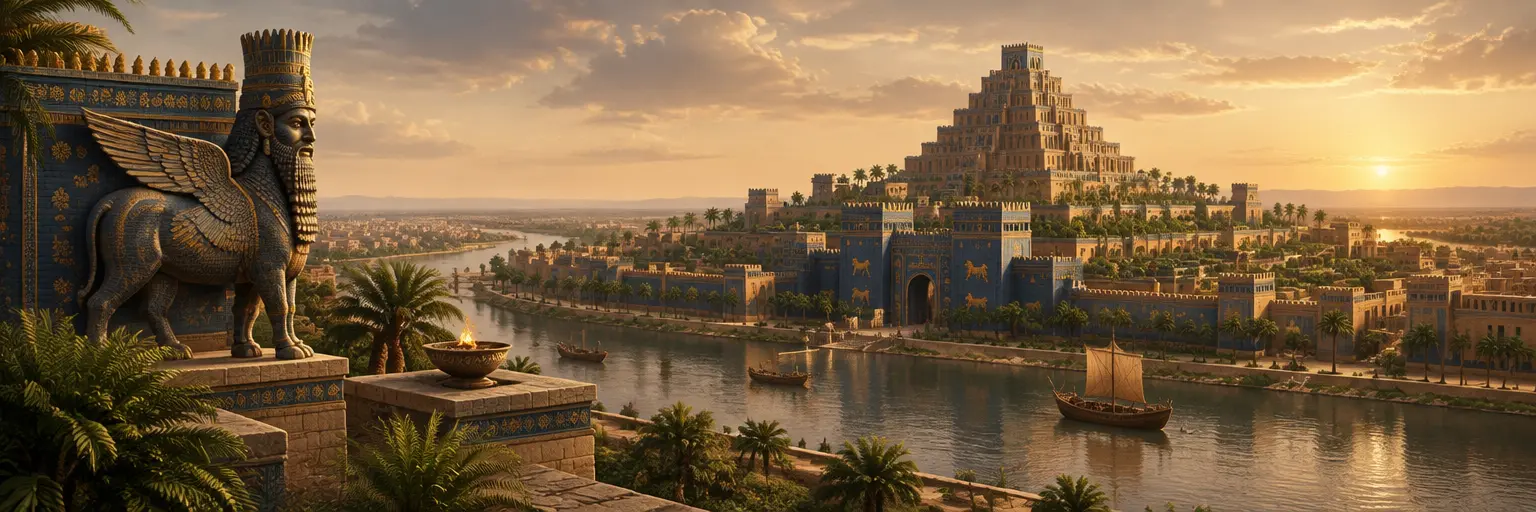
Step back into the glittering heart of the sixth-century BCE, where the Neo-Babylonian Empire rose to legendary splendor under kings like Nebuchadnezzar II. This era was not merely about military conquest—it was a golden age of monumental architecture, astronomical science, and artistic refinement that forever altered the cultural map of the Ancient Near East. From the fabled Ishtar Gate with its vibrant glazed bricks and protective deities, to the towering ziggurat of Etemenanki that may have inspired the biblical Tower of Babel, the Babylonians engineered wonders that still echo in modern imagination. Their scholars mapped the stars, dividing the sky into the zodiac and developing advanced mathematics that influenced Greek and Islamic science. In this detailed exploration, discover how cuneiform scribes preserved epic literature like the *Enuma Elish*, while royal inscriptions and legal codes reveal a sophisticated society of trade, justice, and religious devotion.
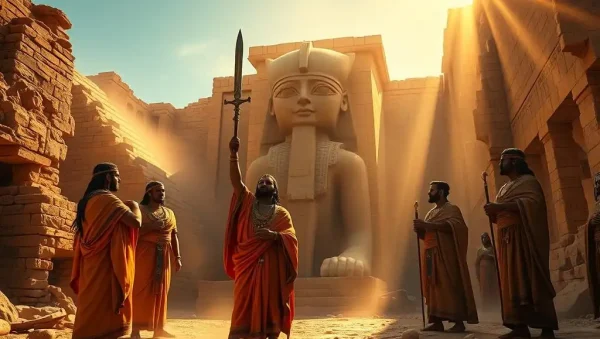
🌟 Explore the Akitu festival Babylonian rituals, a pivotal event showcasing royal ideology and religious symbolism. This article delves into the ritual…
Read article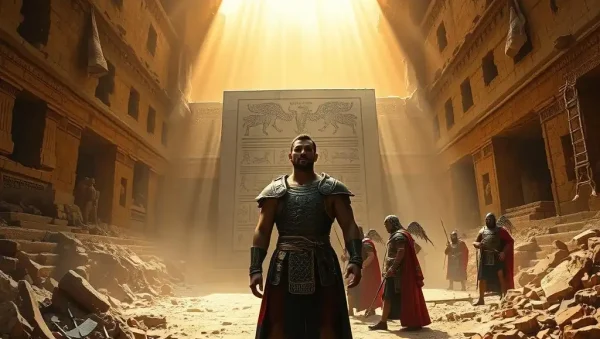
🚀 Explore Belshazzar’s military campaigns timeline, revealing his pivotal role as co-regent and military commander during the late Neo-Babylonian era. This detailed…
Read articleWelcome to ArchaeologyHub.org’s dedicated deep-dive into the Neo-Babylonian Empire, a period of stunning revival and innovation that flourished between 626 and 539 BCE. This subcategory under Civilizations & Cultures focuses on how Nebuchadnezzar II and his successors transformed Babylon into the world’s most dazzling metropolis. Here, you’ll uncover the empire’s architectural marvels, legal reforms, astronomical breakthroughs, and religious life, all grounded in archaeological evidence from sites like Babylon, Borsippa, and Sippar. Whether you’re a student, traveler, or history enthusiast, this section provides a richly layered narrative that connects cuneiform tablets to monumental ziggurats, revealing why this era remains a cornerstone of Near Eastern heritage.
Step into the heart of Neo-Babylonian urban planning, where mudbrick and glazed brick reached unprecedented artistic heights. The empire’s signature achievement was the Ishtar Gate, adorned with vivid blue enameled tiles depicting dragons and bulls, which archaeologists reconstructed from tens of thousands of fragments. You’ll also explore the Etemenanki ziggurat, a seven-tiered tower often linked to the biblical Tower of Babel, and the elusive Hanging Gardens—classical sources describe terraced greenery, yet no definitive excavation has confirmed its location, sparking ongoing scholarly debate.
Expect detailed site plans, reconstruction drawings, and artifact profiles from the German Oriental Society’s 19th-century digs and modern remote sensing surveys. This section explains how massive city walls, canal systems, and the Euphrates-spanning bridge functioned as both practical infrastructure and symbolic assertions of divine kingship. By cross-referencing Babylonian chronicles with stratigraphic layers, you’ll learn how the city’s layout mirrored cosmological beliefs, with sacred processional ways designed for the New Year’s festival, reinforcing the king’s role as Marduk’s earthly steward.
Delve into the empire’s bureaucratic genius through its vast textual corpus, primarily written on clay tablets in Akkadian cuneiform. The Neo-Babylonian legal documents—contracts, loans, marriage agreements, and court records—are among the best-preserved in antiquity, offering an unprecedented window into daily economic and social life. The famous Stele of Nabonidus and royal inscriptions reveal how kings managed temple estates, tax collection, and workforce organization, while the Murašû archive from Nippur shows private business families thriving under imperial oversight.
This subcategory highlights the role of scribal schools in maintaining continuity with older Babylonian traditions, including the revival of Sumerian literary texts. You’ll find transliterations, translations, and paleographic analyses that demonstrate how legal penalties, property rights, and inheritance laws evolved. Moreover, the Edict of Amel-Marduk and the reign of Nabonidus, who controversially elevated the moon god Sin, provide fascinating case studies of how royal religious policy could clash with elite priestly classes, reshaping administrative priorities and temple funding.
Witness the birth of systematic observational astronomy, where Neo-Babylonian scholars compiled meticulous records of planetary movements, lunar eclipses, and solstices. The Astronomical Diaries—fragmentary clay tablets spanning centuries—form the backbone of this research, enabling modern scientists to date historical events with remarkable precision. These observations laid the groundwork for the zodiac, the 360-degree circle, and predictive mathematical models that later influenced Greek and Islamic science.
Explore how Babylonian arithmetic used a sexagesimal (base-60) system, still visible in our clocks and angles, and how they solved quadratic equations without algebraic notation. The subcategory includes digitized tablets from the British Museum and the Vorderasiatisches Museum, with interactive visualizations of star catalogs. You’ll also learn about the lunisolar calendar, including the intercalation of leap months, which was crucial for scheduling agricultural festivals and tax payments—an intellectual achievement that underscores the empire’s blend of empirical rigor and religious devotion.
Immerse yourself in the spiritual universe where Marduk reigned supreme as the cosmic creator, and every major city maintained lavish temples as economic and ritual hubs. The Esagila compound in Babylon housed Marduk’s cult statue, while the Akitu festival reenacted the god’s victory over chaos, reinforcing civic unity. This section details temple inventories, sacrificial practices, and the role of priestesses and diviners who interpreted omens from liver readings and celestial phenomena.
You’ll discover how royal ideology merged with theology: kings like Nebuchadnezzar II claimed to be ‘chosen of Marduk,’ commissioning votive inscriptions that justified their conquests as divinely sanctioned. Archaeological finds—from votive figurines to foundation deposits—illustrate how households practiced personal piety, venerating protective deities like Gula and Shamash. Comparative mythology sections link Babylonian creation epics, such as the Enûma Eliš, to later biblical narratives, highlighting shared motifs of flood, divine council, and temple building, which enrich our understanding of cultural exchange across the ancient Near East.
Uncover the engines of Neo-Babylonian prosperity through its vast trade networks, which connected the Persian Gulf to the Mediterranean via caravan routes and riverine transports. The empire exported barley, dates, wool, and textiles, while importing metals, timber, and luxury stones from Anatolia and the Levant. Detailed records from the Egibi family archives show how entrepreneurial households managed real estate, agricultural leases, and credit operations, acting almost like early banks that financed long-distance commerce.
Examine the material culture of ordinary citizens—from pottery and jewelry to cooking tools and toys—excavated from residential quarters in Babylon and Kish. This subcategory reconstructs urban diets, with evidence for beer brewing, fish processing, and date cultivation, alongside health practices derived from skeletal and botanical analyses. You’ll also explore social stratification: free citizens, temple dependents, and enslaved persons, whose labor underpinned construction projects and large-scale irrigation works. By pairing textual evidence with bioarchaeological data, this section paints a vivid, human picture of life under a powerful imperial state.
The Neo-Babylonian Empire (626–539 BCE) is celebrated for its monumental architecture, particularly the Ishtar Gate and Etemenanki ziggurat, as well as its revival of ancient legal and scribal traditions. It also achieved major advances in astronomy and mathematics, with systematic celestial records that underpinned later scientific developments.
Classical writers described the Hanging Gardens, but no contemporary Babylonian text or archaeological trace confirms their existence. Some scholars suggest they may have been in Nineveh, built by the Assyrian king Sennacherib, or purely mythic. The debate continues among historians and archaeologists.
Babylonian astronomers created detailed almanacs of planetary positions and eclipses, which Greek astronomers like Hipparchus used. Their sexagesimal base-60 system shaped time and angle measurements. Many zodiac constellations and astrological methods trace directly back to Neo-Babylonian observational practices.
The primary script was Akkadian cuneiform, written on clay tablets, while Aramaic increasingly became the spoken lingua franca for trade and legal matters. Scribes preserved Sumerian for literary and ritual texts. Thousands of surviving tablets record contracts, letters, and royal decrees in these languages.
Major collections include the Pergamon Museum (Berlin) with its reconstructed Ishtar Gate, the British Museum (London) holding the Cyrus Cylinder and astronomical diaries, and the Iraq Museum (Baghdad) featuring excavation finds from Babylon and Ur. Many items are also digitized online through museum portals for virtual study.







