The Kition Necropolis, Cyprus: Phoenician Burials and Cultural Syncretism
🌟 Discover the Kition Necropolis in Cyprus, where Phoenician burials reveal a fascinating blend of cultural influences. This site exemplifies ancient syncretism,…
Read article
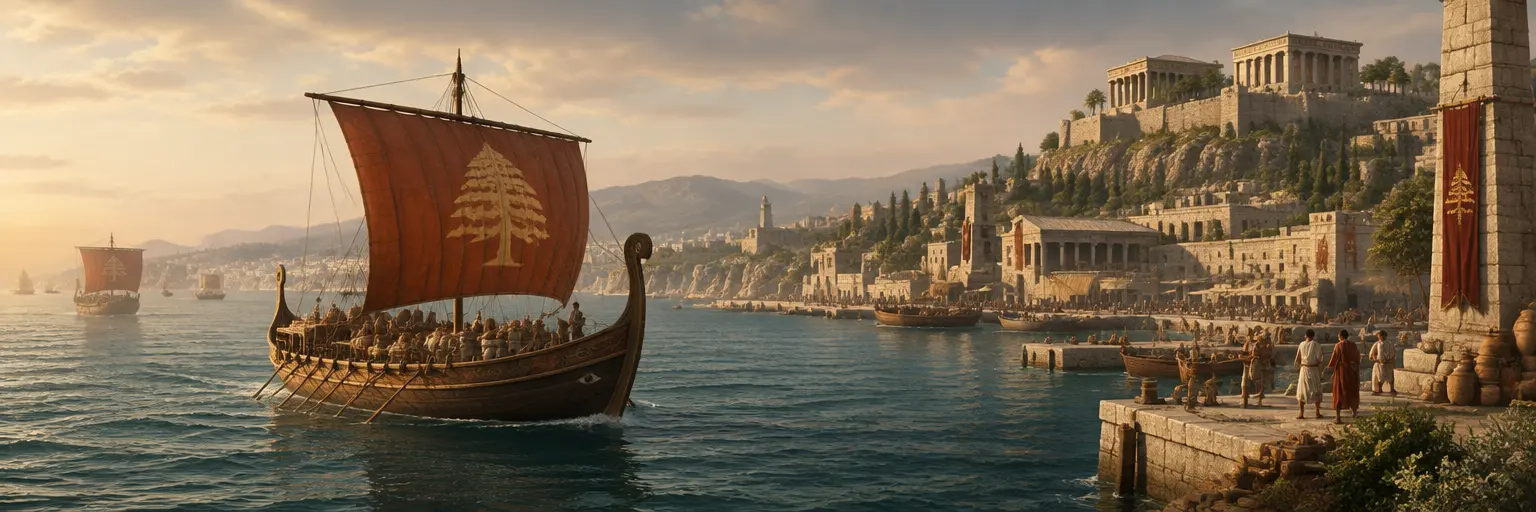
Delve into the seafaring legacy of the Phoenicians, the ancient Mediterranean’s master navigators and traders whose maritime expansion reshaped commerce, culture, and communication across three continents. From their coastal city-states like Tyre and Sidon, these intrepid explorers ventured beyond the Pillars of Hercules, establishing colonies from Carthage to Cadiz and spreading the revolutionary alphabet that underpins Western writing. Through detailed artifact profiles, shipwreck analyses, and harbor excavations, ArchaeologyHub.org illuminates how Phoenician shipbuilding, purple-dye production, and far-reaching trade networks connected the Aegean, Levant, and Iberian worlds. Discover how their hegemony of the waves influenced everything from metalworking to mythology, and how recent underwater archaeology is rewriting our understanding of their voyages, possibly even reaching Britain’s tin mines and Africa’s west coast. Uncover the strategic brilliance behind their monopoly on luxury goods, the cultural exchanges sparked by their diaspora, and the enduring impact of their crafts, religion, and political organization on later empires.
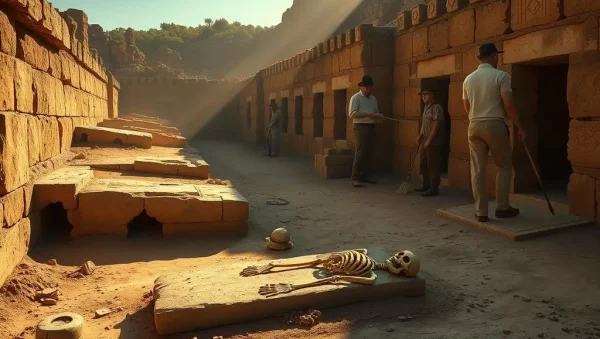
🌟 Discover the Kition Necropolis in Cyprus, where Phoenician burials reveal a fascinating blend of cultural influences. This site exemplifies ancient syncretism,…
Read article
😊 Explore how Phoenician stereotypes in ancient literature shaped perceptions of this influential civilization, contrasting myth and reality through archaeological insights, revealing…
Read articleDive into the world of the Phoenicians, the legendary seafarers of the Ancient Mediterranean whose maritime expansion shaped commerce, culture, and communication across three continents. This subcategory on ArchaeologyHub.org explores their city-states, shipbuilding ingenuity, and the far-flung colonies that spread their alphabetic writing and purple-dyed textiles. From the bustling harbors of Tyre and Sidon to the Atlantic outpost of Gadir, uncover how a small, coastal people became the undisputed masters of the sea. Through artifact profiles, excavation reports, and interpretive analysis, you will trace the networks that connected the Levant with Iberia, North Africa, and beyond, revealing a civilization whose influence echoes in modern letters and trade routes.
Explore the political and economic foundations of Byblos, Sidon, and Tyre, which were never a unified empire but a confederation of fiercely independent maritime hubs. This section clarifies how geography—narrow coastal plains and cedar-rich mountains—drove their reliance on the sea. Expect to learn about the royal tombs, temple complexes, and harbor installations excavated at these sites, which reveal a society organized around trade, craftsmanship, and religious rituals dedicated to deities like Melqart and Astarte. The narrative emphasizes how each city-state competed for dominance, yet shared a common language and cultural identity that facilitated pan-Mediterranean cooperation.
Archaeological evidence from the Late Bronze and Iron Ages shows that Phoenician urban planning prioritized access to natural harbors and defensive promontories. Excavations at Tyre’s causeway and Sidon’s underwater ruins demonstrate advanced engineering for mooring fleets and storing goods such as cedar timber, glass, and metalwork. By studying the distribution of Phoenician pottery and inscriptions across the region, you will understand how these city-states acted as the connective tissue between the Egyptian, Hittite, and later Greek worlds, making them indispensable middlemen in ancient globalism.
Uncover the technological marvels of the Phoenician fleet, from the robust merchant galleys to the swift bireme warships. This H3 focuses on the construction techniques using cedar planks, mortise-and-tenon joints, and the revolutionary addition of a keel for stability. You will also examine navigational aids, including the use of the North Star (Phoenician Star) and celestial observations, which allowed crews to sail beyond sight of land. The legendary expedition commissioned by Pharaoh Necho II, which allegedly circumnavigated Africa in the 6th century BCE, is analyzed here using both textual sources and modern experimental archaeology.
Expect to see diagrams reconstructed from shipwrecks like the 14th-century BCE Uluburun vessel, which carried Phoenician-style cargo, and the later Ma‘agan Mikhael ship. These artifacts reveal sophisticated rigging, steering oars, and hull designs that balanced speed and capacity. The subcategory also discusses the development of the rostrum (ram) for naval warfare, which gave Phoenician fleets a competitive edge against Greek rivals. By understanding these innovations, readers gain insight into how a population of perhaps 200,000 could project power across 10,000 miles of coastline.
Trace the flow of commodities—silver from Iberia, tin from Britain, ivory from Africa, and spices from Arabia—that passed through Phoenician hands. This section uses excavation records from trading posts like Motya, Carthage, and Kition to illustrate how they established emporia (trade enclaves) rather than territorial colonies. Critical here is the Phoenician alphabet, a 22-letter consonantal system that streamlined record-keeping and later became the ancestor of Greek, Latin, and Arabic scripts. You will find incised inscriptions, such as the sarcophagus of Ahiram, that demonstrate the transition from pictographic writing to this efficient phonetic tool.
Archaeological evidence from shipwrecks and land sites shows standardized weights, amphorae, and ingot shapes used across the network, indicating a sophisticated system of contract enforcement and quality control. The distribution of Phoenician goods in Etruscan tombs and Sardinian nuraghe indicates deep penetration into non-Semitic markets. Moreover, the translation of Phoenician texts, like the Nora Stone in Sardinia, provides rare direct testimony of their commercial legal practices and religious dedications, revealing a people who prized pragmatism and cross-cultural adaptability.
Analyze the rise of overseas settlements that began in the 9th century BCE as pressure from Assyrian conquests pushed Phoenicians westward. This H3 examines the strategic selection of sites like Utica, Lixus, and Gadir, emphasizing their access to silver and Atlantic trade routes. Most notably, Carthage (Qart-Hadasht, “New City”) is shown through excavations of its tophet (child sacrifice site) and circular harbors to have evolved from a modest colony into a hegemonic power. You will learn how these settlements maintained ties to the motherland while developing autonomous governments and military capabilities.
Excavations at Carthage’s Punic ports, with their naval and commercial basins, reveal advanced customs houses and ship sheds that managed vast fleets. The subcategory also discusses the role of colonialism in spreading Phoenician funerary customs, such as rock-cut tombs and anthropoid sarcophagi, which blended local traditions with Levantine practices. By mapping the colonial footprint, readers see how demographic pressure and trade disruption, not just adventure, motivated expansion—providing a nuanced view of ancient globalization and its parallels to modern diaspora networks.
Examine the material culture left behind, from purple-dyed textiles and ivory carvings to glass amulets and metal bowls. This section showcases artifact profiles from museum collections and ongoing excavations, including the Nimrud ivories and the Baal of Marseille statue. You will understand the symbolic importance of the Phoenician pantheon, with particular focus on the cult of Tanit and Baal Hammon at Carthage, which is documented through thousands of votive stelae. Additionally, the subcategory details mortuary practices, such as cremation urns and the unique “tophet” controversies, using osteological and epigraphic evidence to offer balanced interpretations.
Pottery typologies, such as the “red slip” ware and bichrome jugs, serve as chronological markers for archaeologists dating sites from Lebanon to Spain. The production of glass beads and head pendants became a signature industry, found as far afield as Central Europe and West Africa, indicating far-reaching trade. Religious festivals, processions, and oracles are reconstructed from texts like the Tale of Wen-Amon and later Roman descriptions. By focusing on objects, this section makes tangible the daily lives, artistic syncretism, and spiritual priorities of a people often overshadowed by their Greek and Roman neighbors.
The decline resulted from a combination of conquest by Neo-Assyrian, Babylonian, and Persian empires, which eroded the independence of Levantine cities, and the rise of Greek and Roman maritime power. The destruction of Carthage in 146 BCE by Rome marked the final end of Phoenician political autonomy, though cultural traits persisted in North Africa and Iberia for centuries.
Classical sources like Herodotus describe Phoenician voyages to the “Cassiterides” (Tin Islands), often identified with Britain or Brittany. While direct evidence is scarce, the presence of Phoenician trade goods in Cornwall and the geographic knowledge required to navigate Atlantic currents suggest plausible, if irregular, voyages. Tin was essential for bronze production, making this trade lucrative but secretive.
The “tophet” cemeteries contain thousands of cremated infant remains, but scholarly debate continues. Some interpret them as evidence of ritual sacrifice to Baal Hammon and Tanit, supported by textual references. Others argue they may be burials of stillbirths or children who died naturally. Recent isotope analyses suggest some infants were indeed sacrificed, but the practice was not universal and likely limited to elite or crisis contexts.
The Phoenician alphabet simplified writing by using about 22 symbols representing consonant sounds, rather than hundreds of pictographic or syllabic signs like Egyptian hieroglyphs or cuneiform. This made literacy easier to learn and use for trade records. Its spread to Greece added vowels, creating the ancestor of most Western alphabets, a monumental legacy.
The archaeological site of Tyre in Lebanon, with its Roman and Phoenician ruins, offers visible harbor structures, a necropolis, and an aqueduct. For a pure Punic experience, Carthage’s Tophet and Antonine Baths in Tunisia are unmatched. For those in Spain, the ruins of Gadir (modern Cádiz) include Phoenician sarcophagi and temple remains, all accessible with informative museum exhibits.







