
The Representation of Phoenicians in Greek and Roman Literature: Stereotypes and Reality

Welcome to ArchaeologyHub.org, your gateway to unlocking the mysteries of the past. Ever wondered if what we think we know about ancient civilizations is actually true? Our exploration of Phoenician stereotypes in ancient literature offers a fascinating glimpse beyond the common narratives, challenging assumptions and revealing the complex reality behind the legends. Dive in and prepare to question everything you thought you knew about this influential culture!
- The Genesis of Phoenician Stereotypes in Early Greek Literature
-
Frequently Asked Questions
- ### What were some common stereotypes of Phoenicians in ancient Greek literature?
- ### How did Roman authors contribute to the stereotyping of Phoenicians?
- ### What is the role of historical context in understanding these stereotypes?
- ### Does archaeological evidence support or contradict the stereotypes found in ancient literature?
- ### Why is it important to critically examine Phoenician stereotypes in ancient literature?
- Final Reflection: Echoes of Ancient Prejudice
- Rediscover the Ancient Phoenicians: Your Journey Begins Now!
The Genesis of Phoenician Stereotypes in Early Greek Literature
Homer's Depiction of Phoenician Traders: Analysis of Iliad and Odyssey Passages
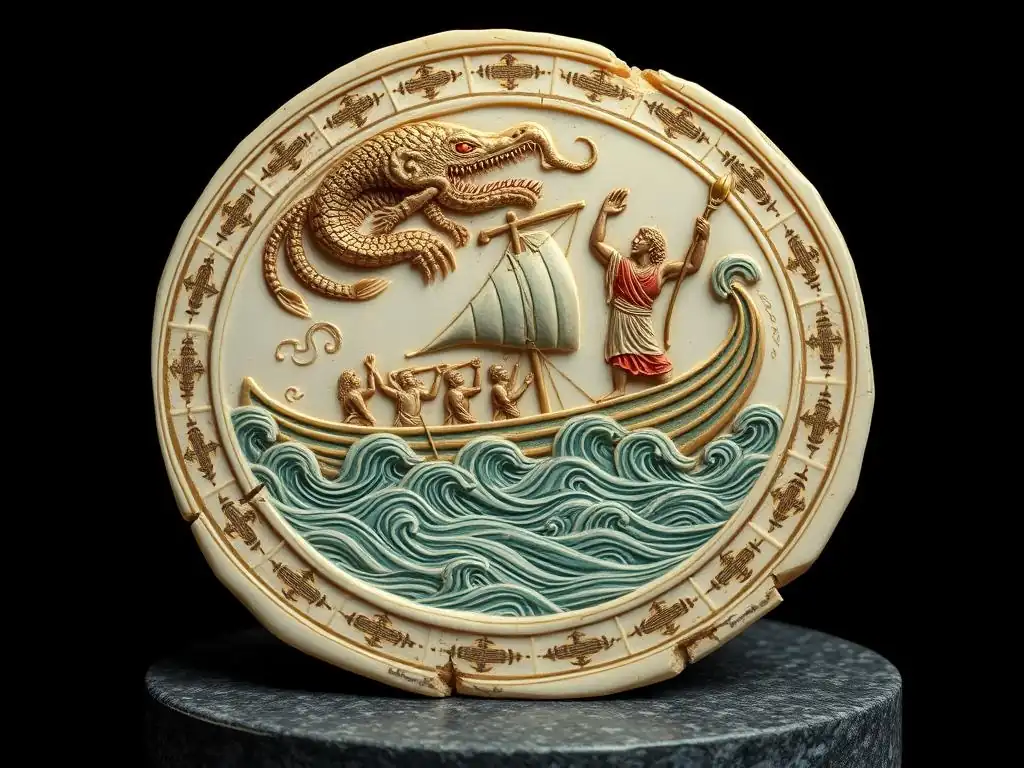
Early Greek literature, particularly the epic poems of Homer, provides some of the earliest and most influential glimpses into the perception of Phoenicians, laying a foundational layer for later Phoenician stereotypes in ancient literature. While the Iliad offers only fleeting mentions, primarily concerning rich gifts and prizes, the Odyssey presents a more detailed, albeit often ambivalent, picture. In the Odyssey, Phoenicians are consistently depicted as skilled mariners and enterprising merchants, their ships laden with "countless trinkets" and "all sorts of wares," underscoring their significant role in the Bronze Age and early Iron Age Mediterranean trade networks.
However, Homer's portrayal is not without its shadows. The Odyssey frequently associates Phoenicians with cunning and, at times, outright treachery. A notable example appears in Book XV, where Eumaeus, Odysseus's loyal swineherd, recounts his childhood abduction by a "crafty Phoenician woman" who conspired with Phoenician sailors to sell him into slavery. This narrative, while perhaps not representative of all interactions, highlights an emerging perception of Phoenicians as individuals capable of shrewd dealings and deceptive practices, contributing significantly to the negative Phoenician stereotypes in ancient literature that would persist for centuries.
The "Phoenician Deceit": Origins in Early Greek Narratives
The concept of "Phoenician deceit" became a recurring motif in early Greek narratives, stemming partly from the competitive nature of trade and partly from cultural misunderstandings. This stereotype was not always based on malice but often on a perceived sharpness in commercial transactions that Greeks might have interpreted as cunning or dishonest. The Phoenicians' reputation for being astute negotiators and their widespread commercial success across the Mediterranean, from the Levant to the Atlantic coasts, likely fueled this perception.
Furthermore, the very nature of maritime trade in antiquity, which often involved high risks and intricate dealings, could easily lend itself to suspicions of trickery. Instances of piracy, though not exclusive to Phoenicians, might also have been conflated with their commercial activities in the Greek imagination. Thus, the "Phoenician deceit" became one of the most enduring Phoenician stereotypes in ancient literature, a shorthand for foreign cunning that contrasted with Greek ideals of straightforwardness, even as Greeks themselves engaged in similar practices.
Maritime Prowess and Commercial Acumen: Recognition and Resultant Suspicion
Despite the emerging negative perceptions, early Greek literature, including Homer, unequivocally recognized the unparalleled maritime prowess and commercial acumen of the Phoenicians. They were the masters of the sea, credited with innovations in shipbuilding, navigation, and long-distance trade. Their vessels regularly traversed vast stretches of the Mediterranean, establishing trading posts and routes that connected disparate cultures and economies, a fact acknowledged even by their competitors. The Greeks themselves adopted many Phoenician technologies and trading practices.
However, this very recognition of their extraordinary abilities often led to suspicion and resentment rather than admiration. The Phoenicians' dominance in lucrative trade routes, their ability to source exotic goods from distant lands, and their seemingly inscrutable foreign customs fostered an "otherness" that bred distrust. Their success was seen as a potential threat to Greek commercial interests, particularly as Greek city-states began their own expansion into the Mediterranean. This duality—acknowledgment of their skill alongside deep-seated suspicion—became a defining characteristic of early Greek Phoenician stereotypes in ancient literature, shaping how future generations would view this influential civilization.
Frequently Asked Questions
### What were some common stereotypes of Phoenicians in ancient Greek literature?
Phoenicians were often portrayed as deceptive traders and pirates. This negative image was likely used to contrast with the perceived virtues of Greek society.
Roman literature built upon Greek stereotypes, focusing on Carthage's perceived treachery during the Punic Wars. This solidified the image of the Phoenician as untrustworthy and prone to deceit.
### What is the role of historical context in understanding these stereotypes?
The rivalry between Greek/Roman powers and Phoenician cities like Tyre and Carthage heavily influenced these depictions. Economic and political competition fueled biased narratives.
### Does archaeological evidence support or contradict the stereotypes found in ancient literature?
Archaeology offers a more nuanced view, revealing Phoenician achievements in trade, navigation, and craftsmanship. This often challenges the purely negative literary portrayals.
### Why is it important to critically examine Phoenician stereotypes in ancient literature?
Understanding the biases within these texts helps us avoid perpetuating inaccurate representations of Phoenician culture. It encourages a more balanced and evidence-based historical perspective.
Final Reflection: Echoes of Ancient Prejudice
The exploration of Phoenician representation in Greek and Roman literature reveals that historical narratives are rarely objective mirrors of reality. The stereotypes perpetuated centuries ago, though rooted in specific socio-political contexts, continue to resonate, reminding us of the enduring power of biased narratives to shape perceptions and fuel prejudice, even across vast stretches of time.
The impact of these ancient prejudices is undeniable, influencing not only historical understanding but also the very fabric of cultural identity. Understanding the origins and perpetuation of these stereotypes is crucial for fostering a more nuanced and equitable understanding of the past and present. History is written by the victors,
a sentiment often attributed to Winston Churchill, underscores the inherent bias present in historical accounts and the importance of critically examining dominant narratives.
As we conclude this journey through the distorted lens of Greek and Roman portrayals of the Phoenicians, I invite you to reflect on the narratives you encounter daily. Question the sources, challenge the assumptions, and strive to see beyond the surface. Only by actively dismantling the echoes of ancient prejudice can we build a future where understanding and empathy prevail over stereotype and misrepresentation.
Rediscover the Ancient Phoenicians: Your Journey Begins Now!
Thank you for diving deep into the world of Phoenician representation! We hope you've found this exploration of their portrayal in Greek and Roman literature insightful. Now, it's time to take your newfound knowledge and turn it into action.
Here's how you can continue your adventure:
- Delve deeper: Visit your local library or university database and explore primary source materials from the Greek and Roman periods, comparing literary depictions with archaeological evidence of Phoenician culture.
- Share your insights! Discuss this article with friends or colleagues interested in ancient history, sparking conversations about the power of historical narratives and biases.
- Uncover hidden stories! Research modern archaeological digs in former Phoenician territories, and share new discoveries and what insights you find on social media using #PhoenicianArchaeology and tag @ArchaeologyHub.
What surprising discovery about the Phoenicians will you uncover next?