Stelae as Historical Documents: Chronicling CityState Events and Royal Deeds in Stone
🌟 Ancient stelae city state history offers invaluable insights into royal deeds and civic events, serving as enduring stone records. This article…
Read article
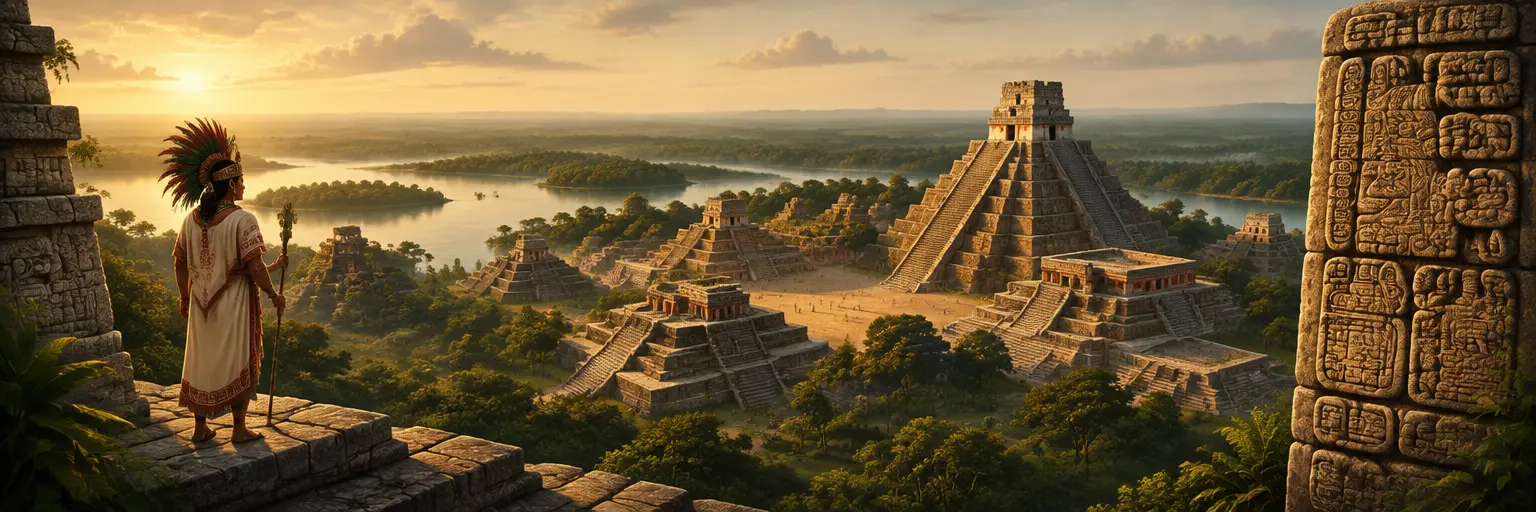
Dive into the heart of the Classic Maya Civilization (c. 250–900 CE), where the lush lowlands of the Americas bore witness to a dazzling constellation of independent city-states—from Tikal’s soaring temples to Palenque’s intricate palaces. This detailed study explores how these polities wove a shared identity through hieroglyphic writing, the most sophisticated script ever developed in the pre-Columbian New World. Uncover the political dynasties, ritual warfare, and astronomical mastery etched into limestone stelae and ceramic vessels, as we decode the glyphs that chronicled royal lineages, cosmic events, and territorial ambitions. With archaeological insights from recent excavations, this entry reveals how Maya kings used monumental art and calendrical cycles to legitimize power, while scribes preserved a rich intellectual legacy that still resonates today. Perfect for enthusiasts of ancient history and epigraphy, here you’ll trace the rise and collapse of iconic centers like Copán and Calakmul, and learn why the Classic Maya remain a pinnacle of urban sophistication in the pre-industrial world.
🌟 Ancient stelae city state history offers invaluable insights into royal deeds and civic events, serving as enduring stone records. This article…
Read article
🌟 Explore the intricate syntax of Maya monument dedication glyphs, revealing how these glyphic phrases encode ritual, political, and cultural significance within…
Read articleWelcome to ArchaeologyHub.org’s deep dive into the Classic Maya Civilization, focusing on its intricate city-states and revolutionary glyphic writing. This subcategory unravels the political, social, and intellectual achievements of the Maya during the Classic Period (c. 250–900 CE), a time when dozens of autonomous urban centers flourished across the Yucatán Peninsula, Guatemala, Belize, and Honduras. Here, you will discover how hieroglyphic inscriptions, carved into stelae, altars, and temple walls, serve as primary sources for reconstructing dynastic histories, alliances, and warfare. Our curated articles blend archaeological evidence with epigraphic breakthroughs, offering both beginners and scholars a rich, SEO-optimized resource to understand the Maya’s enduring legacy.
Classic Maya civilization was not a unified empire but a mosaic of competing city-states—from Tikal and Calakmul to Palenque and Copán—each ruled by a divine king (k’uhul ajaw). These polities engaged in complex diplomatic marriages, tribute systems, and ritual warfare, as revealed through hieroglyphic stairways and carved panels. Archaeological surveys show that urban layouts centered around ceremonial plazas, ballcourts, and royal palaces, reflecting cosmological order. Learn how excavations at Dos Pilas and Caracol have reshaped our understanding of shifting hegemonic powers, where smaller states often allied or rebelled against giant rivals.
For visitors, expect detailed case studies of emblem glyphs—unique city identifiers—that epigraphers use to map political geography. We also analyze site hierarchies, explaining how secondary centers like Yaxchilán maintained autonomy under larger overlords. By comparing architectural styles and ceramic assemblages, you’ll grasp how material culture mirrors political tension and resilience. This section is ideal for students seeking clear explanations of Maya statecraft without oversimplification, enriched by recent lidar discoveries that reveal hidden causeways and defensive walls.
The Maya developed the most sophisticated writing system in the pre-Columbian Americas, combining logograms and syllabograms to record histories, rituals, and astronomical observations. Our subcategory demystifies the syllabary of roughly 800 signs, showing how scholars like Yuri Knorozov and Linda Schele cracked the code. You’ll learn about primary texts such as the Dresden Codex and monumental inscriptions that document accession ceremonies, bloodletting rituals, and calendrical cycles. We highlight how glyphs appear not only on stone but also on painted ceramics and jade artifacts, offering a broader corpus for linguistic analysis.
Expect accessible tutorials on reading emblem glyphs, titles, and verb phrases, with annotated examples from Tikal’s Temple IV lintels. We also explore the intersection of writing and astronomy—how glyphs record lunar series and Venus tables—demonstrating that writing was inseparable from elite knowledge. For beginners, we provide a glossary of common glyphic elements, while advanced readers will appreciate debates on dialectical variation across regions. This content is crafted to boost search visibility for terms like "Maya epigraphy," "glyph decipherment," and "hieroglyphic texts."
Classic Maya cities are famed for towering temple-pyramids, expansive plazas, and intricate palace complexes that functioned as political and religious hubs. Our articles examine construction techniques—from limestone block carving to corbeled vaults—and how urban planning mirrored celestial alignments. For example, at Chichen Itza (late Classic), the pyramid of El Castillo aligns with equinox shadows, while Palenque’s Palace features a unique observation tower. Excavations have uncovered residential groups for elites and commoners, challenging old assumptions about empty ceremonial centers.
Dive into recent studies of water management, including reservoirs and channel systems at Tikal that sustained large populations. We also explore how stucco masks and hieroglyphic benches adorned buildings, reinforcing royal ideology. Comparative analyses with Teotihuacan influence reveal long-distance interactions, while radiocarbon dating refines construction chronologies. This section is perfect for architecture enthusiasts and archaeologists seeking data on urban density, labor organization, and the symbolic meanings of cardinal orientation.
Maya inscriptions functioned as political propaganda, yet they remain our best source for dynastic histories. This subcategory features detailed timelines of ruling lineages, such as the Jaguar dynasty of Yaxchilán and the Snake dynasty of Calakmul. We interpret texts that describe capture events, star wars (aligning with Venus), and accession rituals, cross-referencing them with settlement patterns to infer real conflicts. For instance, the Hieroglyphic Stairway at Copán recounts 15 kings, providing a genealogical backbone for understanding political instability.
Readers will find biographies of notable rulers like Pakal the Great and Yax K’uk’ Mo’, based on tomb artifacts and inscribed sarcophagi. We also discuss the collapse of classic polities—whether due to drought, warfare, or systemic failure—as recorded in the last dated monuments (e.g., Toniná’s 909 CE stela). By linking epigraphy with paleoclimate data, our content offers a nuanced narrative of resilience and decline. This section is keyword-rich for searches like "Maya dynastic sequence," "hieroglyphic warfare," and "Classic Maya collapse."
Beyond monumental stone, the Maya expressed their world through polychrome ceramics, jade mosaics, and codices, many bearing primary texts that narrate myths and royal exploits. Our subcategory examines the codex-style pottery from the Petén region, illustrating scenes from the Popol Vuh (though post-Classic, its roots are here) and bloodletting ceremonies. We analyze how painted glyphs on vases name their owners and intended purposes, offering glimpses into courtly life. For example, the Princeton Vase shows a ruler’s encounter with a mountain spirit, annotated with short captions.
Expect galleries of artifact profiles, from carved shell pendants to obsidian blades, each with epigraphic notes. We also explore how scribes were elite specialists, signing their works—rare in world history—as seen on the Fenton Vase. Comparisons with Maya wall paintings (like Bonampak) reveal narrative sequences involving captives and dancers, where glyphs identify participants. This section serves art historians and hobbyists alike, with high-quality images and downloadable catalogs. SEO terms include "Maya ceramic glyphs," "codex style pottery," and "Maya court art."
The Classic Maya integrated astronomical observations into their writing, using Long Count, Tzolk’in, and Haab’ calendars. Our content explains how glyphic numerals (bars and dots) recorded dates with precision, as seen in the Copán Altar Q or Quiriguá Stela C. We detail the Maya view of time as cyclical, with prophecies tied to period endings (katun, baktun). Advanced articles discuss eclipse tables in the Dresden Codex and how rulers claimed astronomical knowledge to legitimize power. For example, the Xultun murals show astronomical notations that predate compiled codices.
Readers will learn to read calendar glyphs step-by-step, including Initial Series inscriptions and distance numbers. We also explore the 7200-day k’atun celebrations and how they were commemorated in stone. By linking glyphs with archaeoastronomy, we show how buildings were oriented to solstices and lunar standstills. This section is authoritative for "Maya calendar tutorial," "Long Count decipherment," and "Pre-Columbian astronomy." Whether you’re a student or an enthusiast, you’ll leave with a solid grasp of Maya timekeeping as recorded in their spectacular script.
Primary sources include monumental stelae, lintels, hieroglyphic stairways, and painted pottery. Smaller portable objects like jade celts and bone pins also carry texts. Among the most famous is the Dresden Codex, a folded bark-paper book from the later period. Excavations at sites like Tikal, Copán, and Palenque have yielded hundreds of inscribed monuments that epigraphers meticulously photograph and transcribe.
City-states were autonomous polities, each with a divine king (k’uhul ajaw) who served as political and religious leader. They engaged in alliances, tribute extraction, and dynastic marriages. Major centers like Calakmul and Tikal competed for dominance, forming networks of vassal states. Smaller cities maintained local autonomy but often had to honor overlord demands, as recorded in glyphic narratives.
The term was coined by early European explorers because the script visually resembled Egyptian hieroglyphs, with figural and abstract signs. However, Maya writing is a unique logo-syllabic system, where signs represent entire words (logograms) or syllables (syllabograms). Modern scholars prefer Maya script or glyphic writing, but the traditional term remains popular in literature.
They used several interlocking calendars: the 260-day Tzolk’in (ritual), the 365-day Haab’ (solar), and the Long Count for absolute dating. The Long Count counts days from a mythological creation date (3114 BCE). Together, these permitted precise tracking of festivals, agricultural cycles, and historical events, all recorded in glyphic form.
Archaeologists provide context by excavating monuments and dating strata, while epigraphers analyze the textual content. For example, a stela found in situ may be cross-referenced with ceramic chronologies. Recent collaborations also use 3D scanning and reflectance transformation imaging to reveal eroded glyphs, enabling new readings. This synergy yields richer historical reconstructions.







