
The Syntax of Dedication: Analyzing Glyphic Phrases on Maya Monuments in CityStates

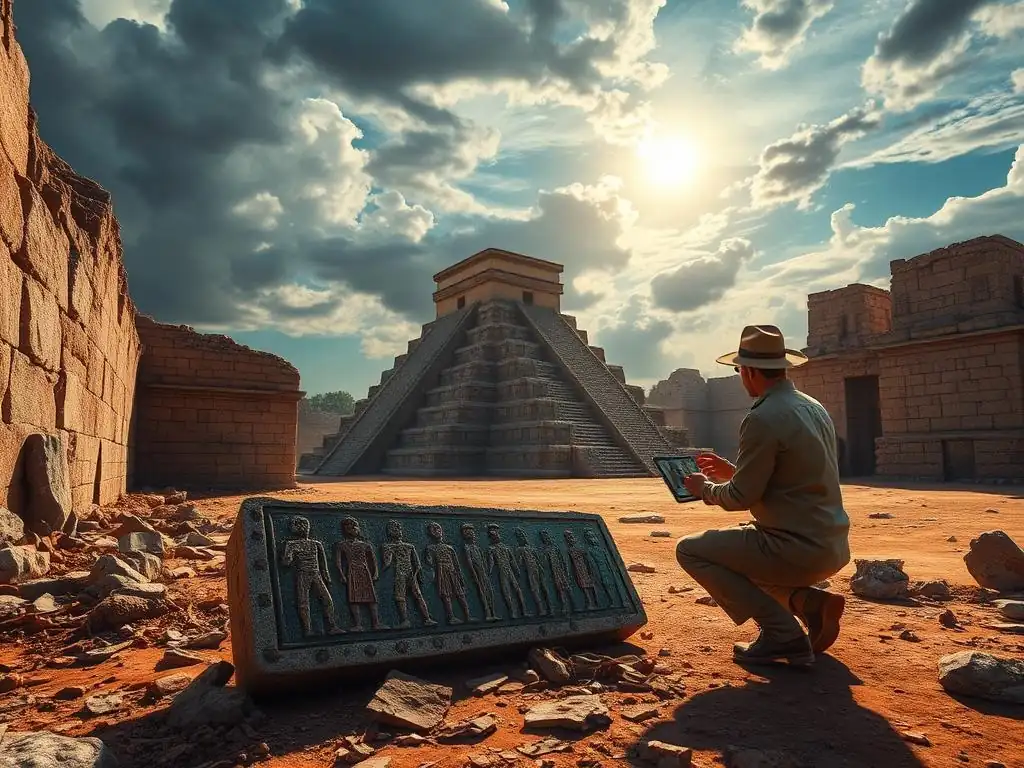
Welcome to ArchaeologyHub.org, your portal to the past! Ever wondered how ancient Maya rulers truly celebrated the completion of monumental structures? Our detailed exploration of Maya monument dedication glyphs unveils the intricate syntax used to mark these pivotal moments in city-state history. Prepare to decipher the secrets etched in stone and uncover the stories these glyphs tell. What hidden messages are waiting to be discovered? Dive in and explore the fascinating world of Maya civilization!
- Introduction: Unveiling the Significance of Maya Monument Dedication Glyphs
- Decoding the Language of Dedication: An Overview of Maya Glyphic Script
- Focus on Dedication Glyphs: Identifying Key Phrases and Their Meanings
- Case Studies: Analyzing Dedication Glyphs from Specific Maya City-States
- The Syntax of Dedication: Exploring Grammatical Patterns and Variations
- The Social and Political Implications of Dedication Glyphs
- Methodological Considerations: Approaches to Deciphering Maya Dedication Glyphs
- Conclusion: The Enduring Legacy of Maya Monument Dedication Glyphs
-
Frequently Asked Questions
- ### What are Maya monument dedication glyphs, and why are they important to archaeologists?
- ### Where on a Maya monument are dedication glyphs typically found?
- ### What kind of information can be gleaned from studying Maya monument dedication glyphs, according to ArchaeologyHub.org?
- ### What are some of the key glyphic elements or phrases commonly found in Maya monument dedication inscriptions?
- ### How does the analysis of Maya monument dedication glyphs contribute to our understanding of Maya civilization's city-states?
- Final Reflection: Echoes of Dedication in Stone
- Unearth Your Inner Archaeologist!
Introduction: Unveiling the Significance of Maya Monument Dedication Glyphs
The Corpus of Maya Hieroglyphic Inscriptions and the Study of Classic Maya Civilization
The study of Classic Maya civilization has been profoundly transformed by the decipherment of its hieroglyphic writing system, which provides an unparalleled window into the political, social, and religious lives of ancient Maya city-states. The vast corpus of Maya hieroglyphic inscriptions, found on stelae, altars, lintels, panels, ceramics, and murals, serves as a primary source for understanding this complex society.
These texts, spanning from roughly 250 to 900 CE, record dynastic histories, ritual performances, astronomical observations, and, crucially, the dedication of monumental structures and objects. Scholars like Linda Schele, David Freidel, and Stephen Houston have been instrumental in unlocking the secrets held within these intricate glyphs, revealing a sophisticated intellectual tradition.
This extensive epigraphic record allows researchers to reconstruct chronologies, identify key historical figures, and delineate the intricate relationships between various Maya polities. The focus on Maya monument dedication glyphs is particularly illuminating, as these specific phrases often mark significant events in the life of a ruler or a city.
They provide direct evidence of the rituals performed to consecrate new constructions or celebrate the completion of a major undertaking, offering insights into the symbolic power invested in these public displays. Understanding the precise syntax and semantics of these dedication phrases is essential for a comprehensive interpretation of Classic Maya political theology and public art.
Understanding the Context: Maya City-States and Their Monumental Landscape
Classic Maya civilization was characterized by a network of independent city-states, each ruled by a k'uhul ajaw (divine lord) and vying for regional influence. Major centers like Tikal, Palenque, Copán, and Calakmul developed unique architectural styles and epigraphic traditions, yet shared a common cultural foundation.
The monumental landscape of these city-states was not merely functional; it was imbued with symbolic meaning, serving as a stage for royal rituals, public ceremonies, and the display of political power. Stelae, altars, temples, and palaces were not just buildings or sculptures; they were active participants in the sociopolitical fabric, often consecrated through elaborate rituals.
The act of dedicating a monument, whether a newly carved stela or a grand temple, was a profound event, signifying the completion of a significant project and its integration into the sacred landscape of the city. These Maya monument dedication glyphs served as an enduring record of such events, legitimizing the ruler's authority and connecting the present reign to a mythical past. The selection of specific locations for monuments, their iconography, and the accompanying dedication texts collectively communicated complex messages to both the elite and common populace, reinforcing the cosmic order and the ruler's place within it.
Decoding the Language of Dedication: An Overview of Maya Glyphic Script
Key Components of Maya Glyphs: Logograms and Syllabograms
The Maya hieroglyphic script is a logosyllabic system, meaning it combines logograms (symbols representing entire words or concepts) with syllabograms (symbols representing phonetic syllables, typically a consonant-vowel combination). This dual nature allows for significant flexibility and sometimes redundancy in writing, where a word can be spelled purely phonetically, purely logographically, or through a combination of both. For instance, the word for "jaguar," balam, could be written with a logogram for jaguar, or phonetically as ba-la-m(a), or even a combination. This intricate system allowed for the precise recording of historical events and ritual acts.
Syllabograms, numbering around 150-200, are crucial for phonetic complements that clarify logogram readings or spell out grammatical affixes. Logograms, on the other hand, number in the hundreds and represent a vast lexicon of nouns, verbs, and adjectives. The careful arrangement of these components within a glyph block, often read from left to right, top to bottom, is fundamental to deciphering the Maya monument dedication glyphs. Understanding whether a glyph functions as a logogram or a syllabogram is the first step in unlocking the meaning of these ancient inscriptions.
The Structure of Maya Glyphic Phrases: Verb-Object-Subject (VOS) and Beyond
While the Classic Maya language often exhibits a Verb-Object-Subject (VOS) word order in its basic declarative sentences, the syntax of monumental inscriptions, especially Maya monument dedication glyphs, can be more complex and varied. Many dedication phrases begin with a date, often expressed in the Long Count calendar, followed by a Calendar Round date, anchoring the event precisely in time. This temporal information typically precedes the verbal clause describing the action. For instance, a common structure might be: Date + Verb + Object + Agent (ruler's name) + Associated Title.
Beyond the basic VOS, Maya monumental texts frequently employ various grammatical structures, including passives, antipassives, and nominalized clauses, to emphasize different aspects of an event or agent. For example, a dedication might state that a monument "was set up" by a ruler, using a passive construction to highlight the monument itself.
The use of specific prepositions, directional indicators, and relational nouns further refines the meaning, detailing where an event occurred or how an object relates to a person or place. Analyzing these syntactic nuances is critical for accurately interpreting the precise ritual or historical act encoded in Maya monument dedication glyphs.
Focus on Dedication Glyphs: Identifying Key Phrases and Their Meanings
Common Glyphic Elements in Dedication Texts: "Completion," "Inauguration," and "Dedication"
Within the corpus of Maya monument dedication glyphs, certain recurring phrases and verbal expressions consistently mark the completion, inauguration, or formal dedication of monuments. These phrases are fundamental to understanding the ritual life of Classic Maya city-states. One of the most frequently encountered concepts is that of "completion" or "termination," often conveyed by verbs that signify the ending of a period or a construction phase. These are distinct from verbs denoting the initial placement or setting up of an object.
Another key concept is "inauguration" or "first appearance," which often refers to the initial public display or use of a new monument or structure. This might involve a procession or a ceremony to mark its official entry into the public sphere. Finally, "dedication" itself encompasses a range of actions, from the formal consecration of an object to its ritual "planting" or "setting." These three conceptual categories, while sometimes overlapping in meaning, are often expressed through distinct glyphic verbs and associated nominal phrases, providing a rich vocabulary for the acts of monumental consecration.
The "tz'ap" Verb: Planting, Setting, and the Dedication of Monuments
One of the most pivotal verbs associated with Maya monument dedication glyphs is tz'ap (or ts'ap). This verb, often translated as "to plant," "to set up," or "to erect," refers specifically to the act of placing a stela, altar, or other stone monument in its designated position. Epigraphers have identified its logographic form, often resembling a hand holding a drill or a pole, and its phonetic spellings, such as tz'a-pa or tz'a-AP. The action described by tz'ap is not merely physical; it carries profound ritual significance, embodying the act of rooting the monument into the sacred earth, thereby activating its power and connecting it to the cosmos.
For example, on Tikal Stela 31, a crucial monument detailing the reign of Siyaj Chan K'awiil II, the verb tz'apaj (a past tense form) is used to describe the erection of the stela itself. This verb often takes the monument as its object, followed by the name of the ruler who performed the dedication. The frequent appearance of tz'ap in association with stelae and altars underscores the importance of these vertical markers in the Maya landscape as conduits between the human and divine realms, actively "planted" by the divine lords.
Other Verbs Associated with Dedication Rituals: "och k'ahk'" (entering fire), "uhtiiy" (it happened)
Beyond tz'ap, several other verbs appear frequently in Maya monument dedication glyphs, broadening our understanding of associated rituals. Och k'ahk' (phonetically o-chi K'AHK'), meaning "fire enters" or "to enter fire," describes a crucial consecration ritual involving fire. This verb is often found in contexts where a new structure, such as a temple or a house, is being dedicated, signifying the infusion of life and sacred energy into the building through a fire ceremony. The burning of offerings, such as copal incense, within the newly consecrated space would have been a central component of such a ritual.
Another significant verb is uhtiiy (phonetically u-ti-ya), which translates to "it happened" or "it came to pass." While not exclusively a dedication verb, uhtiiy frequently introduces a clause describing an event, including the dedication of monuments. It functions as a temporal marker, signaling that the subsequent action took place on the specified date. Its presence in dedication texts emphasizes the historical and chronological precision with which the Maya recorded these important events. The combination of these verbs, along with others like pakab' ("to set in place" or "to carve"), paints a comprehensive picture of the multifaceted dedication processes.
Case Studies: Analyzing Dedication Glyphs from Specific Maya City-States
Tikal: Examining Dedication Phrases on Stelae and Altars
Tikal, one of the largest and most powerful Classic Maya city-states, boasts an extensive collection of monumental inscriptions, many of which contain detailed Maya monument dedication glyphs. The city's rulers, such as Jasaw Chan K'awiil I and Yik'in Chan K'awiil, commissioned numerous stelae and altars to commemorate their reigns and significant ritual events.
These monuments often stood in prominent plazas, serving as public records of royal accomplishments and the city's sacral history. The dedication phrases in Tikal's inscriptions frequently combine calendrical information with verbs of "setting" or "planting" the monument, followed by the name and titles of the ruler responsible.
For instance, the dedication texts on stelae at Tikal often follow a pattern of date + tz'apaj (was planted/erected) + monument name + ruler's name. This formulaic approach ensured clarity and reinforced the ruler's role as the agent of monumental creation and consecration. The sheer volume of such dedications across Tikal's long history provides valuable data for tracing changes in royal ideology and the evolution of ritual practices over centuries, from the Early Classic to the Late Classic periods.
Analyzing the Dedication Glyphs on Tikal Stela 31
Tikal Stela 31, erected in 445 CE, is a monumental Early Classic stela that provides crucial insights into the dynastic history and political shifts of Tikal. Its extensive inscription details the life and reign of Siyaj Chan K'awiil II, including his accession and military victories. The Maya monument dedication glyphs on Stela 31 are particularly informative. The text explicitly states the date of the stela's erection, which corresponds to 9.0.10.0.0 1 Ajaw 13 Keh in the Maya calendar.
The key dedication verb here is TZ'AP-aj (tz'apaj), indicating "it was planted" or "it was set up." The inscription then specifies that it was the "stone" (perhaps referring to the stela itself) that was planted by Siyaj Chan K'awiil II. This explicit dedication phrase not only marks the completion of the physical monument but also links it directly to the divine authority of the ruler, legitimizing his power and connecting him to the cosmic cycles. The meticulous recording of this dedication underscores the monument's significance as a permanent record of royal authority and historical memory in Tikal.
Palenque: Exploring the Royal Dedications in the Temple of Inscriptions
Palenque, known for its exquisite architectural and sculptural artistry, offers a distinct perspective on Maya monument dedication glyphs, particularly through the monumental inscriptions commissioned by its most famous ruler, K'inich Janaab' Pakal I, and his son, K'inich Kan Bahlam II. The city's unique architectural settings, such as the Temple of Inscriptions and the Palace, integrate glyphic texts directly into the fabric of the buildings, making the structures themselves part of the dedication. These texts often detail the dedication of architectural components, such as panels and lintels, as well as the structures housing them.
The inscriptions at Palenque are renowned for their narrative depth and genealogical focus, frequently intertwining dedication events with elaborate accounts of royal lineage and mythological origins. The precision with which these events are dated and attributed reflects a sophisticated understanding of history and a deliberate effort to create an enduring legacy. The dedication phrases here are often embedded within longer historical narratives, highlighting the integral role of ritual completion in the unfolding of dynastic history.
Deciphering Dedication Glyphs in the Palenque Palace
The Palenque Palace, a sprawling complex of courtyards, galleries, and tower, contains numerous inscriptions that include Maya monument dedication glyphs for its various components. For instance, the Tablet of the 96 Glyphs within the Palace records a series of events, including the dedication of specific architectural elements. While not always using the direct tz'ap verb for stone monuments, Palenque's texts employ verbs that describe the "completion" or "termination" of construction phases or the "entering" of fire into newly built structures, such as the o-chi K'AHK' (och k'ahk') glyph for "fire enters."
One example might be the dedication of a specific house or gallery within the Palace. The inscription would detail the date, the verb indicating the completion or consecration, and then identify the specific architectural unit and the royal patron. These dedications often emphasize the sacred nature of the built environment and the ruler's role in creating and maintaining these sacred spaces. The meticulous detailing of these events within the Palace's inscriptions reinforces its status as the ceremonial and administrative heart of Palenque.
Copán: Investigating Dedication Rituals through Glyphic Inscriptions on Sculptures
Copán, a major city-state in the southeastern Maya lowlands, is celebrated for its highly sculptural monuments, particularly its zoomorphic altars and stelae. The Maya monument dedication glyphs at Copán are often integrated seamlessly into these three-dimensional forms, reflecting a distinct artistic and epigraphic tradition. The rulers of Copán, notably Waxaklajuun Ub'aah K'awiil (18 Rabbit) and K'ak' Yipyaj Chan K'awiil (Smoke Shell), commissioned a remarkable series of monuments, each with its own dedication narrative.
Unlike some other sites where stelae are primarily text panels, Copán's stelae are often full-figure portraits with glyphs carved onto their sides or backs, making the physical act of dedication part of the monument's very being. The altars, often zoomorphic or anthropomorphic, also bear dedication texts that explain their purpose and the rituals associated with them. The Copán inscriptions frequently link dedication events to specific astronomical alignments or the completion of calendrical cycles, underscoring the deep connection between time, ritual, and monumental art.
The Dedication of Copán Altar Q: A Detailed Analysis
Copán Altar Q, carved in 776 CE, is one of the most iconic monuments from the site, depicting the sixteen rulers of the Copán dynasty seated in chronological order. Its Maya monument dedication glyphs are carved around its upper perimeter, providing a concise yet profound statement about its purpose. The inscription begins with a date, 9.17.5.0.0 6 Ajaw 13 K'ayab', which marks the completion of a katun (20-year period) and the dedication of the altar.
The text then uses the verb K'AN-wa (k'anwa), meaning "it was presented" or "it was offered," followed by the name of the altar itself, which is referred to as "the stone of the sixteen lords." This phrase explicitly states the altar's purpose as a ceremonial object dedicated to the royal lineage. The dedication of Altar Q was not merely about marking a physical object; it was a profound act of legitimizing the current ruler, Yax Pasaj Chan Yopaat, by ritually connecting him to his illustrious predecessors, thereby solidifying the dynastic history of Copán through a tangible, consecrated monument.
The Syntax of Dedication: Exploring Grammatical Patterns and Variations
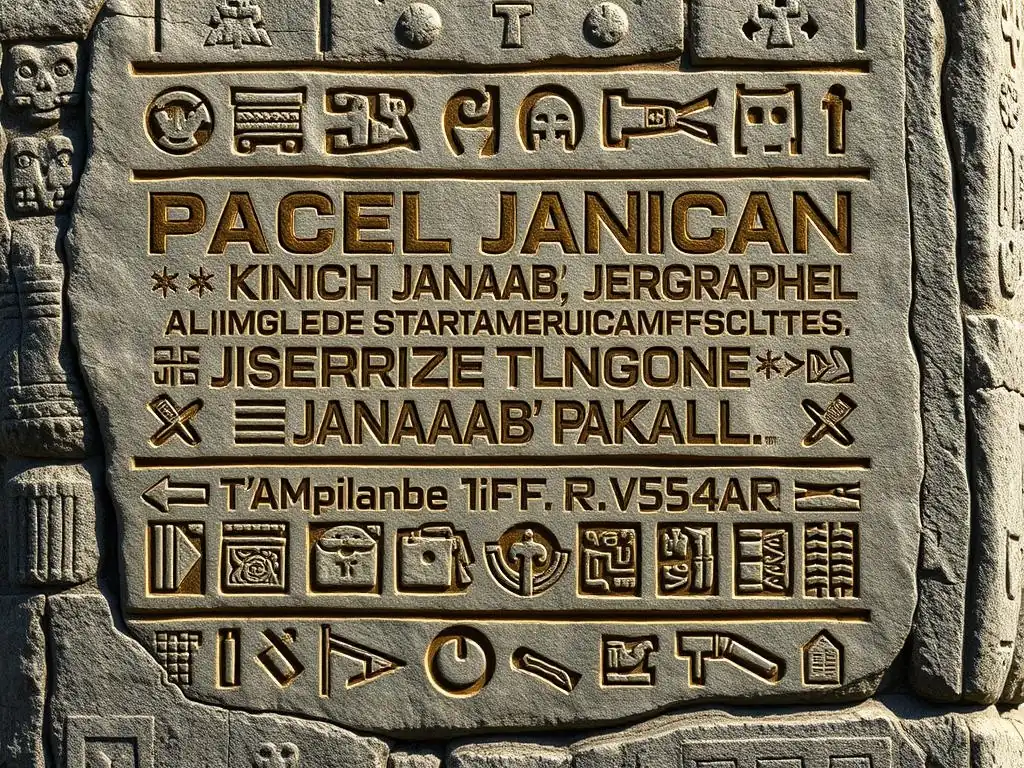
Identifying Syntactic Structures in Maya Monument Dedication Glyphs
The syntactic structures within Maya monument dedication glyphs reveal consistent patterns, yet also exhibit variations that reflect regional preferences, temporal shifts, and the specific nature of the dedicated object. A common structure involves a date clause, often a full Long Count and Calendar Round, followed by a verbal phrase detailing the act of dedication. The verb is typically in the past tense, indicating that the action has been completed. This is then followed by the object of the dedication (e.g., "the stela," "the house") and the agent, typically the ruler's name and titles. For example:
DATE + VERB (tz'apaj) + OBJECT (u tunil, "his stone") + AGENT (K'inich Janaab' Pakal)
However, variations exist. Sometimes, the agent might precede the object, or the object might be implied by the context. Passive constructions are also common, emphasizing the monument itself rather than the royal actor, for instance, "the stone was set up" rather than "the king set up the stone."
The use of positional verbs, which describe the state of being in a certain position, also adds to the syntactic complexity, indicating that the monument "stands" or "rests" in a particular place. These precise grammatical choices reflect deliberate rhetorical strategies employed by the Maya scribes to convey specific meanings and emphasize certain aspects of the dedication event.
Variations in Glyphic Arrangement: Regional and Temporal Differences
The arrangement of Maya monument dedication glyphs within a text block and across different monuments shows notable regional and temporal variations. In the Early Classic period, texts might be more compact, with glyphs tightly packed and less emphasis on elaborate narrative. As the Classic period progressed into the Late Classic, particularly in sites like Palenque and Copán, inscriptions became longer, more discursive, and often integrated into complex iconographic programs. This allowed for more elaborate syntactic structures and the inclusion of extensive genealogical and historical details alongside the core dedication phrases.
For instance, the monumental texts at Yaxchilan, often found on lintels, frequently interweave dedication events with detailed accounts of bloodletting rituals and war captivities, demonstrating a regional emphasis on these particular aspects of royal power. In contrast, sites like Quirigua, known for their massive stelae, often feature very large glyph blocks and a more direct, declarative style for their dedication statements. These variations highlight the dynamic evolution of Maya writing and monumental art, where scribes and sculptors adapted shared conventions to local artistic and political contexts, resulting in diverse yet coherent epigraphic traditions for Maya monument dedication glyphs.
The Role of Divine Entities in Dedication Glyphic Phrases
Divine entities and supernatural beings often play a crucial, albeit sometimes implicit, role in Maya monument dedication glyphs. While the immediate agent of dedication is typically the human ruler, the act itself is frequently framed within a cosmic or divine context. This can be seen through the invocation of patron deities, the association of monuments with specific mythological events, or the use of titles that link the ruler directly to a divine lineage. For example, a ruler might be described as the "divine lord" ( k'uhul ajaw), thereby imbuing his actions, including dedications, with divine sanction.
Furthermore, some dedication phrases may refer to the "raising" or "manifestation" of a deity within a newly constructed temple or altar. This suggests that the dedication was not merely about consecrating a physical object but about creating a space where the divine could reside or manifest.
For instance, the "entering fire" ( och k'ahk') ritual, often associated with building dedications, was believed to invite the presence of deities. The presence of specific patron deities or their associated symbols within the iconography accompanying Maya monument dedication glyphs further reinforces the idea that these human acts of creation and consecration were deeply intertwined with the sacred realm and the will of the gods.
Dedication Glyphs as Statements of Royal Power and Legitimacy
Maya monument dedication glyphs served as potent statements of royal power and legitimacy. By commissioning, carving, and publicly dedicating monumental stelae, altars, temples, and palaces, rulers asserted their authority and solidified their position within the social and political hierarchy. Each dedication was a public performance, often accompanied by elaborate rituals and ceremonies witnessed by the populace. The inscriptions on these monuments provided an enduring, tangible record of these acts, linking the ruler's reign to the city's sacred history and its cosmic destiny.
The sheer scale and artistic sophistication of many dedicated monuments, such as the colossal stelae of Quirigua or the intricate panels of Palenque, visually communicated the wealth, influence, and divine favor of the commissioning ruler. The specific events commemorated, whether military victories, dynastic successions, or calendrical period endings, were carefully selected to reinforce the ruler's accomplishments and divine right to rule. Thus, Maya monument dedication glyphs were not just historical records; they were active instruments of propaganda, shaping public perception and legitimizing the dynastic succession for generations.
The performance of dedication rituals, as implied by Maya monument dedication glyphs, was deeply intertwined with the maintenance of social hierarchy. While the ruler was the primary agent of dedication, these events likely involved various levels of society, from elite scribes and sculptors to common laborers and participants in public ceremonies.
The act of dedicating a major monument would have been a significant community event, reinforcing the social order and the roles of different groups within it. For instance, high-ranking nobles and priests might have participated in the inner sanctum of the ritual, while the general populace witnessed the public aspects from the plaza.
The resources required for monumental construction and dedication—including labor, materials, and specialized artistic skills—demonstrated the ruler's ability to mobilize and control vast resources, further solidifying their position at the apex of the social pyramid. The very act of reading or understanding Maya monument dedication glyphs might have been a marker of elite status, as literacy was likely restricted to the ruling class and their scribal specialists. This exclusivity would have further reinforced the hierarchical structure, with the elite possessing privileged access to sacred knowledge and historical narratives.
How Dedication Glyphs Shaped Collective Memory in Maya Society
Maya monument dedication glyphs played a crucial role in shaping and preserving collective memory within Maya society. By permanently inscribing significant events onto durable stone, rulers ensured that their accomplishments, and the history of their dynasty, would be remembered by future generations. These monuments served as mnemonic devices, anchoring historical narratives in the physical landscape of the city-state. The public display of stelae and altars in plazas meant that these historical records were constantly visible, reinforcing the official narrative of the past.
Moreover, the cyclical nature of Maya timekeeping, with its emphasis on katun endings and other calendrical cycles, meant that dedications often coincided with moments of historical reflection and renewal. New monuments could reinterpret or build upon earlier narratives, creating a dynamic and evolving historical record. The Maya monument dedication glyphs on these structures helped to solidify a shared historical consciousness, connecting the present community to its ancestors and the foundational myths of its city-state. This process ensured the continuity of royal legitimacy and the enduring cultural identity of the Maya people.
Methodological Considerations: Approaches to Deciphering Maya Dedication Glyphs
Epigraphic Analysis: Techniques for Reading and Interpreting Glyphic Texts
The primary methodology for understanding Maya monument dedication glyphs is epigraphic analysis, which involves the systematic reading and interpretation of hieroglyphic texts. This process typically begins with the identification of individual glyph blocks and their constituent elements (logograms, syllabograms, and affixes). Scholars then transliterate the glyphs into the Latin alphabet, based on phonetic values and logographic readings established through decades of research. This is followed by a phonetic transcription, and finally, a grammatical and semantic analysis to arrive at a meaningful translation.
Key techniques include:
- Collocation analysis: Identifying glyphs that frequently appear together to infer their meaning and grammatical function.
- Comparative epigraphy: Comparing texts from different sites and time periods to identify recurring patterns and variations in Maya monument dedication glyphs.
- Iconographic integration: Analyzing the imagery accompanying the glyphs, as iconography and text often work in tandem to convey meaning.
- Linguistic reconstruction: Using modern Ch'olan and Yucatecan languages to reconstruct Classic Maya grammar and vocabulary, providing crucial insights into the syntax and semantics of the ancient script.
Archaeological Context: Integrating Glyphic Data with Excavation Findings
Integrating glyphic data with archaeological excavation findings is crucial for a holistic understanding of Maya monument dedication glyphs. The physical context of a monument—its location within a plaza, temple, or palace, its alignment, and any associated buried offerings—can provide invaluable information that complements the textual record. For example, the discovery of cache deposits beneath a newly dedicated stela, containing jade, shell, or bloodletting instruments, corroborates the ritual nature of the dedication described in the glyphs.
Archaeological data can also help to date monuments when the inscriptions are eroded or incomplete, or to identify the specific structures being referred to in a dedication text. For instance, if Maya monument dedication glyphs mention the "fire enters" ritual for a specific temple, excavation of that temple might reveal evidence of burning or elaborate caches in its foundational layers. This interdisciplinary approach allows researchers to move beyond mere translation, reconstructing the actual ritual practices and the lived experiences surrounding the dedication of these significant objects and structures.
Comparative Analysis: Cross-Referencing Dedication Glyphs Across Different Sites
Comparative analysis, involving the cross-referencing of Maya monument dedication glyphs across different city-states, is a powerful tool for understanding both shared cultural practices and regional variations. By comparing the dedication phrases used at Tikal, Palenque, Copán, Yaxchilan, and other sites, epigraphers can identify common linguistic patterns, shared ritual vocabulary, and overarching themes in Maya monumental art. This allows for the reconstruction of a broader pan-Maya understanding of dedication rituals.
For example, the widespread use of the tz'ap verb for stela erection across multiple sites indicates a shared conceptualization of this act. However, variations in associated verbs, nominal phrases, or iconographic depictions can highlight unique regional interpretations or ritual elaborations. This comparative approach also helps in identifying potential influences between city-states, or the spread of specific scribal traditions. By mapping these similarities and differences, scholars can build a more nuanced picture of Classic Maya political and cultural interactions as reflected in their Maya monument dedication glyphs.
Conclusion: The Enduring Legacy of Maya Monument Dedication Glyphs
Summarizing Key Findings on the Syntax and Significance of Dedication Glyphs
The analysis of Maya monument dedication glyphs reveals a sophisticated system of recording ritual acts that were central to Classic Maya civilization. These inscriptions, found across various city-states, consistently employ specific verbs like tz'ap ("to set up/plant") and och k'ahk' ("fire enters") to denote the consecration of stelae, altars, and architectural structures. While a basic Verb-Object-Subject (VOS) syntax often underpins these phrases, variations in glyphic arrangement and the use of passive or nominalized constructions add layers of complexity and rhetorical emphasis. These glyphs are meticulously dated, anchoring the dedication events precisely within the Maya calendrical system.
Beyond their linguistic structure, Maya monument dedication glyphs held profound social and political significance. They served as public declarations of royal power and legitimacy, demonstrating the ruler's ability to command resources and connect with divine forces. These dedications were integral to reinforcing social hierarchies and shaping collective memory, ensuring that the achievements of past rulers and the foundational narratives of the city-state were preserved for future generations. The study of these glyphs, through a combination of epigraphic, archaeological, and comparative analysis, continues to unlock deeper insights into the ritual life and political ideologies of the ancient Maya.
Future Directions in Research: Unanswered Questions and Emerging Trends
Despite significant advancements in deciphering Maya monument dedication glyphs, several unanswered questions and emerging trends continue to drive research in this field. One area of ongoing inquiry involves refining the precise semantic nuances of various dedication verbs and their regional specificities. For instance, how do seemingly similar verbs like tz'ap and pakab' differ in their ritual implications? Further, the exploration of less common dedication phrases or those found on smaller, less prominent artifacts could reveal new aspects of Maya ritual practice beyond the grand public monuments.
Emerging trends include the application of digital humanities tools, such as advanced imaging techniques and computational linguistics, to analyze large datasets of glyphic inscriptions. These methods can help identify subtle patterns in syntax, frequency of terms, and stylistic variations that might not be apparent through traditional methods alone. Additionally, increased focus on the interrelationship between dedication texts and the broader iconography of the monuments, as well as the acoustic properties of the spaces where dedications occurred, promises to yield a more multisensory understanding of these ancient rituals.
The Importance of Preserving and Protecting Maya Monuments and Glyphic Inscriptions
The enduring legacy of Maya monument dedication glyphs underscores the critical importance of preserving and protecting Maya monuments and their invaluable inscriptions. These stone records are susceptible to natural erosion, environmental degradation, and unfortunately, looting and vandalism. Each lost or damaged glyph represents an irreplaceable piece of human history and a direct link to the intellectual achievements of an ancient civilization. International and local efforts are crucial for safeguarding these archaeological treasures.
Conservation initiatives, including the development of protective shelters, regular maintenance, and the use of advanced documentation techniques like 3D scanning, are vital for ensuring the long-term survival of these monuments. Furthermore, combating the illegal trade in antiquities is paramount to preventing the destruction of sites for their valuable artifacts. By protecting Maya monuments and their glyphic inscriptions, we not only preserve a remarkable cultural heritage but also ensure that future generations of scholars and enthusiasts can continue to learn from and be inspired by the intricate language of dedication left behind by the ancient Maya.
Frequently Asked Questions
### What are Maya monument dedication glyphs, and why are they important to archaeologists?
Maya monument dedication glyphs are inscriptions found on stelae, altars, and other structures that record the ceremonial or ritual dedication of these objects. They provide valuable insights into Maya beliefs, rulership, and calendrical systems.
### Where on a Maya monument are dedication glyphs typically found?
Dedication glyphs are often located on the front or sides of stelae, sometimes encircling the main image or appearing in a separate panel. They can also be found on altars and even within the architectural structures themselves.
### What kind of information can be gleaned from studying Maya monument dedication glyphs, according to ArchaeologyHub.org?
According to ArchaeologyHub.org, these glyphs provide details about dates, rulers involved in the dedication, the purpose of the monument, and sometimes even the specific rituals performed.
### What are some of the key glyphic elements or phrases commonly found in Maya monument dedication inscriptions?
Common elements include glyphs representing "dedication," "completion," or "inauguration," often accompanied by the names and titles of the ruling figures and calendrical dates.
### How does the analysis of Maya monument dedication glyphs contribute to our understanding of Maya civilization's city-states?
Analyzing these glyphs helps us understand the political relationships between city-states, the dynastic histories of rulers, and the cultural practices shared across different regions of the Maya world.
Final Reflection: Echoes of Dedication in Stone
The intricate analysis of Maya monument dedication glyphs reveals more than just historical records; it unveils a profound understanding of how ancient Maya city-states legitimized power and perpetuated their cultural narratives. Today, as we grapple with questions of legacy and permanence in our own rapidly changing world, understanding these ancient strategies for enshrining meaning becomes strikingly relevant. The Maya's meticulous attention to detail in these dedicatory phrases offers a timeless lesson in the power of carefully crafted communication.
This exploration into the syntax of dedication underscores the enduring human desire to leave a mark, to connect with future generations through tangible expressions of belief and achievement. Personally, I find it humbling to consider the dedication and skill required to carve these intricate glyphs, knowing they were intended to resonate across centuries. Time is not a river, as the saying goes, but a vast landscape through which we wander.
- Eduardo Galeano. This quote perfectly encapsulates the Maya's understanding of time and their efforts to navigate it through their monuments.
Now, consider the implications of this ancient practice for our own lives. How can we, like the Maya, dedicate ourselves to projects and ideas that transcend the immediate present? Let us strive to create our own lasting legacies, not necessarily in stone, but in the values we uphold, the knowledge we share, and the positive impact we have on the world around us. Let the echoes of dedication from Maya monuments inspire us to build a future worthy of remembrance.
Unearth Your Inner Archaeologist!
Thank you for delving into the fascinating world of Maya glyphs with us! We hope you found this exploration of dedication syntax on Maya monuments insightful and inspiring. Now, it's time to take your curiosity further.
Here's how you can continue your archaeological adventure:
- Decipher a Glyphic Inscription: Choose a readily available image of a Maya monument and try to identify phrases of dedication using the syntax discussed in the article.
- Share Your Insights: Discuss your findings and interpretations with fellow archaeology enthusiasts on social media using the hashtag #MayaGlyphsUncovered.
- Dive Deeper: Explore digital archives of Maya inscriptions and see if you can uncover variations or exceptions to the syntax rules we discussed.
What dedicatory message will you unearth first?