Explore the Aztec Empire: Tenochtitlan & Conquest
Dive into the heart of Mesoamerica’s most formidable civilization—the Aztec (Mexica) Empire—focusing on its legendary capital, Tenochtitlan, and the dramatic Spanish conquest. This subcategory offers a deep, evidence-based look at urban planning, ritual life, military strategy, and the collision of worlds that reshaped the Americas. Perfect for students, researchers, and enthusiasts, our curated content bridges archaeology, ethnohistory, and primary accounts to illuminate both the grandeur and the fragility of the Aztec world.
🏛️ The Urban Marvel of Tenochtitlan
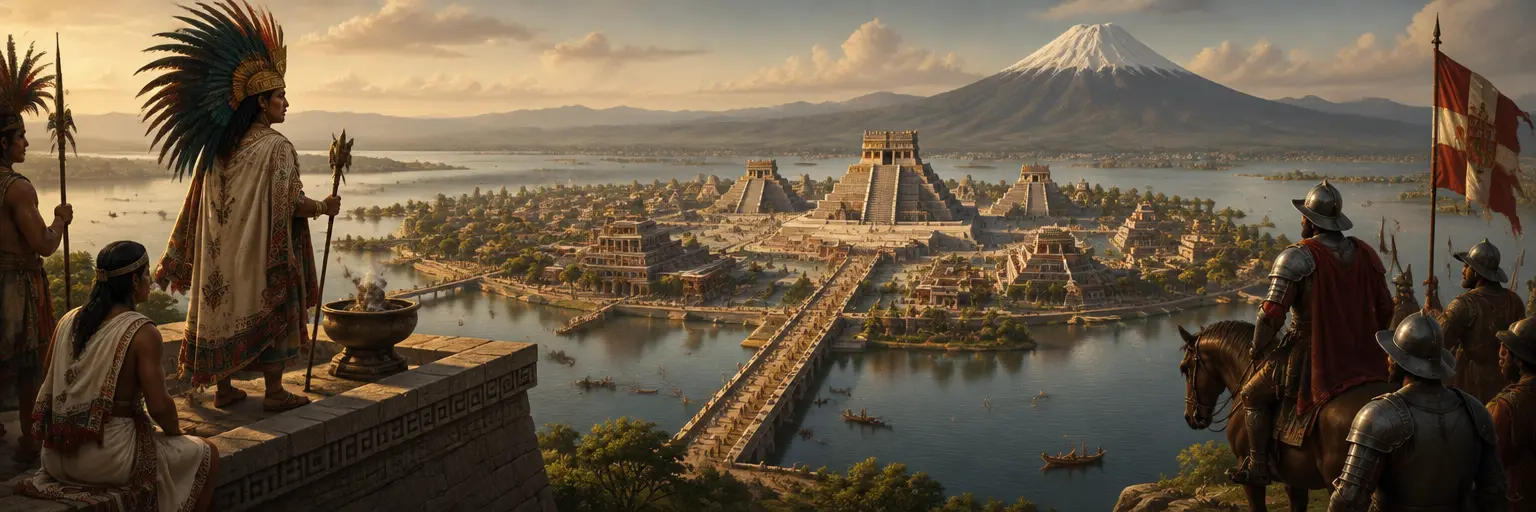
Discover how the Aztecs transformed a swampy island in Lake Texcoco into a thriving metropolis of over 200,000 inhabitants—larger than contemporary European cities. Our detailed guides walk you through the precise grid layout, chinampas (floating gardens), aqueducts, and causeways that showcased advanced hydraulic engineering. Learn about the Templo Mayor’s layered construction, each rebuild corresponding to a new ruler, and the ceremonial precinct that anchored religious and political life. Expect architectural diagrams, excavation photos, and 3D reconstructions that reveal daily life from marketplaces to noble palaces, demonstrating Tenochtitlan as a masterpiece of pre-industrial urbanism.
Beyond physical structure, we analyze social zoning: where commoners, artisans, and nobles lived, and how neighborhood wards (calpulli) managed local governance. Using recent lidar surveys and sediment cores from the Templo Mayor project, we show why the city’s drainage and freshwater systems were revolutionary. Whether you’re studying Aztec cosmology or urban sustainability, this section provides a vivid, data-rich portrait of a city that the conquistadors themselves called “the Venice of the New World.”
⚔️ Aztec Military Power & Expansion
Understand how the Aztec Triple Alliance—Tenochtitlan, Texcoco, and Tlacopan—forged an empire through a blend of terror, tribute, and tactical brilliance. Our analyses break down the warrior classes: from eagle and jaguar knights to the elite cuāuhocēlōtl, along with their weaponry like the macuahuitl (obsidian-edged club) and atlatl. Explore battle tactics, siege warfare, and the flower wars (xōchiyāōyōtl) that served ritual as much as strategic goals. We include codices excerpts, such as the Florentine Codex, describing training for young men and the psychology of warfare that made Aztec armies feared across Mesoamerica.
This section also maps the tribute network—what provinces paid, from jade and cacao to sacrificial captives—and how it fueled Tenochtitlan’s wealth. Critically, we examine the empire’s fragility: the reliance on local rulers, the resentment of conquered groups (like the Tlaxcalans), and the logistical limits of a pre-horse military. By wrapping archaeological evidence of fortifications (e.g., from the Oztuma site) with ethnohistorical accounts, you’ll gain a nuanced view of Aztec power, including its internal tensions that the Spanish would exploit.
🌿 Religion, Ritual & Human Sacrifice
Enter the spiritual world of the Mexica, where the sun’s survival depended on blood. Our content explains the pantheon—from Huitzilopochtli, the war god, to Tlaloc, the rain deity—and their dual temples atop the Templo Mayor. We provide step-by-step reconstructions of major ceremonies, including the New Fire ceremony every 52 years, and the role of human sacrifice in statecraft. Use forensic archaeology findings from the Templo Mayor’s offering deposits, where skeletons of children and warriors reveal rituals of appeasement and fertility. We also contextualize sacrifice as a shared Mesoamerican practice, not a unique aberration, and discuss ethical debates among modern scholars.
Beyond the bloody stereotype, we delve into daily devotional life: household altars, pilgrimage paths to sacred mountains, and the calendar systems (tonalpohualli and xiuhpohualli) that orchestrated festivals. Through analysis of codices like the Codex Borbonicus, we show how cosmic cycles justified political power. Expect clear explanations of how maize, pulque, and hallucinogens played roles in communication with deities. This section balances scholarly precision with readable narrative, ensuring you grasp both the symbolic logic and the gritty realities of Aztec ritual.
📜 The Spanish Conquest: Collapse & Transformation
Witness the 1519-1521 epic, from Hernán Cortés’ landing at Veracruz to the fall of Tenochtitlan. Our timeline details key events: the alliance with Tlaxcala, the massacre at Cholula, Montezuma II’s indecision, and La Noche Triste. We critically evaluate primary sources—using Bernal Díaz del Castillo’s memoir versus indigenous accounts in the Florentine Codex and the Lienzo de Tlaxcala—to separate myth from fact. Examine the role of disease (smallpox), steel, and gunpowder, but also the strategic genius of Cortés in leveraging indigenous allies who resented Aztec dominance. We highlight archaeological evidence from the conquest layer at Templo Mayor, including burnt remains and European trade goods, to anchor the narrative in physical proof.
Finally, we explore the aftermath: the siege’s brutality, the execution of Cuauhtémoc, and the rebuilding of Mexico City atop Tenochtitlan’s ruins. This section discusses how the conquest changed demographics, religion, and ecology, from the introduction of horses and wheat to forced conversion and encomienda labor. By integrating post-conquest Nahua documents (like the Annals of Tlatelolco), we show indigenous perspectives that challenge triumphalist or victim-only narratives. This is not just a battle story—it’s a lesson in cultural resilience and the complex process of colonialism that shaped modern Latin America.
🪦 Archaeological Legacy & Modern Discovery
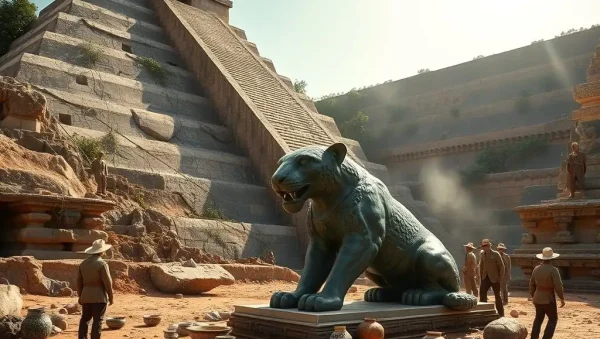
Explore how contemporary archaeology continues to unearth the Aztec world beneath Mexico City’s streets. Our subcategory covers major projects, such as the Templo Mayor excavations since 1978, which have recovered over 200,000 artifacts—from eagle warrior skull masks to gold offerings. We detail recent finds like the Huey Tzompantli (skull rack) in 2017, revealing sacrificial practices’ scale and organization. Learn about non-invasive techniques—ground-penetrating radar, magnetometry—used to map buried structures without disturbing the modern city, and how each discovery refines our understanding of Tenochtitlan’s layout and daily life. Photos of ongoing digs and interviews with archaeologists provide front-line insight.
We also discuss the ethical challenges: how to preserve sites under colonial-era buildings, the repatriation debates of Aztec artifacts (e.g., the Florentine Codex in Florence), and the role of Mexican government heritage laws. Additionally, we highlight public archaeology initiatives, such as virtual reality tours of the Sacred Precinct, which allow global audiences to “walk” through the ancient city. This section proves that the Aztec story is far from over—each excavation rewrites textbooks, offering fresh perspectives on indigenous innovation and the enduring impact of a civilization that refuses to be forgotten. For enthusiasts and professionals, our curated bibliography and repository links serve as a springboard for deeper research.
Frequently Asked Questions
How large was Tenochtitlan at its peak?
At its height in the early 1500s, Tenochtitlan covered about 13 square kilometers and housed an estimated 200,000 to 250,000 residents, making it one of the largest cities globally. Its population density was comparable to contemporary Paris or Constantinople, supported by intensive chinampa agriculture and vast tribute networks.
Did the Aztecs really practice human sacrifice on a massive scale?
Yes, but scale is debated. While some chroniclers claimed thousands of victims at major temple dedications, modern archaeologists, analyzing skull racks like the Huey Tzompantli, estimate hundreds per major event, not tens of thousands. It was ritualized, tied to astronomy and war, and central to religious identity, though not a daily occurrence.
Why were the Spanish able to conquer the Aztecs so quickly?
Key factors included devastating epidemics (smallpox, measles) that killed up to 90% of the population, superior military technology (steel, horses, gunpowder), and, crucially, alliances with disaffected indigenous groups like the Tlaxcalans. Spanish strategy exploited internal divisions, while Mesoamerican coalition warfare differed from total war tactics.
What is the most significant archaeological find from Tenochtitlan?
The 1978 discovery of a massive stone monolith depicting Coyolxauhqui, the moon goddess, led to the excavation of the Templo Mayor. This uncovered layered temples, thousands of offerings (jade, coral, animal skeletons), and evidence of the conquest layer, revolutionizing Aztec studies. In 2017, the Huey Tzompantli skull rack added further monumental finds.
Can I visit Aztec ruins in Mexico City today?
Absolutely. The Templo Mayor Museum (Museo del Templo Mayor) and its archaeological zone are open to the public, displaying original structures and artifacts. Other sites include the Aztec calendar stone at the National Museum of Anthropology, plus nearby ruins like Tlatelolco’s plaza. Many tours offer access via Mexico City’s Metro.