
Aztec Art: Sculpture, Pottery, Featherwork, and Mosaics

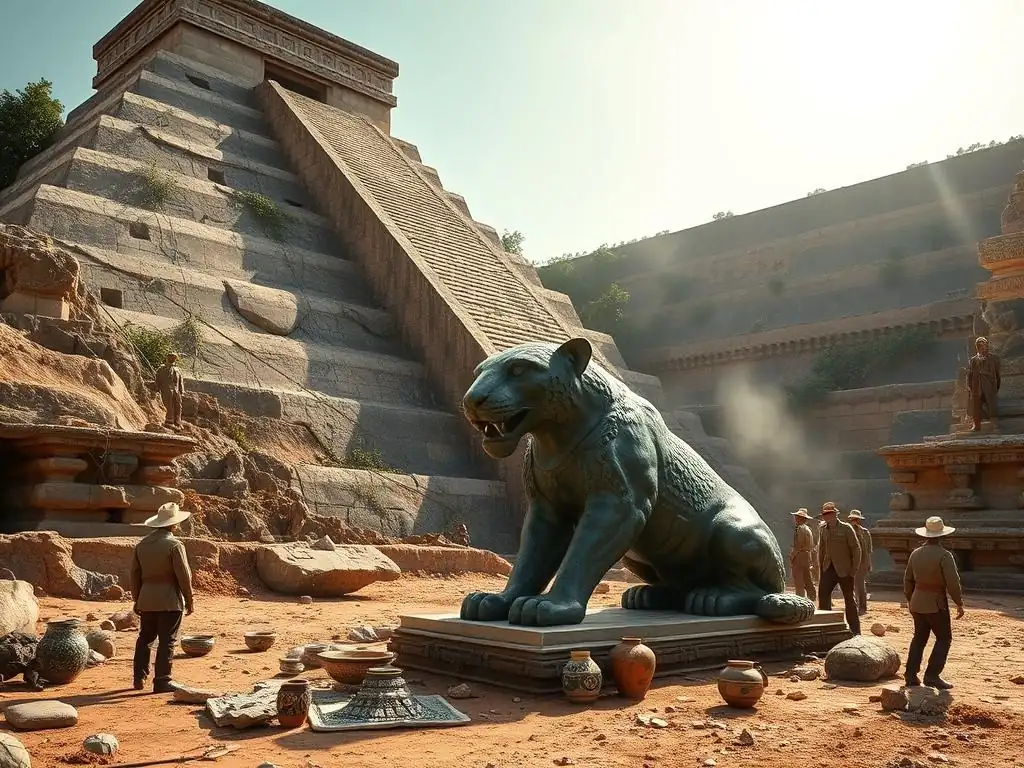
Welcome to ArchaeologyHub.org, your gateway to unraveling the mysteries of the past! Ever wondered how the Aztecs, masters of their world, brought stone to life? Dive into our exploration of Aztec art sculpture techniques and discover the ingenuity behind their breathtaking creations. Prepare to journey through vibrant mosaics, intricate featherwork, and more, as we illuminate the artistic heart of a powerful civilization. The secrets are waiting to be unearthed... continue reading to begin your archaeological adventure!
- Introduction to Aztec Art and its Significance
- Aztec Sculpture: Stone as a Medium of Power
- Aztec Pottery: Form, Function, and Decoration
- Aztec Featherwork: Art as a Symbol of Status and Divinity
- Aztec Mosaics: Art of Precious Materials
- The Legacy of Aztec Art
- Conclusion: Appreciating the Artistic Achievements of the Aztec Civilization
-
Frequently Asked Questions
- What were the primary materials used in Aztec art sculpture?
- How did the Aztecs create their intricate featherwork art?
- What role did pottery play in Aztec society and art?
- Can you describe some common themes and symbols found in Aztec mosaics?
- What sculpture techniques were employed by Aztec artists to create such detailed works?
- Final Reflection: Echoes of Stone and Feather
- Unearth Your Inner Explorer: Delve Deeper into the Aztec World!
Introduction to Aztec Art and its Significance
The Cultural Context of Aztec Art in Tenochtitlan
Aztec art was deeply embedded within the complex socio-political and religious fabric of the Mexica empire, centered in the magnificent city of Tenochtitlan. Flourishing from roughly 1325 to 1521 CE, this sprawling metropolis on Lake Texcoco served as the heart of a vast tribute empire, where art played a crucial role in expressing imperial power, cosmic order, and religious devotion.
Artistic production was not merely decorative; it was a potent tool for legitimizing rulers, commemorating military victories, and communicating intricate theological concepts to a diverse populace. The constant influx of tribute, including raw materials like precious stones, feathers, and specialized craftspeople, fueled an unprecedented artistic output.
The urban landscape of Tenochtitlan itself was a grand artistic statement, with monumental temples, palaces, and public squares adorned with sculptures and murals. From the towering Templo Mayor, dedicated to Huitzilopochtli and Tlaloc, to the intricate residential compounds, art permeated every aspect of life. It served to reinforce the prevailing worldview, where the cosmos was a dynamic interplay of divine forces demanding human ritual and sacrifice. This pervasive integration meant that Aztec art was rarely created in isolation; its form, function, and symbolism were inextricably linked to the empire's expansionist policies, its agricultural cycles, and its fervent belief system.
Overview of Aztec Artistic Styles and Techniques
Aztec artistic styles are characterized by a powerful blend of naturalism and symbolism, often rendered with a striking monumentality. While often perceived through the lens of stone sculpture, Aztec art encompassed a diverse array of mediums, including intricate featherwork, vibrant pottery, and precious mosaics. Common stylistic traits include a dynamic energy, a preference for bold outlines, and a rich iconographic vocabulary featuring deities, mythical creatures, and calendrical symbols. Artists frequently depicted animals with anatomical accuracy, yet infused them with profound symbolic meaning. Human figures, though sometimes stylized, often conveyed a sense of strength and ritualistic posture.
The technical proficiency of Aztec artisans was remarkable, especially considering the tools available to them. Stone carvers, potters, featherworkers, and mosaicists employed specialized Aztec art sculpture techniques and methods passed down through generations. These crafts were often organized into guilds, with amantecas (featherworkers) and tolteca (master artisans, particularly stone carvers) holding high status. Their mastery allowed them to transform raw materials—from volcanic rock to iridescent bird feathers—into objects of profound beauty and spiritual significance, demonstrating an advanced understanding of material properties and design principles that underpinned their sophisticated artistic output.
Aztec Sculpture: Stone as a Medium of Power
Monumental Aztec Stone Sculpture: The Sun Stone, Coatlicue Statue, and Tlaltecuhtli Monolith
Monumental stone sculpture stands as a testament to the Aztec Empire's artistic prowess and its profound cosmological beliefs. Among the most iconic examples is the Sun Stone, often misidentified as a calendar, but more accurately a massive cosmological disk. Discovered in 1790 in Mexico City, this basalt monolith measures approximately 3.6 meters (12 feet) in diameter and weighs around 24 tons, intricately carved with calendrical signs and the face of the sun deity, Tonatiuh, at its center. Its public display likely served to legitimize Aztec rule by linking it to divine cosmic order and the cyclical nature of time.
Another awe-inspiring piece is the colossal statue of Coatlicue, the earth goddess, measuring approximately 2.5 meters (8.2 feet) tall. Her fearsome appearance—a skirt of writhing snakes, a necklace of human hearts and hands, and a head composed of two serpent profiles—embodies the dualistic nature of creation and destruction inherent in Aztec cosmology.
More recently discovered in 2006, the Tlaltecuhtli Monolith, depicting the earth goddess in a crouching position, is even larger at approximately 4 meters by 3.6 meters (13 by 12 feet) and weighing about 12 tons. This massive sculpture, found near the Templo Mayor, further exemplifies the Aztec commitment to monumental art as a means of expressing the power of their deities and the empire.
Aztec Sculpture Techniques: Carving and Polishing
The Aztec art sculpture techniques employed for monumental stone carving were incredibly sophisticated, especially given the absence of metal tools like iron or steel. Artisans primarily utilized harder stones such as basalt, obsidian, chert, and jadeite for their carving tools. The initial rough shaping of large blocks involved percussion techniques, using harder hammerstones to chip away material. For finer details and smoothing, the Aztecs relied on abrasion, meticulously grinding the stone surfaces with abrasive materials like sand, volcanic ash, and water. This labor-intensive process allowed for remarkable precision and intricacy, even on the largest sculptures.
Polishing was a crucial final step in Aztec stone sculpture, enhancing the visual impact and symbolic power of the finished pieces. After the carving was complete, the surfaces were meticulously rubbed with various abrasive powders and softer stones or even wood.
This process created smooth, often lustrous finishes that would have caught the light and made the sculptures appear even more vibrant. For instance, the intricate details on the Sun Stone or the smooth, powerful curves of the Coatlicue statue demonstrate a mastery of these polishing Aztec art sculpture techniques, transforming raw stone into objects of profound aesthetic and ritualistic significance.
Religious Iconography in Aztec Sculpture
Aztec sculpture was overwhelmingly religious in nature, serving as a primary medium for depicting deities, mythological narratives, and sacrificial themes essential to the empire's belief system. Deities such as Huitzilopochtli (god of war and sun), Tlaloc (god of rain and fertility), and Quetzalcoatl (feathered serpent, god of wind and wisdom) were frequently represented in both monumental and smaller sculptures.
A prime example is the Coyolxauhqui disk, a massive relief sculpture approximately 3.25 meters (10.6 feet) in diameter, depicting the dismembered moon goddess, found at the base of the Templo Mayor. This artwork vividly illustrates the myth of Huitzilopochtli's birth and victory, central to Aztec origin stories and sacrificial rituals.
Beyond direct depictions of gods, Aztec sculpture incorporated a rich tapestry of symbolic iconography. Animals like serpents (often associated with Quetzalcoatl or the earth), eagles (representing the sun and warriors), and jaguars (symbols of power and the night) were rendered with both realism and symbolic weight. Natural elements such as mountains, water, and plants were also stylized to convey cosmological concepts. These sculptures served a didactic function, visually reinforcing the Aztec worldview, their pantheon, and the cycles of creation and destruction, making complex theological concepts accessible to a broad audience within the public spaces of Tenochtitlan.
Aztec Pottery: Form, Function, and Decoration
Types of Aztec Pottery: Utilitarian and Ceremonial
Aztec pottery production was extensive, encompassing both utilitarian and ceremonial wares, each serving distinct purposes within Aztec society. Utilitarian pottery formed the backbone of daily life, including cooking pots ( comales for tortillas, ollas for stews), storage jars for maize and beans, and water vessels. These items were typically robust, functional, and often undecorated or minimally adorned with simple incised lines or slips. Common examples include the widespread Texcoco Black-on-Orange ware, characterized by its distinctive orange background and black painted designs, found across the empire, indicating a standardized, widespread production.
In contrast, ceremonial pottery was crafted for ritualistic use, offerings to deities, and burial practices. These pieces often exhibited more elaborate forms, finer finishes, and intricate decoration. Examples include incense burners ( tlalocan), effigy vessels shaped like deities or animals, and sacrificial vessels like the cuauhxicalli (eagle vessel) used to hold offerings. Such pottery was integral to religious ceremonies, from offerings at the Templo Mayor to private household rituals. Their designs frequently incorporated symbolic motifs related to specific gods, cosmic events, or sacrificial themes, distinguishing them from their everyday counterparts.
Decorative Techniques in Aztec Pottery: Painting and Incision
Aztec potters employed a range of sophisticated decorative techniques, primarily painting and incision, to adorn their wares. Painting involved the use of mineral pigments, with reds often derived from iron oxides, blacks from manganese or charcoal, and whites from kaolin clay. These pigments were applied as slips (a thin layer of liquid clay mixed with pigment) either before or after the initial firing, depending on the desired effect.
Designs ranged from geometric patterns and abstract motifs to highly stylized figures of animals, humans, and glyphs, demonstrating a keen eye for composition and symbolism. The application of multiple layers of slip could also create a smooth, prepared surface for detailed painting.
Incision and modeling were also prominent decorative methods. Patterns could be carved or incised into the wet clay before firing, creating texture and depth. For repetitive designs, potters utilized stamps or molds, allowing for efficient production of decorated wares. Modeling, on the other hand, involved shaping the clay into three-dimensional forms, evident in effigy vessels where entire figures or specific anatomical features were sculpted onto the pottery. The combination of these techniques, often on a single piece, showcases the versatility and artistic skill of Aztec potters, transforming simple clay into objects of both utility and aesthetic appeal.
The Role of Pottery in Aztec Daily Life and Rituals
Pottery was indispensable to Aztec daily life, forming the essential tools for food preparation, storage, and consumption. Every household, regardless of social status, relied on a variety of ceramic vessels for cooking staples like tortillas and stews, storing maize, beans, and other agricultural products, and transporting water. The ubiquitous presence of pottery fragments in archaeological sites across the former Aztec Empire underscores its fundamental role in sustaining the population and facilitating domestic routines. Its widespread availability also points to a highly organized and efficient system of production and distribution.
Beyond its practical applications, pottery held significant ritualistic importance. Vessels were used as offerings to gods, filled with food, copal incense, or even human hearts during sacrificial ceremonies. Many archaeological finds, particularly from the Templo Mayor excavations, include pottery interred as part of elaborate offerings, reflecting its sacred value.
Pottery was also commonly placed in burials as grave goods, intended to accompany the deceased into the afterlife. In some rituals, pottery was intentionally broken as an act of termination, symbolizing the end of a cycle or a ceremonial offering, demonstrating its deep integration into the spiritual and ceremonial life of the Aztecs.
Aztec Featherwork: Art as a Symbol of Status and Divinity
The Significance of Feathers in Aztec Culture
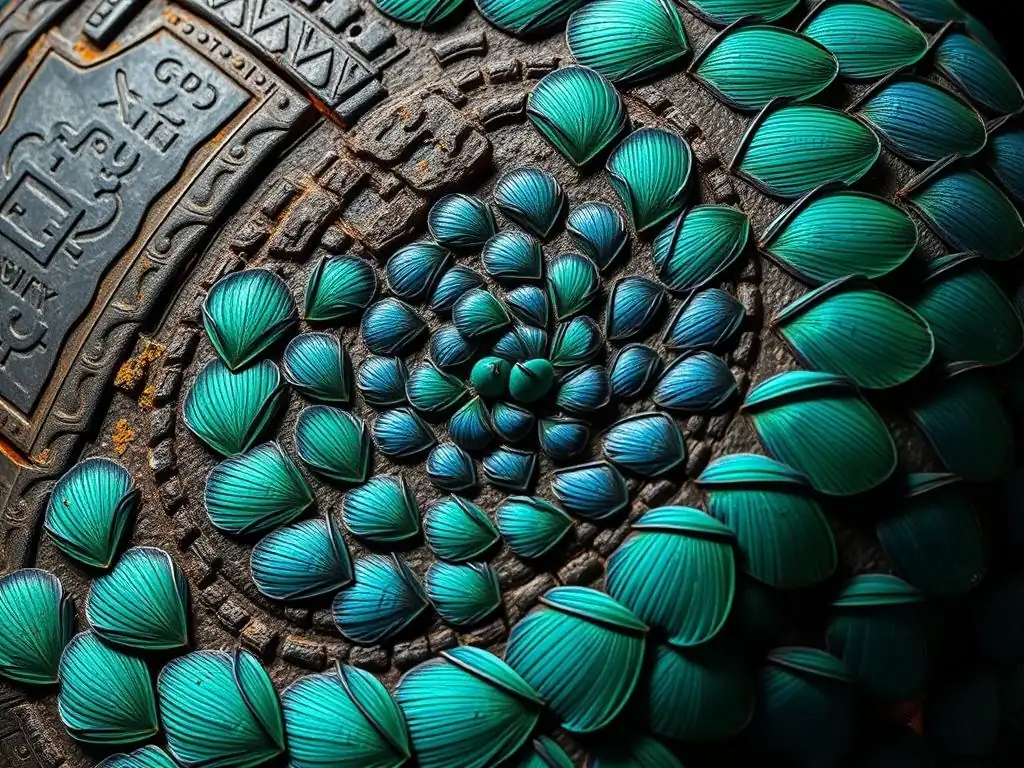
Feathers held immense cultural significance in the Aztec Empire, transcending mere decoration to become powerful symbols of wealth, social status, and divine connection. Sourced from a wide array of exotic birds, including the resplendent quetzal (prized for its iridescent green tail feathers), vibrant macaws, tiny hummingbirds, and brilliant blue cotingas, these materials were often obtained through the extensive tribute system from tropical regions. The amantecas, the guild of featherworkers, were highly esteemed artisans, residing in specialized neighborhoods and enjoying significant privileges due to their mastery of this prestigious art form.
The symbolic meaning of feathers was deeply ingrained in Aztec cosmology. Quetzal feathers, with their shimmering green hue, were particularly associated with Quetzalcoatl, the feathered serpent deity, and symbolized fertility, preciousness, and royalty. Hummingbird feathers, on the other hand, were linked to Huitzilopochtli, the patron deity of the Mexica, representing the sun and warriors.
The vibrant colors themselves carried specific meanings: blue often represented water and sky, while green signified fertility and new life. The rarity and beauty of these materials, combined with the extraordinary skill required to work them, made featherwork one of the most elite and spiritually charged art forms.
Techniques of Aztec Featherwork: Knotting, Gluing, and Layering
The creation of Aztec featherwork was an incredibly meticulous and specialized process, involving sophisticated Aztec featherwork techniques that yielded stunning results. Feathers were first carefully selected, sorted by size, color, and texture, and often trimmed or flattened to ensure a uniform appearance. The primary methods of attachment involved adhering the feathers to a base material, typically a woven fabric, paper made from amatl bark, or even wood, using natural resins or plant-based adhesives. In some cases, feathers were also tied or knotted onto a framework, especially for three-dimensional objects.
A hallmark of Aztec featherwork was the masterful use of layering to create complex designs, depth, and even three-dimensional effects. Smaller, more delicate feathers were often used for intricate details and fine lines, while larger, more robust feathers formed backgrounds and broader color fields. The amantecas would meticulously overlap feathers, often from different species, to achieve subtle color gradients and shimmering optical effects that changed with the light. This highly specialized process required immense patience, precision, and an intimate knowledge of feather properties, with techniques passed down through generations within the artisan guilds.
Examples of Aztec Featherwork Art: Headdresses, Shields, and Garments
Aztec featherwork manifested in a variety of exquisite art forms, most notably headdresses, shields, and garments, all symbolizing high status and religious significance. The most famous example, often associated with Emperor Moctezuma II, is a magnificent headdress (now in Vienna, Austria) believed to contain hundreds of iridescent green quetzal feathers, interspersed with gold and other precious materials. While its direct provenance to Moctezuma is debated, it stands as a prime illustration of the scale and splendor of Aztec featherwork headdresses worn by rulers and high-ranking priests during ceremonies.
Ceremonial shields, known as chimalli, were another prominent form of feather art. These were not used for combat but served as elaborate symbols of military prowess, divine protection, and imperial authority. They often depicted mythological scenes, animal totems, or geometric patterns rendered in vibrant feathers.
Additionally, elaborate cloaks ( tilmàtli) and other garments adorned with feather mosaics were worn by nobles and priests, signifying their elite status and connection to the divine. Due to their organic nature, very few examples of Aztec featherwork have survived the centuries, making the existing pieces incredibly rare and invaluable insights into this ephemeral yet magnificent art form.
Aztec Mosaics: Art of Precious Materials
Materials Used in Aztec Mosaics: Turquoise, Jade, and Shell
Aztec mosaics represent an extraordinary convergence of artistic skill and the strategic acquisition of precious materials from across their vast empire. The most highly prized material was turquoise, a blue-green mineral sourced from distant regions, potentially as far north as what is now the Southwestern United States, making its acquisition a testament to Aztec trade networks and power. Jade and other greenstones, collectively known as chalchihuitl, were also extensively used, symbolizing fertility, water, and preciousness, often sourced from areas like Oaxaca or present-day Guatemala.
Beyond these stones, a diverse array of shells contributed to the dazzling palette of Aztec mosaics. These included the iridescent mother-of-pearl, the vibrant red of spondylus shell, and the creamy white of conch shell, all obtained from coastal regions. Other materials like obsidian (volcanic glass), pyrite (fool's gold), coral, and even small amounts of gold were occasionally incorporated to add contrast and sparkle. The sheer variety and exotic origin of these materials underscore the Aztec Empire's ability to command resources and the sophisticated craftsmanship required to transform them into objects of profound beauty and symbolic value.
Techniques of Aztec Mosaic Creation: Mortar Adhesion and Geometric Design
The creation of Aztec mosaics involved precise and intricate Aztec mosaic techniques, demanding exceptional skill and patience from the artisans. Small, meticulously shaped tesserae (individual pieces) of turquoise, jade, shell, or other materials were carefully cut and ground. These pieces were then adhered to a base material, typically wood, bone, or even human skulls, using a natural resin or a plant-based adhesive derived from pine sap or certain orchids. The precision with which these tiny pieces were cut and fitted together, often without visible gaps, is remarkable, creating seamless, shimmering surfaces.
Aztec mosaic designs were often geometric, reflecting a sophisticated understanding of pattern and symmetry, but also incorporated stylized animal or human forms. The artisan would first prepare the base by carving or shaping it, then meticulously arrange the tesserae to form the desired image or pattern. The interplay of colors and the reflective qualities of the materials, particularly turquoise and shell, were carefully considered to create a dynamic visual effect. This labor-intensive process, involving precise cutting, grinding, and adhesion, allowed the Aztecs to produce objects of unparalleled beauty and durability, showcasing their mastery over these precious materials.
Aztec Mosaic Art: Religious and Political Purposes
Aztec mosaic art served significant religious and political purposes, often combining both functions within a single object. Many surviving mosaic pieces are masks, such as the famous turquoise mosaic mask of Tezcatlipoca (now in the British Museum), which would have been worn during rituals or adorned effigies of deities.
Other examples include ceremonial shields and sacrificial knives, like the double-headed serpent mosaic (also in the British Museum), which was likely used in religious ceremonies or as a prestigious offering. These objects were imbued with spiritual power, acting as conduits between the human and divine realms, and were central to Aztec ritual practice.
From a political standpoint, Aztec mosaic art was a powerful demonstration of imperial wealth, control, and divine favor. The procurement of rare and precious materials like turquoise from distant lands showcased the empire's vast reach and economic might. Objects adorned with these valuable mosaics were often commissioned by the ruling elite, serving as symbols of their authority and prestige. They were worn by emperors and high priests, offered as tribute, or displayed in temples, thereby reinforcing the hierarchical structure of Aztec society and underscoring the divine legitimacy of the ruling class.
The Legacy of Aztec Art
Influence of Aztec Art on Later Cultures
The influence of Aztec art extended beyond the pre-Columbian era, subtly shaping later cultures and artistic movements. While the Spanish Conquest initially led to the destruction of much indigenous art, some forms and motifs persisted, finding their way into early colonial art. For instance, indigenous artisans, under Spanish supervision, sometimes incorporated pre-Hispanic iconography into Christian religious art, creating a unique syncretic style. The "Tree of Life" motif, often seen in colonial ceramics, bears a conceptual resemblance to Aztec cosmic trees.
In the centuries that followed, the rediscovery and appreciation of Aztec art played a significant role in the formation of Mexican national identity. During the 20th century, the monumental scale and symbolic power of Aztec sculpture, in particular, deeply inspired Mexican muralists like Diego Rivera, José Clemente Orozco, and David Alfaro Siqueiros. They drew upon indigenous artistic traditions to create a distinct Mexican aesthetic that celebrated the nation's pre-Columbian heritage. Today, contemporary Mexican indigenous communities continue to preserve certain Aztec motifs and artistic techniques in their crafts, ensuring a living legacy of this ancient art form.
Preservation and Study of Aztec Art Today
The preservation of Aztec art faces significant challenges, primarily due to the extensive destruction during the Spanish Conquest and the inherent fragility of organic materials like feathers and wood over centuries. However, continuous archaeological excavations, most notably the Templo Mayor Project initiated in 1978 in Mexico City, have been instrumental in uncovering thousands of artifacts, often buried as offerings, thereby preserving them from decay and destruction. These discoveries provide invaluable insights into Aztec artistic practices and their cultural context.
Modern conservation techniques now play a crucial role in stabilizing and protecting these delicate artifacts. Sophisticated methods are employed to prevent deterioration caused by humidity, temperature fluctuations, and pollutants. Furthermore, interdisciplinary research, combining archaeology, art history, anthropology, and material science, continues to deepen our understanding of Aztec art. Digital documentation, including 3D scanning and virtual reconstructions, also aids in the study and dissemination of information about these precious objects, ensuring their accessibility for future generations of scholars and the public.
Where to See Aztec Art: National Museum of Anthropology (Mexico City) and British Museum (London)
For anyone seeking to experience the grandeur of Aztec art firsthand, the National Museum of Anthropology (Museo Nacional de Antropología) in Mexico City stands as the foremost destination. Housing the most comprehensive and significant collection of Aztec artifacts in the world, its vast halls display masterpieces such as the iconic Sun Stone, the awe-inspiring Coatlicue statue, and numerous smaller sculptures, pottery, and ritual objects unearthed from the Templo Mayor and other sites. The museum offers an unparalleled opportunity to delve into the artistic and cultural achievements of the Mexica people, providing extensive context for each piece.
Beyond Mexico, the British Museum in London holds another significant collection of Aztec art, showcasing some of the finest examples of featherwork and mosaics that survived the colonial period. Its notable holdings include the exquisite double-headed serpent mosaic and several rare feather shields.
While smaller than the collection in Mexico, it provides a crucial international perspective on Aztec craftsmanship. Other notable collections can be found in institutions such as the American Museum of Natural History in New York and the Musée du Quai Branly - Jacques Chirac in Paris, each offering unique insights into the diverse artistic expressions of the Aztec civilization.
Conclusion: Appreciating the Artistic Achievements of the Aztec Civilization
The artistic achievements of the Aztec civilization were truly remarkable, encompassing a diverse array of mediums from monumental stone sculpture to intricate featherwork, vibrant pottery, and dazzling mosaics. Each art form, shaped by distinct Aztec art sculpture techniques and other specialized methods, served not only aesthetic purposes but was deeply interwoven with the religious, political, and daily life of the empire. From the imposing power of the Sun Stone to the delicate precision of a feather mosaic, Aztec artisans demonstrated an extraordinary mastery of materials and an unparalleled ability to imbue their creations with profound symbolic meaning.
The enduring legacy of Aztec art lies not only in the sheer beauty and technical skill of its surviving pieces but also in its capacity to communicate a complex worldview. These artworks offer invaluable insights into the cosmology, social structure, and ritual practices of a powerful Mesoamerican empire. Despite the challenges of preservation and the passage of centuries, the study and appreciation of Aztec art continue to illuminate the ingenuity and cultural richness of a civilization that left an indelible mark on human history, reminding us of the universal impulse to create and express through art.
Frequently Asked Questions
What were the primary materials used in Aztec art sculpture?
Aztec sculptors primarily used volcanic rock, such as basalt and andesite, for large monuments. They also employed precious stones like jadeite and turquoise for smaller, more intricate pieces. Other materials included wood and clay.
How did the Aztecs create their intricate featherwork art?
Aztec featherwork involved meticulously attaching colorful feathers from various birds, such as quetzals and macaws, to a cotton or amatl paper backing. This required specialized knowledge and skill, often passed down through generations. The practice was usually reserved for elite members of society.
What role did pottery play in Aztec society and art?
Pottery served both practical and artistic purposes in Aztec society. Vessels were used for cooking, storage, and religious ceremonies, often decorated with geometric patterns, animal motifs, and representations of deities. Ceremonial pottery could be quite elaborate.
Can you describe some common themes and symbols found in Aztec mosaics?
Aztec mosaics frequently depicted deities, animals, and geometric patterns. Turquoise was a particularly prized material, often used to create stunning mosaics on masks, shields, and other ceremonial objects. These mosaics were often associated with religious ceremonies and power.
What sculpture techniques were employed by Aztec artists to create such detailed works?
Aztec sculptors used a combination of techniques, including carving, grinding, and polishing, to achieve the desired level of detail. They employed tools made from stone, copper, and obsidian to shape the hard volcanic rock. Master craftsmen were highly regarded in Aztec society.
Okay, here's a final reflection designed to close your article on Aztec Art, specifically focusing on sculpture, pottery, featherwork, and mosaics, while also aiming to resonate with readers and subtly reinforce the keyword "Aztec art sculpture techniques":
Final Reflection: Echoes of Stone and Feather
The intricate details and profound symbolism we've explored in Aztec art – from monumental sculptures to delicate featherwork – are not merely relics of a distant past. They are powerful reminders of human ingenuity and the enduring quest to express meaning through form, resonating even now in contemporary art and design. The mastery of Aztec art sculpture techniques, in particular, speaks to a profound understanding of materials and a dedication to capturing the essence of their world.
The legacy of Aztec artistry continues to shape our understanding of pre-Columbian civilizations and the power of art to transcend time. Witnessing the skill and dedication poured into each piece, from the humblest pottery shard to the most imposing stone monument, evokes a deep respect for the artists and the culture they represented. Art is not what you see, but what you make others see.
- Edgar Degas. This quote perfectly encapsulates the Aztec artists' ability to communicate complex beliefs and narratives through their chosen mediums, leaving an indelible mark on the world.
As we conclude this exploration of Aztec art, I invite you to consider the lessons embedded within these ancient creations. How can we, like the Aztec artisans, harness our own creativity to express our values, beliefs, and experiences? Let the enduring beauty and technical brilliance of Aztec art inspire you to seek out the extraordinary in the ordinary and to craft your own lasting legacy, whether through art, innovation, or simply by living a life filled with purpose and meaning.
Unearth Your Inner Explorer: Delve Deeper into the Aztec World!
Thank you for exploring the rich artistic heritage of the Aztecs with us. We hope you've gained a newfound appreciation for their incredible skill and cultural significance. Now, it's time to take your fascination a step further!
- Visit a museum with an Aztec art collection to see these masterpieces firsthand and connect with history in a tangible way.
- Research a specific Aztec artist or art form (like featherwork) that particularly resonated with you. Share your findings with a friend or family member!
- Create your own piece of art inspired by Aztec designs or techniques. It could be anything from a drawing to a mosaic!
What Aztec artwork are you most eager to learn more about, and how do you plan to start your exploration?