
The Craftsmen of Tenochtitlan: Featherworkers, Goldsmiths, and Lapidaries

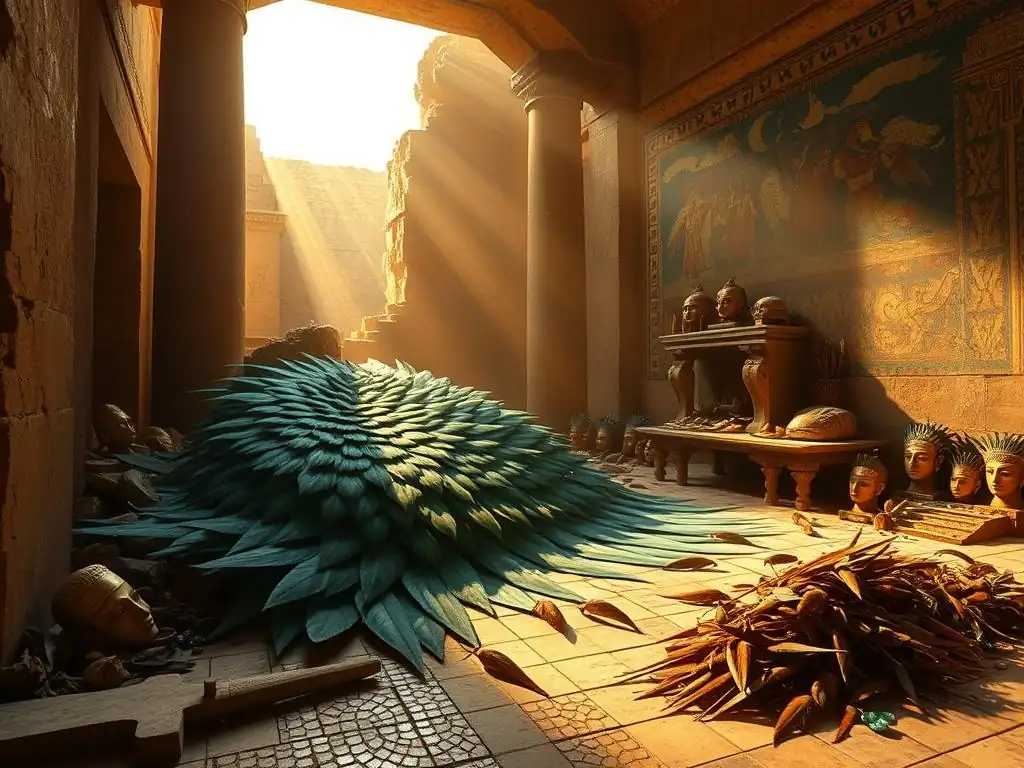
Welcome to ArchaeologyHub.org, your gateway to unlocking the secrets of the past! Dive deep into the world of ancient civilizations and explore the intricate tapestry of human history. Ever wondered about the meticulous artistry of the Aztec capital? Our in-depth analysis of Tenochtitlan featherworking techniques details reveals the remarkable skill and cultural significance behind these vibrant creations. Uncover the stories woven into each plume and prepare to be amazed. What other secrets does Tenochtitlan hold? Let's explore!
- Introduction: The Artistry of Tenochtitlan's Artisans
- Featherworking in Tenochtitlan: An Overview of Techniques and Significance
- Goldsmithing in Tenochtitlan: Precious Metals and Skilled Hands
- Lapidaries of Tenochtitlan: Working with Jade, Turquoise, and Obsidian
- The Organization of Craft Production in Tenochtitlan
- Archaeological Evidence of Tenochtitlan Craftsmanship
- The Legacy of Tenochtitlan Craftsmanship
- Conclusion: Celebrating the Skills of Tenochtitlan's Master Craftsmen
-
Frequently Asked Questions
- What role did featherworkers play in Tenochtitlan society?
- Where did the Aztecs source the feathers needed for their elaborate creations?
- Can you describe the specific featherworking techniques used in Tenochtitlan?
- What types of artifacts were commonly made by featherworkers in Tenochtitlan?
- How does ArchaeologyHub.org provide further details about Tenochtitlan featherworking?
- Final Reflection: The Enduring Legacy of Tenochtitlan's Art
- Unearth Your Inner Artisan!
Introduction: The Artistry of Tenochtitlan's Artisans
Tenochtitlan, the magnificent capital of the Aztec Empire, was not only a center of political and economic power but also a vibrant hub of artistic innovation and craftsmanship. Its artisans, highly skilled and specialized, transformed raw materials into objects of breathtaking beauty and profound cultural significance. From the delicate artistry of feather mosaics to the intricate brilliance of goldwork and the enduring power of carved stone, the crafts of Tenochtitlan reflected the ingenuity, spiritual beliefs, and imperial might of the Aztec civilization.
This article delves into the world of these master craftsmen, exploring the sophisticated Tenochtitlan featherworking techniques details, the mastery of goldsmithing, and the precision of lapidary arts. We will examine the materials they used, the processes they employed, and the symbolic meaning embedded within their creations, revealing the complex organization and immense cultural value placed on these artistic endeavors within Aztec society.
Featherworking in Tenochtitlan: An Overview of Techniques and Significance
Featherworking, or amantecayotl, was arguably the most revered art form in Tenochtitlan, surpassing even gold in its symbolic and aesthetic value. Objects adorned with feathers, from elaborate headdresses to ceremonial shields, were considered divine gifts, reserved for the highest echelons of society and used in vital religious and military contexts. The rarity of the materials and the extraordinary skill required elevated featherworkers to a privileged status.
The Revered Amanteca: Tenochtitlan's Featherworking Masters
The amanteca, as the featherworkers were known, constituted a highly specialized and esteemed artisan class within Aztec society. They often resided in their own designated wards, such as Amantlan in Tenochtitlan, where their workshops flourished. Their craft was typically hereditary, passed down through generations within families, ensuring the meticulous preservation of complex Tenochtitlan featherworking techniques details and artistic traditions. These masters were dedicated from a young age to perfecting their intricate skills, from sorting and preparing feathers to assembling elaborate designs.
Their exceptional artistry was widely recognized and deeply valued by the Aztec elite, including the tlatoani (ruler). The amanteca operated under state patronage, often producing items for the imperial court, military leaders, and religious ceremonies. Their creations were not merely decorative; they were potent symbols of political authority, military prowess, and divine connection, integral to tribute payments, royal regalia, and sacred rituals.
Tenochtitlan Featherworking Techniques: Materials and Processes
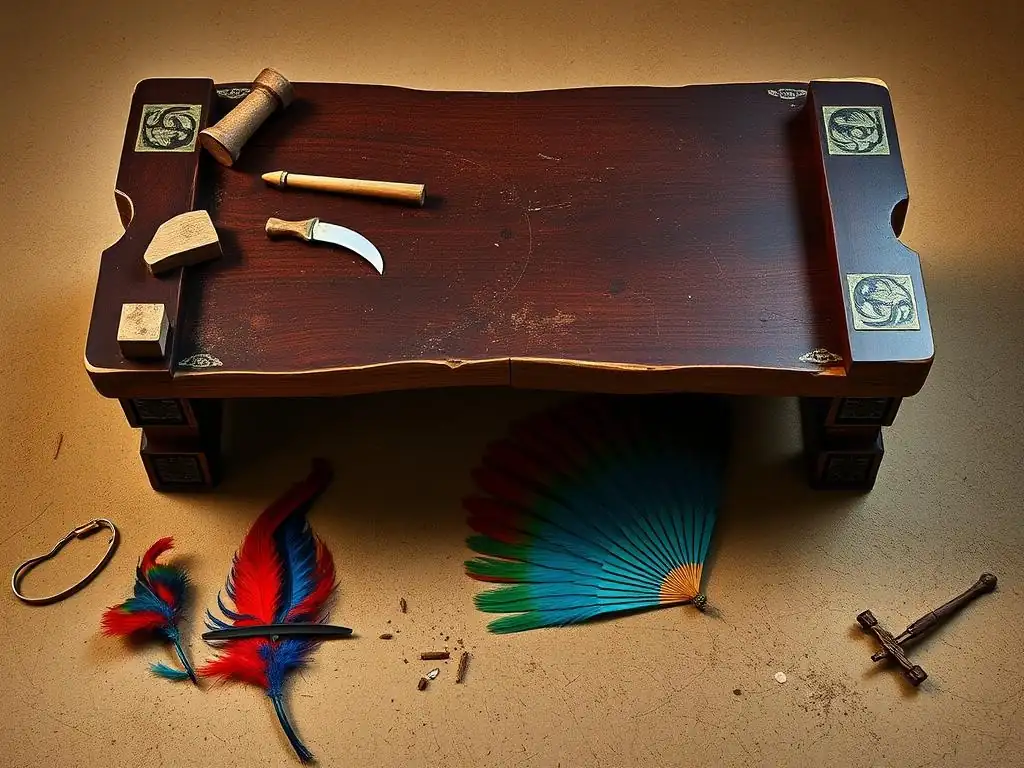
The creation of feather objects in Tenochtitlan involved a remarkable understanding of materials and sophisticated artistic processes. The Tenochtitlan featherworking techniques details required immense patience, precision, and an eye for color and texture, transforming fragile natural elements into durable and visually stunning artworks. Artisans employed a range of tools, including fine obsidian blades for trimming, bone awls for manipulation, and specialized natural adhesives derived from orchid sap or other plant resins.
Sourcing Exotic Feathers: Trade and Tribute
The acquisition of exotic feathers was a cornerstone of Aztec featherworking, driving extensive trade and tribute networks across Mesoamerica. The most prized feathers came from tropical birds found in distant regions, far from the Valley of Mexico. For instance, iridescent green quetzal feathers, highly valued for their length and shimmer, were primarily sourced from the rainforests of Chiapas and Guatemala. Scarlet macaw feathers, brilliant red, and blue cotinga feathers were also imported from tropical lowlands, often as tribute from conquered provinces.
The sheer volume of feathers required for imperial projects was immense. Historical records, such as the Matrícula de Tributos and the Codex Mendoza, detail specific annual tributes. For example, some provinces were obligated to send thousands of quetzal feathers – a demanding quota considering that a single quetzal typically produces only two long tail feathers per year. This vast supply chain underscored the empire's economic reach and its ability to mobilize resources for its most cherished art form.
The Intricate Process of Feather Mosaic Creation
The core of Tenochtitlan featherworking techniques details lay in the creation of feather mosaics. The process began with preparing a rigid or semi-rigid base, often made of cotton cloth, maguey paper, or animal hide, sometimes stiffened with a fine layer of agave sap. Feathers were then meticulously sorted by color, size, and sheen, often arranged on palettes to visualize the final design. The amanteca possessed an encyclopedic knowledge of feather types, colors, and their symbolic associations.
Individual feathers, or carefully cut sections of feathers, were then painstakingly adhered to the base using a strong, natural adhesive. Layers of feathers were often applied, with smaller, finer feathers used for intricate details and larger, coarser feathers forming the background or structural elements. The amanteca were masters of layering and overlapping, creating astonishing depth and a painterly effect. This complex method allowed for the depiction of deities, animals, and geometric patterns with unparalleled vibrancy and precision.
Feather Shield Construction
Feather shields, known as chimalli, were not merely defensive implements but powerful symbols of military rank, prowess, and spiritual protection. Their construction involved integrating feather mosaic techniques onto a more robust foundation. Typically, the base of a chimalli was woven from reeds or crafted from lightweight wood, sometimes reinforced for durability, though their primary function was ceremonial display rather than direct combat.
Over this sturdy base, a layer of fine cotton or thin leather was often stretched to provide a smooth surface. Onto this, the intricate feather mosaic was meticulously attached, following the precise Tenochtitlan featherworking techniques details used for other objects. Designs frequently depicted formidable animals like eagles or jaguars, or abstract cosmological symbols, all rendered in vibrant feathers. These shields were integral to warrior regalia and were often displayed during parades, rituals, and significant state events, showcasing both military might and artistic sophistication.
The Symbolic Meaning of Feathers in Aztec Society
Feathers held profound symbolic meaning in Aztec cosmology, often associated with deities, the heavens, fertility, and the very essence of life. Their lightness and ability to enable flight connected them to the divine realm and the power of movement and transformation. This deep symbolism elevated featherwork beyond mere decoration, making it central to religious, political, and social expression.
Feathered Headdresses: Status and Power
Feathered headdresses, particularly those crafted from the iridescent green tail feathers of the quetzal, were the quintessential symbols of supreme authority and divine connection in Aztec society. The most famous example, often associated with Montezuma II (though its direct provenance is debated, it is an exemplary piece of Aztec featherwork), is the quetzalapanecayotl. Such headdresses were exclusively worn by the tlatoani and the highest-ranking military commanders, signifying their elevated status, military achievements, and direct mandate from the gods.
The type and quantity of feathers in a headdress directly corresponded to the wearer's social rank and accomplishments. While the tlatoani might wear a full quetzal headdress, lower-ranking nobles or accomplished warriors might wear simpler versions adorned with eagle, hummingbird, or macaw feathers. These headdresses were not just ceremonial attire; they were potent visual declarations of power, embodying the wearer's place at the apex of the Aztec hierarchy and their connection to cosmic forces.
Feathered Garments: Ritual and Ceremony
Beyond headdresses, feathers adorned a variety of garments worn during significant rituals, ceremonies, and public appearances. Capes ( tilmahtli), tunics, and elaborate costumes for priests and impersonators of deities were meticulously decorated with feather mosaics. For instance, priests dedicated to specific deities might wear garments made with feathers whose colors and patterns symbolized their associated god, such as the xiuhtlalpilli, a blue cape associated with Huitzilopochtli or Tezcatlipoca, made with blue cotinga feathers.
These feathered garments served a crucial function in Aztec ritual, transforming the wearer into a living embodiment of a deity or an ancestral spirit during sacred rites. The colors and intricate patterns of the feathers often encoded complex religious narratives, cosmological beliefs, or specific affiliations with particular cults. The extensive use of Tenochtitlan featherworking techniques details in these garments underscores their importance in mediating between the human and divine realms, making them indispensable components of Aztec religious life.
Goldsmithing in Tenochtitlan: Precious Metals and Skilled Hands
While featherwork held supreme symbolic value, gold and silver objects were also highly prized in Tenochtitlan, primarily for their aesthetic brilliance and association with light, the sun, and divine power. Aztec goldsmiths, known as teocuitlahua, possessed advanced metallurgical skills, transforming raw metals into intricate jewelry, ritual objects, and small sculptures. Their work was admired for its technical sophistication, particularly given the absence of iron or steel tools.
Aztec Gold and Silver: Sources and Trade Networks
The Aztec Empire did not possess extensive gold or silver mines within its immediate territory. Instead, the primary sources of these precious metals were alluvial deposits, collected from rivers in conquered regions such as Oaxaca, Guerrero, and the Gulf Coast. Silver was less common but also obtained from certain tributary provinces. The Aztecs largely relied on a sophisticated system of tribute and long-distance trade to acquire the raw materials for their thriving goldsmithing industry.
The Codex Mendoza provides detailed accounts of the vast quantities of gold and silver demanded as tribute from subjugated territories. For instance, the province of Coixtlahuaca in Oaxaca was mandated to pay 20 gold disks and 40 bags of cochineal annually, while other regions provided gold dust in quills or finished gold ornaments. This steady influx of precious metals from across the empire flowed directly into Tenochtitlan, fueling the workshops of its master teocuitlahua and enabling the production of luxurious items for the elite and religious institutions.
Tenochtitlan Goldsmithing Techniques: Shaping Precious Metals
Aztec goldsmiths demonstrated remarkable ingenuity in shaping precious metals, utilizing sophisticated techniques that allowed for intricate and delicate creations despite the lack of iron tools. They primarily employed copper tools, stone hammers, and specialized blowpipes to manipulate the gold and silver, showcasing a profound understanding of metallurgy.
Lost-Wax Casting: Jewelry and Sculpture
The most advanced and widely used technique by Aztec goldsmiths was cire perdue, or lost-wax casting. This multi-stage process allowed for the creation of hollow, intricate, and often delicate objects, including bells, pendants, ear spools, and small figurines. The process began with the creation of a core model, typically made of clay, which was then meticulously covered with a layer of beeswax or a mixture of wax and resin to form the exact desired object. Fine details and textures were carved into this wax layer.
Next, the wax-covered model was encased in a second layer of clay, forming a mold. Small channels were left for pouring and venting. The entire assembly was then heated, melting the wax, which drained out, leaving a hollow cavity that perfectly replicated the wax model's form. Molten gold, or alloys of gold and copper or silver, was then poured into this cavity. Once cooled, the outer clay mold was carefully broken away, revealing the finished metal object. This technique allowed for the production of complex forms, including pieces with moving parts, demonstrating extraordinary technical mastery.
Repoussé and Engraving Techniques
Beyond casting, Aztec goldsmiths also utilized repoussé and engraving techniques, particularly for larger, flatter objects. Repoussé involved hammering a thin sheet of metal from the reverse side to create a raised design on the front. This method was employed for items such as ceremonial breastplates, large disks, and masks, creating striking three-dimensional relief patterns. The hammering was performed with stone or wood tools, showcasing the artisans' ability to manipulate metal without melting it.
Engraving and embossing involved using specialized tools to incise or impress designs directly onto the surface of finished metal objects. These techniques allowed for the addition of fine details, symbolic imagery, and textures, enhancing the aesthetic and narrative qualities of the gold and silver pieces. The precision and artistry involved in both repoussé and engraving further highlight the diverse skill set of Tenochtitlan's teocuitlahua.
The Role of Gold in Aztec Ritual and Economy
In Aztec society, gold was not primarily a medium of exchange in the way it was in Europe, but rather a material of immense symbolic and ritual significance. It was revered for its association with the sun, light, and the divine, embodying purity and spiritual power. Its inherent beauty and rarity solidified its place as a symbol of elite status and cosmic connection.
Gold Offerings and Royal Treasures
Gold played a crucial role in Aztec religious rituals. Gold objects, often in the form of small figurines, disks, or intricate jewelry, were frequently offered to deities during ceremonies, buried within temples, or interred with the deceased elite in richly furnished tombs. Archaeological excavations at the Templo Mayor, for instance, have unearthed numerous gold artifacts in offerings (e.g., Offerings 48, 76, 102), which included bells, pendants depicting deities, and finely crafted animal figures. These finds underscore gold's integral role as a sacred offering, a means of honoring the gods and ensuring cosmic balance.
Royal treasures, accumulated by the tlatoani and high-ranking nobles, comprised vast quantities of gold. These included elaborate pectorals, ear spools, labrets, and ceremonial weapons, all meticulously crafted. These treasures served as powerful visual displays of wealth, political power, and divine favor, reinforcing the legitimacy and prestige of the ruling class. The accumulation and display of gold objects were central to demonstrating the tlatoani's connection to the sun god Huitzilopochtli and his authority over the empire.
Gold as Currency and Tribute
While not a standardized currency in the modern sense, gold functioned as a high-value medium of exchange and a significant component of the Aztec tribute system. Gold dust, often contained within clear quills, was used for substantial transactions, particularly in long-distance trade. However, its primary economic role was as a form of tribute demanded from conquered provinces. The Codex Mendoza enumerates specific quantities of gold dust and finished gold ornaments that various regions were compelled to send to Tenochtitlan annually.
This steady flow of gold from tributary provinces into the Aztec capital was vital for the imperial economy. It provided the raw material for state-sponsored workshops, which in turn produced luxury goods for the elite, military, and religious institutions. The control over gold resources and its skilled transformation into valuable objects underscored Tenochtitlan's economic dominance and its ability to extract and redistribute wealth throughout its vast empire.
Lapidaries of Tenochtitlan: Working with Jade, Turquoise, and Obsidian
The lapidaries of Tenochtitlan, known as tepihqueh, were masters of working with hard stones such as jade, turquoise, and obsidian. Their craft was fundamental to Aztec culture, producing objects ranging from utilitarian tools and weapons to exquisite ceremonial ornaments and ritual artifacts. Unlike metals, stone was durable, and thus, a wealth of lapidary artifacts has survived, offering direct insights into their techniques and symbolic meanings.
Sourcing and Trading Precious Stones in the Aztec Empire
Acquiring precious stones for lapidary work involved extensive trade networks, some reaching far beyond the immediate imperial boundaries. Jade, more accurately jadeite, was the most highly prized greenstone, but it was not found locally in the Valley of Mexico. The primary source was the Motagua River Valley in present-day Guatemala, indicating long-distance trade routes that existed for centuries before and during the Aztec period. Turquoise, another highly valued stone, was imported from even more distant regions, possibly from as far north as the American Southwest (e.g., Cerrillos, New Mexico, or areas in Arizona), through complex Mesoamerican trade networks.
Obsidian, in contrast, was abundant closer to Tenochtitlan. Major quarries at Pachuca (famous for its distinctive green obsidian) and Otumba (producing gray and black obsidian), both located in present-day Hidalgo and the State of Mexico, were crucial sources. These quarries were strategically important, providing the raw material for a wide array of tools, weapons, and ceremonial objects, making obsidian a cornerstone of Aztec technology and artistry.
Tenochtitlan Lapidary Techniques: Cutting, Polishing, and Shaping
Aztec lapidaries achieved remarkable feats in cutting, polishing, and shaping hard stones without the use of metal tools. Their techniques relied heavily on abrasive methods, employing harder stone tools (such as chert or basalt) in conjunction with sand (often quartz sand) and water. This labor-intensive process allowed them to grind, drill, and polish even the toughest materials to a high sheen, creating objects of incredible precision and beauty.
The Importance of Turquoise Mosaics
Turquoise mosaics were among the most visually stunning achievements of Aztec lapidary art, often applied to wood, shell, or bone bases. The creation of these mosaics was a meticulous and time-consuming process. Small, precisely cut tesserae (individual pieces) of turquoise were painstakingly shaped and then adhered to the base using natural cements, often a strong pine resin or a mix of beeswax and plant fibers. The Tenochtitlan featherworking techniques details of mosaic creation, involving careful selection and precise placement, were mirrored in this lapidary art form.
The artistry involved in turquoise mosaics was exceptional. Pieces were cut to fit perfectly, creating intricate patterns, geometric designs, or detailed depictions of deities and cosmological scenes. Famous examples include the "Turquoise Mask of Tezcatlipoca" and the "Double-Headed Serpent" (both in the British Museum), which showcase the extraordinary skill and symbolic depth embedded in these precious objects. These mosaics were reserved for the most sacred and elite items, signifying wealth, divine connection, and imperial power.
Obsidian Craftsmanship: From Tools to Ornamental Objects
Obsidian was a versatile and ubiquitous material in Aztec society, valued for both its utilitarian properties and its symbolic significance. Its conchoidal fracture allowed for the creation of incredibly sharp edges, making it ideal for a vast array of tools and weapons. Skilled knappers produced razor-sharp blades for knives, razors, and even surgical instruments, as well as the formidable blades for the macuahuitl, a wooden sword edged with obsidian. This knapping process required immense skill, precision, and an understanding of the stone's properties.
Beyond practical applications, obsidian was also transformed into highly polished ornamental objects. These included reflective mirrors, used for divination and ritual purposes, as well as ear spools, labrets, and small figurines. The deep, lustrous black surface of polished obsidian held significant symbolic meaning, often associated with Tezcatlipoca, the "Smoking Mirror" god, highlighting its profound ritual importance in Aztec cosmology.
The Significance of Greenstone (Chalchihuatl) in Aztec Culture
The term chalchihuitl encompassed various green stones, with jadeite being the most prized. This category of stones held profound symbolic meaning in Aztec culture, representing water, fertility, preciousness, and life itself. It was often equated with the heart and breath, signifying vitality, renewal, and the very essence of human existence. Its rarity and beauty further elevated its status.
Jade Ornaments and Their Spiritual Value
Jade was extensively used in the creation of ornaments such as beads, pendants, ear spools, and small figurines. These objects were not merely decorative; they possessed deep spiritual significance. Jade artifacts were frequently interred with the deceased, particularly the elite, as funerary offerings. For instance, jade beads were often placed in the mouths of the deceased to symbolize the soul or heart, or to act as an offering to the earth, ensuring a connection to the cycles of life and death and facilitating rebirth.
The sheer effort and the vast distances involved in acquiring jade from Guatemala further underscored its immense value. Its presence in burials and ritual caches signified the deceased's high status and their spiritual connection. Jade artifacts were powerful emblems of sacredness, purity, and elite identity, reflecting a profound belief in their ability to connect the mortal world with the divine.
The Symbolism of Color in Aztec Lapidary Art
Color played a crucial role in Aztec lapidary art, with specific hues carrying profound symbolic meaning. Green, particularly the vibrant greens of jade and turquoise, was paramount. It symbolized life, fertility, water, and preciousness, often associated with agricultural bounty and the vital force of nature. Blue, especially the rich blue of turquoise, was linked to rain, water, and the sky, embodying life-giving elements and celestial power.
Black, particularly the deep, reflective black of polished obsidian, held a complex symbolism. It was associated with night, the underworld, and the powerful deity Tezcatlipoca, the "Smoking Mirror," who was often depicted with an obsidian mirror. The deliberate choice and combination of these colors in lapidary art conveyed intricate cosmological and religious messages, reflecting the Aztecs' deep understanding of their symbolic power and their ability to imbue objects with profound spiritual significance.
The Organization of Craft Production in Tenochtitlan
The sophisticated artistic output of Tenochtitlan was underpinned by a highly organized system of craft production. This system ensured a steady supply of raw materials, the training of new generations of artisans, and the distribution of finished luxury goods to the elite and for imperial purposes. The structure of workshops and the social standing of craftsmen were integral to the empire's economic and cultural life.
Guilds and Workshops: Structuring Aztec Craftsmanship
While not "guilds" in the European medieval sense, Aztec craftsmanship was highly structured, often organized into specialized artisan quarters or calpulli. The most famous example is Amantlan, the district in Tenochtitlan specifically designated for amanteca (featherworkers). These were essentially hereditary groups of families who lived and worked together, passing down their specialized skills and Tenochtitlan featherworking techniques details from generation to generation. This familial and communal organization ensured the continuity of traditional techniques and artistic styles.
Workshops were often attached to noble households, temples, or palaces, indicating that a significant portion of luxury craft production was state-sponsored or patronized by the elite. Master craftsmen trained apprentices, typically their own children, from a young age, instilling the discipline and precision required for their intricate crafts. This system fostered deep expertise and maintained high standards of quality for the sophisticated goods produced for the imperial court, military, and religious ceremonies.
The Role of Tribute in Supporting Aztec Artisans
The Aztec imperial tribute system was the economic engine that fueled Tenochtitlan's extensive craft production. Conquered provinces were not only obligated to send finished goods but also vast quantities of raw materials necessary for the capital's workshops. This included exotic feathers from tropical lowlands, gold dust from riverine regions, and precious stones like jade and turquoise from distant trade networks. The Codex Mendoza meticulously lists these tributary obligations, demonstrating the sheer volume of resources flowing into the capital.
This constant influx of raw materials was crucial, as it reduced the need for the Aztecs to directly control or exploit distant resource areas, instead relying on the subjugated territories to supply them. It provided the extensive raw materials necessary to keep the numerous state-sponsored workshops in Tenochtitlan operating at a high capacity. This system ensured that the tlatoani and the elite had access to a continuous supply of luxury goods, reinforcing the economic and political power of the Aztec capital and its ruling class.
The social status of craftsmen in Tenochtitlan varied significantly depending on the rarity of the materials they worked with and the destination of their products. While the majority of the population were commoners ( macehualtin), highly specialized artisans like the amanteca (featherworkers) and teocuitlahua (goldsmiths) held a privileged position. They were often exempt from certain forms of manual labor, lived in more affluent quarters, and were directly patronized by the tlatoani and high-ranking nobility, providing them with a degree of prestige and economic security.
These elite artisans were considered valuable assets to the empire, their skills essential for producing the regalia, offerings, and luxury items that symbolized Aztec power and spirituality. In contrast, craftsmen who worked with more common materials or produced utilitarian goods for the general populace, while respected for their skills, did not enjoy the same elevated status. The distinction underscored the Aztec society's emphasis on luxury goods and their integral role in maintaining the social hierarchy and imperial ideology.
Archaeological Evidence of Tenochtitlan Craftsmanship
Archaeological excavations in and around Mexico City have provided invaluable insights into the craftsmanship of Tenochtitlan. While some materials, like feathers, are highly perishable, the discovery of surviving artifacts, workshop debris, and depictions in historical documents offers a tangible connection to the sophisticated artistic traditions of the Aztec Empire.
Recovered Featherwork Artifacts: Insights into Aztec Artistry
Direct archaeological evidence of featherwork is rare due to the organic nature of feathers, which decay quickly in most environments. However, a few remarkable pieces have survived, offering profound insights into Aztec artistry and Tenochtitlan featherworking techniques details. The most famous example is the "Montezuma Headdress" (now in the Weltmuseum Wien), a spectacular piece of quetzal featherwork, though its direct association with Montezuma II is debated. Other smaller feather mosaics or fragments have been found in dry conditions or preserved within elite burials, such as those unearthed at the Templo Mayor.
Indirect evidence is more abundant and equally crucial. Depictions in pre-Columbian and early colonial codices, such as the Codex Mendoza and the Florentine Codex, vividly illustrate featherwork production, the types of feathers used, and the ceremonial contexts in which feathered objects were worn. Spanish conquistador chronicles also provide firsthand accounts marveling at the beauty and abundance of feather objects encountered in Tenochtitlan, further attesting to the scale and sophistication of this art form.
Excavations of Goldsmith Workshops
Identifying specific Aztec goldsmith workshops has proven challenging due to the extensive looting of precious metals during the Spanish Conquest, which often destroyed the sites. However, archaeological investigations in the vicinity of the Templo Mayor and other elite residential areas in Tenochtitlan have yielded crucial evidence. Excavations have uncovered small gold objects, fragments of molds, and tools consistent with metalworking, such as copper chisels, stone hammers, and ceramic crucibles. These finds suggest that goldsmithing workshops were often located near major temples or royal palaces.
The most significant evidence of Aztec goldsmithing prowess comes from the vast number of gold artifacts recovered from ritual offerings at the Templo Mayor. Offerings 48, 76, and 102, for instance, contained numerous gold items, including intricately cast bells, pendants depicting deities, and finely crafted animal figurines. These exquisite finds, though not direct workshop sites, powerfully demonstrate the immense output and unparalleled technical mastery of Tenochtitlan's teocuitlahua, confirming the sophistication of their lost-wax casting and other techniques.
Lapidary Finds: Unearthing Stone Carvings
In contrast to featherwork and gold, lapidary artifacts are abundant due to the durability of stone. Archaeological excavations across Tenochtitlan, particularly within the Templo Mayor precinct, have unearthed a wealth of stone carvings, providing direct evidence of Aztec lapidary techniques and their artistic output. Finds include vast quantities of obsidian blades, mirrors, and tools, as well as an array of jade and turquoise ornaments, masks, and figurines.
Specific examples include the numerous large obsidian knives found in ritual caches, the intricate turquoise mosaic masks (like the famous one depicting Tezcatlipoca), and countless jade beads and pendants recovered from burials and offerings. The discovery of unfinished pieces, stone debitage (waste flakes), and specialized tools at some sites provides direct insight into the production process and the specific Tenochtitlan featherworking techniques details adapted for stone working. These finds confirm that lapidaries were highly active throughout the city, transforming raw stones into objects of both utility and profound symbolic value.
The Legacy of Tenochtitlan Craftsmanship
The artistic traditions of Tenochtitlan did not vanish with the fall of the Aztec Empire but continued to influence art and culture in colonial New Spain. The legacy of these master craftsmen lives on, not only in the surviving artifacts but also in ongoing efforts to understand and preserve their remarkable heritage. Their ingenuity and skill continue to inspire awe and provide invaluable insights into the richness of pre-Columbian civilizations.
The Influence of Aztec Art on Colonial Art
Following the Spanish Conquest, indigenous artisans, including descendants of the amanteca, teocuitlahua, and tepihqueh, continued to practice their crafts. Their unparalleled skills were not entirely suppressed but rather adapted to new forms and patrons—the Spanish colonial administration and the Catholic Church. This led to a unique syncretic artistic style, blending pre-Columbian techniques and aesthetic sensibilities with European Christian iconography.
A prime example is the continuation of feather mosaic art. Indigenous featherworkers, applying their inherited Tenochtitlan featherworking techniques details, produced exquisite Christian-themed feather mosaics, such as the famous "Mass of St. Gregory" from 1539 (now in the Ambras Castle collection in Austria). Similarly, stone carvers adapted their skills to adorn church facades, religious sculptures, and colonial architecture, demonstrating the enduring influence of pre-Hispanic artistic traditions on the emerging colonial art style.
Preserving the Heritage of Tenochtitlan's Artisans
The preservation of the heritage of Tenochtitlan's artisans is an ongoing and vital endeavor in archaeology, art history, and museology. Research into Tenochtitlan featherworking techniques details, goldsmithing processes, and lapidary methods continues to reveal new insights into Aztec technology, social organization, and cultural practices. Scientific analysis of materials and techniques helps reconstruct the ancient craft processes, offering a deeper understanding of their ingenuity.
Museum collections worldwide, notably the Museo Nacional de Antropología in Mexico City, the British Museum, and the Ethnological Museum Berlin, play a crucial role in safeguarding and exhibiting these invaluable artifacts. Ongoing archaeological projects continue to unearth new evidence, providing fresh perspectives on the scale and sophistication of Aztec craftsmanship. These efforts ensure that the extraordinary skills and artistic legacy of Tenochtitlan's master craftsmen are preserved, studied, and appreciated by future generations.
Conclusion: Celebrating the Skills of Tenochtitlan's Master Craftsmen
The craftsmen of Tenochtitlan were central to the splendor and power of the Aztec Empire. The amanteca, with their mastery of intricate Tenochtitlan featherworking techniques details, created objects of unparalleled beauty and sacred significance. The teocuitlahua transformed precious metals into dazzling displays of divine and imperial power, utilizing advanced casting and shaping methods. And the tepihqueh, through their precise lapidary skills, imbued hard stones with profound symbolic meaning, crafting both essential tools and exquisite ritual objects.
Their collective artistry was not merely decorative but deeply interwoven with Aztec cosmology, social hierarchy, and political authority. The sophisticated organization of their workshops, fueled by an expansive tribute system, allowed Tenochtitlan to flourish as a center of artistic innovation. The enduring legacy of these master craftsmen, evident in surviving artifacts and historical records, continues to inspire awe and provides a powerful testament to the ingenuity and cultural richness of one of Mesoamerica's greatest civilizations.
Frequently Asked Questions
What role did featherworkers play in Tenochtitlan society?
Featherworkers, known as Amantecas, held a high social status in Tenochtitlan. They created intricate and valuable items for religious and political purposes, often commissioned by the elite. Their skills were highly revered.
Where did the Aztecs source the feathers needed for their elaborate creations?
The Aztecs sourced feathers through tribute, trade, and hunting across their vast empire. They kept aviaries to raise certain birds and obtained feathers from various regions, each offering unique colors and textures, leading to great diversity in their work.
Can you describe the specific featherworking techniques used in Tenochtitlan?
Tenochtitlan featherworkers employed techniques such as gluing feathers onto a woven base, sewing them onto cotton cloth, or creating mosaics. They were known for their ability to manipulate feathers to create stunning visual effects.
What types of artifacts were commonly made by featherworkers in Tenochtitlan?
Featherworkers produced a wide range of artifacts, including headdresses, shields, banners, and clothing. These items were often used in ceremonies, rituals, and as symbols of power.
How does ArchaeologyHub.org provide further details about Tenochtitlan featherworking?
ArchaeologyHub.org offers detailed profiles of artifacts crafted using featherworking techniques. It provides interpretive analyses of their cultural significance within the context of Tenochtitlan's history and society.
Final Reflection: The Enduring Legacy of Tenochtitlan's Art
The intricate details of Tenochtitlan featherworking techniques revealed in this exploration are not merely historical curiosities; they represent a profound understanding of materials and a dedication to artistry that resonates even today. The precision, patience, and ingenuity displayed by these ancient craftsmen offer a powerful counterpoint to our modern, often disposable, culture, reminding us of the value of enduring beauty and skilled craftsmanship.
The influence of Tenochtitlan's artistry extends far beyond the archaeological record. It serves as a potent symbol of cultural identity and resilience, inspiring contemporary artists and artisans to reconnect with their heritage and explore new creative avenues. Art is not what you see, but what you make others see.
- Edgar Degas. This quote perfectly captures the essence of the Tenochtitlan craftsmen's work; they transformed raw materials into powerful symbols that continue to speak volumes across time.
As we close this exploration of Tenochtitlan's master artisans, I invite you to reflect on the lessons embedded within their creations. Consider how their dedication to craft, their respect for materials, and their commitment to cultural expression can inform your own life. Let the enduring legacy of Tenochtitlan inspire you to seek beauty, cultivate skill, and contribute to the tapestry of human creativity.
Unearth Your Inner Artisan!
Thanks for diving into the fascinating world of Tenochtitlan's craftsmen! We hope you enjoyed learning about the incredible skill and artistry of the featherworkers, goldsmiths, and lapidaries. Now, it's time to connect with that ancient creativity:
- Design your own piece of 'featherwork' using digital art tools – imagine what a modern-day cloak of feathers might look like!
- Share your favorite fact from the article on social media and tag a friend who would find it interesting.
- Explore online resources about contemporary Indigenous artists and their connection to ancestral craft traditions.
What modern-day craft or art form do you think best embodies the spirit of the Tenochtitlan artisans? Share your thoughts below!