Explore the Kingdom of Kush & Nubian Dynasties
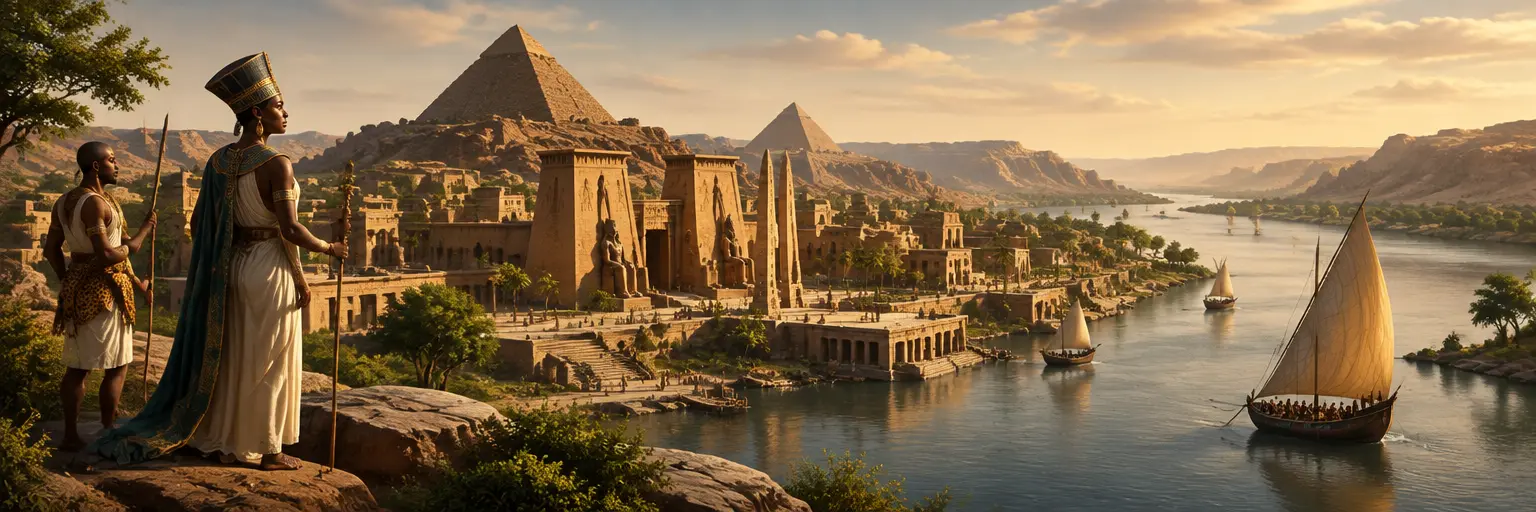
Delve into the mighty African civilizations that flourished along the Nile, south of Egypt. The Kingdom of Kush and its Nubian dynasties represent a rich tapestry of power, trade, and cultural exchange that shaped ancient Northeast Africa. From the early Kerma culture to the later Meroitic empire, this subcategory provides a detailed archaeological and historical analysis of a region often overshadowed by its northern neighbor. Discover the pyramids of Meroë, the warrior queens, and the unique writing systems that define this extraordinary chapter in human history, all curated for deep exploration on ArchaeologyHub.org.
🏛️ The Rise of Kerma & Early Nubian Kingdoms
Explore the earliest centralized state in sub-Saharan Africa, emerging around 2500 BCE. Kerma was not merely a trading post but a formidable urban center with monumental architecture, including the deffufa structures. Learn how this kingdom controlled gold, ivory, and incense routes, creating a wealthy society with distinct burial practices and artistic traditions. Excavations reveal a complex society that rivaled Egypt in its early phases.
This section covers the archaeological evidence of Kerma's urban planning, its massive mud-brick temples, and the royal tombs filled with thousands of sacrificial victims. Understand the geopolitical dynamics that led to intermittent conflict and trade with Egypt. You will find detailed artifacts from the Kerma classique period, including fine pottery and bronze weaponry, illustrating a civilization that mastered both agriculture and warfare in the harsh Nubian landscape.
⚔️ The 25th Dynasty: Kushite Rule Over Egypt
Discover the only period when Nubian kings ruled the entire Nile Valley from the Delta to the confluence of the Blue and White Niles. Known as the “Black Pharaohs,” rulers like Piye and Taharqa conquered Egypt and revitalized its culture, building on sacred traditions. This era marked a renaissance of pyramid building and religious revival, blending Egyptian deities with native Kushite beliefs.
We dissect the military campaigns and administrative systems that sustained Kushite hegemony for nearly a century. Through inscriptions like the Victory Stela of Piye, you will understand the motivations and logistics of this conquest. The section also analyzes the impact on Thebes and Karnak, where Kushite kings added their own monumental structures, leaving a distinct architectural footprint that archaeologists continue to study today.
🗿 Meroë: The Iron Age Capital & Royal Pyramids
Shift focus to the second capital of Kush, Meroë, located between the Atbara and Nile rivers. Unlike Napata, Meroë became a hub of iron smelting, creating weapons and tools that gave it economic and military power. The city featured over 200 small, steep-sided pyramids, unlike Egyptian ones, serving as royal tombs for over 40 kings and queens, including the famous Candaces (warrior queens).
Understand the unique Meroitic script, an alphabetic system derived from Egyptian hieroglyphs that remains partially deciphered. This page details the royal necropolis of Begrawiya, its treasures, and the iconography on the pyramid walls. You'll also learn about the decline of Meroë due to environmental changes and the rise of the kingdom of Aksum, marking the end of this great Nubian civilization around 350 CE.
👑 Queens of Kush: The Powerful Kandakes
Uncover the remarkable role of female rulers in Kushite society, a stark contrast to most ancient Mediterranean cultures. The Kandakes (or Candaces) were not merely regents but full sovereigns who led armies, built monuments, and negotiated with Rome. Queen Amanirenas famously defeated a Roman army and negotiated a favorable peace treaty, securing tribute from Augustus.
This section profiles each major Kandake, from Shanakdakhete and her monumental temple reliefs to Amanishakheto, whose burial at Meroë was looted for jewels now in European museums. We examine the archaeological evidence for their power, including pyramid inscriptions, palace complexes at Wad ban Naqa, and diadem crowns. This analysis highlights how gender dynamics in Nubia challenge our assumptions about ancient power structures.
🏺 Art, Religion & Trade Networks of Nubia
Immerse yourself in the material culture and spiritual world of the Kushites, which fused indigenous Nubian traditions with Egyptian influences. Key deities like Amun and Apedemak were worshipped, with dedicated temples of complex layouts. Trade networks stretched as far as the Indian Ocean, bringing exotic glass beads, spices, and textiles to Meroë.
Review the distinctive pottery styles, from painted wares of Napa to the fine, eggshell-thin Merotic pottery. Religious art often depicted the king being blessed by the lion-god Apedemak, reflecting a local reinterpretation of divine kingship. This part links the archaeological finds to broader economic and ecological trends, including the use of water reservoirs (hafirs) to manage scarce rainfall, demonstrating sophisticated adaptation to the savanna environment.
Frequently Asked Questions
What is the difference between the Kingdom of Kush and the Nubian Dynasties?
The Kingdom of Kush refers to the broader political state that existed from roughly 2500 BCE to 350 CE in Nubia. The “Nubian Dynasties” specifically denote the 25th and 26th dynasties of Egypt, when Kushite kings ruled over Egypt. Thus, all Nubian dynasties are Kushite, but not all of Kush's history was within Egypt.
Were the Kushites black Africans?
Yes, ancient Kushites were Nubian peoples of Sub-Saharan African origin. They had dark skin and curly hair, as depicted in their own art and Egyptian records. Genetic studies and archaeological evidence confirm a continuity with modern populations in the region.
Why did the Kingdom of Kush build so many pyramids?
Kushite kings adopted pyramid burial from Egypt but made it their own with steeper angles and smaller sizes. The pyramids served as royal tombs and monuments to honor deceased rulers, ensuring eternal life and legitimacy. Over 200 are located around Meroë alone, showcasing a deep attachment to the pyramid form.
Who was the most famous Kushite queen?
The most renowned is Queen Amanirenas (c. 40–10 BCE), who famously led troops against Rome. She lost an eye in battle but still negotiated a successful peace treaty with Augustus. Other notable Kandakes include Amanishakheto, known from her pyramid treasure and building projects.
How did the Kingdom of Kush eventually fall?
Kush declined due to a combination of factors: environmental degradation from overgrazing and iron smelting, the rise of the Aksumite Empire in Ethiopia, and the collapse of trade routes. Aksumite armies conquered Meroë around 350 CE, marking the official end of the kingdom, though cultural remnants lingered.