South Asian Civilizations: Vedic Period & Mahajanapadas – A Deep Dive
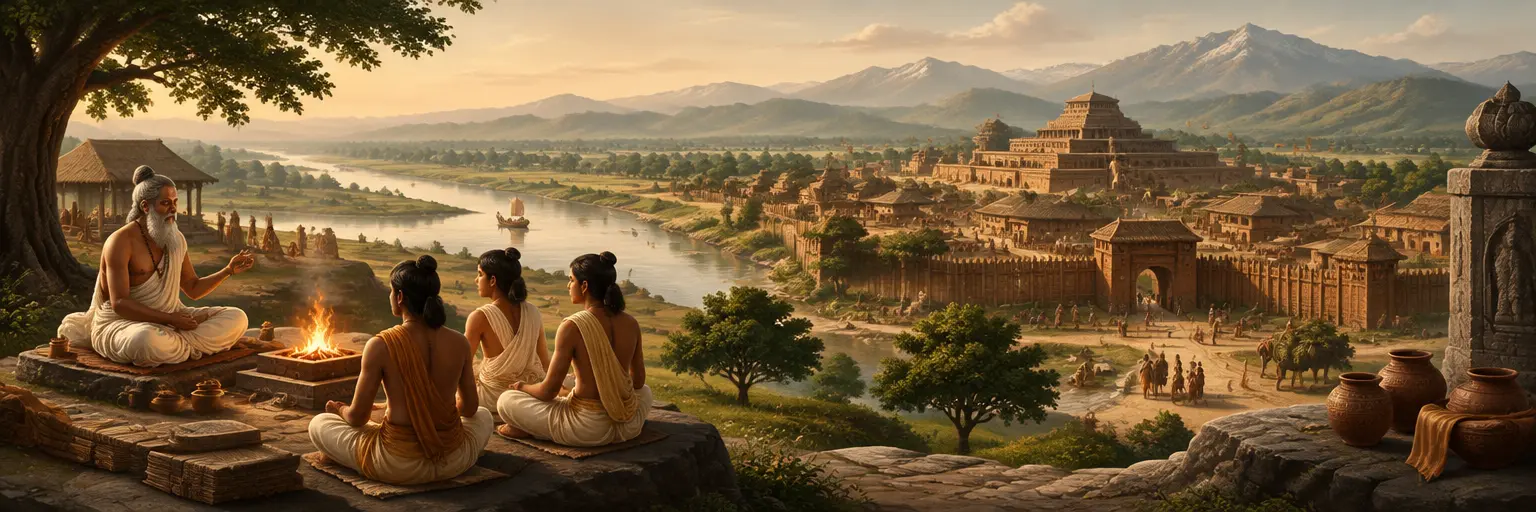
Welcome to ArchaeologyHub.org’s dedicated exploration of the Vedic Period and the Mahajanapadas, a transformative era (c. 1500–600 BCE) that laid the intellectual, social, and political foundations of South Asia. Here, we decode the transition from nomadic pastoralism to settled agrarian states, unravel the Rigvedic hymns, and trace the emergence of sixteen powerful kingdoms. This subcategory merges archaeological evidence—such as painted grey ware pottery, iron tools, and early urban layouts—with textual analysis to offer a rich, evidence-based narrative of ancient India. Discover how ritual, kinship, and monsoon-fed rivers shaped the subcontinent’s first great civilizations.
🏛️ The Rigvedic World: Society, Rituals, and the Dawn of Sanskrit
The Rigveda, composed around 1500–1200 BCE, is humanity’s oldest Indo-European text and a window into early Vedic life. On this page, you’ll explore the clan-based pastoral society, where cattle wealth defined status, and the soma ritual connected priests to cosmic forces. We analyze archaeological correlates like the Gandhara grave culture and early iron artifacts from sites in Punjab and the Swat Valley, linking material remains to the hymns’ references to rivers, chariots, and fire altars.
Expect detailed profiles of key deities—Indra, Agni, and Varuna—and how their worship mirrored social hierarchies. You’ll also find timelines showing the gradual shift from nomadic encampments to semi-permanent villages, supported by evidence of barley cultivation and domesticated horses. This section is ideal for students of early religion, comparative Indo-European studies, and anyone curious about how oral traditions preserve historical memory.
⚔️ The Later Vedic Age: Kingdoms, Caste, and the Ganges Valley
The period from 1000–600 BCE witnessed a dramatic eastward migration into the Ganges-Yamuna doab, transforming society from tribal egalitarianism to stratified kingdoms (janapadas). Here, we examine the rise of Kuru and Panchala as central powers, the codification of the varna system, and the composition of the Brahmanas and early Upanishads. Archaeological evidence, including Painted Grey Ware (PGW) pottery and iron ploughshares, helps date this era and reveals increased agricultural surplus.
We dissect the royal consecration rituals like Rajasuya and Vajapeya, which legitimized kingship, and compare them with excavations at sites like Hastinapur and Ahichhatra. You’ll also trace the growth of trade routes along the Ganges, the emergence of guilds, and the shift toward larger settlements that prefigured urban centers. This section bridges textual history with settle-pattern archaeology, offering a holistic view of political consolidation.
🗺️ The Sixteen Mahajanapadas: Map, Polities, and Urbanization
By 600 BCE, the subcontinent boasted sixteen major territorial states (Mahajanapadas) from Gandhara in the northwest to Anga in the east. Our interactive maps and regional profiles detail each polity—its capital, economy, and military strength. For instance, Magadha with its iron-rich hills and fertile plains became the hegemon, while Vatsa (Kausambi) thrived on long-distance trade. We also analyze the second urbanization, marked by the rise of fortified cities like Rajagriha and Vaishali, and the appearance of Northern Black Polished Ware (NBPW) as a luxury ceramic.
Expect archaeological case studies of early city walls, moats, and drainage systems that reveal advanced planning. You’ll learn how these polities minted punch-marked coins, standardized weights, and fostered craft specialization—evidence of a robust proto-monetary economy. This section is perfect for comparative political history and urban archaeology enthusiasts, as it situates Indian state formation within global narratives of Iron Age complex societies.
🛕 Religion and Philosophy: From Vedic Sacrifice to Upanishadic Thought
The Mahajanapada era was a crucible of religious experimentation, producing the Upanishads, Jainism, and Buddhism. Here, we explore the intellectual ferment that challenged Brahmanical orthodoxy, focusing on concepts like Brahman (ultimate reality) and Atman (self). We correlate this with archaeological evidence of ascetic cave complexes and early stupa burials at sites like Rajgir, indicating new forms of communal living and renunciation.
Our detailed analysis covers the shramana movements—including Mahavira and the Buddha—and their material culture, such as the first inscribed relics and monastic settlements. You’ll also examine how royal patronage of heterodox sects, especially under Bimbisara of Magadha, accelerated the spread of these ideas. This section is essential for understanding how philosophical breakthroughs emerged from specific socio-economic conditions, including urban stress and trade wealth.
🏺 Material Culture: Pottery, Iron, Coins, and Urban Artifacts
Dive into the archaeological fingerprints of the Vedic-Mahajanapada transition. We provide a comprehensive artifact gallery: Painted Grey Ware (with its geometric designs), Black and Red Ware, iron axes, arrowheads, and crucibles for smelting. Each artifact profile explains its production technique, distribution network, and function in daily life. We also feature punch-marked coins—the first pan-Indian currency—and discuss how their silver content and symbols reflect economic integration.
You’ll find stratigraphic charts from key excavations at Atranjikhera, Jakhera, and Ujjain, showing interrupted occupation layers that reveal periods of flooding or conflict. Our 3D models of kilns and granaries help visualize early industrial activity. This section serves as a practical guide for students of archaeometry and anyone interested in how everyday objects reveal macro-historical shifts.
Frequently Asked Questions
What is the main difference between the Early and Later Vedic periods?
The Early Vedic period (1500–1000 BCE) was pastoral, clan-based, and centered in Punjab, with the Rigveda as its primary text. The Later Vedic period (1000–600 BCE) saw eastward migration to the Ganges plains, agricultural surplus, the rise of territorial kingdoms (janapadas), a formalized caste system, and the composition of Brahmanas and early Upanishads, reflecting greater social stratification and political complexity.
How do archaeologists identify a Mahajanapada settlement?
Key indicators include fortified city walls and moats, street grids, specialized craft zones (e.g., metalworking quarters), public granaries, and the presence of Northern Black Polished Ware, a high-grade ceramic. The occurrence of punch-marked coins and standardized weights also signals a centralized economy. Excavations often reveal large public baths or assembly halls, matching textual descriptions of capitals.
Why is the Painted Grey Ware (PGW) culture important for dating the Vedic Age?
PGW pottery—fine, grey, and decorated with black geometric patterns—is found in layers dated to roughly 1100–600 BCE, precisely overlapping the Later Vedic period. Its distribution along the upper Ganges valley aligns with sites mentioned in the Mahabharata, providing a material anchor for the Kuru kingdom’s influence. Thus, PGW helps synchronize archeological stratigraphy with textual chronology, enabling cross-dating of other artifacts.
What was the role of iron technology in the rise of the Mahajanapadas?
Iron tools, especially ploughshares and axes, enabled deforestation of the dense Ganges plains, boosting agricultural yields and allowing population growth. Iron weapons also strengthened standing armies, giving powerful states like Magadha a military edge. The concentration of iron ore deposits in southern Bihar favored Magadha, facilitating its expansion and the eventual absorption of rival states, thus directly linking metallurgy to political centralization.
Were the Mahajanapadas urbanized in the same way as contemporary civilizations?
They exhibited a distinctive “second urbanization,” unlike earlier Harappan cities. Mahajanapada cities were smaller, fortified, and politically driven rather than trade-centric, with populations in the tens of thousands. They lacked massive public monuments but featured planned layouts, monastic complexes, and craft quarters. This urbanization was closely tied to agrarian surplus and military control, differing from the Indus Valley’s uniform grid and standardized bricks.