
Magadha: Archaeological Investigations into its Rise as an Imperial Power

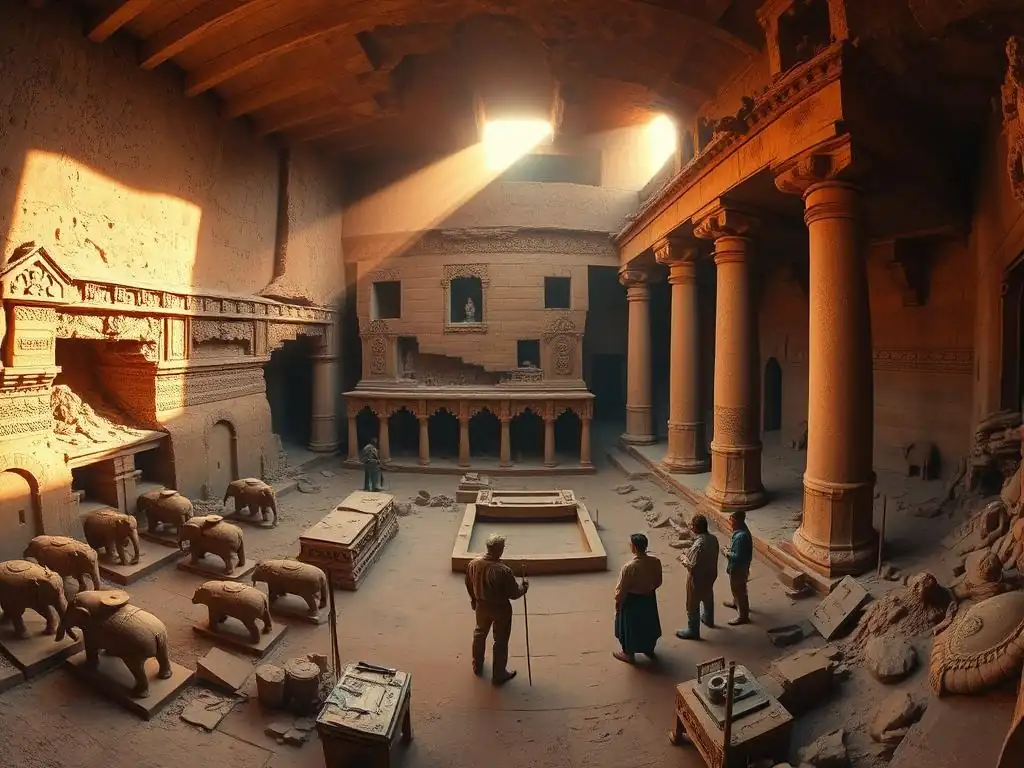
Welcome to ArchaeologyHub.org, your gateway to unraveling the mysteries of the past. Ever wondered what hidden treasures lie buried beneath the sands of time, waiting to rewrite history? This article delves into the remarkable Magadha empire archaeological discoveries, shedding light on the factors that propelled it to become an imperial power. Prepare to embark on a journey through meticulously excavated sites and unearthed artifacts, as we explore the foundations of one of ancient India's most influential civilizations. Discover the evidence and interpretations that shape our understanding of Magadha – and leave you with a thirst for more.
- Introduction to Magadha and its Imperial Ascendancy
- Geographical Context and Early Settlements of Magadha
- Key Archaeological Discoveries Illuminating the Magadha Empire
- The Mauryan Period: Archaeological Evidence of Imperial Expansion
- The Sunga and Kanva Dynasties: Archaeological Traces of Post-Mauryan Magadha
- Magadha's Economy and Trade: Archaeological Indicators
- Religious Developments in Magadha: Archaeological Perspectives
- Military Power and Warfare: Archaeological Evidence of Magadha's Army
- Analyzing the Decline of Magadha: Archaeological Clues
- Conclusion: The Lasting Legacy of Magadha Through Archaeological Research
-
Frequently Asked Questions
- What are some significant archaeological discoveries related to the Magadha Empire?
- How do archaeological excavations contribute to our understanding of the Magadha Empire's rise to power?
- Where are the primary archaeological sites associated with the Magadha Empire located?
- What types of artifacts are commonly found at Magadha Empire archaeological sites?
- How does ArchaeologyHub.org organize information about Magadha Empire archaeological discoveries?
- Final Reflection: Unearthing the Legacy of Magadha
- Unearth Your Inner Archaeologist!
Introduction to Magadha and its Imperial Ascendancy
The Significance of Magadha in Ancient Indian History
Magadha stands as a pivotal political and cultural entity in ancient Indian history, recognized for its extraordinary rise from a regional power to the nucleus of several significant empires, including the formidable Mauryan Dynasty. Situated strategically in the fertile Gangetic plains of modern-day Bihar, its ascendancy between the 6th and 4th centuries BCE marked a transformative period, witnessing the consolidation of power, the emergence of urban centers, and the flourishing of new philosophical and religious movements like Buddhism and Jainism.
The kingdom's economic prosperity, fueled by rich agricultural lands and access to iron ore, provided the foundation for its military strength and administrative sophistication.
Understanding Magadha's imperial journey is incomplete without a rigorous examination of the tangible remnants of its past. Archaeological investigations have been instrumental in corroborating and expanding upon historical texts, offering concrete evidence of its urban planning, material culture, economic systems, and religious practices. These Magadha empire archaeological discoveries have provided invaluable insights into the daily lives of its inhabitants, the structure of its cities, and the technological advancements that underpinned its dominance, allowing historians to reconstruct a more nuanced and accurate narrative of this foundational period in Indian civilization.
ArchaeologyHub.org and the Exploration of South Asian Civilizations
ArchaeologyHub.org is dedicated to serving as a comprehensive digital encyclopedia for archaeological discoveries, and this article on Magadha exemplifies our commitment to detailed exploration of ancient civilizations. By meticulously cataloging excavation techniques, analyzing artifact profiles, and providing interpretive analyses, we aim to illuminate complex historical narratives. This particular study falls within our South Asian Civilizations category, specifically focusing on the Vedic Period & Mahajanapadas, offering a deep dive into the political and cultural landscape that shaped early India.
Our approach emphasizes the critical role of archaeological evidence in understanding the past. For Magadha, this means moving beyond traditional textual accounts to present the physical remains that speak volumes about its imperial ascendancy. Through detailed descriptions of archaeological sites and the artifacts recovered, ArchaeologyHub.org strives to offer readers a robust and visually organized taxonomy of in-depth historical content, ensuring that the rich heritage of the Magadha empire archaeological discoveries is accessible and thoroughly documented for researchers and enthusiasts alike.
Geographical Context and Early Settlements of Magadha
The Strategic Location of Magadha: Rivers and Resources
Magadha's preeminence was significantly influenced by its advantageous geographical position within the middle Gangetic plain. The region benefited immensely from the fertile alluvial soils deposited by the Ganges, Son, and Punpun rivers, which ensured agricultural surplus—a critical prerequisite for supporting a large non-agricultural population, including administrators and a standing army. This agricultural bounty allowed for the accumulation of wealth and resources necessary for state-building and expansion.
Beyond agriculture, Magadha's proximity to the rich iron ore deposits in the Chota Nagpur plateau provided a crucial strategic advantage. Access to abundant iron enabled the large-scale production of superior iron tools for agriculture, leading to enhanced productivity, and more importantly, the manufacture of advanced weaponry for military campaigns. This combination of fertile land and mineral wealth was a unique asset that allowed Magadha to outcompete its contemporaries and lay the groundwork for its imperial ambitions, with Magadha empire archaeological discoveries often revealing evidence of early ironworking.
Pre-Imperial Magadha: Early Archaeological Evidence of Settlements
Archaeological investigations have revealed compelling evidence of early human settlements in the Magadhan heartland that predate its imperial rise, indicating a gradual evolution of complex societies. Sites such as Chirand, located near Patna, have yielded artifacts dating back to the Neolithic (c. 2500 BCE) and Chalcolithic periods, showing early agricultural practices and rudimentary settlements. Further excavations at sites like Sonpur in Bihar have uncovered occupational layers from the Chalcolithic and Iron Age, characterized by Black and Red Ware (BRW) pottery, suggesting early village communities and the nascent use of iron around 1000 BCE.
As Magadha transitioned into the Iron Age (c. 800-600 BCE), the archaeological record shows a shift towards more organized and larger settlements, with the appearance of Northern Black Polished Ware (NBPW) in its early phases. Evidence of early fortifications, like rudimentary earthen ramparts, and the presence of ring wells indicate a move towards proto-urban centers. These Magadha archaeological discoveries provide a crucial baseline, demonstrating the long-term development of settlements and technological capabilities that eventually culminated in the formation of the Magadhan state.
Key Archaeological Discoveries Illuminating the Magadha Empire
Excavations at Rajgir: Unveiling the Ancient Capital
Rajgir, known historically as Girivraja, served as the earliest capital of Magadha, and its archaeological remains provide profound insights into the kingdom's early imperial ambitions. The most striking discovery is the well-preserved cyclopean wall, a massive stone fortification encircling the ancient city, estimated to be approximately 40 kilometers in length and 3-4 meters wide. This impressive defensive structure, dating back to the pre-Mauryan period (c. 6th-5th century BCE), showcases sophisticated engineering and a significant mobilization of resources, indicative of a powerful state.
Further excavations within Rajgir have revealed the remains of various structures, including gateways, watchtowers, and residential areas, along with pottery and tools that paint a picture of a bustling urban center. The Jivakamravana monastery, believed to be a royal physician's residence and a site frequently visited by the Buddha, has also been identified, highlighting the city's importance as a religious and political hub. These Magadha empire archaeological discoveries at Rajgir underscore its strategic importance and the early organizational capabilities of the Magadhan rulers.
Sonbhandar Caves: Deciphering the Mysteries of Magadha's Treasury
The Sonbhandar Caves, located near Rajgir, are a pair of rock-cut caves that have long captured the imagination of archaeologists and historians due to local legends associating them with the treasury of the Magadhan kings. While direct archaeological evidence confirming their use as a treasury is elusive, the caves themselves offer valuable insights into early rock-cut architecture in the region. The larger of the two caves features a polished interior and an inscription in Brahmi script, possibly dating to the 3rd or 4th century CE, indicating continuous use or reverence over centuries.
Despite the lack of explicit treasure, the structural design and the strategic location of the caves within the ancient capital's vicinity suggest a significant purpose, potentially serving as a secure storage facility or a sacred space. The precise craftsmanship visible in the rock cutting, though less elaborate than later cave complexes, offers a glimpse into the architectural skills available in the Magadhan heartland. The mystery surrounding these caves continues to fuel interest in further Magadha archaeological discoveries that might shed light on their true function and historical significance.
Archaeological Finds at Nalanda: Insights into Education and Culture
While Nalanda rose to its zenith as a renowned Buddhist monastic university during the Gupta period, its origins are firmly rooted in the Magadhan heartland, and earlier archaeological layers hint at its continuous development from preceding eras. Extensive excavations have unearthed the sprawling ruins of the Mahavihara, revealing a meticulously planned complex of monasteries, stupas, temples, and residential quarters, demonstrating a highly organized institution. Though most monumental structures date from later periods, the site's enduring significance within Magadha highlights a long tradition of intellectual and spiritual pursuit.
The findings at Nalanda include a vast array of artifacts: sculptures, terracotta figures, seals, inscriptions, and pottery, which collectively illustrate the vibrant intellectual and cultural life fostered in the region. The discovery of numerous monastic cells and lecture halls points to a dedicated pursuit of knowledge, encompassing subjects like logic, medicine, and astronomy, alongside Buddhist philosophy. These archaeological findings in Magadha at Nalanda, even with their later prominence, provide a continuum of the region's cultural evolution, underscoring its role as a center for learning and religious development that likely began during the imperial Magadha era.
The Mauryan Period: Archaeological Evidence of Imperial Expansion
Ashokan Edicts and Pillars: Documenting Mauryan Rule in Magadha
The reign of Emperor Ashoka (c. 268-232 BCE) of the Mauryan Empire, which had its heartland in Magadha, is uniquely documented through his numerous rock and pillar edicts, providing unparalleled archaeological evidence of imperial administration and ethical governance. These edicts, inscribed in various forms of Brahmi script, are found across the subcontinent, with several key examples located within or near the Magadhan core, such as the Minor Rock Edict at Sasaram. They articulate Ashoka's policy of Dhamma (righteousness), his efforts to spread Buddhist principles, and detailed administrative instructions, offering direct insight into the state's ideology and reach.
The monumental Ashokan pillars, often topped with magnificent animal capitals (like the famous Sarnath Lion Capital, though Sarnath is outside Magadha, its creation points to the imperial capital's influence), are prime examples of Mauryan artistry and engineering prowess. Pillars found at sites like Lauriya-Nandangarh in Bihar, with their distinctive highly polished sandstone, reflect the immense resources and centralized control of the Mauryan state. These Magadha empire archaeological discoveries in the form of edicts and pillars are not merely artistic achievements but critical primary sources for understanding the political and moral fabric of the Mauryan imperium.
Pataliputra Excavations: Reconstructing the Mauryan Capital City
Pataliputra, modern-day Patna, served as the grand capital of the Mauryan Empire, and archaeological excavations have been crucial in piecing together its magnificent scale and sophisticated urban planning. Early 20th-century digs by Spooner and later expeditions at sites like Kumhrar and Bulandi Bagh revealed extensive wooden palisades that once encircled the city. These findings corroborate the accounts of Megasthenes, the Greek ambassador, who described Pataliputra as being enclosed by a wooden wall with 64 gates and 570 towers, suggesting a city of immense proportions, estimated to be around 14.5 kilometers long.
Further discoveries at Kumhrar include the remains of a massive pillared hall, believed to be part of the royal palace or an assembly hall, featuring polished Mauryan sandstone columns. The presence of numerous wooden structures, elaborate drainage systems, and evidence of a well-organized urban layout point to a highly developed administrative and residential complex. These Magadha archaeological sites at Pataliputra offer compelling evidence of the Mauryan Empire's administrative capacity, urban sophistication, and the sheer scale of its imperial capital, which was the nerve center of its vast dominion.
Material Culture of the Mauryan Empire: Archaeological Artifact Analysis
The material culture of the Mauryan Empire, particularly evident in Magadha empire archaeological discoveries, provides a tangible link to the daily lives, economic activities, and artistic expressions of the period. A distinctive and widespread artifact is the Northern Black Polished Ware (NBPW) pottery, a highly lustrous, fine-quality ceramic that became a hallmark of the Mauryan era. Its extensive distribution across India, with its highest concentration in the Magadhan heartland, indicates not only sophisticated pottery production techniques but also vast trade networks and a degree of cultural uniformity under imperial rule.
Beyond pottery, excavations have yielded a wealth of other artifacts. Punch-marked coins, predominantly silver and copper, with their characteristic symbols, were the primary medium of exchange, reflecting a robust monetary economy and centralized authority. Terracotta figurines, often depicting human and animal forms, provide insights into popular art and religious beliefs. Iron tools and implements, including agricultural tools and weapons, demonstrate advancements in metallurgy that supported both agricultural surplus and military might. Collectively, these objects offer a rich tapestry of Mauryan life and the economic prowess emanating from Magadha.
The Sunga and Kanva Dynasties: Archaeological Traces of Post-Mauryan Magadha
Following the decline of the Mauryan Empire, the Sunga dynasty emerged, largely retaining control over the core Magadhan region, and archaeological evidence points to a continuity of cultural and political life. While major Sunga artistic achievements are often associated with sites like Bharhut and Sanchi (known for their stupa railings and gateways, though geographically outside the immediate Magadhan heartland), within Magadha itself, sites like Pataliputra show continued occupation. Excavations at Pataliputra have revealed structures built over Mauryan remains, often using bricks, indicating a shift in construction materials and techniques.
Further Magadha archaeological discoveries from the Sunga period include distinctive terracotta figurines, often more stylized and ornate than their Mauryan predecessors, which reflect evolving artistic tastes and religious iconography. Coinage from this period, frequently bearing Brahmi legends and symbols, also provides crucial numismatic evidence of Sunga rule and economic activity within the Magadhan sphere. These findings, though perhaps less monumental than Mauryan structures, are vital for understanding the political and cultural transitions that occurred in the post-imperial Magadha.
Insights into the Kanva Dynasty from Archaeological Remains
The Kanva dynasty, which succeeded the Sungas, had a relatively brief reign (c. 73-28 BCE), and consequently, distinct archaeological evidence directly attributable to them is less abundant compared to the preceding Mauryans or Sungas. Their presence is often inferred from the continuity of occupation layers at sites within the Magadhan region, where pottery types and minor structural changes suggest a transition rather than a radical break. Archaeological surveys occasionally identify specific ceramic types or small finds that align with the chronological bracket of the Kanvas, though these are often subtle.
The primary archaeological insight into the Kanva dynasty comes from numismatic evidence. Coins bearing the names of Kanva rulers, though rare, have been found in the Magadhan heartland, confirming their political authority and economic presence. These archaeological findings in Magadha for the Kanvas highlight a period of political fragmentation and diminishing centralized power compared to the Mauryan zenith, yet they affirm the continuous occupation and administrative succession within the core region, even as larger imperial structures began to wane.
Magadha's Economy and Trade: Archaeological Indicators

Coinage of the Magadha Empire: A Study of Monetary Systems
The economic sophistication of the Magadha Empire is profoundly revealed through its coinage, particularly the widespread use of punch-marked coins (PMCs), which represent the earliest indigenous coinage in ancient India. These coins, typically made of silver or copper, are characterized by their irregular shapes and the presence of multiple symbols (such as the sun, a six-armed symbol, or various animals) punched onto their surface. The standardization of weight and the sheer volume of PMCs found across the subcontinent, with a significant concentration in the Magadhan core, indicate a highly organized monetary system crucial for a vast empire.
Hoards of punch-marked coins discovered at various archaeological sites, from Taxila in the northwest to Golconda in the south, underscore the extensive trade networks facilitated by the Magadhan state. The centralized production and widespread circulation of these coins suggest a robust economy capable of supporting large-scale transactions, taxation, and a complex administrative apparatus. These Magadha empire archaeological discoveries in numismatics are indispensable for understanding the economic backbone that sustained its imperial power.
Trade Routes and Networks: Evidence from Archaeological Excavations
Archaeological excavations in the Magadhan region and beyond provide compelling evidence of extensive trade routes and networks that underpinned the empire's economic prosperity. The strategic location of Magadha in the Gangetic plains allowed it to control major riverine trade routes along the Ganges and its tributaries, connecting it to resource-rich areas and distant markets. Finds of distinctive pottery, such as Northern Black Polished Ware (NBPW), far from its production centers in Magadha, indicate robust internal trade.
Evidence of long-distance trade is also present, albeit more pronounced in later periods, the routes were certainly established during the Magadhan era. Discoveries of non-indigenous materials like certain types of beads, precious stones, and even some foreign ceramic fragments in Magadhan sites suggest connections with regions as far as Central Asia and the Mediterranean. These Magadha archaeological discoveries confirm its role as a central hub in ancient Indian commerce, leveraging its geographical advantages and political stability to foster a thriving mercantile economy.
Agricultural Practices: Archaeological Insights into Food Production in Magadha
The agricultural practices in Magadha were the bedrock of its economic and imperial success, a fact well-supported by archaeological insights. The fertile alluvial plains of the Gangetic basin provided ideal conditions for intensive cultivation, leading to substantial food surpluses. Excavations at various sites within the Magadhan heartland, such as Chirand and Sonpur, have unearthed iron agricultural implements like ploughshares, sickles, and hoes, dating back to the Iron Age, indicating advanced farming technologies that significantly boosted productivity.
Furthermore, archaeological evidence from early urban centers like Pataliputra includes the discovery of large storage pits and what appear to be granaries, suggesting an organized system for collecting and distributing agricultural produce. This surplus was essential for feeding the growing urban populations, supporting the non-agricultural administrative and military classes, and sustaining a large standing army. These Magadha empire archaeological discoveries related to agriculture underscore the efficient food production system that was fundamental to the rise and maintenance of its imperial power.
Religious Developments in Magadha: Archaeological Perspectives
Buddhism and Jainism: Archaeological Sites and Religious Artifacts
Magadha served as the crucible for the emergence and early flourishing of two of India's most significant Sramanic traditions: Buddhism and Jainism. Archaeological sites within the Magadhan core offer compelling evidence of their foundational periods. For Buddhism, key sites include Bodh Gaya, where the Mahabodhi Temple complex and the Vajrasana stone mark the spot of Buddha's enlightenment, with earliest structures dating back to the Mauryan period. Rajgir, another ancient Magadhan capital, features sites like Gridhakuta Hill (Vulture's Peak) and the Saptaparni Cave, both associated with early Buddhist councils and teachings.
Similarly, Jainism also has deep roots in Magadha. Rajgir is sacred to Jains, with numerous temples and sites on Vaibhara Hill associated with Mahavira. Archaeological finds at these sites include early stupas, viharas (monasteries), rock-cut shelters, and votive offerings, along with inscriptions that provide textual corroboration of their religious significance. The presence of early iconography and architectural elements dedicated to these faiths in the Magadhan region highlights its pivotal role as a spiritual center and a cradle for these transformative religious movements, making them crucial Magadha empire archaeological discoveries.
Early Hindu Traditions: Archaeological Evidence from Magadha
While Buddhism and Jainism gained significant prominence in Magadha, archaeological evidence also points to the continued presence and evolution of early Hindu (Brahmanical) traditions within the region. Unlike the monumental monastic complexes of Buddhism and Jainism, early Hindu practices often involved more ephemeral structures or domestic worship, making their archaeological footprint less pronounced in the earliest periods. However, finds of terracotta figurines of various deities, some possibly representing proto-Hindu gods and goddesses, have been unearthed from Magadhan sites dating back to the Mauryan and post-Mauryan eras.
Furthermore, the continuity of certain ritualistic objects and the presence of votive tablets with symbols associated with Brahmanical worship suggest a parallel development of Hindu traditions. While large-scale temple architecture becomes more prevalent in later periods (e.g., Gupta), the foundational elements of Puranic Hinduism were undoubtedly present and evolving within the Magadhan heartland. These archaeological findings in Magadha, though sometimes subtle, demonstrate the religious pluralism and the coexistence of diverse spiritual practices that characterized the imperial state.
Military Power and Warfare: Archaeological Evidence of Magadha's Army
Fortifications and Defensive Structures: Archaeological Analysis
The military might of Magadha, essential for its imperial expansion, is tangibly demonstrated through the extensive fortifications and defensive structures uncovered by archaeological investigations. The most prominent example is the cyclopean wall of Rajgir, the early Magadhan capital, a massive stone rampart approximately 40 kilometers long. This formidable structure, dating to the pre-Mauryan period, showcases the early Magadhan state's capacity for large-scale public works and its commitment to strategic defense.
During the Mauryan period, the capital Pataliputra was protected by an even more elaborate system. Excavations have revealed remnants of a massive wooden palisade, described by ancient Greek sources as having numerous gates and towers, encircling the city. The sheer scale of these defensive works, requiring immense labor and resources, underscores the Magadhan empire's organizational capabilities and its focus on military security. These Magadha empire archaeological discoveries of fortifications provide concrete evidence of its strategic planning and readiness for warfare.
Weapons and Military Equipment: Recovered Artifacts and Technological Advancements
Archaeological finds of weapons and military equipment from various Magadhan sites offer direct insights into the technological advancements and composition of the empire's formidable army. Excavations at sites like Pataliputra and Rajgir have yielded a significant number of iron artifacts, including spearheads, arrowheads, daggers, and swords. The quality and abundance of these iron weapons reflect Magadha's superior metallurgical capabilities, which gave it a crucial advantage over its rivals.
Beyond individual weaponry, textual sources like Megasthenes' Indica describe a diverse army comprising infantry, cavalry, chariots, and elephants. While direct archaeological evidence for all these components is challenging to recover, the scale of urban planning and the presence of large open spaces within imperial cities might indirectly support the existence of such a large and varied military. These Magadha archaeological discoveries of advanced weaponry and the evidence of extensive fortifications collectively confirm the sophisticated military apparatus that underpinned Magadha's rise as an imperial power.
Analyzing the Decline of Magadha: Archaeological Clues
Factors Contributing to the Decline: Evidence from Archaeological Records
The decline of the Magadhan empires, particularly the Mauryan, is a complex historical process, and archaeological records offer valuable, albeit often indirect, clues regarding the contributing factors. Post-Mauryan layers at sites like Pataliputra show a general decrease in the quality and ubiquity of Northern Black Polished Ware (NBPW), a hallmark of imperial prosperity. This shift towards coarser pottery types and less elaborate construction materials may suggest a decline in centralized control over production and a general economic contraction.
Furthermore, while the grand scale of Mauryan structures is evident, later periods sometimes show less monumental construction or a fragmentation of larger urban centers into smaller settlements. Changes in coin types, reductions in metal purity, or a decrease in the volume of currency circulation can also indicate economic strain or a weakening of central authority. These Magadha empire archaeological discoveries, though not always providing direct causes, highlight a gradual transformation and a potential reduction in the state's capacity to maintain its previous imperial scale and administrative efficiency.
Post-Imperial Magadha: Archaeological Findings from Later Periods
Even after the political decline of the great Magadhan empires, archaeological findings confirm the enduring importance of the Magadhan core region as a cultural and economic hub. Sites like Pataliputra and Rajgir continued to be occupied, though the nature of their settlements transformed. Later archaeological layers reveal the emergence of new pottery types, such as Red Ware, and changes in architectural styles, reflecting the influence of successor dynasties and regional powers like the Sungas, Kanvas, and later the Guptas.
These post-imperial Magadha archaeological discoveries illustrate a continuity of human habitation and cultural development, even as the centralized imperial power waned. While the political landscape fragmented, the region remained a significant center for trade, agriculture, and religious activity. The archaeological record thus provides a nuanced picture of transformation rather than abandonment, showcasing Magadha's resilience and its lasting legacy as a foundational region in ancient Indian history, continuing to adapt and evolve through subsequent periods.
Conclusion: The Lasting Legacy of Magadha Through Archaeological Research
Summarizing the Key Archaeological Discoveries
Archaeological research has been indispensable in unraveling the narrative of Magadha's rise to imperial power, moving beyond textual accounts to provide tangible evidence of its historical trajectory. Key Magadha empire archaeological discoveries include the formidable cyclopean walls of Rajgir and the extensive wooden palisades of Pataliputra, which attest to sophisticated urban planning and military might. The ubiquitous presence of Northern Black Polished Ware (NBPW) and the widespread circulation of punch-marked coins reveal a robust economy and advanced material culture.
Furthermore, the archaeological sites associated with the origins of Buddhism and Jainism, such as Bodh Gaya and Rajgir, underscore Magadha's pivotal role as a crucible of new religious movements. Finds of advanced iron weaponry and agricultural tools highlight technological prowess that fueled both military expansion and economic prosperity. Collectively, these archaeological findings offer a comprehensive and concrete understanding of how Magadha transformed from a regional power into the nucleus of India's first great empires.
Future Directions for Archaeological Research in Magadha
Despite the wealth of existing Magadha archaeological discoveries, significant potential remains for future research to further illuminate its imperial past. Deeper stratigraphic excavations at known sites, particularly in unexplored areas of Pataliputra and Rajgir, could uncover more about the pre-Mauryan phases and the transitions between dynasties, offering a more granular understanding of state formation. The application of non-invasive techniques such as LiDAR (Light Detection and Ranging) and ground-penetrating radar could reveal buried structures and settlement patterns without extensive excavation, potentially identifying previously unknown sites.
Moreover, interdisciplinary approaches, combining archaeological data with epigraphy, numismatics, paleobotany, and zooarchaeology, can provide a more holistic picture of Magadha's environment, economy, and daily life. Such integrated studies can help address lingering questions about the precise mechanisms of its imperial expansion, the socio-economic conditions of its populace, and the specific factors contributing to its long-term impact on Indian civilization. Continued archaeological endeavors are vital to fully appreciate the enduring legacy of the Magadha empire.
Frequently Asked Questions
Discoveries include evidence of urban centers like Pataliputra, revealing sophisticated infrastructure and administrative structures. Also important are artifacts indicating trade and economic power, like coins and pottery shards.
How do archaeological excavations contribute to our understanding of the Magadha Empire's rise to power?
Excavations reveal insights into the empire's infrastructure, social organization, and economic activities. Examining settlement patterns and fortifications helps understand its expansionist policies.
Where are the primary archaeological sites associated with the Magadha Empire located?
Key sites are concentrated in present-day Bihar, India, particularly around the ancient capital of Pataliputra (modern Patna). Other important sites are scattered across the Ganges River valley.
What types of artifacts are commonly found at Magadha Empire archaeological sites?
Common finds include pottery, coins, inscriptions, and remains of monumental architecture. These artifacts provide valuable information about the empire's culture, economy, and administration.
How does ArchaeologyHub.org organize information about Magadha Empire archaeological discoveries?
ArchaeologyHub.org categorizes information by geographic region and time period, offering detailed timelines, artifact profiles, and interpretive analyses. This facilitates a comprehensive understanding of the Magadha Empire's history and culture.
Final Reflection: Unearthing the Legacy of Magadha
The archaeological discoveries surrounding the Magadha Empire, as explored in this article, are not merely relics of a distant past; they are vital keys to understanding the foundations of Indian civilization and its enduring influence on the world. By meticulously piecing together the fragments of Magadha's history, we gain a deeper appreciation for the complex political, economic, and social forces that shaped this pivotal empire and, consequently, the trajectory of the subcontinent.
The impact of Magadha resonates profoundly even today. Its innovative administrative systems, its patronage of diverse religious and philosophical schools, and its vast network of trade and communication laid the groundwork for subsequent empires and continue to inform our understanding of statecraft and cultural exchange. As we delve deeper into its past, we uncover not just the story of a powerful empire, but also the roots of many of the values and institutions that define modern India. History, despite its wrenching pain, cannot be unlived, but if faced with courage, need not be lived again.
- Maya Angelou. This quote encapsulates the importance of understanding Magadha's rise and fall, learning from its successes and failures to build a more informed future.
Let us, therefore, not view these archaeological discoveries as mere academic exercises, but as invitations to connect with our shared human heritage. Consider how the lessons of Magadha – its ambition, its innovation, and its ultimate vulnerability – can inform your own understanding of power, progress, and the enduring quest for a just and prosperous society. Reflect on how you can contribute to preserving and celebrating this rich legacy for generations to come, ensuring that the echoes of Magadha continue to inspire and enlighten us all.
Unearth Your Inner Archaeologist!
Thank you for delving into the fascinating world of Magadha! We hope this journey into the archaeological evidence of its rise has sparked your curiosity and provided valuable insights. Now, let's put that newfound knowledge to work!
Here are a few ways to continue your exploration:
- Visit your local museum and seek out exhibits featuring artifacts from ancient India. See if you can identify potential connections to Magadha’s culture and influence!
- Share this article with a friend who shares your passion for history or archaeology. Spark a conversation and exchange perspectives.
- Dive deeper! Research a specific ruler or key battle mentioned in the article. What previously unknown fact about Magadha will you unearth?
What aspects of Magadha's rise to power intrigue you most, and what further questions do you hope archaeology can answer?