Religious Beliefs of the Indus People: Interpreting Iconography and Ritual Practices
🌟 Explore the fascinating world of the Indus Valley religious iconography, revealing insights into the spiritual beliefs and ritual practices of the…
Read article
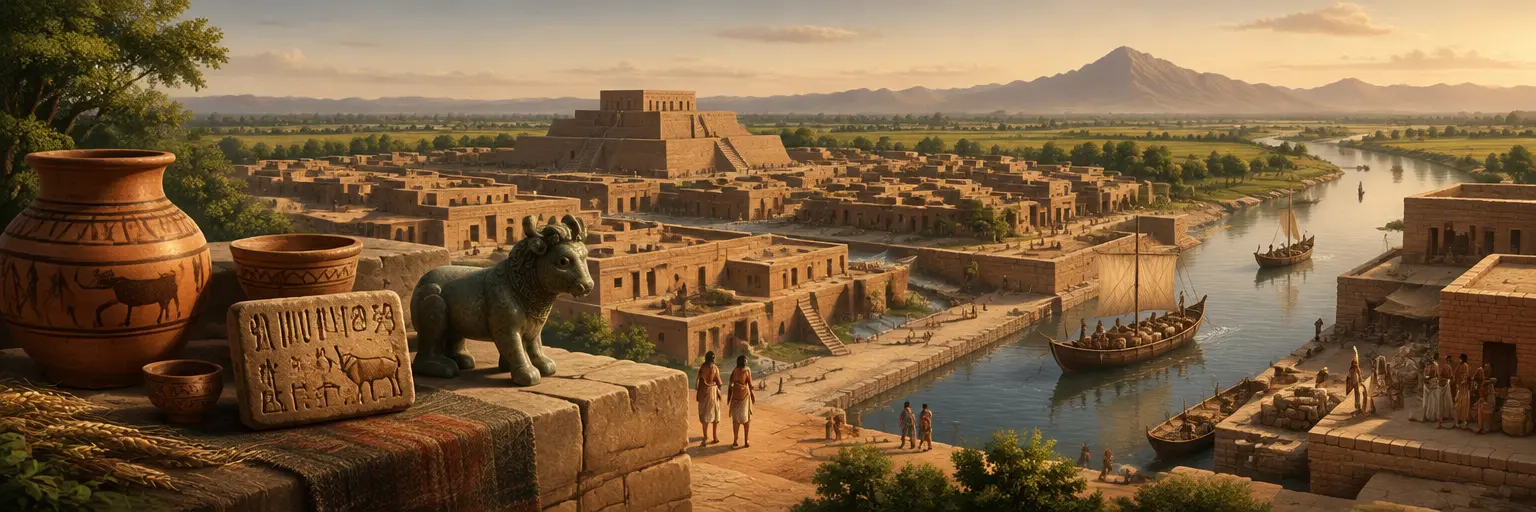
Discover the enigmatic world of the Indus Valley Civilization, one of history’s most advanced yet mysterious ancient societies. This detailed exploration delves into the urban planning, egalitarian social structure, and sophisticated drainage systems of Harappa and Mohenjo-Daro, while unraveling the secrets of their undeciphered script—a puzzle that has baffled linguists for decades. From intricate seal carvings and standardized weights to the possible impacts of climate change and trade disruptions, we analyze the theories of decline that led to this civilization’s mysterious collapse around 1900 BCE. Perfect for enthusiasts of ancient history, archaeology, and South Asian heritage, this page offers a scholarly yet accessible overview, backed by the latest excavation findings. Uncover how this Bronze Age marvel influenced later cultures and why its legacy remains a cornerstone of global historical study. Ideal for students, researchers, and curious minds seeking a deeper understanding of one of the world’s earliest cradles of civilization—dive into the evidence and decide for yourself what truly happened to this remarkable society.
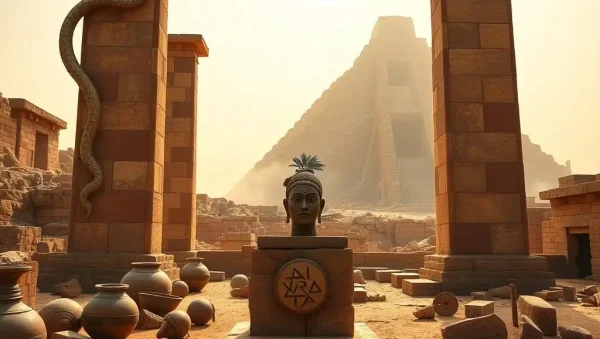
🌟 Explore the fascinating world of the Indus Valley religious iconography, revealing insights into the spiritual beliefs and ritual practices of the…
Read article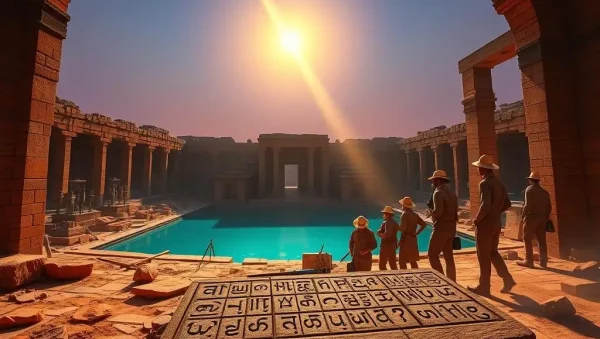
🌟 Discover how the Indus Valley Civilization Impact shaped South Asian society, leaving a lasting legacy through its advanced urban planning, sophisticated…
Read articleWelcome to ArchaeologyHub.org’s detailed study of the Indus Valley Civilization, one of the world’s earliest urban societies, flourishing around 2600–1900 BCE in present-day Pakistan and northwest India. This subcategory delves into the sophisticated city planning, enigmatic undeciphered script, and the multifaceted factors behind its mysterious decline. Whether you are a student, researcher, or enthusiast, these pages offer interpretive analyses grounded in archaeological evidence, artifact profiles, and regional timelines. Expect a rigorous, SEO-rich exploration of one of antiquity’s most compelling puzzles, designed to enhance your understanding and appreciation of this Bronze Age marvel.
The Indus Valley Civilization is renowned for its grid-planned cities like Mohenjo-daro and Harappa, featuring advanced drainage systems, standardized brick sizes, and public baths. Society was notably egalitarian compared to contemporaries like Egypt or Mesopotamia, with no grand palaces or temples dominating the landscape. Evidence suggests a merchant-driven economy with thriving craft specialization, including bead-making, pottery, and metallurgy. Residential quarters varied in size, hinting at social stratification, yet public amenities—like the Great Bath and granaries—indicate communal priorities. This section unpacks excavations, household artifacts, and urban layouts, helping you visualize daily life in a civilization that prioritized hygiene and order.
Explore detailed timelines of urban evolution, from early village settlements to mature urban centers. We analyze the role of citadels versus lower towns, and how water management systems, such as reservoirs and wells, supported large populations. Recent studies on skeletal remains and burial practices reveal health, diet, and occupational patterns, bridging the gap between material culture and social hierarchies. By examining trade networks with Mesopotamia and the Persian Gulf, you’ll see how urban prosperity was fueled by both internal organization and external commerce.
The Indus script, comprising over 400 distinct symbols on seals, pottery, and amulets, remains undeciphered—making it one of archaeology’s greatest mysteries. Unlike cuneiform or hieroglyphs, most inscriptions are brief, typically 4-6 symbols long, suggesting they may encode names, titles, or trade records rather than narrative text. This section profiles the famous steatite seals, often depicting animals like unicorns and bulls, and discusses competing linguistic theories, from Dravidian to Indo-Aryan origins. We also examine the script’s statistical properties, such as symbol frequency and positional patterns, to identify structural rules that hint at a logosyllabic system.
You’ll find a comprehensive artifact gallery with high-resolution images and decipherment attempts over the past century, including recent computational analyses using machine learning. We highlight the scholarly debate: some argue the script represents a pre-writing symbol system, while others contend it’s a true language. Explore the cultural context—seals were used for trade authentication, religious amulets, or administrative tags—and see how ongoing excavations at sites like Dholavira and Rakhigarhi provide new inscriptions that may eventually crack the code.
The Indus economy was a robust network of long-distance trade and local production, evidenced by standardized weights (cubical chert stones) and seals used for commercial transactions. Major exports included cotton textiles, beads, ivory, and timber, with imports of lapis lazuli, silver, and copper from Afghanistan, Iran, and Mesopotamia. This subcategory offers detailed artifact profiles, from the famous dancing girl bronze statue to intricate carnelian beads, illustrating technological innovation like the lost-wax casting and kiln-fired pottery. We delve into maritime trade routes, dockyards at Lothal, and overland caravans, reconstructing a vibrant economic tapestry.
Learn how craft specialization was organized in urban quarters, with evidence of workshops producing shell bangles, faience, and stone tools. Analysis of Indus weights reveals a consistent binary and decimal system, facilitating fair trade. We also cover agricultural surplus management, including barley and wheat cultivation, and the role of the monsoon. By exploring these facets, you’ll gain insight into how an urban civilization sustained millions without visible kings, armies, or temples—suggesting a cooperative, possibly theocratic or assembly-based governance.
The decline of the Indus Valley Civilization (around 1900 BCE) was not abrupt but a gradual process spanning centuries. Leading theories include climate change—specifically, the weakening of monsoon rains and the drying up of the Ghaggar-Hakra river system—leading to crop failures and urban abandonment. Increases in flooding from tectonic activity or river course shifts also devastated cities like Mohenjo-daro. This section critically evaluates archaeological evidence, such as isotope analyses of sediments and skeletal stress markers, to separate fact from speculation. We also assess the role of Aryan migration theories, largely debunked by modern genetics and archaeology.
Explore how urban populations dispersed into smaller villages, with material culture becoming simpler and trade networks shrinking. The decline saw the rise of late-phase cultures, like the Cemetery H and Jhukar, indicating cultural continuity rather than collapse. We present comparative timelines with other Bronze Age collapses, offering a holistic view of systemic vulnerabilities. By examining evidence from sites like Kot Diji and Banawali, we reconstruct the final centuries when monumental architecture gave way to domestic settlements, providing a nuanced narrative of resilience and adaptation.
The Indus Valley Civilization’s legacy persists in modern South Asian identity, influencing urban planning, sanitation systems, and cultural symbols. This subcategory bridges antiquity with contemporary relevance, discussing how colonial-era archaeology shaped early interpretations and how post-independence nations use the Indus past for heritage tourism. We profile UNESCO World Heritage sites, such as Mohenjo-daro’s preservation challenges due to salinity and poor drainage, and highlight contemporary research using satellite imagery and 3D reconstruction. Moreover, we address the political dimensions of script decipherment and how modern nationalisms impact scholarly debate.
You’ll find resources on how the Civilisation’s egalitarian ethos inspires modern urban design and how its trade networks foreshadow globalization. We also link to educational materials, museum collections, and virtual tours, ensuring your learning extends beyond this page. Whether you’re preparing a paper or planning a visit to archaeological museums in Karachi or New Delhi, this section offers curated references and expert commentary to deepen your appreciation of a civilization whose innovations still echo.
The script’s brevity (average 4–6 signs per inscription), lack of bilingual texts like the Rosetta Stone, and unknown underlying language make decipherment elusive. No longer than a label, scholars debate if it encodes a Dravidian or Indo-Aryan language. Advances in computational pattern analysis offer hope, but without a longer text or cultural context, conclusive translation remains a tantalizing goal.
Agriculture formed the base, with wheat, barley, and pulses grown, supplemented by cotton cultivation. Trade was equally vital; artisans produced beads, seals, and pottery for export to Mesopotamia, while imports included metals and precious stones. A standardized weight system and extensive riverine and maritime routes integrated a thriving market economy unseen elsewhere in the Bronze Age.
Monsoon weakening around 4,200 years ago led to reduced river flows, especially the Ghaggar-Hakra system, causing drought and crop failures. Simultaneously, some regions experienced catastrophic floods. These stressors made megacities unsustainable, prompting gradual migration to rural areas or eastward to the Ganges basin, where monsoon rains were more reliable.
No palaces, royal tombs, or grand monuments indicate a lack of autocratic rule. Some scholars propose a priest-elite or merchant oligarchy, while others suggest a decentralized, city-state governance. The uniform urban planning and public works imply strong civic coordination, possibly by councils or assemblies, rather than a single ruler.
Cities featured a raised citadel with public buildings like the Great Bath or granaries, and a lower town with well-planned residential blocks. Houses had multi-room layouts, private wells, and covered drains connecting to street sewers. Baked bricks were uniform, and streets intersected at right angles, showcasing exceptional engineering and sanitation standards.







