
The Legacy of the Indus Valley Civilization: Its Impact on South Asian Society Despite Decline and Undeciphered Script

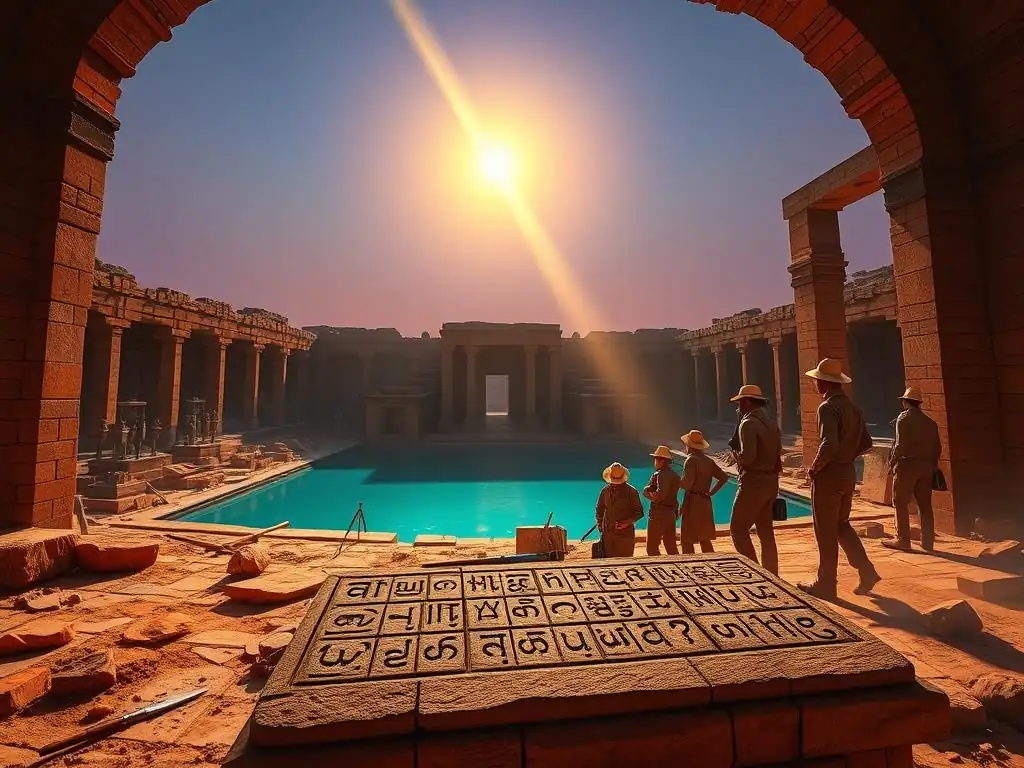
Welcome to ArchaeologyHub.org, your gateway to unraveling the mysteries of the past. Imagine a sophisticated civilization, flourishing millennia ago, leaving an indelible mark on South Asia, even without a fully deciphered script. Delve into our comprehensive exploration of the Indus Valley Civilization Impact, and discover how this ancient society continues to shape our world. Are you ready to uncover the secrets they left behind?
- Introduction: Unveiling the Enduring Influence of the Indus Valley Civilization
- Indus Valley Civilization Impact: Key Contributions and Innovations
- Indus Valley Civilization Society: Social Structures and Cultural Practices
- The Decline of the Indus Valley Civilization: Theories and Explanations
- The Undeciphered Indus Script: A Lingering Mystery
- The Lasting Indus Valley Civilization Impact on South Asian Society
- Rediscovering the Indus Valley Civilization: Archaeological Research and Future Directions
- Conclusion: The Enduring Legacy of the Indus Valley Civilization
-
Frequently Asked Questions
- What were some of the key societal achievements of the Indus Valley Civilization?
- How did the Indus Valley Civilization's decline impact later South Asian societies?
- What is the significance of the Indus script remaining undeciphered?
- In what ways did the Indus Valley Civilization contribute to later agricultural practices in South Asia?
- What archaeological evidence highlights the Indus Valley Civilization's trade networks?
- Final Reflection: Echoes of the Indus
- Unveil the Secrets: Continue Your Indus Journey!
Introduction: Unveiling the Enduring Influence of the Indus Valley Civilization
The Significance of the Indus Valley Civilization (IVC) in South Asian History
The Indus Valley Civilization, flourishing from approximately 2500 to 1900 BCE, stands as one of the three great early civilizations of the Old World, alongside ancient Egypt and Mesopotamia. Spanning an immense geographical area of over 1.5 million square kilometers, from Afghanistan in the west to Uttar Pradesh in the east, and from Jammu in the north to Gujarat in the south, it encompassed parts of modern-day Pakistan, India, and Afghanistan.
This vast expanse, coupled with its distinctive urban planning and lack of monumental architecture like pyramids or grand temples, marks it as a unique and pivotal chapter in human history.
Its foundational role in South Asian history is undeniable. The innovations in urbanism, trade, and technology developed by the Harappans laid crucial groundwork for subsequent societies in the subcontinent. With over 1,000 known sites, though only a fraction extensively excavated, the sheer scale and complexity of the IVC demonstrate a profound and enduring Indus Valley Civilization impact on the cultural and societal development of the region, shaping patterns of settlement and economic interaction for millennia to come.
The Undeciphered Script: A Barrier to Complete Understanding
Central to the mystery of the Indus Valley Civilization is its enigmatic script. Found predominantly on steatite seals, pottery fragments, and copper tablets, this pictographic script consists of approximately 400 to 600 distinct signs. Unlike the deciphered cuneiform of Mesopotamia or hieroglyphs of Egypt, which have yielded vast amounts of information about their respective civilizations, the Indus script remains unread, presenting a significant challenge to a full comprehension of the Harappan world.
The inability to decipher the script severely limits our understanding of crucial aspects of IVC society. Without textual records, insights into their political structures, specific religious beliefs, administrative systems, or even the names of their rulers and deities remain speculative. This forces archaeologists and historians to rely almost exclusively on material culture for interpretation, making a complete and nuanced assessment of the Indus Valley Civilization impact on its contemporaries and successors inherently more difficult than for other ancient civilizations.
Indus Valley Civilization Impact: Key Contributions and Innovations
Urban Planning and Infrastructure: A Model for Ancient Cities
The urban centers of the Indus Valley Civilization, particularly Mohenjo-Daro and Harappa, represent a pinnacle of ancient urban planning. Cities were meticulously laid out on a grid pattern, with streets running north-south and east-west, intersecting at right angles.
A striking feature was the uniformity in brick size, typically adhering to a 1:2:4 ratio (thickness:width:length), a standard maintained across hundreds of kilometers and centuries, suggesting a high degree of centralized authority and sophisticated logistical capabilities. Each major city was often divided into a "citadel" (a raised, fortified area) and a "lower town" (the residential area), indicative of planned segregation and possibly social hierarchy.
The precision in construction is further exemplified by monumental structures within these planned cities. The Great Bath at Mohenjo-Daro, a large public water tank measuring approximately 12 meters long, 7 meters wide, and 2.4 meters deep, showcases remarkable engineering. It features finely constructed waterproof brick lining and bitumen mortar, demonstrating advanced techniques for water management and public infrastructure. This level of sophisticated urban design and engineering represents a profound Indus Valley Civilization impact, serving as a model for future urban development principles in the subcontinent and beyond.
Advanced Drainage Systems and Sanitation
One of the most remarkable features of Indus Valley cities was their sophisticated drainage and sanitation systems, unparalleled in the ancient world. Nearly every house in major urban centers like Mohenjo-Daro and Harappa boasted its own private bathroom and toilet, connected to an intricate network of covered drains that ran along the main streets. These drains were constructed from precisely laid baked bricks and were often covered with stone slabs, allowing for easy access for cleaning and maintenance.
This advanced infrastructure had significant implications for public health and hygiene. The presence of numerous private wells within homes, in addition to public wells, ensured a consistent supply of clean water, while the efficient removal of waste water prevented disease. Such foresight in urban sanitation underscores the Harappans' advanced understanding of public health principles, representing a significant Indus Valley Civilization impact on the quality of urban living standards in antiquity.
Standardized Weights and Measures: Facilitating Trade and Commerce
The Indus Valley Civilization developed a highly standardized system of weights and measures, crucial for its extensive trade networks. Cubical chert weights, found uniformly across sites, adhere to a precise binary system for smaller denominations (1, 2, 4, 8, 16, 32, 64 units) and a decimal system for larger ones (160, 320, 640 units). The basic unit of weight was approximately 13.6 grams, indicating a remarkable level of consistency across a vast geographical area.
This standardization significantly facilitated both local and long-distance trade, ensuring fair exchange and fostering economic integration. The discovery of measuring scales made of bronze and ivory rulers, marked with precise subdivisions (e.g., a ruler from Mohenjo-Daro with divisions of 1.704 centimeters), further attests to their meticulous approach to measurement. This economic organization and precision in commercial practices represent a foundational Indus Valley Civilization impact on ancient commerce and economic stability in the region.
Agricultural Practices and Economic Systems of the IVC
The economic backbone of the Indus Valley Civilization was a robust agricultural system. Major crops cultivated included wheat, specifically bread wheat and club wheat, and barley, with evidence of both two-row and six-row varieties. In certain regions, such as Lothal and Rangpur, evidence of rice cultivation has also been found. The Harappans utilized plows, as indicated by furrow marks at Kalibangan, and likely employed sophisticated irrigation techniques to maximize their yields in the semi-arid environment.
The ability to produce a significant agricultural surplus was critical for sustaining the large urban populations and supporting the specialization of labor seen in Harappan cities. This surplus not only fed the populace but also provided commodities for trade, enabling a complex economic system. This successful agricultural base and its resulting economic stability demonstrate a profound Indus Valley Civilization impact on the ability to support large-scale urbanism in antiquity.
Surplus Production and Trade Networks
The Indus Valley Civilization engaged in extensive trade networks, both internal and external, fueled by its agricultural and craft surpluses. Internally, raw materials such as copper from Rajasthan, gold from Karnataka, and lapis lazuli from Afghanistan were transported across vast distances. Externally, Indus seals, pottery, and other artifacts have been discovered in Mesopotamian cities like Ur and Kish, indicating active maritime trade routes across the Arabian Sea and the Persian Gulf.
Key traded items included carnelian beads, shells, timber, and cotton from the IVC, exchanged for metals like copper, tin, and possibly silver from regions as far as Oman and Mesopotamia. The establishment of a Harappan trading outpost at Shortugai in Afghanistan further exemplifies their organized approach to long-distance commerce. This extensive network highlights the significant Indus Valley Civilization impact on ancient global trade and the interconnectedness of early civilizations.
Domestication of Animals and Crop Cultivation
The Harappans successfully domesticated a variety of animals crucial for their economy and sustenance. These included zebu cattle, buffalo, sheep, and goats, which provided meat, milk, and wool, as well as serving as beasts of burden for agriculture and transport. Notably, chickens are believed to have been first domesticated in the Indus region around 2000 BCE, a significant contribution to global agriculture.
Beyond wheat, barley, and rice, the IVC cultivated a diverse range of crops, including peas, lentils, chickpeas, mustard, and sesame. Perhaps one of the most significant agricultural innovations was the widespread cultivation of cotton. The Indus Valley Civilization is recognized as one of the earliest civilizations to produce cotton textiles, a technological and agricultural Indus Valley Civilization impact that would eventually spread worldwide, revolutionizing clothing and trade.
Art, Craftsmanship, and Technological Advancements in the Indus Valley
The artistic and technological prowess of the Indus Valley Civilization is evident in its distinctive artifacts. Harappan craftsmanship is characterized by sophisticated techniques and a refined aesthetic, particularly visible in their pottery, terracotta figurines, and steatite seals. Iconic examples include the "Priest-King" sculpture from Mohenjo-Daro, a finely carved steatite bust approximately 17.5 cm tall, depicting a robed figure, and the "Dancing Girl," a striking bronze statue about 10.5 cm tall, also from Mohenjo-Daro, showcasing their mastery of form and material.
The production of elaborate beads from precious and semi-precious stones such as carnelian, lapis lazuli, agate, and steatite was another hallmark of Indus craftsmanship. These beads were often meticulously drilled with incredibly fine drills, some less than 0.5 mm in diameter, demonstrating advanced lapidary techniques and precision. This thriving jewelry industry and the sophisticated artistry behind it reflect a significant Indus Valley Civilization impact on ancient artistic expression and material culture.
Pottery, Seals, and Jewelry: Artistic Expressions
Harappan pottery was predominantly wheel-made, typically red or pinkish-red in color, and often adorned with intricate black painted designs. These designs included geometric patterns, stylized plant motifs, and various animal figures. The remarkable uniformity in pottery styles across widely separated sites suggests either centralized production or a broadly shared cultural aesthetic and standardized manufacturing processes within the Indus Valley Civilization.
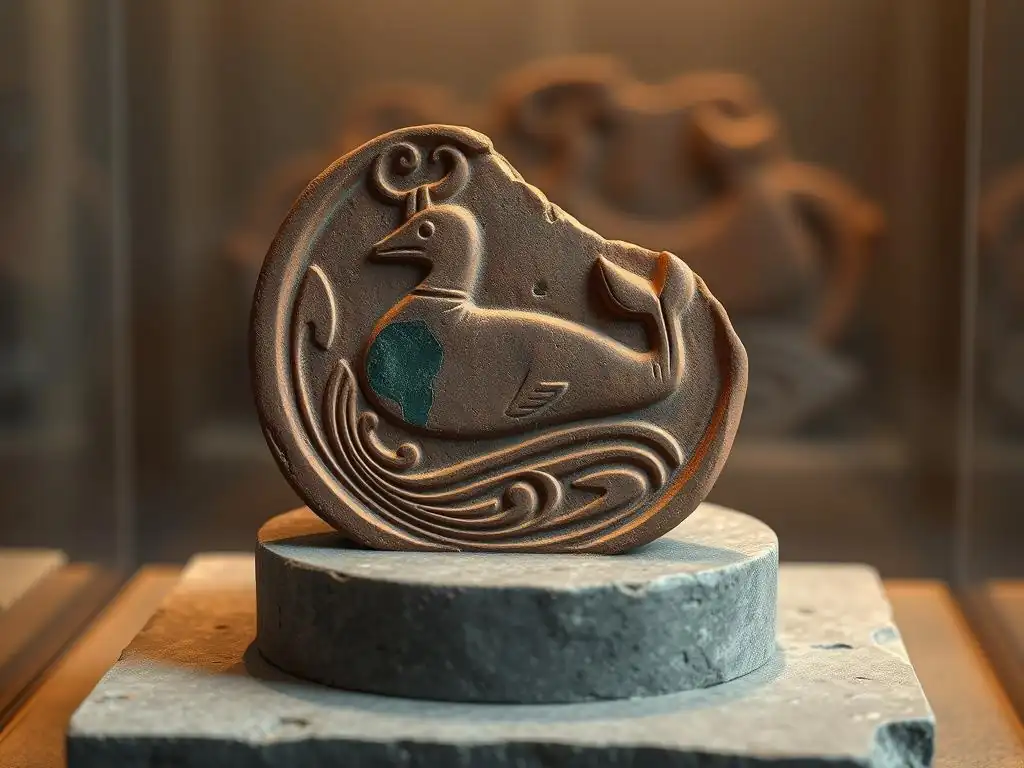
The seals are perhaps the most iconic artifacts of the IVC, with thousands discovered, primarily made of steatite. Typically square (2-4 cm), they feature exquisitely carved animal motifs, such as the enigmatic "unicorn," bull, elephant, and tiger, often accompanied by inscriptions in the undeciphered Indus script. These seals likely served multiple purposes, including trade, administrative identification, and possibly religious rituals, demonstrating a unique artistic and administrative Indus Valley Civilization impact.
Metallurgy and Bronze Casting Techniques
The Harappans were highly skilled metallurgists, proficient in working with copper, bronze, lead, and tin. They developed advanced techniques for casting, forging, and annealing metals to produce a wide array of tools, weapons, and vessels. Archaeological finds include sophisticated copper tools like axes, saws, chisels, and drills, as well as weapons such as spearheads and arrowheads, all demonstrating their practical application of metallurgical knowledge.
A prime example of their technological sophistication in metallurgy is the lost-wax casting method for bronze, used to create intricate objects like the "Dancing Girl" statue. This complex technique, which involves creating a wax model, encasing it in clay, melting out the wax, and pouring molten metal into the void, requires precise temperature control and skilled craftsmanship. The production of bronze, an alloy of copper and tin (typically 10-12% tin), for harder and more durable tools represents a significant technological Indus Valley Civilization impact, pushing the boundaries of ancient material science.
Understanding the social organization of Harappan society is challenging due to the undeciphered script and the absence of monumental palaces or royal tombs that typically signify clear hierarchies in other ancient civilizations. However, archaeological evidence suggests a degree of social stratification. The division of major cities into a "citadel" (possibly for elite or administrative functions) and a "lower town" (residential areas), along with variations in house sizes, hints at differing social statuses. For instance, some houses in Mohenjo-Daro spanned over 200 square meters, significantly larger than average dwellings.
The presence of specialized workshops for crafts like bead-making, shell-working, and metallurgy, coupled with a highly standardized economic system, implies a society where artisans, merchants, and administrators played crucial roles. While there's no clear evidence of a king or emperor, it's theorized that a collective leadership, possibly of merchants or priests, managed the complex urban centers and extensive trade networks, indicating a sophisticated and functionally differentiated Indus Valley Civilization society.
Religious Beliefs and Ritual Practices
Inferences about Indus Valley religious beliefs are primarily drawn from seals, figurines, and architectural features. The famous "Pashupati" seal from Mohenjo-Daro, depicting a seated horned figure surrounded by animals, is often interpreted as an early form of Shiva, specifically as "Pashupati" or Lord of Animals, linking it to later Hindu iconography. The widespread discovery of numerous female terracotta figurines suggests the veneration of a Mother Goddess, symbolizing fertility, prosperity, and the life-giving forces of nature.
The Great Bath at Mohenjo-Daro is widely believed to have served a ritualistic purpose, possibly for ceremonial bathing or purification rituals, a practice that resonates with later traditions in South Asia. Furthermore, the discovery of fire altars at sites like Kalibangan and Lothal suggests the practice of fire worship or sacrificial rituals. While no large-scale temples akin to those in Mesopotamia or Egypt have been identified, these elements collectively point towards a developed set of religious beliefs and practices, hinting at a subtle yet enduring Indus Valley Civilization impact on later spiritual traditions.
Daily Life and Customs of the Indus Valley People
Archaeological findings offer glimpses into the daily lives of the Indus Valley people. Their homes, typically built of baked bricks, often featured multiple stories, central courtyards, and private wells, reflecting a comfortable and organized domestic existence. Their diet was varied, consisting of staple crops like wheat, barley, and rice, supplemented by pulses, vegetables, and meat from domesticated animals. Evidence also suggests they wore cotton clothing, a testament to their advanced textile production.
Leisure activities and personal adornment were also part of their daily customs. Excavations have unearthed a variety of toys, including miniature carts, animal figurines, and dice, suggesting recreational pursuits. Both men and women adorned themselves with an array of jewelry, including elaborate necklaces, bracelets, earrings, and bangles made from a diverse range of materials such as carnelian beads, shells, and metals. These artifacts provide rich insights into the aesthetic preferences and daily routines of the Indus Valley people, reflecting a vibrant and sophisticated Indus Valley Civilization culture.
The Decline of the Indus Valley Civilization: Theories and Explanations
Environmental Factors: Climate Change and River Shifts
One prominent theory for the decline of the Indus Valley Civilization points to significant environmental changes around 2000-1900 BCE. Paleoclimatic evidence suggests a major shift in monsoon patterns, leading to prolonged and severe droughts across the region. This climatic alteration would have drastically reduced agricultural productivity, particularly impacting the cities reliant on a consistent water supply from the Ghaggar-Hakra river system, which is often identified with the ancient Saraswati River mentioned in Vedic texts.
Further contributing to environmental stress were tectonic activities that likely caused major rivers, such as the Sutlej and Yamuna, to shift their courses eastward, away from the Ghaggar-Hakra basin. This diversion would have deprived numerous IVC settlements of their vital water source, leading to their abandonment. The cumulative effect of these environmental factors, including drought and hydrological changes, placed immense pressure on the Harappan agricultural base, forcing populations to migrate and ultimately contributing to the gradual decline of the urban centers and the overall Indus Valley Civilization.
Socio-Political Instability: Internal Conflicts and External Pressures
While direct evidence of widespread warfare or conquest is limited in the Indus Valley Civilization, some theories propose socio-political instability as a contributing factor to its decline. The later phases of major urban centers like Mohenjo-Daro show a noticeable decline in the quality of urban planning and infrastructure, with haphazard constructions encroaching upon earlier, well-organized layouts. This deterioration suggests a breakdown in centralized authority, weakening administrative control, or increasing internal social stratification and unrest.
The once-popular "Aryan Invasion Theory," which posited an invasion by Indo-Aryans as the cause of the IVC's downfall, has largely been discredited due to a lack of conclusive archaeological evidence. While isolated instances of skeletal remains with signs of violence have been found in Mohenjo-Daro (e.g., in the "Mound of the Dead"), these are not indicative of a widespread invasion as the primary cause of collapse. Instead, scholarly consensus leans towards a more complex interplay of internal decay and environmental pressures rather than external military conquest as the major factor in the decline of the Indus Valley Civilization.
Transformation and Adaptation: Continuity and Change in the Post-Harappan Period
The decline of the Indus Valley Civilization was not a sudden collapse but rather a gradual process of transformation and adaptation, leading to what is known as the "Late Harappan" or "Post-Urban Harappan" phase (c. 1900-1300 BCE). As environmental conditions deteriorated and urban centers became unsustainable, populations began to disperse. There was a notable eastward migration towards the fertile Ganga-Yamuna Doab and southward movement into regions like Gujarat, where smaller, more rural, and agrarian settlements emerged.
Despite the de-urbanization, elements of Indus culture persisted in these successor cultures. Some pottery styles, certain craft techniques, and possibly even specific religious symbols continued to be found, albeit in modified forms. This continuity, rather than a complete disappearance, indicates a complex process of cultural adaptation and survival. The transformation of the Indus Valley Civilization into regional successor cultures demonstrates a subtle but significant long-term Indus Valley Civilization impact, shaping the trajectory of subsequent South Asian societies.
The Undeciphered Indus Script: A Lingering Mystery
Attempts to Decipher the Script: Methodologies and Challenges
The decipherment of the Indus script remains one of the most enduring mysteries in archaeology. The primary challenge lies in the absence of a "Rosetta Stone"—a bilingual inscription that would provide a key to its translation, unlike the decipherment of Egyptian hieroglyphs. Furthermore, the vast majority of Indus inscriptions are exceedingly short, averaging only about five signs, with the longest known inscription containing merely 26 signs. This brevity makes statistical analysis and contextual understanding incredibly difficult.
Numerous methodologies have been employed by researchers in attempts to crack the code, including computational linguistics, statistical pattern analysis, and comparative studies with other ancient scripts like Proto-Elamite or later Indian scripts such as Brahmi. Despite decades of dedicated research and various claims of decipherment, none have achieved widespread academic consensus. This persistent enigma underscores the profound difficulty in understanding the script and its significant Indus Valley Civilization impact on our limited knowledge of their internal narratives and beliefs.
Theories on the Nature of the Script: Logographic, Syllabic, or Alphabetic?
The nature of the Indus script is a subject of ongoing debate among scholars. The prevailing theory suggests that it is logographic or logo-syllabic, meaning that signs represent entire words or syllables, respectively, similar to ancient Egyptian hieroglyphs or Sumerian cuneiform. This theory is supported by the relatively large number of distinct signs identified (ranging from 400 to 600), which is too many for a purely alphabetic script but consistent with a system where individual symbols convey meaning or phonetic sounds.
Less supported theories propose that the script might be purely ideographic, with signs representing concepts rather than sounds, or even a precursor to later Indian scripts. However, the lack of definitive evidence and the absence of a clear evolutionary link to known language families make these propositions difficult to substantiate. The continuing debate about the script's fundamental nature highlights the profound challenge it poses and the significant Indus Valley Civilization mystery it presents to full historical reconstruction.
The Impact of the Undeciphered Script on Understanding the IVC
The fact that the Indus script remains undeciphered has a profound impact on our understanding of the Indus Valley Civilization. Unlike ancient Egypt or Mesopotamia, where royal decrees, religious texts, administrative records, and literary works provide rich, first-hand accounts of their societies, we lack the "voice" of the Harappans themselves. Our knowledge of their political organization, specific religious beliefs, philosophical thought, and even their own self-perception is largely derived from archaeological remains alone.
This limitation means that interpretations of Harappan society are inherently speculative and rely heavily on inference from material culture. Decipherment of the script would unlock an unparalleled wealth of information, potentially revealing details about their governance, social customs, laws, literature, and interactions with neighboring civilizations. Such a breakthrough would drastically transform our current understanding of the Indus Valley Civilization impact and its rightful place in the broader narrative of ancient world history.
The Lasting Indus Valley Civilization Impact on South Asian Society
Cultural Continuity: Traces of IVC in Later Traditions and Beliefs
Despite its decline, the Indus Valley Civilization left subtle but enduring cultural imprints on later South Asian traditions. The "Pashupati" seal, with its horned figure surrounded by animals, is frequently cited as a potential early representation of Shiva, particularly in his aspect as "Pashupati" (Lord of Animals), suggesting a deep-rooted continuity in religious iconography. Similarly, the widespread discovery of female figurines points to the veneration of a Mother Goddess, a concept that resonates strongly with the later Shakti worship in Hinduism, showing a subtle but significant Indus Valley Civilization impact on subsequent religious thought.
Furthermore, certain symbols and practices found in the IVC re-emerge in later periods. The swastika, a motif found on Indus seals, reappears as an auspicious symbol in Hinduism, Buddhism, and Jainism. The practice of ritual bathing, as inferred from the Great Bath, could be seen as a precursor to the sacred bathing rituals prevalent in Hinduism. These instances of cultural persistence suggest a profound, underlying Indus Valley Civilization impact that shaped the spiritual and symbolic landscape of the subcontinent.
Technological Legacy: Influence on Subsequent Innovations
The technological advancements of the Indus Valley Civilization, while not always directly inherited, set important precedents for subsequent innovations in South Asia. The Harappans' standardized weights and measures, though their specific system did not endure, established the concept of rational economic systems and precise measurement that would be re-developed in later periods. Their sophisticated drainage and sanitation systems, while not replicated on the same grand scale immediately after the IVC's decline, demonstrated an advanced understanding of urban infrastructure that would undoubtedly influence later urban planning principles in the region.
Moreover, the Harappan mastery of metallurgy, particularly in copper and bronze working, including the lost-wax casting method, laid critical groundwork for the metalworking traditions that flourished in later South Asian cultures. The cultivation of cotton and its transformation into textiles also represents a direct technological Indus Valley Civilization impact that continued to expand and evolve, becoming a cornerstone of the subcontinent's economy and textile industry for millennia.
The Indus Valley Civilization's Contribution to South Asian Identity
The Indus Valley Civilization holds a unique and foundational place in shaping South Asian identity. As the earliest major urban civilization of the subcontinent, its existence demonstrates a long and rich history of indigenous development, challenging earlier narratives that often emphasized external origins for significant cultural and technological advancements in the region. The discovery and study of the IVC provided a new, deeper historical root for the subcontinent, revealing a complex and sophisticated society that predated many commonly known historical periods.
The IVC's achievements in urban planning, trade, and technology illustrate a remarkable period of innovation and organization. Its legacy underscores the capacity for independent cultural evolution and complex societal structures within South Asia. The ongoing exploration and understanding of the Indus Valley Civilization continue to enrich the narrative of the region's deep historical roots, firmly establishing its profound and multifaceted Indus Valley Civilization impact on the collective identity of South Asia.
Rediscovering the Indus Valley Civilization: Archaeological Research and Future Directions
Ongoing Excavations and Discoveries: New Insights into the IVC
Archaeological research continues to unveil new facets of the Indus Valley Civilization, constantly refining our understanding. Recent significant discoveries include the ongoing excavations at Rakhigarhi in Haryana, India, which is now considered one of the largest Harappan cities, potentially spanning over 350 hectares. This site has provided crucial insights into the scale and complexity of IVC urbanism, its craft production, and its potential role as a regional center. Similarly, excavations at Dholavira in Gujarat, India, have revealed unique water harvesting systems and monumental architecture, including a massive reservoir, further illuminating the Harappans' ingenious adaptation to their environment.
These ongoing excavations and new finds continually challenge existing theories and provide a more nuanced picture of the IVC's chronology, geographical extent, internal variations, and interactions with contemporary cultures. Each new discovery contributes significantly to our knowledge base, enhancing our comprehension of this ancient civilization and its wide-ranging Indus Valley Civilization impact.
Preserving and Protecting Indus Valley Heritage Sites
The preservation of Indus Valley heritage sites is a critical challenge, as many face threats from urban encroachment, agricultural expansion, and natural erosion. For instance, Mohenjo-Daro, a UNESCO World Heritage site in Pakistan, is particularly vulnerable to salinity and waterlogging, which degrade the ancient brick structures. Similarly, other sites across India and Pakistan face pressures from development and climate change, necessitating urgent conservation measures.
Recognizing the immense historical and cultural value of these sites, national archaeological departments, such as the Archaeological Survey of India and the Department of Archaeology and Museums in Pakistan, along with international organizations like UNESCO, are engaged in vital conservation efforts. These initiatives are crucial to mitigate environmental degradation and human impact, ensuring that future generations have the opportunity to study and appreciate the profound Indus Valley Civilization impact on global history.
Future Research Avenues: Utilizing New Technologies and Interdisciplinary Approaches
Future research into the Indus Valley Civilization promises to be significantly enhanced by the application of new technologies and interdisciplinary approaches. Remote sensing technologies, including LIDAR (Light Detection and Ranging) and drone mapping, can help identify previously unknown sites and efficiently map existing ones without extensive ground disturbance. Geophysical surveys can reveal subsurface structures and urban layouts, providing valuable insights into planning without the need for immediate excavation.
Furthermore, combining traditional archaeological methods with fields such as paleoclimatology, genetics (e.g., ancient DNA analysis of human remains), and advanced material analysis (e.g., isotopic analysis of artifacts to trace their origins and trade routes) can provide a more holistic understanding of the IVC's environment, population dynamics, and technological processes. This integrated approach is essential to unlock remaining mysteries and further illuminate the multifaceted Indus Valley Civilization impact on human civilization.
Conclusion: The Enduring Legacy of the Indus Valley Civilization
The Indus Valley Civilization's Place in World History
The Indus Valley Civilization holds a unique and distinguished place in world history. As one of the three earliest urban civilizations, it is celebrated for its unparalleled urban planning, sophisticated sanitation systems, and extensive trade networks that connected it with distant lands. The IVC represents a distinct trajectory of human development, evolving independently of, yet sometimes interacting with, contemporary civilizations in Mesopotamia and Egypt. Its achievements stand as a testament to early human ingenuity, organizational capacity, and adaptability in a complex environment.
Despite its eventual decline and the enduring mystery of its undeciphered script, the Indus Valley Civilization continues to fascinate scholars and the public alike. Its legacy underscores the diversity of pathways to urbanism and complex societies in antiquity. The remarkable achievements of the Harappans ensure their indelible Indus Valley Civilization impact on the tapestry of global history, offering invaluable lessons on urban sustainability and societal organization.
The Importance of Continued Research and Preservation.
Much about the Indus Valley Civilization remains unknown, particularly the intricacies of its political and religious life, largely due to the undeciphered nature of its script. Therefore, continued archaeological research, embracing technological advancements, and fostering interdisciplinary studies are not merely academic exercises but essential endeavors to unlock the remaining secrets of this ancient civilization. Each new discovery has the potential to redefine our understanding and provide a more complete picture of the Harappan world.
Equally critical is the imperative to preserve and protect these invaluable historical sites. They are fragile windows into a distant past, vulnerable to both natural forces and human activities. Their diligent protection ensures that the foundational Indus Valley Civilization impact on South Asia and the wider world can be continuously studied, understood, and appreciated by present and future generations, safeguarding a crucial part of humanity's shared heritage.
Frequently Asked Questions
What were some of the key societal achievements of the Indus Valley Civilization?
The Indus Valley Civilization is notable for its advanced urban planning, including grid-patterned cities and sophisticated drainage systems. They also developed standardized weights and measures, suggesting a complex economic structure.
How did the Indus Valley Civilization's decline impact later South Asian societies?
While the exact reasons for its decline are debated, the collapse of the Indus Valley Civilization likely led to migration and cultural diffusion, influencing later societies in the region. Some scholars believe it led to the emergence of new regional cultures.
What is the significance of the Indus script remaining undeciphered?
The inability to decipher the Indus script hinders our understanding of their language, religion, and social structure. This lack of textual evidence makes it challenging to fully grasp the complexities of their civilization.
In what ways did the Indus Valley Civilization contribute to later agricultural practices in South Asia?
Evidence suggests the Indus Valley Civilization cultivated various crops, including wheat, barley, and cotton. Their agricultural practices, such as irrigation techniques, likely influenced later agricultural developments in South Asia, contributing to food security.
What archaeological evidence highlights the Indus Valley Civilization's trade networks?
Archaeological finds, such as seals and artifacts, found in Mesopotamia and other regions, indicate extensive trade networks. These networks facilitated the exchange of goods and ideas, connecting the Indus Valley Civilization to other ancient cultures.
Final Reflection: Echoes of the Indus
The enduring mystery surrounding the Indus Valley Civilization, even with its undeciphered script, speaks volumes about its profound and lasting influence. The very fact that we continue to study and speculate about this ancient society underscores its significance in shaping the cultural and societal landscape of South Asia. Its urban planning, sophisticated sanitation systems, and standardized weights and measures are not just archaeological curiosities; they are testaments to a level of societal organization that resonates even today.
The impact of the Indus Valley Civilization extends far beyond its physical remnants. Its influence, though often subtle and interwoven with later cultural developments, is palpable in the traditions, art, and even the genetic makeup of modern South Asian populations. The seeds of many practices and beliefs were likely sown during this period, shaping the region's unique identity. The past is never dead. It's not even past.
- William Faulkner. This quote perfectly encapsulates the enduring presence of the Indus Valley Civilization, a civilization whose legacy continues to inform the present.
As we reflect on the Indus Valley Civilization and its impact, let us consider the lessons it offers. Let us strive to understand the interconnectedness of past, present, and future, and to appreciate the enduring power of human ingenuity and societal organization. How can we, like the people of the Indus Valley, build societies that prioritize sustainability, equality, and the well-being of all? Let the echoes of the Indus inspire us to create a more just and equitable world, learning from the successes and the mysteries of this remarkable civilization.
Unveil the Secrets: Continue Your Indus Journey!
Thank you for exploring the fascinating world of the Indus Valley Civilization with us. We hope you've gained a deeper appreciation for its lasting impact, despite the mysteries that remain. Now, let's take that curiosity a step further:
- Embark on your own research! Visit your local library or explore online archives to discover primary source materials related to the IVC, such as archaeological reports and scholarly articles.
- Share this article with friends and family to spark conversations about this incredible ancient culture and its influence on South Asian society.
- Dive deeper into the world of undeciphered scripts! Consider joining an online forum or community dedicated to solving the Indus script puzzle.
What aspect of the Indus Valley Civilization's legacy resonates most with you, and how can we collectively contribute to unraveling its remaining mysteries?