European Prehistory: Paleolithic Hunter-Gatherers & Art – A Deep Dive into the Dawn of Human Creativity
Welcome to ArchaeologyHub.org’s detailed exploration of European Prehistory, focusing specifically on Paleolithic Hunter-Gatherers and their breathtaking cave art. This subcategory within “Civilizations & Cultures (Detailed Studies)” transcends simple timelines. Here, you will uncover the survival strategies, cognitive evolution, and symbolic expressions of the first modern humans in Europe, from the Aurignacian to the Magdalenian periods. We dissect lithic technology, faunal analysis, and the latest archaeoacoustic research to provide a comprehensive, SEO-rich resource for students, enthusiasts, and researchers alike.
🪨 Life & Subsistence Strategies of Paleolithic Hunter-Gatherers
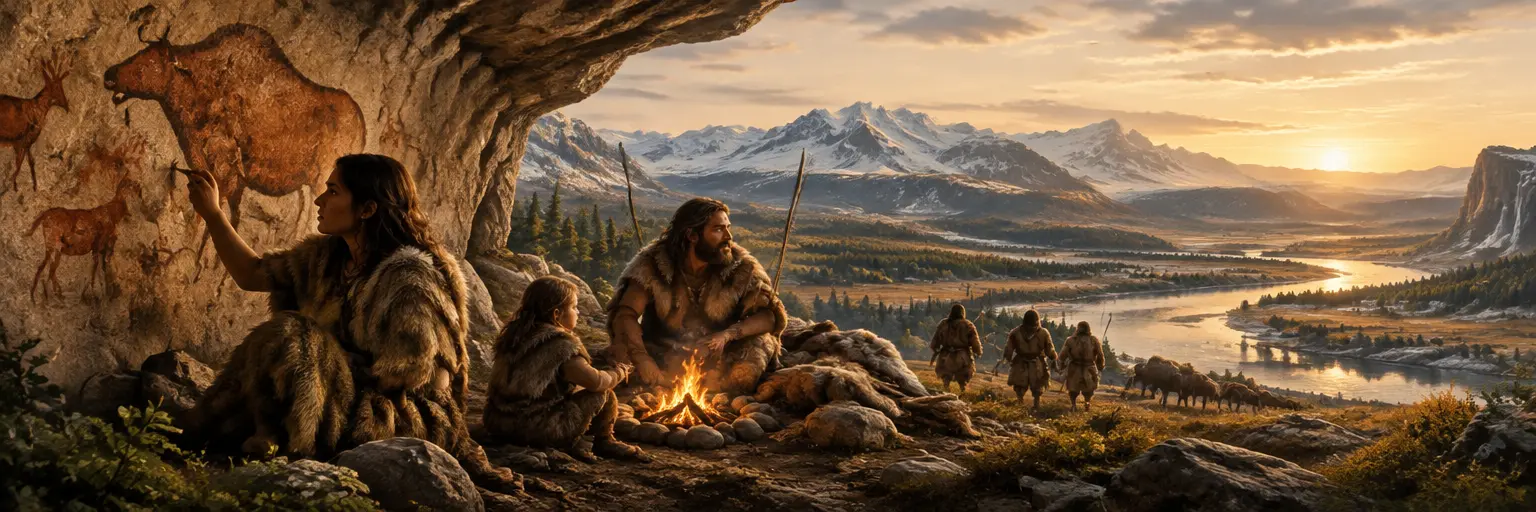
Step into the daily existence of Ice Age Europeans who roamed a mammoth-steppe environment. This section analyzes seasonal migration patterns, hunting tactics for megafauna (mammoths, bison, reindeer), and the pivotal role of plant gathering and fishing. We emphasize faunal assemblage interpretations from key sites like Dolní Věstonice and Pincevent, revealing butchery practices, hide processing, and the division of labor. Expect detailed breakdowns of lithic toolkits—from Levallois points to microliths—and how they dictated group mobility and social organization. This is not a romanticized view; it’s a reconstruction based on microwear analysis and ethnoarchaeological comparison, proving how survival was a collective, knowledge-dense endeavor.
🎨 The Genesis of Symbolic Thought: Cave Art & Portable Artifacts
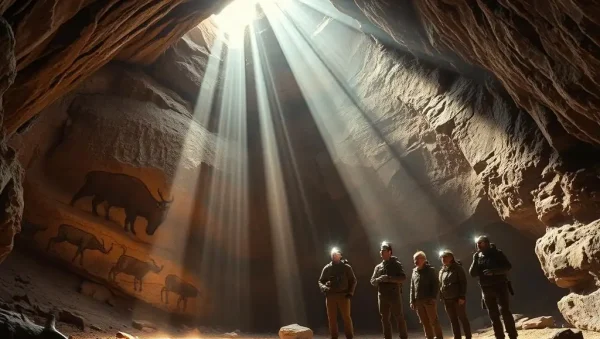
Discover why the caves of Chauvet, Lascaux, and Altamira are called the Sistine Chapels of Prehistory. We examine the chronology of artistic expression, from simple hand stencils (c. 40,000 BP) to elaborate polychrome animal friezes (c. 15,000 BP). Beyond aesthetics, you’ll learn about the techniques: charcoal drawing, mineral pigment grinding, and the use of natural rock contours to create depth. Crucially, we discuss the interpretive frameworks—shamanistic trance theories versus structuralist mappings of animal symbolism—and how portable art (Venus figurines, engraved antlers) functioned as mnemonic devices or status markers. This section answers the profound question: what drove humans to create art in the dark?
🏞️ Regional Variations: From the Iberian Peninsula to the Urals
Not all Paleolithic Europe was monolithic. This facet hones in on geographic distinctiveness, comparing the Franco-Cantabrian region’s rich cave networks with the open-air settlements of the Russian Plain and the Mediterranean coastal adaptations. We analyze how environmental gradients (glacial refugia versus periglacial tundra) shaped tool traditions, burial practices, and art styles. For instance, you’ll explore the engraved plaquettes of Gönnersdorf (Germany) versus the painted boulders of Côa Valley (Portugal). This comparative lens helps you understand that “hunter-gatherer” culture was a mosaic of localized innovations, linked by long-distance exchange networks of shells and flint.
🧬 Cognitive Evolution & Social Complexity Beyond Survival
Here, we delve into the archaeological evidence for modern cognition—planning depth, abstract categorization, and language sophistication. Learn how the construction of temporary shelters (like the mammoth-bone houses at Mezhyrich) and the curation of exotic raw materials indicate complex social alliances and territoriality. We also review evidence of intentional burial (e.g., the Red Lady of El Mirón) and grave goods as signs of status and belief in afterlife. This section incorporates recent DNA and proteomic studies, linking Paleolithic populations to later Mesolithic groups, while debunking myths of passive scavenging. Expect a rigorous analysis of how cooperation, rather than brute force, enabled survival and cultural flourishing.
🔍 Methodological Breakthroughs: How We Know What We Know
Uncover the cutting-edge science behind the chronology and interpretation of Paleolithic sites. We detail Uranium-series dating of calcite layers over art, Optically Stimulated Luminescence for sediment burial, and ZooMS (Zooarchaeology by Mass Spectrometry) for identifying fragmentary bone. You’ll also appreciate the role of experimental archaeology in replicating spear-thrower use or pigment grinding. This behind-the-scenes look emphasizes why the subcategory is reliable: every claim in our articles is anchored to peer-reviewed field data. We also discuss ethical debates around site accessibility versus preservation, including the famous Lascaux closure and replica initiatives, ensuring you understand the fragile balance between public education and conservation.
Frequently Asked Questions
What is the oldest known cave art in Europe?
The oldest confirmed figurative cave art is the rhino and bison imagery in El Castillo Cave, Spain, dating to at least 40,800 years ago via U-Th dating. For non-figurative marks, Neanderthal engravings in Gorham’s Cave, Gibraltar, are over 39,000 years old. However, the Chauvet-Pont d’Arc cave in France, with sophisticated charcoal drawings of lions and horses, dates to about 37,000 BP, astonishingly early for such artistic maturity.
Did Paleolithic hunter-gatherers only eat meat?
No. While large game was crucial, isotopic analyses of bone collagen from sites like Cave of the Cussac show a mixed diet. Plant remains—hazelnuts, water lily seeds, and root vegetables—were part of the menu, and fishing was significant in coastal and riverine sites (e.g., Dolní Věstonice). Dental calculus studies reveal even carbohydrate consumption from grasses, though meat likely provided the majority of calories, especially in northern latitudes.
Why did hunter-gatherers create art deep inside caves?
Several theories exist. Some scholars suggest shamanic ritual in altered states, as many paintings are in acoustically resonant chambers. Others propose they served as initiatory or educational “maps” for hunting knowledge, with animals drawn to encode migration routes. A structuralist view, championed by Lévi-Strauss, posits that art reflected a bipartite symbolic system (e.g., bison vs. horse) mirroring male/female opposites. No single explanation fits all sites, but the effort and darkness imply profound ceremonial significance.
How did climate change affect European Paleolithic societies?
Cold peaks (e.g., Last Glacial Maximum, ~20,000 BP) forced populations into southern refugia—Iberia, Italy, and the Balkans—leading to isolation and genetic diversification. As ice retreated (15,000–10,000 BP), groups recolonized northern areas, shifting from communal mammoth hunts to more flexible adaptations, including increased dependence on red deer and plants. This transition set the stage for the Mesolithic’s broader toolkits and, eventually, sedentary lifestyles.
Are there any Paleolithic art sites still open to the public?
Yes, but access is often restricted. Lascaux is closed to save its microbiome, but you can see the full replica, Lascaux IV. Altamira offers limited, lottery-based visits to the original, while the Neocave provides a thorough virtual experience. Chauvet is closed, but the Pont d’Arc Cavern replica is open. Lodge Cave in France and Cussac allow limited tours. Always check local regulations; many sites require permits to protect fragile art.