Explore the Qin Dynasty: The Empire That Forged China
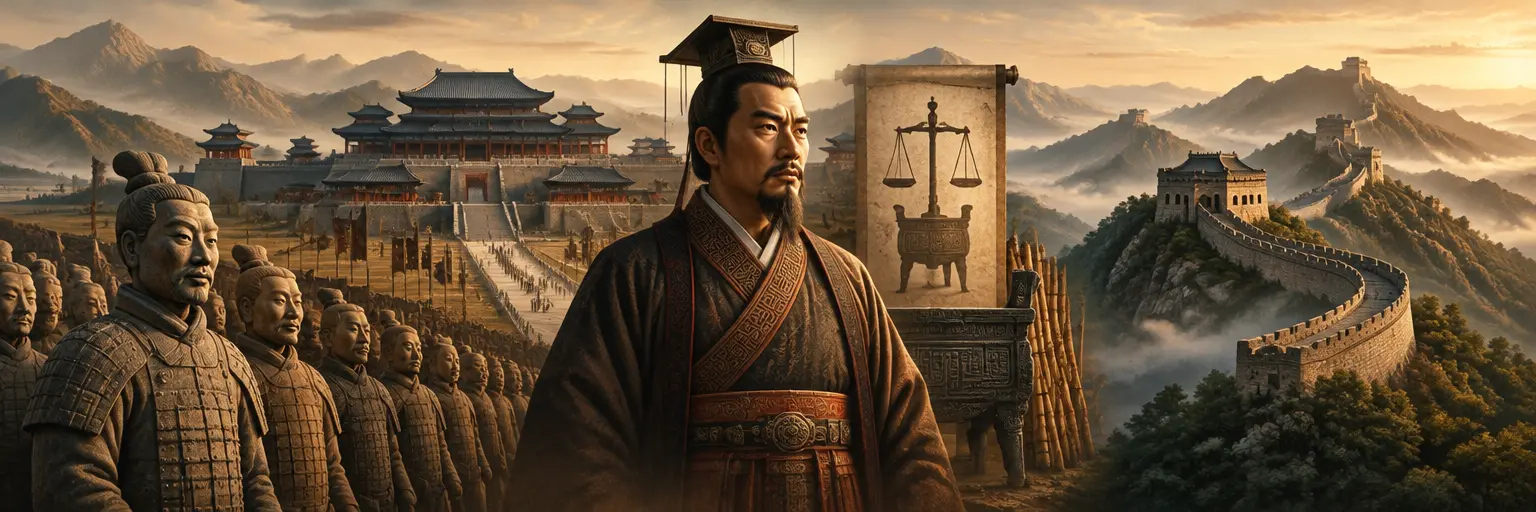
Welcome to ArchaeologyHub.org’s detailed study of the Qin Dynasty (221–206 BCE), a transformative era when the Chinese states were first unified under a single, iron-fisted rule. This subcategory dives deep into the political genius and brutal pragmatism of Qin Shi Huang, the architect of imperial China. Here, you will uncover how legalist philosophy, monumental defense projects, and radical standardization laid the groundwork for two millennia of dynastic rule. Perfect for history enthusiasts and students, our analyses connect archaeological evidence with the ideological shifts that still echo in modern Chinese identity.
🏛️ Unification and Administrative Revolution
Under Qin Shi Huang, a decentralized feudal system was violently replaced by a centralized bureaucracy. This section explores the administrative reforms—standardized weights, measures, currency, and even axle widths—that enabled efficient governance over a vast territory. Excavated bamboo slips and bronze edicts reveal a state obsessed with control, where laws were applied uniformly regardless of local customs. Discover how this unprecedented consolidation of power created a template for future Chinese empires, blending military conquest with institutional innovation.
Key archaeological evidence includes the remains of the Qin road network and the standardized bronze coins unearthed at provincial capitals. By examining these artifacts, you can trace how the Qin state projected authority through material culture, erasing regional differences in favor of a homogenous, state-directed identity. This administrative revolution was not merely bureaucratic—it was a social transformation that redefined the relationship between ruler, state, and subject, a legacy that persists in East Asian governance models.
⚖️ Legalism as State Doctrine
Legalism, the philosophy of Han Feizi and Li Si, provided the ideological backbone of Qin rule. This h3 section dissects how the dynasty applied harsh, codified laws to eliminate dissent and enforce absolute obedience. From mutilation penalties to collective punishment, the legal code was designed to deter any challenge to imperial authority. Recent excavations of Qin-era legal texts, such as the Shuihudi Qin bamboo slips, offer a rare glimpse into the daily application of these draconian statutes, revealing a society where every action was prescribed by law.
Contrary to popular belief, Legalism was not simply about cruelty; it was a pragmatic response to the chaos of the Warring States period. By removing aristocratic privilege and promoting merit based on deeds, the Qin sought to create a predictable, orderly state. Our analyses highlight how this ideological shift is visible in tomb sites, where even lower-ranking officials were buried with standardized legal manuals, indicating that literacy in law became a tool of social mobility and control.
🧱 The Great Wall: A Monument to Defensive Strategy
Contrary to the continuous stone wonder seen today, the Qin Great Wall was a series of rammed-earth fortifications linking older regional walls. This subcategory focuses on the archaeological evidence of the original Qin sections, which employed conscripted laborers on a massive scale. The wall served not only as a military barrier against Xiongnu nomads but also as a tangible symbol of the empire’s engineered boundary, marking the edge of the civilized world. Recent satellite surveys have mapped over 5,000 kilometers of Qin-era earthworks, challenging earlier assumptions about its construction.
Excavations at watchtower sites have unearthed weapons, grain storage pits, and signaling equipment, illustrating how the wall functioned as an integrated defense network. The logistics of building and supplying such a barrier underline the Qin state’s organizational capacity, but they also expose its brutal labor practices, with mass graves of workers discovered near construction sites. This duality—monumental achievement versus human suffering—is a central theme, revealing the wall as both a feat of engineering and a tombstone to coerced labor.
⚱️ Terracotta Army and Imperial Afterlife
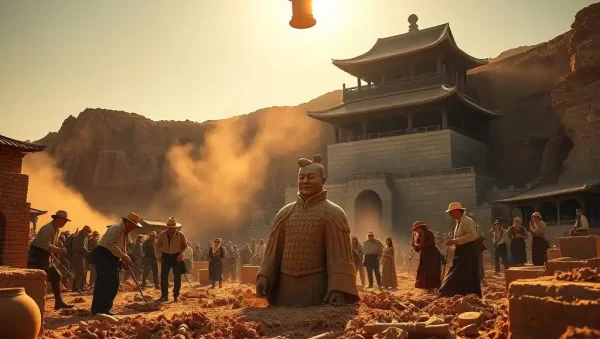
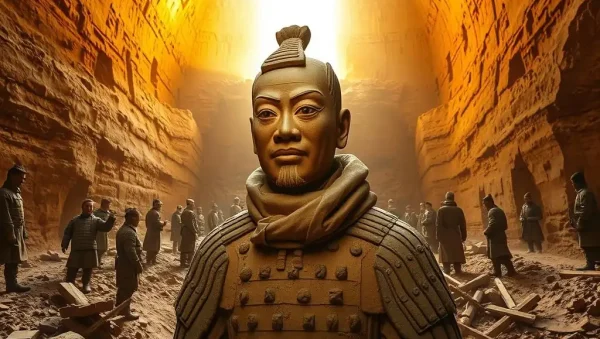
The Terracotta Army, discovered in 1974 near Xi’an, remains the most iconic artifact of the Qin Dynasty. This section interprets the 8,000 soldiers, 130 chariots, and 670 horses not merely as funeral art but as a complex spiritual and political statement. Each figure was unique, with individual facial features, hairstyles, and armor, suggesting a microcosm of the real imperial army. The mausoleum complex itself is a blueprint of the cosmos, with bronze rivers of mercury and celestial ceilings, reflecting Qin Shi Huang’s quest to replicate his earthly empire in the afterlife.
Ongoing excavations reveal new surprises, such as acrobats, officials, and bronze waterfowl in a subterranean park, underscoring the sheer scale of imperial ambition. The sheer craft required—mass production combined with individualized detailing—points to state-run workshops operating under strict quality control. For archaeologists, the pits are a time capsule, offering direct evidence of military organization, metallurgy, and the spiritual beliefs that motivated the most extravagant tomb ever built.
🔗 Legacy and Collapse of the Qin
Despite its monumental projects, the Qin Dynasty collapsed within fifteen years of its founding. This final analytical section examines the causes of this rapid downfall, from the crushing tax burden and forced labor to the violent repression of intellectual dissent, such as the infamous book burning of 213 BCE. Archaeological evidence of widespread rebellion, including burned palace complexes and hastily abandoned settlements, paints a picture of a system that cracked under its own weight. The Khmer Rouge-esque brutality of the regime alienated the very population it sought to control.
The Han dynasty that followed retained Qin’s administrative structure while softening its legalist extremes, proving that the Qin model was both revolutionary and unsustainable in its pure form. Our curated collection of artifacts—from inscribed land contracts to iron farming tools—helps illustrate how the agrarian base was overexploited. By studying this collapse, historians can glean lessons about the limits of top-down social engineering, making the Qin case study essential for understanding the cyclical nature of Chinese imperial history.
Frequently Asked Questions
What exactly was the Qin Dynasty’s most significant administrative reform?
The standardization of script, currency, weights, and axle widths was the most significant reform. This unified disparate regions into one economic and cultural space, facilitating trade, communication, and central taxation. It also erased local identities, creating a homogenized imperial subject. Archaeological finds of standardized bronze coins and legal documents across the realm prove this policy was effectively enforced, forming the bedrock of Chinese state unity for centuries.
Was the Great Wall built entirely by slaves?
Not entirely by slaves; most laborers were conscripted peasants, soldiers, and convicts under forced labor service. Historical records and mass graves suggest they lived under brutal conditions, with huge death tolls. The wall was built in segments using local materials like rammed earth, not the later brick. This was a state project, not a voluntary civic work, reflecting the Qin's coercive labor system rather than a singular slave class.
How do we know about Qin Law if many books were burned?
The 1975 discovery of the Shuihudi Qin bamboo slips provided a cache of legal statutes, administrative records, and case studies. These documents were buried in a local official’s tomb, escaping the book burnings. They detail everyday offenses and punishments, offering a direct window into Legalist practice. This discovery revolutionized our understanding, proving that the legal code was applied in granular detail to ordinary life.
Why did Qin Shi Huang build a mausoleum with Terracotta Warriors?
He believed in an afterlife that mirrored his earthly existence. The terracotta army was meant to protect him in the spirit world, symbolizing his eternal military power. The tomb was also a cosmic model, with a ceiling of stars and rivers of mercury, ensuring the emperor would rule the entire cosmos even beyond death. The army was a magical insurance policy against chaos in the netherworld.
Are there any unexcavated parts of the Qin Dynasty sites?
Yes, the actual tomb mound of Qin Shi Huang remains unexcavated, largely due to concerns about preservation and the massive levels of mercury detected in the soil, which could be toxic. The tomb’s core is likely untouched, but severe damage from tomb robbers is possible. Future excavation is stalled by the technical challenge of preserving artifacts that may degrade upon exposure. The mystery adds to the site’s allure.