
The Influence of Qin Dynasty Unification on Subsequent Han Dynasty Policies

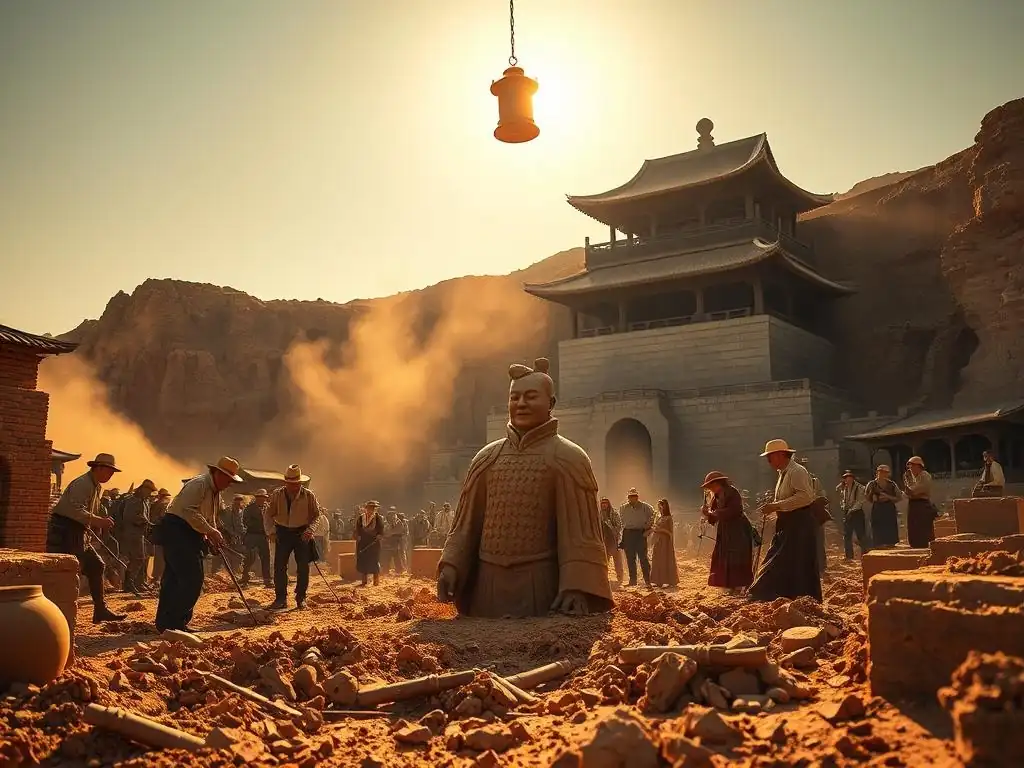
Welcome to ArchaeologyHub.org, your gateway to unraveling the past! Did the short-lived but impactful Qin Dynasty truly dictate the course of China's subsequent golden age? Delve into our exploration of the Qin Dynasty Han Dynasty policies and discover how the foundations laid by the First Emperor shaped the landscape of the mighty Han. Explore the intricacies of their legal systems, economic strategies, and societal structures, and uncover the surprising connections that echo through history. Ready to unearth the truth? Let's begin!
- Introduction: Qin Unification and its Lasting Legacy on the Han Dynasty
- The Qin Dynasty's Standardization Policies: A Foundation for the Han
- Qin Dynasty Infrastructure Projects: Shaping Han Dynasty Development
- The Qin Legalist Philosophy and its Transformation in the Han Dynasty
- The Qin Dynasty's Centralized Government: A Model for the Han
- The Qin Dynasty's Downfall and Lessons Learned by the Han Dynasty
- Han Dynasty Policies: Building on the Foundations of the Qin Dynasty Unification
- Conclusion: The Enduring Influence of the Qin Dynasty on Han Dynasty Policies
-
Frequently Asked Questions
- How did the Qin Dynasty's centralized government influence the Han Dynasty's administrative structure?
- What aspects of the Qin Dynasty's legal code were retained or modified by the Han Dynasty?
- In what ways did the Qin Dynasty's standardization efforts (e.g., currency, weights, measures) impact the Han Dynasty's economy?
- How did the Qin Dynasty's infrastructure projects, such as the Great Wall, affect the Han Dynasty's military strategy and defense?
- To what extent did the Han Dynasty maintain or reform the Qin Dynasty's land ownership and taxation policies?
- Final Reflection: Echoes of Unification
- Unearth Your Inner Historian: Act on Ancient Wisdom!
Introduction: Qin Unification and its Lasting Legacy on the Han Dynasty
Archaeological Evidence of Qin and Han Dynasties: Insights from Xi'an
Excavations around Xi'an, the ancient capital region of both the Qin and Han Dynasties, offer compelling archaeological insights into the continuity of imperial power and administrative structures. While the most famous discovery is the Terracotta Army protecting Qin Shi Huang's mausoleum, further archaeological work at sites like Chang'an, the Han capital, reveals shared urban planning principles, road networks, and even certain artifact types.
For instance, the scale of imperial tombs, though differing in specific design, maintained the monumental ambition seen in the Qin mausoleum, indicating a shared imperial ideology of grandeur and centralized power that influenced subsequent Qin Dynasty Han Dynasty policies.
The discovery of uniform bricks and tiles across Qin and early Han urban sites, particularly in the Guanzhong region, suggests an inherited approach to construction standards. Furthermore, the presence of similar administrative seals and weight standards in both Qin and early Han archaeological strata points to the enduring influence of Qin's bureaucratic system, which the Han largely adopted and refined rather than entirely discarded. These material remains provide tangible evidence of how the Han built upon the physical and administrative foundations laid by its predecessor.
The Significance of Qin Dynasty's Unification in East Asian History: Establishing Imperial Rule
Before Qin Shi Huang's unification in 221 BCE, the region now known as China was fragmented into numerous warring states for centuries. The Qin's decisive military victory brought an end to this tumultuous period, establishing a single, centralized imperial state that would endure in various forms for over two millennia. This unprecedented act of unification set the precedent for the concept of "All Under Heaven" (Tianxia) under a single emperor, a foundational principle of subsequent Chinese political thought and a core element of future Qin Dynasty Han Dynasty policies.
The institutional framework established by the Qin, including the adoption of the imperial title (Huangdi), a centralized bureaucracy, and a unified legal code, provided the blueprint for the Han Dynasty. Even though the Han initially distanced itself from Qin's harshness and Legalist ideology, the fundamental structure of imperial governance, including the division of the empire into commanderies and prefectures, was directly inherited from the Qin. This demonstrated the profound and lasting impact of Qin's foundational achievements on the subsequent Han period.
The Qin Dynasty's Standardization Policies: A Foundation for the Han
Standardizing Weights, Measures, and Currency under Qin Rule: Establishing Economic Control
Qin Shi Huang mandated uniform weights, measures, and currency across his newly unified empire, a monumental undertaking that eliminated regional variations that had plagued the Warring States period. He enforced the use of standard units such as the shi (approximately 60 kg) and the jin (approximately 250 g) for weights, and the chi (roughly 23 cm) for measures.
For currency, he decreed the exclusive use of round bronze coins with a square hole, known as Banliang (半兩) coins, effectively creating a single economic system. Archaeological finds of these standardized coins and weights are abundant across Qin and early Han sites, including burial sites and urban centers, underscoring their widespread adoption.
The economic benefits derived from this standardization were immense, allowing for more efficient collection of taxes and levies, and streamlining commercial transactions across the vast imperial territory. The Han Dynasty, recognizing the efficacy of these Qin Dynasty Han Dynasty policies, largely maintained these standards, making only minor adjustments later, such as the introduction of the Wuzhu (五銖) coin under Emperor Wu, which built upon the Qin's unified coinage concept. The continuity of these economic instruments highlights the foundational role of Qin's initiatives in establishing a unified economic landscape.
The Impact of Qin Legalism on Han Administrative Practices: Centralized Power Structures
Qin Legalism, particularly as espoused by thinkers like Han Fei, advocated for strict laws, centralized authority, and a merit-based bureaucracy. The Qin state was meticulously organized into commanderies and prefectures, each governed by centrally appointed officials directly accountable to the emperor. This system, which bypassed the traditional feudal aristocracy, allowed the Qin to mobilize vast resources for monumental projects like the Great Wall and large-scale armies, demonstrating its effectiveness in establishing a powerful, centralized state.
While the Han Dynasty publicly denounced the perceived harshness of Qin Legalism, its administrative structure was undeniably a direct continuation of Qin's centralized model. The Han empire also divided its territory into commanderies and prefectures, maintaining a system of appointed officials and a centralized bureaucracy. For instance, the Han's system of imperial examinations, though developed later, built upon the Qin's emphasis on meritocracy for official appointments, demonstrating how core Qin Dynasty Han Dynasty policies related to governance persisted and were refined.
Examining Archaeological Finds: Evidence of Qin Standardization of Axle Widths
One remarkable example of Qin standardization, specifically mentioned in historical texts like the Shiji (Records of the Grand Historian), was the unification of carriage axle widths. This policy ensured that carts could travel uniformly on the newly constructed road networks, preventing ruts of differing widths from damaging vehicles or making roads impassable. Archaeological excavations of ancient roadways and ruts near Qin and early Han capital cities, such as Chang'an, have revealed consistent rut spacing, supporting the historical accounts of this crucial logistical standardization.
The practical implication of this seemingly minor detail was profound: it facilitated efficient transportation of goods, troops, and official communications across the vast empire. The Han Dynasty inherited and continued to enforce this standardization, as evidenced by the consistent design of cartwheels and road infrastructure found at Han sites. This continuity highlights how even highly specific Qin Dynasty Han Dynasty policies for logistical efficiency were adopted and maintained for the benefit of the unified state, underscoring the deep influence of Qin's practical reforms.
Qin Dynasty Infrastructure Projects: Shaping Han Dynasty Development
The Great Wall and its Strategic Importance to the Qin and Han Dynasties: Defense Against Nomadic Invasions
Qin Shi Huang initiated the connection and extension of existing defensive walls to create the initial iteration of the Great Wall, primarily as a formidable barrier against nomadic tribes from the north, such as the Xiongnu. Estimates suggest that millions of laborers were conscripted for this monumental undertaking, with sections stretching for thousands of kilometers, though much of this early wall was earthen. This ambitious project aimed to secure the northern frontier and prevent the recurrent incursions that had plagued previous states.
The Han Dynasty, particularly under Emperor Wu, recognized the strategic imperative of the Great Wall. While not always building new sections on the same scale, they extensively repaired, extended, and garrisoned the Qin's northern defenses, especially during periods of intense conflict with the Xiongnu. Han garrisons and watchtowers, often built upon Qin foundations, are evident in archaeological surveys across Inner Mongolia and Gansu, demonstrating the enduring influence of Qin Dynasty Han Dynasty policies regarding border defense and the enduring legacy of this massive infrastructure project.
Road Networks and Trade: Qin Infrastructure's Influence on Han Commerce: The Silk Road's Foundation
The Qin Dynasty constructed an extensive network of imperial roads, often wide enough for multiple carriages, connecting the capital of Xianyang to distant parts of the empire. A notable example is the "Straight Road" (Zhi Dao), a monumental military road stretching over 800 kilometers from Xianyang north towards the Ordos region. These roads facilitated rapid troop movements, the dissemination of imperial decrees, and the efficient transportation of tribute and commercial goods.
This foundational road network was crucial for the Han Dynasty's commercial expansion, including the nascent development of the Silk Road. While the Silk Road's full extent emerged during the Han, the internal infrastructure laid by the Qin provided the backbone for domestic trade and logistical support for westward expansion. Archaeological evidence of well-maintained roadbeds and official relay stations from the Han period often overlays or parallels Qin routes, illustrating the continuity of Qin Dynasty Han Dynasty policies in infrastructure development and their long-term impact on Chinese commerce.
Irrigation and Agriculture: Qin Innovations Adopted by the Han Dynasty: The Lingqu Canal
The Qin Dynasty undertook significant hydraulic engineering projects to boost agricultural output and facilitate transportation, demonstrating foresight in resource management. A prime example is the Lingqu Canal (Spirit Canal), constructed in 214 BCE in Guangxi. This ingenious canal connected the Xiang River (part of the Yangtze basin) with the Li River (part of the Pearl River basin), creating a navigable waterway between northern and southern China, which also provided vital irrigation to surrounding agricultural lands.
The Lingqu Canal proved invaluable for the Han Dynasty, not only for military logistics during campaigns in the south but also for the continued economic integration of the region and enhanced agricultural productivity. Its continued use and maintenance throughout the Han period and beyond demonstrate how fundamental Qin Dynasty Han Dynasty policies regarding agricultural infrastructure directly supported the Han's economic stability and expansion. Other Qin-era irrigation systems, like the Dujiangyan irrigation system (though pre-Qin, it was maintained and expanded under Qin and Han), also highlight this continuity.
The Qin Legalist Philosophy and its Transformation in the Han Dynasty
The Qin Dynasty's official ideology was Legalism, which emphasized strict laws, collective responsibility, and harsh punishments to maintain order and strengthen the state. This philosophy, while effective in unifying the empire, led to widespread resentment due to its perceived cruelty and suppression of dissent, famously culminating in the "burning of books and burying of scholars." The oppressive nature of these Qin Dynasty Han Dynasty policies contributed to the dynasty's short lifespan.
In contrast, the Han Dynasty, particularly under Emperor Wu (reigned 141-87 BCE), gradually adopted Confucianism as its official state ideology. This shift was a deliberate effort to legitimize imperial rule through moral authority and benevolence, rather than pure coercion. While Confucianism promoted filial piety, harmony, and ethical governance, elements of Legalist pragmatism remained embedded in Han administrative practices, especially concerning law enforcement and bureaucratic efficiency, creating a unique blend of governance.
The Role of Legalism in Qin Dynasty Centralization: Efficient Governance
Legalism provided the theoretical framework for Qin's highly centralized and authoritarian state, proving instrumental in its rapid unification. It justified the absolute power of the emperor, the establishment of a rigorous bureaucracy accountable directly to the throne, and the systematic conscription of labor and military service from the populace. The system of mutual responsibility, where entire families or villages could be punished for the transgressions of one individual, ensured strict adherence to laws.
This philosophy enabled the Qin to rapidly mobilize resources for massive projects and military campaigns, leading to the swift subjugation of the Warring States. For instance, the systematic registration of households and land, a core Legalist principle, allowed for efficient tax collection and conscription, demonstrating how these Qin Dynasty Han Dynasty policies provided a powerful toolkit for state control and resource management that later dynasties, including the Han, would adapt.
Analyzing Han Dynasty Policies: A Rejection or Refinement of Qin Legalism? The Salt and Iron Debate
While the Han Dynasty publicly distanced itself from Qin's Legalism, many of its practical policies retained a core Legalist influence. The "Salt and Iron Debate" (81 BCE) provides a vivid illustration of this nuanced relationship. During this debate, Confucian scholars argued against state monopolies on salt, iron, and liquor, advocating for less government intervention and more benevolent rule, reflecting their ideological stance.
However, the Legalist-leaning imperial ministers successfully argued for the continuation of these monopolies, citing their necessity for state revenue and military funding, especially for ongoing campaigns against the Xiongnu. This debate underscores that while Confucianism became the official ideology, the practical realities of governing a vast empire often necessitated the continuation of centralized economic controls and administrative efficiency that originated in Qin Legalist thought. The Han Dynasty, therefore, didn't entirely reject Qin Legalism but rather refined and integrated its pragmatic aspects within a broader Confucian moral framework, creating more stable and enduring Qin Dynasty Han Dynasty policies.
The Qin Dynasty's Centralized Government: A Model for the Han

The Imperial System: Continuity and Change from Qin to Han: The Mandate of Heaven
Qin Shi Huang famously adopted the title Huangdi (Emperor), combining the characters for "sovereign" and "deity," signifying a ruler superior to previous kings and establishing a new paradigm for supreme authority. This act established the concept of a single, supreme ruler at the apex of the state, holding absolute power. The Qin effectively dismantled the old feudal system, replacing it with a centrally appointed bureaucracy loyal to the throne.
The Han Dynasty fully embraced the imperial system established by the Qin, maintaining the title of Emperor and the principle of centralized authority. However, the Han legitimized this rule not through the harshness of Legalism, but by re-emphasizing the "Mandate of Heaven" (Tianming), a concept that suggested divine approval for a just ruler. This shift in ideological justification for imperial power, while retaining the Qin's governmental structure, contributed significantly to the Han's longevity compared to the Qin's mere 15-year reign, shaping enduring Qin Dynasty Han Dynasty policies.
Bureaucracy and Administration: Qin Innovations in Han Governance: The Three Departments and Nine Ministries System
The Qin Dynasty developed a sophisticated bureaucratic system, including a central administration with key figures like a Chancellor (Chengxiang), a Grandee Secretary (Yushi Daifu), and a Grand Commandant (Taiwei), overseeing various ministries. This system replaced the old aristocratic power structures with officials appointed based on merit and loyalty, rather than birth. The empire was further divided into 36 (later 40) commanderies, each subdivided into prefectures, all administered by centrally appointed officials.
The Han Dynasty largely inherited and refined this Qin administrative framework. While the names and specific responsibilities of some positions evolved, the core structure of a central government comprising key ministries (e.g., the Three Departments and Nine Ministries system, though formalized later, had its roots in Qin administrative divisions) and a decentralized network of commanderies and prefectures remained. This enduring bureaucratic model was a direct legacy of Qin Dynasty Han Dynasty policies, enabling efficient governance of a vast empire for centuries.
The Censorate: Monitoring Official Conduct in Both Dynasties
The Qin Dynasty established the Censorate, an independent branch of government headed by the Grandee Secretary, whose primary role was to supervise and audit the conduct of all officials throughout the empire. Censors were empowered to investigate corruption, malfeasance, and disloyalty, ensuring that imperial decrees were properly implemented and that officials adhered strictly to the law. This system was a crucial check on bureaucratic power, designed to maintain the integrity of the centralized state.
The Han Dynasty not only retained the Censorate but also strengthened its role, making it an indispensable part of imperial administration. Han censors continued to monitor local and central officials, ensuring accountability and preventing abuses of power. The continuity of this institution, which served as the "eyes and ears" of the emperor, demonstrates how critical Qin Dynasty Han Dynasty policies related to internal control and oversight were for maintaining the stability and integrity of the centralized state.
The Qin Dynasty's Downfall and Lessons Learned by the Han Dynasty
Factors Contributing to the Collapse of the Qin Dynasty: Oppressive Laws and Rebellions
The Qin Dynasty, despite its rapid unification, collapsed just 15 years after its establishment (221-206 BCE). Key factors included its excessively harsh Legalist laws, which imposed severe punishments for minor infractions, and exorbitant demands for taxes and forced labor. Peasants were conscripted en masse for monumental projects like the Great Wall and the Emperor's mausoleum, leading to widespread discontent. The Daze Village Uprising in 209 BCE, led by Chen Sheng and Wu Guang, sparked a chain of rebellions that ultimately overwhelmed the dynasty.
The relentless pace of expansion and construction, coupled with the suppression of intellectual dissent (e.g., the "burning of books and burying of scholars" in 213 BCE), alienated various segments of society. The death of Qin Shi Huang in 210 BCE and the subsequent power struggles among his successors further destabilized the empire, proving that even a highly centralized and powerful state could crumble under the weight of popular resentment and internal strife, offering stark lessons for subsequent Qin Dynasty Han Dynasty policies.
The Han Dynasty's Response: Avoiding the Pitfalls of Qin Rule: Emphasis on Benevolence and Confucianism
Learning directly from the Qin's rapid demise, the early Han emperors, particularly Emperor Gaozu (Liu Bang) and Emperor Wen, adopted a starkly different approach to governance. They consciously reduced the severity of laws, emphasized Confucian principles of benevolence ( ren) and righteousness ( yi), and sought to win the loyalty of the populace rather than simply coerce it. This shift was a direct response to the widespread resentment that Legalist harshness had engendered.
Han Dynasty policies initially focused on stability and recovery, prioritizing agricultural development and reducing the burden on the peasantry. For instance, early Han emperors often issued edicts granting amnesties, reducing corvée labor, and promoting a more lenient approach to governance. This strategic pivot from Qin Dynasty Han Dynasty policies of absolute control to a more balanced rule based on Confucian ideals was instrumental in the Han's ability to endure for over four centuries.
Reducing Taxes and Labor Requirements: Addressing Public Grievances
Immediately after its founding, the Han Dynasty significantly reduced the heavy tax burdens and corvée labor demands that had plagued the Qin. Under Emperor Wen, land taxes were reduced to as low as one-thirtieth of the harvest (compared to the Qin's often higher and more unpredictable rates), and for a period, even abolished. Conscription for military service and public works was also significantly scaled back and made less onerous, alleviating immense pressure on the populace.
These measures directly addressed the primary grievances that fueled the Qin's downfall. By alleviating the economic and labor pressures on the common people, the Han Dynasty garnered popular support and ensured long-term stability. This pragmatic adjustment of Qin Dynasty Han Dynasty policies regarding resource extraction and labor mobilization proved to be a critical factor in the Han's ability to consolidate its power and establish a lasting imperial order.
Han Dynasty Policies: Building on the Foundations of the Qin Dynasty Unification
The Han Dynasty's Economic Policies: Building Upon Qin Precedents: State Monopolies
While early Han emperors initially practiced a more laissez-faire economic policy to allow for societal recovery, later Han emperors, particularly Emperor Wu, reverted to state monopolies on key industries, a concept rooted in Qin Dynasty Han Dynasty policies. The state took control of the production and distribution of salt and iron, generating substantial revenue for the imperial treasury and funding ambitious military campaigns and public works. This re-adoption demonstrated the enduring appeal of centralized economic control.
These state-controlled industries, though sometimes debated (as seen in the Salt and Iron Debate), were a direct inheritance of Qin's centralized economic control. The Han also maintained the Qin's standardized currency system, issuing the Wuzhu coin which became the standard for centuries, further demonstrating the enduring influence of Qin's economic foundations on Han Dynasty policies and prosperity. This continuity ensured economic stability and facilitated large-scale state endeavors.
The Han Dynasty's Military Strategies: Inherited from the Qin Dynasty? Maintaining a Standing Army
The Qin Dynasty established a highly organized and disciplined professional army, capable of large-scale mobilization and sophisticated siege warfare, as evidenced by the Terracotta Army and historical accounts of their military campaigns. This army was centrally commanded and drew recruits from across the empire, a significant departure from the feudal levies of earlier periods. This innovation in military organization proved crucial for unified state defense.
The Han Dynasty inherited and expanded upon this model of a professional, standing army. They continued the system of conscription, maintained large garrisons along the frontiers (especially against the Xiongnu), and employed strategic doctrines that built upon Qin's emphasis on unified command and logistics. The Han's successful expansion into Central Asia and Korea, and their sustained defense of the empire, relied heavily on the military organizational principles established by the Qin, showcasing continuity in Qin Dynasty Han Dynasty policies for defense and expansion.
Cultural Developments in the Han Dynasty: Reflecting Qin Influences: Standardized Script
One of the most enduring cultural legacies of the Qin Dynasty was the standardization of the written script. Before unification, various states used different forms of Chinese characters, impeding communication and administrative efficiency. Qin Shi Huang mandated the use of a unified "small seal script" (xiaozhuan) and later promoted the "clerical script" (lishu), significantly simplifying and standardizing written communication across the empire.
The Han Dynasty continued and further developed this standardized script, with the clerical script becoming the dominant form and laying the foundation for modern Chinese characters. This linguistic unity, initiated by the Qin, was crucial for the Han's ability to administer its vast territory, disseminate official decrees, and foster a shared cultural identity. The widespread use of uniform writing on Han-era bamboo slips, wooden tablets, and stone inscriptions directly reflects the success of these foundational Qin Dynasty Han Dynasty policies in cultural integration.
Conclusion: The Enduring Influence of the Qin Dynasty on Han Dynasty Policies
Evaluating the Long-Term Impact of Qin Unification: Shaping Chinese Civilization
The Qin Dynasty's unification, despite its brevity, irrevocably altered the course of Chinese history. It established the fundamental template for imperial governance, centralized administration, and national identity that would persist for over two millennia. From the imperial title itself to the division of the empire into commanderies and prefectures, and the standardization of everything from currency to axle widths, the Qin laid down the institutional and ideological bedrock upon which subsequent dynasties, most notably the Han, would build.
The Qin's innovations in infrastructure, military organization, and legal principles, even if later refined or softened, provided the essential framework for a unified Chinese state. The Han Dynasty's success and longevity can be largely attributed to its strategic adoption and adaptation of these Qin Dynasty Han Dynasty policies, demonstrating that the Qin, despite its negative reputation, was the indispensable precursor to the enduring imperial system that shaped Chinese civilization.
Further Research: Exploring the Archaeological Evidence of Qin-Han Continuity in Ceramic Production
Future archaeological research could further illuminate the subtle continuities between Qin and Han Dynasty policies, particularly in areas like ceramic production and artistry. While distinct styles emerged, studies of kiln sites and pottery fragments might reveal shared techniques, material sourcing, or even administrative oversight in state-sponsored workshops. For example, comparing the clay composition and firing temperatures of everyday pottery from late Qin and early Han urban sites could provide insights into inherited industrial practices and the daily lives of the populace.
Detailed analysis of tomb artifacts and grave goods, beyond the grand imperial mausoleums, could also highlight the adoption of specific burial practices or symbolic representations across the transition. Such granular archaeological investigations would offer concrete evidence of how Qin Dynasty Han Dynasty policies influenced not only grand state affairs but also the daily lives and material culture of the period, providing a richer understanding of this pivotal era in Chinese history.
Frequently Asked Questions
How did the Qin Dynasty's centralized government influence the Han Dynasty's administrative structure?
The Qin established a highly centralized system, which the Han Dynasty initially adopted. However, the Han later moderated it by incorporating elements of Confucianism and delegating some power to regional officials.
What aspects of the Qin Dynasty's legal code were retained or modified by the Han Dynasty?
The Han Dynasty largely abandoned the Qin's harsh legalism in favor of a more Confucian-influenced legal system. While some Qin-era laws were kept, the Han emphasized moral governance and reduced the severity of punishments.
In what ways did the Qin Dynasty's standardization efforts (e.g., currency, weights, measures) impact the Han Dynasty's economy?
The Qin's standardization initiatives provided a foundation for the Han Dynasty's economic growth. The Han continued to utilize the standardized currency and measurements, which facilitated trade and economic integration across the empire.
How did the Qin Dynasty's infrastructure projects, such as the Great Wall, affect the Han Dynasty's military strategy and defense?
The Great Wall, begun by the Qin, provided the Han Dynasty with a critical defensive barrier against nomadic invaders. The Han expanded and maintained the Wall, incorporating it into their overall military strategy.
To what extent did the Han Dynasty maintain or reform the Qin Dynasty's land ownership and taxation policies?
The Han Dynasty initially maintained the Qin's system of direct taxation on land. However, over time, the Han implemented policies aimed at reducing the tax burden on peasants and promoting land redistribution, though with varying degrees of success.
Final Reflection: Echoes of Unification
The legacy of the Qin Dynasty, though short-lived, remains profoundly relevant today, particularly when we consider the enduring impact of centralized governance and standardized systems on subsequent dynasties. The Han Dynasty, inheriting both the strengths and weaknesses of its predecessor, provides a compelling case study in how the pursuit of unity can shape the very fabric of a nation, even centuries later.
The Qin's influence on the Han extends far beyond mere imitation; it represents a conscious adaptation and refinement of policies, a dance between innovation and tradition. Understanding this historical interplay is crucial because it illuminates the cyclical nature of power and governance, reminding us that even seemingly radical changes are often built upon the foundations of the past. Those who cannot remember the past are condemned to repeat it.
- George Santayana. This quote perfectly encapsulates the Han's careful consideration of the Qin's successes and failures.
As we reflect on the Qin Dynasty's unification and its subsequent impact on Han Dynasty policies, let us consider the enduring power of centralized systems and the delicate balance between control and freedom. How can we, in our own lives and communities, learn from the lessons of history to build more just and sustainable societies? Let us strive to understand the past, not to simply repeat it, but to forge a better future, one built on the wisdom of experience and the courage to innovate.
Unearth Your Inner Historian: Act on Ancient Wisdom!
Thank you for delving into the world of the Qin and Han Dynasties! Now that you've grasped the profound impact of Qin unification on Han policies, it's time to take your exploration further.
Here are some steps to continue your journey:
- Delve deeper into primary sources: Seek out translated texts from the Qin and Han periods to gain firsthand insights into their legal codes, philosophical treatises, and administrative documents.
- Explore related archaeological sites: Research significant locations such as the Terracotta Army or Han Dynasty tombs and consider planning a visit or taking a virtual tour.
- Share your insights: Discuss your newfound understanding of the Qin-Han transition with friends, family, or online history communities.
What specific aspect of Qin governance do you think the Han Dynasty improved upon most effectively, and why?