Explore the Han Dynasty: Expansion, Silk Road & Culture
Welcome to ArchaeologyHub.org’s detailed study of the Han Dynasty (206 BCE–220 CE), a cornerstone of East Asian civilization. This subcategory delves into one of history’s most influential empires, examining its military expansion, the transformative Silk Road trade network, and its enduring cultural achievements. From the rise of centralized bureaucracy to the invention of paper, this page offers curated archaeological insights, artifact profiles, and interpretive analyses. Whether you are a student, enthusiast, or researcher, you will find layered content connecting governance, economy, and daily life, all optimized to enrich your understanding of this pivotal era.
🏛️ Political Expansion and Military Campaigns
Here, we unpack how the Han Dynasty expanded its borders through strategic military campaigns, notably under Emperor Wu (141–87 BCE), who pushed into the Hexi Corridor, Vietnam, and Korea. Archaeological evidence from sites like the Mawangdui tombs and frontier garrisons reveals fortified walls, cavalry tactics, and the use of iron weapons. You’ll explore how this expansion secured trade routes and established tributary systems, reshaping East Asian geopolitics. Expect detailed maps, excavation reports on military outposts, and analysis of bronze seals and bamboo slips that document administrative control over newly conquered territories.
Beyond conquest, the Han state implemented a sophisticated bureaucracy, dividing territories into commanderies and counties. Excavated wooden tablets from Juyan (Inner Mongolia) provide census data, tax records, and military rosters, showing how imperial power reached local levels. This section also covers the Xiongnu conflicts, including the Great Wall extensions and diplomatic marriages. By correlating textual records with material finds—such as chariot fittings and signal towers—you’ll see how expansion was both a military and logistical achievement, laying foundations for later Chinese dynasties.
🌏 The Silk Road: Connectivity and Exchange
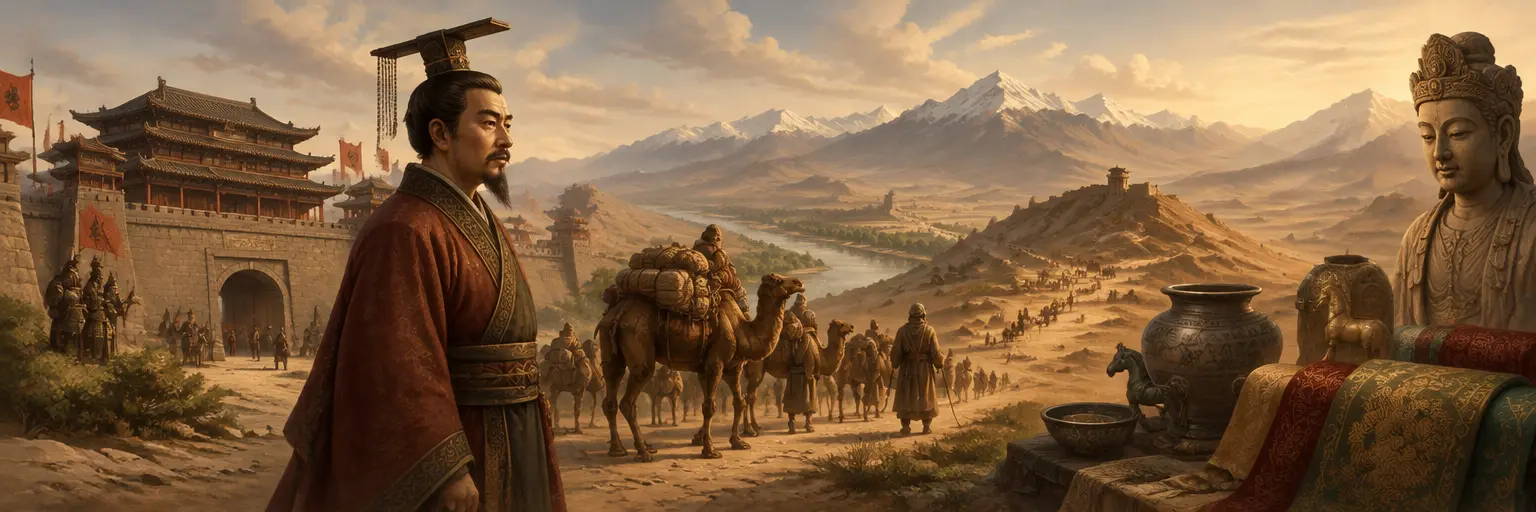
This facet focuses on the Han’s role in creating the Silk Road, a network of overland and maritime routes linking China to Central Asia, India, and the Mediterranean. Initiated by Zhang Qian’s diplomatic missions (circa 138 BCE), the Silk Road facilitated trade in silk, jade, spices, and horses, while also transmitting ideas, religions, and technologies. Archaeological finds—such as Roman glassware in Chinese tombs and Han silk in Egyptian mummies—demonstrate the scale of exchange. You’ll also explore the desert oasis cities like Dunhuang and Loulan, where caravanserais and murals reveal multicultural interactions.
We provide artifact profiles on coins, textiles, and ceramics that traveled along these routes, plus analysis of the Hexi Corridor’s watchtowers and relay stations. Discover how the Han introduced iron smelting, irrigation techniques, and paper to the West, while adopting grapes, alfalfa, and Buddhist imagery. Through excavation reports on shipwrecks and buried hoards, you’ll understand the Silk Road’s economic impact, including the standardization of coinage and the rise of merchant guilds. This section emphasizes that the Silk Road was not a single road but a dynamic web of interactions that shaped global history.
🎨 Cultural Flourishing: Literature, Art, and Philosophy
Here, you’ll delve into the Han’s cultural renaissance, which produced monumental achievements in literature, historiography, and art. Central is Sima Qian’s “Records of the Grand Historian,” a groundbreaking narrative that set standards for historical writing. Archaeological discoveries in tombs demonstrate artistic sophistication, including lacquerware, jade burial suits, and painted silk banners that depict cosmological beliefs. We also examine the role of Confucianism as state ideology, alongside Daoist and Legalist influences, reflected in excavated texts like the “Analects” and medical manuscripts.
This section analyzes how art served both religious and political purposes, from bronze mirrors inscribed with auspicious motifs to earthenware figurines portraying daily life. You’ll explore the evolution of calligraphy and the invention of paper (attributed to Cai Lun in 105 CE), which revolutionized record-keeping. Ritual bronzes, music stones, and the imperial academy’s curriculum reveal a culture deeply invested in education and ceremonial display. Through case studies of elite tombs—such as those at Mancheng and Nanyang—you’ll see how burial goods reflect social status, filial piety, and expectations of the afterlife.
🏺 Daily Life and Material Culture
This facet shifts focus to the everyday experiences of Han people, using archaeological evidence from villages, workshops, and urban centers. Excavated granaries, iron plows, and water mills illuminate agricultural innovations, while kiln sites reveal mass production of pottery and bricks. You’ll explore domestic architecture via courtyard house models found in tombs, which show ventilation, heating, and family arrangements. Textiles, clothing, and food storage vessels indicate trade and social stratification, with peasants using coarse pottery and elites possessing glazed wares and bronze utensils.
We also cover crafts like silk weaving, lacquer making, and metallurgy, including the mass production of coins and weapons. Urban life in capitals like Chang’an and Luoyang is reconstructed from street grids, marketplaces, and drainage systems featured in archaeological surveys. The section includes artifact explanations—such as oil lamps, cooking stoves, and toy figurines—that humanize historical records. By comparing tomb inventories with written sources, we show how diet, health, and leisure varied across regions, providing a nuanced view of Han society beyond the elite.
📜 Religion, Beliefs, and Burial Practices
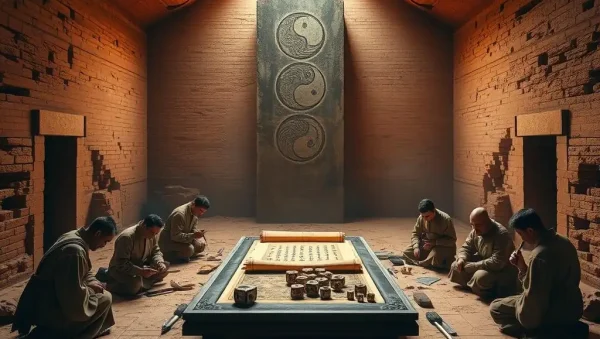
This segment examines Han spirituality, which blended indigenous folk religion, Confucian ancestor worship, and Daoist cosmology, while permitting early Buddhist entry. Elite tombs, like those with jade suits and lacquered coffins, reveal beliefs in immortality and the soul’s journey. Excavated “tomb quells” and land contracts with written spells indicate protective rituals. We also analyze the role of shamans, divination texts on bamboo slips, and the cult of the Queen Mother of the West, which gained popularity during this era.
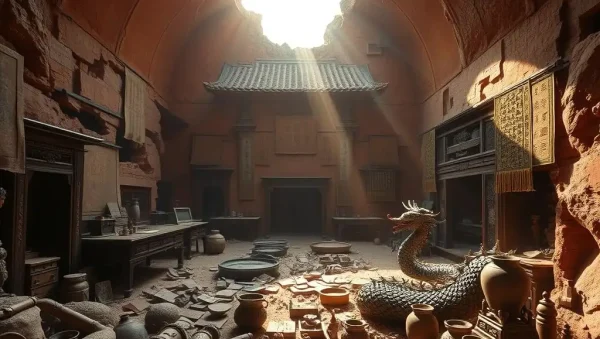
Through analyses of mortuary architecture—including underground chambers and above-ground shrines—you’ll understand regional variations and royal versus commoner practices. Artifacts like incense burners, bronze bells, and painted clay figures depict scenes of feasting, horsemanship, and celestial journeys. We also cover the Han’s state sacrifices at altars and the recording of auspicious omens in official histories. This section links archaeological evidence with philosophical texts to explain how religious institutions legitimated imperial rule and provided comfort amid social change.
Frequently Asked Questions
What was the Han Dynasty’s most significant contribution to history?
The most significant contribution was the consolidation of a centralized bureaucratic state that lasted over 400 years, establishing administrative models, legal codes, and cultural norms. It also pioneered the Silk Road, connecting China to the wider world, and invented paper, which revolutionized communication. These foundations influenced all subsequent Chinese dynasties and neighboring civilizations.
How did the Silk Road influence Han Dynasty culture?
The Silk Road introduced new goods—like grapes, walnuts, and exotic animals—and stimulated artistic motifs, such as lion figures and Hellenistic designs. It also facilitated the arrival of Buddhism, which initially blended with Daoist practices. Diplomatically, it enabled tribute exchanges, while economically it created wealth for merchants and spread technologies like glassmaking and winemaking.
What are the best archaeological sites to learn about the Han Dynasty?
Key sites include the Mawangdui tombs (Hunan), with exceptional textiles and lacquerware; the Mancheng Han tombs (Hebei), featuring jade suits; and the Chang’an city ruins (Shaanxi), showing urban planning. The Juyan frontier stations, Yumen Pass, and Dunhuang caves offer insights into border life and Silk Road exchange. Each provides unique artifacts and structures for comprehensive study.
How did Han burial practices differ from earlier dynasties?
Han burials expanded scale and sophistication, using multi-chambered vaults, brick constructions, and elaborate grave goods like miniature estates and servants. They introduced jade suits for elite preservation and wall murals depicting daily life and cosmology. Compared to Shang’s sacrificial pits, Han tombs emphasized family lineage, ancestor worship, and aims for immortality, reflecting Confucian and Daoist values.
What do Han artifacts reveal about technological advancements?
Han artifacts show mastery in iron casting, including hydraulic-powered bellows and agricultural tools. Paper fragments confirm early manufacturing, while bronze mirrors and lacquerware display precision craftsmanship. Textile fragments indicate advanced silk weaving techniques. Water mills and seismographs (invented by Zhang Heng) highlight engineering innovation, while coin molds and graded weights demonstrate standardized production.