
Syncretism in Han Dynasty Beliefs: Blending Confucian, Daoist, and Folk Traditions

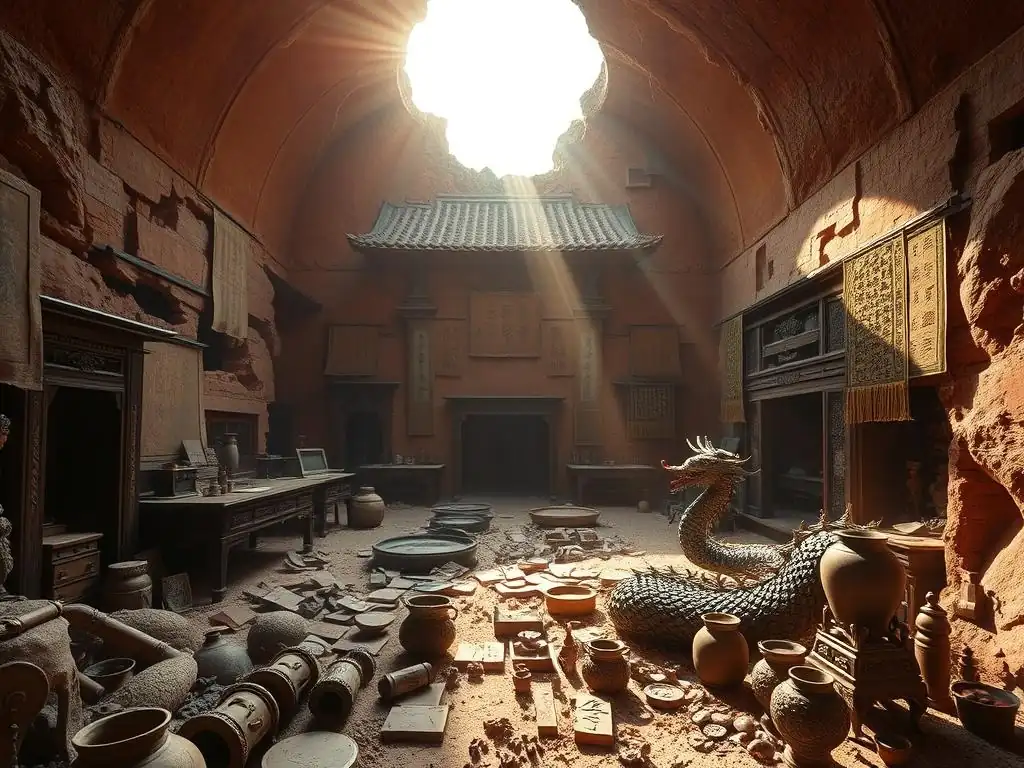
Welcome to ArchaeologyHub.org, your gateway to unraveling the mysteries of the past. Dive into a world where ancient stones whisper forgotten stories, and meticulously unearthed artifacts paint vivid pictures of civilizations long gone.
Ever wondered how diverse belief systems could intertwine and shape an entire era? Our deep dive into Han dynasty religious syncretism reveals the fascinating blend of Confucian ideals, Daoist philosophies, and vibrant folk traditions that defined the spiritual landscape of this influential period. Prepare to explore the intricate connections and unexpected harmonies within this unique cultural tapestry. Let's begin!
- Introduction: Understanding Han Dynasty Religious Syncretism
- The Core Belief Systems Influencing Han Dynasty Religious Practices
- The Interplay of Confucianism, Daoism, and Folk Traditions: A Syncretic Blend
- Archaeological Evidence of Han Dynasty Religious Syncretism
- Case Studies: Specific Examples of Han Dynasty Religious Syncretism
- The Legacy of Han Dynasty Religious Syncretism
-
Frequently Asked Questions
- What is religious syncretism, and why is it important to understand in the context of the Han Dynasty?
- How did Confucianism, Daoism, and folk traditions interact and influence each other during the Han Dynasty?
- Can you provide specific examples of Han Dynasty artifacts or archaeological sites that demonstrate religious syncretism?
- How did the Han Dynasty's policy towards religious beliefs contribute to or hinder the process of syncretism?
- What were the long-term effects of Han Dynasty religious syncretism on Chinese culture and religious practices?
- Final Reflection: The Enduring Tapestry of Belief
- Unveil the Past: Your Journey into Han Dynasty Beliefs Begins Now!
Introduction: Understanding Han Dynasty Religious Syncretism
The Flourishing of Syncretic Beliefs During the Han Dynasty (206 BCE – 220 CE)
The Han Dynasty, a period of remarkable stability and expansion in Chinese history, witnessed an unprecedented flourishing of diverse belief systems. This era, spanning over four centuries, provided fertile ground for the blending and reinterpretation of philosophical schools and popular spiritual practices. As the empire solidified its vast territorial control, stretching from the Korean peninsula to Central Asia and Vietnam, it encompassed a diverse population, estimated to be around 60 million people during its peak in the Western Han period. This demographic and geographic breadth naturally fostered an environment where different traditions interacted and influenced one another.
The imperial court's adoption of Confucianism as the state ideology did not eradicate other existing beliefs; instead, it set the stage for a complex interplay. Daoist philosophy, with its emphasis on nature and individual harmony, continued to appeal to many, while deeply rooted folk traditions, including ancestor worship and local spirit cults, remained pervasive across all social strata. The Han period's intellectual vibrancy, coupled with its administrative reach, meant that these disparate elements were not merely coexisting but actively synthesizing, creating a unique spiritual landscape that defined Han dynasty religious syncretism.
Defining Religious Syncretism in the Context of Han China
Religious syncretism, in the context of Han China, refers to the amalgamation of different religious or philosophical beliefs and practices, resulting in new forms or the reinterpretation of existing ones. This was not a passive coexistence but an active process of integration, where elements from Confucianism, Daoism, and various folk traditions were selectively adopted, adapted, and combined to address the spiritual, social, and political needs of the time. The Han approach was often pragmatic, seeking to achieve harmony, prosperity, longevity, and social order through a comprehensive spiritual framework.
Unlike later periods where distinct religious institutions might compete, Han syncretism often manifested as a fluid, often unspoken, synthesis within individuals' belief systems and communal practices. For instance, a Han official might rigorously adhere to Confucian rites in public life, consult Daoist alchemists for longevity, and participate in local festivals honoring folk deities, all without perceiving these as contradictory. This pragmatic flexibility is a hallmark of Han dynasty religious syncretism, reflecting a holistic worldview where different paths could lead to similar desired outcomes, whether personal well-being or imperial stability.
Archaeological Evidence and the Study of Han Dynasty Culture
Archaeological findings have been instrumental in unraveling the intricate layers of Han dynasty religious syncretism, offering tangible proof where textual sources might be ambiguous or incomplete. Excavations of Han tombs, particularly those belonging to elites, have yielded a wealth of artifacts that explicitly illustrate the blending of beliefs. These include elaborate funerary art, such as murals and silk banners, depicting scenes that combine Confucian morality tales with Daoist visions of immortality and folk underworld guardians.
For example, the Mawangdui tombs (c. 168 BCE) in Hunan province provide a striking illustration, with their famous silk banner featuring a cosmic diagram that incorporates celestial beings (Daoist), symbols of the underworld (folk), and representations of the deceased's journey to a harmonious afterlife (influenced by all three). Furthermore, the sheer volume of mingqi (tomb figures) and symbolic items like jade plugs and bronze mirrors found in Han burials attests to a pervasive belief in a structured afterlife, influenced by desires for cosmic harmony and protection.
These material remains offer direct insights into the lived religious experiences and the practical applications of Han dynasty religious syncretism.
The Core Belief Systems Influencing Han Dynasty Religious Practices
Confucianism's Role in Shaping Han Dynasty Society and Rituals
Confucianism, initially a philosophical school emphasizing ethics and social harmony, was elevated to the status of state ideology during the reign of Emperor Wu (141-87 BCE). This institutionalization profoundly shaped Han society, providing a moral and political framework for governance and individual conduct. Its core tenets, as expounded in the Five Classics, emphasized filial piety, loyalty, righteousness, and the importance of hierarchical relationships, which were seen as crucial for maintaining order both within the family and the state.
The establishment of the Imperial Academy around 124 BCE, dedicated to the study of Confucian texts, solidified its influence on the education of future bureaucrats. This ensured that generations of officials were steeped in Confucian principles, which then guided their administration and public life. While Confucianism focused more on ethical conduct in the human realm rather than explicit spiritual doctrines, its emphasis on ritual ( li) became a cornerstone of state ceremonies, linking imperial authority to cosmic order and ancestral veneration.
Confucian Ethics and the Mandate of Heaven
Confucian ethics provided the moral bedrock for Han society, stressing the cultivation of ren (humanity), yi (righteousness), and li (propriety/ritual). These virtues were not merely personal but were seen as essential for a well-ordered society and a stable government. The concept of the "Mandate of Heaven" ( Tianming) was central to this framework, asserting that the emperor's right to rule was granted by Heaven, contingent upon his virtuous conduct and ability to maintain harmony within the realm. Natural disasters or social unrest were often interpreted as signs that the emperor had lost the Mandate, thereby legitimizing dynastic change.
This powerful political-religious concept meant that the emperor, as the "Son of Heaven," was responsible for mediating between the human and cosmic realms. His performance of rituals and adherence to ethical governance were believed to directly influence the well-being of the empire. The Mandate of Heaven thus imbued Confucian ethics with a profound spiritual dimension, linking political legitimacy directly to moral rectitude and cosmic approval, a key component of Han dynasty religious syncretism.
State Confucianism and Imperial Cults
The formal adoption of Confucianism by the Han court led to the development of "State Confucianism," a system where Confucian principles were integrated into imperial governance and ritual practices. This included the establishment of state-sponsored sacrifices to Heaven and Earth, performed by the emperor himself, and elaborate ceremonies honoring imperial ancestors. These rituals, meticulously prescribed by Confucian texts, were not just symbolic acts but were believed to ensure the prosperity of the empire and the legitimacy of the ruling house.
Beyond the capital, Confucian temples were built across the empire, and local officials were encouraged to promote Confucian virtues among the populace. The imperial cults, particularly those centered around the sacred mountains (like Mount Tai) and specific deities, often absorbed Confucian interpretations, emphasizing the emperor's role as the supreme mediator. This blending of political ideology with religious ritual was a deliberate strategy to unify the vast empire under a common cultural and spiritual framework, illustrating a top-down manifestation of Han dynasty religious syncretism.
Daoism's Influence on Han Dynasty Spirituality and Alchemy
Daoism, encompassing both philosophical texts and burgeoning religious practices, exerted a profound influence on Han dynasty spirituality, often complementing or contrasting with the more rigid structure of Confucianism. Philosophical Daoism, rooted in the teachings attributed to Laozi and Zhuangzi, emphasized harmony with the natural order ( Dao), spontaneity, and the pursuit of inner tranquility. This resonated with individuals seeking spiritual solace outside the demands of societal conformity and bureaucratic life.
However, during the Han period, a distinct "religious Daoism" began to emerge, characterized by a focus on physical immortality, alchemy, and the worship of various deities. This practical dimension of Daoism appealed to a broad spectrum of society, from emperors seeking eternal life to commoners desiring healing and protection from malevolent spirits. The pursuit of longevity and transcendence became a central theme, leading to a rich tradition of esoteric practices that significantly contributed to Han dynasty religious syncretism.
Philosophical Daoism vs. Religious Daoism in the Han Period
While philosophical Daoism, exemplified by texts like the Daodejing and Zhuangzi, advocated for a return to nature, non-action ( wu wei), and a profound understanding of the universe's underlying principles, religious Daoism took a more pragmatic and ritualistic turn during the Han. Philosophical Daoism offered an intellectual framework for understanding cosmic cycles and individual liberation from worldly attachments. Its influence can be seen in the contemplative practices and artistic expressions of the era.
In contrast, the rise of religious Daoism saw the development of organized sects and the systematization of practices aimed at achieving specific goals. This included the veneration of divine beings, the use of talismans, and the performance of elaborate rituals for healing, exorcism, and the accumulation of merit. This divergence highlights the dual nature of Daoist influence in the Han: a sophisticated philosophical tradition for the elite and a popular, accessible set of practices for the masses, both contributing to the broader Han dynasty religious syncretism.
The Pursuit of Immortality and Daoist Practices
The quest for immortality ( chang sheng bu lao) was a defining characteristic of Han religious Daoism, captivating individuals from emperors to common folk. This pursuit manifested in various practices, including external alchemy (synthesizing elixirs from minerals like cinnabar and mercury), internal alchemy (meditative and breathing exercises to cultivate qi or vital energy), and dietary regimens. Emperors like Wu were known to patronize Daoist masters and send expeditions in search of the mythical Isles of the Immortals.
Archaeological evidence, such as bronze mirrors adorned with symbols of the Queen Mother of the West (Xiwangmu), a prominent Daoist deity associated with immortality, found in Han tombs, underscores the widespread nature of this belief. The popular appeal of achieving transcendence and overcoming death fueled the development of elaborate Daoist rituals and the compilation of esoteric texts. These practices, aimed at personal transformation and longevity, added a distinct spiritual dimension to the prevailing Han dynasty religious syncretism.
The Enduring Power of Folk Traditions and Ancestor Veneration
Beneath the layers of imperial Confucianism and developing Daoism, the bedrock of Han Chinese belief lay in deeply ingrained folk traditions and the pervasive practice of ancestor veneration. These were not formalized doctrines but organic, localized practices that had existed for millennia, shaping daily life and communal identity. They encompassed a wide array of beliefs, from the worship of local deities and nature spirits to the elaborate rituals surrounding death and the afterlife.
These traditions were often highly localized, varying from one region to another, yet shared common underlying principles: a belief in a spirit world that directly influenced the human realm, the importance of maintaining harmony with these spirits, and the profound respect for one's forebears. Their enduring power meant that even as Confucianism and Daoism gained prominence, these folk elements continued to thrive, often absorbing and being absorbed by the more formalized systems, thus contributing significantly to Han dynasty religious syncretism.
Local Deities and Spirit Beliefs in Han Dynasty China
Across Han China, people revered a multitude of local deities and spirits associated with specific geographical features or natural phenomena. Mountains, rivers, trees, and even rocks were often believed to house powerful spirits ( shen) that could bestow blessings or inflict misfortune. Agricultural communities, in particular, relied on the goodwill of deities of the soil (Tudigong) and grain, offering sacrifices to ensure bountiful harvests. These practices were deeply embedded in the rhythm of agrarian life, reflecting a practical cosmology focused on immediate well-being and protection.
Beyond nature spirits, beliefs in various ghosts ( gui) and protective deities were also widespread. Charms, talismans, and exorcistic rituals were common ways to ward off evil influences and ensure good fortune. While often seen as "superstitious" by later Confucian scholars, these localized cults formed an indispensable part of the spiritual landscape for the vast majority of the Han population. Their pervasive presence meant that any emerging organized belief system had to either accommodate or integrate these existing traditions, further enriching Han dynasty religious syncretism.
Ancestral Rites and Their Significance
Ancestor veneration was arguably the most fundamental and universally practiced belief in Han China, transcending social classes and regional differences. It was deeply intertwined with the Confucian concept of filial piety ( xiao), which extended beyond the life of one's parents. The living were responsible for honoring their deceased ancestors through elaborate rituals, offerings of food and wine, and maintaining ancestral tablets or shrines. These rites were believed to ensure the well-being of the family, as ancestors, in turn, could intercede on their behalf with the gods or ensure prosperity.
Archaeological discoveries from Han tombs vividly illustrate the importance of these rites, with elaborate burial goods ( mingqi) designed to provide for the deceased in the afterlife, mirroring their earthly comforts. The belief was that a well-provided and respected ancestor would bring blessings, while a neglected one could cause misfortune. This profound connection between the living and the dead, reinforced by rituals and material culture, formed a crucial element of Han spiritual life and served as a powerful unifying force, making it a central component of Han dynasty religious syncretism.
The Interplay of Confucianism, Daoism, and Folk Traditions: A Syncretic Blend
The Integration of Confucian Values into Daoist Practices
As religious Daoism began to formalize and attract wider followings during the Han Dynasty, it increasingly incorporated ethical principles that resonated with Confucian thought. While philosophical Daoism often emphasized detachment from worldly concerns, the emerging Daoist sects, particularly those seeking to establish a structured religious community, recognized the importance of moral conduct for societal harmony and individual spiritual progress. This integration was a crucial step in making Daoism more palatable and widespread within a society deeply influenced by Confucian norms.
This blending often meant that Daoist teachings on cultivating inner harmony and achieving longevity were framed within a moral context that stressed loyalty to the state, filial piety towards parents, and good conduct towards neighbors. The concept of accumulating "merit" through virtuous actions became a significant aspect of Daoist salvation theories, directly aligning with Confucian ideals of moral self-cultivation. This demonstrated a pragmatic adaptation, allowing Daoism to flourish without directly challenging the established social order, thereby contributing to Han dynasty religious syncretism.
Examples of Ethical Concepts in Daoist Sects
A prominent example of this integration can be found in the Way of the Celestial Masters ( Tianshi Dao), one of the earliest organized Daoist religious movements, which emerged in the late Eastern Han period (around 142 CE). While its core practices involved healing through confession of sins and communal rituals, the Celestial Masters' teachings explicitly incorporated Confucian ethical concepts. They emphasized loyalty to the Dao and the ruler, filial piety, and the importance of benevolent actions as prerequisites for spiritual advancement and avoiding punishment in the afterlife.
Their "Registers" ( lu), which members received, often included moral injunctions alongside lists of deities and spiritual protection. The idea that one's moral conduct directly influenced their spiritual fate, and even their physical health, was a powerful synthesis of Daoist pursuit of longevity and Confucian emphasis on ethical living. This practical application of Confucian ethics within a Daoist spiritual framework vividly illustrates a key aspect of Han dynasty religious syncretism.
Daoist Influences on Confucian Rituals and Statecraft
Despite Confucianism's official status, Daoist cosmology and natural philosophy subtly permeated aspects of Confucian rituals and imperial statecraft, particularly in areas related to understanding the cosmos and predicting natural phenomena. The Han intellectual landscape was dynamic, and scholars often drew from various traditions to construct a comprehensive worldview. This cross-pollination led to a more nuanced and cosmologically informed Confucianism, particularly in the realm of imperial prognostication and governance.
The integration was often indirect, through the acceptance of shared cosmological principles rather than overt adoption of Daoist deities. For instance, the systematic application of Yin-Yang and Five Phases theories, which had strong Daoist or proto-Daoist roots, became central to Confucian imperial thought. These theories were used to interpret natural events, guide imperial policies, and even design capital cities and ritual spaces, demonstrating a deep, albeit often unacknowledged, influence on the very fabric of state ritual and administration, showcasing a subtle form of Han dynasty religious syncretism.
Daoist Cosmology and Natural Philosophy in Governance
The Han scholar Dong Zhongshu (c. 179–104 BCE), a key figure in the formalization of State Confucianism, famously integrated the Yin-Yang and Five Phases theories into his comprehensive cosmological framework. While fundamentally Confucian in his aims, Dong used these Daoist-influenced concepts to explain the intricate relationship between Heaven, Earth, and humanity. He argued that natural disasters were not random occurrences but cosmic warnings from Heaven, indicating the emperor's failure to maintain harmony and virtue.
This holistic view, which posited a sympathetic resonance between the cosmos and human affairs, became a cornerstone of Han imperial policy. Calendrical reforms, the selection of auspicious dates for state rituals, and even the color of imperial robes were often determined by these cosmological principles. This integration meant that the emperor's governance was not just a matter of human ethics but also a delicate balancing act within a vast, interconnected cosmos, a concept heavily informed by Daoist natural philosophy and a prime example of Han dynasty religious syncretism in statecraft.
Folk Traditions and Their Absorption into Elite Belief Systems
While folk traditions formed the grassroots of Han spiritual life, they were not entirely separate from the elite belief systems of Confucianism and Daoism; rather, they frequently influenced and were absorbed into them. This process was often driven by a desire for comprehensive spiritual protection, a pragmatic approach to power, and the sheer pervasiveness of popular beliefs. Elite individuals, including emperors, often consulted shamans ( wu) and participated in local cults, indicating that these "lower" traditions held significant sway across all social strata.
The absorption of folk elements into elite systems often manifested in the incorporation of local deities into official pantheons, or the reinterpretation of popular myths through a Confucian or Daoist lens. This was a form of cultural synthesis, where the state sought to legitimize and control popular religious expression by integrating it into the broader imperial framework. This dynamic interplay ensured that the rich tapestry of local beliefs remained a vital component of Han dynasty religious syncretism.
The Role of Shamans and Ritual Specialists
Shamans ( wu), individuals believed to possess the ability to communicate with spirits and perform healing or divinatory rituals, played a significant role in Han society, bridging the gap between folk beliefs and elite practices. They were consulted by commoners for personal matters and, at times, even by emperors for matters of state, such as seeking divine guidance or warding off evil influences. While Confucian scholars might have viewed them with suspicion, their practical utility ensured their continued presence and influence.
Furthermore, many popular cults, such as the widespread veneration of the Queen Mother of the West (Xiwangmu), gained traction from folk origins and subsequently attracted imperial patronage or Daoist reinterpretation. Her cult, initially a folk deity associated with immortality and the Western paradise, became a prominent figure in religious Daoism and was even depicted in elite tomb art. This demonstrates how powerful folk traditions could ascend to influence formal religious systems and imperial piety, clearly illustrating the pervasive nature of Han dynasty religious syncretism.
Archaeological Evidence of Han Dynasty Religious Syncretism
Examining Tombs and Burial Practices for Syncretic Elements
Han dynasty tombs represent an unparalleled archive of the period's religious beliefs, offering tangible proof of Han dynasty religious syncretism through their structure, contents, and decorative motifs. The elaborate nature of these burials, especially for the elite, reflects a complex understanding of the afterlife, blending Confucian ideals of filial piety and social hierarchy with Daoist aspirations for immortality and folk beliefs about the spirit world. The sheer volume of excavated tombs, numbering in the tens of thousands, provides a vast dataset for researchers.
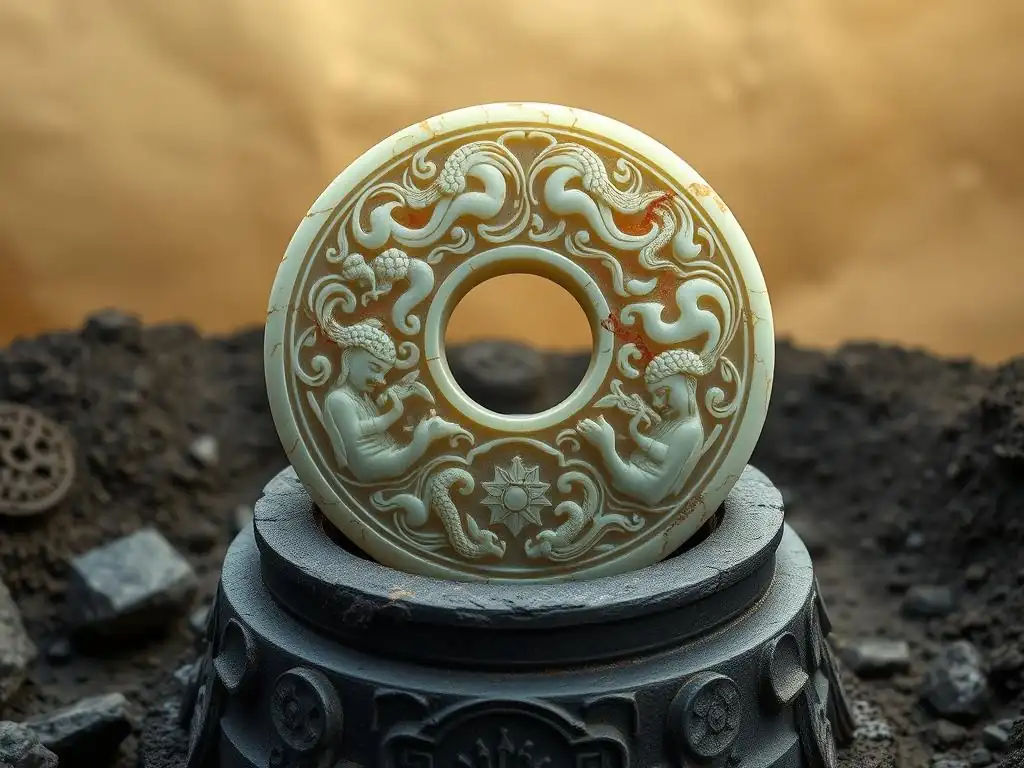
For instance, the tomb of Liu Sheng, Prince of Zhongshan, and his consort Dou Wan (c. 113 BCE), discovered in Mancheng, Hebei province, exemplifies this syncretic approach. Their jade burial suits, meticulously crafted from thousands of jade pieces sewn with gold thread, were believed to preserve the body and ensure immortality, a concept deeply rooted in Daoist alchemical traditions. Simultaneously, the vast array of mingqi (tomb figures) representing servants, horses, chariots, and entire miniature estates reflects a Confucian-influenced desire to maintain one's social status and comforts in the afterlife, highlighting the practical blend of beliefs.
Funerary Art and Religious Symbolism
Han funerary art, particularly tomb murals, carved reliefs, and painted silk banners, provides rich narratives of Han dynasty religious syncretism. These visual records often depict a harmonious coexistence, and sometimes outright fusion, of themes from different traditions. For example, scenes of Confucian filial piety, such as the twenty-four paragons, might appear alongside depictions of Daoist immortals riding mythical beasts or folk guardians protecting the tomb entrance.
The famous silk banner from the Mawangdui tomb (c. 168 BCE), mentioned earlier, is a prime example. It meticulously illustrates a cosmic journey, with the lower section depicting the underworld inhabited by folk spirits and mythical creatures, the middle section showing the deceased's earthly life and ascent, and the upper section portraying the celestial realm with Daoist immortals like the Queen Mother of the West and celestial dragons.
This single artifact encapsulates the Han belief in a multi-layered cosmos, where different spiritual entities and destinies are integrated into a cohesive vision, showcasing the visual evidence of Han dynasty religious syncretism.
The Use of Jade and Other Symbolic Materials
Beyond the jade burial suits, the widespread use of jade in Han funerary contexts further illustrates syncretic beliefs. Jade, revered for its perceived purity, durability, and life-giving properties, was believed to prevent decay and facilitate the deceased's transition to immortality. Small jade objects, such as plugs for the nine orifices of the body, were routinely placed on or in the deceased, reflecting a Daoist-influenced concern for physical preservation and the integrity of the qi (vital energy) within the body.
Other symbolic materials also played a role. Bronze mirrors, frequently found in Han tombs, often featured intricate designs incorporating cosmological symbols like the four directional animals (Azure Dragon, Vermilion Bird, White Tiger, Black Tortoise), the twelve zodiac animals, and figures of immortals.
These symbols, drawn from a mix of folk beliefs and Daoist cosmology, were thought to reflect cosmic harmony and offer protection. The inclusion of ceramic models of houses, granaries, and farm animals ( mingqi) in tombs also speaks to a folk belief in a continuation of earthly life in the afterlife, a desire for material comfort that transcended mere philosophical abstraction, further demonstrating the material evidence of Han dynasty religious syncretism.
Analyzing Religious Texts and Inscriptions from the Han Dynasty
While many Han dynasty religious texts have been lost, those that survive, alongside numerous inscriptions on artifacts and monuments, offer invaluable insights into the nuanced blending of beliefs. These written records, ranging from philosophical treatises to official decrees and personal dedications, reveal how various spiritual concepts were articulated and understood by people across different social strata. The language used often reflects a shared vocabulary that drew from multiple traditions, making it challenging to neatly categorize beliefs into distinct "Confucian" or "Daoist" boxes.
For instance, texts like the Huainanzi (compiled c. 139 BCE), a philosophical work from the court of Liu An, King of Huainan, is a prime example of this intellectual synthesis. It extensively discusses cosmology, natural philosophy, and statecraft, drawing heavily from both Daoist thought (Yin-Yang, Five Phases) and Confucian principles of governance. Similarly, inscriptions found on stelae and bronze vessels often combine wishes for Confucian virtues like filial piety with aspirations for longevity or blessings from spirits, reflecting a practical, integrated approach to spirituality.
Insights from Inscriptions on Bronze Vessels and Stelae
Inscriptions found on Han dynasty bronze vessels, often used for ancestral offerings or ritual purposes, frequently contain prayers and dedications that blend elements of Confucian piety with folk and Daoist aspirations. A typical inscription might commemorate a family's lineage and express wishes for their continued prosperity (Confucian concern for family and lineage), while also invoking blessings from spirits or ensuring longevity (folk and Daoist aspirations). For example, a bronze mirror inscription might include a phrase like "May you have great fortune and reach immortality," combining a general wish for good luck with a specific Daoist goal.
Similarly, Han stelae (stone tablets), erected to commemorate important individuals or events, often feature epitaphs that highlight the deceased's Confucian virtues and achievements, such as loyalty and scholarly merit. However, these same stelae might also include cosmological diagrams, references to celestial realms, or phrases alluding to the deceased's journey to a blessed afterlife, concepts influenced by Daoist and folk beliefs. The "Shiliao Stele" (184 CE) from Shandong, for instance, depicts Confucian figures alongside Daoist immortals and mythical animals, visually and textually combining these elements, providing concrete textual evidence of Han dynasty religious syncretism.
The Significance of Han Dynasty Temples and Ritual Sites
While few Han dynasty temples and ritual sites survive intact, archaeological foundations, literary descriptions, and later architectural influences provide clues about their design and function, indicating a blending of religious elements. Unlike later periods with distinct temple complexes for specific religions, Han sites often appear to have served multi-purpose functions, reflecting the fluid nature of Han beliefs. Imperial ritual sites, in particular, were designed to consolidate various spiritual practices under the emperor's authority.
The construction of altars for state sacrifices, such as the Round Mound Altar ( Yuanqiu) for Heaven worship, meticulously followed cosmological principles, many of which had roots in Daoist or pre-Daoist Yin-Yang and Five Phases theories, even as the rituals themselves were Confucianized. These sites were not merely places of worship but symbolic representations of the emperor's cosmic role, aiming to harmonize the human and natural worlds. This imperial effort to synthesize various religious practices into a unified state cult is a significant aspect of Han dynasty religious syncretism.
The Blending of Confucian, Daoist, and Folk Elements in Temple Design
Although concrete examples of surviving Han temples are rare, archaeological investigations of their foundations and historical records suggest that their design and function often incorporated a blend of elements from different traditions. Imperial temples dedicated to the Five Emperors (Wudi), for example, were established to honor ancient sage-kings and cosmic deities, integrating figures from folk mythology and early cosmological thought into a state-sanctioned pantheon. The layout and orientation of these temples often adhered to principles derived from Daoist cosmology, such as fengshui, to ensure auspicious alignment.
Furthermore, local cult sites, while primarily serving folk traditions, were sometimes sponsored or reinterpreted by local officials through a Confucian lens, emphasizing their role in promoting social harmony and agricultural prosperity. The absence of strict sectarian divisions in Han temple architecture, as opposed to later periods, suggests a more fluid integration where a single site might accommodate various ritual practices, from ancestral veneration to prayers for rain, reflecting the overarching nature of Han dynasty religious syncretism in architectural form.
Case Studies: Specific Examples of Han Dynasty Religious Syncretism
Case Study 1: The Cult of the Yellow Emperor (Huangdi)
The cult of the Yellow Emperor, Huangdi, stands as a prime example of Han dynasty religious syncretism, illustrating how a single figure could embody ideals from multiple belief systems. Huangdi was revered as a legendary culture hero, credited with inventing writing, medicine, the compass, and establishing the foundational principles of civilized society. This image of a wise and benevolent ruler perfectly aligned with Confucian ideals of a sage-king and the origins of imperial authority.
Simultaneously, Huangdi was also seen as a powerful immortal, a master of alchemy, and a cosmic deity who ascended to heaven. This aspect resonated deeply with Daoist pursuits of longevity and transcendence, positioning him as a patron of esoteric practices. The Han emperors, particularly Emperor Wu, actively promoted the cult of Huangdi, constructing temples and performing sacrifices in his honor. This imperial patronage further solidified his dual identity, making him a central figure in the state's efforts to synthesize diverse spiritual aspirations, reflecting a deliberate effort at Han dynasty religious syncretism.
The Yellow Emperor as a Synthesis of Confucian and Daoist Ideals
Huangdi's dual nature as both a Confucian sage-king and a Daoist immortal made him an ideal figure for the syncretic environment of the Han. For Confucian scholars, he represented the epitome of virtuous governance and the source of cultural institutions, providing a historical precedent for imperial authority and moral order. His legendary inventions and contributions to civilization underscored the importance of human ingenuity and societal progress, aligning with Confucian emphasis on practical administration.
However, for those drawn to Daoist spirituality, Huangdi was a figure of profound mystical power. Tales of his ascension to immortality after cultivating the Dao, and his mastery of esoteric arts like alchemy and medicine, made him a revered patron for those seeking longevity and spiritual transcendence. This ability to appeal to both the political-ethical concerns of Confucianism and the spiritual-mystical aspirations of Daoism ensured his widespread veneration and made his cult a microcosm of Han dynasty religious syncretism.
Case Study 2: The Development of Early Daoist Sects
The Han Dynasty was a pivotal period for the development of organized religious Daoism, moving beyond philosophical texts to structured communities with distinct rituals and doctrines. These early Daoist sects, such as the Way of the Celestial Masters ( Tianshi Dao) and the Way of Great Peace ( Taiping Dao), emerged in the late Eastern Han, often in response to social unrest and political instability. Their success lay partly in their ability to synthesize existing folk beliefs with developing Daoist concepts and even Confucian ethics, offering comprehensive solutions for spiritual and worldly problems.
These sects provided a sense of community and spiritual guidance that was often lacking in the more formal state-sponsored rituals or diffuse folk practices. They attracted large followings, sometimes numbering in the hundreds of thousands, by offering healing, salvation, and a structured moral code. Their emergence and growth represent a significant bottom-up manifestation of Han dynasty religious syncretism, where new religious movements actively integrated elements from the prevailing spiritual landscape.
The Way of the Celestial Masters and its Syncretic Beliefs
The Way of the Celestial Masters, founded by Zhang Daoling around 142 CE in Sichuan, is one of the most well-documented early Daoist sects and a clear example of Han dynasty religious syncretism. It established a hierarchical organization, a system of "parishes," and a unique set of practices that blended Daoist spiritual cultivation with elements borrowed from Confucian ethics and folk healing traditions. Members were required to confess their sins, which were then written on scrolls and submitted to Heaven, Earth, and Water, a practice derived from ancient folk rituals.
Crucially, the Celestial Masters emphasized moral conduct, including loyalty, filial piety, and benevolence, as essential for spiritual progress and avoiding illness or misfortune. They also incorporated traditional folk healing methods alongside Daoist incantations and talismans. This combination of organized spiritual practice, ethical living (Confucian), and practical healing (folk) made the Celestial Masters highly appealing and effective in their reach, demonstrating a powerful and enduring form of Han dynasty religious syncretism.
Case Study 3: The Evolution of Ancestor Worship
Ancestor worship, a cornerstone of Chinese spiritual life since pre-dynastic times, underwent a significant evolution during the Han Dynasty, absorbing and becoming enriched by elements from both Confucianism and emerging Daoist beliefs. While its fundamental practice of honoring deceased family members remained, the Han period saw an increasing elaboration of rituals and funerary practices, reflecting a more complex understanding of the afterlife and the relationship between the living and the dead.
This evolution was fueled by the institutionalization of Confucian filial piety, which elevated ancestor veneration to a central moral imperative, and by Daoist beliefs in immortality and the soul's journey. The result was a sophisticated system of ancestral rites that integrated elements from all three traditions, ensuring the continued relevance and profound significance of ancestor worship across all social strata, making it a dynamic example of Han dynasty religious syncretism.
The Incorporation of New Rituals and Beliefs
During the Han Dynasty, ancestor worship became more formalized and intricate, incorporating new rituals and beliefs that reflected the syncretic spiritual environment. The Confucian emphasis on li (propriety and ritual) led to highly standardized and elaborate ancestral ceremonies, particularly at the imperial level, where sacrifices to royal ancestors were meticulously performed to ensure dynastic legitimacy and cosmic harmony. Filial piety was not just a moral virtue but a ritual obligation that extended to the deceased.
Simultaneously, Daoist-influenced beliefs about the afterlife, such as the journey of the soul to realms of immortals or the need to avoid malevolent spirits, led to the inclusion of specific incantations, talismans, and burial practices aimed at facilitating the deceased's peaceful transition. The construction of increasingly grand and well-furnished tombs, filled with mingqi (tomb figures), was a tangible manifestation of this blend: they served to honor the deceased (Confucian filial piety) and provide for their comfort in an afterlife envisioned with material needs (folk beliefs), while also incorporating items for spiritual protection or immortality (Daoist influence).
This rich interplay showcases the evolving nature of Han dynasty religious syncretism in everyday practice.
The Legacy of Han Dynasty Religious Syncretism
The Impact on Subsequent Dynasties and Religious Traditions
The Han Dynasty's profound Han dynasty religious syncretism left an indelible mark on subsequent Chinese dynasties and the broader religious landscape of East Asia. The practical and fluid integration of Confucian, Daoist, and folk traditions established a foundational pattern that would characterize Chinese religious life for centuries to come. This legacy meant that future emperors and scholars rarely sought to enforce strict religious orthodoxy but rather continued to embrace a composite worldview that accommodated diverse spiritual expressions.
The syncretic model facilitated the later assimilation of Buddhism, which arrived in China during the late Han period. Instead of outright conflict, Buddhism gradually found ways to align with existing Chinese values, adopting Confucian ethics like filial piety and incorporating Daoist concepts into its philosophical interpretations. This ability to absorb and adapt new traditions into an already syncretic framework is a testament to the enduring influence of the Han approach to beliefs, shaping the distinctively Chinese "three teachings" (Confucianism, Daoism, Buddhism) paradigm.
Influence on Later Dynasties
The blueprint of Han dynasty religious syncretism profoundly influenced the imperial policies and popular religious practices of subsequent dynasties. The idea of Confucianism as the state's ethical and political framework, complemented by Daoism for spiritual cultivation and longevity, and undergirded by pervasive folk beliefs, became the de facto model for imperial governance and societal cohesion. Dynasties like the Tang (618-907 CE) explicitly embraced the "three teachings" ( san jiao) as integral components of their cultural and political identity, often sponsoring temples and scholars from all three traditions.
Even during periods of fragmentation or foreign rule, the syncretic nature of Chinese beliefs persisted, allowing for adaptability and resilience. The imperial cults and ancestral rites, refined during the Han, continued to form the bedrock of state rituals, while Daoist practices evolved into more formalized religious institutions. This enduring legacy ensured that future religious innovations and foreign imports, such as Christianity and Islam, would also face a cultural context predisposed to integration rather than rigid exclusion, demonstrating the long-term impact of Han dynasty religious syncretism.
Modern Interpretations of Han Dynasty Religious Syncretism
Modern scholarship views Han dynasty religious syncretism not as a chaotic jumble of beliefs but as a dynamic and sophisticated process of cultural adaptation and reinterpretation. Rather than seeing distinct traditions being diluted, researchers emphasize how these systems mutually enriched each other, creating a unique and coherent spiritual framework that served the complex needs of a vast empire. This perspective moves beyond simple categorization to explore the nuanced interactions and pragmatic motivations behind the blending of beliefs.
Scholars such as Michael Loewe, Anna Seidel, and Poo Mu-chou have extensively analyzed the archaeological and textual evidence, highlighting how Han individuals and institutions navigated and integrated diverse spiritual elements. They argue that Han syncretism was often driven by a practical desire for cosmic harmony, personal well-being, and social order, rather than strict theological purity. This scholarly approach underscores the ingenuity of the Han people in forging a cohesive spiritual identity from disparate parts, offering a deeper understanding of Han dynasty religious syncretism.
Scholarly Perspectives on the Blending of Beliefs
Contemporary scholarly perspectives on Han dynasty religious syncretism emphasize its organic and often unconscious nature. It wasn't necessarily a top-down decree to merge religions, but rather a fluid process occurring at all levels of society, from imperial courts to local villages. This blending often resulted in new interpretations of existing concepts; for example, Confucian filial piety gained new dimensions when combined with Daoist beliefs about the soul's journey in the afterlife.
Academics also highlight the functional aspects of this syncretism. For instance, the state's promotion of Confucianism provided a moral and administrative backbone, while Daoist practices offered avenues for personal spiritual cultivation and longevity, and folk traditions addressed immediate concerns like illness and agricultural success. This pragmatic approach meant that different traditions could serve complementary roles, leading to a robust and adaptable spiritual system. The ongoing archaeological discoveries continue to refine these interpretations, revealing ever more intricate layers of Han dynasty religious syncretism.
Conclusion: The Enduring Significance of Han Dynasty Religious Syncretism
The Han Dynasty stands as a pivotal era in Chinese history, not least for its profound contribution to the development of a unique and enduring religious syncretism. The blending of Confucian ethics, Daoist spirituality, and deeply rooted folk traditions created a complex, yet remarkably coherent, spiritual landscape that defined the Han worldview. This was not a passive coexistence but an active, dynamic process of integration, evident in everything from imperial rituals and statecraft to individual burial practices and popular cults.
Archaeological evidence, such as the rich contents of Han tombs and the insights from inscriptions, unequivocally demonstrates this pervasive Han dynasty religious syncretism. It shows how the pursuit of social harmony, individual longevity, and cosmic balance drove the fusion of these disparate elements into a pragmatic and comprehensive spiritual system. The legacy of this syncretism resonated for centuries, establishing a flexible framework that would allow Chinese civilization to absorb and adapt new belief systems, including Buddhism, shaping the distinctive "three teachings" that characterize Chinese religious identity to this day.
Frequently Asked Questions
What is religious syncretism, and why is it important to understand in the context of the Han Dynasty?
Religious syncretism refers to the blending of different religious beliefs and practices. Understanding it in the Han Dynasty is crucial because it shaped the cultural and spiritual landscape of the era, impacting everything from governance to daily life.
How did Confucianism, Daoism, and folk traditions interact and influence each other during the Han Dynasty?
Confucianism provided the ethical and social framework, Daoism offered spiritual and philosophical insights, and folk traditions contributed local beliefs and rituals. These elements were not separate but rather intertwined and influenced each other.
Can you provide specific examples of Han Dynasty artifacts or archaeological sites that demonstrate religious syncretism?
Han Dynasty tombs often contain artifacts reflecting syncretism, such as Confucian imagery combined with Daoist symbols. The layout of some imperial tombs may also demonstrate a blend of different cosmological beliefs.
How did the Han Dynasty's policy towards religious beliefs contribute to or hinder the process of syncretism?
The Han Dynasty's policy of official patronage of Confucianism coexisted with tolerance for other beliefs. This created an environment where different traditions could influence each other, leading to syncretism.
What were the long-term effects of Han Dynasty religious syncretism on Chinese culture and religious practices?
The religious syncretism of the Han Dynasty laid the groundwork for the future development of Chinese religions, including the later forms of Buddhism and Daoism. Its influence continues to be seen in many aspects of contemporary Chinese culture.
Final Reflection: The Enduring Tapestry of Belief
The exploration of Han dynasty religious syncretism reveals more than just historical blending; it illuminates a fundamental human impulse to find meaning and coherence in a complex world. The echoes of this ancient synthesis resonate even today, reminding us that rigid boundaries between belief systems are often artificial, and that true understanding lies in recognizing the shared threads that connect us all. The Han dynasty's embrace of Confucianism, Daoism, and folk traditions offers a powerful lesson in the potential for harmony and innovation when diverse perspectives are embraced.
This intricate weaving of philosophies and practices profoundly shaped, and continues to shape, our understanding of Chinese culture and spirituality. The legacy of the Han dynasty's syncretism is not merely a historical footnote, but a living testament to the power of adaptation and integration. The unity of Heaven and man is the ultimate principle of Chinese thought.
This quote, though not specifically from the Han dynasty, encapsulates the very essence of the syncretic spirit that permeated the era, striving to reconcile the earthly and the divine, the individual and the cosmos.
As we conclude this journey through the landscape of Han dynasty religious syncretism, I invite you to consider the ways in which you, too, can embrace a more syncretic approach to life. Reflect on the seemingly disparate elements within your own beliefs and experiences. Seek out the common ground, the underlying unity, and allow yourself to be enriched by the diverse perspectives that surround you. Embrace the potential for growth and understanding that comes from blending seemingly contradictory ideas, and contribute to a world where harmony and innovation flourish.
Unveil the Past: Your Journey into Han Dynasty Beliefs Begins Now!
Thank you for exploring the fascinating blend of traditions in Han Dynasty beliefs. We hope this glimpse into their world has sparked your curiosity. Now, it's time to take your exploration further!
Here are a few ways to continue your journey:
- Delve deeper by researching a specific deity or ritual mentioned in the article and trace its evolution.
- Share this article with fellow history enthusiasts to ignite discussions about cultural syncretism.
- Consider visiting your local museum to view artifacts from the Han Dynasty and connect with the past in a tangible way.
What specific aspect of Han Dynasty syncretism resonates most with you, and how might it inform our understanding of cultural exchange today?