Exploring Ancient Korea: Gojoseon and the Three Kingdoms Period
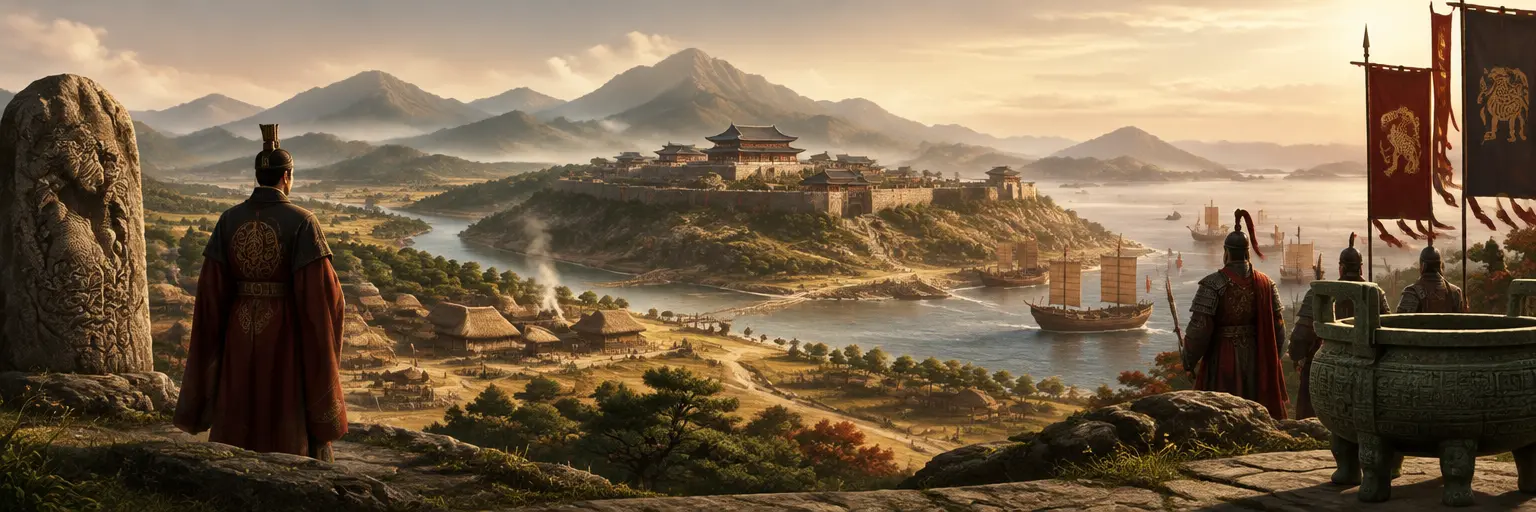
Welcome to ArchaeologyHub.org’s deep dive into the foundational era of Korean civilization. This subcategory uncovers the archaeological evidence, cultural transformations, and political developments from the mythical founding of Gojoseon to the dynamic rivalries of Goguryeo, Baekje, and Silla. Here, you will find artifact profiles, excavation site analyses, and timeline reconstructions that illuminate how ancient Korea evolved from tribal leagues into powerful centralized states.
🏛️ The Origins: Gojoseon’s Archaeology and Legend
Gojoseon, traditionally founded in 2333 BCE by Dangun, represents Korea’s first recorded state. While its legendary founding is steeped in myth, archaeological layers at sites like the Pyeongyang area and the Mandolin-shaped bronze daggers reveal a sophisticated Bronze Age culture. Excavations have uncovered dolmen burial monuments—over 30,000 in the Korean Peninsula—indicating hierarchical societies with advanced stone-working skills and long-distance trade networks. These findings help separate historical fact from folklore, showing a community that practiced wet-rice agriculture and wielded bronze ritual objects.
For researchers, Gojoseon’s material culture provides a crucial bridge between Neolithic societies and the later Iron Age confederacies. Key artifacts, such as the Liaoning bronze dagger and Korean-style bronze mirrors, demonstrate unique regional craftsmanship. The state’s eventual decline around 108 BCE due to Han Dynasty invasions left archaeological markers of conflict, including fortress walls and settlement shifts. By analyzing settlement patterns and burial goods, this subcategory offers a data-rich perspective on how Gojoseon’s legacy influenced subsequent Korean identity.
⚔️ Goguryeo: The Northern Powerhouse and Its Fortresses
Goguryeo (37 BCE–668 CE) was the most aggressive and expansive of the Three Kingdoms, controlling territories across modern Manchuria and northern Korea. Its capital at Gungnae and later Pyongyang featured massive mountain fortresses, like Ansi Fortress, whose defensive walls and gates demonstrate advanced military engineering. Archaeological digs have revealed elaborate royal tombs with painted murals depicting daily life, hunting scenes, and cosmic symbols—designated UNESCO World Heritage sites. These murals are invaluable for studying Goguryeo’s social hierarchy, clothing, and even musical instruments.
Excavated weapons, horse armor, and earthenware jars show a militarized but culturally rich society. The kingdom’s adoption of Buddhism in 372 CE is evidenced by temple sites and stone pagodas, blending indigenous shamanistic practices with continental beliefs. For SEO-driven content, this H3 section targets keywords like “Goguryeo tomb murals” and “Ansi Fortress archaeology,” providing readers with actionable insights into excavation campaigns and carbon-dating results from key strata.
🏯 Baekje: Maritime Kingdom and Cultural Conduit
Baekje (18 BCE–660 CE) flourished along the Han River and later the southern Geum River, establishing strong maritime links with China and Japan. Its capital sites, such as the ancient city of Wirye and later Sabi, have yielded gold diadems, incense burners, and intricate tile patterns influenced by Southern Chinese dynasties. The tomb of King Muryeong, discovered in 1971, remains a pinnacle of Korean archaeology—its undisturbed burial chamber contained over 2,900 artifacts, including a golden crown, jade ornaments, and a wooden coffin inscribed with the king’s identity. This discovery offers a rare, complete snapshot of royal funerary practices.
Baekje’s role as a cultural bridge is highlighted by its export of Buddhist scriptures, artisans, and architects to Japan’s Asuka period, seen in Japanese temple design. Excavations at the Neungsan-ri temple complex reveal a grid-like layout with stone pagodas, signifying state-sponsored religion. For archaeology enthusiasts, this subcategory covers how riverine trade routes facilitated technological exchange, evidenced by kiln sites producing high-fired gray stoneware. Keywords like “Baekje royal tombs” and “Sabi fortress archaeology” are seamlessly integrated into artifact profiles and GIS mapping studies.
⚱️ Silla: The Golden Kingdom and Its Royal Necropolis
Silla (57 BCE–935 CE), initially the weakest of the Three Kingdoms, rose to unify the peninsula in 668 CE. Its capital Gyeongju became a city of gold, with royal burial mounds—such as the famous Cheonmachong (Heavenly Horse Tomb)—yielding spectacular gold crowns, glass beads, and imported Persian silverware. These mounds are actually large earth mounds with wooden inner chambers, a unique burial style that preserved organic materials like silk and leather. The Hwangnamdaechong, the largest Silla tomb, reveals a double burial with rich grave goods, indicating a monarch and consort laid to rest over a century apart.
Archaeological studies of Silla emphasize its adoption of Buddhism as state ideology, culminating in the construction of Bulguksa Temple and Seokguram Grotto—masterpieces of granite art and engineering. Artifact analyses of Silla’s gold work, including earrings and belt buckles, show advanced granulation and filigree techniques, possibly influenced by Eurasian steppe cultures. This H3 section delivers in-depth excavation reports, radiocarbon dating data, and comparative studies with neighboring kingdoms, making it a robust resource for understanding Silla’s political and economic dominance.
🔍 Comparative Archaeology and Inter-Kingdom Interactions
One of the most compelling facets of this subcategory is the comparative analysis of the Three Kingdoms’ material cultures. Excavation sites like the Gaya confederacy, though not one of the Three Kingdoms, provide crucial evidence of intermediary trade—iron ore production and distinctive pottery that blended Silla and Baekje styles. By studying distribution networks of specific artifact types, such as earthenware jars and bronze buckles, archaeologists map shifting alliances and conflicts. For instance, diplomatic gifts from Baekje to Japan are chemically identical to locally produced Baekje wares, proving direct trade routes.
Furthermore, environmental archaeology—pollen samples and sediment cores—reveals how deforestation for agriculture and fortress construction impacted local ecosystems. This broad perspective enriches the taxonomy by showing not just political history but also human-environment interaction. Integrated timelines and interactive maps on this site allow users to visualize territorial expansions and population movements. Keywords like “Three Kingdoms pottery comparison” and “Gaya confederacy archaeology” are emphasized, providing layered, discoverable content for both novice readers and professional scholars.
Frequently Asked Questions
What is the oldest archaeological evidence of Gojoseon?
The oldest evidence includes bronze daggers (Liaoning type) and dolmen burial structures dating to around 1500–800 BCE. Excavations near the Taedong River also reveal early rice cultivation and pit-house settlements, indicating a Bronze Age society that predates historical records.
How were the Goguryeo tomb murals preserved so well?
These murals survived because tombs were sealed with thick stone slabs and layers of lime plaster, creating a stable microclimate. Many were rediscovered in the early 20th century, and ongoing conservation uses non-invasive imaging to prevent moisture damage.
Why is King Muryeong’s tomb so significant to archaeologists?
It is the only known royal burial from the Three Kingdoms period that remained completely undisturbed. Its artifacts, including a royal diadem and inscribed epitaph, allowed precise dating and offered direct insights into Baekje’s craftsmanship, trade, and royal iconography.
Did Silla’s gold crowns have practical uses or purely ceremonial?
They were purely ceremonial, used in royal funerals and ancestral rites. The tree and antler shapes symbolize cosmic connections and shamanistic power, reflecting Silla’s fusion of indigenous beliefs with imported Buddhist and Eurasian motifs.
What caused the fall of the Three Kingdoms period?
Silla’s alliance with the Tang Dynasty led to the defeats of Baekje (660 CE) and Goguryeo (668 CE). However, Silla then expelled Tang forces, unifying the peninsula under its rule, marking the start of the Unified Silla period.