Byzantine Policies Towards the Huns: Containment and Cooption
🛡️ Explore how Byzantine Huns containment policies evolved as strategic efforts to manage and coopt the nomadic threat, shaping the empire's frontier…
Read article
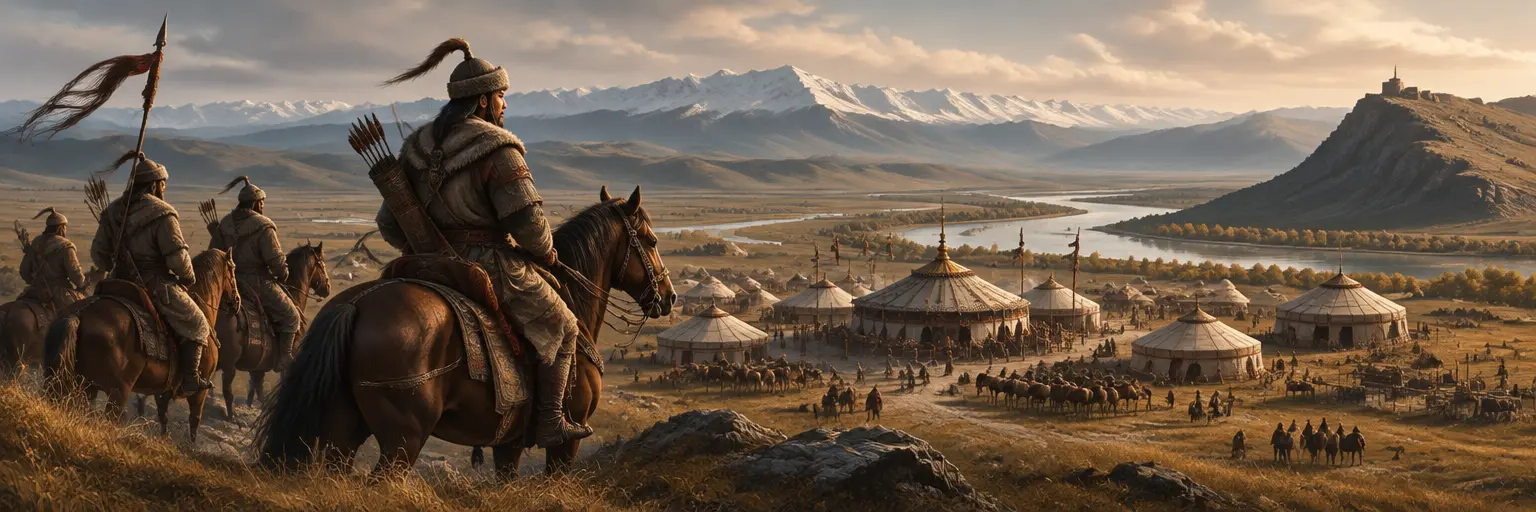
Explore the enigmatic world of the Xiongnu & Hunnic Confederations, the formidable mounted empires of the Central Asian steppe whose influence reshaped the ancient world. From their origins as nomadic coalitions to their role as catalysts in the fall of dynasties and the migration of peoples, this detailed study delves into archaeology-driven insights on burial mounds, horse gear, and frontier fortifications. Uncover how these warrior societies mastered mobility, trade, and diplomacy, challenging sedentary powers from China to Rome. Ideal for enthusiasts of steppe archaeology, this interpretation bridges artifact evidence with historical narratives, illuminating a legacy often shrouded in myth and misconception.
🛡️ Explore how Byzantine Huns containment policies evolved as strategic efforts to manage and coopt the nomadic threat, shaping the empire's frontier…
Read article
😊 Explore Roman Huns perceptions Ammianus Marcellinus and Priscus of Panium offer invaluable insights into Roman attitudes toward the Huns, revealing complex…
Read articleDelve into the nomadic empires that reshaped Eurasia, from the Mongolian steppes to the gates of Rome. This detailed study explores the Xiongnu, the first great confederation of steppe nomads, and their presumed descendants, the Huns, whose migrations triggered the fall of the Western Roman Empire. Discover the archaeology of their burial mounds, the craftsmanship of their golden artifacts, and the complex political systems that rivaled ancient China and Persia.
Uncover the archaeological evidence from the Bronze and early Iron Ages that traces the formation of the Xiongnu around 209 BCE, when Modu Chanyu unified disparate nomadic tribes. Excavations at sites like the royal tombs of Noyon Uul reveal a sophisticated hierarchical society with advanced horse breeding, composite bows, and iron metallurgy. These findings dispel old myths of "barbarian" chaos, showing a centralized state that controlled trade routes and exacted tribute from Han China.
Learn how environmental pressures, including climate shifts that reduced pastureland, likely propelled the rapid consolidation of these groups. The Xiongnu’s political genius lay in their "decentralized confederacy," integrating conquered peoples—from Turkic, Mongolic, and Iranian speakers—into a multi-ethnic empire. This model was later replicated by the Mongols, proving the steppe’s capacity for statecraft beyond mere raiding. Artifacts like belt plaques and silk from Han workshops highlight their long-distance exchange networks, connecting Siberia with China.
Focus on the controversial link between the Xiongnu and the Huns who appeared in Europe around 370 CE. Genetic and linguistic studies remain inconclusive, but archaeological parallels in cauldrons, composite bows, and cranial deformation suggest a partial connection from Central Asia. The Huns’ sudden westward push, likely driven by climate change and internal strife, triggered the domino effect of the Great Migration, shoving Goths, Vandals, and Alans into Roman territories, forever changing European demography.
Explore the military innovations attributed to the Huns, especially the stirrup (though its origin is debated) and the devastating horse-archer tactic of the "Parthian shot." Their use of lassoes, iron-tipped darts, and swift feigned retreats confused heavier Roman infantry. While no major Hunnic urban site has been excavated, grave goods such as gilded saddles, diadems, and horse sacrifices reveal a chieftain social structure, with leaders like Attila wielding absolute power through a blend of terror, tribute collection, and strategic alliance-making.
Examine the rich archaeological record from kurgan (burial mound) excavations across Mongolia, Kazakhstan, and Hungary. Elite Xiongnu tombs contain lacquered Han coffins, turquoise inlays, and woolen carpets with felt appliqués, while Hunnic graves in the Danube Basin yield Roman silver plates, gold fibulae, and iron swords with gilded handles. These items showcase not just wealth but deliberate acquisition of foreign prestige goods, signaling political dominance over sedentary neighbors.
Understand the significance of horse burials—from full skeletons to head-and-hoof deposits—which emphasize the animal’s spiritual and martial role. The grave of a Xiongnu noble at Gol Mod included 22 horses, while a Hunnic warrior at Pannonhalma (Hungary) was interred with a tent-shaped wooden structure. Such practices suggest a shamanistic worldview where the afterlife mirrored earthly status, with sacrificial victims (humans or animals) accompanying the elite to ensure continued service and protection.
Trace how the Xiongnu forced Han China into the Great Wall’s expansion and initiated the first "tribute system," which later shaped Silk Road diplomacy. The Xiongnu’s extraction of silk, grain, and iron from China—not just via raids but through negotiated Heqin ("peace and kinship") alliances—created a template for later nomadic empires. Their referral to China as a "vassal" state, mirrored in Han chronicles, prefigures modern international power balances.
Assess the Huns’ role in the collapse of the Western Roman Empire, including their pivotal victory at the Battle of the Catalaunian Plains (451 CE). Even after Attila’s death, Hunnic successor groups, like the Kutrigurs and Utigurs, persisted in the Pannonian steppe, eventually assimilating into Slavs and Bulgars. This legacy persists in the ethnogenesis of modern Hungarians, who claim Hunnic (and later, Hun) ancestry, reflecting how historical memory shapes national identities in Central Europe today.
Navigate the primary written records, chiefly the Chinese chronicles of Sima Qian (Shiji) and Ban Gu (Han Shu), which offer detailed ethnographic accounts of Xiongnu customs, political leaders, and their relations with Han envoys like Zhang Qian. These texts are invaluable despite their Sinocentric bias, providing census-like data on tribal divisions, seasonal movements, and the legal code of the Xiongnu, including punishments for cowardice and theft. Roman historian Ammianus Marcellinus, in his Res Gestae, portrays the Huns as "almost glued to their horses" but also notes their lack of agriculture, a key contrasting feature.
Consider the problematic nature of these sources: they were written by enemies or conquered peoples, often exaggerating barbarism to justify military retaliation. Modern archaeologists cross-reference these texts with hard evidence, such as the Chinese-style bronze mirrors found in Hunnic graves, confirming trade or plunder. Additionally, diplomatic letters from Cassiodorus and Priscus (who visited Attila’s court) provide a vivid eyewitness account of Hunnic feasts, politics, and the intricate etiquette of tribute demands, revealing a sophisticated court with multilingual scribes.
Current genetic evidence suggests partial continuity, but not a direct, one-to-one lineage. Some Huns likely carried Y-haplogroups common in ancient Mongolia, but the name "Hun" may have been a blanket term for diverse steppe groups. The link remains plausible but unproven, with archaeologists pointing to similar composite bows and bronze cauldrons as cultural, not necessarily genetic, markers.
The primary trigger was likely a combination of Chinese military campaigns (under the Han dynasty) breaking up the Xiongnu confederacy, causing internal tribal fragments to flee. Additionally, a major climate event—a severe drought around 300-400 CE—reduced steppe pasture, forcing nomadic groups to seek new grazing lands, pushing them progressively into Central Asia and Europe.
No, no Hunnic inscriptions or written texts have been found. They used the services of Roman and Greek scribes for diplomatic correspondence, as seen in Priscus’ account. However, some scholars suggest they may have adopted the Runic-like script of the Eurasian steppe, but no conclusive archaeological examples survive.
Excavated in the 1920s and 2000s, these kurgans contained gold-embroidered felt carpets, lacquer bowls from Han China, and wooden chariots (dismantled). They provide undeniable evidence of long-distance trade and elite status. Their location in Mongolia, far from the Han border, proves the Xiongnu’s reach and political complexity, challenging earlier dismissals as "primitive" tribes.
Movies and novels often exaggerate his cruelty and his threat as a "barbarian." Historical documents show he was a shrewd negotiator who used Roman gold and internal rivalries to his advantage. He never literally "conquered" Rome, instead agreeing to peace treaties and tributary payments. His real impact was military pressure that weakened Rome’s ability to defend its provinces, never direct rule over Western Europe.







