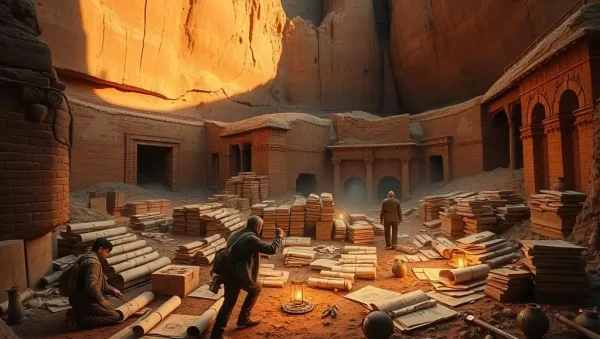
The Mount Mugh Archive: Sogdian Documents from a Mountain Fortress
🌟 Discover the Sogdian documents mountain fortress archive, a remarkable collection unearthed from Mount Mugh. This digital archive offers invaluable insights into…
Read article
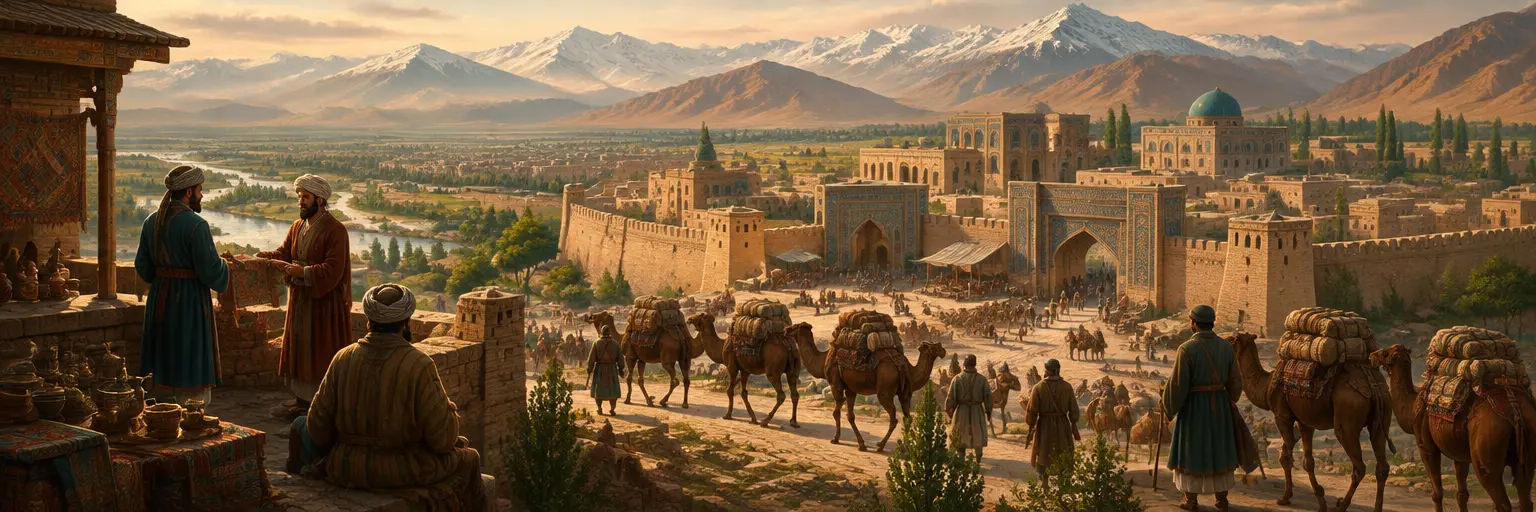
Dive into the fascinating world of the Sogdian city-states, the legendary Silk Road intermediaries whose entrepreneurial spirit bridged East and West. This study explores how these Central Asian merchants, based in bustling urban hubs like Samarkand and Bukhara, dominated transcontinental trade for over a millennium. Uncover their unique role as cultural conduits, spreading religious ideas, artistic motifs, and even administrative practices across vast distances. Discover their intricate network of caravan routes, sophisticated commercial contracts, and the remarkable multicultural society they cultivated among the Steppe empires. From the majestic murals of Penjikent to the multilingual documents of Mount Mugh, this analysis illuminates how a people without a unified empire wielded immense economic and political influence. Ideal for archaeology enthusiasts and history buffs, this page provides a granular look at a civilization that defined an era of exchange, resilience, and innovation.
Explore the fascinating world of the Sogdians, the ancient Silk Road’s most influential traders and cultural brokers. This detailed subcategory on ArchaeologyHub.org delves into the archaeology of their prosperous city-states—such as Samarkand, Panjakent, and Bukhara—and uncovers how their merchant networks shaped economies, religions, and artistic exchange across Central Asia, Persia, China, and beyond. Here, you’ll find artifact analyses, excavation reports, and interpretive histories that bring their vanished civilization back to life.
Sogdian city-states were not just trading posts; they were fortified urban centers with sophisticated architecture, vibrant murals, and complex social hierarchies. Excavations at sites like ancient Panjakent reveal multi-roomed houses with elaborate wall paintings depicting feasts, battles, and Zoroastrian deities, offering a rare glimpse into daily life and elite culture. The cities’ citadels, bazaars, and temples were strategically laid out to facilitate caravan traffic and administrative control. Urban archaeology here focuses on mud-brick construction techniques, water management systems, and the material culture of craft production—from textiles to metalwork—that sustained these thriving hubs.
For readers, expect detailed site reports and stratigraphic analyses that reconstruct the physical layout and evolution of these cities over centuries. You’ll also learn about the decline of these urban centers after the Arab conquests, as evidenced through abandonment layers and ceramic sequence changes. The subcategory emphasizes how archaeological evidence, rather than just textual records, anchors our understanding of Sogdian urbanism.
The Sogdians were the preeminent middlemen of the Silk Road, controlling trade routes that connected China’s Tang dynasty with the Sassanian Empire and Byzantium. Their commercial networks dealt in silk, spices, precious metals, glassware, and slaves, while they also introduced innovations like paper money and standardized contracts. Archaeological finds from Sogdian settlements—caravanserais, marketplaces, and warehouses—along with caches of coins from various empires, illustrate the scale and sophistication of their trade economy. Recent excavations of merchant houses have uncovered sealed storerooms with imported pottery and exotic goods, proving their long-distance connections.
This section provides artifact-centered essays, including analyses of weight systems, trade seals, and graffiti left by caravaneers on desert cliffs. You’ll explore how archaeology differentiates between local production and imported luxury items, and how distribution patterns reveal their commercial reach. It also covers the logistical challenges of caravan travel, including water facilities and rest stops, as evidenced through excavation and geographic surveys.
Sogdian art is a breathtaking blend of Persian, Indian, Greek, and Chinese influences, seen vividly in the murals of Panjakent and Afrasiab. These paintings depict not only daily commerce but also epic myths, Buddhist icons, and Zoroastrian rituals, showing a cosmopolitan society that absorbed and transmitted ideas. Religious tolerance was key; Sogdians practiced Zoroastrianism, Buddhism, Manichaeism, and even Nestorian Christianity, as evidenced by temple complexes and religious paraphernalia unearthed at their sites. Artifact studies focus on ceramics, silverware, and textiles that carry intricate motifs and inscriptions, revealing workshops and cultural exchange.
Expect interpretive analyses of how Sogdian merchants acted as cultural translators, carrying artistic styles and religious texts across Asia. The subcategory details iconographic comparisons with contemporary cultures, showing borrowings and innovations. You’ll also find discussions on how archaeology challenges older narratives of passive transmission, highlighting instead the Sogdians’ active role in shaping the Pan-Asian artistic koine that defined the early medieval period.
Beyond material finds, the Sogdians left a rich documentary legacy in the Sogdian language, an Eastern Iranian tongue written in Aramaic-derived script. Excavations have yielded official letters, legal contracts, and religious manuscripts from sites like Mount Mugh and Dunhuang’s library cave. These texts are invaluable for reconstructing not only trade law and taxation but also political diplomacy, as seen in the famous Sogdian Ancient Letters, which describe early 4th-century commercial and political crises. Epigraphic analysis of inscriptions on monuments and pottery further illuminates everyday concerns and official communications.
This section provides translations, paleographic studies, and historical contextualization of these documents. Readers can expect comparative analyses between textual claims and archaeological strata, which sometimes align and sometimes conflict, offering fruitful debates. The focus is on how combining textual and material evidence creates a nuanced portrait of Sogdian society, including its legal systems, social hierarchies, and international relations.
The Sogdian world did not vanish overnight; its heritage persisted through Turkic and Islamic assimilations for centuries after the Arab conquest of 712 CE. Archaeological evidence from early Islamic-era Samarkand and Bukhara shows gradual changes in pottery styles, urban layouts, and religious architecture, blending Sogdian elements with emergent Muslim traditions. This subcategory explores transition phases, such as the adaptation of Sogdian administrative practices and mercantile customs into Caliphal governance. It also traces how Sogdian diaspora communities in China continued to thrive, as seen in the tombstone inscriptions of Luoyang and Xi’an.
Here, you’ll find comparative studies of continuity and change, using ceramic typologies and building phases to date these shifts. The section discusses cultural memory—how later Islamic authors remembered the Sogdians—and contrasts that with archaeological facts. By examining these later layers, readers gain a fuller understanding of how ancient civilizations evolve rather than abruptly end, and how merchant networks laid the groundwork for the Islamic Golden Age’s commercial dynamism.
The best-known Sogdian site is ancient Panjakent in Tajikistan, famed for its exceptionally well-preserved murals and residential quarters. Excavations since the 1950s have uncovered dozens of houses with intricate wall paintings, providing a vivid snapshot of 5th–8th century urban life and religious practices.
Sogdian merchants dominated the Silk Road’s central segments, connecting China, India, Persia, and Byzantium. They introduced standardized trade contracts, currency exchange practices, and logistical networks that facilitated long-distance caravan trade. Their cultural influence also spread Buddhism and Manichaeism into China.
The Sogdians spoke an Eastern Iranian language, written primarily in the Sogdian script derived from Aramaic. Some texts also used Manichaean and Syriac scripts for religious documents. Inscriptions on ceramics, coins, and rock faces are common, supplemented by paper manuscripts found in Central Asia.
Main causes include the Arab conquests of the 8th century, which disrupted political autonomy and trade routes. Additionally, shifts in Silk Road traffic toward steppe routes and maritime paths reduced their strategic importance. However, some cities persisted under Islamic rule with significant Sogdian cultural continuity.
Yes, major collections exist at the State Hermitage Museum in St. Petersburg, the National Museum of Tajikistan, and the Louvre in Paris. These include murals, silver vessels, coins, and textiles. Many sites, like Panjakent, also have on-site museums with original and replica objects.







