
The Mount Mugh Archive: Sogdian Documents from a Mountain Fortress

Welcome to ArchaeologyHub.org!
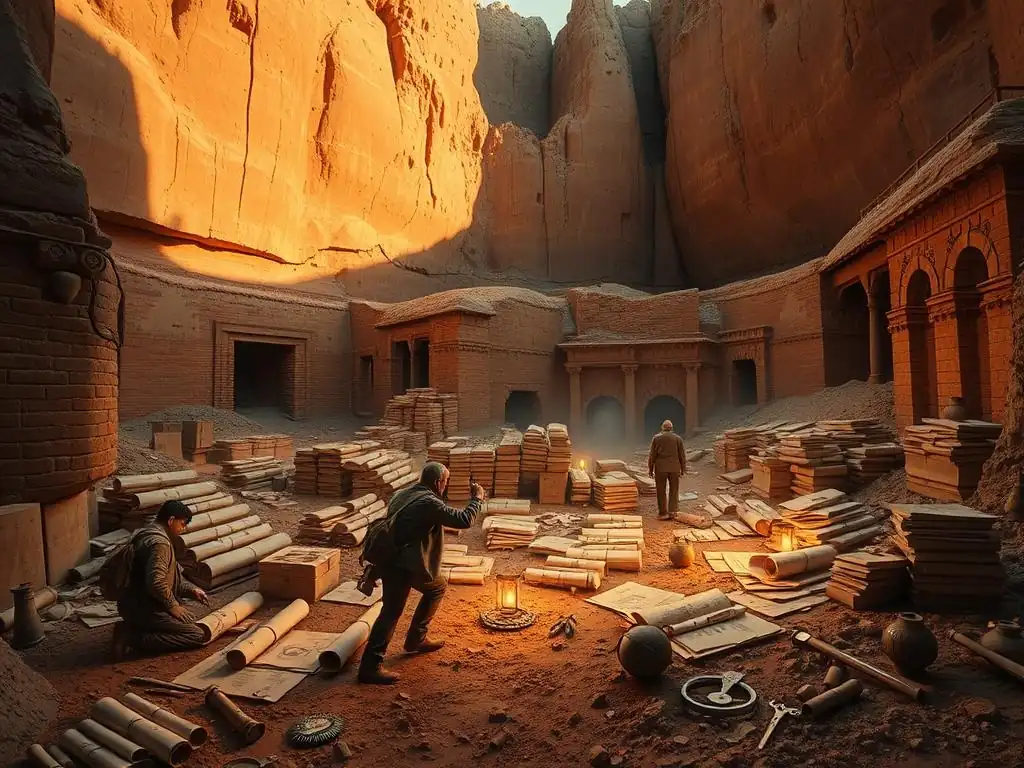
Delve into the fascinating world of ancient civilizations. Prepare to uncover secrets hidden for centuries, starting with an extraordinary find. What if a remote mountain fortress held a treasure trove of insights into a lost world? Explore the untold stories within the Sogdian documents mountain fortress archive – a remarkable collection that offers a rare glimpse into the lives, trades, and struggles of a vibrant culture. Join us as we unravel the mysteries of Mount Mugh and discover how these ancient texts are rewriting history. Read on and let the journey begin...
- Introduction to the Mount Mugh Archive and Sogdian Civilization
- Discovery and Excavation of the Sogdian Archive at Mount Mugh
- The Content of the Sogdian Documents: Insights into Daily Life
- The Importance of the Sogdian Language and Script
- The Historical Context: Sogdian City-States and the Arab Conquest
- Analysis of Specific Sogdian Documents from the Mount Mugh Fortress
- The Mount Mugh Archive and its Contribution to Archaeological Knowledge
- The Legacy of the Sogdian Documents Mountain Fortress Archive
-
Frequently Asked Questions
- What is the significance of the Mount Mugh Archive?
- Where is Mount Mugh located, and why was it an important site?
- What kind of information is contained within the Sogdian documents discovered at Mount Mugh?
- How did the discovery of the Mount Mugh Archive impact our understanding of Sogdian history?
- What are some of the challenges involved in studying and preserving the Mount Mugh Sogdian documents?
- Final Reflection: Echoes from a Forgotten Fortress
- Unearth Your Inner Archaeologist!
Introduction to the Mount Mugh Archive and Sogdian Civilization
Unveiling Sogdiana: A Glimpse into Ancient Central Asia
Sogdiana was a pivotal ancient civilization located in what is now modern-day Uzbekistan and Tajikistan, specifically in the fertile Zarafshan Valley, with major cities like Samarkand and Panjikent. Flourishing from the 6th to the 8th centuries CE, it served as a dynamic cultural and commercial nexus along the fabled Silk Road. The Sogdians, an East Iranian people, were renowned for their entrepreneurial spirit and their ability to bridge diverse cultures, facilitating trade and cultural exchange between East Asia, India, Persia, and the Byzantine Empire.
This vibrant civilization developed a unique blend of Iranian traditions, incorporating influences from their interactions with Chinese, Indian, and Turkic peoples. Their cities were centers of artistry, scholarship, and religious diversity, reflecting a cosmopolitan outlook that was rare for its time. The remnants of Sogdian civilization, particularly their written records, provide invaluable insights into a period of intense global connectivity, making the study of Sogdian documents essential for understanding ancient Central Asia.
The Significance of Sogdian Documents for Understanding Silk Road History
Sogdian documents are paramount for deciphering the intricate history of the Silk Road because they offer firsthand accounts from the very people who navigated and sustained its vast networks. Unlike external historical narratives, which often focus on political events and empires, these internal records provide granular detail on economic transactions, legal disputes, diplomatic correspondence, and personal lives. They illuminate the mechanisms of long-distance trade, including credit systems, currency exchange, and the logistics of transporting goods across thousands of kilometers.
The rarity of such detailed primary sources from ancient Central Asia elevates the importance of every Sogdian document. They reveal the extensive reach of Sogdian merchant communities, with trading posts stretching from Mongolia to Byzantium. The unique concentration of these records in the Sogdian documents mountain fortress archive at Mount Mugh offers an unparalleled window into the daily realities and complex socio-economic structures that underpinned the greatest trade route in antiquity.
Mount Mugh: A Fortress Preserving Sogdian History
Mount Mugh, or Mug Tepe, is a remote and rugged mountain fortress situated high in the upper Zarafshan Valley in Tajikistan, near the modern village of Khairabad. Its strategic location, perched on a steep promontory, made it an ideal defensive stronghold. This isolated bastion became the final refuge of Dewashtich, the last known ruler (or dehqan) of Panjikent, during the Arab conquest of Sogdiana in the early 8th century CE.
The significance of Mount Mugh lies in its role as an accidental time capsule. As Dewashtich and his retinue sought shelter and continued their resistance from this formidable mountain fortress, they brought with them crucial administrative, legal, and personal papers. When the fortress eventually fell around 722-723 CE, these Sogdian documents were left behind, buried or abandoned, and remarkably preserved by the dry conditions, creating the invaluable Sogdian documents mountain fortress archive that scholars study today.
Discovery and Excavation of the Sogdian Archive at Mount Mugh
The Accidental Find: How the Mount Mugh Documents Were Discovered
The remarkable discovery of the Sogdian documents at Mount Mugh occurred serendipitously in 1932. A local shepherd, while foraging for firewood on the slopes of the mountain, stumbled upon a basket containing ancient manuscripts. These papers, fragile and brittle, were found tucked away in a small cave or crevice, shielded from the elements. The shepherd, recognizing their unusual nature, reported his find to local authorities, initiating a chain of events that would profoundly impact Central Asian studies.
The initial reports quickly reached Soviet archaeological institutions, which immediately recognized the potential historical significance of the discovery. This accidental unveiling of a hidden trove of ancient writings prompted swift action to secure the site. The serendipitous nature of the find underscores how many pivotal archaeological discoveries often begin with the keen observation of ordinary individuals, laying the groundwork for the systematic recovery of the Sogdian documents mountain fortress archive.
Archaeological Excavations at Mount Mugh: Unearthing the Past
Following the initial discovery, systematic archaeological expeditions were launched to Mount Mugh, primarily by the Soviet Academy of Sciences. The remote and challenging terrain of the mountain fortress presented considerable logistical difficulties for the excavators. Despite these obstacles, meticulous work began to unearth the full extent of the archive and the associated structural remains of the fortress. Excavation teams carefully sifted through layers of debris, employing methods designed to preserve the delicate paper and leather documents.
Beyond the Sogdian documents themselves, the excavations revealed significant architectural features of the fortress, including defensive walls, residential quarters, and administrative buildings. Artifacts such as pottery shards, tools, and remnants of daily life were also recovered, providing vital context for the written materials. These material culture finds, combined with the textual evidence from the Sogdian documents mountain fortress archive, allowed archaeologists to reconstruct a more comprehensive picture of life within this strategic stronghold.
The Role of Alexander Zakhidov in the Mount Mugh Excavations
Alexander Zakhidov, a distinguished Soviet archaeologist and orientalist, played a pivotal role in the systematic study and preservation of the Mount Mugh finds. Recognizing the unparalleled significance of the discovered Sogdian documents, Zakhidov was instrumental in organizing the initial conservation efforts for the fragile manuscripts. His expertise was crucial in establishing the protocols for handling and stabilizing the ancient paper and leather, ensuring that these invaluable records could be studied without further deterioration.
Zakhidov's contributions extended beyond conservation; he was deeply involved in the initial decipherment efforts and the scholarly publication of the early findings. His meticulous approach to documentation and analysis laid the essential academic foundation for all subsequent research on the Sogdian documents mountain fortress archive. His pioneering work ensured that the Mount Mugh collection was not merely a collection of old papers, but a meticulously studied and academically rigorous source for understanding Sogdian history and language.
The Content of the Sogdian Documents: Insights into Daily Life
Economic Records and Trade in Sogdian Documents
The Sogdian documents from Mount Mugh yield a wealth of economic records, providing an unprecedented look into the commercial practices of this mercantile civilization. Among these are numerous contracts for loans, sales of various commodities, and detailed records of debts and payments. For instance, documents describe the sale of agricultural produce, such as wheat and barley, as well as more valuable goods like silk, spices, and horses, which were central to Silk Road commerce. One specific document details a loan of 400 dirhams, outlining terms of interest and repayment.
These records reveal the sophistication of Sogdian economic systems, including the widespread use of Chinese copper coins as currency and the existence of established credit mechanisms that facilitated long-distance trade. They demonstrate an intricate network of transactions that underpinned the Sogdian economy, extending far beyond the immediate region. The Sogdian documents mountain fortress archive thus serves as a ledger of a vibrant ancient economy, detailing the everyday transactions that fueled the Silk Road.
The Mount Mugh archive contains a significant number of legal documents that shed light on Sogdian social structures and legal customs. These include property deeds, such as those detailing the sale or lease of vineyards and agricultural land, as well as adoption papers, marriage contracts, and records of dispute resolutions. For example, one document outlines the terms of an inheritance dispute, illustrating the legal framework for property division and family relations.
Analysis of these legal texts provides insights into the hierarchy of Sogdian society, the rights of individuals, and gender roles. Documents occasionally refer to the status of women in property ownership, indicating a degree of legal agency. Furthermore, the presence of documents related to the sale of slaves, such as one detailing the transaction of a female slave named "Tash" for a specific sum, offers direct evidence of the practice of slavery within Sogdian society, revealing specific social dynamics within the Sogdian documents mountain fortress archive.
Religious Texts and Beliefs in the Sogdian Archive
While the Mount Mugh archive is predominantly secular, it does contain fragments of religious texts that offer glimpses into the spiritual landscape of Sogdiana. The most notable religious content is related to Zoroastrianism, which was the predominant faith among the Sogdians. These fragments include portions of prayers, liturgical instructions, and administrative documents pertaining to religious institutions or practices, providing direct evidence of devotional activities within the mountain fortress.
Though less prominent than in other Sogdian sites, the archive also hints at the syncretic nature of Sogdian beliefs. While the explicit presence of Buddhist, Manichaean, or Nestorian Christian texts is limited compared to sites like Dunhuang, the general cultural context suggests a tolerant environment where various faiths coexisted. The Sogdian documents from Mount Mugh, therefore, contribute to our understanding of the religious pluralism that characterized this vibrant Central Asian civilization.
Sogdian Letters: Personal Correspondence from Mount Mugh
Among the most compelling finds in the Sogdian documents mountain fortress archive are the personal letters, which offer a rare and intimate glimpse into the lives and anxieties of individuals during a turbulent period. The most famous example is the correspondence of Dewashtich himself, including his desperate appeals for military assistance from neighboring rulers, such as the Turkic Qaghan and the Chinese Tang emperor, against the advancing Arab forces. These letters convey the political turmoil and the strategic maneuvering of the time.
Other letters, though fewer, touch upon more personal matters, reporting on family news, health concerns, and the emotional toll of the ongoing conflict. These epistolary Sogdian documents provide a powerful human dimension to the historical narrative, allowing scholars to connect with the fears, hopes, and daily concerns of people living through a period of profound upheaval. They are a poignant testament to the human experience preserved within the walls of the mountain fortress.
The Importance of the Sogdian Language and Script
Deciphering the Sogdian Script: Challenges and Breakthroughs
The Sogdian script is an Aramaic-derived alphabet, characterized by its cursive nature and the frequent use of ligatures, where multiple letters are joined. This highly cursive style, combined with the limited initial corpus of texts, presented significant challenges to early decipherers. The script, written from right to left, often omitted vowels, requiring extensive philological knowledge and contextual understanding to accurately interpret words and sentences.
Breakthroughs in decipherment were achieved through meticulous comparative linguistic analysis, drawing parallels with other Middle Iranian languages and utilizing the growing body of Sogdian texts discovered across Central Asia. Scholars like V.A. Livshits made significant strides in establishing the phonetic values and grammatical structures of the language. The decipherment of the Sogdian documents was a monumental linguistic achievement, unlocking direct access to the thoughts and records of an ancient civilization.
Linguistic Analysis of the Mount Mugh Sogdian Texts
Linguistic analysis of the Sogdian documents from Mount Mugh has provided invaluable insights into the Sogdian language itself. Scholars have been able to reconstruct significant aspects of its grammar, vocabulary, and phonology, identifying regional or temporal variations within the archive. The texts reveal a rich lexicon related to trade, administration, and daily life, offering a concrete basis for understanding the language as it was actively spoken and written.
Furthermore, the detailed study of these texts has contributed significantly to the broader field of Iranian philology. The Mount Mugh Sogdian documents mountain fortress archive serves as a crucial data set for understanding the evolution and interrelationships of Middle Iranian languages, such as Parthian, Khotanese, and Middle Persian. The linguistic purity and diversity found within this collection make it a cornerstone for comparative studies of ancient Iranian languages.
The Sogdian Language in the Context of Other Iranian Languages
Sogdian stands as a key East Iranian language, offering a vital link in the linguistic tapestry of ancient Eurasia. Its study, largely propelled by the wealth of Sogdian documents, reveals fascinating commonalities and distinct divergences when compared to other contemporary Iranian languages. For instance, while sharing a common ancestor with languages like Parthian and Middle Persian, Sogdian exhibits unique phonological and morphological features that distinguish it as a separate branch.
The linguistic evidence from the Sogdian documents mountain fortress archive has been instrumental in reconstructing proto-Iranian forms and tracing the historical dispersal of Iranian languages across Central Asia. It provides concrete examples of linguistic contact and influence, demonstrating how Sogdian absorbed elements from Chinese and Turkic languages due to its mercantile nature. This makes the Mount Mugh collection not just a historical archive, but a crucial resource for understanding the dynamism and interconnectedness of ancient language families.
The Historical Context: Sogdian City-States and the Arab Conquest

The Political Landscape of Sogdiana Before the Arab Conquest
Prior to the Arab conquest, Sogdiana was not a unified empire but rather a collection of independent city-states, each governed by its own local ruler, often titled dehqan or ikhshid. Prominent among these were Samarkand, Panjikent, Bukhara, and Chach (modern Tashkent). This decentralized political structure fostered a degree of autonomy for each city, though they often formed alliances or engaged in rivalries based on shifting geopolitical interests and trade routes.
These city-states occupied a critical strategic position between the major empires of the day: Tang China to the east, Sasanian Persia to the west, and later the burgeoning Umayyad Caliphate. The Sogdians skillfully navigated these powerful neighbors through a combination of diplomacy, economic influence, and occasional military alliances, primarily focused on maintaining their lucrative trade networks. The Sogdian documents frequently reflect these intricate diplomatic maneuvers and the constant balancing act required to preserve their independence.
The Arab Conquest and the Fall of the Sogdian City-States
The early 8th century CE marked a dramatic turning point for Sogdiana with the westward expansion of the Umayyad Caliphate. Beginning around 705 CE, under the leadership of commanders like Qutayba ibn Muslim, Arab armies launched systematic campaigns into Transoxiana (Mawara'annahr), aiming to subjugate the rich Sogdian city-states. One by one, cities like Bukhara and Samarkand fell, often after fierce resistance, leading to the imposition of Arab rule and the spread of Islam.
The Sogdian documents mountain fortress archive at Mount Mugh directly chronicles the final, desperate stages of this conquest. It contains records from Dewashtich, the dehqan of Panjikent, who led a significant resistance movement. His attempts to rally support from other Sogdian rulers and Turkic allies are vividly documented in his letters, painting a poignant picture of a civilization fighting for its survival against overwhelming odds, ultimately leading to the collapse of independent Sogdian rule around 722-723 CE.
Mount Mugh as a Refuge During Times of Conflict
In the face of the relentless Arab advance, Mount Mugh served as a critical refuge and a final administrative center for Dewashtich and his remaining loyalists. Its remote and defensible position made it an ideal stronghold for a desperate last stand. Dewashtich retreated to this formidable mountain fortress with his family, court, and crucial state documents, intending to continue his resistance and perhaps appeal for external aid.
The documents found within the Sogdian documents mountain fortress archive vividly illustrate the dire circumstances of this period. They include military reports detailing troop movements, pleas for provisions, and urgent requests for reinforcements, all reflecting the extreme pressure faced by the besieged Sogdians. The very act of bringing and preserving these Sogdian documents within the mountain fortress speaks volumes about the importance placed on administrative continuity and the hope, however slim, of eventual triumph, even as their civilization faced its twilight.
Analysis of Specific Sogdian Documents from the Mount Mugh Fortress
Case Study: The Letter of Dewashtich - Insights into Political Turmoil
Among the most historically significant items in the Sogdian documents mountain fortress archive is the letter written by Dewashtich, the ruler of Panjikent, addressed to the Arab governor of Khurasan, al-Jarrah ibn Abdallah al-Hakami. This pivotal document, dated around 722 CE, details Dewashtich's attempts to negotiate a peaceful surrender while simultaneously seeking to preserve some form of autonomy for his people. It reveals his desperate pleas for leniency and a guarantee of safety for his family and followers.
The letter provides unparalleled insights into the political turmoil of the early 8th century in Central Asia. It showcases the complex diplomatic dance between the resisting Sogdian rulers and the powerful Arab invaders, highlighting the shifting alliances and the challenges of maintaining sovereignty. This particular Sogdian document is not merely a historical record but a direct voice from a key historical figure, offering a personal perspective on the fall of an ancient civilization.
Another compelling Sogdian document from Mount Mugh is a detailed account of the sale of a slave, specifically a female slave named Tash. This document meticulously records the transaction, including the names of the seller and buyer, the identity of the slave, and the agreed-upon price, which was typically paid in coins or goods. Such records provide concrete evidence of the institution of slavery within Sogdian society, a practice common across many ancient civilizations.
This document offers valuable insights into Sogdian social practices, legal frameworks, and economic values. It reveals the mechanisms through which individuals were bought and sold, highlighting aspects of property rights and the legal recognition of such transactions. The existence of these types of Sogdian documents mountain fortress archive entries allows scholars to reconstruct a more complete picture of daily life, including its less palatable aspects, providing a nuanced view of social stratification.
Examining the Materials and Preservation of the Sogdian Documents
The Sogdian documents from Mount Mugh were primarily written on paper, a testament to the early adoption and widespread use of paper in Central Asia, predating its extensive use in Europe by centuries. A smaller number of documents were also found on leather and wood, showcasing the variety of writing materials available. The quality of the paper, often thin yet durable, speaks to the advanced papermaking techniques in the region.
The remarkable preservation of these Sogdian documents mountain fortress archive items is largely due to the unique environmental conditions within the mountain fortress. The dry, arid climate of the cave or chamber where they were stored, coupled with the protective embrace of the earth, prevented significant decay. The manner in which they were stored—often bundled together or placed in baskets—also contributed to their survival, allowing for the recovery of a truly invaluable collection for archaeological and historical study.
The Mount Mugh Archive and its Contribution to Archaeological Knowledge
Reconstructing Sogdian Society through Archival Evidence
The Sogdian documents from Mount Mugh have revolutionized our understanding of Sogdian society, moving beyond what can be gleaned solely from material culture. These textual records provide an unprecedented level of detail on the administrative, economic, and legal structures of the Sogdian city-states. They reveal the intricate bureaucracy, the complex financial systems, and the daily interactions that shaped their civilization, allowing scholars to reconstruct a far more nuanced picture than previously possible.
This wealth of archival evidence has enabled a deeper understanding of Sogdian social stratification, family structures, and gender roles. For instance, the legal documents clarify inheritance laws and property rights, while economic records illuminate trade networks and credit systems. The Sogdian documents mountain fortress archive thus provides the "voices" of the Sogdians themselves, offering direct insight into their lived experiences and societal organization.
The Mount Mugh Documents: A Window into the Daily Life of Sogdians
The Mount Mugh Sogdian documents offer a unique and intimate window into the daily life of Sogdians during the early 8th century CE. Unlike grand inscriptions or official histories, these documents capture the mundane yet vital aspects of everyday existence. They detail how people managed their finances, bought and sold goods, resolved disputes, and communicated with their families and colleagues. For example, records of grain sales or loan agreements provide concrete examples of common transactions.
This human element is particularly evident in the personal letters, which convey the anxieties, hopes, and relationships of individuals living through a period of immense political upheaval. These Sogdian documents mountain fortress archive entries allow scholars to connect with the past on a personal level, illustrating the challenges and resilience of people facing the collapse of their way of life within the confines of a besieged mountain fortress.
Comparing the Mount Mugh Archive with Other Central Asian Archaeological Finds
The Sogdian documents mountain fortress archive at Mount Mugh stands in complementary relation to other significant archaeological finds across Central Asia. Sites like Panjikent, Afrasiab (ancient Samarkand), and Varakhsha have yielded spectacular material culture, including vibrant murals, elaborate architecture, and exquisite artifacts, showcasing the artistic and architectural grandeur of Sogdian civilization. However, these sites primarily provide visual and material evidence.
Mount Mugh, conversely, offers the textual evidence that explains the social, economic, and political structures underlying that material culture. While Panjikent's murals depict scenes of daily life, religious ceremonies, and epic tales, the Sogdian documents from Mount Mugh provide the written contracts, letters, and administrative records that explain the legal frameworks, trade networks, and political events that shaped those lives. This unique textual contribution makes the Mount Mugh Sogdian documents mountain fortress archive an indispensable and distinct resource among Central Asian archaeological treasures.
The Legacy of the Sogdian Documents Mountain Fortress Archive
The Ongoing Research and Preservation Efforts
The Sogdian documents mountain fortress archive continues to be a subject of intense international scholarly research. Teams of philologists, historians, and archaeologists from institutions in Russia, Europe, Japan, and the United States collaborate on the ongoing study, translation, and interpretation of these invaluable manuscripts. New technologies, such as multispectral imaging, are being applied to reveal faint or damaged texts, promising further discoveries from the collection.
Simultaneously, significant efforts are dedicated to the physical preservation of these fragile Sogdian documents. Given their age and delicate nature, advanced conservation techniques are employed to stabilize the paper and leather. Digital archiving initiatives are also underway to create high-resolution reproductions, ensuring their long-term survival and accessibility for future generations of scholars and the public, safeguarding the integrity of this unique mountain fortress archive.
The Mount Mugh Archive's Impact on Central Asian Studies
The Sogdian documents mountain fortress archive has profoundly impacted Central Asian studies, fundamentally reshaping our understanding of the region's history, particularly the crucial period leading up to and during the Arab conquest. Before the discovery of these Sogdian documents, much of the knowledge about Sogdiana was derived from external sources, primarily Chinese and Arabic chronicles. The Mount Mugh archive provided the authentic, internal voices of the Sogdians themselves.
This shift in perspective has illuminated the agency and sophistication of Sogdian civilization, establishing it as a central rather than peripheral player in Eurasian history. Its influence extends across various disciplines, including Silk Road studies, linguistics, economic history, and social history, cementing the archive's status as a foundational resource for understanding the complex cultural and political dynamics of ancient Central Asia.
Future Directions for Research on the Sogdian Documents
Despite decades of intensive study, the Sogdian documents mountain fortress archive still holds immense potential for future research. Ongoing philological work promises more refined translations and interpretations of existing texts, while new discoveries from other sites in Central Asia may offer comparative insights that further contextualize the Mugh collection. The application of advanced scientific techniques, such as DNA analysis on the paper or ink, could reveal details about their origins and composition.
Furthermore, future research could focus on more thematic studies, such as a deeper dive into Sogdian legal philosophy, the nuances of their commercial contracts, or a comprehensive prosopography of the individuals mentioned in the Sogdian documents. The enduring legacy of this mountain fortress archive lies in its continued capacity to yield fresh perspectives and deepen our understanding of a vibrant civilization that played a pivotal role in connecting the ancient world.
Frequently Asked Questions
What is the significance of the Mount Mugh Archive?
The Mount Mugh Archive represents a crucial find of Sogdian documents. These documents provide invaluable insights into the daily life, administration, and trade of the Sogdian people during the 8th century CE. It also shows information about the political and social dynamics of the era.
Where is Mount Mugh located, and why was it an important site?
Mount Mugh is located in present-day Tajikistan. Its remote, mountainous location made it a naturally defensible fortress, used as a safe haven and administrative center during periods of unrest, preserving the Sogdian documents.
What kind of information is contained within the Sogdian documents discovered at Mount Mugh?
The documents cover a wide range of topics, including legal contracts, business correspondence, religious texts, and administrative records. They offer a detailed glimpse into the economic and social structures of Sogdian society.
How did the discovery of the Mount Mugh Archive impact our understanding of Sogdian history?
The Mount Mugh Archive dramatically enriched our understanding of Sogdian history by providing primary source material. Before the discovery, knowledge of the Sogdians relied heavily on secondary accounts and archaeological evidence.
What are some of the challenges involved in studying and preserving the Mount Mugh Sogdian documents?
Challenges include the fragile state of the documents, requiring careful conservation. The decipherment and translation of the Sogdian language also presents ongoing difficulties, alongside the need to contextualize the documents within the broader historical landscape.
Okay, here's a final reflection designed to close your article "The Mount Mugh Archive: Sogdian Documents from a Mountain Fortress," optimized for the keyword "Sogdian documents mountain fortress archive," and following the structure you provided:
Final Reflection: Echoes from a Forgotten Fortress
The rediscovery and ongoing study of the Mount Mugh Archive serve as a potent reminder that history is not a monolithic narrative, but rather a collection of fragmented voices preserved against all odds. The Sogdian documents, rescued from their mountain fortress archive, offer an unparalleled glimpse into a vibrant culture that once thrived along the Silk Road, challenging preconceived notions and enriching our understanding of Central Asian history.
The enduring power of these documents lies not only in their historical significance but also in their ability to connect us to the lives of individuals who lived centuries ago. Imagine the hands that penned these letters, the merchants who traded with these contracts, the administrators who recorded these decrees. History is not the past but a map of the past drawn from a particular point of view.
- David P. Henige. The Mount Mugh Archive compels us to reconsider our own perspectives and appreciate the complexities of a world long past, yet still resonant today.
Let us, therefore, embrace the spirit of inquiry and preservation that has brought these Sogdian documents to light. As we delve deeper into the secrets held within this mountain fortress archive, may we also strive to safeguard the fragile remnants of our own cultural heritage, ensuring that future generations can learn from the echoes of the past and build a more informed and compassionate future.
Unearth Your Inner Archaeologist!
Thank you for delving into the fascinating world of the Mount Mugh archive! We hope you found the insights into Sogdian documents as enriching as we do. Ready to take your exploration further?
Here are a few ways to keep the adventure going:
- Visit a Local Museum: Explore Sogdian-related artifacts or archives if available in your area, or research online collections! Seeing these treasures firsthand can deepen your connection to history. This is the most impactful step you can take.
- Delve deeper! Research related topics: from ancient trade routes to cultural exchanges along the Silk Road and the history of Sogdiana.
- Share what you learned! Discuss the Mount Mugh discoveries with a friend, or consider writing a short blog post about your favorite aspects.
What surprising detail from the Mount Mugh archive sparked your curiosity the most? Share your thoughts in the comments!