Central Asian & Steppe Cultures: Saka & Related Steppe Cultures - East of Scythia
Dive deep into the enigmatic world of the Saka, the eastern cousins of the Scythians, who roamed the vast steppes of Central Asia from the 1st millennium BCE. This subcategory on ArchaeologyHub.org unpacks their unique material culture, burial practices, and geopolitical influence, offering a scholarly yet accessible exploration of their distinct identity beyond the Pontic steppe.
🏇 The Origins and Migration Patterns of the Saka
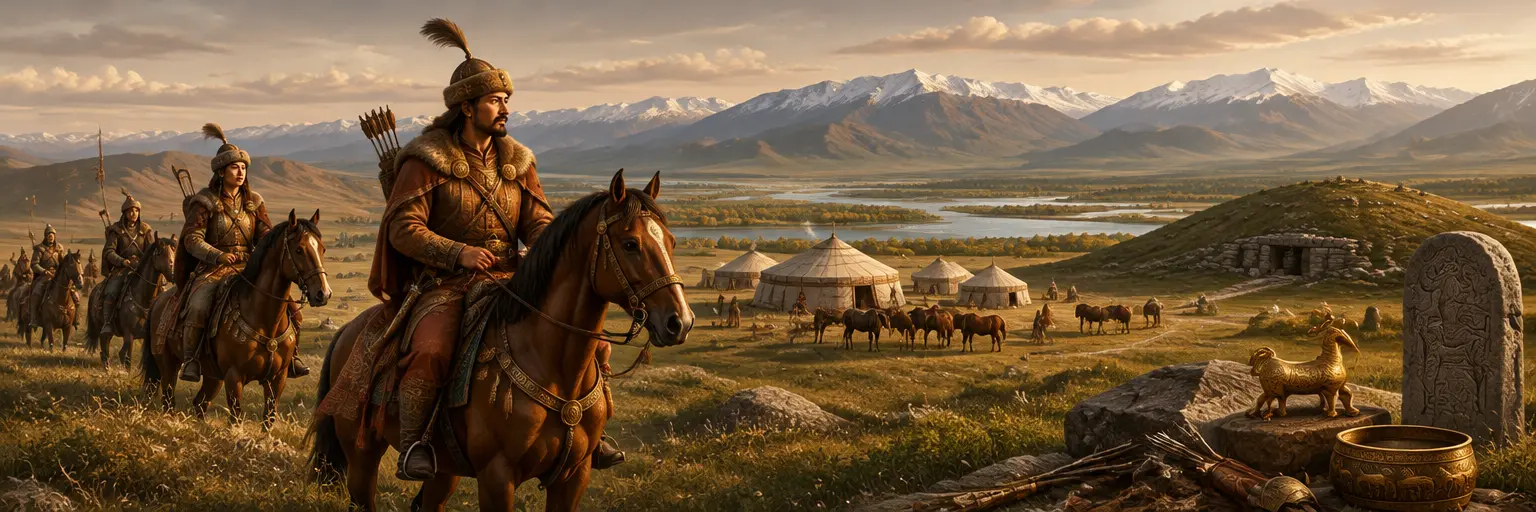
Here, we trace the archaeological and textual evidence that situates the Saka across the Tien Shan, Pamir, and Fergana valleys. Expect detailed analyses of early Iron Age kurgan sites such as Arzhan-2 and the "Golden Man" of Issyk, which reveal a highly mobile, horse-mounted society with sophisticated metallurgical skills. Key focus lies on how climate and trade routes, including the nascent Silk Road, shaped their seasonal migration and territorial expansion.
Readers will also learn about the Persian and Chinese written sources—like the Behistun Inscription and the Shiji—that name the Saka as formidable neighbors. Our content distinguishes the Saka from Scythians through genetic and linguistic markers, emphasizing their role as cultural brokers between sedentary oasis cities and nomadic confederations, a critical dynamic for understanding Central Asian prehistory.
⚰️ Burial Mounds, Pazyryk-Style Art, and Ritual Life
This section explores the spectacular frozen tombs of the Altai and their well-preserved organic artifacts. We detail the construction of timber-lined burial chambers, the inclusion of sacrificed horses, and the elaborate Saka-Siberian animal style—depicting deer, felines, and griffins—carved in gold, felt, and horn. Each excavation report is paired with interpretive essays on cosmology, shamanic practice, and social stratification, making the intangible belief systems tangible.
Additionally, you will find comparative studies between the Pazyryk (often considered a Saka subgroup) and the more western Scythian kurgans, highlighting regional variations in tattoo art, headgear, and textile weaving. By focusing on the symbolic role of the Ili river valley and the Ordos region, we clarify how ritual violence, feasting, and ancestor veneration sustained political authority across generations.
🛡️ Weaponry, Horse Gear, and the Warrior Ethos
Uncover the military innovations that made Saka archers legendary in ancient warfare. Detailed artifact profiles cover the composite bow, trilobate bronze arrowheads, akinakes swords, and lamellar armor, with high-resolution images and measurement data. Our tactical analyses explain the "Parthian shot" technique and how mobile light cavalry used hit-and-run strategies against both Achaemenid and Chinese armies, a key competitive edge in the steppe environment.
Beyond weaponry, the section examines the evolution of horse bridles, saddles, and bits, which allowed for unprecedented control during riding. We also discuss the social role of the warrior, including elite men and occasionally women (Amazons of the east), as evidenced by weapon burials and battle injuries. This content bridges practical archaeology with social history, showing how martial skill determined access to trade goods and marriage alliances.
🌏 Interactions with the Achaemenid Empire, Greco-Bactrians, and Han China
The Saka were not isolated; their politics intersected with major empires. This segment details their conflicts and alliances with Cyrus the Great and Darius I, including the famous campaign against the Massagetae in 530 BCE. You will read about diplomacy, tribute payments, and prisoner exchanges, followed by the later Greco-Bactrian trade in glass, wine, and silk, which transformed Saka elite consumption patterns.
Our interpretive material further covers the Yuezhi migration that displaced the Saka into Gandhara and India, leading to the Indo-Scythian kingdoms. By synthesizing numismatic evidence, Chinese court chronicles, and excavated caravan stopovers, we illustrate how Saka chieftains integrated foreign technologies while maintaining indigenous identity—a nuanced narrative that counters the simplistic "barbarian" stereotype.
🧵 Textiles, Diet, and Daily Life in Steppe Camps
Contrary to popular belief, nomadic life was richly textured with domestic crafts. This subcategory brings you the material culture of Saka settlements: felt rugs, woven woolen fabrics, leather pouches, and wooden utensils recovered from permafrost and oasis sites. Detailed carpological and faunal analyses reveal a diet centered on dairy, millet porridge, mutton, and wild fruits, with seasonal foraging patterns.
We also reconstruct winter camps versus summer pasture rotations, including the construction of semi-subterranean houses at sites like Kyzyl Oi and Togusken. Gender roles in textile production, pottery-making, and food processing are discussed via ethnographic analogy and spatial analysis. By understanding daily chores and child-rearing practices, readers gain a visceral sense of life on the steppe, far beyond battlefield narratives.
Frequently Asked Questions
What is the main difference between Saka and Scythian cultures?
The Saka are essentially the eastern group of the larger Scythian-speaking peoples. While they shared a similar nomadic lifestyle, horse-riding, and animal-style art, the Saka lived east of the Caspian Sea, in Central Asia, whereas Scythians dominated the Pontic steppe north of the Black Sea. This geographic split led to distinct burial rituals, dietary practices, and trade connections—Saka were more oriented toward China and Persia.
Where can I see the "Golden Man" of Issyk artifact?
The "Golden Man" (Issyk kurgan) is a reconstructed armored figure, now a national symbol of Kazakhstan and displayed at the State Museum of the Republic of Kazakhstan in Astana. The original burial, dated to the 4th–3rd century BCE, contained a suit covered with over 4,000 gold ornaments, proving the extraordinary craftsmanship and wealth of Saka elites. On ArchaeologyHub, we provide 360-degree views and conservation notes.
Did the Saka have a written language?
Most Saka were pre-literate, relying on oral epic traditions and diplomatic memory. However, the Khotanese Saka, who later settled in the Tarim Basin, adopted the Brahmi script to write a Middle Iranian language from the 4th century CE. No indigenous writing system from formative Saka times exists; our records come from Persian, Greek, and Chinese sources, which sometimes preserved Saka words and names.
Were Saka women active in warfare?
Yes, archaeological evidence from kurgans in the Altai and Fergana valleys shows that about 20% of elite Saka burials contain weapons and horse gear for women. These "warrior women" likely fought in defense of their camps or led raids, matching the Greek accounts of Amazons among the Scythians. Isotopic studies suggest some female warriors consumed high-protein diets similar to male counterparts, indicating both physical training and social prestige.
How did climate change affect Saka nomadic societies?
Paleoclimatic data from lake sediments and ice cores show that the early Saka period (900–400 BCE) benefited from a humid phase, increasing grassland productivity for large herds. A subsequent arid phase after 300 BCE forced pastoralist groups to diversify crops, intensify irrigation at oasis foothills, and negotiate new trade routes. This environmental stress likely contributed to the Yuezhi displacement and subsequent Saka migration into South Asia.