Ancient Persia: Parthian & Sasanian Empires – Culture & Conflict
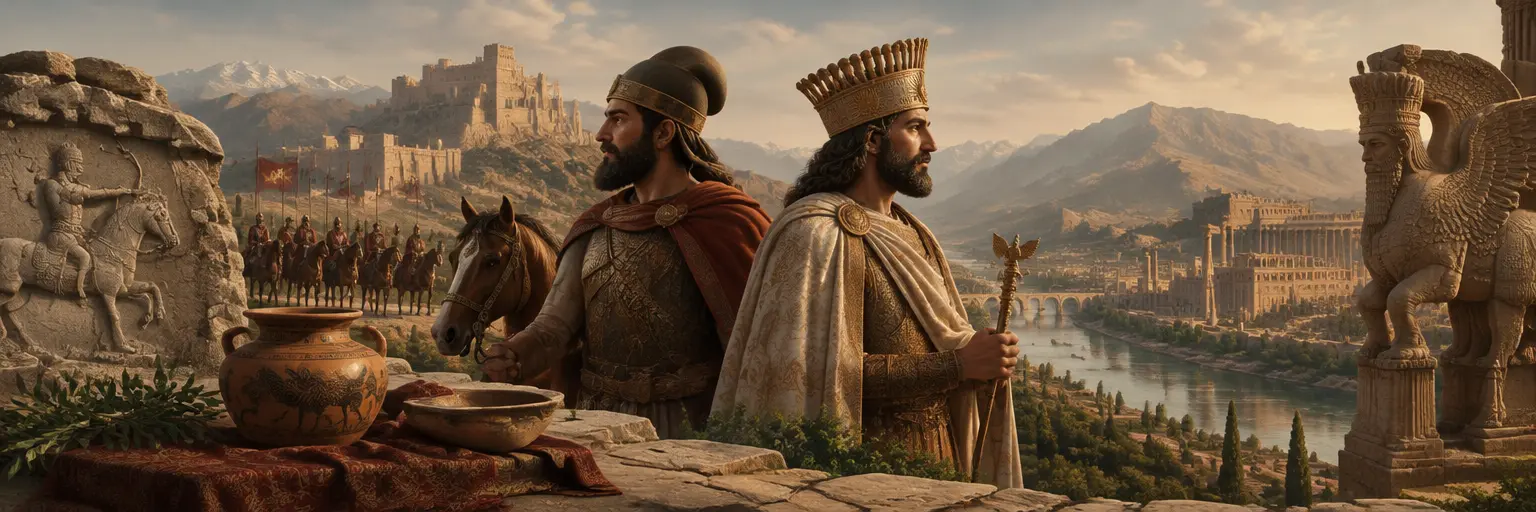
Dive into the formidable dynasties that bridged the Hellenistic world and the early Islamic era. This subcategory on ArchaeologyHub.org explores the Parthian (247 BCE–224 CE) and Sasanian (224–651 CE) empires, focusing on their monumental architecture, intricate art, Zoroastrian traditions, and relentless military clashes with Rome and Byzantium. Here, you’ll find curated archaeological insights, artifact analyses, and regional timelines that reveal how these powers shaped the ancient Near East.
🏛️ Sasanian Palatial Architecture & Urban Planning
Uncover the engineering marvels of Sasanian cities like Ctesiphon and Firuzabad, where the Taq Kasra’s massive arched hall still astounds visitors. Expect detailed excavation reports on palatial complexes, fire temples, and fortified settlements. These studies highlight how royal authority was expressed through monumental vaulted halls, circular city layouts, and sophisticated water management systems. For SEO, keywords like “Sasanian palace archaeology,” “Ctesiphon Taq Kasra,” and “ancient Persian urban design” are woven throughout the analysis.
You’ll also learn about the Rock Reliefs at Naqsh-e Rostam and Bishapur, which served as political propaganda. Archaeologists interpret these carvings to reconstruct succession rituals, royal hunts, and divine investiture scenes. By examining plaster, stucco, and fresco fragments, we piece together daily life in elite households. This section is essential for students seeking primary-source evidence and for enthusiasts tracing the evolution of Persian architectural identity before the Arab conquest.
⚔️ Parthian Military Tactics & Roman Encounters
Explore the famed Parthian shot—the cavalry archery technique that confused Roman legions at Carrhae (53 BCE). Our curated excavation summaries from battlefields and fortresses along the Euphrates reveal how Parthian cataphracts and horse archers operated. You’ll also discover garrison towns like Hatra that withstood multiple Roman sieges, offering a unique window into siege engineering and cross-cultural military exchange. Keywords here include “Parthian cavalry archaeology,” “Battle of Carrhae history,” and “Roman-Parthian wars.”
Beyond tactics, this section examines the diplomatic and economic conflicts over Silk Road trade routes. Archaeological finds of Roman glassware in Parthian tombs and Parthian coins in Roman hoards prove sophisticated networks of exchange and espionage. Expect comparisons of siege engines, armor designs, and fortress layouts. This content is tailored for history buffs and wargamers hoping to visualize ancient combat, while also serving as a reliable academic reference for early imperial border conflicts.
🕊️ Zoroastrian Ritual Sites & Fire Temples
Central to Sasanian identity was the state religion of Zoroastrianism, with its sacred fires representing cosmic order. This subcategory illuminates fire temple archaeology at Takht-e Soleyman, where the Azargoshnasp temple drew pilgrims from across the empire. You’ll find stratigraphic reports on altar layouts, water basins, and ossuary deposits. These details demonstrate how priestly elites managed ritual purity and pilgrimage economies. Keywords such as “Zoroastrian archaeology,” “Sasanian fire temple,” and “Takht-e Soleyman excavations” are featured throughout.
Also included are analyses of burial practices—exposed corpses in dakhmas (towers of silence) versus elite ossuaries. Comparing skeletal remains from excavated cemeteries reveals health, diet, and social stratification. The visual culture of ritual vessels and seals further shows how mythological motifs like the boar and Faravahar were used for protection. For researchers, this section offers a rich dataset on ancient Iranian spirituality, one that connects ritual architecture with broader political ideology in the Sasanian realm.
🎨 Parthian & Sasanian Art: Syncretism and Identity
Witness the visual language that blended Greco-Roman naturalism with Persian iconography. This section focuses on silver-gilt vessels, textiles, and stucco panels that depict kings hunting lions or crowning successors. You’ll learn how archaeologists date these objects via stylistic motifs and technical analysis (e.g., trace element fingerprinting). The famous Sasanian silver plates are examined not just as luxury items but as diplomatic gifts that spread Persian aesthetics across Eurasia. Keywords include “Sasanian silverware,” “Parthian art history,” and “ancient Persian iconography.”
Additionally, we cover Mithraic and Christian interactions visible in excavated seals and reliefs. At sites like Dura-Europos, Parthian-era temples coexisted with synagogues, revealing a polycultural society. This content piece explores how artisans adapted motifs (e.g., the eagle, the griffin) to serve multiple faiths and audiences. By integrating archaeology with art history, we offer a nuanced view of identity formation in ancient Iran, demonstrating that art was never mere decoration but a medium of power and adaptation.
📜 Numismatics & Royal Propaganda
Coins are the most abundant artifacts from both empires, providing precise royal chronologies and ideological snapshots. Our numismatic database covers Parthian drachms with their distinctive Greek-style portraits and Sasanian dinars featuring crowned monarchs and fire altars. You’ll discover how die studies help reconstruct mint locations and economic policies. Keywords like “Parthian coins,” “Sasanian numismatics,” and “ancient Persian minting” are optimized here. Each coin profile includes weight, metal purity, and iconographic comparisons across reigns.
Beyond dates, coin legends reveal shifting titles (e.g., “King of Kings,” “Iranian and Non-Iranian”) and responses to Roman propaganda. For instance, the crowning imagery of Shapur I on coins directly celebrates his victories over Valerian. We also examine hoard evidence from Levantine and Central Asian sites to trace trade networks. This section is invaluable for collectors, numismatists, and historians who rely on coins as primary documents for political and economic history.
🏺 Everyday Life & Trade Networks
Step beyond royalty into the kitchens, workshops, and market towns of the Parthian and Sasanian eras. Excavations at sites like Rayy and Susa reveal household pottery, glassware, and food remains, helping reconstruct domestic diets and craft production. You’ll find comparisons of storage jars, cooking stands, and oil lamps that indicate urban provisioning systems. This section uses keywords such as “ancient Persian household,” “Sasanian pottery,” and “Silk Road archaeology” to attract a broad audience of material culture enthusiasts.
We also explore caravan stops and harbors like Charax Spasinu on the Persian Gulf, where artifacts from India, China, and East Africa have been unearthed. Analyses of spice residues and coin countermarks demonstrate long-distance exchange controlled by aristocratic families. This content is perfect for those interested in economic history and early globalization. By integrating botanical and faunal evidence, we present a living portrait of ancient Persian society beyond battlefield glory—one of farmers, merchants, and artisans whose labor sustained these empires.
Frequently Asked Questions
What are the main differences between Parthian and Sasanian cultures?
Parthians were more decentralized, relying on feudal vassal kings, while Sasanians promoted a strongly centralized state with Zoroastrianism as a state religion. Sasanian art and architecture show heavier Roman influence, while Parthian culture retained more Hellenistic elements. Sasanians also built larger bureaucratic structures and persecuted religious minorities more systematically than their predecessors.
Where can I find authentic Parthian or Sasanian artifacts online?
Check reputable museum databases like the British Museum, the Met, or the Louvre’s online collections, which provide high-resolution images and provenance. For excavation reports, visit academic repositories like Academia.edu or the Archaeological Data Service. Always verify authenticity via certificate of origin when purchasing from dealers; academic sources never sell artifacts but offer digital records.
How did the Sasanians maintain control over such a vast empire?
They used a shared system of provincial governors (marzbans) and a professional army, plus a network of fire temples to unify religious and political loyalty. A sophisticated road and courier system ensured rapid communication. Royal coinage standardized taxes and trade, while massive diplomatic marriages and hostage exchanges secured alliances on the frontiers.
What is the best archaeological site to understand Sasanian military engineering?
Visit the fortified city of Derbent (now in Russia) with its massive stone walls stretching to the Caspian Sea. Also explore the siege complex at Hatra in Iraq, which has preserved Roman and Parthian war machines. Both sites offer tangible evidence of defensive tactics, gate designs, and constructions for long sieges, ideal for understanding ancient warfare.
Why did the Sasanian Empire fall so quickly to Arab armies?
Prolonged wars with Byzantium exhausted resources and manpower, leading to heavy taxes and internal revolts. The plague further weakened the population. Additionally, the Arab cavalry’s mobility exploited gaps in Sasanian defensive lines, and many provincial governors chose to negotiate rather than fight to the death, accelerating the political collapse.