
Ctesiphon: Archaeological Exploration of the Dual Imperial Capital of the Parthian and Sasanian Empires

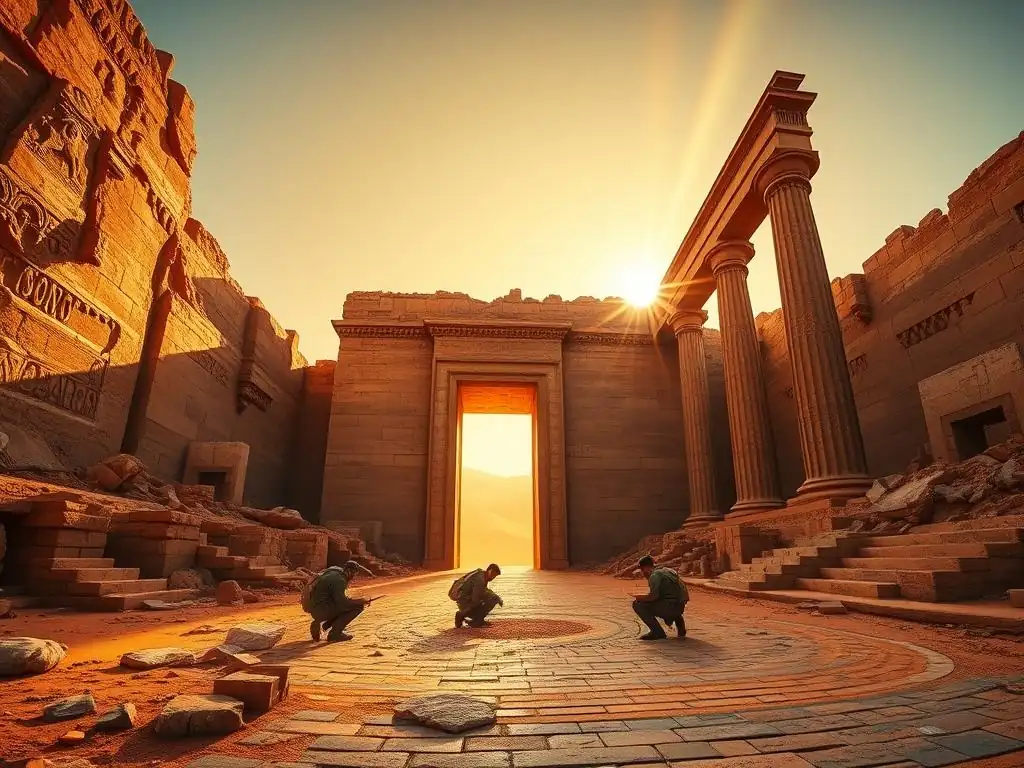
Welcome to ArchaeologyHub.org, your gateway to unraveling the mysteries of the past. Ever wondered about the bustling heart of empires long gone? Dive into our in-depth exploration of Ctesiphon: A Dual Imperial Capital, where we delve into the Parthian and Sasanian archaeology that reveals the secrets of this pivotal ancient city. Unearth the stories embedded within its ruins and discover the legacy of empires that shaped the course of history. Prepare to journey back in time and witness the rise and fall of a civilization. What secrets will Ctesiphon reveal to you?
- Ctesiphon: Archaeological Exploration of the Dual Imperial Capital
- Introduction to Ctesiphon: A Parthian and Sasanian Metropolis
- The Historical Context of Ctesiphon: From Parthian Foundation to Sasanian Glory
- Archaeological Discoveries at Ctesiphon: Unearthing Imperial Grandeur
- The Urban Layout of Ctesiphon: A Glimpse into Imperial Urbanism
- Religious and Cultural Aspects of Ctesiphon: A Melting Pot of Traditions
- Ctesiphon's Decline and Abandonment: Factors Contributing to its Demise
- Ctesiphon Archaeology: Current Research and Future Prospects
- Ctesiphon in Comparative Perspective: Examining Similar Ancient Capitals
- Conclusion: Ctesiphon as a Window into the Parthian and Sasanian Worlds
-
Frequently Asked Questions
- What is Ctesiphon, and why is it important in archaeology?
- What types of archaeological discoveries have been made at Ctesiphon?
- Which empires ruled from Ctesiphon, and during what time periods?
- What excavation techniques are commonly used at the Ctesiphon site?
- What makes Ctesiphon particularly valuable for understanding Parthian and Sasanian culture?
- Final Reflection: Echoes of Empires, Lessons for Today
- Unearth Your Inner Archaeologist: Explore the Mysteries of Ctesiphon!
Ctesiphon: Archaeological Exploration of the Dual Imperial Capital
Introduction to Ctesiphon: A Parthian and Sasanian Metropolis
Unveiling Ctesiphon's Significance in Ancient Mesopotamian History
Ctesiphon, located on the east bank of the Tigris River, approximately 35 kilometers southeast of modern Baghdad, stands as a monumental testament to over 800 years of continuous imperial power in ancient Mesopotamia. Its strategic position at a crucial bend in the river, near the confluence of major trade routes, made it an indispensable hub for control over the region.
For centuries, Ctesiphon served as the primary capital for two of the most formidable empires of the ancient world: the Parthian Arsacid dynasty and its successors, the Sasanian Persian Empire, making it a unique focal point for the study of post-Achaemenid Iranian history.
The city's enduring prominence reflects its adaptive capacity and strategic importance, acting as a bridge between Hellenistic influences inherited from the Seleucid Empire and the distinctly Persian cultural and political identities forged by the Parthians and Sasanians. Its long tenure as an imperial center facilitated a rich cultural synthesis, where diverse traditions in administration, art, and religion converged and evolved. Understanding Ctesiphon is therefore crucial for comprehending the geopolitical landscape and cultural dynamics of the Near East during the Classical and Late Antique periods.
Archaeological Importance of Ctesiphon for Understanding Parthian and Sasanian Dynasties
The archaeological record of Ctesiphon offers unparalleled insights into the evolution and characteristics of both the Parthian and Sasanian empires. Unlike many ancient capitals that saw a single dominant period, Ctesiphon's layered stratigraphy provides a unique chronological sequence, revealing shifts in urban planning, architectural styles, and material culture that directly correspond to the transition between these two powerful dynasties. This makes Ctesiphon Parthian Sasanian archaeology a critical field for comparative historical analysis.
Excavations and surveys at Ctesiphon have unearthed a wealth of information, from monumental architecture like the Taq-i Kisra to intricate artifacts, which collectively illuminate the administrative structures, economic activities, and daily lives of its inhabitants. The site's vastness, estimated to cover an area of approximately 30 square kilometers, hints at a sprawling urban complex that supported a significant population, potentially hundreds of thousands, during its peak. The study of Ctesiphon's remains is essential for reconstructing the imperial ambitions and cultural achievements of two empires that, for centuries, rivaled Rome and Byzantium for dominance.
The Historical Context of Ctesiphon: From Parthian Foundation to Sasanian Glory
Parthian Origins: Ctesiphon as a Royal Residence and Expanding Capital
Ctesiphon's origins trace back to the mid-2nd century BCE, when the Parthian king Mithridates I established it as a military camp and winter residence around 140 BCE, following his conquest of Mesopotamia from the Seleucids. Its proximity to the Hellenistic city of Seleucia on the Tigris allowed the Parthians to maintain a strategic presence while gradually asserting their authority over the region. Over time, Ctesiphon grew from a temporary encampment into a significant urban center, eventually eclipsing Seleucia as the primary Parthian capital, particularly after the sack of Seleucia by the Roman emperor Trajan in 116 CE.
The Parthian period saw Ctesiphon develop into a sprawling conurbation, likely comprising several distinct districts, including a royal quarter, military garrisons, and residential areas. While archaeological evidence for early Parthian Ctesiphon is challenging to isolate due to later Sasanian overbuilding, historical texts confirm its status as the primary seat of the Arsacid kings, where important ceremonies, diplomatic receptions, and military preparations took place. Its growth under Parthian rule laid the foundational infrastructure for the grand imperial city it would become under the Sasanians.
Ctesiphon Under the Sasanian Empire: The Zenith of Power and Influence
Upon overthrowing the Parthian Empire in 224 CE, Ardashir I, the founder of the Sasanian Empire, inherited Ctesiphon and promptly reaffirmed its status as the imperial capital. Under Sasanian rule, Ctesiphon reached its zenith, transforming into one of the largest and most magnificent cities of the ancient world. The Sasanians invested heavily in its development, constructing grand palaces, administrative buildings, and sophisticated infrastructure that reflected their centralized and powerful empire.
The most iconic surviving structure, the Taq-i Kisra, or Arch of Ctesiphon, is a monumental vaulted hall believed to have been part of the royal palace complex of Khosrow I (Anushirvan, r. 531–579 CE). This massive brick arch, rising approximately 37 meters (121 feet) high with a span of about 26 meters (85 feet), showcases the unparalleled engineering and architectural prowess of the Sasanian period.
Ctesiphon became not only the administrative and military heart of the Sasanian Empire but also a vibrant center of culture, learning, and trade, attracting scholars, merchants, and artisans from across Eurasia, solidifying its place in Ctesiphon Parthian Sasanian archaeology.
Ctesiphon's Role in Parthian-Roman and Sasanian-Roman Conflicts
Ctesiphon's strategic location made it a perpetual flashpoint in the protracted conflicts between the Parthian and Sasanian empires and their Western rivals, the Roman and later Byzantine empires. The city was a frequent target of Roman legions, its capture symbolizing a major victory for the Western power. Roman emperors such as Trajan (116 CE), Lucius Verus (165 CE), Septimius Severus (198 CE), and Carus (283 CE) all managed to capture or sack Ctesiphon at various points, often leading to the plundering of its riches and the temporary disruption of its imperial functions.
Despite these repeated assaults, Ctesiphon consistently demonstrated remarkable resilience, being rebuilt and reoccupied by its Persian overlords. This cycle of destruction and resurgence underscores the city's critical importance as an imperial capital and a symbol of Iranian power. The enduring conflict over Ctesiphon highlights its role not merely as a geographic prize but as a psychological and political emblem in the millennia-long struggle for dominance between East and West, leaving a rich but complex archaeological record for Ctesiphon Parthian Sasanian archaeology.
Archaeological Discoveries at Ctesiphon: Unearthing Imperial Grandeur
Key Excavation Sites within the Ctesiphon Area: A Detailed Overview
The vast archaeological landscape of Ctesiphon encompasses several distinct mounds and areas, indicating its immense size and complex urban development over centuries. Early systematic excavations were conducted by German expeditions in the early 20th century (1928-1931), focusing primarily on the Taq-i Kisra area and nearby palace structures. Later, American expeditions, notably from the University of Michigan and the Metropolitan Museum of Art (1931-1932), expanded the scope, exploring residential areas and other mounds like Tell Dhahab and Tell Baruda, which provided crucial insights into daily life and urban planning.
More recent Iraqi-led efforts, often in collaboration with international teams, have continued to map and investigate the sprawling remains. The sheer scale of the site, which extends for several kilometers along the Tigris, makes comprehensive excavation a monumental task. Much of the site remains unexcavated, buried under modern agricultural land or accumulated silt, presenting ongoing challenges and immense potential for future Ctesiphon Parthian Sasanian archaeology to uncover new information.
Notable Architectural Remains: Taq-i Kisra (Arch of Ctesiphon) and Palace Complexes
The most prominent and enduring architectural marvel at Ctesiphon is the Taq-i Kisra, or Arch of Ctesiphon. This colossal brick arch and the remnants of its surrounding palace complex represent the pinnacle of Sasanian architectural achievement. The aiwan (vaulted hall) itself measures approximately 37 meters (121 feet) in height, with an arch span of about 26 meters (85 feet) and a depth of 50 meters (164 feet), making it one of the largest single-span, unreinforced brick arches in the world. It served as the grand audience hall of the Sasanian kings, symbolizing their imperial power and majesty.
Beyond the Taq-i Kisra, archaeological surveys and limited excavations have identified the foundations of other palace structures, administrative buildings, and residential quarters. These include the remains of a smaller palace to the north of the main complex, possibly of Parthian origin, and extensive mud-brick walls and foundations indicating a dense urban fabric. The distinctive use of brick, often in intricate patterns, and the monumental scale of the surviving structures underscore the imperial grandeur that characterized Ctesiphon's peak.
Artifacts and Material Culture: Insights into Parthian and Sasanian Daily Life
The archaeological digs at Ctesiphon have yielded a diverse array of artifacts, providing invaluable insights into the daily life, economic activities, and cultural practices of its inhabitants. Pottery fragments are abundant, ranging from utilitarian wares to finely decorated vessels, reflecting both local traditions and influences from across the Parthian and Sasanian empires. The evolution of pottery styles across the strata helps date specific contexts and trace cultural shifts.
Numismatic finds, including thousands of Parthian and Sasanian coins, are particularly significant. These coins bear the effigies of various rulers, providing a crucial chronological framework and shedding light on imperial iconography, economic policies, and trade networks. Smaller finds, such as seals, stamp impressions, glass fragments, bronze objects, and stucco fragments with decorative motifs, offer glimpses into administrative practices, personal adornment, and artistic expressions. For instance, detailed stucco panels with floral, geometric, and figural designs from Sasanian palaces illustrate the sophisticated decorative arts of the period, enriching our understanding of Ctesiphon Parthian Sasanian archaeology.
The Urban Layout of Ctesiphon: A Glimpse into Imperial Urbanism
Understanding the City's Structure: Residential Areas, Markets, and Administrative Centers
Ctesiphon was not a single, compactly planned city but rather a sprawling conurbation that evolved over centuries, encompassing several distinct urban clusters. Early Parthian Ctesiphon likely grew organically alongside the older Hellenistic city of Seleucia on the west bank of the Tigris, forming a dual city complex. Under the Sasanians, Ctesiphon continued to expand, with the royal and administrative centers, including the grand palace complexes, forming the core. Residential areas, likely organized into neighborhoods, extended outwards, though precise mapping is challenging due to the site's size and subsequent decay.
Historical accounts and limited archaeological evidence suggest a complex urban fabric that included bustling markets, workshops for artisans, and possibly specific districts for different ethnic or religious communities. The sheer scale of the ruins indicates a highly organized imperial capital capable of supporting a large and diverse population, requiring sophisticated urban planning and resource management.
Water Management and Irrigation Systems in Ancient Ctesiphon
Sustaining a large imperial capital like Ctesiphon in a semi-arid region like Mesopotamia necessitated advanced water management and irrigation systems. The Tigris River was the primary source of water, and historical texts mention the construction of elaborate canal systems to divert water for agricultural purposes, supplying the city with food, and for urban consumption. While much of this infrastructure is no longer visible on the surface, traces of ancient canals and irrigation channels have been identified through remote sensing and geological surveys in the surrounding plain.
Evidence suggests that the Sasanians, known for their engineering prowess, further developed these systems. The maintenance of these vital waterways was crucial for the city's survival and prosperity, ensuring both potable water for its inhabitants and the irrigation of vast agricultural lands that fed the capital. Understanding these systems is a key aspect of Ctesiphon Parthian Sasanian archaeology, revealing the practical challenges of sustaining an ancient metropolis.
The Defensive Infrastructure: Walls, Fortifications, and Strategic Locations
Given its frequent role as a battleground and target of Roman invasions, Ctesiphon undoubtedly possessed significant defensive infrastructure, though much of it has been lost or lies buried. Historical accounts describe formidable walls and fortifications designed to protect the imperial capital. While continuous city walls enclosing the entire sprawling metropolis are difficult to trace archaeologically, defensive structures around key palace complexes and strategic points along the river are more plausible.
The city's location on the Tigris offered a natural defensive barrier on one side, while the flat Mesopotamian plain necessitated strong landward defenses. Control of the river was also vital, suggesting the presence of riverine fortifications or watchtowers. The resilience of Ctesiphon in the face of numerous sieges attests to the effectiveness of its defensive planning and the strategic importance placed on its protection by both the Parthian and Sasanian empires.
Religious and Cultural Aspects of Ctesiphon: A Melting Pot of Traditions
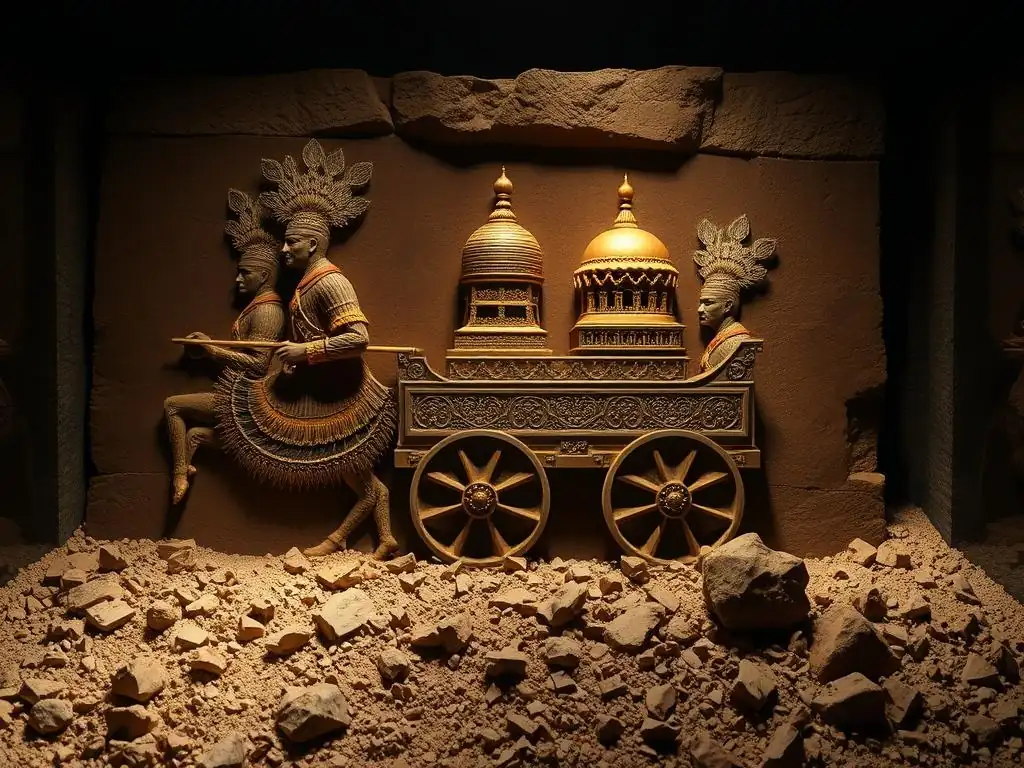
Religious Practices: Zoroastrianism, Christianity, and Other Faiths in Ctesiphon
Ctesiphon, as the capital of two multi-ethnic and multi-religious empires, was a vibrant center where various faiths coexisted, sometimes harmoniously, sometimes with tension. Under the Sasanians, Zoroastrianism was the official state religion, and fire temples would have been prominent features within the city. However, Ctesiphon was also home to significant Christian communities, particularly the Church of the East (Nestorian Church), which had its patriarchate located in the twin city of Seleucia-Ctesiphon, testifying to its importance as a Christian center in the Sasanian Empire.
Jewish communities were also present, contributing to the city's diverse religious landscape. The archaeological record, though limited in direct evidence of religious structures beyond a few possible Christian churches, suggests a rich tapestry of beliefs. The co-existence of these major faiths in the imperial capital reflects the broader religious policies and social dynamics of the Parthian and Sasanian empires.
Artistic Expressions: Pottery, Sculpture, and Decorative Arts from Ctesiphon
The artistic output from Ctesiphon reveals a fascinating blend of influences, reflecting its role as an imperial capital at the crossroads of cultures. Parthian art from the region often shows a fusion of Hellenistic, Roman, and local Mesopotamian and Iranian styles, particularly evident in statuary and architectural decoration. Sasanian art, while drawing upon earlier traditions, developed a distinct imperial style characterized by its emphasis on royal power, hunting scenes, and investiture motifs.
Excavations have yielded exquisite examples of Sasanian stucco reliefs, which adorned palace walls and private residences, depicting intricate floral patterns, geometric designs, and sometimes human or animal figures. Fragments of luxury goods like silver plates, glass vessels, and textile fragments from the broader Sasanian realm hint at the sophisticated craftsmanship patronized by the court. The art of Ctesiphon provides a window into the aesthetic sensibilities and ideological expressions of both empires.
The Influence of Ctesiphon on Parthian and Sasanian Culture
As the imperial capital, Ctesiphon was the epicenter of cultural innovation and dissemination for both the Parthian and Sasanian empires. It served as a magnet for skilled artisans, architects, scholars, and poets from across the vast territories, fostering a vibrant intellectual and artistic environment. Decisions made in Ctesiphon regarding urban planning, architectural styles, and artistic patronage profoundly influenced provincial centers throughout the empires.
The city's cosmopolitan nature, with its diverse population and exposure to various traditions, contributed to a unique cultural synthesis. Royal ceremonies, diplomatic exchanges, and the presence of a powerful court shaped the cultural norms and imperial identity that radiated outwards. The influence of Ctesiphon is discernible in the widespread adoption of Sasanian architectural forms, administrative practices, and artistic motifs across the Near East, making its study crucial for understanding broader cultural trends.
Ctesiphon's Decline and Abandonment: Factors Contributing to its Demise
Political Instability and Shifting Power Dynamics
Ctesiphon's decline began with the mounting political instability that plagued the late Sasanian Empire. Decades of protracted and costly wars with the Byzantine Empire severely depleted Sasanian resources and manpower. Internal power struggles, succession crises, and a weakening central authority further destabilized the empire, leaving it vulnerable. This internal strife and external pressure culminated in the Arab-Islamic conquests of the 7th century CE.
The decisive Battle of al-Qadisiyyah in 636 CE, though fought west of Ctesiphon, paved the way for the Arab forces to march on the capital. Ctesiphon was captured by the Muslim army under Sa'd ibn Abi Waqqas in 637 CE, marking the symbolic end of the Sasanian Empire and the beginning of a new era in Mesopotamian history. The city was extensively looted, and while initially used by the conquerors, its imperial function ceased.
Environmental Changes and Economic Challenges
Beyond political upheaval, environmental factors and economic challenges also contributed to Ctesiphon's eventual abandonment. Shifts in the course of the Tigris River, a phenomenon common in the alluvial plains of Mesopotamia, could have impacted the city's access to water or made parts of it more susceptible to flooding. Repeated sieges and the ensuing destruction would have also taken a heavy toll on the city's infrastructure and agricultural hinterland, disrupting its economic base.
The transition of power to the Islamic caliphate brought significant economic changes. While Ctesiphon continued to be inhabited for a period, the focus of trade routes and political power gradually shifted. The disruption of established networks and the reorientation of the regional economy under new administration diminished Ctesiphon's economic vitality, making it less attractive as a major urban center.
The Legacy of Ctesiphon: Its Impact on Subsequent Mesopotamian History
Following its capture, Ctesiphon gradually fell into disuse. Its monumental structures served as a quarry for later constructions, most notably for the founding of the new Abbasid capital of Baghdad in 762 CE, just a short distance north. Many of Ctesiphon's bricks and building materials were likely reused in the construction of Baghdad, a testament to its former grandeur but also contributing to its rapid decay.
Despite its physical decline, Ctesiphon's legacy endured in historical memory and cultural narratives. Its majestic ruins, particularly the Taq-i Kisra, continued to inspire poets, chroniclers, and travelers throughout the Islamic period. The city's long history as a dual imperial capital provided a powerful symbol of past glory and sophistication, influencing subsequent Mesopotamian urbanism and architecture, and serving as a rich, if challenging, site for Ctesiphon Parthian Sasanian archaeology.
Ctesiphon Archaeology: Current Research and Future Prospects
Modern Archaeological Techniques and Methodologies Applied at Ctesiphon
Modern Ctesiphon Parthian Sasanian archaeology employs a range of advanced techniques to overcome the challenges posed by the site's vastness and the difficulty of traditional excavation. Remote sensing technologies, such as satellite imagery and aerial photography (including drone-based surveys), are crucial for mapping the sprawling urban footprint and identifying buried features without invasive digging. These methods have helped delineate ancient canals, road networks, and potential residential areas that are no longer visible on the surface.
Geophysical surveys, including magnetometry and ground-penetrating radar (GPR), are also increasingly utilized to detect subsurface structures and anomalies, offering a non-invasive way to understand the city's layout and identify promising areas for future, targeted excavations. These technologies allow archaeologists to build comprehensive virtual models of the ancient city, providing a more holistic understanding of its complex urban development.
Ongoing Excavations and Discoveries
Despite its long history of exploration, Ctesiphon remains largely unexcavated, holding immense potential for future discoveries. Ongoing efforts, primarily led by the Iraqi State Board of Antiquities and Heritage, sometimes in collaboration with international missions, focus on conservation of the Taq-i Kisra and limited new investigations. Recent conservation projects on the Taq-i Kisra, for instance, have provided opportunities for detailed architectural analysis and minor archaeological observation of its immediate surroundings.
The sheer scale of the site means that many areas, particularly residential and industrial zones, have yet to be systematically explored. Future excavations could uncover new palace complexes, religious structures, or extensive archives, offering unprecedented insights into the daily lives, economic activities, and administrative functions of the Parthian and Sasanian capitals.
Preserving Ctesiphon: Challenges and Conservation Efforts
The preservation of Ctesiphon presents significant challenges. The Taq-i Kisra, the most iconic standing structure, has suffered from structural instability, environmental erosion, and neglect, particularly during periods of conflict. International organizations, such as the World Monuments Fund, have collaborated with Iraqi authorities on critical conservation projects, including emergency stabilization efforts and long-term preservation plans for the Arch.
Beyond the Taq-i Kisra, the vast archaeological landscape of Ctesiphon faces threats from urban encroachment, agricultural expansion, and illicit looting. Protecting the entire site requires sustained funding, international cooperation, and robust legal frameworks. Ensuring the long-term survival of this irreplaceable heritage site is paramount for future generations to study and appreciate the rich history of Ctesiphon Parthian Sasanian archaeology.
Ctesiphon in Comparative Perspective: Examining Similar Ancient Capitals
Comparing Ctesiphon with Other Parthian and Sasanian Urban Centers
Ctesiphon's unique status as a dual imperial capital distinguishes it from other major urban centers of the Parthian and Sasanian empires. While cities like Nisa (early Parthian royal residence and fortress in modern Turkmenistan) and Bishapur (a meticulously planned Sasanian city in Fars, Iran) offer valuable insights into their respective dynastic periods, Ctesiphon's continuous occupation and transformation under both empires provide a unique layered record. Nisa, for example, reveals earlier Parthian architectural forms and administrative practices, while Bishapur showcases a distinct Sasanian urban planning philosophy.
Ctesiphon, however, represents the imperial heartland, absorbing influences from both its Parthian past and its Sasanian revitalization. Its strategic location and sheer scale surpass most other sites, making it the most significant archaeological window into the imperial ambitions and cultural syntheses of these two powerful Iranian empires.
Ctesiphon's Place Within the Broader Context of Ancient Near Eastern Capitals
In the grand tapestry of ancient Near Eastern capitals, Ctesiphon holds a prominent place alongside legendary cities like Babylon, Nineveh, and Persepolis. While Babylon and Nineveh represent earlier Mesopotamian imperial traditions, and Persepolis epitomizes Achaemenid Persian grandeur, Ctesiphon embodies the continuity of imperial power in Mesopotamia from the Hellenistic period through Late Antiquity. It inherited the mantle of earlier Mesopotamian capitals in its strategic importance on the Tigris and its role as a center of administration and trade.
Compared to Western capitals like Rome or Constantinople, Ctesiphon often served as a rival imperial hub, reflecting a distinct Eastern imperial tradition. Its architecture, particularly the Taq-i Kisra, showcases unique Iranian engineering and aesthetic principles that diverged from Greco-Roman norms, yet its urban fabric also reveals influences from the West. This comparative perspective highlights Ctesiphon's exceptional role as a bridge between diverse imperial traditions.
Lessons Learned from Ctesiphon
The study of Ctesiphon offers profound lessons about the resilience of imperial power, the dynamics of cultural exchange, and the challenges of sustaining large urban centers in antiquity. Its ability to serve as a capital for over eight centuries, weathering numerous sieges and dynastic changes, speaks to the strategic genius of its location and the administrative capacity of its rulers. The site also illustrates the complex interplay of continuity and change in architecture, art, and urban planning as one empire succeeded another.
Furthermore, Ctesiphon’s archaeological record underscores the importance of water management, defense, and economic networks for the survival of ancient metropolises. The city's eventual decline due to political fragmentation and environmental shifts provides a cautionary tale about the fragility of even the most powerful empires. The ongoing efforts in Ctesiphon Parthian Sasanian archaeology continue to yield new insights into these timeless lessons.
Conclusion: Ctesiphon as a Window into the Parthian and Sasanian Worlds
The Enduring Archaeological Value of Ctesiphon
Ctesiphon stands as an archaeological treasure, offering an unparalleled window into the Parthian and Sasanian worlds. Its layered remains provide a unique chronological sequence, allowing scholars to trace the evolution of imperial architecture, urban planning, and material culture across more than eight centuries. As the primary capital for two successive and powerful empires, Ctesiphon is a crucial site for understanding the political, economic, and cultural dynamics of ancient Mesopotamia and the broader Iranian plateau.
The iconic Taq-i Kisra, a testament to Sasanian engineering and artistic ambition, serves as a powerful symbol of the city's past grandeur. Beyond this monumental structure, the extensive archaeological landscape of Ctesiphon holds vast potential for uncovering the intricacies of daily life, administrative practices, and the diverse cultural interactions that shaped these formidable empires. Its enduring value lies in its ability to inform our understanding of imperial resilience, cultural synthesis, and the complex relationship between East and West in antiquity.
Future Directions for Ctesiphon Research and Preservation
The future of Ctesiphon Parthian Sasanian archaeology lies in continued, systematic research, leveraging modern non-invasive techniques to map and understand the site's vastness before further decay or encroachment. Remote sensing, geophysical surveys, and advanced digital documentation offer promising avenues for uncovering buried urban elements and understanding the city's complex layout without extensive excavation. Targeted excavations in specific areas, informed by these surveys, can then provide detailed insights into key periods and structures.
Crucially, sustained international cooperation and funding are essential for the long-term preservation of Ctesiphon, particularly the fragile Taq-i Kisra. Conservation efforts must address both structural stability and environmental threats, while also mitigating the risks posed by modern development and illicit activities. Investing in Ctesiphon's preservation and continued archaeological exploration is vital to safeguard this irreplaceable heritage, ensuring that it continues to illuminate the rich history of the Parthian and Sasanian empires for generations to come.
Frequently Asked Questions
What is Ctesiphon, and why is it important in archaeology?
Ctesiphon was a dual imperial capital for both the Parthian and Sasanian Empires. Its importance stems from its long period of occupation and the wealth of archaeological evidence it provides about these civilizations.
What types of archaeological discoveries have been made at Ctesiphon?
Discoveries include palatial complexes, residential areas, and evidence of large-scale urban planning. Artifacts found range from ceramics and metalwork to architectural remains, providing insights into daily life and imperial power.
Which empires ruled from Ctesiphon, and during what time periods?
Ctesiphon served as the capital of the Parthian Empire from the 2nd century BC to the 3rd century AD, and subsequently as the capital of the Sasanian Empire from the 3rd to the 7th centuries AD. This represents a significant and continuous period of imperial rule.
What excavation techniques are commonly used at the Ctesiphon site?
Common techniques include stratigraphic excavation, remote sensing, and analysis of architectural remains. These methods help archaeologists understand the chronological sequence of the site and reconstruct its historical development.
What makes Ctesiphon particularly valuable for understanding Parthian and Sasanian culture?
Ctesiphon offers a unique opportunity to study the cultural synthesis and continuities between the Parthian and Sasanian periods. The site's extensive remains allow for a comprehensive understanding of imperial administration, urban life, and artistic traditions.
Final Reflection: Echoes of Empires, Lessons for Today
The journey through Ctesiphon's ruins reveals more than just crumbling walls; it unveils the enduring power of cultural exchange and the cyclical nature of empires. The echoes of Parthian and Sasanian ingenuity, ambition, and ultimately, their decline, resonate profoundly in our modern world, reminding us that even the most formidable powers are subject to the tides of history. Understanding the rise and fall of Ctesiphon offers invaluable insights into the complexities of governance, the importance of cultural preservation, and the fragility of even the most seemingly invincible civilizations.
The story of Ctesiphon, a city that witnessed the ebb and flow of two powerful empires, continues to shape our understanding of the ancient Near East. Its legacy, though fragmented and often overlooked, serves as a potent reminder of the interconnectedness of cultures and the lasting impact of human endeavor. The archaeological record, painstakingly pieced together, provides a tangible link to a past that informs our present. History, despite its wrenching pain, cannot be unlived, but if faced with courage, need not be lived again.
- Maya Angelou. This quote encapsulates the importance of studying Ctesiphon, not just to understand the past, but to learn from it and build a more informed future.
As we conclude this exploration of Ctesiphon, I invite you to reflect on the lessons embedded within its ancient stones. Consider how the rise and fall of empires, the interplay of cultures, and the enduring power of human innovation can inform your own perspective. Let the story of Ctesiphon inspire you to appreciate the richness of our shared human history and to contribute to a future where the lessons of the past guide us towards a more enlightened and sustainable world.
Unearth Your Inner Archaeologist: Explore the Mysteries of Ctesiphon!
Thank you for delving into the fascinating history of Ctesiphon! We hope this journey through the heart of the Parthian and Sasanian empires has sparked your curiosity about the ancient world. Now, let's take that enthusiasm a step further:
- Embark on a virtual dig: Explore online interactive maps and 3D models of Ctesiphon. Reimagine the city's grandeur from the comfort of your home!
- Share your newfound knowledge! Spread the word about Ctesiphon by sharing this article with fellow history buffs and archaeology enthusiasts on your favorite social media platform. Let's bring this ancient city to life for a wider audience.
- Dig Deeper: Research little-known facts about Ctesiphon's influence on art, architecture, and political structure, and share them in the comments below.
What aspects of Ctesiphon's rise and fall resonate most deeply with your understanding of empires and civilizations?