Ancient Near East: Sumerian Civilization – Origins & Early Dynastic
Welcome to ArchaeologyHub.org’s deep dive into the cradle of civilization. This subcategory unravels the origins of the Sumerians, the world’s first urban society, and their transformative Early Dynastic period. Explore how a marshy delta in southern Mesopotamia gave rise to monumental temples, cuneiform writing, and the first city-states like Uruk and Ur. Perfect for students, enthusiasts, and researchers seeking detailed chronologies, artifact analyses, and excavation insights, this taxonomy section bridges archaeology and historical interpretation, emphasizing cultural innovation and societal complexity.
🏛️ Geographical & Environmental Foundations of Sumer
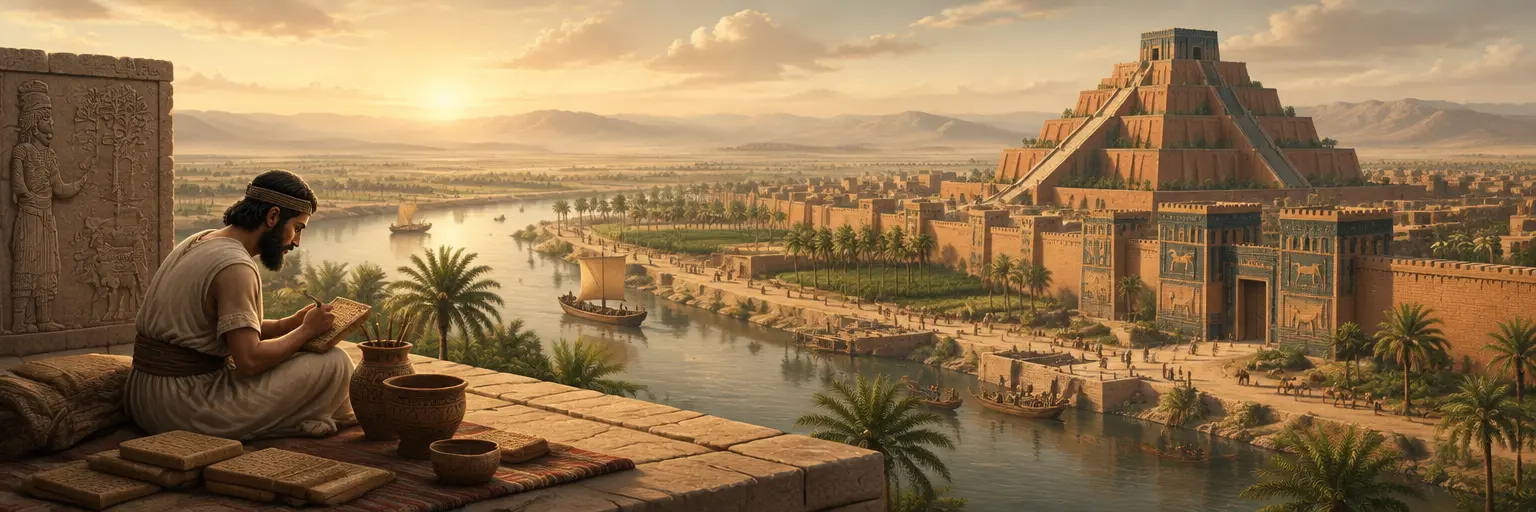
Understanding Sumerian origins begins with the Tigris-Euphrates alluvial plain—a harsh, arid landscape transformed by ingenious irrigation. This region, now southern Iraq, lacked stone, timber, and metal, prompting Sumerians to innovate with mudbrick construction and water management systems. Early settlements like Eridu (c. 5400 BCE) emerged near marshlands, where date palms and reeds supported subsistence. The unpredictable floods of the twin rivers forced communal cooperation, leading to centralized planning—a key driver of urbanization.
For archaeology enthusiasts, this subcategory offers strata-specific insights into Ubaid and Uruk period transitions. Learn how clay sickles, fishing hooks, and reed boats reveal daily life, while temple platforms (precursors to ziggurats) signify growing religious authority. Environmental reconstructions based on paleobotany and sediment core analyses help map how shifting river courses influenced settlement patterns, providing a nuanced view of human-environment interaction.
📜 The Uruk Expansion & Proto-Cuneiform Writing
The Uruk period (c. 4000–3100 BCE) marks Sumer’s first great leap, defined by urban sprawl and long-distance trade. This subcategory examines how Uruk grew to 40,000 inhabitants, with monumental complexes like the White Temple at Anu Ziggurat. Crucially, it details the invention of proto-cuneiform—pictographic tokens used for accounting grain, livestock, and labor. These tablets, found in temple archives, represent the earliest written evidence of administrative complexity and economic surplus.
Readers will discover excavation reports from Jemdet Nasr and Uruk-Warka, where German expeditions uncovered thousands of clay tablets. The content explains token systems evolving into lexical lists, which standardized bureaucracy. Artifacts like cylinder seals demonstrate artistic mastery and social hierarchy, while trade artifacts (lapis lazuli from Afghanistan, obsidian from Anatolia) prove a vast network. This section bridges writing’s evolution from simple tally marks to full syllabic script—a cornerstone of Sumerian civilizational impact.
🏺 Early Dynastic City-States & Political Rivalries
After Uruk’s collapse, the Early Dynastic period (c. 2900–2350 BCE) saw Sumer fragment into competing city-states: Ur, Lagash, Umma, Kish, and Eridu. This subcategory profiles each polity’s political structure, from lugals (kings) to ensi (governor-priests), illustrating how warfare over water rights and arable land shaped territorial borders. The Royal Tombs of Ur (c. 2600 BCE) provide spectacular evidence of elite burials, including the Standard of Ur and Queen Puabi’s golden headdress, revealing wealth, sacrifice, and religious cosmology.
Archaeological narratives here highlight epigraphic sources like the Kish Tablet and War of Lagash inscriptions, which recount victories and treaties. Stratigraphy from sites like Tell Agrab and Abu Salabikh offers domestic contexts—pottery kilns, ovens, and courtyards—showing non-elite life. The subcategory emphasizes how temple economies and palace administrations vied for labor, while votive statues and foundation pegs attest to ritual practices. This political fragmentation ironically fueled cultural flourishing, from lyre music to elaborate artistic motifs.
⚒️ Technological & Agricultural Innovations
Sumerian resilience depended on revolutionary technologies, detailed in this section: the plow seeder (cultivator), bronze casting, and sail-based river transport. Irrigation networks, including large canals like the Iturungal, required mathematical surveying and administrative record-keeping. This subcategory explores how clay sickles were mass-produced in molds, while pottery workshops evolved from hand-coiling to slow wheels, boosting trade. Such innovations supported a surplus economy, enabling specialization in crafts, priesthood, and writing.
For hands-on learning, expect reconstruction diagrams of shadufs (water-lifting devices) and granaries, along with experimental archaeology findings on firing temperatures for metal tools. The text also covers textile production—wool from sheep, flax for linen—using spindle whorls and looms found in domestic debris. By linking these technologies to social stratification, you see how control of surplus storage empowered temple elites, setting the stage for state formation and eventual imperial conquest by Sargon of Akkad.
🔍 Excavation Methods & Interpretive Challenges
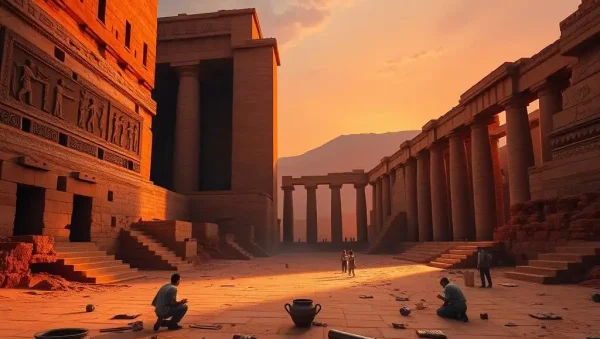
This subcategory dedicates itself to methodological archaeology, showing how modern teams uncover Sumerian origins. Start with aerial photography and satellite imagery to trace ancient watercourses, then dive into stratigraphic excavation at sites like Eridu and Ur, where deep soundings revealed occupational layers from Ubaid to Early Dynastic. Discussed is the use of micromorphology to detect floor surfaces and the archaeomagnetic dating of kilns. Artifact processing includes pottery seriation and seal impression typologies.
Interpretive debates are equally key: how do we distinguish ethnic Sumerians from other populations when material culture changes gradually? This section reviews linguistic paleography of oldest texts, bioarchaeology of skeletal remains (e.g., dental enamel isotopes) for mobility patterns, and residue analysis on vessels—beer, barley, or fish sauces. Honest discussions on looting at Fara and Umm al-Aqarib highlight preservation challenges. By exposing these methods, readers gain a critical eye on how archaeological knowledge is produced.
Frequently Asked Questions
What is the earliest known Sumerian settlement?
The earliest significant settlement is Eridu, occupied from around 5400 BCE during the Ubaid period. Excavations revealed a sequence of eighteen superimposed temples, with the earliest being a small mudbrick shrine. Its enduring religious importance, later dedicated to the god Enki, marks Eridu as a foundational site for understanding Sumerian origins.
How did cuneiform writing evolve from pictographs?
Cuneiform began as clay tokens for counting goods in the Uruk period. Around 3200 BCE, these tokens were impressed into clay tablets, evolving into pictographs that represented objects. Over centuries, signs became more abstract, using wedges (hence cuneiform) and adopting syllabic values, enabling full language representation—a key driver of bureaucracy and literature.
What was the role of temples in Early Dynastic economy?
Temples acted as central redistributive centers, managing land, labor, and surplus. Priests administered food rations, collected taxes in barley, and employed scribes to record transactions. They also organized craft workshops for pottery, textiles, and metalwork. Temples’ economic power often rivaled or exceeded palace control, shaping political alliances and conflicts.
Why did city-states fight in the Early Dynastic period?
Primary conflicts centered on water rights, arable land, and trade routes. As populations grew, competition over canal access and fertile soil intensified. Border disputes, like those between Lagash and Umma, are documented in inscriptions. These wars spurred military innovations but also led to diplomatic treaties, a hallmark of Sumerian political sophistication.
What evidence exists for social hierarchy in Sumerian graves?
The Royal Tombs of Ur provide striking evidence: elite burials contained gold, lapis lazuli, and human sacrifices (retainer burial), indicating strict social stratification. In contrast, commoner graves held only simple pots and beads. Skeletal analyses of isotope evidence suggest varied childhood nutrition, reinforcing status differences. Together, these findings reveal a complex, ranked society.