Exploring Old & Middle Assyrian Trade Networks
Delve into the economic and political foundations of the Old Assyrian period (c. 2025–1378 BCE) and the Middle Assyrian period (c. 1365–1050 BCE), when merchant colonies (karums), royal caravans, and imperial expansion reshaped the Ancient Near East. This subcategory on ArchaeologyHub.org focuses on how trade networks linked Assur to Anatolia, Mesopotamia, and beyond, highlighting textile and metal exchange, diplomatic marriages, and the rise of state-controlled commerce. Discover artifacts like cuneiform tablets from Kültepe (Kanesh), which reveal family firms, price fluctuations, and cross-cultural interactions. Whether you are a student, researcher, or enthusiast, these detailed studies offer primary-source insights, timeline analyses, and archaeological context that illuminate the commercial arteries of the early Assyrian world.
🏛️ The Old Assyrian Merchant Colonies (Karums) 🏛️
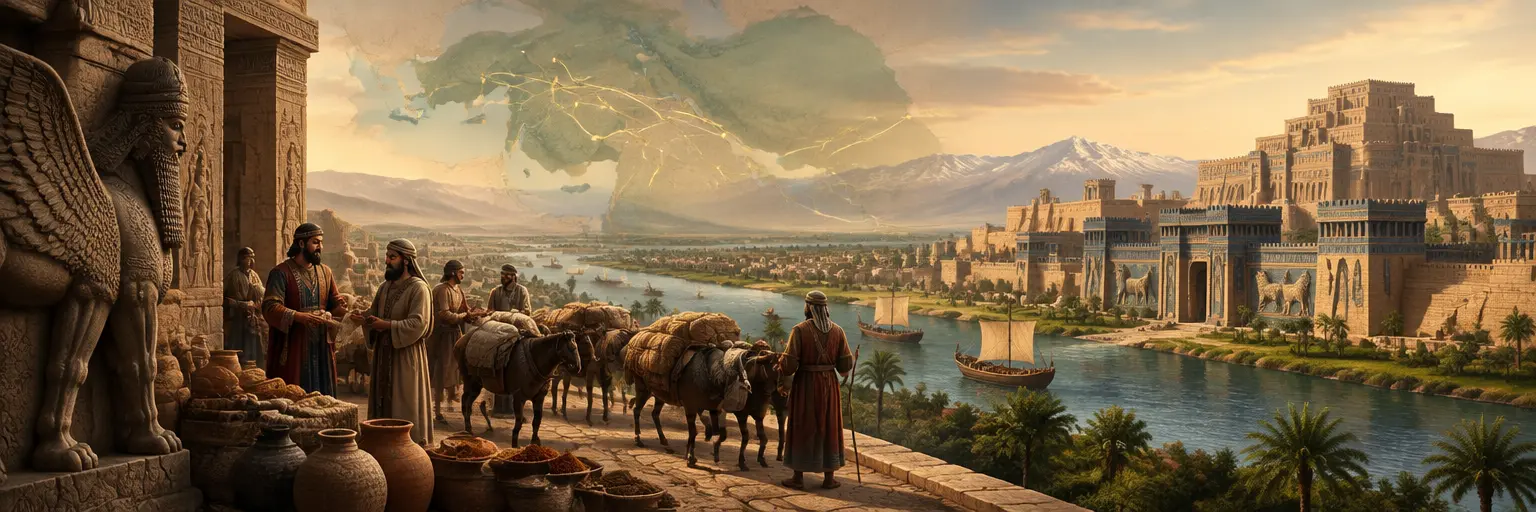
Explore how the karum system—a network of self-governing merchant enclaves—operated as the backbone of Old Assyrian trade. The most famous, Kültepe (Kanesh), housed over 20,000 cuneiform tablets documenting loans, partnerships, and disputes. These records show that Assyrian merchants exported tin and textiles from Assur and importedgold, silver, and copper from Anatolia, using donkeys as pack animals on routes that crossed the Taurus Mountains.
Learn about the legal frameworks that governed these colonies, including treaties with local Anatolian rulers and the role of the bit kārim (merchant assembly). The karum operated as a hub of innovation, introducing sealed receipts, interest-bearing loans, and arbitration practices. This section also covers archaeological excavations by Turkish teams since 1948, revealing residential quarters, archives, and the palace of Warsama, which underscores the complexity of cross-cultural economic integration.
📜 Cuneiform Records and Economic Life 📜
Unpack the primary sources that define our understanding of Old Assyrian trade. Over 23,000 private letters and documents from Kültepe detail daily commercial activities, family partnerships, and even the role of women—who managed assets while husbands traveled. These tablets record price ratios (e.g., one shekel of silver for 15 liters of barley) and the cost of caravan logistics, including tolls and security guards.
This subcategory provides translations and interpretive essays on key texts, such as the “Trade and Markets” archives and the “Sargon letter” that lists forty commodities. You will also find comparative analysis with contemporaneous economies in Mari and Ebla, highlighting how Assyrian “capitalism” predated Greco-Roman models. For SEO, keywords include cuneiform contracts, merchant archives, silver loans, Assyrian weights, and trading partnerships—all presented with clear, scholarly precision.
🐪 Caravan Routes and Logistics 🐪
Follow the geographic pathways that made trade possible, from Assur’s river ports to Anatolian market towns. Key routes passed through Harran, Hahhum, and Kanesh, spanning roughly 1,200 kilometers. The journey took six to eight weeks, with caravans of up to 200 donkeys carrying tin ingots from the east and woolen textiles produced in Assur’s state workshops.
This section examines infrastructure challenges—mountain passes, rivers, and banditry—and the solutions used, including caravanserais and hired guards. You’ll also learn about animal husbandry (donkey breeding), packaging methods (leather sacks), and the role of climate on seasonal travel. Artifact profiles include clay bullae used as seals and itineraries recorded on tablets, offering a vivid picture of real-world supply chains that connected the Old Assyrian period with the broader Ancient Near East.
🏺 Middle Assyrian Imperial Trade Expansion 🏺
Shift to the Middle Assyrian period, when kings like Adad-nirari I and Tukulti-Ninurta I transformed trade into a state-controlled system. Following the collapse of Mitanni, Assyria expanded westward, controlling the Habur River valley and extracting tribute from vassal states. This era saw the creation of royal storehouses (ekallātu) and the standardization of weights under Assyrian law, as evidenced in the Assyrian Law Code.
Discover how imperial roads with fortified waystations improved communication and taxed commerce, while diplomatic gifts and exchange marriages facilitated safe passage through foreign territories. This period also marks the first use of “Assyrian” as an ethnic label in external records, such as Hittite letters. Focus on archaeological sites like Tell Sabi Abyad and Kar-Tukulti-Ninurta, where excavations reveal massive grain silos, craft quarters, and imported luxury items like ivory and lapis lazuli, illustrating imperial-driven trade networks that foreshadowed the Neo-Assyrian empire.
⚖️ Trade Law, Diplomacy, and Cultural Exchange ⚖️
Analyze the legal and diplomatic institutions that underpinned both periods. In the Old Assyrian era, disputes were resolved by the karum assembly, which issued verdicts, enforced debt collection, and even imposed commercial embargoes. This section compares Assyrian law with Hammurabi’s code, highlighting innovations like interest caps (20%) and warranty clauses for goods.
For the Middle Assyrian period, royal edicts (dīnu) set fixed prices for grain and metals, while tributary states had limited autonomy in local trade. Cultural exchange flourished through intermarriage between Assyrian officials and local elites, leading to syncretic art—like cylinder seals blending Assyrian and Hurrian motifs. This subcategory also covers religious commerce, including the sale of votive objects and temple-owned lands. Keywords include commercial law, royal edicts, diplomatic gifts, cultural hybridity, and trade diasporas.
Frequently Asked Questions
What were the main goods traded in the Old Assyrian period?
The primary exports from Assur were tin (from Iranian sources) and woolen textiles, while imports from Anatolia included silver, gold, and copper. Some goods were local, like tools and jewelry. The trade thrived because Anatolia lacked tin for bronze, and Assyria needed precious metals to finance its economy.
How did the karum system function politically?
Each karum was a self-governing merchant colony with its own assembly and courts, operating under treaties with local rulers. It paid taxes, administered justice among merchants, and maintained diplomatic relations. The karum at Kanesh acted as a central hub, coordinating routes and setting standards for weights and prices.
What role did women play in Old Assyrian trade?
Many women, such as Kuliya’s wife, managed finances, issued loans, and supervised weaving in Assur while men traveled. They owned property and appeared in court as litigants. Some also invested in caravans, making them key economic actors in a male-dominated system.
How did Middle Assyrian trade differ from the Old period?
Trade became state-monopolized, with royal officials supervising caravan routes and setting prices. Foreign merchants had fewer privileges, and Assyrian kings used tribute and military conquest to secure resources. Private entrepreneurship declined, replaced by palace-directed exchange.
Where can I find primary texts about these trade networks?
Most documents come from Kültepe (Kanesh) and Assur. Digitized collections are available via the CDLI and ORACC portals. For Middle Assyrian, consult tablets from Tell Sabi Abyad and the Middle Assyrian corpus on the British Museum’s archive. These sources offer transliterations and translations.