Exploring the Classical Period of Ancient Greece: Athens, Sparta & the Persian Wars
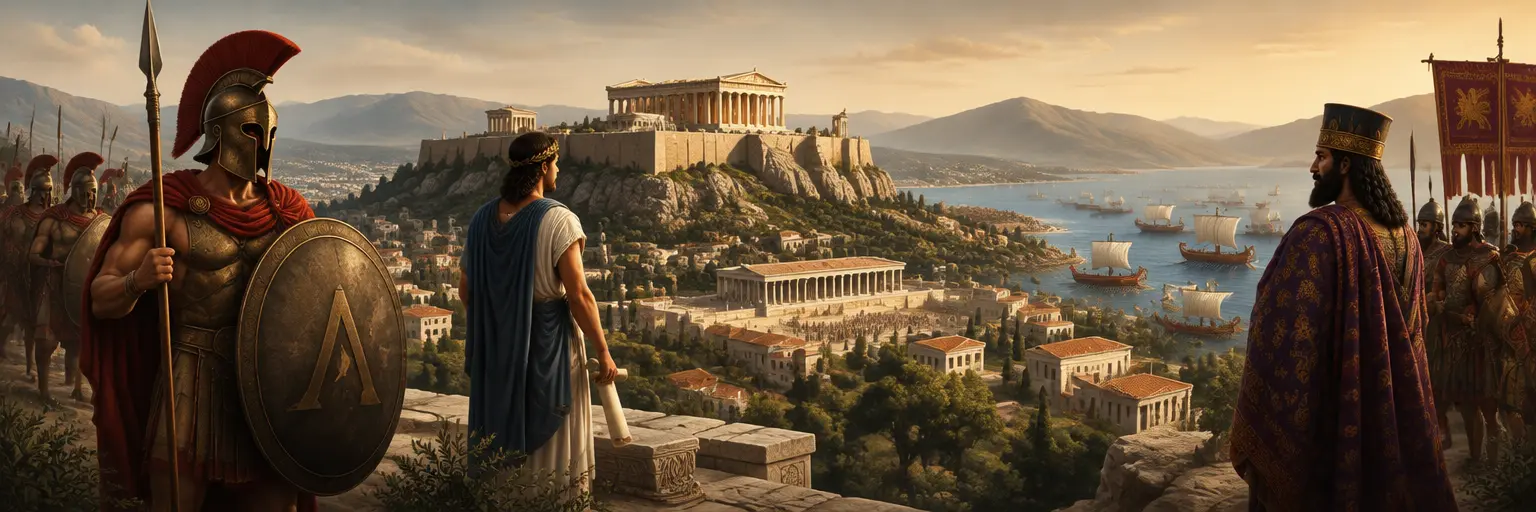
Welcome to ArchaeologyHub.org’s detailed study of the Classical Period of Ancient Greece (c. 480–323 BCE), a transformative era defined by the rise of Athenian democracy, the militaristic society of Sparta, and the epic Greco-Persian Wars that reshaped the Mediterranean world. This subcategory offers a comprehensive archaeological and historical lens on the political, cultural, and military achievements of these rival city-states. Expect to uncover primary sources, artifact analyses, and site-specific excavations that illuminate how Athens and Sparta forged legacies that still influence modern governance, warfare, and philosophy. Dive deep into the material evidence—from the Acropolis’s marble temples to Spartan hoplite armor—and trace the battles of Marathon, Thermopylae, and Salamis through the latest fieldwork and scholarly interpretation.
🏛️ Athenian Democracy & the Archaeological Evidence of Civic Life
The Athenian democratic experiment was not merely an idea but a lived practice, deeply embedded in public spaces like the Agora, Pnyx, and Acropolis. Excavations at the Agora have uncovered ostraka (pottery shards used in voting), ballot boxes, and inscriptions detailing decrees—proof of direct citizen participation. The Pnyx hill, where assemblies met, shows stages rebuilt over time, reflecting evolving political rights. For readers, this section reveals how democracy functioned physically, with evidence from water clocks (clepsydrae) to boundary stones, proving that governance was as much about architecture as ideology. Expect to learn how archaeological stratigraphy dates these civic reforms, linking material culture to historical texts like Aristotle’s Constitution of the Athenians.
Visitors will also explore the Kerameikos cemetery, whose grave markers display both democratic equality and aristocratic display. The Erechtheion and Parthenon provide sculptural evidence of Athena’s patronage, but also the financial power of the Delian League, which funded Pericles’ building program. By correlating pottery styles, coin hoards, and building records, archaeologists reconstruct the daily life of citizens—from jury pay to festival sacrifices. This content satisfies both amateur enthusiasts and serious researchers seeking a materialist view of one of history’s most celebrated governments.
⚔️ Spartan Militarism: Society, Excavation, and the Warrior Ethos
Sparta’s reputation as a formidable military state is confirmed by archaeological surveys of Laconia, especially the sanctuary of Artemis Orthia, where ivory carvings and lead votives reveal a ritualized upbringing for young warriors. The Menelaion (shrine to Helen and Menelaus) and the acropolis of Sparta itself show fewer monumental temples than Athens, reflecting a society that prized austere discipline over artistic opulence. Excavations at the Messene walls and the thyreatis border forts demonstrate how Spartans controlled their helot population through militarized landscapes. For readers, this section illuminates the krypteia (secret police) and the agoge system through rare finds like inscribed lead curse tablets and bronze weaponry from votive deposits.
Moreover, recent geoarchaeological studies of the Eurotas valley have revised our understanding of Spartan demographics and agricultural production, challenging the myth of total isolation. The absence of city walls—once interpreted as a sign of invincibility—is now understood as a deliberate choice rooted in psychological warfare. Here, you’ll examine how artifacts like the Laconian black-figure kylix and terracotta masks help date the phases of Spartan austerity, while comparing hoplite panoplies from sanctuaries to reconstruct battle tactics. This archaeological lens offers a nuanced, evidence-based counterpoint to literary stereotypes.
⚡ The Persian Wars: Battlefield Archaeology and Strategic Landscapes
The Greco-Persian Wars (490–479 BCE) are among the best-documented conflicts of antiquity, and archaeology now enriches the narrative with hard data. At Marathon, the tumulus (burial mound) of the 192 Athenian dead was excavated in the 19th century, but modern geophysical surveys have located arrowheads, sling bullets, and Persian grave pits that refine our understanding of troop positions. This section explains how battlefield archaeology uses metal detectors, soil analysis, and aerial photography to map the clash—revealing, for instance, that the Athenians likely charged not in a phalanx line but in a wedge formation. For readers, expect detailed artifact profiles, including bronze spearheads and Persian scale armor, that bridge the gap between Herodotus and physical remains.
Further west, the naval battle of Salamis has been studied through underwater archaeology in the straits, though the challenges of sediment and currents complicate recovery. Travelers can explore the trophy monuments at Plataea and the Serpent Column in Delphi, which was originally cast from melted Persian weapons—a tangible artifact of victory. This subcategory also covers the sack of Athens and the burning of the Acropolis, evidenced by charcoal layers and damaged sculptures, later deliberately buried by Athenians. You’ll gain a chronological and spatial understanding of the wars, from the bridge of boats at the Hellespont to the siege of Eretria, all grounded in up-to-date excavation reports.
🏺 Material Culture: Pottery, Sculpture, and Coinage as Historical Sources
No study of the Classical Period is complete without the art that financed and celebrated its power. Attic red-figure pottery provides vivid depictions of hoplite battles, symposium scenes, and mythological allegories, but also serves as a dated index for ceramic typologies used by archaeologists worldwide. This section examines how painter attributions (e.g., the Berlin Painter) and workshop stamps allow precise dating of stratigraphic layers, aiding chronological debates about the Persian destruction levels. For readers, artifact profiles include the Panathenaic amphorae, filled with olive oil, awarded to athletes and used as victory trophies—objects that link religion, sport, and politics.
Coinage, particularly the Athenian tetradrachm (“owl”), was a true currency revolution, and hoards recovered from sites like the Benghazi Treasury demonstrate trade networks extending to Egypt and Italy. Sculptural fragments, such as the Caryatids from the Erechtheion, offer insights into drapery techniques and workshop practices. By correlating these materials with epigraphic records (like the Tribute Lists of the Delian League), you’ll learn how archaeologists reconstruct economic history and craft specialization. This section emphasizes contextual analysis, showing how a simple sherd or coin can overturn old assumptions about state finances or cultural exchange.
🛡️ Religious Sanctuaries and Panhellenic Games: Olympia and Delphi
The Classical Period also saw the flowering of Panhellenic sanctuaries, which served as neutral grounds for worship, competition, and political intrigue. Olympia’s excavations have yielded the workshop of Phidias, where the gold-and-ivory statue of Zeus was crafted, alongside dedications like bronze tripods and inscribed victory odes. This section details how archaeologists use votive deposits and faunal remains to reconstruct sacrificial rituals, while the stadium’s starting blocks and water drainage systems reveal the logistics of the games. For readers, expect a virtual tour of the site’s chronological layers, from the early ash altar to the classical temple of Hera, and explanations of how Panhellenic ideals influenced city-state relations.
Delphi’s Oracle is equally rich, with evidence of the temple’s adyton (inner sanctum) and the Charioteer statue commemorating a victory. Geological studies have proposed ethylene gas as a possible source of prophetic fumes, adding a scientific layer to the mythology. This subcategory also explores the theoroi (sacred ambassadors) and the sacred truce, demonstrating how religion and politics were inseparable. By analyzing inscriptions and treasuries (like the Athenian treasury), readers can see how states showcased wealth and propaganda. This content is ideal for those studying ancient religion, sports history, or interstate diplomacy through an archaeological lens.
Frequently Asked Questions
What is the difference between the Classical Period and the Archaic Period in Greece?
The Archaic Period (c. 800–480 BCE) saw the rise of city-states, colonization, and early democracy, often with more stylized art. The Classical Period begins after the Persian Wars, marked by Athenian dominance, mature democracy, naturalistic sculpture (e.g., the Parthenon), and the Peloponnesian War. Archaeologically, the transition is identified by pottery styles, changes in temple plans, and the presence of Persian destruction layers.
How did the Persian Wars influence later democratic institutions?
The victory over Persia boosted Athenian confidence and funded naval expansion through the Delian League, enabling Pericles’ building projects and more inclusive civic participation (e.g., jury pay). Material evidence, such as public building dedications and increased law inscriptions, shows a shift from aristocratic to communal power, solidifying democracy as a successful model against tyranny.
What archaeological evidence proves the Spartan agoge system existed?
Excavations at the sanctuary of Artemis Orthia have yielded over 100,000 lead votive figurines, many depicting warriors or animals, possibly dedicated during initiatory rituals. Also, inscriptions about whipping contests and keras (cheese-stealing) rites, plus the site’s architectural phases, confirm a brutal training regime, though literary sources remain primary for daily details.
Are there any underwater finds from the Battle of Salamis?
Yes, but recovering them is extremely challenging due to strong currents and thick sediment. A few bronze rams (like the Athlit ram) and scattered amphorae have been found, along with wooden ship remnants, though experts debate their exact context. Most evidence of the battle comes from onshore trophies, coins, and literary descriptions rather than intact wreck sites.
Why is the Delian League treasury important for dating classical artifacts?
The Delian League treasury, moved to Athens in 454 BCE, provided a fixed date for inscriptions and coinage, serving as a chronological anchor. For instance, the so-called “Tribute Lists” record payments from member states, allowing archaeologists to correlate pottery and sculpture styles with precise years, refining the timeline of the entire classical period.