
The Athenian Assembly (Ekklesia): Citizen Participation in Classical Governance


Welcome to ArchaeologyHub.org, your gateway to unraveling the mysteries of the past. Ever wondered how ancient civilizations truly functioned? Delve into the heart of Athenian democracy and discover the power of citizen participation in governance. Our detailed study of the Athenian Assembly (Ekklesia) offers a fascinating glimpse into this groundbreaking system. What role did ordinary citizens play in shaping the course of history? Explore the depths of this pivotal institution and uncover the secrets of classical governance.
- Introduction: Understanding the Ekklesia and Athenian Democracy
- The Origins and Evolution of the Athenian Assembly
- Structure and Function of the Ekklesia
- Powers and Responsibilities of the Athenian Assembly
- The Role of Rhetoric and Persuasion in the Ekklesia
- Limitations and Criticisms of the Athenian Assembly
- The Legacy of the Athenian Assembly
- Archaeological Evidence of the Ekklesia
- Conclusion: The Enduring Significance of Citizen Participation in Athenian Governance
-
Frequently Asked Questions
- How did the Athenian Assembly function in terms of citizen participation?
- What were the primary responsibilities of the Athenian Assembly?
- Who was eligible to participate in the Athenian Assembly, and were there any restrictions?
- How frequently did the Athenian Assembly meet, and where did these meetings take place?
- What role did rhetoric and debate play in the decision-making process of the Athenian Assembly?
- Final Reflection: The Enduring Echoes of Athenian Democracy
- Unearth Your Inner Athenian: Shape the Future!
Introduction: Understanding the Ekklesia and Athenian Democracy
The Significance of Citizen Assemblies in Ancient Athens
Citizen assemblies in ancient Athens represented a groundbreaking experiment in political organization, fundamentally distinct from the monarchical or oligarchic systems prevalent elsewhere in the ancient world. Unlike many city-states where power rested with a king, a small elite, or a council of aristocrats, Athens empowered its adult male citizens to directly participate in the decision-making processes of their state.
This direct engagement was not merely symbolic; it was the very engine of Athenian political life, allowing a significant portion of the populace to shape laws, declare war, and elect leaders, thereby embodying the radical concept of demos kratos, or "rule by the people."
The institution of the Ekklesia, or Athenian Assembly, was the primary vehicle for this unparalleled citizen participation governance. It served as the ultimate sovereign body, where every eligible citizen had the right to speak, propose motions, and cast a vote. This direct form of democracy fostered a unique civic identity and a profound sense of responsibility among the citizenry, who were acutely aware that the success or failure of the polis rested on their collective decisions. The Athenian Assembly thus stands as a monumental historical example of direct citizen participation in governance.
Ekklesia: Foundation of Athenian Direct Democracy
The Ekklesia was the very cornerstone of Athenian direct democracy, acting as the supreme deliberative and legislative body. Unlike modern representative democracies where citizens elect individuals to make decisions on their behalf, the Ekklesia brought citizens together to directly debate and vote on all major state affairs. From the city's budget to military campaigns, every significant policy decision was ultimately ratified or rejected by the assembled citizens. This made Athens unique in its time, as sovereignty resided directly with the demos.
This direct control by the citizenry over public policy distinguished Athens from its contemporaries and ensured that the will of the people, as expressed in the Assembly, was paramount. The Ekklesia's existence meant that political power was not concentrated in the hands of a few, but distributed among thousands of citizens, each with an equal vote. This radical model of Athenian Assembly citizen participation governance ensured that the foundation of the state was its collective citizenry, making it a true and unprecedented demos kratos.
The Origins and Evolution of the Athenian Assembly
From Monarchy to Democracy: The Early Development of the Ekklesia
The journey towards the fully-fledged Athenian Assembly was a gradual process, evolving from an earlier monarchical system to an aristocratic oligarchy, and finally blossoming into a democracy. Early forms of citizen participation were limited, often restricted to the wealthy elite. However, significant reforms initiated by figures like Solon in approximately 594 BCE began to lay the groundwork for broader inclusion. Solon's reforms, while not establishing full democracy, broadened the eligibility for participation in the Assembly (then known as the Ecclesia or Heliaia), allowing even the thetes, the lowest economic class, to attend and vote on magistrates.
This inclusion of the thetes was a crucial step, as it meant that political rights were no longer solely tied to land ownership or aristocratic lineage. While the Assembly's powers at this stage were still constrained by the Council of the Areopagus and aristocratic archons, Solon's reforms introduced the principle that all citizens, regardless of wealth, had a stake in the political process. This progressive broadening of the franchise was fundamental in fostering the early stages of Athenian Assembly citizen participation governance.
Cleisthenes' Reforms: Shaping the Athenian Assembly Structure
The pivotal moment in the development of the Athenian Assembly came with the reforms of Cleisthenes in 508/507 BCE. Often hailed as the "father of Athenian democracy," Cleisthenes dismantled the traditional power bases of aristocratic families by reorganizing the citizen body into ten new tribes, based on geography rather than kinship. Each tribe was composed of demes (local districts) from the coast, city, and interior, ensuring that no single region or powerful family could dominate a tribe. This innovative system fostered a new sense of civic identity, transcending old loyalties.
Crucially, Cleisthenes' reforms significantly enhanced the power and centrality of the Ekklesia. By ensuring more equitable representation across the new tribes and weakening the influence of the aristocratic clans, the Assembly became the undisputed central organ of the new democratic system. The reforms made the Athenian Assembly the primary decision-making body, ensuring a more systematic and widespread form of citizen participation governance that empowered ordinary citizens and laid the foundation for Athens' Golden Age.
Key Milestones in the Ekklesia's History
The Ekklesia's trajectory was marked by several key milestones that progressively solidified its power and the scope of citizen participation. One significant development occurred with the reforms of Ephialtes in 462 BCE, which drastically curtailed the power of the aristocratic Council of the Areopagus. Most of the Areopagus's judicial and political functions were transferred to the Ekklesia and the popular courts, effectively making the Assembly the supreme authority in Athens. This shift represented a major victory for democratic principles and further empowered the ordinary citizen.
The period under Pericles, particularly from approximately 461 to 429 BCE, is often regarded as the zenith of Athenian democracy and the Ekklesia's influence. During this time, the Assembly's power was at its peak, overseeing major public works, military campaigns, and foreign policy.
It is estimated that roughly 40,000 adult male citizens were eligible to attend Assembly meetings, though typical attendance for major sessions ranged from 6,000 to 8,000 citizens. This era showcased the full potential of Athenian Assembly citizen participation governance, as citizens directly debated and decided on matters of immense importance, from funding the Parthenon to declaring war.
Structure and Function of the Ekklesia
Composition: Who Could Participate in the Athenian Assembly?
Participation in the Athenian Assembly was a privilege reserved exclusively for adult male citizens who had completed their military training (ephebeia), typically at the age of 18 or 20. This definition of "citizen" was narrow by modern standards, as it rigorously excluded women, slaves, and metics (resident foreigners), regardless of their wealth or contribution to Athenian society. While revolutionary for its time, this meant that the vast majority of the population of Attica did not possess political rights.
In the mid-5th century BCE, the eligible citizen population in Athens is estimated to have ranged between 30,000 and 60,000 adult males, out of a total population in Attica that could have been as high as 250,000 to 300,000 people, including slaves (estimated at 80,000-100,000) and metics (perhaps 40,000-50,000). This demographic reality underscores that while the Athenian Assembly citizen participation governance was direct, its scope was limited to a privileged minority, highlighting a significant constraint on the "democracy" from a contemporary perspective.
The Pnyx: Location and Significance of Assembly Meetings
The primary meeting place for the Athenian Assembly was the Pnyx hill, a natural amphitheater located west of the Acropolis. This open-air venue was specifically designed to accommodate large gatherings of citizens, with rock-cut benches and a prominent orator's platform (bema) facing the audience. Archaeological excavations have revealed at least three distinct phases of construction for the Pnyx, with its final iteration (Pnyx III) in the late 4th century BCE capable of holding an estimated 6,000 to 13,000 citizens.
The Pnyx was more than just a meeting site; it was a powerful symbol of Athenian democracy, a physical manifestation of the people's collective power. Here, thousands of citizens gathered regularly—typically four times in each 35- or 36-day prytany (roughly ten times a year)—to debate and decide the fate of their city. The Pnyx was the stage for crucial political discourse and decisions, making it central to the practice of Athenian Assembly citizen participation governance.
Agenda Setting: The Role of the Boule (Council of 500)
To ensure order and efficiency in the Ekklesia's deliberations, the agenda for Assembly meetings was meticulously prepared by the Boule, or Council of 500. This council was composed of 50 citizens chosen by lot annually from each of the ten tribes, ensuring broad representation. The Boule's primary function was to draft preliminary decrees ( probouleumata) that would then be presented to the Ekklesia for discussion and a final vote. This process prevented chaotic, unorganized debates among thousands of citizens.
The Boule's role was crucial in streamlining the legislative process. While the Ekklesia retained the ultimate authority to approve, amend, or reject these proposals, the Boule ensured that issues were thoroughly vetted and presented in a structured manner. This division of labor between the preparatory council and the ultimate decision-making body was a sophisticated mechanism designed to facilitate effective Athenian Assembly citizen participation governance.
Voting Procedures in the Athenian Assembly: Show of Hands and Secret Ballot
For most legislative and policy decisions, the Athenian Assembly employed a simple yet effective voting method: cheirotonia, or a show of hands. After a debate, the presiding officials would call for a vote, and citizens would raise their hands to indicate their approval or disapproval. The outcome was determined by a visual count, a practical method for quick assessment of the collective will of several thousand people. This public method encouraged participation but also allowed for social pressure.
However, for particularly sensitive decisions, such as ostracism or the election of certain key officials, a secret ballot was employed. In these cases, citizens would cast their vote by depositing a pebble or a pottery fragment ( ostrakon) into an urn or by writing a name on an ostrakon. This method provided a degree of anonymity, protecting voters from direct pressure or retribution. The use of both public and secret voting methods demonstrates a nuanced and practical approach to managing Athenian Assembly citizen participation governance.
Powers and Responsibilities of the Athenian Assembly
Legislation: Creating and Amending Laws in Athens
The Athenian Assembly held supreme legislative authority, making it the ultimate source of law in the city-state. Citizens directly proposed, debated, and voted on both laws ( nomoi) and decrees ( psephismata). A psephisma was a temporary measure or a decision on a specific issue, while a nomos was a permanent law. Any citizen could propose a psephisma directly to the Assembly, but a nomos required a more rigorous process involving a special body of "law-givers" ( nomothetai) to ensure consistency with existing legal frameworks.
This direct legislative power was a defining characteristic of Athenian democracy, fundamentally distinguishing it from representative systems. The process allowed for dynamic and responsive law-making, as citizens could directly address pressing issues and adapt existing laws. This direct engagement in shaping the legal fabric of the state was a profound expression of Athenian Assembly citizen participation governance.
Foreign Policy: Decisions on War, Peace, and Alliances
Perhaps one of the most significant powers of the Ekklesia was its absolute control over foreign policy. Decisions regarding declarations of war, the negotiation and signing of peace treaties, the formation of alliances, and the sending of diplomatic embassies were made directly by the assembled citizens. This meant that the fate of Athens in its international relations rested squarely on the collective judgment of its citizens. For instance, the momentous decision to launch the ill-fated Sicilian Expedition in 415 BCE, a pivotal event in the Peloponnesian War, was made by a vote in the Assembly.
The gravity of these foreign policy decisions, often involving significant risks to lives and resources, underscored the profound responsibility borne by the citizens. By participating in these critical choices, the citizens directly experienced the consequences of their collective actions, whether success or catastrophic failure. This direct engagement in matters of war and peace was a powerful demonstration of Athenian Assembly citizen participation governance.
Electing Officials: The Role of the Ekklesia in Appointing Magistrates
While many public officials in Athens were chosen by lot ( klerosis) to ensure equal opportunity and prevent the concentration of power, the Ekklesia retained the crucial function of electing certain key magistrates. These elected officials were typically those who required specialized skills or expertise, such as the ten strategoi (generals), who held significant military and political authority, and various financial officers. These elections were held annually, and individuals could be re-elected, allowing for the retention of experienced leaders.
This blend of sortition and election represented a pragmatic approach to governance, balancing the democratic ideal of broad participation with the practical necessity of competence in critical roles. The annual election of the strategoi was particularly important, as these individuals directed Athens' military campaigns and often wielded considerable influence in the Assembly itself. Their accountability to the Ekklesia was a vital aspect of Athenian Assembly citizen participation governance.
Ostracism: Protecting Athenian Democracy from Tyranny
Ostracism was a unique and powerful political procedure, introduced by Cleisthenes, that allowed the Athenian Assembly to protect its democracy from potential tyrants or individuals whose influence was deemed too great. Once a year, citizens had the opportunity to vote to exile any individual for ten years, without loss of property or citizen rights. This was done by writing the name of the person they wished to ostracize on a pottery shard, or ostrakon. If at least 6,000 votes were cast, the person with the most votes was exiled.
Notable figures who faced ostracism include Themistocles, the hero of the Battle of Salamis, who was exiled around 471 BCE due to political rivalry, and Aristides "the Just," ostracized around 482 BCE. This mechanism served as a safeguard against the rise of ambitious individuals who might threaten the democratic order, preventing the accumulation of excessive power in a single person's hands. Ostracism stands as a testament to the radical and self-protective nature of Athenian Assembly citizen participation governance.
The Role of Rhetoric and Persuasion in the Ekklesia
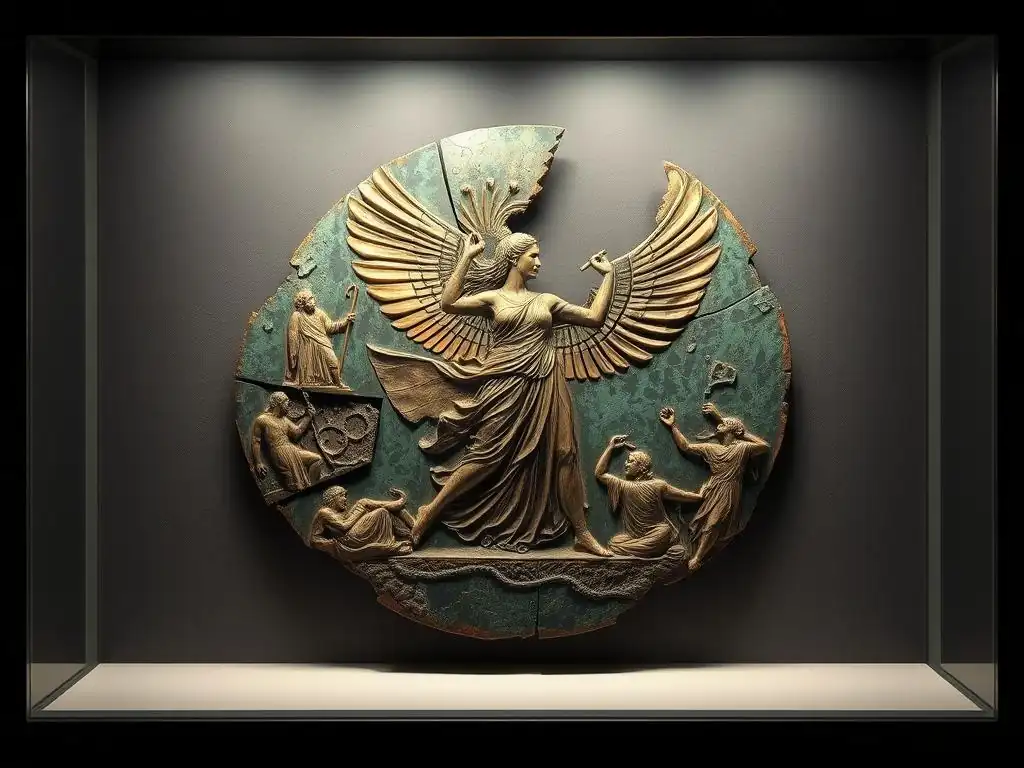
Oratory Skills and Their Importance in Athenian Politics
In the Athenian Assembly, where decisions were made directly by thousands of citizens, the ability to deliver compelling speeches was paramount for political success. Effective oratory was not merely a desirable skill; it was an essential tool for influencing public opinion, swaying votes, and guiding the city's policies. Citizens, including those without formal training, were expected to be able to articulate their views, and professional orators ( rhetores) often played significant roles in shaping debates.
The power of persuasion was central to the functioning of the Ekklesia. Speakers had to be skilled in constructing logical arguments, appealing to the emotions of the crowd, and establishing their credibility. This emphasis on persuasive speech fostered a highly articulate, argumentative, and often theatrical political culture, where the strength of an argument and the charisma of its delivery could determine the fate of significant proposals. This made persuasive rhetoric an integral component of Athenian Assembly citizen participation governance.
Prominent Speakers and Their Influence on Assembly Decisions: Pericles and Alcibiades
The history of the Athenian Assembly is replete with examples of influential orators whose words profoundly shaped the city's destiny. Pericles, a leading statesman during Athens' Golden Age (c. 461-429 BCE), was renowned for his eloquence and his ability to guide the Assembly towards his strategic vision. His famous Funeral Oration, though perhaps a literary reconstruction, exemplifies his capacity to inspire and unify the citizenry, influencing their decisions on major public works and military endeavors.
Conversely, Alcibiades, a controversial but charismatic figure during the Peloponnesian War, demonstrated the powerful, yet sometimes perilous, impact a single speaker could have. His captivating rhetoric in 415 BCE famously persuaded the Assembly to approve the disastrous Sicilian Expedition, despite warnings from more cautious generals like Nicias. This decision, driven largely by Alcibiades' ambitious promises, illustrates the immense sway that skilled orators could hold over the Athenian Assembly citizen participation governance, for better or worse.
The Art of Persuasion: Techniques Used in Athenian Political Discourse
Athenian political discourse was a sophisticated art, employing various rhetorical techniques to sway the Assembly. Orators often utilized logos (appeal to logic and reason), presenting factual arguments and rational justifications for their proposals. They also frequently employed pathos (appeal to emotion), stirring the audience's patriotism, fear, hope, or anger to garner support. Additionally, ethos (appeal to credibility and character) was crucial, as speakers sought to establish their trustworthiness and wisdom.
Debates in the Ekklesia were often vigorous and highly interactive. Orators would use historical examples, moral arguments, and promises of future benefit or warnings of impending disaster to influence the thousands of citizens present. The presence of sophists, who taught rhetoric, sometimes controversially, further highlights the importance placed on the art of persuasion. The dynamic interplay between speaker and audience, with citizens expressing approval or disapproval through shouts or applause, was a defining feature of Athenian Assembly citizen participation governance.
Limitations and Criticisms of the Athenian Assembly
The Exclusion of Women, Slaves, and Metics from Athenian Citizenry
Despite its revolutionary nature, the Athenian Assembly operated within significant limitations, most notably the systematic exclusion of the vast majority of the population from political life. Women, regardless of their social standing or wealth, were entirely denied citizenship and the right to participate in the Ekklesia. Similarly, the large population of slaves, estimated to be between 80,000 and 100,000 in 5th century BCE Athens, had no political rights whatsoever.
Furthermore, metics, the resident foreigners who often contributed significantly to Athens' economy and culture, were also excluded from citizenship and thus from the Assembly. This meant that less than 15-20% of the total population of Attica had the right to vote or participate in Athenian Assembly citizen participation governance. While common in ancient societies, this fundamental exclusion raises critical questions about the true breadth and inclusivity of Athenian "democracy" from a modern perspective.
While all eligible citizens technically possessed equal voting power in the Ekklesia, wealth and social status often translated into disproportionate influence. Wealthier citizens, particularly those from established families, often had the leisure time necessary to dedicate themselves fully to political life, attending meetings regularly and engaging in public discourse. Their extensive networks and financial resources could also subtly amplify their voices and support their political ambitions.
Moreover, certain public offices, even those selected by lot, sometimes implicitly favored the wealthier who could afford to take time away from their livelihoods. The practice of liturgies, where wealthy citizens voluntarily funded public works or festivals, also enhanced their prestige and could sway public opinion in their favor. This demonstrated that while direct citizen participation was the ideal, the realities of social hierarchy could still impact the true balance of power within Athenian governance.
Susceptibility to Demagoguery and Manipulation: The Sicilian Expedition
A significant criticism of the Athenian Assembly's direct democracy was its susceptibility to demagoguery and manipulation. With thousands of citizens voting directly on complex issues, the absence of robust checks and balances, independent expert advice, or a critical press meant that the Assembly could be swayed by charismatic but irresponsible leaders, known as demagogues. These individuals often appealed to the emotions and prejudices of the crowd rather than relying on sound reasoning or long-term strategic thinking.
The Sicilian Expedition (415-413 BCE) stands as a stark example of this vulnerability. Despite strategic warnings from experienced generals like Nicias, the Assembly, largely influenced by the ambitious and self-serving rhetoric of Alcibiades, voted for a massive and ultimately catastrophic invasion of Sicily. This decision led to the loss of thousands of Athenian lives and hundreds of ships, severely weakening Athens during the Peloponnesian War. This tragic episode highlights the potential perils of unchecked Athenian Assembly citizen participation governance when swayed by popular but flawed arguments.
The Legacy of the Athenian Assembly
Influence on Modern Democratic Systems
Despite its limitations, the Athenian Assembly's innovative concept of direct rule by the people laid foundational principles that profoundly influenced later democratic thought and practice. Ideas such as the rule of law, the principle of equality before the law ( isonomia), and the paramount importance of public debate and deliberation can be directly traced back to Athenian political practices. The very notion of sovereignty residing with the people, rather than a monarch or an elite, was a radical departure that echoed through centuries.
While modern democracies are predominantly representative, the Athenian model provided an early, tangible example of a political system where citizens actively shaped their collective destiny. This pioneering experiment captivated Enlightenment thinkers, such as Montesquieu and Rousseau, and subsequently influenced the framers of modern constitutions, including those of the United States and France. The enduring impact of Athenian Assembly citizen participation governance on the evolution of democratic ideals is undeniable.
Lessons from Athenian Direct Democracy for Contemporary Governance
The experience of Athenian direct democracy offers invaluable lessons for contemporary governance. On the positive side, it underscores the profound value of active citizen engagement, fostering civic responsibility and transparency in decision-making. The Athenian model demonstrates the potential for citizens to directly address complex issues, promoting a sense of ownership and accountability in political outcomes. It highlights the power of public discourse in shaping collective identity and purpose.
Conversely, the Athenian experience also provides crucial cautionary tales. It illustrates the dangers of unchecked popular opinion, the susceptibility to demagoguery, and the challenges inherent in managing large-scale direct participation without adequate safeguards. These lessons remain highly relevant in contemporary debates surrounding referendums, citizen initiatives, and the potential of digital democracy. Understanding the nuances of Athenian Assembly citizen participation governance helps inform modern approaches to democratic reform.
The Ekklesia as a Model for Citizen Participation: Referendums and Initiatives
The Athenian Ekklesia serves as a historical precedent for modern forms of direct citizen participation in governance, particularly referendums and citizen initiatives. In various contemporary democracies, citizens are empowered to directly vote on specific legislative proposals or constitutional amendments, bypassing representative bodies. For example, in Switzerland, citizens frequently participate in national and local referendums on a wide range of policy issues, mirroring the direct legislative power exercised by the Athenian Assembly.
Similarly, citizen initiatives allow a certain number of citizens to propose new laws or constitutional changes, which are then put to a popular vote. While the scale and mechanisms differ significantly from ancient Athens, these modern tools embody the spirit of direct democracy where citizens have a direct say in shaping laws and policies. They represent a continuation of the principle of direct rule by the people that was so central to the Athenian Assembly.
Archaeological Evidence of the Ekklesia
Excavations at the Pnyx: Uncovering the Assembly Site
Archaeological investigations at the Pnyx hill have provided invaluable tangible evidence of the Athenian Assembly's physical setting. Extensive excavations, notably by the American School of Classical Studies at Athens since the early 19th century, have systematically uncovered the various phases of the site's development. These include the rock-cut seating areas, the prominent speaker's platform (bema) carved directly into the bedrock, and the retaining walls that supported the terraced seating.
The archaeological findings at the Pnyx confirm its long-standing use as the primary meeting place for the Assembly, from its earliest form in the 6th century BCE to its final, more formalized layout in the 4th century BCE. The remains allow scholars to accurately reconstruct the layout and estimated capacity of the meeting area, with the final phase (Pnyx III) believed to have accommodated up to 6,000 citizens. These physical remnants offer a direct connection to the space where Athenian Assembly citizen participation governance unfolded.
Beyond the Pnyx itself, numerous artifacts unearthed in Athenian excavations provide direct insights into the practical workings of the Ekklesia and broader political life. Thousands of ostraca (pottery shards inscribed with names) have been discovered, particularly in the Kerameikos and Agora. These fragments, bearing names like Themistocles, Aristides, and Pericles, are direct evidence of the ostracism procedure, illuminating how citizens exercised this unique power to exile individuals.
Another crucial artifact is the klepsydra, or water clock. Fragments of these devices, used to time speeches in the courts and likely in some Assembly debates, have been found. The klepsydra ensured fairness in public discourse by limiting speaking time, reflecting the meticulous organization behind Athenian democratic processes. These archaeological finds, from voting shards to time-keeping devices, vividly illustrate the mechanisms that facilitated Athenian Assembly citizen participation governance.
Reconstructing the Athenian Assembly Through Archaeological Research
Archaeological research plays a critical role in reconstructing the physical and logistical aspects of the Athenian Assembly, complementing literary and epigraphic sources. By meticulously excavating and analyzing sites like the Pnyx, archaeologists can visualize how thousands of citizens gathered, moved, and deliberated. For instance, the layout of the entrances and exits, the positioning of the bema, and the arrangement of seating all contribute to understanding the practical flow and organization of Assembly meetings.
This interdisciplinary approach, combining material evidence with textual accounts, allows for a more comprehensive and nuanced understanding of how direct democracy functioned on a practical level. From the acoustics of the Pnyx to the simple tools of voting and speech timing, archaeological findings deepen our appreciation for the scale and sophistication of Athenian Assembly citizen participation governance, bringing the ancient political process to life.
Conclusion: The Enduring Significance of Citizen Participation in Athenian Governance
The Athenian Assembly, or Ekklesia, stands as a monumental achievement in the history of political thought and practice. It was a groundbreaking experiment in direct democracy, empowering thousands of ordinary citizens to directly shape the laws, foreign policy, and leadership of their city-state. Despite its inherent limitations, such as the exclusion of women, slaves, and metics, the Ekklesia represented an unparalleled degree of citizen participation in governance for its era.
Its legacy profoundly influenced subsequent democratic ideals, laying foundational principles that continue to resonate in modern political systems. The lessons learned from the Ekklesia, both its triumphs in fostering civic engagement and its vulnerabilities to demagoguery, remain highly relevant for contemporary debates on democratic reform and the future of citizen involvement. Through its pioneering spirit, the Athenian Assembly solidified its place as an enduring model for the power and complexities of direct citizen participation governance.
Frequently Asked Questions
How did the Athenian Assembly function in terms of citizen participation?
The Athenian Assembly, or Ekklesia, allowed all male citizens to participate directly in political decision-making. They debated and voted on laws, decrees, and policies, making it a direct democracy.
What were the primary responsibilities of the Athenian Assembly?
The Assembly held significant power, responsible for declaring war, electing magistrates, approving laws, and overseeing foreign policy. Their decisions profoundly impacted Athenian governance and shaped the city-state's trajectory.
Who was eligible to participate in the Athenian Assembly, and were there any restrictions?
Any male citizen of Athens, typically over the age of 18, could attend and vote in the Assembly. Slaves, women, and resident aliens (metics) were excluded from participation.
How frequently did the Athenian Assembly meet, and where did these meetings take place?
The Assembly typically met around 40 times per year, often on the Pnyx hill, a designated open-air space. These frequent meetings ensured regular citizen engagement in governance.
What role did rhetoric and debate play in the decision-making process of the Athenian Assembly?
Rhetoric was crucial. Persuasive speakers could sway votes through compelling arguments. Effective communication was central to influencing the Assembly's decisions and shaping Athenian policy.
Final Reflection: The Enduring Echoes of Athenian Democracy
The exploration of the Athenian Assembly, as we've seen, isn't merely a historical exercise; it's a vital reminder of the power and potential of direct citizen participation in governance. In a world increasingly grappling with questions of representation, accountability, and the erosion of trust in institutions, the lessons learned from the Ekklesia resonate with profound urgency. The successes and failures of this ancient experiment offer invaluable insights for shaping more inclusive and responsive political systems today.
The legacy of the Athenian Assembly continues to shape our understanding of democracy, influencing movements for social justice and participatory governance around the globe. Witnessing the dedication and engagement of Athenian citizens, even with its inherent limitations, underscores the fundamental human desire to have a voice in shaping one's own destiny. The price good men pay for indifference to public affairs is to be ruled by evil men.
- Plato. This quote, though critical of Athenian society, highlights the crucial role of citizen engagement in safeguarding the integrity of any political system.
As we conclude this journey through the heart of Athenian democracy, I invite you to reflect on the principles of citizen participation and governance that we've explored. Consider how you can actively engage in your own community, contribute to informed decision-making, and champion the ideals of a more just and equitable society. Let the spirit of the Athenian Assembly inspire you to become a more informed, engaged, and empowered citizen, shaping the future with wisdom and courage.
Unearth Your Inner Athenian: Shape the Future!
Thank you for delving into the fascinating world of the Athenian Assembly! We hope you've gained a newfound appreciation for the power of direct citizen participation. Now, it's time to channel that ancient spirit into modern action.
- Actively participate in your local government. Attend community meetings, voice your opinions on important issues, and be a force for positive change, just like an Athenian citizen!
- Explore online forums and discussions related to civic engagement and responsible citizenship. Share your insights and connect with like-minded individuals striving to build a better society.
- Surprise yourself: Research and write a mock law that you believe would improve your community, and share it with your local representatives!
How will you use what you've learned about Athenian democracy to make your voice heard today?