Sneferu's Pyramids at Dahshur: The Bent and Red Pyramids Explored
🌟 Discover the fascinating Sneferu pyramids exploration techniques used at Dahshur, where the Bent and Red Pyramids reveal innovative construction methods and…
Read article
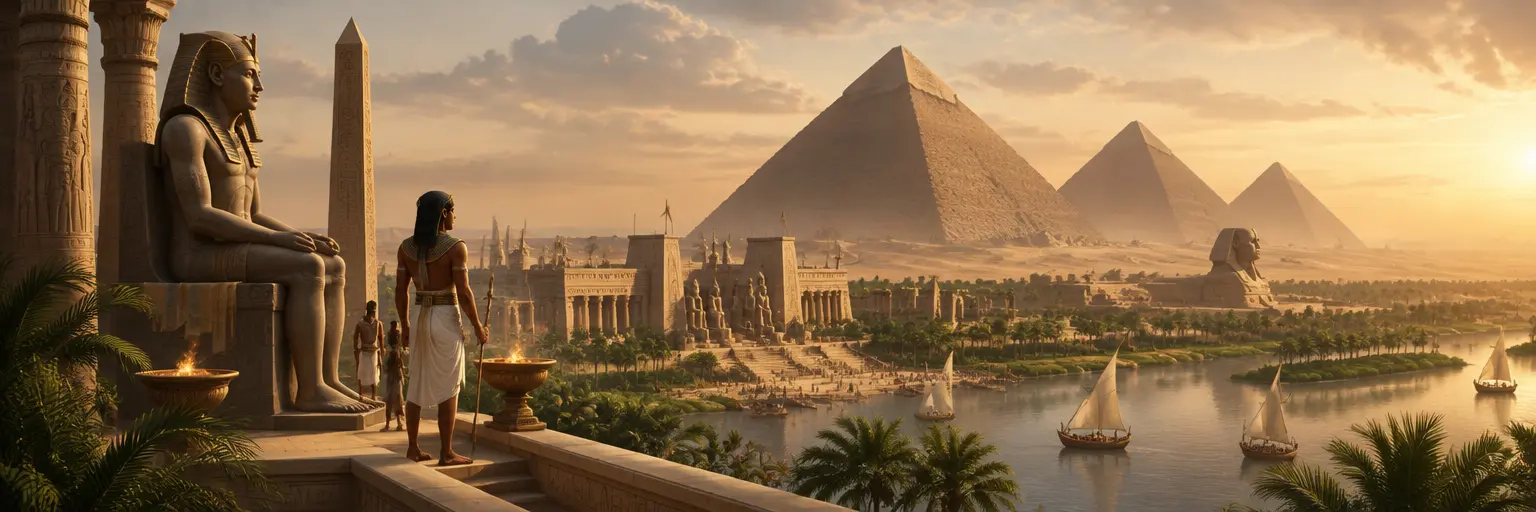
Step back in time to the Golden Age of the Nile, where colossal limestone monuments pierced the desert sky and god-kings ruled with absolute divine authority. The Old Kingdom (c. 2686–2181 BCE) was the era that birthed the Great Pyramids of Giza, the only surviving wonder of the ancient world, and cemented the pharaoh’s role as both earthly sovereign and celestial intermediary. Here, imhotep’s step pyramid at Saqqara evolved into the smooth-sided marvels we revere today, while sophisticated solar boat pits and valley temples revealed a culture obsessed with the afterlife and cosmic order (ma’at). From the 4th Dynasty’s engineering genius—Khufu, Khafre, and Menkaure—to the administrative brilliance of the 5th and 6th Dynasties, this period forged the template for Egyptian statehood, art, and religion. Discover how quarry marks, worker villages, and the Pyramid Texts illuminate not just royal power, but the daily lives of thousands who built for eternity. Perfect for enthusiasts of archaeology, ancient engineering, and monumental architecture, this deep dive unearths the rituals, political intrigue, and divine kingship that defined a civilization’s most monumental chapter.
🌟 Discover the fascinating Sneferu pyramids exploration techniques used at Dahshur, where the Bent and Red Pyramids reveal innovative construction methods and…
Read article
🌅 Explore how the Heliopolitan cosmogony shaped Old Kingdom pyramid theology, revealing the profound influence of Heliopolis pyramid theology influence on Egyptian…
Read articleStep into the golden era of ancient Egypt, the Old Kingdom (c. 2686–2181 BCE), often called the “Age of the Pyramids.” This subcategory on ArchaeologyHub.org offers a detailed, SEO-rich examination of the Dynasty 3 through Dynasty 6, focusing on monumental architecture, theocratic kingship, and the socio-economic engines that built the Giza plateau. Here, you will uncover how pharaohs like Sneferu and Khufu transformed limestone into eternal statements of power, and how priests, scribes, and laborers sustained a civilization that still fascinates archaeologists and historians worldwide. Dive into artifact profiles, excavation reports, and interpretive analyses tailored for enthusiasts, students, and professionals.
This section traces the architectural leap from early mudbrick mastabas at Saqqara to the first true smooth-sided pyramid—the Red Pyramid of Sneferu. You’ll learn how the Step Pyramid of Djoser (Dynasty 3) laid the blueprint for royal burial, and how subsequent pharaohs experimented with angles, internal chambers, and casing stones to achieve structural perfection. Excavation notes reveal that the transition was not linear but marked by engineering failures, such as the Bent Pyramid’s angle correction, offering a rare glimpse into ancient problem-solving.
Expect detailed timeline breakdowns of each major pyramid—Meidum, Dahshur, and Giza—with archaeometric data on limestone sourcing, ramp theories, and workforce logistics. We also include recent discoveries from the Giza Plateau Mapping Project, showing that pyramid builders were not slaves but paid laborers with organized camps and bakeries. This content is optimized for keywords like “pyramid construction techniques,” “Old Kingdom architecture,” and “Sneferu bent pyramid,” ensuring you grasp both the monumental scale and the human ingenuity behind these UNESCO World Heritage wonders.
Here, we dissect the divine status of the pharaoh—considered the earthly incarnation of Horus and the son of Ra—whose authority permeated every pyramid, temple, and decree. You’ll explore the Pyramid Texts, the oldest religious writings in the world, found in the tombs of Unas and Teti, which reveal spells for resurrection and the afterlife. This subcategory also highlights the royal cult complexes attached to each pyramid, where priests performed daily offerings to sustain the king’s spirit (Ka).
Read about the succession crises and regional power shifts that marked the late Old Kingdom, including the reigns of Pepi II and the mysterious Queen Khentkaus. Artifact profiles include mudbrick pyramid models, royal statues, and tomb reliefs depicting the Heb Sed festival—the jubilee that reaffirmed pharaonic vigor. Whether you’re researching “Old Kingdom pharaoh list” or “ancient Egyptian royal rituals,” this section integrates archaeological evidence with textual analysis to show how kingship shaped daily life, economy, and even climate adaptation during the arid Nile Valley.
Contrary to cinematic myths, the pyramid builders were a well-fed, organized workforce, not enslaved captives. This section uses excavated worker villages at Heit el-Ghurab (the “Lost City of the Pyramid Builders”) to explain the bureaucracy of grain rations, medical care, and specialized trades—from stone masons to copper toolmakers. You’ll discover how the state’s redistribution economy collected taxes in grain, cattle, and linen, then channeled resources into large-scale projects that unified Upper and Lower Egypt.
Archaeological evidence from ostraca (inscribed potsherds) and seal impressions reveals complex administrative hierarchies, including the role of the vizier, royal overseers, and “director of every work of the king.” We also analyze the seasonal labor system, where farmers joined crews during the Nile’s inundation, and the supply chain for cattle, fish, and bread—a logistical feat rivaling modern mega-projects. For keyword-rich learning, we cover “pyramid workers’ diet,” “Old Kingdom economy,” and “ancient Egyptian labor organization,” while debunking popular misconceptions about slavery.
Beyond the royal sphere, this subcategory investigates regional nomarchs (provincial governors) whose decorated rock-cut tombs at Beni Hasan and Qubbet el-Hawa illustrate the growing power of local elites. You’ll see how private mortuary cults and estate records on tomb walls provide census-like data on cattle counts, land ownership, and trade networks. This era also saw the rise of the sun temples dedicated to Ra, especially under Dynasty 5, which shifted some royal focus from pyramids to solar obelisks.
Finally, we analyze the climate and political stressors—prolonged droughts, reduced Nile floods, and the “Crisis of the 22nd Century BCE”—that led to the First Intermediate Period. This section is rich with artifact profiles on false doors, offering tables, and funerary models of boats and granaries. We integrate recent paleoclimatology studies with textual records from the Autobiography of Harkhuf to explain why the Old Kingdom’s centralized power collapsed. Keywords like “Old Kingdom decline causes,” “provincial tombs Egypt,” and “sun temple Dynasty 5” are thoroughly covered for advanced research.
Learn how modern archaeology is rewriting the Old Kingdom narrative through non-invasive surveys, drone photogrammetry, and DNA analysis of mummified remains. This section highlights the ScanPyramids Project, which used muon tomography to detect the “Big Void” in the Great Pyramid, and high-resolution satellite imaging that identifies unexcavated mastaba fields. We also showcase stratigraphic digging methods applied at Dahshur and Abu Sir, revealing undisturbed burial shafts containing sarcophagi and canopic jars.
You’ll explore how ceramic typology and pottery seriation help date Old Kingdom strata, and how flotation techniques recover botanical residues from offering pots—evidence of wine, figs, and beer. Interviews with field directors and 3D reconstructions of pyramid complexes provide a behind-the-scenes look at conservation challenges, including tourist impact and salt weathering. This SEO-focused area covers “archaeological technology Egypt,” “Giza void discovery,” and “Old Kingdom excavation reports,” ensuring you grasp how science and heritage management intersect to preserve these iconic monuments for future generations.
The Old Kingdom is generally dated from c. 2686 to 2181 BCE, covering Dynasties 3–6. Some scholars extend it to Dynasty 8, but the classic “Age of Pyramids” peaks during Dynasties 4–5, with the Giza pyramids built by Khufu, Khafre, and Menkaure.
After Dynasty 5, pyramids became smaller and less durable due to economic constraints, lower-quality limestone, and the rising power of the sun cult and provincial elites. The state’s central treasury also faced increased costs from temple endowments and administrative expansion.
No. Archaeological evidence from worker cemeteries, such as the Baker’s village at Giza, shows well-fed, honored laborers who received medical care and bread. They were likely conscripted seasonal workers and skilled artisans, not slaves in the modern sense.
These are the oldest known religious texts in Egypt, carved on the interior walls of late Old Kingdom pyramids (starting with Unas). They contain spells for protecting the pharaoh’s mummy, ensuring rebirth, and navigating the afterlife—a foundation for later Coffin Texts and the Book of the Dead.
They use a combination of pottery seriation, stratigraphy, radiocarbon dating on organic materials (e.g., charcoal or reed ropes), and textual inscriptions like names of kings or officials. Recent C-14 models have helped refine the timeline, though some dates still have a margin of error.







