
The Heliopolitan Cosmogony and its Influence on Old Kingdom Pyramid Theology

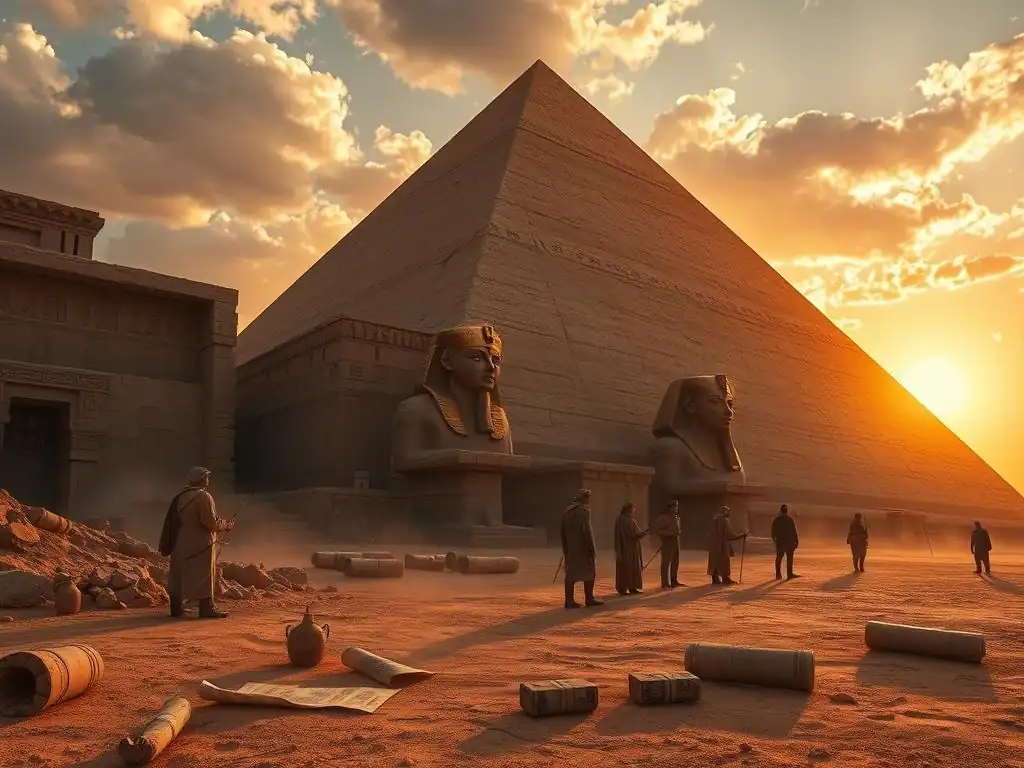
Welcome to ArchaeologyHub.org, your portal to uncovering the secrets of the past. Ever wondered how ancient beliefs shaped monumental architecture? Delve into the fascinating world of Heliopolis pyramid theology influence and discover how the Heliopolitan Cosmogony profoundly impacted the design and purpose of Old Kingdom pyramids. Unravel the mysteries and explore the intricate connections between faith, power, and the very stones that shaped an era. Prepare to journey back in time and explore the architectural echo of creation myths.
- Introduction: Understanding Heliopolis' Role in Old Kingdom Beliefs
- The Heliopolitan Cosmogony: Creation Myths and Divine Genealogy
- Pyramid Texts: Unveiling Old Kingdom Theology
- Heliopolitan Influence on Old Kingdom Royal Ideology
- Examining Specific Heliopolitan Concepts in Pyramid Theology
- Contrasting Heliopolitan Theology with Other Contemporary Beliefs
- Case Studies: Examples of Heliopolitan Influence in Specific Pyramids
- The Legacy of Heliopolitan Cosmogony in Ancient Egypt
- Conclusion: The Profound Impact of Heliopolis on Pyramid Theology
-
Frequently Asked Questions
- What is the Heliopolitan Cosmogony?
- How did the Heliopolitan Cosmogony influence Old Kingdom pyramid theology?
- What specific aspects of pyramid construction reflect Heliopolitan beliefs?
- Where was Heliopolis located, and what was its significance?
- Did the "Heliopolis pyramid theology influence" extend beyond the Old Kingdom?
- Final Reflection: Echoes of Creation in Stone
- Unearth Ancient Wisdom: Your Journey into Cosmic Archaeology Begins Now!
Introduction: Understanding Heliopolis' Role in Old Kingdom Beliefs
Setting the Stage: Heliopolis as a Center of Egyptian Cosmology
Heliopolis, known to the ancient Egyptians as Iunu, meaning "The Pillar," stood as one of the most significant religious centers in ancient Egypt, particularly during the Old Kingdom period (circa 2686–2181 BC). Located north of modern Cairo, its prominence stemmed from its status as the primary cult center for the sun god Ra, or more specifically, Atum-Ra, the creator god of the Heliopolitan cosmogony. This city became the intellectual heart of Egyptian theological thought, where priests developed sophisticated creation myths that explained the origins of the cosmos, gods, and humanity.
The theological doctrines propagated from Heliopolis permeated various aspects of Egyptian society, from daily rituals to the grandest state-sponsored projects. Its priests, often considered the most influential intellectual class, meticulously documented and refined their understanding of the divine order. This foundational role ensured that the Heliopolitan viewpoint, particularly its creation narrative and the concept of the sun god's supremacy, would become a dominant force in shaping the religious and political landscape of Old Kingdom Egypt, profoundly impacting the development of its unique pyramid theology.
The Significance of Pyramid Theology in the Old Kingdom
Pyramid theology refers to the intricate system of beliefs and practices surrounding the construction and purpose of the pyramids during the Old Kingdom. These monumental structures, primarily built as tombs for pharaohs, were far more than mere burial sites; they were perceived as machines for resurrection, designed to facilitate the deceased king's ascent to the divine realm and ensure his eternal existence. The theology embedded within these pyramids reflected the prevailing understanding of the afterlife, the pharaoh's divine nature, and the cosmic order.
The development of pyramid theology was intrinsically linked to the consolidation of royal power and the state's religious ideology. Through the elaborate rituals and the textual content inscribed within, the pyramids served as a physical manifestation of the pharaoh's journey from earthly ruler to a deified being among the stars and gods. This theology sought to guarantee the king's successful transformation into an akh, an effective spirit, capable of influencing the living and maintaining cosmic balance, highlighting the profound Heliopolis pyramid theology influence.
Exploring the Connection: Heliopolis' Influence on Royal Mortuary Practices
The connection between Heliopolitan cosmogony and Old Kingdom royal mortuary practices is profound and multifaceted. The theological framework developed in Heliopolis provided the conceptual blueprint for the pharaoh's journey into the afterlife, directly influencing the architecture, orientation, and textual content of the pyramids. The emphasis on the sun god Ra and the solar cycle of rebirth became central to the pharaoh's post-mortem destiny.
Specifically, the Heliopolitan belief in the pharaoh as the "Son of Ra" legitimized the king's earthly rule and his divine ascension. This ideology dictated that the pyramid itself should serve as a pathway to the heavens, aligning the king with the sun's eternal journey. Consequently, the Heliopolis pyramid theology influence manifested in architectural alignments, the symbolic use of pyramidions, and most notably, in the content of the Pyramid Texts, which are replete with spells designed to facilitate the pharaoh's solar resurrection and union with the creator god.
The Heliopolitan Cosmogony: Creation Myths and Divine Genealogy
The Primordial Waters: Nun and the Dawn of Creation
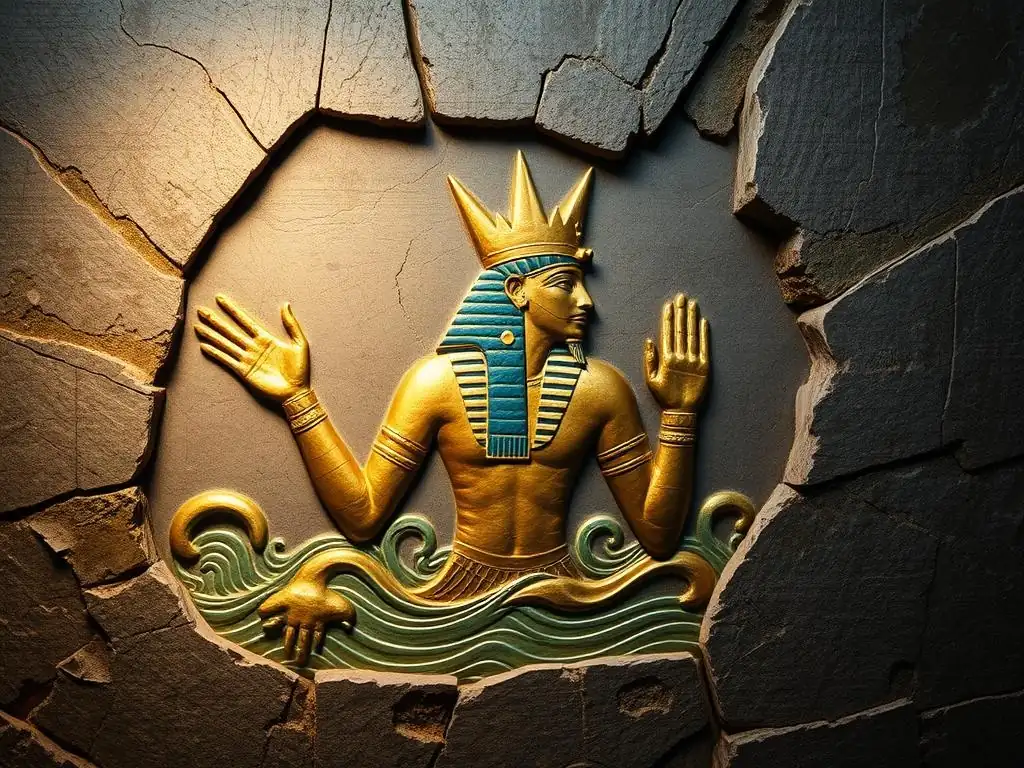
According to the Heliopolitan cosmogony, before creation, there existed only Nun, the boundless, dark, and chaotic primordial waters. Nun represented the inert, undifferentiated potential from which all existence would eventually emerge. It was not merely water in the earthly sense, but rather the formless void that encompassed all that was not yet. This concept of a primeval ocean is a recurring theme in many ancient creation myths, but in Heliopolis, Nun was the passive, formless entity from which the active principle of creation would spontaneously arise.
From these primordial waters, a primeval mound, often referred to as the Benben stone, spontaneously emerged. This mound was the first dry land, symbolizing the initial act of separation and the beginning of order from chaos. This emergence of the Benben mound from Nun was the critical moment that allowed for the subsequent acts of creation to unfold, providing a stable platform for the self-created god who would initiate the cosmos.
Atum: The Self-Created God of Heliopolis
The Heliopolitan creation myth centers around Atum, the "All" or "The Complete One," who emerged from the chaotic waters of Nun onto the primeval Benben mound. Atum was a self-created god, often depicted as having brought himself into existence through an act of masturbation or by spitting. This unique auto-creation underscored his supreme power and his role as the sole origin of all subsequent divine and earthly beings. He was the first divine entity, containing within himself the potential for all life.
Atum's act of creation involved separating the first pair of gods from his own essence: Shu, the god of air, and Tefnut, the goddess of moisture. This initial act of separation established the fundamental elements of the cosmos and set the stage for the generation of the rest of the Ennead. The concept of Atum's self-generation and his subsequent procreation became a cornerstone of Heliopolitan theology, emphasizing a linear, genealogical progression of divine power that directly impacted the understanding of pharaonic succession and divine legitimacy, demonstrating a core aspect of Heliopolis pyramid theology influence.
The Ennead: The Nine Gods of Heliopolitan Theology
The Ennead, or the "Great Nine," is the core pantheon of Heliopolitan theology, representing the first nine gods to emerge from creation. Following Atum's self-creation and the generation of Shu and Tefnut, this divine pair then produced Geb, the god of the earth, and Nut, the goddess of the sky. This second generation of gods established the physical world, with Nut arching over Geb, separating the heavens from the earth.
Geb and Nut, in turn, gave birth to the final four members of the Ennead: Osiris, Isis, Seth, and Nephthys. These four gods are central to the Osirian myth cycle, which deals with kingship, death, resurrection, and the afterlife. The complete Ennead thus forms a genealogical tree of divine power, illustrating the structured and orderly progression of creation from a single, self-generated source. This divine lineage provided a cosmic precedent for royal succession and the orderly transmission of power, reinforcing the Heliopolis pyramid theology influence on the pharaoh's divine right to rule.
The Role of Ra in the Heliopolitan Cosmogony
While Atum was the initial self-created god, Ra emerged as the preeminent solar deity within the Heliopolitan system, eventually becoming synonymous with Atum as Atum-Ra. Ra was the personification of the sun, responsible for the daily cycle of light and life. His journey across the sky in the solar bark, from east to west, and his nightly passage through the Duat (underworld), symbolized the cycle of death and rebirth, a concept fundamental to Egyptian afterlife beliefs.
Ra's daily resurrection from the underworld was seen as the ultimate triumph over chaos and death, offering a powerful metaphor for the pharaoh's desired transformation and eternal existence. As the sun god, Ra was the king of the gods and the sustainer of cosmic order (Ma'at).
The pharaoh, by virtue of being the "Son of Ra," was believed to participate in this divine cycle, ensuring his own rebirth and continued reign in the afterlife. This identification with Ra was a crucial aspect of the Heliopolis pyramid theology influence, tying the pharaoh's destiny directly to the most powerful deity in the Egyptian pantheon.
Pyramid Texts: Unveiling Old Kingdom Theology
Deciphering the Pyramid Texts: A Glimpse into Royal Afterlife Beliefs
The Pyramid Texts represent the oldest known corpus of religious texts from ancient Egypt, providing an unparalleled insight into Old Kingdom royal afterlife beliefs. These texts, consisting of a vast collection of spells, hymns, and incantations, were first inscribed on the internal walls of the burial chambers and antechambers of the pyramids of late 5th Dynasty pharaoh Unas (circa 2375-2345 BC) and subsequent Old Kingdom rulers like Teti, Pepi I, Merenre, and Pepi II. Unlike later funerary texts, they were exclusively for the king and, later, queens.
The purpose of these texts was manifold: to protect the deceased pharaoh from various dangers in the afterlife, to provide the necessary knowledge and tools for navigating the perilous journey through the Duat, and crucially, to ensure his successful transformation into an akh (an effective and glorious spirit) and his ultimate union with the gods, particularly Ra. The approximately 700 distinct utterances found across these pyramids reveal a complex and evolving understanding of the cosmos and the king's place within it, heavily reflecting Heliopolis pyramid theology influence.
The Function of Pyramid Texts: Ensuring Royal Ascent and Divine Union
The primary function of the Pyramid Texts was to act as a divine guidebook and a magical arsenal for the deceased pharaoh, guaranteeing his royal ascent to the heavens and his divine union with the sun god Ra. These spells were not merely prayers but were considered potent incantations that, when recited or inscribed, would magically enable the pharaoh to overcome obstacles, identify with various deities, and transform into celestial beings. For instance, many spells explicitly describe the pharaoh flying to the sky like a falcon or a duck, or ascending on a ladder.
A significant portion of the texts focuses on the pharaoh joining Ra in his solar bark as it traverses the sky, or becoming one with the imperishable circumpolar stars, which were believed to be the eternal dwelling place of the gods. The texts also contain rituals for purification, offerings to the gods, and instructions for navigating the dangers of the underworld. This meticulous provision for the king's journey underscores the belief that his successful afterlife was paramount for the continued well-being of Egypt itself, an integral component of the Heliopolis pyramid theology influence.
The Pyramid Texts vividly describe the pharaoh's post-mortem journey, which was envisioned as a complex and challenging passage through the Duat, the underworld, before achieving immortality. This journey was not a passive one; the texts portray the pharaoh as actively engaging with the divine landscape, asserting his power, and utilizing the spells to overcome malevolent forces and gain access to the divine realm. The Duat was populated by both helpful and dangerous entities, and the texts provided the king with the necessary knowledge to appease or subdue them.
Ultimately, the goal of this arduous journey was to achieve immortality and eternal existence, often through identification with Ra or Osiris. While earlier texts emphasize a solar ascent to join Ra among the stars, later texts show an increasing integration of Osirian beliefs, where the pharaoh also becomes Osiris, the resurrected king of the underworld. This dual destiny – solar and Osirian – ensured the pharaoh's complete transformation and eternal reign, highlighting the multifaceted Heliopolis pyramid theology influence that adapted to incorporate new theological developments while maintaining its core solar emphasis.
Heliopolitan Influence on Old Kingdom Royal Ideology
The concept of the pharaoh as the "Son of Ra" (Sa-Re) became a cornerstone of Old Kingdom royal ideology, particularly from the 4th Dynasty onwards. This title was not merely ceremonial; it asserted the pharaoh's direct divine lineage from the sun god himself, thereby legitimizing his rule and elevating his status above mere mortals. This direct connection to the creator deity, championed by Heliopolitan priests, provided an unassailable foundation for the pharaoh's authority, positioning him as the earthly representative and embodiment of cosmic order.
This divine identification profoundly shaped the pharaoh's role in the state religion. He was not just a king but a living god, responsible for maintaining Ma'at (cosmic balance and justice) on Earth, just as Ra maintained it in the heavens. This ideology meant that the pharaoh's well-being and successful transition to the afterlife were crucial for the prosperity of Egypt. The Heliopolis pyramid theology influence cemented the pharaoh's position as the nexus between the divine and human realms, making his mortuary cult a matter of national importance.
Solar Symbolism in Pyramid Architecture: Aligning with Heliopolitan Beliefs
The architectural design and orientation of Old Kingdom pyramids are replete with solar symbolism, directly reflecting Heliopolitan beliefs. The very shape of the pyramid, rising from the earth to a point, was seen as a monumental representation of the primeval Benben mound, the first land to emerge from the waters of Nun at Heliopolis. This shape symbolized creation and resurrection, a ramp for the deceased pharaoh to ascend to the heavens and join the sun god.
Furthermore, the precise astronomical alignments of the pyramids often emphasized their connection to the sun and stars. While the Great Pyramid of Giza (Khufu, circa 2589–2566 BC) is remarkably aligned with the cardinal points, its eastern face and causeway were oriented towards the rising sun, symbolizing the pharaoh's rebirth with Ra. The pyramidion, the capstone of the pyramid, was typically made of polished white limestone or even electrum (a gold-silver alloy), designed to reflect the sun's rays, making the pyramid itself a beacon of solar power and a direct manifestation of Heliopolis pyramid theology influence.
The Benben Stone: A Symbol of Creation and Royal Power in Pyramid Complexes
The Benben stone, originating from Heliopolitan creation myths as the primeval mound upon which Atum first stood, became a potent symbol of creation, rebirth, and royal power within Old Kingdom pyramid complexes. In its original form, it was likely a conical or pyramidal stone located within the main temple of Ra at Heliopolis. Its significance lay in its representation of the first solid ground emerging from the primordial waters, a symbol of life beginning from chaos.
This powerful symbol was physically manifested in the pyramidion, the capstone of the pyramid. By crowning the massive pyramid with a miniature Benben, the pharaoh's tomb was directly linked to the very act of creation, ensuring his participation in the eternal cycle of rebirth and his identification with the creator god Atum-Ra. The presence of the Benben stone, whether actual or symbolic, within the mortuary complexes underscored the profound Heliopolis pyramid theology influence on the architectural and theological design of these monumental royal tombs, solidifying the king's connection to the origins of the cosmos.
Examining Specific Heliopolitan Concepts in Pyramid Theology
The Concept of Ma'at: Cosmic Order and Divine Justice
The concept of Ma'at, embodying truth, justice, balance, and cosmic order, was a fundamental principle deeply integrated into Heliopolitan theology and, consequently, into Old Kingdom pyramid theology. Ma'at was personified as a goddess, often depicted with an ostrich feather on her head. Her existence was essential for the universe to function correctly, preventing the return to primordial chaos (Isfet). Ra himself was believed to uphold Ma'at through his daily journey, and the pharaoh, as Ra's earthly representative, was responsible for maintaining Ma'at in Egypt.
In pyramid theology, the pharaoh's successful journey through the afterlife and his union with the gods were contingent upon his adherence to Ma'at during his earthly life. The Pyramid Texts contain spells that emphasize the pharaoh's righteousness and his ability to pass the judgment of the gods. His role was not only to rule but to ensure the cosmic order, mirroring the divine blueprint set forth by Ra. This vital concept highlights how Heliopolis pyramid theology influence extended beyond mere creation myths to encompass the ethical and moral framework governing both divine and human existence.
The Importance of Rebirth: Solar Cycle and Royal Resurrection
The cyclical nature of the sun, its daily death at sunset and glorious rebirth at dawn, served as the paramount metaphor for resurrection and eternal life in Heliopolitan theology, profoundly shaping Old Kingdom pyramid theology. The pharaoh's afterlife journey was explicitly modeled on Ra's solar cycle. Just as the sun god regenerated each morning, the deceased king was expected to undergo a similar transformation, overcoming death to achieve a renewed and eternal existence.
This emphasis on rebirth permeated the Pyramid Texts, with numerous spells designed to facilitate the pharaoh's resurrection and his participation in the solar bark's journey across the sky and through the Duat. The pyramid itself was conceived as a vehicle or a launching pad for this solar ascent, ensuring that the pharaoh would rise with the sun, forever renewed. This core belief in solar rebirth, central to Heliopolis, represents a critical aspect of Heliopolis pyramid theology influence, providing the framework for the pharaoh's eternal destiny.
The Role of Osiris: Integrating Osirian Beliefs into Heliopolitan Framework
While Heliopolitan theology primarily focused on Ra and solar resurrection, the rising prominence of the Osiris cult by the late Old Kingdom led to an intriguing integration of Osirian beliefs into the existing framework of pyramid theology. Osiris, the god of the underworld, vegetation, and resurrection through judgment, offered a different path to the afterlife compared to the solar ascent championed by Heliopolis. Initially, these two theological systems might have appeared distinct, but the Pyramid Texts demonstrate a gradual syncretism.
By the 6th Dynasty, the Pyramid Texts show spells where the pharaoh not only joins Ra in the sky but also becomes identified with Osiris, the archetypal deceased king who is resurrected. This dual identification allowed the pharaoh to benefit from both the solar path to eternal life (union with Ra) and the chthonic path of regeneration and kingship in the underworld (union with Osiris). This flexibility highlights the adaptive nature of Egyptian religious thought and the pervasive Heliopolis pyramid theology influence that could absorb and integrate new theological concepts while maintaining its foundational solar emphasis.
Contrasting Heliopolitan Theology with Other Contemporary Beliefs
Heliopolis vs. Hermopolis: Competing Creation Myths
Ancient Egypt was home to several significant religious centers, each developing its own distinctive cosmogony. While Heliopolis championed the creation by Atum and the Ennead, Hermopolis, a city in Middle Egypt, developed its own powerful creation myth centered on the Ogdoad, a group of eight primordial deities. These eight gods were divided into four pairs of male and female principles: Nun and Naunet (primordial water), Heh and Hehet (infinity), Kek and Keket (darkness), and Amun and Amaunet (hiddenness).
Unlike Atum's self-creation from Nun, the Hermopolitan myth posited that the Ogdoad, through their interaction in the primeval waters, generated the primeval mound or a lotus flower from which the sun god (Ra) or the creator god (often Thoth) emerged. This difference in the initial creative act and the nature of the primordial deities represented a distinct theological perspective.
While Heliopolis emphasized a linear, genealogical creation from a single source, Hermopolis focused on the emergence from a state of primordial chaos personified by eight forces. Despite these differences, both cosmogonies ultimately led to the emergence of the sun god, demonstrating a shared underlying reverence for solar power, even if the Heliopolis pyramid theology influence was dominant in royal contexts.
The Evolution of Religious Thought: From Heliopolis to Later Theologies
The Old Kingdom saw Heliopolitan theology as the dominant state religion, particularly in royal mortuary practices. However, Egyptian religious thought was dynamic and evolved significantly over millennia. While the core concepts of Heliopolis, such as the sun god Ra, the Ennead, and the principle of Ma'at, remained fundamental throughout Egyptian history, later dynasties witnessed the rise of new theological centers and deities that adapted or integrated these earlier beliefs.
For instance, during the Middle Kingdom, Thebes rose to prominence, and its local god Amun gained significant power, eventually becoming Amun-Ra through syncretism with the Heliopolitan sun god. Similarly, the New Kingdom saw the brief but radical monotheistic experiment of Atenism under Akhenaten, which, while rejecting other gods, was still a solar cult, demonstrating the enduring importance of the sun. This continuous evolution illustrates that while the Heliopolis pyramid theology influence was profound, it was also foundational, providing the bedrock upon which subsequent, more complex, and syncretic theological systems were built.
Comparison with Memphite Theology and the God Ptah
Memphis, as the political capital for much of the Old Kingdom, also developed its own distinct cosmogony centered around its patron deity, Ptah, the god of craftsmen and architects. The Memphite Theology, best preserved on the Shabaka Stone (a later copy of an Old Kingdom text), presents a creation narrative that stands in contrast to the Heliopolitan one. While Atum creates through physical acts (masturbation or spitting), Ptah creates through thought and speech.
According to Memphite theology, Ptah conceived the world in his heart (mind) and then brought it into being by uttering its name. This intellectual and verbal creation was seen as a more sophisticated and powerful form of genesis compared to Atum's physical act.
Despite these differences, the Memphite text also acknowledges the existence and importance of the Ennead, stating that they are manifestations of Ptah's thoughts and words. This indicates a degree of theological reconciliation, suggesting that different cosmogonies could coexist and even be seen as complementary aspects of a larger divine plan, though the Heliopolis pyramid theology influence remained paramount for the pharaoh's direct connection to the sun.
Case Studies: Examples of Heliopolitan Influence in Specific Pyramids
The Pyramid of Unas: A Prime Example of Heliopolitan Texts
The Pyramid of Unas, the last pharaoh of the 5th Dynasty (circa 2375-2345 BC), located at Saqqara, holds immense significance as it is the first royal tomb discovered to contain the Pyramid Texts inscribed on its internal walls. The approximately 283 distinct utterances found within Unas's burial chamber and antechamber are overwhelmingly solar in their orientation, reflecting the profound Heliopolis pyramid theology influence. These texts frequently depict the pharaoh's ascent to the sky, his identification with Ra, and his journey in the solar bark.
For example, Utterance 273, often called the "Cannibal Hymn," describes Unas consuming the power of gods to become mighty and join Ra. Many other spells focus on Unas flying to the heavens like a bird, crossing the sky on a ladder, or being welcomed by the sun god. The sheer volume and explicit nature of these solar-centric spells within Unas's pyramid unequivocally establish it as a prime example of how Heliopolitan beliefs were meticulously integrated into the very fabric of royal mortuary practices.
The Pyramid of Teti: Solar Bark Imagery and Royal Transformation
The Pyramid of Teti, the first pharaoh of the 6th Dynasty (circa 2345-2323 BC), also located at Saqqara, continues the tradition initiated by Unas, featuring an expanded collection of Pyramid Texts. The texts in Teti's pyramid further emphasize the pharaoh's solar journey and his transformation into a divine being, reinforcing the Heliopolis pyramid theology influence. Here, the imagery of the solar bark becomes even more prominent, with spells detailing Teti's successful boarding of Ra's vessel and his participation in the sun god's eternal voyage across the heavens.
The texts in Teti's pyramid also contain numerous spells dedicated to the pharaoh's metamorphosis into various powerful birds, such as the falcon, goose, or heron, enabling him to fly directly to the sky and join the circumpolar stars, which were believed to be the eternal dwelling places of the gods. This emphasis on aerial ascent and direct communion with the solar deity demonstrates the continuing and evolving integration of Heliopolitan concepts into the royal funerary literature, ensuring the king's eternal companionship with Ra.
Architectural Alignment: Giza Pyramids and Heliopolitan Solar Cult
While the Great Pyramids of Giza (Khufu, Khafre, Menkaure, built roughly between 2589-2500 BC) predate the extensive inscription of Pyramid Texts, their architectural design and precise alignments strongly suggest a deep connection to the Heliopolitan solar cult. The very shape of the pyramid, as noted, symbolized the Benben mound, the primeval hill of creation from Heliopolis. Furthermore, the orientation of these massive structures is highly significant.
The Great Pyramid of Khufu, for instance, is aligned with remarkable accuracy to the cardinal points, but its eastern orientation is particularly telling. The causeways leading from the valley temples (near the Nile) to the mortuary temples (east of the pyramids) were often designed to align with the rising sun, allowing the pharaoh's spirit to directly ascend with Ra.
The pyramidion, or capstone, of these pyramids would have been polished to reflect the sun's rays, turning the entire structure into a colossal sun symbol. This meticulous solar alignment in the Giza complex powerfully illustrates the pervasive Heliopolis pyramid theology influence on early Old Kingdom monumental architecture, even before the widespread use of funerary texts.
The Legacy of Heliopolitan Cosmogony in Ancient Egypt
Lasting Impact on Religious Practices and Beliefs
The Heliopolitan cosmogony and its associated theological principles exerted a lasting and profound impact on ancient Egyptian religious practices and beliefs for millennia beyond the Old Kingdom. The concept of the sun god Ra as the supreme creator and sustainer of the cosmos remained a cornerstone of Egyptian religion. The Ennead, the nine gods of Heliopolis, continued to be a fundamental grouping in the pantheon, often adapted or integrated into local theological systems.
Key concepts such as Ma'at, the principle of cosmic order and justice, and the cyclical nature of rebirth, symbolized by the sun's daily journey, permeated all aspects of Egyptian spiritual life. These ideas were not confined to royal theology but influenced the beliefs of commoners regarding their own afterlife. The Heliopolis pyramid theology influence laid the intellectual and spiritual groundwork for subsequent funerary texts, including the Coffin Texts of the Middle Kingdom and the Book of the Dead of the New Kingdom, which continued to draw heavily on solar and Osirian themes.
Influence on Later Dynasties and Religious Developments
The influence of Heliopolitan cosmogony extended far beyond the Old Kingdom, shaping religious developments throughout later dynasties. Even as new gods and cult centers rose to prominence, the basic framework established by Heliopolis persisted. For example, during the New Kingdom, the powerful state god Amun of Thebes became syncretized with Ra, forming Amun-Ra, a testament to the enduring power and adaptability of the Heliopolitan sun god. This fusion ensured that the solar aspect remained central to the imperial cult.
Even the radical religious reforms of Akhenaten in the 18th Dynasty, which promoted a near-monotheistic worship of the Aten (the visible disk of the sun), can be seen as a direct, albeit extreme, evolution of the solar cult rooted in Heliopolis. The "Son of Ra" title, indicative of the pharaoh's divine lineage, continued to be a fundamental epithet for rulers well into the Ptolemaic and Roman periods, demonstrating the remarkable longevity of Heliopolis pyramid theology influence on royal ideology and state religion.
Heliopolis' Enduring Significance in Egyptian History
Despite the fact that the physical structures of ancient Heliopolis have largely been lost to time, buried beneath modern Cairo, its intellectual and spiritual legacy remains one of the most significant contributions to Egyptian history. It was the crucible where many of the fundamental concepts of ancient Egyptian religion were formulated, debated, and systematized. Its theological output provided a coherent narrative for creation, divine order, and the afterlife that resonated deeply with the Egyptian worldview.
Heliopolis served as a beacon of learning and religious authority for millennia, its priests acting as custodians of ancient wisdom. The insights gained from the Pyramid Texts, a direct product of its theological school, continue to be invaluable for understanding the sophisticated spiritual landscape of the Old Kingdom. Thus, Heliopolis' enduring significance lies not in its physical remains, but in its profound and lasting intellectual contribution to the religious, political, and cultural identity of ancient Egypt, solidifying its role in the development of pyramid theology.
Conclusion: The Profound Impact of Heliopolis on Pyramid Theology
Recap of Heliopolis' Influence on Royal Mortuary Practices
The Heliopolitan cosmogony exerted a profound and pervasive influence on Old Kingdom pyramid theology and royal mortuary practices. From the very inception of creation myths centered on Atum and the Ennead, to the preeminence of the sun god Ra, Heliopolis provided the conceptual bedrock for the pharaoh's journey into the afterlife.
This Heliopolis pyramid theology influence manifested in several key areas: the architectural design of the pyramids, symbolizing the primeval Benben mound and aligning with solar paths; the royal ideology of the pharaoh as the "Son of Ra," legitimizing his divine rule and post-mortem ascent; and most significantly, the content of the Pyramid Texts, which provided the magical and ritualistic means for the pharaoh to achieve solar resurrection and join the gods.
The intricate details within the pyramids, from their orientation to the specific spells inscribed on their walls, consistently point back to Heliopolitan theological principles. The daily cycle of the sun became the template for the pharaoh's rebirth, ensuring his eternal existence and the continued prosperity of Egypt. This deeply intertwined relationship underscores how the intellectual output of a single religious center could shape the grandest monuments and the most fundamental beliefs of an entire civilization.
Future Research Directions: Examining Regional Variations in Pyramid Texts
While the dominant Heliopolis pyramid theology influence on Old Kingdom royal mortuary practices is clear, future research could delve deeper into potential regional variations within the Pyramid Texts. Although the core corpus of spells is consistent across the pyramids of the 5th and 6th Dynasties, subtle differences in emphasis, the inclusion of unique utterances, or the interpretation of certain divine interactions might reflect local theological nuances from other cult centers. Investigating these minor deviations could reveal a more complex interplay of religious ideas beyond the primary Heliopolitan framework.
Furthermore, comparative studies examining the evolution of specific spells or themes across different pharaohs' pyramids could shed light on how theological understanding itself evolved within the Old Kingdom, and how new concepts, such as the increasing integration of Osirian beliefs, were gradually assimilated into the prevailing solar theology. Understanding these regional and temporal variations offers a richer, more granular picture of ancient Egyptian religious thought.
The Enduring Mystery and Fascination of Ancient Egyptian Beliefs
The study of the Heliopolitan cosmogony and its profound impact on Old Kingdom pyramid theology continues to be a source of immense fascination and ongoing research. The complexity, sophistication, and enduring nature of these ancient Egyptian beliefs speak to a deep human desire to understand creation, life, death, and the divine. The meticulous planning and execution evident in the pyramids and their accompanying texts represent a civilization's grandest attempt to conquer mortality and achieve eternal union with the cosmos.
Despite centuries of archaeological and textual analysis, the full scope of ancient Egyptian religious thought, particularly the subtle nuances and lived experiences of these beliefs, remains an area of active scholarly inquiry. The enduring mystery and the sheer scale of the Heliopolis pyramid theology influence invite continuous exploration, offering new insights into one of history's most compelling and spiritually rich civilizations.
Frequently Asked Questions
What is the Heliopolitan Cosmogony?
The Heliopolitan Cosmogony is an ancient Egyptian creation myth originating from the city of Heliopolis. It details the emergence of the world and the gods from the primordial waters of Nun. This myth significantly shaped later Egyptian religious beliefs.
How did the Heliopolitan Cosmogony influence Old Kingdom pyramid theology?
The Heliopolitan Cosmogony provided the theological framework for the Old Kingdom pyramids. Pharaohs aimed to ascend to the afterlife and join the sun god Ra, as described in the myth.
What specific aspects of pyramid construction reflect Heliopolitan beliefs?
The pyramid's design itself, particularly its shape and orientation, symbolized the primordial mound emerging from the waters. Burial rituals and texts within the pyramid further echoed the creation narrative and the Pharaoh's journey to the sun god.
Where was Heliopolis located, and what was its significance?
Heliopolis, located near modern-day Cairo, was a major religious center in ancient Egypt. It was the primary site for the worship of Ra and the development of the sun god's theology, which profoundly influenced royal ideology.
Did the "Heliopolis pyramid theology influence" extend beyond the Old Kingdom?
While most pronounced during the Old Kingdom, elements of the Heliopolitan worldview continued to influence Egyptian religious practices throughout its history. The sun god Ra remained a central figure, and the concept of royal ascension persisted in later periods.
Final Reflection: Echoes of Creation in Stone
The journey through the Heliopolitan Cosmogony and its profound impact on Old Kingdom pyramid theology reveals that the ancient quest for understanding creation continues to resonate within our modern understanding of history and belief systems. The intricate narratives woven into the pyramids' very structure speak volumes about the enduring human desire to connect with origins and immortality, a desire that still fuels our art, philosophy, and spirituality today.
This exploration has highlighted how deeply the Heliopolitan worldview shaped the cultural landscape of ancient Egypt, influencing not only religious practices but also the very architecture that defined their civilization. The enduring power of these myths reminds us that stories, especially those concerning creation, hold immense sway over shaping societal values and beliefs. The universe is change; our life is what our thoughts make it.
- Marcus Aurelius. This quote encapsulates the essence of the Heliopolitan Cosmogony, where constant transformation and the power of thought shaped the world, mirroring the influence these beliefs had on Egyptian society.
As we conclude this exploration of the Heliopolitan Cosmogony and its influence, I invite you to reflect on the enduring power of stories and beliefs in shaping our world. Consider how the narratives you embrace influence your own understanding of existence and your place within it. Just as the ancient Egyptians sought meaning in the cosmos, may we all strive to find our own connection to something larger than ourselves, building our own metaphorical pyramids of purpose and understanding.
Unearth Ancient Wisdom: Your Journey into Cosmic Archaeology Begins Now!
Thank you for delving into the fascinating world of the Heliopolitan Cosmogony and its profound impact on Old Kingdom pyramid theology. Now, let's translate this knowledge into action!
- Embark on a personal cosmogony: Reflect on your own understanding of creation and purpose, documenting how your beliefs resonate with or differ from the ancient Egyptians. Share your insights with a friend or family member for a stimulating conversation!
- Research a specific element of Heliopolitan cosmology (e.g., Atum, Ra, the Ennead) and create a short presentation or infographic to educate others about its significance.
- Visit a local museum with Egyptian artifacts, paying close attention to how the displays interpret the Heliopolitan creation myth. What previously unnoticed connections can you now identify?
What specific question about the Heliopolitan Cosmogony lingers in your mind, waiting to be explored further?