Ancient Egypt: New Kingdom – Empire & Famous Rulers
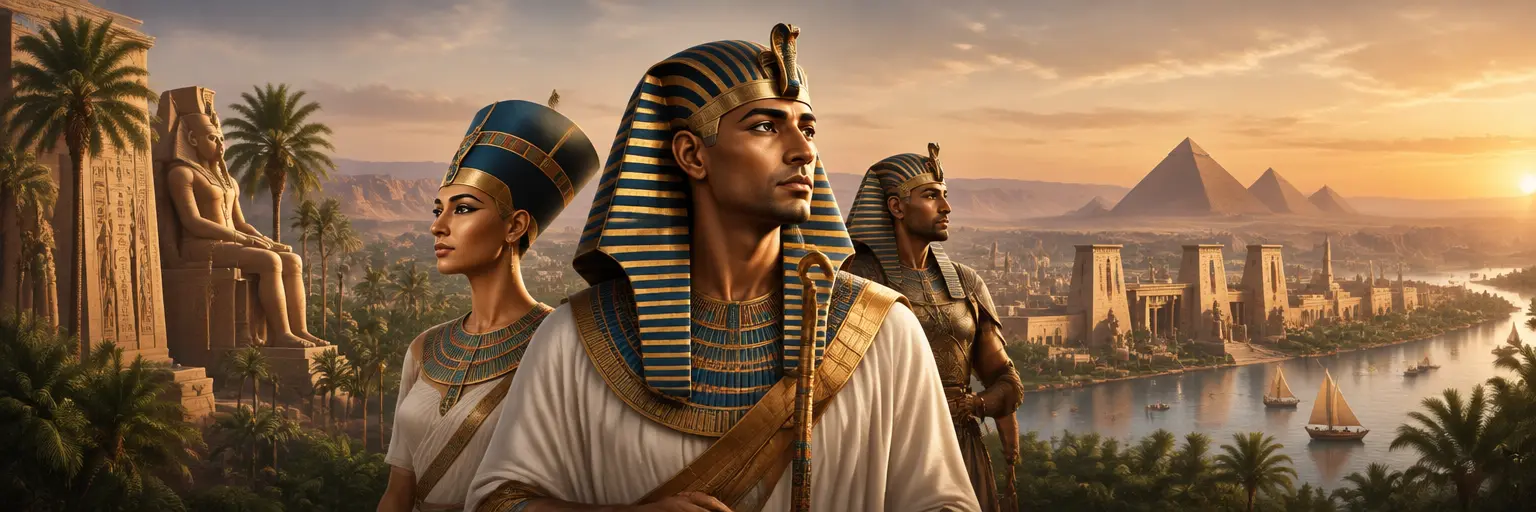
Welcome to ArchaeologyHub.org’s deep dive into the New Kingdom (c. 1550–1070 BCE), often called Egypt’s Golden Age. This era saw the rise of a true empire, monumental temples, and legendary pharaohs like Hatshepsut, Akhenaten, and Ramesses II. Here, you’ll explore military campaigns, diplomatic marriages, religious revolutions, and the wealth that fueled colossal building projects, all rooted in archaeological evidence.
⚔️ Military Expansion & The Birth of an Empire
The New Kingdom began with the expulsion of the Hyksos and quickly transformed into a militaristic superpower. Pharaohs like Thutmose III led campaigns into the Levant and Nubia, securing gold, tribute, and trade routes. Archaeological finds from Megiddo and Karnak’s Annals reveal a carefully organized army using chariots, composite bows, and siege tactics.
You’ll learn how these conquests were not just about land but about establishing a buffer zone against rivals like the Hittites. The empire’s administrative reforms, including the use of viceroys and garrisons, are documented in texts from Amarna and Nubian fortresses. This section provides a strategic overview of how Egypt’s borders expanded to the Euphrates, reshaping ancient geopolitics for centuries.
👑 Iconic Pharaohs: Hatshepsut, Akhenaten, and Ramesses II
Few rulers in history match the fame of these three. Hatshepsut, a female king, built the terraced temple at Deir el-Bahri and launched a trade expedition to Punt. Akhenaten radically shifted religion to Atenism, founding a new capital at Amarna—a site that offers a rare, well-preserved snapshot of daily life. Ramesses II, the “Great,” secured peace with the Hittites and erected Abu Simbel’s colossal statues.
Each ruler left a distinct archaeological signature: from Hatshepsut’s obelisks to Akhenaten’s artistic revolution and Ramesses’s massive mortuary complex, the Ramesseum. Here, you’ll examine royal tombs in the Valley of the Kings, including KV5 (Ramesses’s sons) and the famous KV62 (Tutankhamun), using recent lidar and petrographic analyses to separate myth from verified evidence.
🏛️ Monumental Architecture & Temple Economies
Karnak and Luxor temples epitomize New Kingdom architectural ambition. Pharaohs added hypostyle halls, colossal pylons, and obelisks, while temple estates controlled vast agricultural lands, employing thousands of priests and laborers. The temple economy functioned as a redistribution system, documented in papyri like the Wilbour Papyrus.
Excavations at Karnak’s Open Air Museum and the Sphinx Temple reveal not just religious rituals but also state-sponsored workshops for stone carving, goldsmithing, and linen production. You’ll explore how engineering feats, such as the use of ramps and levers, allowed the movement of 1,000-ton statues—with recent experimental archaeology proving feasible methods. This section ties architecture to social hierarchy and resource management.
📜 Diplomacy, Trade & International Relations
The Amarna Letters—a cache of cuneiform tablets—provide a rare window into New Kingdom diplomacy. Pharaohs correspond with Babylonian, Assyrian, and Hittite kings, arranging marriages and gold-for-peace deals. Trade networks extended from Cyprus (copper) to the Aegean (pottery) and Punt (frankincense), as evidenced by shipwrecks and artifact distributions.
You’ll discover how gift exchange was a political tool, not mere commerce, and how Egypt’s control of Nubian gold mines funded this outward reach. Recent DNA studies of mummified remains from Amarna also hint at cosmopolitan populations. This subcategory connects textual evidence with material culture, showing you how archaeologists reconstruct ancient globalism.
⚰️ Religious Revolution & Afterlife Practices
Akhenaten’s monotheistic experiment is one of the most studied religious shifts in archaeology. The Amarna period’s sunken reliefs and radically different iconography contrast sharply with traditional polytheism, leading to a post-Amarna backlash that restored temples to Amun. Tomb decorations from the era show unique scenes of royal family closeness, unlike any other period.
Afterlife practices evolved too: royal tombs became more complex, with elaborate Book of the Dead spells painted on wood or papyrus. Recent CT scans of royal mummies, including those from the Deir el-Bahari cache, reveal embalming techniques and diseases. This section explains how funerary archaeology, from shabti figures to canopic jars, helps reconstruct beliefs about the afterlife and the priesthood’s power.
🛠️ Daily Life & Social Structure
Beyond pharaohs, the New Kingdom hosted a thriving middle class of scribes, artisans, and soldiers. The workmen’s village of Deir el-Medina is a treasure trove, with over 5,000 ostraca (limestone flakes) documenting work schedules, wages, and even strikes. You’ll see how ostracon records reveal legal disputes, medical recipes, and love poetry.
Houses in Amarna and Tell el-Dab’a show distinct plans for rich and poor, with evidence of bread-making, brewing, and textile production. Excavations of cemeteries at Saqqara and Valley of the Nobles provide bioarchaeological data on diet and labor injuries. This practical angle grounds the empire’s glory in the daily grind of its citizens, using quantitative methods to estimate population and resource allocation.
Frequently Asked Questions
Who is considered the most powerful New Kingdom ruler?
Ramesses II is often cited for his long reign (66 years), military victories, and monumental building, including Abu Simbel and the Ramesseum. However, Thutmose III, called the “Napoleon of Egypt,” conquered more territory, establishing the empire’s greatest extent. Recent archaeological work favors a balanced view, acknowledging both for their distinct contributions.
What caused the end of the New Kingdom?
The primary factors include economic collapse, internal corruption, and the invasion of the Sea Peoples around 1200 BCE. Egypt weakened due to succession disputes and loss of Nubian gold. Dating from the 20th Dynasty shows rising grain prices and tomb robberies, indicating systemic dysfunction, culminating in the Third Intermediate Period’s fragmented rule.
Are there any tombs from the New Kingdom still undiscovered?
Yes, the Valley of the Kings only has about 65 known tombs, with recent radar scans suggesting voids like a possible tomb near Tutankhamun’s KV62. Dr. Nicholas Reeves’s theory of hidden chambers remains unproven. Meanwhile, Saqqara’s New Kingdom necropolis yields new shaft tombs with intact burial goods each year, proving the era is far from fully excavated.
How did Akhenaten’s religious changes affect daily life?
Daily life shifted to worshiping the sun disc Aten, with private temples and altered household shrines. Art became more naturalistic, showing the royal family in intimate poses. Administrative and legal texts use “Aten” in oaths instead of Amun. After his death, the traditional priesthood reasserted power, erasing Akhenaten’s sites but leaving Amarna’s ruins to preserve this unique experiment.
What is the best source for understanding New Kingdom diplomacy?
The Amarna Letters are the most direct evidence, consisting of 350+ cuneiform tablets from the 18th Dynasty’s foreign chancery. These letters detail marriage alliances, trade disputes, and mutual defense pacts. To cross-reference, archaeologists use Hittite archives from Bogazkoy and Ramesside treaty texts, like the Kadesh Peace Treaty, which is the world’s oldest diplomatic agreement.