Ancient Egypt: Late & Ptolemaic Periods – Foreign Rule & Syncretism
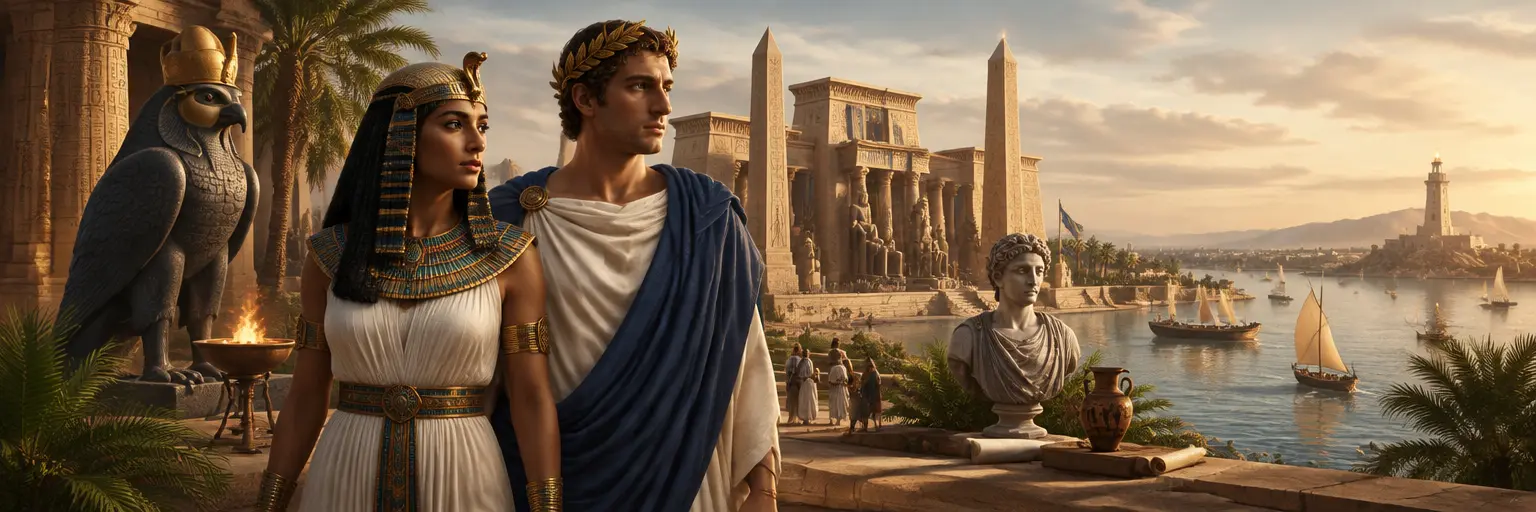
Explore the transformative era when Egypt’s pharaonic traditions collided with Persian, Greek, and Macedonian powers, forging a unique cultural fusion that reshaped religion, art, and governance. This subcategory on ArchaeologyHub.org delves into the Late Period (664–332 BCE) and Ptolemaic dynasties (332–30 BCE), highlighting how foreign rulers adopted Egyptian iconography while introducing Hellenistic innovations. From the Decree of Canopus to the Serapeum of Alexandria, discover the archaeological evidence of political shifts, temple-building programs, and multicultural syncretism that defined this fascinating chapter of Nile Valley history.
🏛️ Persian Dominion: The 27th and 31st Dynasties
Key archaeology: Darius I’s Suez Canal stelae, the Hibis temple in Kharga Oasis, and administrative papyri from Elephantine reveal how Achaemenid rulers maintained Egyptian bureaucratic structures while imposing imperial oversight. Excavations at Tell el-Maskhuta and Memphis show Persian military garrisons alongside traditional cult centers, with artwork blending Persian dress and Egyptian hieroglyphs.
Visitors will learn how Persian kings like Cambyses (despite later Greek slander) funded temple restorations and participated in local rituals to legitimize rule. Syncretism emerged through coinage—Athenian owls minted with Egyptian demotic inscriptions—and through the deification of Darius at temple sites, a practice that set precedent for later Greek rulers. Artifact profiles include a headless statue of Darius found at Susa, inscribed with cuneiform and hieroglyphs, demonstrating dual royal ideology.
⚱️ Alexander’s Legacy: Macedonian Conquest and Alexandria’s Rise
Macedonian military strategy met Egyptian priestly diplomacy when Alexander the Great visited Siwa Oasis in 331 BCE, receiving divine confirmation as son of Amun. Archaeological traces include the foundation deposits of Alexandria, the lighthouse’s sunken blocks, and the Sarapeum’s carved reliefs merging Zeus and Osiris iconography.
This section details how Ptolemy I Soter established a Greco-Egyptian state, founding the Museum and Library that attracted scholars like Manetho, whose Aegyptiaca structured dynastic history. Excavations at Kom el-Dikka unearthed a Roman-era lecture hall, proving Alexandria’s intellectual continuity. Syncretism appears in royal portraiture: coins depicting Ptolemy II with ram’s horns of Amun, and temple reliefs where Greek himations overlay Egyptian kilts—a visual language of dual sovereignty that persisted for three centuries.
🛕 Ptolemaic Temple Building: Edfu, Dendera, and Philae
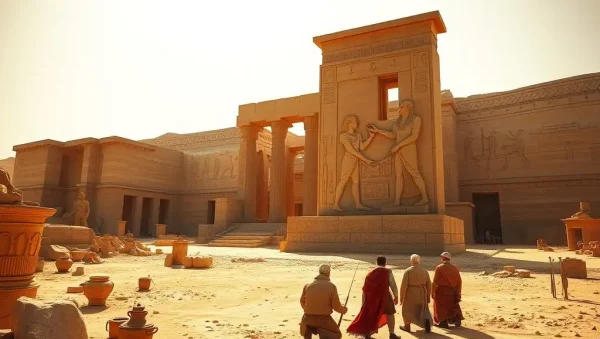
Monumental sacred architecture reached its climax under the Ptolemies, with pylons, hypostyle halls, and birth houses inscribed in both Greek and Egyptian scripts. The Temple of Horus at Edfu (237–57 BCE) preserves hundreds of ritual texts, including the Book of the Divine Cow and technical manuals for temple construction.
Archaeologists have identified deliberate syncretism in cult practice: at Philae, Isis absorbed Greek aspects of Aphrodite and Demeter, while Osiris was equated with Serapis—a composite deity invented by Ptolemy I to unify Greek and Egyptian subjects. Dendera’s zodiac ceiling blends Babylonian astral mythology with Egyptian decanal stars, showing celestial syncretism. Foundational deposits—faience plaques, model tools, and amulets—reveal purification rituals and king’s role as chief priest, preserving Pharaonic rites under foreign rule.
⚔️ Cleopatra VII and the End of Dynastic Egypt
Final Ptolemaic queen Cleopatra VII (51–30 BCE) is known through archaeology beyond Shakespearean drama: her cartouche at Karnak, temple reliefs at Dendera showing her as Isis, and the Alexandrian mint issuing coins with her portrait and Greek legend. Underwater excavations in Alexandria’s harbor uncovered sphinxes, statues, and amphorae from the royal quarter, destroyed by earthquake and tsunami.
This section examines Roman intervention via Octavian’s victory at Actium (31 BCE) and the subsequent annexation. Syncretism’s peak appears in the Decree of Memphis (196 BCE), inscribed bilingually on the Rosetta Stone, where Ptolemy V receives divine honors from Egyptian priests. Cleopatra’s diplomatic acumen—presenting Caesarion as son of Isis and Osiris—illustrates how political power hinged on religious iconography, a strategy that ultimately failed against Roman pragmatism. Legacy includes Coptic Christianity’s adoption of Egyptian symbols, blending old and new.
🏺 Archaeological Finds and Museum Collections
Key artifacts include the Greenfield Papyrus (Book of the Dead), Fayum mummy portraits executed in Greek encaustic technique, and Ptolemaic statue of the priest Hor with a Greek-style himation. Excavations at Tanis (the biblical Zoan) revealed royal tombs with silver coffins and gold masks, connecting Late Period kingship to New Kingdom traditions.
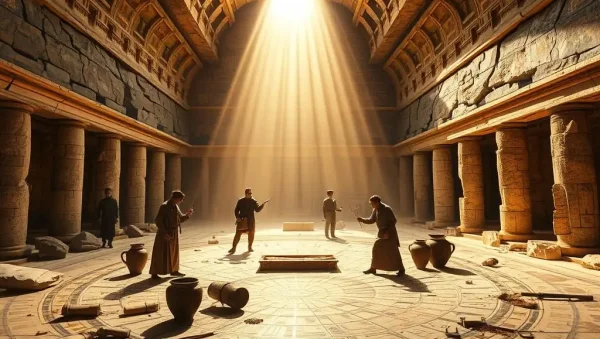
Museums like the Louvre and Egyptian Museum in Berlin house syncretic reliefs, such as the Berlin Green Head (a priest’s portrait in hard stone) and the Alexandria National Museum’s collection of Greco-Roman terracotta figurines. Ongoing research uses CT scans of mummies to identify Ptolemaic-era embalming changes, including artificial eyes and resin-soaked wrappings. Digital reconstructions of the Serapeum’s library and the Canopic Way’s processional road enrich interpretive layers, showing how foreign rule both preserved and reinvented Egypt’s spiritual landscape.
Frequently Asked Questions
What does “syncretism” mean in the context of Late Period Egypt?
Syncretism refers to the blending of Greek, Persian, and Egyptian religious and artistic practices. For example, the god Serapis combined Osiris and Apis with Greek aspects of Zeus and Hades. This fusion helped foreign rulers gain acceptance among local priests and populations.
How did Persian rulers treat Egyptian temples?
Persian kings like Darius I sponsored temple restorations and even built the Hibis temple in Kharga Oasis. They adopted pharaonic titles and participated in religious festivals, though some sources—likely Greek propaganda—claim Cambyses damaged temples. Archaeological evidence shows continuity of cult practices.
Why is the Rosetta Stone important for understanding these periods?
The Rosetta Stone (196 BCE) contains a decree in Greek, hieroglyphic, and demotic script. This bilingual text allowed Jean-François Champollion to decipher hieroglyphs, unlocking all Egyptian history. It also demonstrates how Ptolemaic kings used Egyptian priestly decrees to legitimize their rule.
What evidence exists for Cleopatra VII’s rule beyond literary sources?
Archaeological evidence includes her cartouches on temple walls, coins bearing her portrait as Isis, and statues from the Alexandria harbor submerged ruins. Papyri from the time also mention her administration, including land leases and tax records, confirming her control over state affairs.
Are there any famous mummies from the Ptolemaic period?
Yes, the Fayum mummy portraits—painted on wooden panels attached to mummies—are iconic. The “Weaver” mummy from Akhmim and the mummy of a young priest named Djedher show Greek-influenced burial customs, while CT scans reveal embalming techniques that combined older traditions with new materials like resin.