
Alexander's Legacy: Hellenization and its Initial Impact on Egyptian Culture

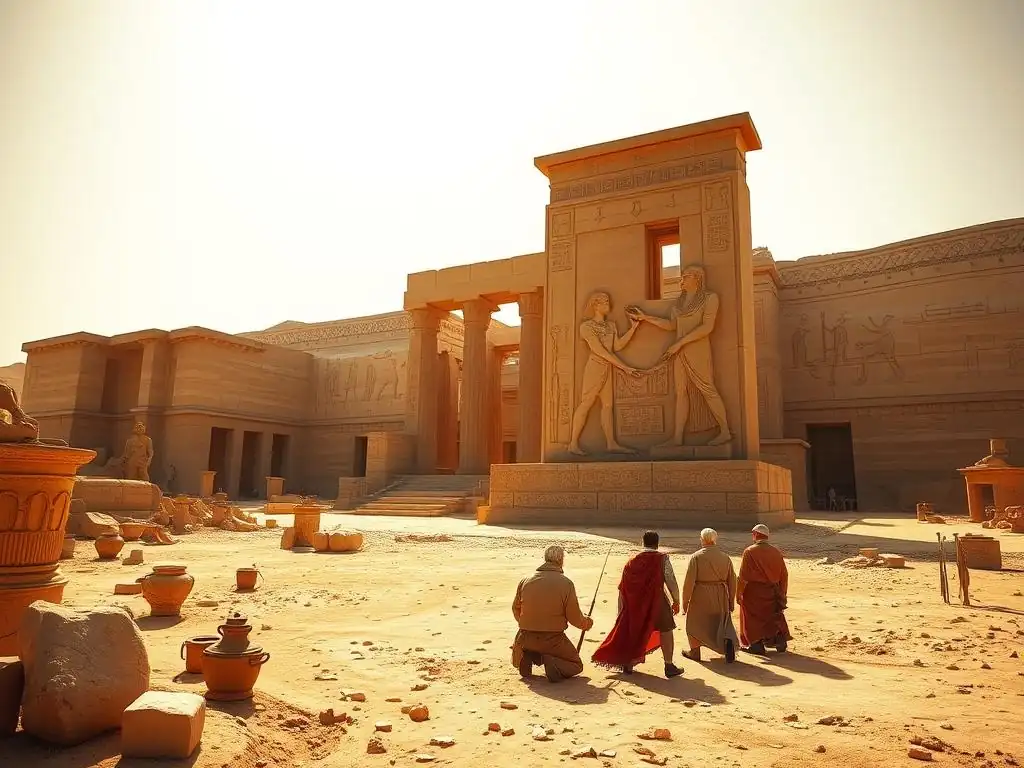
Welcome to ArchaeologyHub.org, your gateway to the past! Ever wondered how Alexander the Great's conquest truly reshaped ancient Egypt? Dive into our detailed exploration of Hellenization and its initial impact on Egyptian culture. Discover the fascinating fusion of two powerful worlds and uncover the lasting legacy of this pivotal era. Intrigued? Keep reading to unearth the secrets buried beneath the sands of time...
- Introduction: The Dawn of Hellenistic Egypt
- The Seeds of Hellenization: Pre-Alexandrian Greek Influence in Egypt
- Alexander's Arrival and the Establishment of Ptolemaic Rule
- Hellenization in Action: Cultural Syncretism and Transformation
- Economic and Administrative Changes Under Ptolemaic Rule
- Resistance and Adaptation: Egyptian Reactions to Hellenization
- The Long-Term Effects of Hellenization on Egyptian Culture
- Conclusion: Assessing the Initial Impact of Hellenization on Ancient Egypt
-
Frequently Asked Questions
- ### What exactly is Hellenization and how did it begin?
- ### How did Alexander the Great's conquests contribute to the Hellenization of Egypt?
- ### What were some of the initial ways Hellenization manifested in Egyptian culture?
- ### Did Hellenization completely replace Egyptian culture, or did the two cultures interact?
- ### What are some examples of lasting impacts of Hellenization on Egypt based on ArchaeologyHub.org?
- Final Reflection: Echoes of Conquest, Seeds of Transformation
- Unearth Your Inner Explorer: Continue the Journey into Hellenistic Egypt!
Introduction: The Dawn of Hellenistic Egypt
Alexander the Great's Conquest and the Shift in Egyptian History
In 332 BCE, Alexander the Great's arrival marked a pivotal turning point in the annals of ancient Egypt. His conquest was notably swift and bloodless, a stark contrast to his campaigns elsewhere.
Having just liberated Egypt from over a century of sporadic and often oppressive Persian Achaemenid rule, Alexander was welcomed by many Egyptians as a liberator. His strategic visit to the Oracle of Amun at Siwa Oasis, where he was proclaimed a divine son, further solidified his legitimacy in the eyes of the Egyptian populace, laying crucial groundwork for the subsequent integration of Greek influence and the process of Hellenization.
This seemingly benign transition initiated a profound cultural and political transformation. The end of indigenous pharaonic rule and the subsequent establishment of the Ptolemaic dynasty by one of Alexander's generals fundamentally reoriented Egypt's trajectory. This shift introduced a new administrative framework, economic policies, and a vibrant Hellenistic culture that would gradually intertwine with the ancient Egyptian traditions, shaping the unique character of Hellenistic Egypt and leaving an indelible mark on ancient culture.
Archaeological Evidence: Exploring the Hellenistic Period in Egypt
Archaeological endeavors provide compelling, tangible evidence of the Hellenistic period's profound impact on ancient Egypt. Beyond the grand ruins of Alexandria, numerous sites across the Nile Delta and the Fayum region, such as Karanis and Oxyrhynchus, reveal extensive Greek settlement and the deep cultural interactions that characterized this era. Excavations have unearthed a wealth of artifacts, including distinctive pottery styles (e.g., imported Attic ware alongside local imitations), vast hoards of Ptolemaic coinage, and architectural remains that blend Greek and Egyptian design principles, offering direct insights into daily life and cultural fusion.
Further insights into the Hellenization of Egypt come from the vast collection of papyri discovered, notably from sites like Oxyrhynchus. These thousands of documents, predominantly written in Greek, range from official decrees and legal contracts to private letters and literary fragments, providing an unparalleled textual window into the administrative, economic, and social fabric of Ptolemaic Egypt. Combined with syncretic religious artifacts like statues of Serapis and funerary stelae depicting figures in both Greek and Egyptian styles, these archaeological finds meticulously chronicle the complex interplay of cultures that defined this transformative period in ancient Egyptian culture.
The Seeds of Hellenization: Pre-Alexandrian Greek Influence in Egypt
Greek Presence in Egypt Before Alexander: Trade and Mercenary Activities
Long before Alexander's conquest, Greek presence in Egypt was a significant, albeit more limited, precursor to the extensive Hellenization that would follow. As early as the Saite Dynasty (26th Dynasty, 664-525 BCE), Pharaoh Psamtik I actively encouraged Greek mercenaries to serve in his army, recognizing their military prowess.
This strategic alliance led to the establishment of Greek garrisons at various points along the Nile. Furthermore, around 650 BCE, the city of Naukratis in the Nile Delta was designated as the sole official Greek trading post, becoming a regulated hub for commerce between Egyptians and Greeks and facilitating early economic interdependencies.
Naukratis flourished as a cosmopolitan center where Greeks from diverse city-states, including Miletus, Samos, and Chios, resided and conducted trade. Archaeological excavations at Naukratis have uncovered numerous temples dedicated to Greek deities such as Apollo, Hera, and the Dioscuri, alongside a significant quantity of Greek pottery – including Rhodian, Corinthian, and Attic wares – found intermingled with Egyptian artifacts. This evidence clearly demonstrates a controlled but substantial early exchange, where Greek traders and soldiers offered a glimpse into their culture, laying preliminary groundwork for the more profound Hellenization of ancient Egypt that Alexander's arrival would precipitate.
Cultural Exchange: Early Interactions Between Greeks and Egyptians
The pre-Alexandrian period saw a nascent, yet influential, cultural exchange between Greeks and Egyptians. While not a large-scale assimilation, there were instances of artistic influence, notably the adoption of certain Egyptian sculptural conventions, such as the rigid frontality and block-like forms, in early Greek kouroi statues. Greek scholars and travelers, most famously Herodotus in the 5th century BCE, visited Egypt, documenting its ancient wonders and customs, which although often viewed through a Hellenocentric lens, introduced Egyptian history and monumental achievements to the Greek world.
Beyond artistic and intellectual curiosity, practical interactions fostered a limited cultural dialogue. Greek mercenaries serving the pharaohs would have been exposed to Egyptian military organization and daily life, potentially adopting certain techniques or customs. Similarly, Egyptian artisans and merchants interacting in trade centers like Naukratis might have gained exposure to Greek craftsmanship and commercial practices. This early contact, though not leading to widespread Hellenization, served as a crucial preliminary stage, familiarizing both cultures with aspects of the other, setting the scene for the much more intensive cultural fusion that would define Ptolemaic Egypt and its ancient culture.
Alexander's Arrival and the Establishment of Ptolemaic Rule
Founding Alexandria: A New Capital for a New Era
In 331 BCE, Alexander the Great personally oversaw the founding of Alexandria, a city destined to become the greatest metropolis of the Hellenistic world. Its location on a narrow strip of land between Lake Mareotis and the Mediterranean Sea was meticulously chosen for its strategic advantages: defensible terrain, access to freshwater, and, crucially, an excellent natural harbor. This decision deliberately bypassed existing Egyptian capitals like Memphis or Thebes, signaling Alexander's intent to establish a new, outward-looking center that would serve as a nexus for Greek power and influence, fundamentally altering the urban landscape of ancient Egypt.
Under the subsequent Ptolemaic dynasty, Alexandria rapidly transformed into a beacon of Hellenistic culture and learning. It quickly surpassed other cities in size and grandeur, boasting architectural marvels such as the iconic Lighthouse of Pharos, one of the Seven Wonders of the Ancient World, and the unparalleled Great Library of Alexandria. At its zenith, the Library was estimated to house between 400,000 and 700,000 scrolls, attracting scholars, scientists, and philosophers from across the Mediterranean world. This intellectual hub became a symbol of Hellenization, profoundly impacting ancient culture through its contributions to mathematics, astronomy, literature, and philosophy.
The Ptolemaic Dynasty: Greek Rulers of Ancient Egypt
Following Alexander's premature death in 323 BCE, his vast empire was fragmented among his generals, known as the Diadochi. Ptolemy I Soter, one of Alexander's most trusted companions, shrewdly secured control of Egypt. In 305 BCE, he declared himself pharaoh, establishing the Ptolemaic dynasty, which would rule Egypt for nearly three centuries until the death of Cleopatra VII in 30 BCE. This marked the longest continuous period of foreign rule in ancient Egyptian history, fundamentally shaping the trajectory of Hellenization in Egypt.
While the Ptolemies adopted the traditional pharaonic title and outwardly patronized Egyptian religious cults, even building magnificent temples in the traditional Egyptian style (e.g., Edfu, Dendera), their core administration, military, and court culture remained distinctly Greek. Greek was the official language of government, and a clear social hierarchy placed Greeks and Macedonians at the apex of society. This dual approach allowed the Ptolemies to maintain legitimacy in the eyes of the native population while firmly establishing a Hellenistic ruling class, which was instrumental in driving the extensive Hellenization of ancient Egyptian culture.
Hellenization in Action: Cultural Syncretism and Transformation
The Fusion of Greek and Egyptian Religion: Serapis - A Syncretic Deity
One of the most deliberate and significant examples of Hellenization in ancient Egyptian culture was the creation and promotion of the god Serapis. Ptolemy I Soter actively sought to foster religious unity between his Greek and Egyptian subjects, commissioning the development of a deity that would appeal to both. Serapis was a carefully constructed syncretic deity, blending aspects of the Egyptian gods Osiris and Apis (forming Osiris-Apis) with characteristics of Greek deities such as Zeus, Hades, and Asclepius. This fusion resulted in a powerful, universal god designed to bridge the cultural divide.
The principal cult center for Serapis was the magnificent Serapeum in Alexandria, a grand temple complex that became a focal point for worship. The cult of Serapis rapidly gained widespread popularity not only within Egypt but also across the broader Hellenistic world, with shrines and temples dedicated to him found from Rome to Delos. Archaeological discoveries of countless statues and representations of Serapis throughout Ptolemaic Egypt confirm his prominence and illustrate a successful, albeit engineered, religious syncretism that became a hallmark of Hellenization and profoundly influenced the religious landscape of ancient culture.
Language and Literature: The Spread of Greek and its Impact on Egyptian Writing
Under Ptolemaic rule, Greek rapidly ascended to become the dominant language of administration, law, and intellectual discourse in Egypt. Thousands of papyri unearthed from sites across Egypt, particularly from the Fayum and Oxyrhynchus, overwhelmingly demonstrate the pervasive use of Greek in official documents, legal contracts, commercial transactions, and even private correspondence. This linguistic shift profoundly impacted the daily lives of Egyptians, especially those involved in government or trade, as proficiency in Greek became essential for social and economic advancement.
While Demotic script, the cursive form of ancient Egyptian, continued to be used by the native population for religious texts and everyday purposes, its official prominence diminished significantly. The iconic Rosetta Stone, inscribed in 196 BCE, perfectly encapsulates this linguistic landscape, featuring a decree in three scripts: Hieroglyphic, Demotic, and Greek.
The inclusion of Greek was crucial for the decree's legal validity and widespread comprehension, underscoring its status as the language of the ruling power. This period eventually paved the way for the development of Coptic, an Egyptian language written using Greek characters, a direct testament to the enduring linguistic legacy of Hellenization on ancient Egyptian culture.
Art and Architecture: Blending Hellenistic and Egyptian Styles
The process of Hellenization in ancient Egypt led to a fascinating artistic syncretism, where Greek naturalism and idealization began to intertwine with traditional Egyptian frontality and symbolic representation. This fusion is vividly displayed in artifacts such as the famous Fayum mummy portraits, created during the Roman period but rooted in Hellenistic artistic traditions. These portraits, characterized by their lifelike, individualized depictions in a realistic Greco-Roman style, were nevertheless affixed to mummified bodies, demonstrating a profound blend of Greek artistic technique with ancient Egyptian funerary practices.
In architecture, a dual approach emerged. While Greek architectural forms, including Doric, Ionic, and Corinthian columns, were prevalent in new cities like Alexandria and other Greek settlements, the Ptolemies also commissioned the construction of magnificent temples dedicated to Egyptian deities, such as the Temple of Horus at Edfu (begun 237 BCE) and the Temple of Hathor at Dendera.
These temples largely adhered to traditional Egyptian monumental styles and iconography, though some subtly incorporated Hellenistic elements in their relief sculptures or decorative motifs. This architectural duality highlights how Hellenization adapted to and respected existing ancient culture, rather than entirely replacing it.
Economic and Administrative Changes Under Ptolemaic Rule
Greek Influence on Egyptian Agriculture and Trade
The Ptolemaic dynasty implemented a highly centralized and systematic economic policy that profoundly influenced Egyptian agriculture and trade, aiming to maximize revenue for the state. They introduced new crops, such as improved varieties of grapes and olives, and implemented advanced irrigation techniques, leading to a significant increase in agricultural productivity, particularly of Egypt's staple grains like wheat and barley. This surplus was crucial not only for feeding the local population but also for supporting the Ptolemaic military and for export, making Egypt the "breadbasket" of the Hellenistic world.
Alexandria swiftly became the primary economic hub, serving as a vital port for international trade. Egyptian exports, including vast quantities of grain, papyrus, and linen, flowed out, while essential imports such as timber, metals, and luxury goods flowed in. The Ptolemies also revolutionized the Egyptian economy by introducing a sophisticated monetary system, minting large quantities of silver and bronze coinage. This standardized currency facilitated transactions, integrated Egypt more deeply into the broader Hellenistic economic network, and fundamentally transformed the ancient culture's traditional barter-based economy.
Reorganization of Egyptian Administration: The Role of Greek Officials
Under Ptolemaic rule, the ancient Egyptian administrative structure underwent a comprehensive reorganization, largely influenced by Hellenistic bureaucratic principles. The kingdom was divided into distinct administrative units, with the nome (a traditional Egyptian province) serving as the primary regional division. Each nome was overseen by a strategos (military governor) and a nomarch (civil administrator), both typically Greek or Macedonian, ensuring tight central control and efficient tax collection. This hierarchical system was meticulously designed to extract resources and maintain order across the vast agricultural landscape.
Greek became the official language of administration, and legal systems often incorporated Greek principles alongside existing Egyptian laws, especially in commercial and property disputes. While Egyptians continued to fill many lower-level administrative and clerical positions, the upper echelons of power, including key financial and military roles, remained firmly in the hands of the Greek ruling class. This administrative structure, largely staffed by foreigners and operating in a foreign language, reinforced the social stratification of Ptolemaic Egypt and was a key mechanism through which Hellenization permeated the ancient culture.
Resistance and Adaptation: Egyptian Reactions to Hellenization
Preservation of Egyptian Traditions: Maintaining Cultural Identity
Despite the pervasive influence of Hellenization, ancient Egyptians actively demonstrated resilience and adaptation, striving to preserve their rich cultural identity. Egyptian religious practices, including the elaborate temple cults and funerary rituals, largely persisted, often with the support of the Ptolemies themselves, who, for political legitimacy, sponsored the construction of magnificent temples in traditional Egyptian styles, such as the Temple of Horus at Edfu. The Egyptian priesthood continued to play a pivotal role in maintaining these ancient traditions and safeguarding the hieroglyphic script for sacred and monumental purposes.
Beyond religious continuity, the Egyptian language (Demotic script) remained in widespread use for personal documents, contracts, and literary texts among the native population. Egyptian law also continued to be applied in local courts, particularly for disputes between Egyptians, running parallel to the Greek legal system. This parallel existence of distinct linguistic and legal frameworks underscores a form of cultural resilience and adaptation, rather than outright assimilation, showcasing how ancient Egyptian culture managed to maintain its core identity even under significant foreign rule.
Ptolemaic society was rigidly stratified, with Greeks and Macedonians occupying the highest echelons and enjoying significant privileges, including tax exemptions and preferential access to administrative and military positions. The vast majority of the population, however, consisted of native Egyptians, who were primarily agricultural laborers, artisans, and lower-level administrators. This clear social hierarchy, where ethnicity largely dictated one's status and opportunities, created inherent tensions within the state.
This stratification occasionally erupted into open revolt, particularly in Upper Egypt, which remained a stronghold of traditional Egyptian identity. Notable uprisings occurred in the late 3rd and early 2nd centuries BCE, such as the Theban revolt led by Horwennefer (205-186 BCE), which challenged Ptolemaic authority and briefly established an independent Egyptian kingdom. While these revolts were ultimately suppressed, they serve as powerful evidence of Egyptian resistance to foreign domination and a persistent desire to maintain their cultural autonomy and identity in the face of Hellenization, demonstrating the complex dynamics of ancient culture under foreign rule.
The Long-Term Effects of Hellenization on Egyptian Culture
The Legacy of Alexandria: A Center of Learning and Culture
The city of Alexandria, founded as a symbol of Hellenistic power, evolved into an unparalleled global center of learning and culture, an intellectual legacy that far outlasted the Ptolemaic dynasty itself. Its renowned Library and Museion (a research institute) attracted the brightest minds of the ancient world. Scholars like Euclid, whose "Elements" laid the foundation for geometry, Eratosthenes, who accurately calculated the Earth's circumference, and Hero of Alexandria, a pioneer in mechanics, conducted their groundbreaking work within its walls. This intellectual vibrancy profoundly influenced Western thought and scientific development for centuries.
Beyond its academic prowess, Alexandria was a true cosmopolitan melting pot where Greek, Egyptian, and later Roman cultures interacted, leading to new literary forms, philosophical schools, and artistic expressions. Its architectural grandeur, including the Lighthouse of Pharos, and its role as a nexus for trade and ideas, cemented its status as a model for future global cities. The enduring influence of Alexandria stands as a testament to the profound impact of Hellenization, not just on ancient Egyptian culture, but on the broader intellectual and cultural landscape of antiquity.
Hellenistic Influences on Later Egyptian Art and Religion
The artistic fusion born from Hellenization continued to manifest in Egyptian art well into the Roman period. The Fayum mummy portraits, produced from the 1st to the 4th centuries CE, are perhaps the most striking examples. These remarkably lifelike painted portraits, executed in a distinctly Hellenistic-Roman style, were placed directly over the faces of mummified bodies, demonstrating a profound and lasting syncretism in funerary practices that blended two vastly different cultural traditions. This genre shows how the aesthetic impact of Hellenization endured long after the political shift.
Similarly, the religious syncretism initiated during the Ptolemaic era had far-reaching effects. The cult of Serapis, specifically engineered to appeal to both Greeks and Egyptians, along with Hellenized versions of ancient Egyptian deities like Isis and Harpocrates (the child Horus), spread extensively throughout the Roman Empire. The worship of Isis, in particular, evolved into a popular mystery cult with followers across the Mediterranean, from Britain to Afghanistan. This demonstrates how elements of Hellenization in Egypt transcended its initial geographical and temporal boundaries, profoundly influencing the religious landscape of the wider ancient culture for centuries.
Conclusion: Assessing the Initial Impact of Hellenization on Ancient Egypt
A Period of Transformation and Cultural Fusion
The arrival of Alexander the Great and the subsequent establishment of Ptolemaic rule ushered in an era of unprecedented transformation for ancient Egypt. This period was characterized not merely by foreign conquest, but by a profound and dynamic process of Hellenization, where Greek administrative systems, economic policies, and intellectual pursuits began to intertwine with the deeply rooted traditions of ancient Egyptian culture. This intricate interplay led to the emergence of a unique Greco-Egyptian civilization, particularly vibrant in new urban centers like Alexandria, which became a beacon of learning and cultural exchange.
The initial impact of Hellenization was multifaceted, marked by both imposed changes and remarkable cultural fusion. While Greek became the language of power and the economy was centralized, Egyptian religious practices and artistic expressions adapted, leading to syncretic forms like the cult of Serapis and blended artistic styles. This era represents a compelling case study of cultural interaction, where distinct identities coexisted, adapted, and sometimes merged, creating a complex and rich society that profoundly shaped the trajectory of ancient Egyptian culture for centuries to come.
Further Research: Exploring the Depths of Hellenistic Egypt
The study of Hellenistic Egypt remains a fertile ground for ongoing archaeological and scholarly inquiry. To further explore the depths of Hellenization, researchers continue to focus on specific sites like Tuna el-Gebel, Oxyrhynchus, and Karanis, which offer invaluable insights into daily life, religious practices, and the intricate administrative structures under Ptolemaic rule. The meticulous analysis of papyrological discoveries, in particular, continues to refine our understanding of the nuances of legal systems, economic activities, and social dynamics during this transformative period, shedding light on the lived experiences of both Greeks and Egyptians.
The continuous stream of new archaeological finds and textual interpretations perpetually enriches our appreciation of Hellenization in Egypt. These ongoing discoveries provide fresh perspectives on the complex interactions between the Greek ruling elite and the native Egyptian population, highlighting the remarkable resilience of ancient cultures and the multifaceted nature of cultural change in antiquity. Such research is crucial for fully grasping the profound and enduring legacy of Hellenization on ancient culture, revealing its intricate layers and lasting contributions to the historical narrative.
Frequently Asked Questions
### What exactly is Hellenization and how did it begin?
Hellenization refers to the spread of Greek culture and language following the conquests of Alexander the Great. It began in the 4th century BCE and significantly impacted the societies of the Eastern Mediterranean and beyond.
### How did Alexander the Great's conquests contribute to the Hellenization of Egypt?
Alexander's conquest of Egypt in 332 BCE marked the beginning of a new era, replacing Persian rule with a Greek-led administration. This led to the establishment of Alexandria as a major Hellenistic center.
### What were some of the initial ways Hellenization manifested in Egyptian culture?
Initially, Hellenization was visible in the establishment of Greek cities, the adoption of Greek language in administration, and the introduction of Greek art and architecture into Egyptian society.
### Did Hellenization completely replace Egyptian culture, or did the two cultures interact?
Hellenization didn't replace Egyptian culture entirely. Instead, there was a period of cultural syncretism, where Greek and Egyptian traditions blended, resulting in a unique Greco-Egyptian culture.
### What are some examples of lasting impacts of Hellenization on Egypt based on ArchaeologyHub.org?
ArchaeologyHub.org details the lasting impact through examples like the blending of deities, such as Serapis (a combination of Greek and Egyptian gods), and the continued use of Greek in administration and scholarship for centuries.
Final Reflection: Echoes of Conquest, Seeds of Transformation
The story of Alexander's conquest and the subsequent Hellenization of Egypt, as we've explored, isn't just a historical account; it's a powerful reminder of the enduring impact of cultural exchange. The blending of Greek and Egyptian traditions, though born from conquest, laid the foundation for a vibrant and complex society that continues to resonate in our understanding of cultural fusion today. The ripples of Hellenization, even in its initial stages, demonstrate the profound and often unpredictable consequences of interaction between vastly different civilizations.
This historical period profoundly shaped the cultural landscape, leaving an indelible mark on Egyptian art, architecture, religion, and governance. Witnessing the fusion of these two distinct worlds underscores the inherent human capacity for adaptation and innovation, even under conditions of subjugation. The only constant is change,
Heraclitus famously stated, and the Hellenization of Egypt serves as a potent illustration of this timeless truth, revealing how societies evolve through both deliberate action and unforeseen consequences.
As we conclude this exploration of Alexander's legacy in Egypt, let us consider the lessons it offers for our own time. How do we, as individuals and as a global society, navigate the complexities of cultural exchange and globalization? Let us strive to approach these interactions with empathy, understanding, and a commitment to fostering a world where diverse cultures can coexist and enrich one another, learning from the past to build a more harmonious future.
Unearth Your Inner Explorer: Continue the Journey into Hellenistic Egypt!
Thanks for delving into the fascinating world of Alexander's impact on Egyptian culture. We hope you found the blend of Hellenistic and Egyptian traditions as captivating as we do. Now, let's take that curiosity a step further:
- Visit your local museum and discover the Hellenistic artifacts of Egypt.
- Share this article with someone who appreciates history or ancient cultures.
- Challenge yourself to learn five Greek words that were adopted into the Egyptian language.
What aspects of Hellenistic Egypt intrigue you the most, and which local museum are you planning to visit first?