Explore Teotihuacan: The Metropolis of Ancient Mesoamerica
Welcome to ArchaeologyHub.org’s detailed study of Teotihuacan, one of the most influential and enigmatic urban centers of the pre-Columbian Americas. Located in the highlands of modern-day Mexico, this sprawling city—known as the “City of the Gods”—flourished between 150 BCE and 650 CE, housing over 100,000 inhabitants at its peak. In this subcategory, we delve into its monumental architecture, cosmological planning, vibrant murals, complex social hierarchy, and the mystery of its eventual collapse. Whether you are a student, researcher, or curious explorer, this resource provides curated insights, artifact profiles, and excavation timelines to deepen your understanding of this ancient marvel.
🏛️ Monumental Architecture: Pyramids, Causeways, and Urban Design
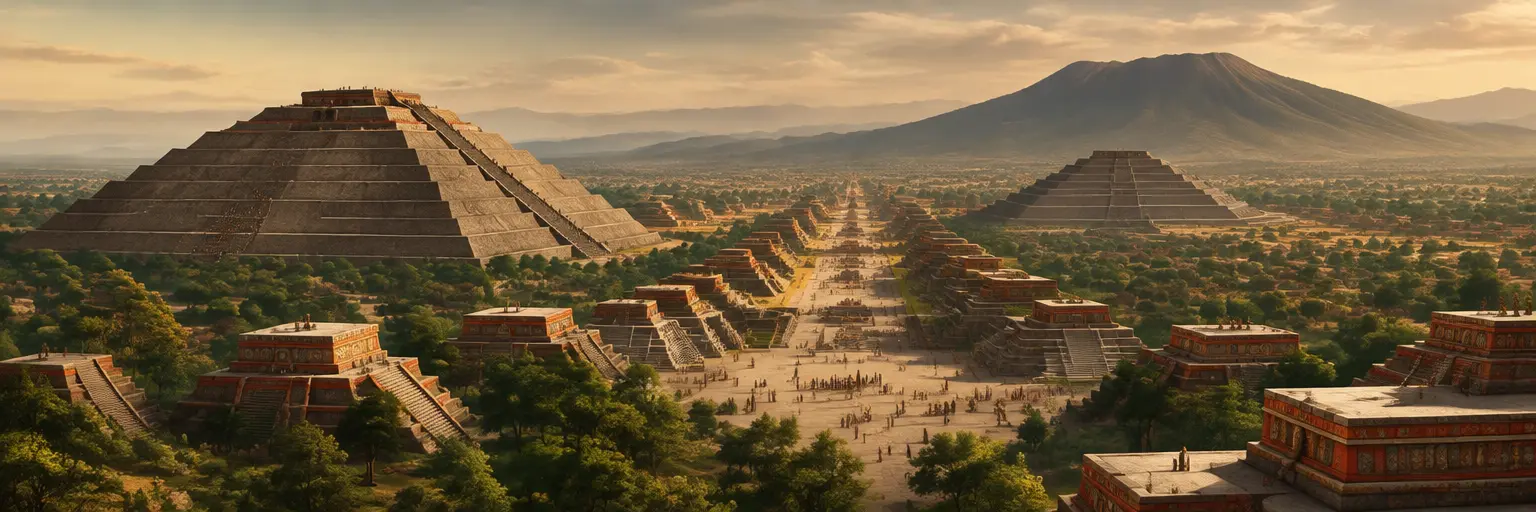
Teotihuacan’s urban layout is a masterpiece of geometric precision and cosmic symbolism. The Pyramid of the Sun, the third-largest pyramid in the ancient world, dominates the eastern side of the Avenue of the Dead, while the Pyramid of the Moon anchors the northern terminus. The city’s grid-like orientation—aligned 15.5 degrees east of true north—reflects astronomical observations tied to solar cycles and the Pleiades star cluster. Excavations reveal sophisticated drainage systems, residential compounds, and ceremonial plazas, showcasing advanced engineering without the use of wheels or metal tools.
Visitors and researchers alike will appreciate our detailed floor plans, 3D reconstructions, and stratigraphic profiles. We explore how the Citadel—a massive sunken plaza—housed the Temple of the Feathered Serpent (Quetzalcoatl), adorned with alternating serpent heads and Tlaloc masks. These architectural choices were not merely functional; they communicated political power, religious devotion, and a shared identity among diverse ethnic groups. Our archive also includes recent LiDAR surveys that reveal hidden structures beneath the modern landscape, offering fresh perspectives on suburban expansion and resource management.
🎨 Art, Murals, and Symbolic Iconography
Teotihuacan’s artistic legacy is a vivid window into its worldview. Over 1,500 mural fragments have been cataloged, depicting processions of priests, jaguars, eagles, and anthropomorphic deities. The Palace of the Jaguars and the Tepantitla compound feature the famous “Paradise of Tlaloc” mural, illustrating a lush afterlife with butterflies, flowers, and flowing streams. Colors derived from cinnabar, hematite, and malachite were applied using fresco techniques, ensuring durability for centuries. These artworks are not just decorative; they encode calendrical rituals, mythological narratives, and social hierarchies.
Our subcategory offers high-resolution image galleries, pigment analysis reports, and iconographic glossaries. We break down recurring motifs such as the Storm God, the Great Goddess, and feathered serpents, linking them to Mesoamerican cosmology and agricultural cycles. Comparative studies with Maya and Zapotec art highlight both shared symbols and unique Teotihuacan innovations. For enthusiasts, we provide downloadable teaching kits and interactive maps that trace the spread of these motifs across Mexico, Guatemala, and Belize through trade and diplomatic exchange.
👥 Society, Economy, and Multicultural Life
Teotihuacan was a melting pot, with evidence of distinct neighborhoods—Oaxacan, Maya, and Gulf Coast enclaves—each maintaining their own languages, diets, and burial customs. Stable isotope analyses of human bones reveal a diet rich in maize, beans, and squash, supplemented by wild game. Craft specialization was highly organized: obsidian workshop zones produced thousands of blades, arrowheads, and eccentric artifacts, while ceramic kilns in the Ciudadela mass-produced tripod vessels and incense burners. The marketplace, likely located near the Great Compound, facilitated trade in cacao, cotton, jade, and exotic bird feathers from distant lowlands.
We examine the political structure, which seemingly operated as a corporate or collective state rather than a dynastic monarchy. Unlike the later Aztec or Maya rulers, no single royal tomb has been found, suggesting governance by councils of elites. Our profiles of residential compounds, like Xalla and La Ventilla, detail household rituals, domestic labor, and social stratification. We also discuss recent DNA research that identifies multi-generational migration patterns, illuminating how Teotihuacan absorbed foreign populations while projecting cultural influence across Mesoamerica.
🔭 Astronomical Alignments and Cosmology
The city’s layout is a giant observatory. The Sun Pyramid’s base is oriented to sunset on specific days, while an artificial cave beneath it likely served as a ritual entry to the underworld. The Avenue of the Dead aligns with the Pleiades rise, tying agricultural calendars to stellar cycles. Scholars debate whether these alignments were deliberate or emergent, but excavation of the Moon Pyramid uncovered burials with captive individuals and sacrificial offerings, suggesting ceremonies timed to celestial events. Our resource includes star charts, solstice calculators, and virtual tours that simulate the sky view from key plazas at critical dates.
We also explore the Teotihuacan measuring system, possibly based on the “hunab” unit of 83 cm, used to plan large-scale constructions with mathematical consistency. The use of talud-tablero architecture (sloped base with vertical panel) became a hallmark, later adopted by Maya cities like Tikal and Copán. For digital scholars, we provide raw alignment data, horizon photographs, and comparisons with other Mesoamerican urban centers. This depth aids in understanding how Teotihuacan asserted itself as a cosmic axis, mediating between human and divine realms through spatial choreography.
💥 The Collapse and Post-Teotihuacan Legacy
Around 550–650 CE, Teotihuacan experienced rapid decline: evidence of burning in ceremonial areas, elite sculptures defaced, and population shifts to marginal zones. Theories range from internal revolt against ruling elites, prolonged drought, or disruption of trade routes. Our analysis synthesizes paleoclimatological data (speleothems, lake sediments) with ceramic seriation and radiocarbon dates to propose a multi-causal collapse, not a single cataclysm. Following its fall, the city was not fully abandoned; squatters and pilgrims revisited it for centuries, and Aztec kings later claimed Teotihuacan as a sacred pilgrimage site, even renaming it “Place of the Gods.”
We trace the cultural afterlives of Teotihuacan motifs—stone masks, incense burners, and architecture—in later Postclassic cultures. For instance, the Mixtec codices and Aztec Tenochtitlan borrowed artistic elements, while pilgrimage routes to the ruins persisted into the sixteenth century. Our subcategory offers a timeline of reinterpretations, from Spanish colonial chroniclers to modern nationalist archaeology. We also discuss current preservation challenges, including erosion, looting, and urban encroachment from Mexico City’s sprawl, and highlight ongoing conservation projects using non-invasive imaging and sustainable tourism practices.
Frequently Asked Questions
What is the significance of the Pyramid of the Sun at Teotihuacan?
The Pyramid of the Sun, built around 100 CE, is the largest structure in Teotihuacan and one of the tallest in ancient Mesoamerica. Its base covers nearly 45 acres, and it was aligned to sunset on astronomical dates. It served as a focal point for solar worship and community rituals, with a cave beneath believed to be a mythological place of origin.
Who are the Great Goddess and the Storm God in Teotihuacan art?
The Great Goddess is a distinctive female deity associated with caves, spiders, and earth, often depicted with disembodied hands and streams of water. The Storm God, likely an ancestor of Tlaloc, was linked to rain, lightning, and warfare. Both are central to murals and ceramics, representing agricultural fertility and cosmological duality in Teotihuacan religion.
How did Teotihuacan influence other Mesoamerican cultures?
Through trade, diplomacy, and migration, Teotihuacan spread its talud-tablero architecture, thin orange pottery, and iconographic motifs across Maya, Zapotec, and central Mexican regions. Cities like Tikal adopted building styles, and murals in Cacaxtla show Teotihuacan warrior imagery. However, political control was rarely direct, indicating cultural influence rather than imperial domination.
What evidence exists for ethnic diversity at Teotihuacan?
Excavations of residential compounds, such as the Oaxaca barrio and Maya enclave, show distinct cemetery styles, languages, and imported ceramics from their homelands. Oxygen isotope analyses of teeth reveal individuals born in distant regions, suggesting long-term immigration. This diversity fostered artistic and technological exchange but also led to social segregation in some cases.
Why did Teotihuacan collapse, and what happened afterward?
The collapse around 550–650 CE likely resulted from a combination of power struggles, environmental stress (drought), and economic disruption. Burning of elite buildings and the destruction of statues suggest a revolt. Afterward, the site retained religious significance, and later Aztec elites honored it as a sacred site, using its ruins for ancestor worship and political legitimacy.