
Teotihuacan and its Contemporaries: Interactions with Monte Albán and Cholula

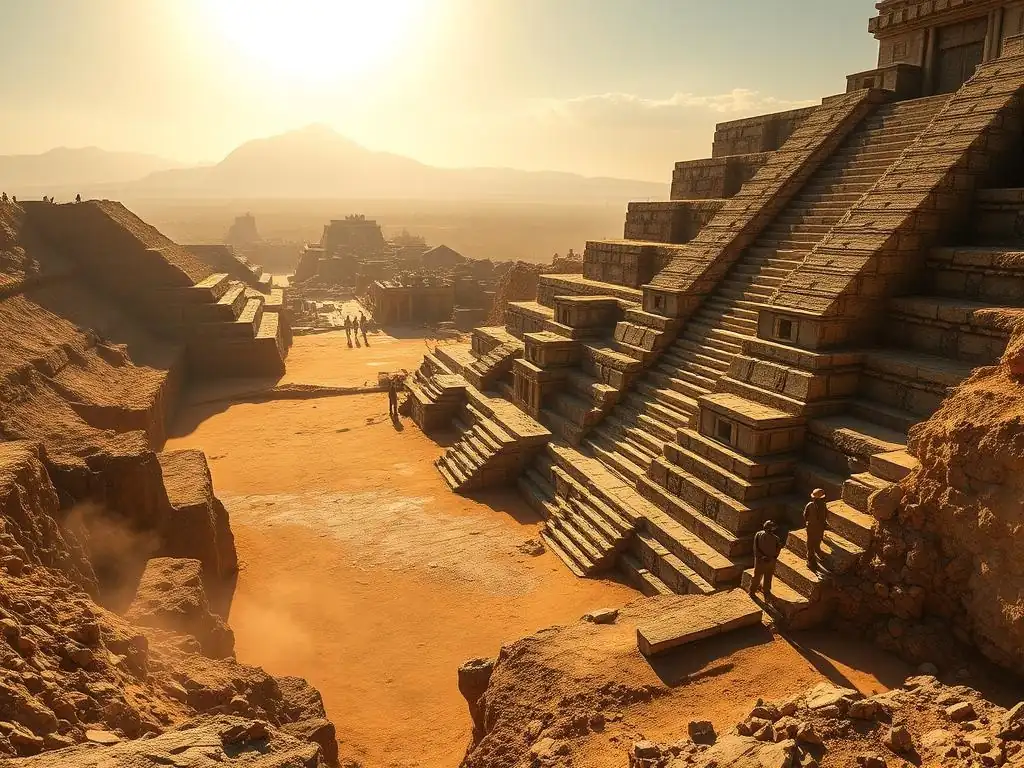
Welcome to ArchaeologyHub.org, your gateway to unlocking the secrets of the past.
Delve into the fascinating world of ancient Mesoamerica as we explore the intricate relationships between Teotihuacan and its Contemporaries: Monte Albán and Cholula. Uncover the political, economic, and cultural dynamics that shaped these powerful civilizations and discover the enduring legacies they left behind. What secrets lie buried beneath the pyramids and plazas? Prepare to journey back in time and unravel the mysteries that connect these iconic sites.
- Introduction: Understanding Inter-city Dynamics in Ancient Mesoamerica
- Teotihuacan: The Rise of a Mesoamerican Metropolis
- Monte Albán: Zapotec Power in the Valley of Oaxaca
- Cholula: A Sacred City and Center of Pilgrimage
- Teotihuacan and Monte Albán: Tracing Interactions and Influences
- Teotihuacan and Cholula: Exploring Shared Cultural Traits
- Monte Albán and Cholula: Independent Trajectories and Distinct Identities
- The Decline of Teotihuacan and its Impact on Monte Albán and Cholula
- Comparative Analysis: Teotihuacan, Monte Albán, and Cholula
- Conclusion: The Legacy of Interconnectedness in Ancient Mesoamerica
-
Frequently Asked Questions
- What evidence suggests interactions between Teotihuacan, Monte Albán, and Cholula?
- How did Teotihuacan's influence impact Monte Albán and Cholula?
- What role did trade play in the relationship between these three cities?
- Were there any conflicts between Teotihuacan, Monte Albán, and Cholula?
- How did the decline of Teotihuacan affect Monte Albán and Cholula?
- Final Reflection: Echoes of Ancient Exchange
- Unearth Your Inner Archaeologist: Dig Deeper into Ancient Mesoamerica!
Introduction: Understanding Inter-city Dynamics in Ancient Mesoamerica
The Significance of Studying Teotihuacan, Monte Albán, and Cholula
The study of ancient Mesoamerica is incomplete without a deep dive into the complex relationships that existed between its most prominent urban centers. Among these, Teotihuacan, Monte Albán, and Cholula stand out as pivotal players, each representing distinct cultural trajectories yet intertwined through various forms of interaction.
Examining the dynamics between these three cities, particularly during the Classic period (roughly 200-900 CE), offers invaluable insights into the political, economic, and cultural networks that shaped the pre-Columbian world. Understanding how Teotihuacan Monte Albán Cholula engaged with one another—through trade, diplomacy, shared religious practices, or even conflict—reveals the intricate web of influence that extended across vast distances.
This focused exploration helps us move beyond isolated narratives of individual cities to appreciate the broader, interconnected Mesoamerican landscape. For instance, the presence of Teotihuacan-style artifacts in Monte Albán or the architectural parallels between Teotihuacan and Cholula are not mere coincidences but tangible evidence of active, sustained contact. These interactions, whether direct or indirect, profoundly impacted the development, resilience, and eventual decline of each civilization, making their comparative analysis a cornerstone of Mesoamerican archaeology.
Focus: Contextualizing Teotihuacan within Mesoamerican Civilization
Teotihuacan, located in the Basin of Mexico, emerged as the largest and most influential metropolis in Mesoamerica during the Classic period, potentially hosting a population exceeding 125,000 to 200,000 residents at its zenith. Its monumental architecture, sophisticated urban planning, and extensive trade networks projected its influence far beyond its immediate surroundings. However, Teotihuacan did not exist in a vacuum; its rise to prominence and its eventual decline were inextricably linked to its relationships with other major centers.
This article specifically aims to contextualize Teotihuacan by examining its interactions with two other significant urban centers: Monte Albán in the Valley of Oaxaca and Cholula in the Puebla-Tlaxcala Valley. By tracing the archaeological evidence of these relationships, we can better understand the mechanisms of power projection, cultural diffusion, and economic exchange that characterized the Classic period. The study of Teotihuacan Monte Albán Cholula interactions is crucial for deciphering the complex political geography and cultural mosaic of ancient Mesoamerica.
Teotihuacan: The Rise of a Mesoamerican Metropolis
Teotihuacan's Urban Planning and Sociopolitical Organization
Teotihuacan's urban layout is a testament to its highly organized society and centralized authority. The city was meticulously planned on a grid system, oriented 15.5 degrees east of true north, with the monumental Avenue of the Dead serving as its central axis.
Flanking this grand avenue were massive structures like the Pyramid of the Sun (with a base measuring approximately 225 meters per side and a height of 63 meters), the Pyramid of the Moon, and the Ciudadela, which housed the Temple of the Feathered Serpent. The city was divided into distinct residential compounds, often referred to as "apartment compounds," which housed multiple families, possibly organized by kinship or occupation.
These compounds, numbering over 2,000, suggest a highly structured, corporate society rather than one dominated by a single dynastic ruler, as seen in many contemporary Maya cities. The uniform architectural style and the apparent lack of grandiose individual royal tombs point towards a more collective form of governance, perhaps involving a council or a shared elite authority. This unique sociopolitical model allowed Teotihuacan to manage its vast population and complex infrastructure effectively, facilitating specialized craft production and long-distance trade.
Economic Power and Influence of Teotihuacan
Teotihuacan's economic prowess was largely rooted in its control over valuable resources and sophisticated manufacturing. The city was a primary center for the production and distribution of obsidian tools, particularly from the rich Pachuca obsidian sources located north of the Basin of Mexico. This distinctive green obsidian has been found in archaeological sites across Mesoamerica, from the Maya lowlands to the Pacific coast of Guatemala and as far south as Costa Rica, indicating Teotihuacan's dominant role in long-distance trade networks.
Beyond obsidian, Teotihuacan was also renowned for its distinctive Thin Orange ware pottery, a fine, high-fired ceramic that was widely traded and emulated. Other craft specializations included intricate shell work, textiles, and elaborate murals that adorned public buildings and elite residences. The city's economic influence was not merely extractive; it involved a complex system of production, distribution, and potentially diplomatic relations that facilitated the widespread adoption of Teotihuacan goods and, by extension, its cultural influence across various regions, including those inhabited by Monte Albán and Cholula.
Monte Albán: Zapotec Power in the Valley of Oaxaca
Monte Albán's Strategic Location and Defensive Architecture
Monte Albán, the capital of the Zapotec state, occupied a commanding position atop a flattened mountain ridge overlooking the three arms of the Valley of Oaxaca. This strategic location, approximately 400 meters above the valley floor, provided natural defensive advantages and an unparalleled panoramic view, allowing its inhabitants to monitor activity across a wide region. The city's planners further enhanced its defensibility with the construction of massive walls, ditches, and fortified gateways, particularly noticeable during its earlier phases (Monte Albán I and II, 500 BCE - 250 CE).
The city's central plaza, an expansive open space, was surrounded by elite residences, temples, and ballcourts. Evidence of warfare and conquest is prominently displayed in the "Danzantes" gallery, a series of carved stone slabs depicting nude, contorted figures, often interpreted as slain captives from conquered rival polities. This imagery underscores Monte Albán's aggressive expansionist policy and its role as a unifying force in the Oaxaca Valley, consolidating power and resources under Zapotec rule.
Monte Albán exhibited a clear and well-defined social hierarchy, characteristic of a centralized state. Archaeological evidence, including elaborate tombs (such as Tomb 7, a rich burial found by Alfonso Caso), elite residential compounds, and monumental public architecture, points to a ruling class that wielded significant power and authority. This elite stratum, likely composed of hereditary rulers and priests, oversaw the administration of the city-state, the maintenance of its infrastructure, and the organization of religious ceremonies.
The Zapotec developed their own sophisticated writing system, one of the earliest in Mesoamerica, and a complex calendrical system, both of which were instrumental in record-keeping, legitimizing rulers, and scheduling rituals. Inscriptions on stelae and carved monuments document dynastic lineages, military victories, and astronomical observations, reinforcing the divine right of the rulers. Unlike Teotihuacan's apparent corporate governance, Monte Albán's political system was clearly centralized around a divine ruler, a distinct governance model that shaped its interactions with other major centers like Teotihuacan and Cholula.
Cholula: A Sacred City and Center of Pilgrimage
The Great Pyramid of Cholula: A Monumental Construction
Cholula, situated in the Puebla-Tlaxcala Valley, is perhaps best known for its colossal Great Pyramid (Tlachihualtepetl, "artificial mountain"), which boasts the largest base of any pyramid in the world, covering an area of approximately 18.2 hectares (45 acres) and with an estimated volume of 4.5 million cubic meters. This monumental structure is not a single construction but rather a series of superimposed pyramids, built and expanded over more than a thousand years, from roughly 300 BCE to 900 CE. Each new phase enveloped the previous one, leading to its immense size and complex internal structure.
The pyramid's construction involved millions of adobe bricks and earth fill, demonstrating an extraordinary mobilization of labor and resources. Early phases of the pyramid incorporate talud-tablero architecture, reminiscent of Teotihuacan's style, suggesting early cultural exchange. Its continuous growth and adaptation reflect Cholula's enduring importance as a sacred site throughout various Mesoamerican periods, even into the Postclassic era when it remained a significant religious center long after the decline of Teotihuacan.
Religious Significance and Cultural Influence of Cholula
Cholula's enduring legacy lies primarily in its role as a major religious center and pilgrimage destination, attracting devotees from diverse regions across Mesoamerica. Its strategic location at a crossroads of trade routes facilitated the flow of people, ideas, and goods, making it a vibrant cultural melting pot. Archaeological evidence suggests a rich tapestry of religious practices and a pantheon of deities that evolved over centuries, reflecting both indigenous traditions and external influences.
The Great Pyramid itself was a focal point for rituals and offerings, with discoveries of elaborate caches, burials, and painted murals within its various construction layers. Cholula's cultural influence extended through its role as an intermediary, disseminating religious concepts, architectural styles, and ceramic traditions. Its unique position as a sacred hub meant that it absorbed and reinterpreted influences from powerful neighbors like Teotihuacan, while simultaneously projecting its own distinct identity through its highly developed polychrome pottery and unique ceremonial practices, making it a crucial link in the network of Teotihuacan Monte Albán Cholula interactions.
Teotihuacan and Monte Albán: Tracing Interactions and Influences
Archaeological Evidence of Contact Between Teotihuacan and Monte Albán
Archaeological findings provide compelling evidence of direct and indirect contact between Teotihuacan and Monte Albán. One of the most significant indicators is the presence of a "Teotihuacan barrio" or enclave within Monte Albán, specifically identified through the discovery of Teotihuacan-style pottery, architecture, and burial practices in a distinct sector of the Zapotec capital. While not a large, formally designated district, the concentration of Teotihuacan-style cylindrical tripod vessels, Thin Orange ware, and even some talud-tablero architectural elements in specific elite contexts suggests the presence of Teotihuacan residents, possibly diplomats, merchants, or artisans.
Furthermore, obsidian sourcing studies have identified Pachuca obsidian, controlled by Teotihuacan, in Monte Albán contexts, albeit in smaller quantities compared to local obsidian sources. This indicates a selective exchange, likely for high-value items or as part of diplomatic gifts. The limited yet distinct presence of Teotihuacan material culture in Monte Albán suggests a relationship characterized by diplomacy and elite exchange rather than direct political domination, highlighting the Zapotec state's strong autonomy.
Trade Routes and Exchange of Goods Between Teotihuacan and Monte Albán
The interactions between Teotihuacan and Monte Albán were facilitated by established long-distance trade routes, though the precise paths remain subjects of ongoing research. Goods exchanged likely included prestige items and specialized crafts rather than bulk commodities. Teotihuacan primarily exported its signature Pachuca obsidian, used for high-quality blades and ritual objects, and Thin Orange ware pottery, which was highly prized across Mesoamerica for its distinctive style and durability.
In return, Monte Albán likely offered goods unique to the Oaxaca region, such as specific types of jade, cochineal dye (derived from insects), or possibly cacao from more southern reaches of its influence. While the volume of trade might not have been as extensive as Teotihuacan's trade with closer regions, the presence of these foreign goods in elite contexts at both sites underscores a deliberate and organized system of exchange, possibly managed by state-level entities or specialized merchant guilds, reinforcing the interconnectedness of Teotihuacan Monte Albán Cholula economies.
Teotihuacan Influence on Zapotec Art and Architecture
The question of Teotihuacan influence on Zapotec art and architecture is complex, often involving adaptation rather than direct replication. While distinct Teotihuacan architectural elements, such as the talud-tablero style, appear in some structures at Monte Albán, they are typically integrated in a modified Zapotec form. For instance, the Zapotec version of talud-tablero often features simpler, less ornate tableros compared to their Teotihuacan counterparts. This suggests a selective adoption or a shared architectural tradition rather than a direct imposition.
In terms of art, while some motifs like the feathered serpent or Tlaloc-like imagery are shared across Mesoamerica, their specific iconographies and interpretations often differ between Teotihuacan and Monte Albán. Zapotec art maintained its strong regional identity, characterized by distinct ceramic urns depicting deities and ancestors, elaborate tomb murals, and a unique glyphic writing system. While there was clearly contact, Monte Albán largely retained its artistic autonomy, absorbing influences in a way that reinforced, rather than supplanted, its indigenous Zapotec aesthetic.
Religious Syncretism and Similarities in Ritual Practices
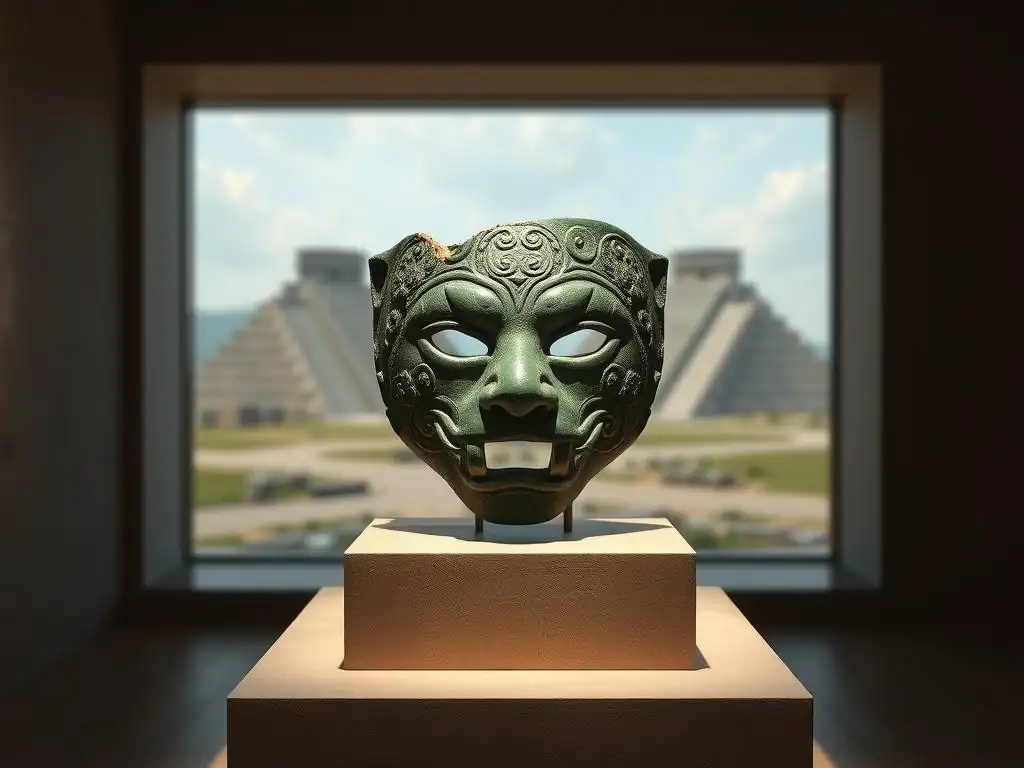
Cholula's role as a major pilgrimage center naturally led to a degree of religious syncretism, where elements from various Mesoamerican traditions were incorporated into its local practices. The influence of Teotihuacan is particularly evident in shared deities and ritual concepts. For example, prominent Teotihuacan deities like Tlaloc (the rain god) and Quetzalcoatl (the feathered serpent deity) appear in Cholula's iconography and religious architecture. The presence of Teotihuacan-style ritual paraphernalia and offerings in Cholula suggests the adoption of certain ceremonial practices or the participation of Teotihuacan pilgrims and priests.
Archaeological discoveries within the Great Pyramid of Cholula and surrounding areas have revealed caches and burials with offerings that bear resemblances to Teotihuacan ritual deposits, including specific types of green obsidian blades and ceramic vessels. This shared ritual vocabulary indicates a significant level of cultural exchange, possibly facilitated by Cholula's open and accommodating religious environment. This cultural blending suggests a strong religious connection, making Cholula a key conduit for the spread of Teotihuacan religious ideas across the central highlands.
Architectural Parallels Between Teotihuacan and Cholula
One of the most striking architectural parallels between Teotihuacan and Cholula is the pervasive use of the talud-tablero architectural style. This distinctive style, characterized by an inclined lower panel ( talud) supporting a vertical upper panel ( tablero), is a hallmark of Teotihuacan monumental architecture. In Cholula, particularly in the earlier phases of the Great Pyramid and in structures like the Patio of the Altars, talud-tablero constructions are abundantly present and closely resemble those found in Teotihuacan.
This strong architectural similarity indicates either direct influence, the presence of Teotihuacan architects or masons in Cholula, or the widespread adoption of a prestigious architectural idiom. The "Patio of the Altars" complex, with its Teotihuacan-style altars and platforms, further strengthens the argument for significant architectural exchange. These parallels are not merely aesthetic; they suggest a shared understanding of monumental expression and possibly a common ideological framework, underscoring the deep connections between Teotihuacan Monte Albán Cholula architectural traditions.
The Role of Cholula as a Potential Ally or Rival of Teotihuacan
Cholula's strategic location at a nexus of trade routes, combined with its immense religious significance, positioned it as a crucial player in the Classic Mesoamerican political landscape. While direct evidence of its political relationship with Teotihuacan is scarce, scholars propose several possibilities: Cholula could have been a key ally, a subordinate client state, or an independent entity with strong diplomatic ties. The widespread presence of Teotihuacan-style artifacts, including green Pachuca obsidian and Thin Orange ware pottery, in Cholula suggests robust economic and cultural ties, indicative of a friendly or at least cooperative relationship.
Given Cholula's religious magnetism, it might have served as a vital pilgrimage destination for Teotihuacanos, fostering a unique form of alliance based on shared spiritual interests. Conversely, its independence and significant regional influence could have made it a potential rival for control over central highland trade routes, though direct conflict is not well documented. Most evidence points to a strong, mutually beneficial relationship, where Cholula acted as a crucial gateway, facilitating the movement of goods and ideas between Teotihuacan and other regions to the south and east.
Monte Albán and Cholula: Independent Trajectories and Distinct Identities
Contrasting Political Systems: Zapotec Autonomy vs. Cholula's Adaptability
Monte Albán and Cholula, despite their interactions with the dominant Teotihuacan, maintained remarkably distinct political systems and trajectories. Monte Albán represented a powerful, centralized Zapotec state, characterized by a dynastic ruling lineage, a sophisticated writing system, and a military apparatus capable of unifying and controlling the Valley of Oaxaca. Its political structure emphasized autonomy and territorial integrity, evidenced by its defensive architecture and monuments celebrating military conquests. The Zapotec state at Monte Albán largely resisted direct political subjugation by external powers, including Teotihuacan.
In contrast, Cholula's political organization appears to have been more fluid and decentralizing, perhaps less focused on territorial conquest and more on its role as a sacred, pan-Mesoamerican pilgrimage center. Its adaptability allowed it to absorb diverse cultural influences without losing its core identity. While it certainly held regional political sway, its power was arguably more religiously and economically driven than militarily consolidated, differentiating it significantly from Monte Albán's more rigid, state-centric governance.
Distinct Artistic Styles and Cultural Expressions
Despite the occasional adoption of external elements, both Monte Albán and Cholula developed and maintained highly distinct artistic styles that reflected their unique cultural identities. Zapotec art, exemplified by the intricate ceramic funerary urns depicting specific deities and ancestors, the distinctive glyphic writing system, and the powerful imagery of the "Danzantes," is unmistakably unique to the Oaxaca region. While some shared Mesoamerican motifs exist, their execution and contextual meaning are distinctly Zapotec.
Cholula, while embracing influences from Teotihuacan and later from Gulf Coast cultures, also developed its own renowned artistic traditions, particularly in its polychrome pottery. The Cholula polychrome style, characterized by its vibrant colors and intricate designs often depicting mythological scenes or geometric patterns, became highly sought after in the Postclassic period, but its origins are rooted in earlier Classic period developments. These distinct artistic expressions underscore that even amidst widespread interactions, the cultures of Teotihuacan Monte Albán Cholula preserved their individual creative spirits and regional identities.
Competition for Regional Dominance
While Teotihuacan was the overarching power in the Classic period, Monte Albán and Cholula also engaged in their own regional power dynamics and competition. Monte Albán, as the capital of the Zapotec state, actively expanded its control throughout the Valley of Oaxaca and into neighboring regions, often through military campaigns against rival Zapotec centers or other ethnic groups. Its focus was on consolidating and maintaining its hegemony within its immediate sphere of influence, rather than directly challenging Teotihuacan.
Cholula, positioned at a strategic crossroads, likely competed for influence over local trade routes and pilgrimage networks within the Puebla-Tlaxcala basin and beyond. Its economic and religious prominence would have naturally led to a degree of rivalry with other regional centers vying for control over resources and populations. While direct military confrontation between Monte Albán and Cholula is not extensively documented, their distinct spheres of influence and independent trajectories indicate that they were significant regional players with their own interests and ambitions, contributing to the complex tapestry of Classic Mesoamerica.
The Decline of Teotihuacan and its Impact on Monte Albán and Cholula
Theories on the Collapse of Teotihuacan's Empire
The collapse of Teotihuacan, around 550-600 CE, marks a pivotal moment in Mesoamerican history and remains a subject of intense archaeological debate. No single cause is universally accepted, but multiple theories propose a combination of internal and external factors. Internal theories suggest socio-political instability, perhaps an elite revolt or a breakdown in governance, evidenced by the deliberate burning and destruction of elite structures along the Avenue of the Dead. Environmental degradation, such as prolonged droughts, deforestation, or soil exhaustion, could have led to resource scarcity and famine, exacerbating internal tensions.
External theories propose invasion or pressure from migrating groups, though direct evidence for a large-scale conquest is limited. It is more likely that a combination of these factors, including a period of severe drought from 535-536 CE that impacted agricultural output, contributed to a systemic collapse. The city's population dramatically declined, and its monumental core was largely abandoned, ushering in a period of shifting power dynamics across Mesoamerica.
The Aftermath: How Monte Albán and Cholula Adapted to the Power Vacuum
The decline of Teotihuacan created a significant power vacuum in the Mesoamerican highlands, prompting Monte Albán and Cholula to adapt in distinct ways. Monte Albán, already a formidable regional power, continued to flourish for approximately another 200-300 years (Classic to Early Postclassic), albeit with some internal changes. The cessation of Teotihuacan's influence may have allowed Monte Albán to further consolidate its regional hegemony without a dominant northern rival. While the Zapotec state eventually fragmented into smaller polities, this process was gradual and distinct from Teotihuacan's abrupt collapse.
Cholula, with its deeply ingrained religious significance, also demonstrated remarkable resilience. Its role as a pilgrimage center likely continued, possibly even increasing in importance as other centers declined. The city continued to be inhabited and its Great Pyramid expanded, albeit under new cultural influences. Cholula's adaptable nature, perhaps less reliant on a rigid political structure, allowed it to weather the storm and transition into a prominent Postclassic center, demonstrating the long-term impact of Teotihuacan Monte Albán Cholula interactions.
Shifting Power Dynamics in Post-Teotihuacan Mesoamerica
The collapse of Teotihuacan fundamentally altered the political and economic landscape of Mesoamerica. The centralized power structure of the Classic period gave way to a more fragmented and militarized Late Classic and Epiclassic period (600-900 CE). New regional centers, such as Xochicalco and Cacaxtla in the central highlands, rose to prominence, often adopting defensive strategies and incorporating diverse iconographic styles, reflecting the increased competition and interaction between polities.
Monte Albán and Cholula navigated this new environment by maintaining their regional significance, though their roles evolved. Monte Albán eventually saw a decline in its centralized power, with a shift towards smaller, independent Zapotec and later Mixtec centers in the Oaxaca Valley. Cholula, however, continued to thrive as a key religious and commercial hub, attracting new populations and becoming a melting pot of Epiclassic and Early Postclassic traditions. The enduring legacies of Teotihuacan Monte Albán Cholula are evident in how their individual trajectories were shaped by the presence, and eventual absence, of the dominant Teotihuacan metropolis.
Comparative Analysis: Teotihuacan, Monte Albán, and Cholula
Sociopolitical Structures: A Comparative Overview
The sociopolitical structures of Teotihuacan, Monte Albán, and Cholula present fascinating contrasts, reflecting diverse approaches to urban governance in ancient Mesoamerica. Teotihuacan, uniquely, appears to have been governed by a highly organized, possibly corporate or collective elite, rather than a single dynastic ruler. The city's numerous apartment compounds suggest a horizontally stratified society with a strong emphasis on communal living and administration, distinct from the royal courts found elsewhere.
In stark contrast, Monte Albán was the capital of a centralized Zapotec state with a clear dynastic lineage, where power was concentrated in the hands of a hereditary ruling class. Evidence from stelae, tombs, and palaces points to a divinely sanctioned monarchy that commanded military and religious authority.
Cholula, on the other hand, seems to have possessed a more fluid and religiously oriented political structure. While it certainly had local elites, its primary influence stemmed from its role as a pan-Mesoamerican pilgrimage center, suggesting a governance model perhaps more focused on religious administration and economic facilitation than on rigid political control or military expansion.
Economic Systems and Trade Networks
The economic systems and trade networks of Teotihuacan Monte Albán Cholula were distinct yet interconnected. Teotihuacan’s economy was characterized by large-scale, state-controlled production, particularly of obsidian tools from Pachuca and Thin Orange ware pottery. Its extensive long-distance trade networks reached far across Mesoamerica, making it an economic hegemon. This control allowed Teotihuacan to project its influence through the distribution of highly valued goods.
Monte Albán's economy, while sophisticated, was more regionally focused, centered on intensive agriculture within the Oaxaca Valley, localized craft production, and regional exchange networks. While it participated in long-distance trade, its economic power was not as expansive or dominant as Teotihuacan's. Cholula, strategically located at a crossroads, served as a vital trade hub, facilitating the movement of goods between the Basin of Mexico, the Gulf Coast, and southern regions.
It also developed its own specialized craft production, notably its distinctive polychrome pottery in later periods, which became widely traded. Each city carved out a unique economic niche within the broader Mesoamerican system.
Religious Beliefs and Ritual Practices
Religious beliefs and ritual practices also varied among these three major centers, reflecting both shared Mesoamerican traditions and distinct local developments. Teotihuacan's pantheon prominently featured deities like Tlaloc, the Feathered Serpent (Quetzalcoatl), and the Great Goddess, with rituals often involving large-scale public ceremonies, human sacrifice, and elaborate offerings within its monumental pyramids. Its religious iconography was widely disseminated through art and architecture.
Monte Albán's Zapotec religion placed a strong emphasis on ancestor veneration, rain deities, and specific calendrical rituals. Funerary practices, including elaborate tombs and ceramic urns depicting ancestors and deities, were central to their religious life. Their unique writing system was often used to record religious events and dynastic lineages.
Cholula, as a pilgrimage center, demonstrated a remarkable capacity for religious syncretism, incorporating elements from various traditions, including Teotihuacan's, while maintaining its own core cults related to its immense pyramid. Its religious practices were characterized by a diverse range of offerings and ceremonies, reflecting its role as a spiritual melting pot.
Conclusion: The Legacy of Interconnectedness in Ancient Mesoamerica
Understanding the Complex Relationships Between Teotihuacan, Monte Albán, and Cholula
The study of Teotihuacan, Monte Albán, and Cholula reveals a dynamic and complex web of interactions that shaped the trajectory of Classic Mesoamerican civilization. These were not isolated city-states but integral components of a vast, interconnected system, engaging in diverse forms of exchange ranging from economic trade and diplomatic relations to the diffusion of architectural styles and religious ideas. While Teotihuacan exerted a powerful, far-reaching influence, Monte Albán and Cholula maintained their distinct identities and adapted these influences in unique ways, demonstrating remarkable cultural resilience and political autonomy.
The archaeological evidence, from obsidian sourcing and ceramic distribution to architectural parallels and shared iconography, paints a nuanced picture of these relationships. It highlights that the interactions between Teotihuacan Monte Albán Cholula were not uniform but varied in intensity and nature over time, reflecting shifting power dynamics and evolving cultural landscapes. This intricate network of relationships is fundamental to understanding the overall complexity and sophistication of ancient Mesoamerican societies.
The Importance of Interdisciplinary Research in Mesoamerican Archaeology
Deciphering the intricate relationships between ancient Mesoamerican cities like Teotihuacan, Monte Albán, and Cholula necessitates an interdisciplinary approach. Archaeology provides the foundational material evidence through excavations, artifact analysis, and urban planning studies. However, combining these insights with epigraphy (the study of ancient writing), iconography (the analysis of visual symbols), and comparative studies of sociopolitical and economic systems from various sites enriches our understanding significantly.
For instance, ceramic analysis and obsidian sourcing provide concrete data on trade routes and economic spheres of influence. Architectural comparisons reveal shared aesthetic principles and potential movements of artisans or ideas. The integration of environmental studies helps contextualize the challenges and opportunities faced by these civilizations. This holistic approach is crucial for moving beyond simplistic narratives and for building a more comprehensive and accurate picture of the interconnectedness that defined the Classic period in Mesoamerica.
Further Research Directions
Despite decades of intensive research, many aspects of the Teotihuacan Monte Albán Cholula interactions remain ripe for further investigation. Future research could focus on refining chronological sequences to pinpoint the precise timing and duration of specific contacts. More extensive chemical analyses of artifacts, such as obsidian and pottery, could yield more precise data on trade routes and production centers. Investigations into smaller, intermediary sites along proposed trade routes could shed light on the mechanisms of exchange and the role of regional actors.
Furthermore, comparative studies of burial practices and skeletal remains could offer insights into population movements and intermarriage between groups from these cities. Deeper analysis of iconographic variations and their local interpretations could illuminate the nuances of cultural borrowing and adaptation. Continued excavation at these monumental sites, coupled with advanced scientific techniques, promises to uncover even more compelling evidence of the fascinating and complex relationships that shaped the ancient world of Teotihuacan, Monte Albán, and Cholula.
Frequently Asked Questions
What evidence suggests interactions between Teotihuacan, Monte Albán, and Cholula?
Archaeological evidence reveals trade networks, shared religious iconography, and possibly political alliances between these major Mesoamerican centers. Similar architectural styles and artifact distributions further support these interactions.
How did Teotihuacan's influence impact Monte Albán and Cholula?
Teotihuacan's economic and political power likely influenced the development of Monte Albán and Cholula. This influence may have manifested through trade dependencies and the adoption of Teotihuacan cultural elements.
What role did trade play in the relationship between these three cities?
Trade was crucial, facilitating the exchange of obsidian, ceramics, and other valuable goods. This exchange fostered economic interdependence and the spread of cultural ideas among Teotihuacan, Monte Albán, and Cholula.
Were there any conflicts between Teotihuacan, Monte Albán, and Cholula?
While direct evidence of large-scale warfare is limited, competition for resources and political dominance likely led to conflicts. This competition could have influenced shifting alliances and regional power dynamics.
How did the decline of Teotihuacan affect Monte Albán and Cholula?
The decline of Teotihuacan resulted in power vacuums that Monte Albán and Cholula sought to fill. This led to increased regional competition and the development of new political and economic strategies.
Final Reflection: Echoes of Ancient Exchange
The intricate web of interactions between Teotihuacan, Monte Albán, and Cholula, as explored in this article, reveals that cultural exchange and influence were not isolated events, but rather the very lifeblood of ancient Mesoamerica. Understanding these connections is crucial today, as we navigate an increasingly interconnected world, reminding us that collaboration and competition have always shaped civilizations. The echoes of these ancient interactions resonate even now, influencing our understanding of power dynamics, artistic innovation, and the enduring human desire for connection.
This exploration of Teotihuacan, Monte Albán, and Cholula has profoundly underscored the importance of recognizing the interconnectedness of history and the lasting impact of cultural exchange. It's easy to view these ancient cities as isolated entities, but the evidence clearly demonstrates a vibrant network of interaction. The past is never dead. It's not even past.
- William Faulkner. This quote perfectly encapsulates the enduring relevance of these ancient relationships, reminding us that the foundations of our present are built upon the interactions and exchanges of those who came before.
As we conclude this journey through the ancient landscapes of Mesoamerica, I invite you to reflect on the lessons learned from Teotihuacan, Monte Albán, and Cholula. Consider how these ancient cities, through their interactions, shaped the course of history. How can we, in our own lives and communities, foster meaningful exchange, learn from diverse perspectives, and build a future where collaboration and understanding triumph? Let the echoes of these ancient interactions inspire us to create a more connected and harmonious world.
Unearth Your Inner Archaeologist: Dig Deeper into Ancient Mesoamerica!
Thank you for exploring the fascinating world of Teotihuacan and its relationships with Monte Albán and Cholula! We hope you've gained a deeper appreciation for the complex interactions of these ancient Mesoamerican societies. Now, let's translate that newfound knowledge into action.
- Start a virtual dig: Identify three specific artifacts or architectural features mentioned in the article and research their significance in the context of Teotihuacan's interactions.
- Share your insights: Discuss a surprising fact you learned about Teotihuacan's influence on Monte Albán or Cholula with a friend or on social media, using the hashtag #AncientMesoamerica.
- Plan a future exploration: Research potential archaeological sites in Mesoamerica that are open to the public and add one to your travel bucket list.
What intriguing connection between Teotihuacan and its contemporaries are you most eager to explore further?