La Venta: Ritual Architecture and Sacred Spaces of the Olmec
🌎 Discover the significance of La Venta’s Olmec ritual architecture in Mexico, revealing sacred spaces that highlight the spiritual and ceremonial practices…
Read article
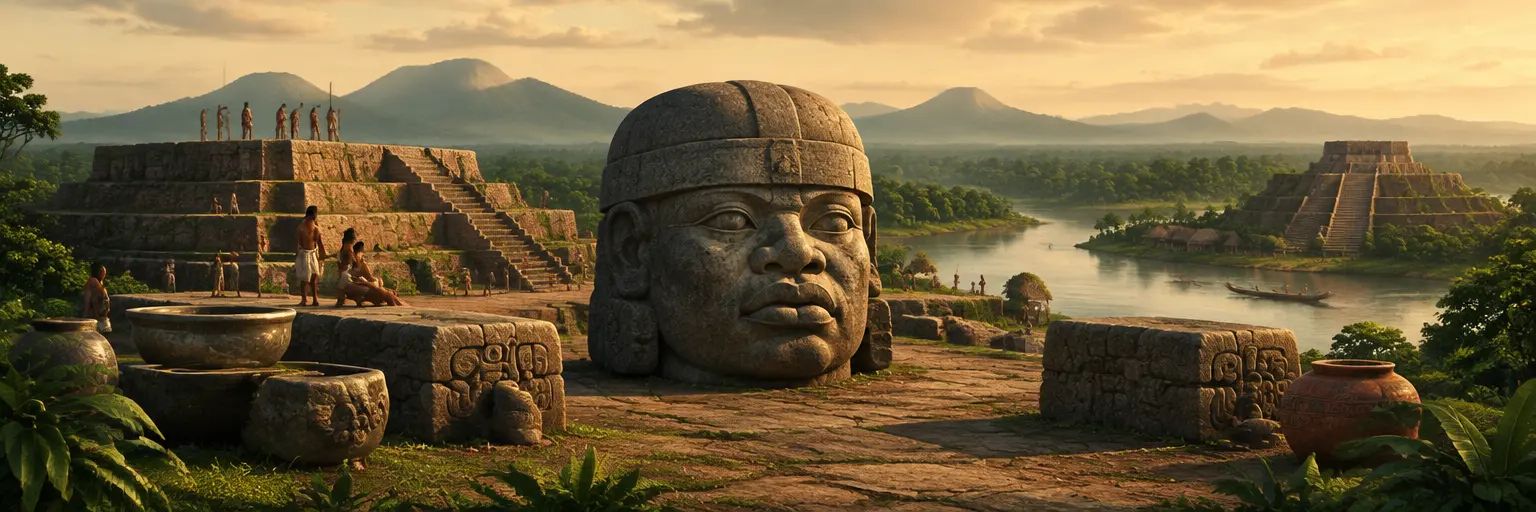
Unlock the enigmatic origins of Mesoamerica with a deep dive into the Olmec civilization, widely celebrated as the “Mother Culture” of the region. Flourishing along the Gulf Coast of modern-day Mexico between roughly 1500 and 400 BCE, the Olmecs pioneered monumental stone sculpture, including the iconic colossal basalt heads, and established foundational patterns in astronomy, writing, and ritual ballgames that later Maya and Aztec societies would inherit. Explore their ceremonial centers like San Lorenzo and La Venta, decipher the symbolism embedded in jade figurines and altar thrones, and understand how their trade networks and political organization shaped the cultural DNA of ancient Americas. Perfect for enthusiasts of pre-Columbian archaeology, this observational profile illuminates the artistic brilliance, religious cosmology, and enduring legacy of the first great civilization of the New World, offering a critical lens into how early complex societies evolved and influenced thousands of years of subsequent cultural development.
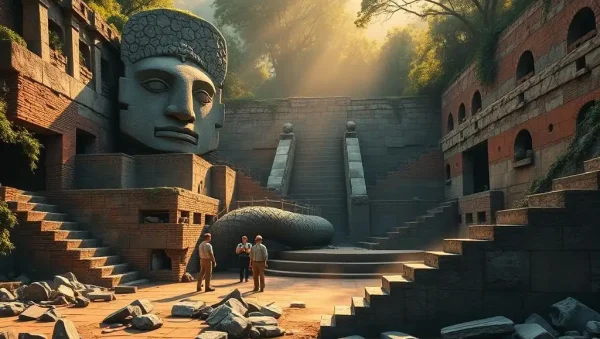
🌎 Discover the significance of La Venta’s Olmec ritual architecture in Mexico, revealing sacred spaces that highlight the spiritual and ceremonial practices…
Read article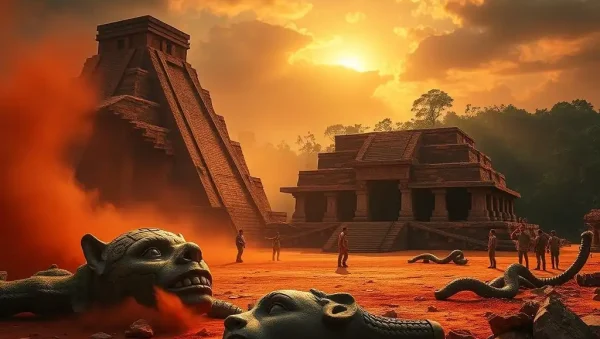
🌟 Explore the Olmec Heartland Collapse Timeline to understand how environmental shifts, societal changes, and external pressures led to La Venta's decline,…
Read articleWelcome to ArchaeologyHub.org’s detailed study of the Olmec Civilization, the foundational society that shaped Mesoamerican art, religion, and political organization. Known as the "Mother Culture," the Olmec thrived along Mexico’s Gulf Coast from roughly 1500 to 400 BCE, leaving behind colossal stone heads, intricate jade carvings, and early writing systems. This subcategory offers a deep dive into their origins, monumental architecture, daily life, and enduring influence on later civilizations like the Maya and Aztec. Explore artifact profiles, site excavations like San Lorenzo and La Venta, and interpretive analyses that reveal how these ancient innovators laid the blueprint for an entire cultural region.
The Olmec civilization emerged in the tropical lowlands of modern-day Veracruz and Tabasco, a region rich in rivers, fertile soil, and natural resources like basalt and clay. Archaeological evidence situates their cultural zenith between 1200 and 400 BCE, with early ceremonial centers at San Lorenzo (1200–900 BCE) and later at La Venta (900–400 BCE). Their chronology is divided into formative phases, marked by increasing social complexity, monumental art, and trade networks that extended across Mesoamerica.
Understanding this timeline is crucial for grasping how the Olmec transitioned from small farming villages to stratified chiefdoms. Radiocarbon dating and stratigraphic excavation at key sites reveal a gradual shift toward centralized power, evidenced by the construction of earthen mounds, plazas, and colossal basalt sculptures. By studying these chronological layers, researchers can trace the development of kingship, ritual calendars, and pan-regional exchange systems that set the stage for later civilizations. This section provides a chronological framework essential for any student or enthusiast of pre-Columbian history.
The most iconic Olmec artifacts are the seventeen colossal stone heads, each carved from single basalt boulders weighing up to 20 tons. These heads, ranging from 1.5 to 3 meters in height, depict individualized rulers with distinctive headdresses, facial features, and expressions. Transported over 80 kilometers from volcanic quarries, they demonstrate advanced engineering and centralized labor organization. Beyond heads, the Olmec produced thrones, altars, and figurines featuring the hallmark "were-jaguar" motif—a mix of human and feline traits.
Artistic analysis reveals that these monuments were not mere decorations but political propaganda, legitimizing rulers through supernatural associations. The use of greenstone and jade for smaller carvings indicates a high value placed on precious materials, likely linked to ritual and status. Iconographic studies compare these works with later Maya and Zapotec art, showing direct stylistic and thematic continuities. This section offers artifact profiles, 3D reconstructions, and interpretive essays that decode the symbolic language embedded in Olmec masterpieces, providing a visual and intellectual feast for archaeology enthusiasts.
San Lorenzo, the earliest major Olmec center, was built on a raised plateau above the Coatzacoalcos River, featuring artificial terraces, stone drainage systems, and thousands of ceramic fragments. La Venta, its successor, is famed for its 100-foot-tall clay pyramid, intricate mosaic pavements, and buried offerings of jade and serpentine. These sites were arranged along north-south axes, reflecting astronomical alignments and cosmological beliefs—a pattern later adopted at Teotihuacan and Monte Albán.
Excavations at these ceremonial hubs reveal complex water management, including basalt-lined channels and reservoirs, indicating advanced hydraulic engineering. The layout of plazas, altars, and tombs suggests ritual performances held for large audiences, reinforcing social hierarchy. Recent LiDAR surveys uncover hidden structures beneath jungle canopies, expanding known site extents. By exploring these sacred landscapes, you’ll understand how the Olmec created spaces that merged natural topography with human-made monuments, anchoring their culture in a landscape that still echoes with ancient meaning.
The Olmec are credited with early examples of Mesoamerican writing, including the Cascajal Block (c. 900 BCE) featuring 62 glyphs, and cylinder seals for stamping patterns on cloth or skin. They also developed an early 260-day ritual calendar and a possible 365-day solar count, precursors to the Maya system. Their cosmology revolved around a layered universe with sky, earth, and underworld, governed by supernatural forces and shamanic rulers who could transform into animal spirits.
Interpretive analyses of iconography reveal a deep connection between rain, maize, and jaguar deities, with the were-jaguar symbolizing fertility and royal power. The discovery of talc columns and greenstone axes in ritual caches points to symbolic offerings linking earthly rulers to celestial cycles. This section deciphers Olmec glyphs and calendrical notations, comparing them to later scripts from the Isthmian region and the Maya. Understanding these early systems illuminates how writing and timekeeping became essential tools for political control and religious expression across Mesoamerica.
Subsistence was based on maize, beans, squash, and manioc, supplemented by fish, turtles, and wild game from the riverine ecosystem. Pollen analysis and coprolite studies reveal a diet rich in maize-based foods, with evidence of nixtamalization (alkaline processing) to increase nutritional value. Domestic architecture included wattle-and-daub houses with thatched roofs, arranged around shared courtyards for extended families
Trade networks were extensive, importing basalt for monuments, obsidian for blades, and jade from Highland Guatemala. The Olmec exported pottery, carved shell, and possibly cacao, establishing long-distance relationships that spread their cultural influence. Craft specialization is evident in workshops for ceramics, stone carving, and textile production, suggesting a complex economy. This section offers insights into settlement patterns, subsistence strategies, and exchange systems, showing how daily life sustained monumental projects and social stratification. By examining household artifacts and ecofacts, you gain a grounded understanding of Olmec society beyond its elite monuments.
The Olmec’s role as the "Mother Culture" is confirmed by the diffusion of their artistic motifs, religious concepts, and political structures into Maya, Zapotec, and Teotihuacan civilizations. Ballgame courts, rain deities, and the use of jade all trace back to Olmec origins, while their writing and calendar systems evolved into more complex forms. Sites like Tres Zapotes show continuity of occupation, indicating that Olmec traditions persisted even as new centers rose.
Comparative archaeology reveals that Epi-Olmec cultures, such as the Isthmian script users, directly inherited Olmec glyphs and calendrical knowledge. The famous Tuxtla Statuette and La Mojarra Stela (both post-Olmec) display advanced writing that clearly descends from earlier Olmec experiments. This section explores these connections, citing excavation reports and stylistic analyses to demonstrate a direct thread of influence. Understanding this legacy helps contextualize the Olmec as innovators rather than isolated anomalies, providing a narrative of cultural evolution that spans millennia. For anyone studying Mesoamerican history, this legacy is indispensable.
The Olmec flourished from approximately 1500 to 400 BCE, with their peak from 1200 to 400 BCE. They are divided into early (San Lorenzo) and later (La Venta) phases. Their decline around 400 BCE led to succession by Epi-Olmec societies, but their cultural legacy persisted for centuries.
The term reflects their pioneering role in developing writing, calendars, monumental architecture, and religious iconography that later Maya, Zapotec, and Teotihuacan societies adopted and adapted. Archaeological evidence shows direct diffusion of Olmec art styles and concepts, making them foundational to Mesoamerican civilization.
Each head is carved from a single massive basalt boulder, sourced from volcanic quarries in the Tuxtla Mountains. Transporting these stones, some weighing up to 20 tons, likely involved human labor over 80 kilometers. They are believed to represent individual rulers, not gods.
Yes, evidence includes the Cascajal Block (c. 900 BCE) with 62 glyphs, and cylinder seals. However, a full decipherment remains incomplete, and their script is less understood than later Maya writing. Still, these examples are the earliest known in Mesoamerica, linking to later writing systems.
The cause is debated, with theories including climate change, river shifts, internal conflict, or social revolt. The fall of San Lorenzo around 900 BCE was followed by La Venta’s decline around 400 BCE. Sites were gradually abandoned, but Olmec traditions survived in successor cultures.







