
La Venta's Demise: Examining Causes and Consequences for the Olmec Heartland

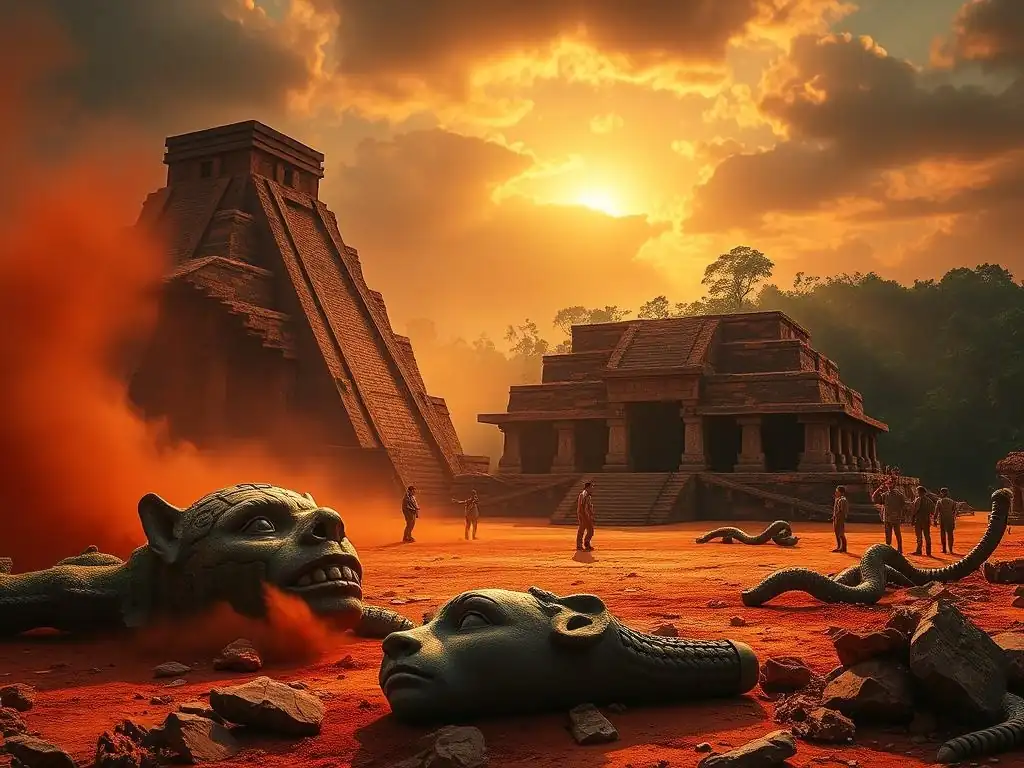
Welcome to ArchaeologyHub.org, your portal to the past! Unearth the secrets of forgotten civilizations and explore groundbreaking discoveries that reshape our understanding of history. Dive deep into our digital encyclopedia and join us as we dissect the pivotal moment in Mesoamerican history: the Olmec Heartland Collapse Timeline. What forces triggered La Venta's demise, and what ripple effects did it have on the broader Olmec culture? Begin your journey to find out more!
- Introduction: The Significance of La Venta in Olmec Civilization
- The Olmec Heartland Collapse Timeline: A Chronological Overview
- Possible Causes of La Venta's Decline: An Archaeological Investigation
- Consequences of La Venta's Abandonment: Impact on Olmec Society and Beyond
- The Olmec Heartland After La Venta: Reconfiguration and Transformation
- Conclusion: Lessons Learned from La Venta's Demise and the Olmec Heartland Collapse Timeline
-
Frequently Asked Questions
- What is the "Olmec Heartland" mentioned in the article?
- What is the general timeline of the Olmec Heartland Collapse, particularly focusing on La Venta?
- What are some of the proposed causes for La Venta's demise and the overall collapse of the Olmec Heartland?
- What were the consequences of the Olmec Heartland Collapse for the region and subsequent Mesoamerican cultures?
- Where can I find more detailed information about the Olmec Heartland Collapse Timeline and specific archaeological discoveries?
- Final Reflection: Echoes of a Lost Heartland
- Unearth Ancient Knowledge: Continue Your Olmec Adventure!
Introduction: The Significance of La Venta in Olmec Civilization
La Venta: A Key Olmec Center and Its Role in Mesoamerican History
La Venta, located in the modern Mexican state of Tabasco, stands as one of the most prominent and extensively studied archaeological sites of the ancient Olmec civilization. Flourishing primarily between 900 BCE and 400 BCE, it served as a major political, economic, and religious hub within the Olmec heartland, exerting considerable influence across Mesoamerica.
Its monumental architecture, including a massive earthen pyramid (Complex C) rising over 30 meters, and its intricate basalt colossal heads and jade offerings, underscore its status as a sophisticated early urban center. The site's strategic location near the Coatzacoalcos River estuary facilitated extensive trade networks, connecting it to resource-rich areas far beyond its immediate vicinity.
The societal organization at La Venta was highly stratified, indicative of a complex chiefdom or early state, with evidence pointing to specialized craft production, long-distance trade, and ritual practices that laid foundational elements for later Mesoamerican cultures. Excavations have revealed elaborate buried offerings, such as the thousands of serpentine blocks forming mosaics and pavements, which suggest a profound investment in public works and ceremonial activities.
This dedication to monumental construction and ritual displays solidifies La Venta's role as a pivotal center for the development of Olmec ideology, iconography, and political power, making its eventual decline a critical point in the Olmec Heartland Collapse Timeline.
Understanding the Olmec Heartland and its Importance
The Olmec heartland refers to the tropical lowlands of south-central Mexico, specifically the modern states of Veracruz and Tabasco, where the earliest and most complex Olmec sites emerged. This region, characterized by its fertile floodplains, dense rainforests, and abundant rivers, provided the environmental basis for the Olmec's agricultural success and the growth of their major centers like San Lorenzo, La Venta, and Tres Zapotes.
The heartland was not merely a geographical area but the cradle of a civilization that developed many of the cultural hallmarks later adopted by civilizations such as the Maya and Zapotec, earning the Olmec the moniker "Mother Culture of Mesoamerica."
The importance of the Olmec heartland lies in its pioneering innovations, including the earliest known ballcourts, the initial development of monumental sculpture, the probable invention of a writing system, and the establishment of complex ritual calendars. The interconnectedness of sites within this region, facilitated by riverine transportation, allowed for the exchange of goods, ideas, and technologies, contributing to a shared Olmec identity and cultural sphere.
Understanding the dynamics of this core region, including the factors that led to the abandonment of its premier sites, is crucial for reconstructing the broader Olmec Heartland Collapse Timeline and appreciating the subsequent trajectory of Mesoamerican prehistory.
The Olmec Heartland Collapse Timeline: A Chronological Overview
Periodizing the Decline: From Zenith to Abandonment of La Venta
The decline of La Venta did not occur as a sudden, catastrophic event but rather as a gradual process spanning several decades, marking a significant phase in the broader Olmec Heartland Collapse Timeline. The site reached its peak influence and population density between approximately 800 BCE and 500 BCE, evidenced by its most elaborate constructions and offerings, including the aforementioned colossal heads and massive jade caches. Archaeological data suggests a period of decreasing investment in monumental public works and a reduction in the quality and quantity of exotic goods exchanged around 450 BCE.
By around 400 BCE, evidence points to the systematic abandonment of La Venta. This period is characterized by a cessation of large-scale construction, a decline in the production of high-status artifacts, and a notable decrease in population figures derived from residential archaeological surveys.
While some argue for ritual defacement or destruction of monuments, many scholars now interpret this as part of a formal closing of the site, indicating a deliberate decision to cease its function as a primary ceremonial and political center. This marks the end of La Venta's dominance and a pivotal moment in the Olmec Heartland Collapse Timeline, ushering in a new era for the region.
Key Events Leading to the Olmec Heartland Crisis
The crisis that led to the decline of La Venta and the broader Olmec heartland was likely multifaceted, involving a confluence of environmental, socio-political, and economic stressors. While no single event can be pinpointed, a critical period of intensifying pressure appears to have emerged in the 5th century BCE. This era saw a possible decrease in agricultural productivity due to environmental shifts, which would have strained the subsistence base of a large, concentrated population. Concurrently, there may have been shifts in regional power dynamics, with the rise of new competing centers or internal unrest challenging La Venta's authority.
Another significant factor in the Olmec Heartland Collapse Timeline was the potential disruption of long-distance trade networks. La Venta relied heavily on exotic resources such as obsidian, jade, and magnetite, which were essential for both elite prestige and practical tools.
Changes in the control of these routes, perhaps due to the emergence of new powerful groups outside the immediate Olmec sphere or increasing competition within it, could have severely impacted La Venta's economic viability and its ability to maintain its elaborate social structure. The cumulative effect of these pressures ultimately rendered the maintenance of such a complex, resource-intensive center unsustainable.
Possible Causes of La Venta's Decline: An Archaeological Investigation
Environmental Factors: Climate Change and its Impact on the Olmec Heartland
Climate change played a significant, albeit complex, role in the decline of La Venta and the broader Olmec Heartland Collapse Timeline. Paleoclimate studies, utilizing data from sediment cores, speleothems, and pollen analysis from the Gulf Coast lowlands, suggest a period of increased climatic variability around the time of La Venta's abandonment. Specifically, research indicates a transition from generally wetter conditions to more pronounced fluctuations, including periods of significant drought and, conversely, intense flooding events. These shifts would have directly impacted the delicate balance of the Olmec agricultural system.
For example, studies by researchers like Hodell et al. (2001) analyzing lake sediments from the Yucatán Peninsula, though not directly in the Olmec heartland, provide regional climate proxies indicating severe droughts around 400-300 BCE that could have extended westward. Such prolonged dry spells would have drastically reduced crop yields, leading to food shortages and increased stress on the population. Conversely, more intense and frequent tropical storms could have caused devastating floods, eroding fertile topsoil, destroying infrastructure, and disrupting agricultural cycles, making the sustained support of a large urban center increasingly difficult within the Olmec Heartland Collapse Timeline.
Evidence of Drought and Flooding in the Olmec Region
Archaeological and paleoenvironmental investigations in the Olmec heartland have indeed uncovered compelling evidence for both prolonged drought conditions and severe flooding events during the Late Formative period, coinciding with La Venta's decline. Sedimentological analysis of riverbeds and ancient floodplains in the Tabasco region, for instance, reveals distinct layers of alluvium indicating periods of intense inundation, which would have submerged agricultural fields and settlements. The presence of these layers suggests a shift towards more erratic hydrological regimes, disrupting the traditional patterns of flood-recession agriculture that the Olmec likely practiced.
Complementary to flood evidence, isotopic analysis of ancient plant remains and faunal bones found at Olmec sites provides proxies for past precipitation levels. While direct, high-resolution drought data for the immediate La Venta vicinity is still developing, regional patterns across Mesoamerica strongly suggest a trend towards drier conditions in certain intervals of the Late Formative. This dual threat of unpredictable drought and devastating floods would have posed immense challenges to a civilization reliant on consistent agricultural surplus, directly impacting their ability to sustain large populations and monumental projects, thereby contributing to the Olmec Heartland Collapse Timeline.
Impact on Agriculture and Resource Availability
The environmental shifts, particularly the increased frequency of droughts and floods, had a profound impact on Olmec agriculture, which was primarily based on maize, beans, and squash cultivation. Prolonged droughts would have led to crop failures, reducing the available food supply for La Venta's population, estimated to be several thousand during its peak. This scarcity would have resulted in malnutrition, increased disease susceptibility, and heightened social tensions. The Olmec, like many early agricultural societies, relied on predictable seasonal patterns for successful harvests; the disruption of these patterns would have been catastrophic.
Furthermore, intense flooding would not only destroy crops but also damage crucial infrastructure such as irrigation systems (if present) and transport routes, impeding the movement of goods and people. Beyond agriculture, these climatic changes would have affected the availability of other vital resources. Forests might have suffered, impacting timber supply for construction and fuel.
Wildlife populations, a supplemental food source, could have dwindled. The cumulative effect of these environmental stressors would have placed immense pressure on the Olmec social and economic systems, making the maintenance of a complex societal structure at La Venta unsustainable and accelerating its role in the Olmec Heartland Collapse Timeline.
Socio-Political Instability: Internal Conflicts and Power Shifts
Beyond environmental pressures, internal socio-political instability likely played a significant role in the decline of La Venta. Archaeological evidence, though indirect, suggests a highly stratified society at La Venta, with a powerful elite controlling vast resources and labor. Such stratification inherently carries the risk of internal tensions, particularly if the elite's ability to provide benefits (e.g., successful harvests, protection, access to exotic goods) diminished due to environmental or economic crises. Dissatisfaction among commoners or competing factions within the elite could have led to unrest or even open rebellion, fragmenting the centralized authority.
The deliberate defacement or caching of monuments, such as the mutilation of colossal heads or the burial of elaborate offerings at La Venta, has been interpreted by some scholars not merely as ritual closing ceremonies but potentially as signs of internal power struggles or even iconoclasm. While definitive proof remains elusive, the significant investment required to create and maintain these monuments suggests that their intentional dismantling could symbolize a profound shift in political power or a rejection of the ruling ideology.
Such internal strife would have weakened the state from within, making it more vulnerable to other external pressures and contributing to the Olmec Heartland Collapse Timeline.
Evidence of Social Stratification and Potential Uprisings
Archaeological investigations at La Venta have consistently revealed pronounced social stratification, evident in the differential access to exotic goods, the monumental scale of elite residences versus commoner dwellings, and the elaborate burial practices for high-status individuals. For example, Tomb A at La Venta contained rich jade and serpentine offerings, contrasting sharply with simpler burials. This hierarchy implies a significant division of labor and resources, with a small elite likely controlling the vast majority of wealth and political power. Such disparities often breed resentment, especially when resources become scarce.
While direct evidence of uprisings is rare in the archaeological record, the systematic dismantling and burial of colossal heads and altars at La Venta, particularly around 400 BCE, has sparked scholarly debate. Some theories suggest these acts were not just ritual termination but possibly politically motivated acts by a new ruling faction or even a disgruntled populace seeking to symbolically overthrow the previous regime.
Though speculative, the sheer effort involved in these actions points to a significant societal upheaval, indicating profound internal changes that could have fragmented the political coherence of the Olmec heartland, accelerating its inclusion in the Olmec Heartland Collapse Timeline.
Shifts in Leadership and Governance in the Olmec Heartland
The decline of La Venta almost certainly involved significant shifts in leadership and governance, though the precise nature of these changes remains subject to archaeological interpretation. The cessation of monumental construction and the abandonment of the site suggest a loss of centralized authority capable of organizing large-scale labor and resource allocation. This could have been due to the death of a powerful ruler without a clear successor, leading to a power vacuum, or the rise of competing factions that eroded the existing leadership's legitimacy.
Alternatively, the elite themselves might have chosen to relocate, perhaps due to environmental pressures or economic decline, seeking new opportunities or more defensible positions elsewhere. This type of strategic withdrawal would still signify a fundamental shift in the locus of power within the Olmec heartland. The subsequent emergence of new centers like Tres Zapotes, which continued Olmec traditions but with distinct stylistic variations, suggests a reconfiguration of political power rather than a complete societal collapse. These shifts underscore a dynamic period in the Olmec Heartland Collapse Timeline, where old structures gave way to new configurations of authority.
Economic Decline: Trade Disruptions and Resource Depletion
A significant factor contributing to La Venta's decline was likely a severe economic downturn, primarily driven by disruptions to its vital long-distance trade networks and potential overexploitation of local resources. La Venta, as a major ceremonial and political center, depended heavily on the influx of exotic materials like obsidian, jade, iron ore (magnetite and ilmenite for mirrors), and serpentine, which were not locally available. These resources were crucial for crafting elite goods, ritual objects, and even practical tools, symbolizing status and facilitating the ruling elite's power.
Changes in the supply routes or the control of these valuable resources would have severely undermined La Venta's economic stability and the elite's ability to maintain their prestige and control. If neighboring groups gained control over key trade routes or if the source regions themselves became unstable, La Venta's access to these essential commodities would have dwindled. This economic vulnerability, coupled with potential resource depletion in its immediate vicinity, would have exacerbated existing environmental and socio-political stresses, pushing La Venta further along the Olmec Heartland Collapse Timeline.
Changes in Trade Networks and Access to Essential Resources
Archaeological evidence strongly indicates a shift in Mesoamerican trade networks around the time of La Venta's abandonment. Obsidian, a key resource for cutting tools, was sourced from various regions, including the Guatemalan highlands (El Chayal and Ixtepeque) and central Mexico (Pachuca). Analysis of obsidian artifacts from La Venta shows a decrease in the quantity and diversity of exotic obsidian types in the later phases of the site's occupation, suggesting reduced access or disrupted supply chains. This shift is particularly noticeable after 500 BCE.
Similarly, access to high-quality jade, primarily sourced from the Motagua River Valley in Guatemala, appears to have become more challenging for La Venta's inhabitants. The intricate jade carvings characteristic of Olmec art diminish in quantity and perhaps quality in the final centuries of La Venta's prominence. This reduction in the influx of highly valued, non-local goods would have significantly impacted the elite's ability to maintain their status through display and exchange, contributing to economic decline and internal instability, which are critical elements in understanding the Olmec Heartland Collapse Timeline.
Overexploitation of Natural Resources Around La Venta
While trade disruptions impacted external resources, the overexploitation of local natural resources also likely played a role in La Venta's decline. Sustaining a large population and undertaking massive construction projects, such as the earthen pyramid and numerous mounds, required significant quantities of timber for fuel, construction, and potentially for firing pottery and processing food. Deforestation in the immediate vicinity of La Venta could have led to soil erosion, reduced biodiversity, and altered local microclimates, making the area less hospitable for long-term habitation.
The intensive agricultural practices necessary to feed a growing urban center might have also led to soil exhaustion or increased susceptibility to pests and diseases over time, reducing yields even under favorable climatic conditions. While direct archaeological evidence of widespread deforestation or soil depletion is challenging to isolate for specific Olmec sites, it is a common factor in the decline of many ancient civilizations. The cumulative pressure of supporting a dense population through intensive resource use would have made the region around La Venta less productive, contributing to the broader Olmec Heartland Collapse Timeline.
External Pressures: Competition and Warfare with Neighboring Groups
The decline of La Venta may also have been influenced by external pressures, including increased competition or even warfare with neighboring groups. As other centers within and beyond the Olmec heartland began to develop their own complexities and assert their influence, the political landscape of Mesoamerica would have become more competitive. The Olmec's dominance was not absolute, and emerging polities might have challenged their control over trade routes or territory.
While direct archaeological evidence of large-scale warfare at La Venta is scarce compared to later Mesoamerican cultures, the presence of certain types of artifacts or the strategic positioning of some sites could hint at increased conflict. Raiding for resources, captives, or territory could have destabilized the region, leading to population displacement and further straining La Venta's resources and authority. Such external pressures, combined with internal vulnerabilities, would have compounded the challenges facing the Olmec leadership and accelerated the Olmec Heartland Collapse Timeline.
Evidence of Conflict and Raiding in the Olmec Heartland
Direct archaeological evidence of widespread warfare in the Olmec heartland is less pronounced than in later Mesoamerican periods (e.g., Classic Maya), where fortified sites and widespread iconography of conflict are common. However, some indirect indicators suggest the possibility of increased localized raiding or conflict during the Late Formative period. The deliberate mutilation of monuments, particularly the colossal heads, by non-Olmec groups has been proposed by some as a sign of conquest or symbolic defeat, though internal factors are also strongly considered.
Furthermore, the strategic locations of some late Olmec or Epi-Olmec sites, sometimes on defensible hilltops, could suggest a need for protection against external threats. While a full-scale invasion leading to La Venta's demise is unlikely, persistent raiding by smaller, emerging groups or competition over valuable resources could have contributed to a climate of insecurity. This would have disrupted agricultural production, trade, and daily life, adding significant pressure to the already strained Olmec heartland and playing a role in its Olmec Heartland Collapse Timeline.
The Rise of Competing Centers and their Influence
A critical external factor was the simultaneous rise of new, competing centers of power both within and on the periphery of the traditional Olmec heartland. As La Venta began its decline, sites like Tres Zapotes (also in Veracruz) began to gain prominence. Tres Zapotes, though exhibiting clear Olmec influences in its early phases, developed its own distinct stylistic elements and calendrical systems (e.g., Stela C with its Long Count date). This suggests a shift in the locus of political and cultural innovation.
Beyond the immediate heartland, other emerging regional powers, such as those in the Oaxaca Valley (e.g., San José Mogote, later Monte Alban) and the Maya lowlands, were also developing their own complex societies. While these were not necessarily direct adversaries of La Venta in a military sense, their independent development and control over their own resources and trade networks would have diminished La Venta's regional influence and access to valuable goods.
The rise of these alternative power centers meant a dilution of the Olmec's unique position, contributing to the broader Olmec Heartland Collapse Timeline and the eventual re-shaping of Mesoamerican civilization.
Consequences of La Venta's Abandonment: Impact on Olmec Society and Beyond

Population Displacement and Migration Patterns
The abandonment of La Venta, a major population center, undoubtedly led to significant population displacement and shifts in migration patterns within the Olmec heartland and surrounding regions. While the exact numbers are difficult to ascertain, archaeological surveys indicate a substantial decrease in population density at La Venta itself and in its immediate hinterland after 400 BCE. The people who once inhabited this vibrant city would have dispersed, seeking new agricultural lands, resources, and opportunities in less stressed areas.
These displaced populations likely moved to smaller, more dispersed settlements within the broader Olmec heartland, potentially contributing to the growth of sites like Tres Zapotes or San Andrés. Others might have migrated further afield, seeking refuge or new livelihoods in regions beyond the traditional Olmec core. This dispersion would have fragmented existing social structures and necessitated adaptations to new environments and political landscapes, marking a profound demographic shift within the Olmec Heartland Collapse Timeline.
Where Did the People of La Venta Go?
The exact destinations of the people of La Venta remain a subject of ongoing archaeological research, but several hypotheses exist. A significant portion likely resettled in nearby, smaller communities within the Gulf Coast lowlands that continued to thrive or emerge during the Late Formative period. Sites like Tres Zapotes, which maintained some aspects of Olmec culture while developing new features, could have absorbed a portion of the displaced population, leading to its eventual prominence. San Andrés, a site near La Venta, also shows continued occupation and the development of writing systems post-La Venta.
Other groups might have moved further inland or along coastal routes, seeking new agricultural lands or integrating with nascent communities in what would become the Maya lowlands or the Isthmus of Tehuantepec. While direct evidence of large-scale, organized migrations is scarce, the dispersal pattern suggests a gradual absorption into existing or newly forming regional polities. This movement of people, carrying elements of Olmec culture and knowledge, played a role in the continued legacy of the Olmec beyond the immediate Olmec Heartland Collapse Timeline.
The Spread of Olmec Influence to Other Regions
Despite the abandonment of its major centers like La Venta, the Olmec Heartland Collapse Timeline did not signify the end of Olmec cultural influence. As populations dispersed, they carried with them Olmec ideas, artistic styles, religious concepts, and technological innovations to other parts of Mesoamerica. This process had been ongoing for centuries prior to La Venta's decline, but the collapse of the heartland centers likely intensified the outward spread of these traditions.
Evidence of this spread is seen in the adoption of Olmec-derived iconography (e.g., jaguar motifs, flame brows), calendrical concepts, and possibly even early writing systems in emerging cultures. For instance, sites in Oaxaca (e.g., Monte Albán) and the Maya lowlands show clear influences in their early art and architecture. The "Mother Culture" aspect of the Olmec was not extinguished but rather disseminated and transformed, laying foundational elements for the later Classic period civilizations. This cultural diffusion is a critical long-term consequence of La Venta's demise.
Cultural and Religious Shifts: Changes in Olmec Beliefs and Practices
The abandonment of La Venta, a paramount ceremonial center, naturally led to significant cultural and religious shifts within the remaining Olmec-influenced populations. The elaborate rituals, monumental offerings, and the specific iconography associated with La Venta's ruling elite would have been profoundly impacted. The cessation of large-scale public ceremonies and the decline in the production of specific types of high-status ritual objects indicate a transformation in the organization and expression of religious beliefs.
While the core tenets of Olmec cosmology, such as the veneration of the jaguar-human transformation and the concept of sacred mountains (represented by pyramids), likely persisted, their manifestation would have changed. Smaller, more localized cults might have emerged, or the focus of worship could have shifted to different deities or practices more suited to dispersed communities. This period marks a transition in the religious landscape of the Olmec heartland, adapting and evolving beyond the centralized, state-sponsored religion of La Venta, a crucial aspect of the Olmec Heartland Collapse Timeline.
The Decline of La Venta's Religious Significance
With the physical abandonment of La Venta, its religious significance as the paramount ceremonial center of the Olmec heartland inevitably declined. The massive earthen pyramid, once a focal point of pilgrimages and state-sponsored rituals, would have ceased to be actively maintained or used for grand ceremonies. The elaborate buried offerings, such as the pavements of serpentine and jade mosaics, were intentionally covered, suggesting a ritual closing rather than abandonment due to disaster, but still signifying an end to its active sacred function.
This decline meant that the centralized authority that once orchestrated large-scale religious events and maintained a shared pan-Olmec iconography through ritual was gone. While local religious practices undoubtedly continued, the unifying spiritual power of La Venta diminished, leading to a more fragmented religious landscape. This transition from a highly centralized religious system to more localized expressions is a key outcome of the Olmec Heartland Collapse Timeline.
Adaptation and Evolution of Olmec Art and Ideology
Following the decline of La Venta, Olmec art and ideology did not simply disappear but underwent significant adaptation and evolution. The distinctive monumental style of colossal heads and massive altars, characteristic of La Venta and San Lorenzo, largely ceased to be produced. Instead, new artistic traditions emerged, particularly at sites like Tres Zapotes, which developed what is often termed "Epi-Olmec" art. This style retained some Olmec elements but introduced new iconographic features, glyphic systems, and calendrical notations.
For instance, the stylistic shift from the rounded, naturalistic forms of classic Olmec sculpture to the more angular and often narrative-focused art of the Epi-Olmec period reflects this evolution. Ideologically, while core Olmec concepts like the importance of rain deities and the sacredness of certain animals (e.g., jaguars, serpents) persisted, they were reinterpreted and integrated into emerging regional belief systems. This transformation demonstrates the resilience and adaptability of Olmec heritage, even as its original centers faded within the Olmec Heartland Collapse Timeline.
Long-Term Effects on Mesoamerican Civilization
The abandonment of La Venta and the broader Olmec Heartland Collapse Timeline had profound and lasting long-term effects on the trajectory of Mesoamerican civilization. While the Olmec heartland itself saw a period of reorganization rather than complete societal collapse, the shift in power and cultural innovation away from this core region allowed for the independent development and flourishing of new civilizations. The "Mother Culture" had, in essence, nurtured its offspring to the point where they could stand on their own.
This period of transition, often referred to as the Late Formative (c. 400 BCE - 250 CE), saw the acceleration of distinct regional traditions in areas like the Oaxaca Valley (Zapotec culture), the Maya lowlands, and the central Mexican highlands. These emerging cultures built upon the foundational innovations of the Olmec – including monumental architecture, calendrical systems, early writing, and complex religious iconography – but adapted them to their own unique environmental and socio-political contexts, leading to the diverse and complex civilizations of the Classic period.
The Legacy of the Olmec Collapse on Subsequent Cultures
The legacy of the Olmec Heartland Collapse Timeline on subsequent Mesoamerican cultures is multifaceted. While the political and economic dominance of the Olmec heartland waned, its cultural and intellectual innovations continued to resonate. The conceptual framework for kingship, the use of sacred calendars, the development of early writing systems, and a shared iconographic language (e.g., the feathered serpent motif) all have roots in the Olmec period. The "collapse" was not an eradication but a dispersion and transformation of these ideas.
For example, the Zapotec civilization in Oaxaca, which began to flourish around the same time La Venta declined, clearly adopted and reinterpreted Olmec artistic and calendrical elements. Similarly, early Maya sites show Olmec stylistic influences. The experience of the Olmec, including the challenges leading to their decline, might have also provided lessons for subsequent civilizations regarding resource management, political organization, and the sustainability of large urban centers. Thus, the Olmec's end was, in many ways, a beginning for others.
Olmec Heritage and its Continued Relevance
Even centuries after the abandonment of La Venta, the Olmec heritage remained relevant and continued to influence Mesoamerican societies. The colossal heads and other monumental sculptures left behind in the heartland likely served as powerful reminders of an ancient, powerful past, possibly viewed as ancestral figures or mythical beings by later inhabitants. These visible markers of a grand past could have inspired or informed the cultural identity of subsequent groups in the region.
Furthermore, the intellectual achievements of the Olmec, such as their understanding of astronomical cycles and their development of a sophisticated numerical system, were not lost. These foundational elements were refined and expanded upon by cultures like the Maya, whose Long Count calendar has clear antecedents in the Olmec period. The continued study of the Olmec Heartland Collapse Timeline and its aftermath is crucial for understanding the deep historical roots and interconnectedness of Mesoamerican civilizations, highlighting how the innovations of one era laid the groundwork for the next.
The Olmec Heartland After La Venta: Reconfiguration and Transformation
Post-Collapse Settlement Patterns in the Olmec Region
Following the abandonment of La Venta around 400 BCE, the Olmec heartland did not become entirely depopulated but underwent a significant reconfiguration of settlement patterns. The large, centralized urban and ceremonial centers like La Venta gave way to a more dispersed and, in some cases, less monumental settlement system. While some areas might have seen temporary population declines, other existing smaller sites grew, and new settlements emerged, particularly in regions that offered better agricultural prospects or defensible positions.
Sites like Tres Zapotes in Veracruz gained prominence during this Epi-Olmec period (c. 400 BCE - 250 CE), demonstrating a continuity of some Olmec traditions blended with new cultural developments. This shift suggests a decentralization of political power and a move towards more regionalized polities, rather than a single dominant center. The transformation of settlement patterns reflects a societal adaptation to new environmental, economic, and political realities following the critical period in the Olmec Heartland Collapse Timeline.
The Rise of New Centers of Power in Mesoamerica
The period immediately following the decline of La Venta witnessed the rise of new centers of power across Mesoamerica, marking a pivotal transition from the Early and Middle Formative Olmec dominance to the diverse regional states of the Late Formative and Classic periods. While the Olmec heartland continued to be inhabited, the locus of major innovation and political influence shifted.
In the Oaxaca Valley, Monte Albán began its rapid ascent around 500 BCE, evolving from a cluster of smaller settlements into a formidable urban center that would dominate the region for centuries. In the Maya lowlands, sites like Nakbe and El Mirador started to develop monumental architecture and complex societal structures, foreshadowing the Classic Maya florescence. These emerging powers, though influenced by the Olmec, forged their own distinct cultural trajectories, fundamentally reshaping the political and cultural map of Mesoamerica after the key events in the Olmec Heartland Collapse Timeline.
Archaeological Evidence of Continued Olmec Presence
Despite the abandonment of major sites like La Venta and San Lorenzo, archaeological evidence confirms a continued Olmec presence and cultural legacy in the heartland during the Epi-Olmec period. While the monumental art style changed, elements of Olmec iconography, religious concepts, and even early writing systems persisted and evolved. For instance, at Tres Zapotes, monuments like Stela C display a distinct Epi-Olmec style but clearly build upon Olmec calendrical and glyphic traditions.
Furthermore, post-Olmec sites in the region continue to yield artifacts that show a clear stylistic lineage from the earlier Olmec period, albeit with local adaptations. The enduring presence of Olmec-derived ceramic traditions, settlement patterns, and subsistence strategies indicates a cultural continuity rather than a complete break. This suggests that the Olmec Heartland Collapse Timeline was more about a transformation and decentralization of power than a complete disappearance of the Olmec people or their cultural identity.
Conclusion: Lessons Learned from La Venta's Demise and the Olmec Heartland Collapse Timeline
Reassessing the Factors Contributing to the Olmec Heartland Decline
Reassessing the factors contributing to the Olmec heartland decline reveals a complex interplay of environmental, socio-political, and economic pressures rather than a single catastrophic event. The cumulative impact of increased climatic variability (droughts and floods), potential overexploitation of local resources, internal social stratification leading to instability, and disruptions in vital long-distance trade networks created an unsustainable environment for the highly centralized and resource-intensive system of La Venta. External pressures from emerging competing centers further exacerbated these internal vulnerabilities.
Modern archaeological and paleoenvironmental research increasingly points towards a multi-causal explanation, emphasizing that the resilience of any complex society is tested by a combination of stressors. The decline of La Venta serves as a crucial case study in early Mesoamerican prehistory, illustrating how even pioneering civilizations, at the peak of their influence, could succumb to a confluence of factors that gradually eroded their foundations. Understanding this intricate web of causes is essential for fully grasping the significance of the Olmec Heartland Collapse Timeline.
The Enduring Legacy of La Venta and the Olmec Civilization
Despite its eventual abandonment, the enduring legacy of La Venta and the broader Olmec civilization is undeniable and profoundly shaped the subsequent course of Mesoamerican history. La Venta, as a vibrant center for centuries, pioneered many of the cultural, technological, and ideological innovations that would become hallmarks of later civilizations. From monumental architecture and sophisticated artistry to early writing systems and complex calendrical calculations, the Olmec laid the groundwork for the Classic period Maya, Zapotec, and Teotihuacan cultures.
The "collapse" of the Olmec heartland should therefore be viewed not as a failure but as a transformative period. It was a catalyst for the diffusion of Olmec ideas and peoples, allowing their foundational contributions to be adopted, adapted, and further developed by new regional powers. The lessons learned from the Olmec Heartland Collapse Timeline highlight the dynamic nature of cultural evolution, where the decline of one dominant entity can pave the way for the flourishing of many others, ensuring the continuation of a rich cultural heritage.
Future Research Directions for Understanding the Olmec Heartland
Future research directions for understanding the Olmec heartland, particularly concerning its decline and the Olmec Heartland Collapse Timeline, should focus on integrating more interdisciplinary approaches. Continued advancements in paleoenvironmental studies, including higher-resolution climate proxies from new sediment cores and speleothems, will provide a clearer picture of climatic variability and its precise impact on agricultural productivity and resource availability in the immediate vicinity of Olmec sites.
Furthermore, refined archaeological methodologies, such as extensive regional surveys utilizing LiDAR technology, can help identify more dispersed post-La Venta settlements and trace migration patterns with greater accuracy. Detailed analyses of artifact provenance, particularly for exotic goods, will shed more light on the nature and extent of trade disruptions. Finally, comparative studies with other ancient civilizations facing similar pressures can offer valuable insights, helping to construct a more comprehensive and nuanced understanding of the factors that led to the complex transformation of the Olmec heartland.
Frequently Asked Questions
What is the "Olmec Heartland" mentioned in the article?
The Olmec Heartland refers to the core area of Olmec civilization in Mesoamerica, primarily located in the present-day states of Veracruz and Tabasco, Mexico. This region is known for its fertile lands and significant archaeological sites.
What is the general timeline of the Olmec Heartland Collapse, particularly focusing on La Venta?
The decline of La Venta, a major Olmec center, occurred around 400 BCE. This period marks a significant shift in Olmec societal structure and influence within the Olmec Heartland.
What are some of the proposed causes for La Venta's demise and the overall collapse of the Olmec Heartland?
Possible causes include environmental changes, such as shifts in river courses and agricultural productivity, as well as internal social unrest and potential external pressures.
What were the consequences of the Olmec Heartland Collapse for the region and subsequent Mesoamerican cultures?
The collapse led to the dispersal of the Olmec population and the rise of other regional centers. Olmec influence, however, continued to impact later Mesoamerican civilizations like the Maya and Aztec through cultural and religious traditions.
Where can I find more detailed information about the Olmec Heartland Collapse Timeline and specific archaeological discoveries?
You can explore ArchaeologyHub.org for a digital encyclopedia of archaeological discoveries. Search for "Olmec Heartland Collapse Timeline" to find detailed timelines, artifact profiles, and interpretive analyses of the Olmec civilization.
Okay, here's a final reflection designed to close your article, "La Venta's Demise: Examining Causes and Consequences for the Olmec Heartland," optimized for the keyword "Olmec Heartland Collapse Timeline," and following the structure you provided:
Final Reflection: Echoes of a Lost Heartland
The exploration of La Venta's demise, as detailed in this article, is not merely an archaeological exercise; it's a poignant reminder of the fragility of even the most advanced civilizations. Understanding the Olmec Heartland Collapse Timeline allows us to draw parallels to contemporary challenges, highlighting the interconnectedness of environmental factors, social structures, and political stability in shaping the fate of societies, both past and present. The lessons learned from La Venta's story resonate deeply in our current era of rapid environmental change and societal upheaval.
The Olmec civilization, and specifically the collapse of its heartland, continues to exert a subtle but profound influence on our understanding of Mesoamerican history and the cyclical nature of civilizations. The meticulous reconstruction of the Olmec Heartland Collapse Timeline underscores the importance of interdisciplinary research and careful analysis of archaeological evidence. Those who cannot remember the past are condemned to repeat it.
- George Santayana. This quote serves as a stark reminder that by studying the rise and fall of civilizations like the Olmec, we can gain invaluable insights into the factors that contribute to both societal flourishing and eventual decline.
As we reflect on the Olmec Heartland Collapse Timeline and the lessons gleaned from La Venta's demise, consider how these ancient events inform your own understanding of the world around you. What steps can you take, both individually and collectively, to foster resilience and sustainability in the face of present-day challenges? Let the story of La Venta serve as a catalyst for critical thinking and proactive engagement, inspiring you to contribute to a more sustainable and equitable future, learning from the echoes of a lost heartland.
Unearth Ancient Knowledge: Continue Your Olmec Adventure!
Thank you for diving into the fascinating story of La Venta and its impact on the Olmec civilization. We hope this exploration has sparked your curiosity and deepened your understanding of Mesoamerican history. Now, let's translate that knowledge into action!
- Start your own research: Delve into academic journals or books to explore specific aspects of Olmec society and the fall of La Venta that intrigue you most.
- Share this article with friends and family to spread awareness about this incredible period.
- Imagine you are an Olmec archaeologist: What new question would you explore if you had the opportunity to conduct further research on La Venta?