Norte Chico/Caral-Supe: Unearthing the Americas’ First Civilization
Welcome to ArchaeologyHub.org’s deep-dive into the Norte Chico/Caral-Supe complex, the earliest known civilization in the Americas—a society that flourished along Peru’s arid central coast between 3000 and 1800 BCE. Often overshadowed by the Inca, this Pre-Columbian culture predates the Olmec by nearly a millennium and stands as a testament to independent state formation. Here, you will explore the monumental architecture, maritime subsistence, and socio-political innovations that defined this remarkable Andean founding culture, backed by the latest archaeological fieldwork and regional surveys.
🏛️ Monumental Architecture: The Pyramid Complexes of Supe Valley
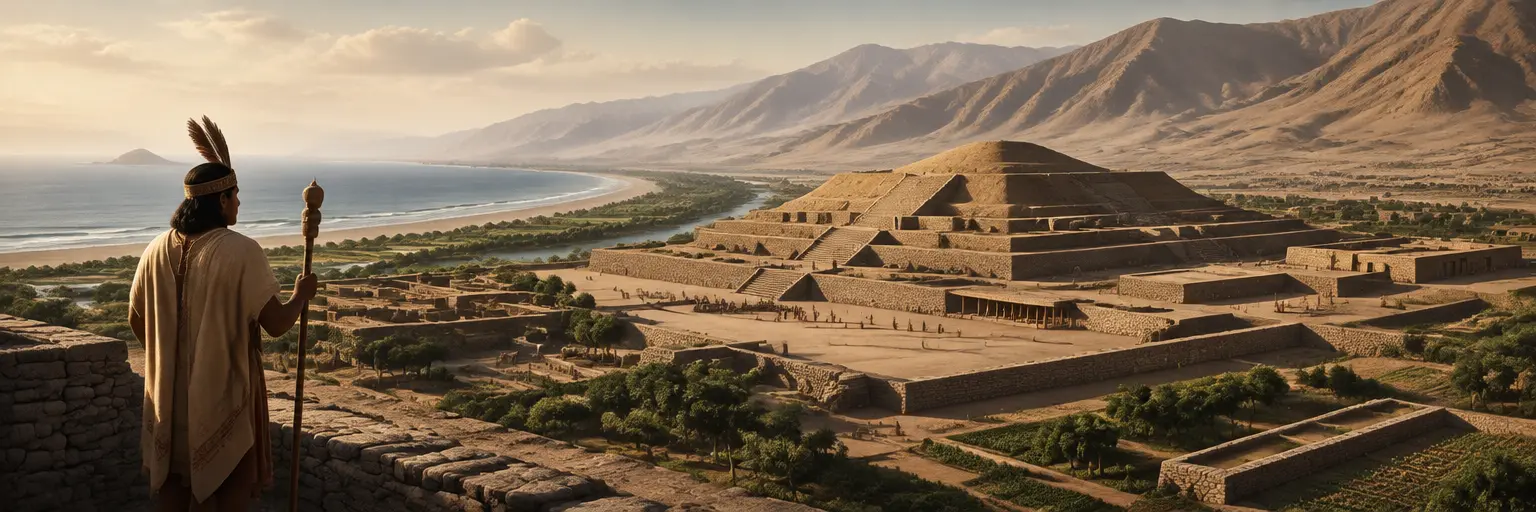
The hallmark of Caral-Supe civilization is its extraordinary corporate architecture, erected centuries before any comparable monumental construction in Mesoamerica. The Sacred City of Caral alone spans 66 hectares, featuring six large platform mounds, sunken circular plazas, and residential complexes—all meticulously planned using shicra (woven plant-fiber bags) filled with river cobbles to stabilize earthquake-prone structures. These pyramids, such as the 18-meter-high Piramide Mayor, required immense labor coordination, suggesting a centralized authority with power to mobilize large workforces. Radiocarbon dating from your exploration will show that these structures emerged concurrently with agrarian intensification, yet the diet was surprisingly marine-heavy. Expect detailed insights into construction techniques, territorial planning, and the ceremonial role of fire altars found atop these stone giants.
🌊 Maritime Economy: The Fisherman-Farmer Paradox
One of the most debated facets of Norte Chico is its economic base. Unlike Old World civilizations, which relied on cereal agriculture, early Andean society here derived over 90% of its dietary protein from anchovies and sardines, harvested along the nutrient-rich Humboldt Current. Yet, the Supe Valley’s inhabitants also cultivated cotton, gourds, and beans—not for food, but for fishing nets, floats, and textile exchange. In this section, you will discover the fascinating synergy between maritime fishing and inland horticulture, as evidenced by the exchange networks connecting coastal settlements with valley interior sites like Aspero and Caral. Advanced studies reveal that seasonal fishing cycles dictated labor allocation toward construction, painting a complex picture of a civilization that thrived without staple grain surpluses. Prepare to challenge traditional models of societal complexity driven solely by agricultural surplus.
🌽 Agricultural Innovation: Cotton, Guava, and the “Green Revolution”
While food staples were limited, Norte Chico cultivated a diverse array of non-food crops that underpinned its economic sophistication. Gossypium barbadense (Peruvian cotton) became the region’s primary industrial crop, used for nets, clothing, and trade goods, while Inga feuillei (guava) and chili peppers supplemented a marine diet. Excavations at Caral show complex irrigation canals diverting the Supe River’s water, demonstrating early hydraulic engineering. More significantly, your research will highlight how this agricultural system was intentionally designed to support textile and fishing industries rather than calorie production—a strategic adaptation to desert conditions. This section also covers climate data reconstructions, revealing that El Niño events may have spurred innovations in resource storage and inter-valley collaboration. Such findings position Norte Chico as a unique case of low- or no-cereal civilizational development.
🎵 Cultural Expressions: Textiles, Flutes, and Ceremonial Life
Beyond stone and subsistence, Norte Chico offers a rare glimpse into early Andean cosmology and aesthetics. The discovery of 32 flutes carved from pelican and condor bones at Caral—with patterns of tuning holes—suggests formalized music ensembles used in ritual gatherings, possibly to synchronize collective labor. Textiles, though fragmentary, show intricate twining and dyeing techniques with natural plant and mineral pigments. You will also examine small anthropomorphic figurines of mud and reeds, likely used in household shrines, reflecting a domestic-level spirituality distinct from the later state religions of Chavín and Moche. Public ceremonial architecture, including the sunken plazas, oriented to winter solstice alignments, points to an astronomer-priest class. This section interprets these material remains as evidence of shared identity and social cohesion, unrivaled in contemporary Andean societies. Expect detailed artifact profiles and comparative iconographic analysis.
🌐 Social Organization: Non-Coercive Governance and Trade Networks
Norte Chico’s social structure challenges modern assumptions about state power. Notably, there is no evidence of defensive fortifications, weaponry, or war-related trauma in skeletal remains—suggesting a remarkably peaceful, cooperatively organized polity. Leadership likely rested on ideological authority (religious and astronomical knowledge) and economic management of cotton exchange, rather than military force. Long-distance trade networks extended from the highlands (for camelid wool and hallucinogenic cacti) to the coast, facilitated by the wide, flat chapap roads that later became the Inca Qhapaq Ñan. You will learn how kinship and reciprocity, rather than coercive bureaucracy, maintained social equilibrium across multiple valleys. This section synthesizes settlement pattern studies, mortuary data (though scarce), and isotopic analyses to propose a model of “theocratic governance” with significant communal participation—a crucial counterpoint to Old World despotic states.
Conclusion: Why Norte Chico Matters in Global Archaeology
Understanding Caral-Supe is essential for rethinking the trajectory of human civilization. As the Americas’ oldest monumental society, it demonstrates that organized complexity can emerge independently, without writing, pottery, or a staple grain crop. Its collapse around 1800 BCE—likely influenced by climate shifts and resource exhaustion—offers lessons in ecological adaptation. By studying this subcategory, you join a growing community of scholars re-evaluating history’s Eurocentric biases, celebrating the Pacific Andes as a cradle of innovation in architecture, sustainability, and social equity.
Frequently Asked Questions
What is the most significant discovery at Caral, Peru?
The most significant discovery is the 5,000-year-old monumental architecture, particularly the Piramide Mayor and sunken circular plazas. This proved that organized state societies existed in the Americas 1,000 years earlier than previously thought. Furthermore, the absence of pottery and weapons forced archaeologists to rewrite theories on what constitutes a civilization, emphasizing public works and trade over traditionally defined markers.
How did Norte Chico sustain itself without corn or wheat?
They relied on a vast anchovy fishery from the nearby Pacific Ocean, which provided abundant protein. Cotton, gourds, and edible plants like guava were grown in irrigated valley floors, but the main calorie source was fish. This maritime surplus was exchanged for highland goods, while cotton nets made fishing highly efficient. This reveals a flexible economic model not dependent on cereal agriculture.
Did the Norte Chico people have writing or a calendar?
No true writing system has been found, but they used quipu-like knotted strings (proto-quipus) as early as 2500 BCE, likely for accounting and possibly record-keeping. They also demonstrated astronomical alignment in their structures, such as solstice-oriented plazas, but no formal calendar system was carved. This suggests a society that tracked time for rites rather than bureaucratic administration.
Why did the Norte Chico civilization collapse?
Evidence points to severe El Niño events around 1900-1800 BCE, which caused flooding and disrupted the marine food web. This may have reduced anchovy yields, overstraining the food supply. Additionally, inland agricultural soils salinized from prolonged irrigation. The social contract, based on reciprocal exchange, likely broke down as redistributive networks failed, leading to abandonment of major centers like Caral.
How can I visit the Norte Chico sites today?
The Sacred City of Caral is a UNESCO World Heritage site, open to visitors with daily guided tours. Access is via a road from Barranca, about 180 km north of Lima. Other sites like Aspero and Vichama are less developed but offer wooden pathways and site museums. Due to desert heat, visit early morning; hiring a local guide is recommended for deeper interpretive context.