
Urban Planning in the Sacred City of Caral: A Blueprint for Andean Civilization

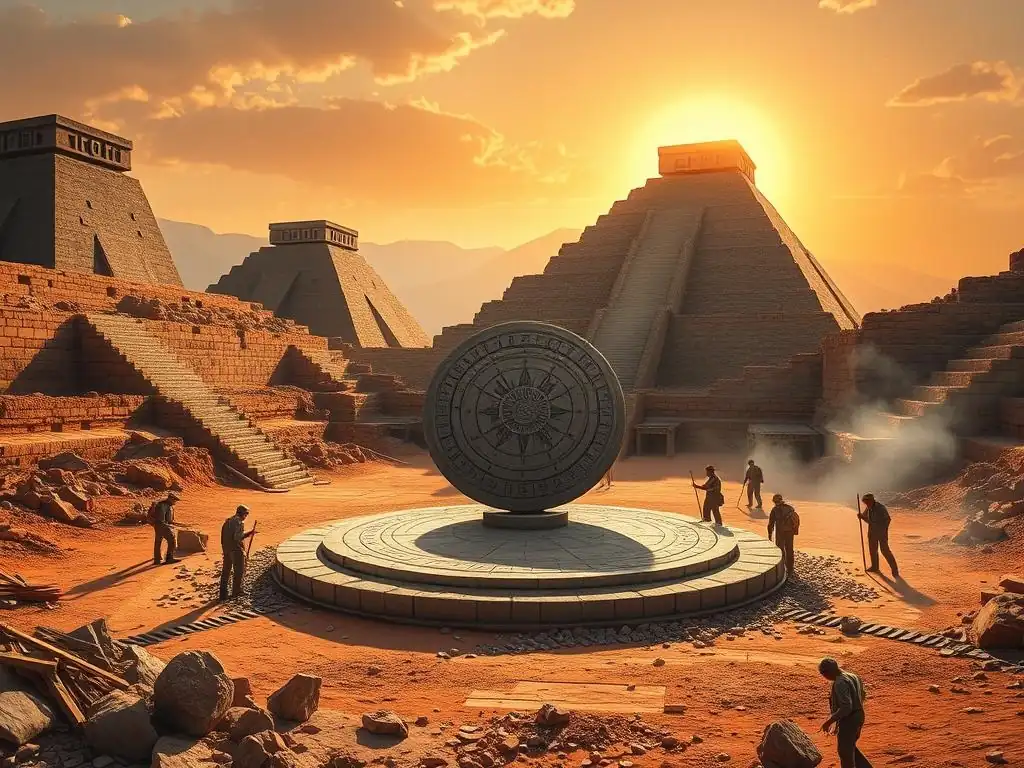
Welcome to ArchaeologyHub.org, your comprehensive guide to unraveling the mysteries of the past! Ever wondered how ancient societies structured their lives and left behind enduring legacies? Dive in to our deep exploration of Civilizations & Cultures and discover how innovative thinking shaped the world.
Today, we journey to the heart of ancient Peru to explore the groundbreaking Caral urban planning strategies. What secrets does this Sacred City hold about the rise of Andean civilization? Prepare to be captivated as we delve into its meticulously designed layout, revealing a blueprint that echoes through the ages. Read on to uncover the intricate details and learn how Caral’s urban design influenced generations to come!
- Introduction: Unveiling Caral - A Pioneer in Andean Urbanism
- Caral's Strategic Location and Environmental Context
- The Core of Caral Urban Planning Strategies
- Analyzing the Architectural Components of Caral
- Advanced Engineering and Construction Techniques in Caral
- Caral Urban Planning Strategies: A Focus on Social Organization and Governance
- Comparison with Contemporary Urban Centers: Caral's Unique Contributions
- The Decline of Caral: Theories and Possible Explanations
- Legacy of Caral: Influencing Later Andean Civilizations
- Preserving Caral: Challenges and Opportunities for Archaeological Conservation
- Conclusion: Caral - A Testament to Early Andean Ingenuity and Urban Planning
-
Frequently Asked Questions
- What were some of the key features of Caral's urban planning?
- How did Caral's urban layout differ from other contemporary settlements in the Andes?
- What role did water management play in Caral's urban planning strategies?
- What evidence suggests social stratification within Caral's urban design?
- How can studying Caral's urban planning contribute to our understanding of Andean civilization?
- Final Reflection: Echoes of Caral's Vision
- Unearth the Secrets of Caral: Start Your Andean Adventure!
Introduction: Unveiling Caral - A Pioneer in Andean Urbanism
The Significance of Caral-Supe: Challenging Preconceived Notions of Andean Development
The discovery and subsequent archaeological exploration of Caral-Supe have profoundly reshaped our understanding of early complex societies in the Americas. Dating back approximately 5,000 years, from 3000 to 1800 BCE, Caral stands as the oldest known city in the Americas, placing its origins contemporary with the great pyramid builders of Egypt, the early Sumerian cities of Mesopotamia, and the nascent civilizations of the Indus Valley.
Its existence demonstrably predates the Olmec civilization in Mesoamerica by nearly 2,000 years and the well-known Chavín culture in the Andes by over a millennium, forcing a significant re-evaluation of the timeline and independent development of urbanism in the New World.
Caral's monumental architecture, intricate social organization, and sophisticated Caral urban planning strategies reveal a highly advanced society that flourished long before previously thought possible in the Andean region. The sheer scale of its pyramids, plazas, and residential complexes speaks to a centralized authority capable of orchestrating massive communal labor and resource management. This level of societal complexity, without apparent influence from Old World civilizations, highlights Caral-Supe as a remarkable example of independent cultural evolution and a foundational blueprint for subsequent Andean civilizations.
ArchaeologyHub.org and the Exploration of Early Civilizations
ArchaeologyHub.org is dedicated to serving as a comprehensive digital encyclopedia for archaeological discoveries, and the site of Caral-Supe perfectly embodies our mission to explore the depths of ancient civilizations. Caral offers an unparalleled window into the origins of urban life, societal structures, and the innovative spirit of early human populations in the Americas. Its detailed timelines, artifact profiles, and interpretive analyses provide invaluable insights for researchers and enthusiasts alike.
The study of Caral, with its pioneering Caral urban planning strategies, allows ArchaeologyHub.org to present a rich narrative of human ingenuity and adaptation. By delving into the specifics of its architectural design, resource management, and social organization, we can better appreciate the intricate ways in which ancient peoples shaped their environments and built enduring societies. Caral stands as a testament to the diverse paths of human development and a prime example of the type of in-depth historical content we strive to provide.
Caral's Strategic Location and Environmental Context
The Supe Valley: A Fertile Ground for Early Andean Societies
Caral is strategically situated in the arid Supe Valley, approximately 200 kilometers north of modern-day Lima, Peru. Despite being located in a coastal desert region, the presence of the Supe River provided a crucial lifeline, transforming patches of the valley into fertile agricultural land. This river, fed by Andean meltwaters, offered a consistent water source that was meticulously managed by the inhabitants of Caral, enabling them to cultivate a diverse range of crops essential for sustaining a large, concentrated population.
The valley's unique geographical position also offered access to a variety of ecological zones. While the river provided freshwater and fertile soil, the nearby Pacific Ocean, just 23 kilometers away, was an abundant source of marine resources. To the east, the Andean foothills offered different plant and animal resources, as well as mineral deposits. This access to diverse ecosystems was a fundamental element in the success of Caral's early Caral urban planning strategies, allowing for a varied diet and a broad economic base.
Resource Management in the Arid Environment
The inhabitants of Caral developed sophisticated resource management techniques to thrive in their challenging arid environment. Their most notable agricultural achievement was the extensive cultivation of cotton ( Gossypium barbadense), a non-food crop that became central to their economy. This cotton was primarily used to produce fishing nets, which were then traded with coastal communities for protein-rich anchovies and sardines, forming a crucial part of their diet. Other cultivated crops included gourds, beans, squash, sweet potatoes, and chili peppers, demonstrating a well-rounded agricultural system.
Beyond agriculture, Caral's resource management extended to the efficient use of water through advanced irrigation canals. Archaeological evidence suggests these systems were complex, designed to maximize water delivery to fields and potentially to manage floodwaters. The innovative Caral urban planning strategies also incorporated the careful procurement and distribution of building materials, such as quarried stone and river cobbles, demonstrating a deep understanding of their local environment and the logistical challenges of large-scale construction in a resource-limited setting.
The Core of Caral Urban Planning Strategies
Defining Caral's Urban Layout: Key Features and Characteristics
The urban layout of Caral is a remarkable demonstration of pre-meditated design and sophisticated Caral urban planning strategies. The city is divided into two distinct sectors: an "Upper Half" (Caral Alto) and a "Lower Half" (Caral Bajo), a bipartite division that would become a recurring pattern in later Andean urbanism.
The Upper Half, located on a higher terrace, contains the largest and most prominent monumental structures, including the Great Pyramid, the Central Pyramid, and various plazas. The Lower Half, while also featuring significant public buildings, appears to have been less monumental and potentially housed a greater proportion of residential areas.
This deliberate spatial organization suggests a hierarchical society with clear functional zoning. The core of Caral's design emphasizes large public spaces and ceremonial architecture, indicating a strong communal and religious focus over purely residential density. Streets and pathways connect these areas, facilitating movement and access. The meticulous alignment of structures, possibly with astronomical significance, further underscores the advanced nature of the Caral urban planning strategies that guided its construction over centuries.
Public Architecture: The Role of Pyramids, Plazas, and Ceremonial Spaces
Public architecture forms the heart of Caral's urban fabric, dominating the landscape and reflecting the societal values and governance of its inhabitants. Six major pyramids, along with numerous smaller mounds, define the city's skyline. These stepped platforms, built over successive construction phases, served as the focal points for religious rituals, administrative activities, and possibly astronomical observation. Their sheer size and elaborate construction indicate a monumental investment of labor and resources, signifying their central role in the community's life.
Adjacent to these pyramids are large plazas and sunken circular courts, designed to accommodate significant gatherings. The Main Plaza, a vast open space, would have been the venue for large-scale public ceremonies and communal events, fostering social cohesion and reinforcing collective identity. The presence of multiple such spaces across the site suggests a society that placed high importance on shared experiences and ritual performance. These public spaces, meticulously integrated into the overall Caral urban planning strategies, underscore the city's function as a ceremonial and administrative hub for the Supe Valley.
Analyzing the Architectural Components of Caral
The Great Pyramid of Caral: Structure, Purpose, and Significance
The Great Pyramid of Caral, known as Pirámide Mayor, stands as the most impressive architectural feat within the site, a testament to the advanced engineering capabilities of its builders. Rising approximately 18 meters (59 feet) in height, its base measures roughly 150 meters (492 feet) long by 160 meters (525 feet) wide, covering an area equivalent to four football fields. This massive structure is characterized by its stepped platforms and a central staircase leading to the summit, where a temple or ceremonial chamber likely once stood.
Its construction involved multiple phases over centuries, with successive layers built atop older ones, indicating a long-term vision and continuous community effort. The Great Pyramid served as the primary ceremonial and administrative center of Caral, embodying the spiritual and political power of the civilization. Artifacts found within its vicinity, such as quipus (knotted textile records), musical instruments, and ritual offerings, reinforce its role as a nexus of governance, religious practice, and intellectual activity, illustrating the pinnacle of Caral urban planning strategies.
Beyond the large stepped pyramids, Caral features distinctive sunken circular plazas and amphitheater-like structures that are integral to its Caral urban planning strategies. The Large Circular Plaza, located in the lower section of the city, is a prominent example, measuring approximately 66 meters (216 feet) in diameter.
These circular spaces, often found at the base of larger pyramids or mounds, served as dedicated venues for large public ceremonies, rituals, and possibly musical performances. The discovery of 32 flutes made from condor and pelican bones within one of these plazas strongly suggests the importance of music and sound in their rituals.
The Amphitheater, another notable structure, is a smaller, oval-shaped sunken court with tiered seating, indicating a more intimate setting for specific gatherings or performances. The presence of hearths within these circular plazas, often filled with burned offerings, further confirms their ceremonial function. These architectural elements demonstrate a sophisticated understanding of acoustics and crowd management, designed to facilitate communal participation and reinforce shared cultural and religious beliefs. Their integration underscores a society deeply invested in collective ritual and social cohesion through carefully designed public spaces.
While the monumental public architecture dominates Caral, the residential areas provide crucial insights into the city's social organization and daily life. Archaeological excavations have revealed a range of dwelling types, from simple, single-room structures to more complex, multi-room compounds. These residential zones are typically found surrounding the major ceremonial complexes, often built on terraces or platforms, indicating a deliberate integration into the overall Caral urban planning strategies.
The varying sizes, construction quality, and proximity to public buildings suggest a clear social hierarchy within Caral. More elaborate residences, likely belonging to the elite or administrative classes, are often found closer to the pyramids and plazas, while simpler dwellings are situated further away. The estimated population of Caral at its peak is believed to have been between 3,000 and 5,000 inhabitants. Analysis of artifacts found within these residential areas, such as tools, pottery fragments, and textile remnants, helps reconstruct the daily activities and economic specializations of Caral's diverse population, from farmers and fishers to artisans and administrators.
Advanced Engineering and Construction Techniques in Caral
Stone Masonry and Building Materials: Adapting to the Environment
The builders of Caral demonstrated remarkable ingenuity in their use of local materials and adaptation to the environment. The primary construction materials included quarried stone, river cobbles, and adobe bricks, all readily available in the Supe Valley. Large, undressed stones were used for retaining walls and foundations, while smaller stones and rubble formed the core of platforms and mounds. Adobe bricks, made from local clay and straw, were also employed, particularly for walls and interior structures, showcasing a versatile approach to construction.
Perhaps the most distinctive and innovative construction technique employed at Caral was the use of shicra bags. These are large, loosely woven net bags made from plant fibers (likely reeds or cotton) filled with stones. Thousands of these bags were used as infill material for the monumental platforms and pyramids. This method was highly efficient, allowing for rapid construction without the need for mortar between individual stones, and it also had a crucial structural benefit, reflecting an advanced understanding of the Caral urban planning strategies and engineering principles.
Evidence of Geotechnical Knowledge: Earthquake Resistance and Stability
The shicra bag technique at Caral is considered a groundbreaking example of ancient geotechnical engineering, particularly for its contribution to earthquake resistance. By filling large net bags with stones and then stacking them to form the core of platforms, the Caral builders created a flexible, yet stable, internal structure. When seismic activity occurred, the loose stones within the bags could shift and settle, absorbing the energy of the tremors rather than transmitting it rigidly through the structure. This "shock absorber" effect significantly enhanced the stability and longevity of Caral's monumental buildings in an earthquake-prone region.
Furthermore, the Caral urban planning strategies included careful consideration of drainage and erosion control. Terraces and retaining walls were constructed not only to create building platforms but also to manage water runoff, preventing erosion during the infrequent but intense rains. The precise leveling of large platforms and plazas, often built on uneven terrain, also demonstrates a sophisticated understanding of landform modification and structural stability, ensuring the long-term viability of their urban center.

The monumental scale of Caral's architecture and the intricate design of its urban layout provide compelling evidence of a highly organized society with a clear social hierarchy and significant labor specialization. The construction of six large pyramids and numerous other public structures would have required the coordinated effort of thousands of individuals over many generations, implying a centralized authority capable of planning, mobilizing, and overseeing such massive projects. This level of organization speaks to a sophisticated governance structure.
Archaeological findings support the presence of specialized roles within Caral society. There is evidence of skilled architects and engineers responsible for the precise Caral urban planning strategies and construction techniques. Farmers cultivated crops in the valley, while fishers supplied marine resources from the coast. Artisans produced textiles, pottery, and musical instruments. The varying sizes and quality of residential dwellings also suggest distinct social strata, with an elite class likely overseeing religious, administrative, and economic affairs, while common laborers contributed to the vast construction efforts and agricultural production.
Caral's Economic System: Agriculture, Trade, and Resource Distribution
Caral's economic system was robust and multifaceted, centered on a strong agricultural base and extensive trade networks. The cultivation of cotton was paramount, as it formed the basis of their exchange system. Cotton was processed into nets, which were then traded with coastal communities for dried fish, especially anchovies and sardines, providing a vital protein source. This "cotton-fish" exchange system was a cornerstone of their economy, illustrating a sophisticated understanding of resource complementarity between different ecological zones.
Beyond this primary exchange, Caral participated in a broader regional trade network. Obsidian, a volcanic glass used for tools, has been found at Caral, originating from highland sources hundreds of kilometers away. Spondylus shells, highly valued for ceremonial purposes, were imported from warmer waters off the coast of Ecuador. Gourds were used as containers, and various food crops were cultivated and distributed. The Caral urban planning strategies likely facilitated these economic activities, with designated areas for storage, processing, and exchange, indicating a highly organized system for resource distribution and wealth management.
The Role of Religion and Ideology in Shaping Caral's Urban Landscape
Religion and ideology played a profoundly central role in shaping the Caral urban planning strategies and the overall urban landscape. The dominance of monumental ceremonial architecture – the pyramids, plazas, and sunken circular courts – over residential areas underscores the spiritual and ritualistic focus of the society. These structures were not merely buildings; they were sacred spaces designed to facilitate communal rituals, connect with the divine, and reinforce the collective identity and beliefs of the populace.
The precise alignment of some structures with astronomical events suggests a sophisticated understanding of the cosmos and its integration into their religious practices. Offerings of figurines, flutes, and other artifacts found within ceremonial contexts indicate elaborate rituals performed to maintain cosmic order and ensure prosperity. The centralized nature of these sacred spaces within the city's layout suggests that religious leaders or a theocratic elite held significant power, using shared ideology and ritual performance as a means of social control and cohesion. The very design of Caral was a physical manifestation of its spiritual worldview.
Comparison with Contemporary Urban Centers: Caral's Unique Contributions
Contrasting Caral with Other Early Urban Centers Worldwide
When compared to contemporary early urban centers in the Old World, such as Ur in Mesopotamia (c. 2600 BCE), Mohenjo-Daro in the Indus Valley (c. 2500 BCE), or early Egyptian cities like Memphis (c. 3100 BCE), Caral exhibits both similarities and striking differences. All these civilizations developed monumental architecture, sophisticated social hierarchies, and complex economic systems. However, Caral stands apart in several key aspects that define its unique Caral urban planning strategies.
Unlike many Old World cities which often featured defensive walls or strong evidence of warfare, Caral shows no signs of extensive fortifications or widespread conflict. This suggests a potentially more peaceful development, with its power and influence likely stemming from religious authority, economic prosperity, and cultural integration rather than military dominance. Furthermore, the absence of elaborate pottery or significant artistic traditions, which are hallmarks of many contemporary civilizations, points to a different focus for Caral's cultural expression, perhaps emphasizing textiles, perishable materials, or monumental architecture itself as primary artistic media.
The Distinctive Characteristics of Andean Urbanism as Demonstrated by Caral
Caral's Caral urban planning strategies laid down foundational characteristics that would become hallmarks of later Andean urbanism for millennia. One of the most distinctive features is the consistent emphasis on monumental public and ceremonial architecture, often overshadowing residential areas in scale and prominence. This focus on communal ritual spaces, such as the sunken circular plazas and stepped pyramids, contrasts with the more densely packed residential grids often seen in other early urban centers.
Another defining characteristic is the bipartite division of the city, exemplified by Caral Alto and Caral Bajo, a spatial organization that reappears in various forms throughout Andean history. The innovative use of shicra bags for seismic stability is also a uniquely Andean engineering solution, showcasing an early adaptation to the region's geological challenges.
Caral's integrated approach to resource management, connecting diverse ecological zones through trade and sophisticated irrigation, also sets a precedent for the vertical archipelago economic model that characterized later Andean societies. These elements demonstrate that Caral was not merely an isolated phenomenon but the progenitor of a distinctive Andean urban tradition.
The Decline of Caral: Theories and Possible Explanations
Environmental Factors and Climate Change
The decline of Caral, which appears to have occurred gradually around 1800 BCE, is likely attributable to a complex interplay of environmental factors and societal transformations. One leading theory points to significant climatic shifts, particularly a period of increased aridity or more frequent and intense El Niño events. Prolonged droughts would have severely stressed Caral's agricultural system, dependent on the Supe River for irrigation, leading to crop failures and food scarcity.
Intense El Niño events, characterized by heavy rainfall and flooding, could have caused devastating damage to irrigation canals and agricultural fields, further destabilizing the food supply. Such environmental pressures would have made it increasingly difficult to sustain a large urban population in the Supe Valley, potentially leading to outward migration or a fragmentation of the centralized authority that managed the sophisticated Caral urban planning strategies and resource distribution. The evidence suggests a long-term environmental degradation rather than a sudden catastrophic event.
Beyond environmental pressures, social and political transformations likely contributed to Caral's decline. As the climate became more unpredictable, the established social order, heavily reliant on agricultural surplus and centralized control, may have begun to fray. Resource scarcity could have led to internal unrest, disputes over land and water, or a weakening of the elite's authority. The ability to maintain the complex Caral urban planning strategies and monumental construction projects would have diminished as resources dwindled.
It is also possible that new regional centers emerged, drawing population and influence away from Caral. As smaller, more resilient communities developed in other valleys or adapted to the changing conditions, Caral's status as the primary ceremonial and economic hub may have waned. The decline was likely not a collapse into barbarism but rather a decentralization and reorganization of power and population across the Andean landscape, leading to the eventual abandonment of the major urban centers in the Supe Valley.
Legacy of Caral: Influencing Later Andean Civilizations
Caral as a Precedent for Subsequent Andean Urban Development
Despite its eventual decline, Caral left an indelible legacy, serving as a crucial precedent for subsequent Andean urban development. Many of the fundamental Caral urban planning strategies and architectural concepts reappeared in later, more widely known Andean civilizations, demonstrating a remarkable continuity of cultural innovation. The emphasis on monumental public architecture, particularly stepped pyramids and large ceremonial plazas, found its echoes in sites like Chavín de Huántar (c. 900-200 BCE), Moche sites (c. 100-800 CE), and even the Inca capital of Cusco (c. 1400-1532 CE).
The bipartite division of urban centers, first evident in Caral's layout of an "Upper" and "Lower" city, became a recurring organizational principle in later Andean settlements, reflecting a deeply ingrained cosmological and social structure. The sophisticated hydraulic engineering, including advanced irrigation systems and water management, also continued to be refined and expanded upon by subsequent cultures, ensuring agricultural productivity in diverse environments. Caral's innovations laid the groundwork for the unique trajectory of urbanism in the Andean region.
Caral's Enduring Impact on Andean Culture and Traditions
Beyond urban planning, Caral's enduring impact can be seen in the broader cultural and traditional practices that characterized later Andean civilizations. The strong focus on communal ritual and ceremonial life, as evidenced by Caral's numerous public spaces and offerings, continued to be a central tenet of Andean societies for millennia. The importance of music, as indicated by the flutes found at Caral, also resonates through the rich musical traditions of subsequent cultures.
The economic model, based on the exchange of products from different ecological zones (e.g., coastal fish for valley cotton), established a pattern of vertical integration and reciprocal trade that was a hallmark of Andean economies for thousands of years. While direct lineage can be difficult to trace across such vast time spans, the foundational societal structures, religious ideologies, and technological innovations pioneered by Caral undoubtedly contributed to a shared cultural substratum that influenced the development of complex societies throughout the Andean region, making its Caral urban planning strategies and cultural achievements truly foundational.
Preserving Caral: Challenges and Opportunities for Archaeological Conservation
Threats to the Site: Erosion, Looting, and Urban Encroachment
The ancient city of Caral, designated a UNESCO World Heritage site in 2009, faces numerous threats that jeopardize its long-term preservation. Natural processes, such as wind and sand erosion, along with the infrequent but powerful floods from the Supe River, constantly degrade the delicate structures. The arid environment, while preserving organic materials, also exposes the fragile adobe and stone constructions to the elements.
More critically, human activities pose significant dangers. Illegal excavations and looting continue to be a persistent problem, with clandestine diggers seeking artifacts for the black market, causing irreparable damage to archaeological contexts. Furthermore, the expansion of agricultural lands and increasing urban encroachment from nearby modern settlements threaten the integrity of the archaeological buffer zones and undiscovered portions of the site. Balancing agricultural development with the imperative of preserving this invaluable heritage remains a significant challenge for ongoing conservation efforts.
Ongoing Archaeological Research and Conservation Efforts
Despite the challenges, significant ongoing archaeological research and conservation efforts are dedicated to protecting and understanding Caral. The Caral-Supe Special Archaeological Project (PEACS), led by Dr. Ruth Shady Solís, has been at the forefront of these endeavors since the mid-1990s. This multi-disciplinary project not only conducts extensive excavations to uncover more about Caral's sophisticated Caral urban planning strategies and daily life but also implements robust conservation measures.
These efforts include the stabilization of fragile structures, the reburial of excavated areas to protect them from environmental damage, and the implementation of protective barriers against human interference. Educational programs are also vital, engaging local communities in the importance of heritage preservation and fostering a sense of ownership. International collaboration and funding play a crucial role in supporting these long-term initiatives, ensuring that Caral's remarkable story and its pioneering Caral urban planning strategies continue to be revealed and safeguarded for future generations.
Conclusion: Caral - A Testament to Early Andean Ingenuity and Urban Planning
Re-evaluating the Importance of Caral in Understanding Andean Civilization
Caral stands as an extraordinary testament to early Andean ingenuity and a pivotal site for understanding the origins of civilization in the Americas. Its discovery and ongoing study have fundamentally re-evaluated the timeline for the emergence of complex societies in the Western Hemisphere, demonstrating that sophisticated urbanism, monumental architecture, and advanced social organization developed independently and much earlier than previously conceived. Caral's age, its sheer scale, and the complexity of its Caral urban planning strategies firmly establish it as a "mother civilization" for the Andean region, laying the groundwork for millennia of cultural development.
The city's sophisticated resource management, intricate trade networks, and the prominent role of ceremonial life underscore a highly adaptive and innovative society that flourished in a challenging environment. Caral forces us to look beyond traditional narratives of diffusion and appreciate the diverse paths humanity took towards urbanism and state-level societies. Its unique contributions, from the shicra construction technique to its distinctive urban layout, underscore its unparalleled importance in the archaeological record of the Americas.
Future Directions for Research and Exploration at Caral-Supe.
While much has been revealed about Caral, significant opportunities remain for future research and exploration at Caral-Supe and the broader Supe Valley. Further detailed archaeological investigations into residential areas could provide deeper insights into daily life, social stratification, and the economic activities of the common populace. Expanding excavations to the numerous smaller sites surrounding Caral within the Supe Valley is crucial to understanding the regional settlement patterns and the hierarchical relationship between the capital and its satellite communities.
Advanced scientific analyses, including paleoenvironmental studies and isotopic analysis of human remains, could shed more light on dietary practices, population movements, and the precise impacts of climate change on the civilization's trajectory. Continued interdisciplinary research, integrating archaeology with environmental science, engineering, and social anthropology, will further refine our understanding of Caral's remarkable Caral urban planning strategies and its enduring legacy. The potential for new discoveries to enrich our knowledge of this pivotal civilization remains immense, promising to deepen our appreciation for one of humanity's earliest urban experiments.
Frequently Asked Questions
What were some of the key features of Caral's urban planning?
Caral's urban planning involved monumental architecture, including pyramids and plazas, organized around a central axis. These features likely reflected social hierarchy and religious beliefs.
How did Caral's urban layout differ from other contemporary settlements in the Andes?
Unlike some settlements, Caral had a highly organized and centralized plan, indicating a sophisticated level of social and political control. This contrasts with more dispersed or less structured layouts.
What role did water management play in Caral's urban planning strategies?
Irrigation systems were crucial, enabling agricultural surplus and supporting the urban population. Canals and reservoirs were integrated into the city's design.
The size and location of residences, along with access to key structures, indicate a clear social hierarchy. Larger, more elaborate buildings were likely occupied by elites.
How can studying Caral's urban planning contribute to our understanding of Andean civilization?
Caral provides insights into the early development of complex societies and state-level organization in the Andes. Its urban planning offers a blueprint for later Andean civilizations.
Final Reflection: Echoes of Caral's Vision
The intricate Caral urban planning strategies, once relegated to the annals of archaeological history, resonate powerfully today as we grapple with the challenges of sustainable urban development. The foresight displayed in Caral, prioritizing community, resource management, and harmonious integration with the environment, serves as a stark reminder that ancient wisdom can offer invaluable solutions to modern urban dilemmas. This ancient blueprint, unearthed from the Peruvian desert, challenges our contemporary approaches and compels us to reconsider the very foundations of how we design and inhabit our cities.
The enduring legacy of Caral lies not just in its monumental architecture, but in its profound understanding of societal needs and ecological balance. Witnessing the sophistication of Caral's urban design firsthand evokes a deep sense of responsibility to learn from their successes and avoid the pitfalls of unsustainable growth. We do not inherit the earth from our ancestors; we borrow it from our children.
This poignant proverb encapsulates the very essence of Caral's philosophy, urging us to adopt a long-term perspective in our urban planning endeavors, ensuring a thriving future for generations to come.
As you reflect on the lessons gleaned from Caral's urban planning strategies, consider how you can contribute to creating more sustainable and equitable cities. Let the ingenuity and foresight of the Caral civilization inspire you to advocate for responsible urban development in your own community, championing designs that prioritize human well-being and environmental harmony. Embrace the spirit of Caral, and become an architect of a brighter, more sustainable urban future.
Unearth the Secrets of Caral: Start Your Andean Adventure!
Thank you for exploring the fascinating urban planning of Caral with us. We hope you've gained a new appreciation for the ingenuity of this ancient Andean civilization and its remarkable blueprint for societal organization. Ready to take your archaeological curiosity to the next level?
Here's how you can delve deeper:
- Design your own miniature Caral city plan, focusing on replicating its key architectural features and understanding their potential functions.
- Explore online databases and museum collections for artifacts from Caral and other early Andean sites to compare their cultural expressions.
- Share this article with fellow archaeology enthusiasts and spark a discussion about the importance of preserving Caral as a UNESCO World Heritage site.
What specific aspect of Caral's urban planning inspires you most to rethink modern city design?