
Apedemak: The LionHeaded God of Meroë and Indigenous Kushite Deities

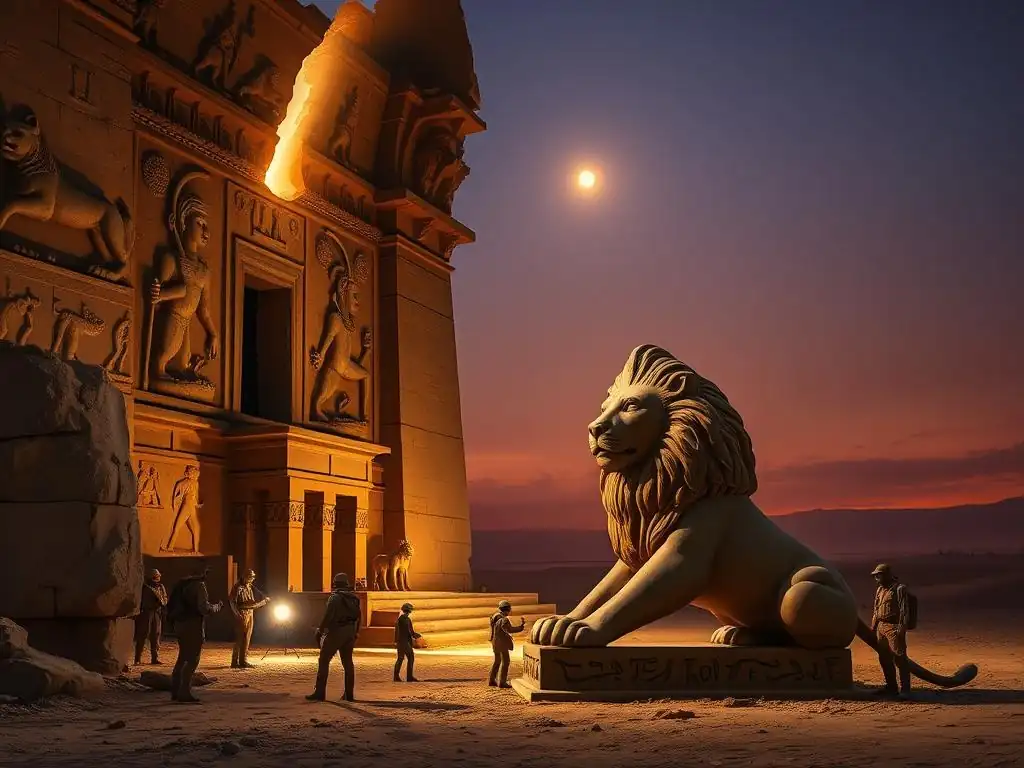
Welcome to ArchaeologyHub.org, your gateway to unraveling the mysteries of the past. Delve into the heart of ancient civilizations and uncover the secrets they left behind. Ever wondered about the powerful deities revered by long-lost kingdoms? This exploration begins with a captivating journey into the symbolism surrounding Apedemak, the Lion-Headed God of Meroë. What secrets does this ferocious deity hold about the Kushite people and their beliefs? Prepare to embark on an in-depth analysis that will reshape your understanding of this fascinating culture.
- Introduction to Apedemak: Unveiling the Kushite Lion God
- Origins and Development of the Apedemak Cult
- Apedemak's Iconography and Attributes: A Detailed Examination
- Apedemak's Role in Kushite Religion and Society
- Archaeological Evidence of Apedemak Worship
- Apedemak and Other Indigenous Kushite Deities: A Comparative Analysis
- The Decline of Meroë and the Fate of Apedemak's Cult
- Apedemak Kushite Deity Symbolism: A Summary and Conclusion
- Frequently Asked Questions
- Final Reflection: Echoes of Kushite Resilience
- Unearth Your Inner Explorer: Delve Deeper into Kushite Mysteries!
Introduction to Apedemak: Unveiling the Kushite Lion God
Apedemak in the Pantheon of Meroitic Deities
Apedemak stands as one of the most distinctive and widely revered indigenous deities of the ancient Kingdom of Kush, particularly prominent during its Meroitic period, which spanned roughly from 300 BCE to 350 CE. Unlike many other Meroitic gods who often bore strong resemblances to Egyptian deities, Apedemak possessed a unique iconography and a clear, independent origin within Kushite religious traditions. He was primarily venerated as a god of war, protection, and prosperity, serving as a powerful symbol of Meroitic strength and cultural identity.
His cult was central to the Meroitic state religion, often appearing alongside or even occasionally surpassing the prominence of Egyptian gods like Amun or Isis in monumental temple complexes. Archaeological evidence from major Meroitic centers such as Musawwarat es-Sufra and Naqa unequivocally demonstrates his significant role. The widespread depiction of Apedemak across royal and public structures highlights how Apedemak Kushite deity symbolism was deeply interwoven into the fabric of Meroitic society and its spiritual landscape.
The Significance of Lion Symbolism in Ancient Kush
The lion held a profound and ancient significance across many African cultures, long before the rise of the Meroitic kingdom. It was universally recognized as a creature embodying raw power, ferocity, royal authority, and protective prowess. Early Nubian rock art and tomb decorations from periods predating Meroë often feature lion imagery, underscoring its deep-rooted symbolic importance in the region's spiritual and political consciousness.
The Meroites, building upon this enduring legacy, adopted and amplified the lion's symbolism, channelling its attributes directly into the form and character of Apedemak. By associating their principal indigenous deity with the king of beasts, they created a powerful representation of Meroitic might, independence, and the protective spirit guarding their land and rulers. This direct association of the lion with divine power is a cornerstone of Apedemak Kushite deity symbolism, making him an embodiment of the kingdom's formidable nature.
Origins and Development of the Apedemak Cult
Pre-Meroitic Roots of Lion Worship in Nubia
The reverence for lions in Nubia predates the Meroitic period by millennia, laying a foundational cultural substrate for the later emergence of Apedemak. Evidence of lion symbolism can be traced back to the Kerma culture, flourishing between approximately 2500 and 1500 BCE, where lion motifs appeared in elaborate burial sites and on various artifacts, suggesting an early association with power and the afterlife. Even older Neolithic rock art across the Nubian landscape frequently depicts lions, indicating a pervasive and ancient respect for these majestic predators.
This long-standing tradition of lion worship in various forms provided a fertile ground for the development of a specific anthropomorphic lion deity. Apedemak did not emerge in a vacuum but rather as a sophisticated evolution of deep-seated indigenous beliefs concerning the lion's protective and formidable qualities. This continuity underscores that the rich Apedemak Kushite deity symbolism was not an isolated phenomenon but rather the culmination of a long cultural trajectory.
The Rise of Meroë and the Ascendancy of Apedemak
The distinct emergence of Apedemak as a prominent, identifiable deity is strongly correlated with the ascendancy of Meroë as the cultural and political capital of the Kingdom of Kush, particularly following the shift from the Napatan period around 300 BCE. As Meroë asserted its independence from direct Egyptian influence and developed its own unique script, artistic styles, and religious emphasis, Apedemak rose to become a central figure in this process of cultural differentiation.
He became a potent emblem of Meroitic identity and sovereignty, reflecting the kingdom's self-assured power. His image was prominently featured in royal temples, stelae, and inscriptions commissioned by Meroitic rulers, solidifying his role within the state religion. This strategic promotion of Apedemak by the Meroitic elite further embedded his unique Apedemak Kushite deity symbolism into the national consciousness, distinguishing Meroë from its northern neighbor.
Influences on Apedemak: Egyptian, Hellenistic, and Local Traditions
While Apedemak is undeniably an indigenous Kushite deity, the Meroitic religious landscape was complex and subject to various influences. Egyptian religious traditions, particularly the worship of deities like Amun and Isis, remained significant in Kush. Apedemak, while distinct, may have adopted certain iconographic conventions or absorbed conceptual aspects from Egyptian lion-headed deities such as Sekhmet or Maahes, integrating them into a fundamentally Kushite framework without losing his unique character.
Furthermore, trade routes and interactions with the Hellenistic world might have introduced subtle, albeit minor, external artistic or conceptual elements into Meroitic art and religion. However, it is crucial to re-emphasize that the core of Apedemak's attributes, his specific roles, and his unique composite form were overwhelmingly shaped by deep-rooted indigenous Nubian traditions. This synthesis of influences, with a strong emphasis on local beliefs, defines the intricate tapestry of Apedemak Kushite deity symbolism.
Apedemak's Iconography and Attributes: A Detailed Examination
The Lion-Headed Anthropomorphic Form of Apedemak
Apedemak's most recognizable and dominant iconographic representation is his anthropomorphic form, characterized by a human body combined with the head of a lion. This powerful hybrid imagery is central to his identity and the understanding of Apedemak Kushite deity symbolism. While typically depicted with one lion head, variations exist, such as the striking portrayal at the Lion Temple of Naqa, where he appears with three lion heads and four arms, signifying an even greater extension of his divine power and protective reach.
He is often shown in a dynamic, striding, or standing posture, wearing traditional Meroitic royal regalia, which frequently includes a kilt, elaborate collars, and occasionally a distinctive Kushite crown, sometimes adorned with a sun disk or uraeus. These elements reinforce his divine authority and his close association with the Meroitic monarchy, presenting him as a regal and formidable protector of the kingdom.
Symbolic Meanings of Apedemak's Lion Aspects
The lion head of Apedemak is not merely an aesthetic choice but a concentrated symbol of strength, untamed ferocity, and protective guardianship. This aspect made him the quintessential patron deity for Meroitic kings and warriors, embodying the raw power necessary for military victory and the safeguarding of the realm. His lionine nature directly conveyed the formidable might of the Meroitic state, warning off potential adversaries.
Beyond his martial prowess, the lion also symbolized natural forces, the wild savanna, and the life-giving vitality of the land. This broader interpretation links Apedemak to the fertility of the Nile and the productivity of agricultural endeavors, suggesting a role in ensuring the abundance of resources crucial for the Meroitic kingdom's survival. This dual nature, encompassing both destructive power and life-sustaining attributes, enriches the complex Apedemak Kushite deity symbolism.
Apedemak's Associated Symbols: Weapons, Plants, and Animals
In his depictions, Apedemak is frequently armed, reinforcing his role as a god of war and protection. Common attributes held in his hands include a bow and arrows, a spear, or a sword, all instruments of combat and defense. These weapons underscore his active participation in safeguarding the Meroitic people and their rulers from both internal and external threats, making him an ever-present force in times of conflict.
Occasionally, Apedemak is also associated with symbolic plants, such as the lotus flower, which in ancient Egyptian and Meroitic contexts could signify creation, rebirth, or the sun. Furthermore, other animals sometimes appear alongside him or as part of his iconography, including snakes or crocodiles. These creatures, often representing chaotic or primordial forces, are typically shown subjugated by Apedemak, illustrating his supreme power over the natural world and reinforcing his role as a bringer of order, thus adding layers to the Apedemak Kushite deity symbolism.
Apedemak's Role in Kushite Religion and Society
Apedemak as a God of War and Protection
Apedemak's primary function within the Meroitic pantheon was unequivocally as a god of war and protection. He was invoked by Meroitic kings and queens for victory in battle and for the defense of the kingdom against its enemies. Numerous royal inscriptions and temple reliefs attest to this role, frequently depicting him aiding the monarch in triumph over adversaries. For instance, the Lion Temple at Naqa features scenes where Apedemak is shown trampling foes alongside the Meroitic ruler, King Natakamani, visually asserting his direct involvement in military success.
This divine patronage in warfare was crucial for the Meroitic state, which often faced external pressures, particularly from Roman Egypt. Apedemak's ferocious lion aspect made him an ideal deity to embody martial strength and provide a sense of divine invincibility to the Meroitic army. His protective aspect extended beyond the battlefield, encompassing the security and well-being of the entire realm, making him a cornerstone of Meroitic national identity and a vital component of Apedemak Kushite deity symbolism.
Apedemak and Royal Power: Divine Kingship in Meroë
The relationship between Apedemak and Meroitic royal power was deeply symbiotic. Meroitic kings and queens (Candaces) sought divine legitimation through their association with this powerful indigenous deity. Temples dedicated to Apedemak, such as those at Musawwarat es-Sufra and Naqa, were often built or extensively adorned under royal patronage, serving as monumental declarations of the monarch's divine right to rule. These structures reinforced the bond between the divine and the earthly ruler.
In many reliefs, the Meroitic monarch is depicted in close proximity to Apedemak, sometimes even mirroring the deity's stance or receiving blessings directly from him. This visual narrative underscored the idea that the king embodied Apedemak's strength and authority, or acted as his earthly representative. This intimate connection between the king and Apedemak was fundamental to Meroitic royal ideology, demonstrating how Apedemak Kushite deity symbolism was strategically employed to bolster and sanctify monarchical rule.
Apedemak's Connection to Fertility and Agriculture
While primarily recognized for his martial and protective attributes, Apedemak also possessed a chthonic or agrarian aspect, connecting him to the fertility of the land and agricultural abundance. The lion, as a creature of the savanna, was intrinsically linked to the natural environment, its cycles, and its productivity. In a kingdom heavily reliant on the annual inundation of the Nile and the bounty of its fertile lands, a powerful deity like Apedemak would naturally be invoked for successful harvests and overall prosperity.
Evidence for this broader role can be inferred from certain temple reliefs and offerings, which occasionally depict scenes related to agriculture or present offerings that signify abundance. This suggests that Apedemak's influence extended beyond warfare to encompass the essential life-sustaining aspects of the Meroitic economy. This multifaceted nature, combining protection, warfare, and fertility, highlights the comprehensive scope of Apedemak Kushite deity symbolism within the Meroitic worldview.
Archaeological Evidence of Apedemak Worship
Temple Complexes Dedicated to Apedemak: Musawwarat es-Sufra and Naqa
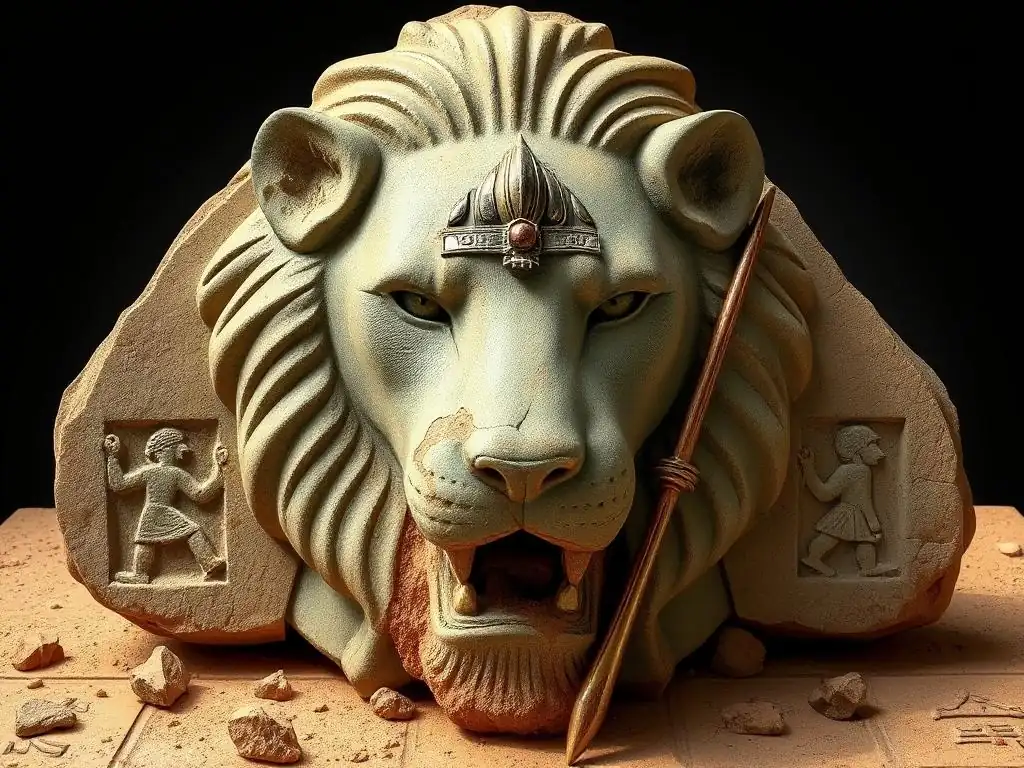
The most compelling archaeological evidence for Apedemak's worship comes from the monumental temple complexes at Musawwarat es-Sufra and Naqa, two of the most significant Meroitic sites. At Musawwarat es-Sufra, the "Great Enclosure" houses several structures, notably the Lion Temple (Temple 300), which is almost entirely dedicated to Apedemak. This temple is unique for its architectural layout and the pervasive presence of Apedemak reliefs across its walls, showcasing various aspects of his iconography and cultic practices.
Similarly, the Lion Temple at Naqa, built by King Natakamani and Queen Amanitore in the 1st century CE, stands as a premier example of Apedemak's prominence. Its remarkably well-preserved reliefs vividly depict Apedemak in numerous scenes, often alongside the royal family, engaging in ritual activities or trampling enemies. These temples serve as primary sources for understanding the extensive devotion to Apedemak and the elaborate manifestation of Apedemak Kushite deity symbolism.
Reliefs and Sculptures Depicting Apedemak: Iconographic Analysis
The artistic style of Meroitic reliefs, while often incorporating elements from Egyptian conventions, distinctly showcases indigenous Kushite artistic choices. Apedemak is a central figure in these reliefs, typically depicted in dynamic poses that emphasize his power. Scenes frequently show him aiding the Meroitic king in battle, receiving offerings, or standing in a protective stance, often with multiple arms or heads as seen in some of the Naqa depictions, signifying his manifold powers.
Beyond large-scale temple reliefs, smaller freestanding statues, stelae, and votive objects found across various Meroitic sites also portray Apedemak. These portable artifacts indicate the widespread nature of his cult beyond the royal centers and demonstrate a consistent iconographic representation of the deity across different mediums. The detailed analysis of these depictions provides crucial insights into the evolving Apedemak Kushite deity symbolism and Meroitic religious art.
Inscriptions and Texts Referencing Apedemak and Kushite Beliefs
A significant portion of our knowledge about Apedemak and Meroitic beliefs derives from inscriptions written in the Meroitic script, found extensively within his dedicated temples and on other monuments. While the Meroitic language remains only partially deciphered, the names of deities, including Apedemak, and certain recurring phrases are identifiable. These texts frequently name Apedemak, describe his attributes, or detail the rituals performed in his honor, offering direct textual evidence of his cult.
These inscriptions are invaluable for piecing together the Meroitic pantheon, understanding the relationships between different deities, and discerning the specific roles and invocations of gods like Apedemak within the broader Kushite belief system. They provide a textual complement to the visual evidence, offering a more complete picture of Apedemak Kushite deity symbolism and the intricate religious practices of the Meroites.
Apedemak and Other Indigenous Kushite Deities: A Comparative Analysis
Apedemak vs. Amun, Isis, and Sebiumeker
While Apedemak held a distinct and prominent position, the Meroitic pantheon was diverse, incorporating both indigenous and adopted Egyptian deities. Amun, the Egyptian state god, remained highly important, especially in the earlier Napatan period, and continued to be revered in Meroë. Isis, another key Egyptian deity, also had a significant following. Apedemak's rise often coincided with a period of asserting a more distinct Meroitic identity, though he frequently appeared alongside these Egyptian gods in temple complexes, signifying a coexistence rather than an outright replacement.
Crucially, Apedemak was often associated with other indigenous Kushite deities, most notably Sebiumeker, a creator and underworld god. Sebiumeker and Apedemak are frequently depicted together, sometimes in complementary roles, suggesting a shared or interconnected divine sphere. While Apedemak symbolized martial power and protection, Sebiumeker might have represented primordial creative forces or the cycle of life and death, demonstrating the complex yet harmonious interplay of different indigenous Apedemak Kushite deity symbolism.
Syncretism and Regional Variations in Kushite Religious Practices
Meroitic religion was characterized by a significant degree of syncretism, where indigenous beliefs blended seamlessly with Egyptian influences. Apedemak, despite his uniquely Kushite origins, often shared iconographic elements or even temple spaces with Egyptian gods. This blending allowed for a rich and adaptable religious system, where distinct deities could coexist and even influence each other without losing their core identities. For example, Apedemak might wear a crown reminiscent of Egyptian pharaohs while retaining his lion-headed form, illustrating this syncretic approach.
Furthermore, there might have been regional variations in the emphasis placed on Apedemak's cult across the vast Kingdom of Kush. While his worship was undeniably central in the Meroitic heartlands like Naqa and Musawwarat es-Sufra, the intensity or specific rituals associated with his cult might have differed in more peripheral areas of the kingdom. These regional nuances highlight the dynamic and localized nature of Apedemak Kushite deity symbolism and religious practice.
The Role of Local Deities Alongside Apedemak
Beyond the major state-sponsored deities like Apedemak, Amun, and Isis, the Meroitic religious landscape was further enriched by the presence of numerous local spirits, ancestor cults, and lesser-known gods. These localized forms of worship played an important role in the daily lives of ordinary Meroites, addressing specific community needs or agricultural concerns. Apedemak's powerful cult coexisted with these more localized and often less monumental forms of veneration.
The Meroitic pantheon was thus a rich and diverse tapestry, where a powerful, state-sanctioned deity like Apedemak provided overarching protection and legitimacy, while a multitude of other spiritual entities addressed more specific or regional concerns. This layered religious structure ensured that the spiritual needs of both the monarchy and the common populace were met, adding complexity to the understanding of Apedemak Kushite deity symbolism within its broader religious context.
The Decline of Meroë and the Fate of Apedemak's Cult
Factors Contributing to the Decline of Meroitic Civilization
The decline of the Kingdom of Meroë, culminating around 350 CE, was a multifaceted process driven by a combination of environmental, economic, and external pressures. Environmental degradation, including deforestation due to extensive iron production and agricultural exhaustion, likely reduced the kingdom's resource base. Economic shifts, such as the decline of Meroë's role in long-distance trade routes as new powers emerged, also contributed to its weakening. Simultaneously, the rising power of the Aksumite kingdom to the east exerted increasing military pressure, ultimately leading to the Aksumite conquest of Meroë.
These compounding factors led to a gradual erosion of political stability, a reduction in royal patronage for monumental building projects, and a weakening of the centralized religious institutions that supported the elaborate cults of deities like Apedemak. The diminishing resources and increasing external threats meant less focus and investment could be directed towards maintaining the grand temples and rituals associated with the state religion.
The Transition to New Religious Beliefs in Nubia
Following the decline of Meroë, the religious landscape of Nubia underwent a profound transformation. Beginning around the 6th century CE, Christianity gradually spread throughout the region, eventually becoming the dominant religion in the successor Nubian kingdoms (Nobatia, Makuria, and Alodia). This transition marked a decisive shift away from the ancient Meroitic pantheon, including the vibrant cult of Apedemak, as new theological frameworks and ritual practices took hold.
While the overt worship of Apedemak and other Meroitic deities ceased with the advent of Christianity, it is possible that some elements of older beliefs, symbolic associations, or local traditions persisted in folk practices or were subtly integrated into the new Christian framework, much like pagan elements sometimes influenced early Christian customs elsewhere. However, the distinct Apedemak Kushite deity symbolism, as understood in its Meroitic context, faded from overt practice.
Legacy of Apedemak: Influence on Later Nubian Cultures
Despite the cessation of his formal cult, Apedemak's legacy endures as a powerful symbol of indigenous Kushite religious expression and cultural independence. While direct influence on later Christian Nubian cultures is not explicitly documented in the same form, the concept of a powerful, protective leonine deity may have left an abstract imprint on the cultural memory or artistic motifs of the region. The lion continued to be a potent symbol in various contexts, though no longer directly linked to Apedemak.
For modern archaeological and historical studies, Apedemak remains of paramount significance. He represents a pinnacle of indigenous Kushite religious development, distinct from the pervasive Egyptian influences. The study of Apedemak's temples, iconography, and associated texts offers invaluable insights into the unique identity and spiritual life of the Kingdom of Kush, underscoring the enduring importance of understanding Apedemak Kushite deity symbolism for comprehending ancient Nubian civilization.
Apedemak Kushite Deity Symbolism: A Summary and Conclusion
The Enduring Power of Lion Symbolism in Nubian History
The lion, as a symbol of power, royalty, and protection, has held a profound and enduring significance throughout Nubian history, predating the Meroitic period by millennia. From ancient rock art to the sophisticated temple reliefs of Meroë, the majestic feline consistently represented strength and authority. Apedemak, the lion-headed god, crystallized this ancient symbolism into a distinct and powerful deity, becoming the ultimate embodiment of Meroitic might and resilience.
Apedemak's unique fusion of human form with the lion's head made him a formidable and instantly recognizable figure. His presence in royal temples and his association with both warfare and agricultural prosperity underscore the comprehensive nature of his symbolic power. This long-standing reverence for the lion, culminating in Apedemak, demonstrates how deeply ingrained this symbolism was in the cultural and spiritual fabric of ancient Kush, shaping the core of Apedemak Kushite deity symbolism.
Apedemak's Contribution to Our Understanding of Kushite Culture
The study of Apedemak provides an invaluable lens through which to understand the distinctiveness and sophistication of the Kingdom of Kush. His prominence in the Meroitic pantheon highlights the assertion of indigenous religious identity in a region long influenced by Egypt. By analyzing his iconography, the architecture of his temples, and the Meroitic inscriptions that reference him, scholars gain deep insights into Meroitic religious beliefs, political structures, artistic styles, and the intricate relationship between the divine and earthly rulers.
Apedemak is not merely a deity; he is a testament to the Meroites' ability to synthesize various influences while maintaining a strong, unique cultural identity. His cult illuminates the spiritual landscape of a powerful African civilization that flourished for centuries, offering crucial details about their worldview, their understanding of power, and their connection to the natural world. This comprehensive understanding is essential for appreciating the rich tapestry of Apedemak Kushite deity symbolism.
Further Research and Exploration of Apedemak's Legacy
Despite significant archaeological discoveries and scholarly research, the Kingdom of Kush and its deities, including Apedemak, continue to hold many mysteries. Ongoing archaeological expeditions in Sudan hold the potential for new discoveries that could further illuminate Apedemak's cult, his specific rituals, and his broader role within Meroitic society. Unearthing new texts or previously unrecorded temple complexes could revolutionize our understanding.
Continued academic and public interest in Apedemak is vital for preserving and promoting the rich cultural heritage of ancient Nubia. Further decipherment of the Meroitic language and detailed analysis of existing archaeological data will undoubtedly reveal more about the nuances of Apedemak Kushite deity symbolism and the intricate complexities of the Meroitic world. His enduring legacy inspires continued exploration and appreciation of this remarkable African civilization.
Frequently Asked Questions
What is Apedemak, and where did this deity originate?
Apedemak is a lion-headed warrior god originating from the Kingdom of Meroë in ancient Nubia (present-day Sudan). He is a key figure in Kushite religion.
What are the primary symbols associated with Apedemak?
Besides his lion head, Apedemak is often depicted with bows and arrows, symbolizing his warlike nature and protection. He is also associated with fertility and royal power.
How does Apedemak relate to other Kushite deities?
Apedemak is considered a prominent indigenous deity in the Kushite pantheon, distinct from Egyptian gods adopted later. He represents a strong local religious tradition that predates Egyptian influence.
Where can archaeologists find evidence of Apedemak worship?
Evidence of Apedemak worship is primarily found at Meroitic temples, such as the Temple of Apedemak at Naqa. These sites contain reliefs, inscriptions, and architectural features dedicated to the god.
What does the symbolism of Apedemak reveal about the Kushite culture?
Apedemak's symbolism highlights the importance of warfare, royal power, and indigenous traditions in Kushite society. He demonstrates a unique blend of local beliefs and influences, distinguishing Kushite culture.
Final Reflection: Echoes of Kushite Resilience
The journey through the symbolism of Apedemak, the lion-headed god of Meroë, reveals more than just ancient beliefs; it illuminates the enduring power of cultural resilience and indigenous identity. In a world increasingly homogenized, understanding the unique spiritual expressions of civilizations like Kush becomes paramount, offering a vital counterpoint to narratives that often marginalize or erase non-Western perspectives. The echoes of Apedemak's roar still resonate, reminding us of the strength and ingenuity inherent in cultures that thrived in the face of adversity.
The exploration of Apedemak's symbolism has profoundly impacted my understanding of cultural heritage, underscoring the importance of decolonizing our perspectives and actively seeking out marginalized voices in history. The lion-headed god is not merely a relic of the past, but a powerful symbol of Kushite sovereignty and spiritual independence. His presence challenges us to reconsider the narratives we've inherited and to appreciate the richness and complexity of African history. The past is never dead. It's not even past.
- William Faulkner. This quote perfectly encapsulates the enduring relevance of Apedemak, whose symbolism continues to inform our understanding of Kushite identity and its lasting impact.
As we conclude this exploration of Apedemak and Kushite deity symbolism, I invite you to reflect on the power of cultural preservation and the importance of honoring indigenous voices. Consider how you can actively contribute to a more inclusive understanding of history, seeking out narratives that challenge conventional wisdom and celebrate the diversity of human experience. Let the roar of Apedemak inspire you to become an advocate for cultural understanding and a champion for the preservation of our shared human heritage.
Unearth Your Inner Explorer: Delve Deeper into Kushite Mysteries!
Thank you for journeying with us into the fascinating world of Apedemak and the ancient Kushite civilization. Now that you've gained insights into this powerful lion-headed god and his cultural significance, it's time to take your exploration further.
Here are some actionable steps you can take to continue your adventure:
- Embark on a virtual expedition: Seek out online resources and museum collections showcasing Kushite artifacts. Use keywords like "Meroitic art," "Sudanese archaeology," or "Apedemak statue" to begin your quest.
- Share your newfound knowledge: Discuss Apedemak and the Kushite kingdom with friends, family, or fellow history enthusiasts.
- Consider supporting archaeological research: Explore ways to donate to or volunteer with organizations dedicated to uncovering and preserving Kushite heritage.
What aspects of Apedemak or the Kushite kingdom pique your curiosity the most, and what specific avenues for further exploration will you pursue first?