
Archaeological Evidence of Aksumite Trade: Artifacts, Ports, and Exchange Networks


Welcome to ArchaeologyHub.org, your gateway to the past.
Delve into the fascinating world of ancient civilizations and uncover the secrets hidden beneath our feet. Ever wondered how ancient kingdoms thrived through global exchange? Our detailed exploration of Aksumite trade routes analysis offers a compelling glimpse into the intricate networks that connected Aksum to the wider world. Discover the artifacts, ports, and exchange networks that shaped this powerful kingdom and fueled its rise. Prepare to embark on a journey through time and explore the archaeological evidence that brings history to life... Keep reading to unravel the mysteries!
- Introduction: Unveiling Aksumite Trade Through Archaeological Evidence
- Aksum: A Brief Overview of the Ancient Kingdom
- Key Aksumite Ports: Gateways to Global Trade
- Artifacts as Indicators of Aksumite Trade Routes
- Aksumite Trade Routes: Connecting the Kingdom to the World
- Exchange Networks: Partners and Competitors in Aksumite Trade
- The Decline of Aksumite Trade: Factors and Consequences
- Conclusion: The Legacy of Aksumite Trade and its Archaeological Record
-
Frequently Asked Questions
- ### What were the main commodities traded along the Aksumite trade routes?
- ### What archaeological evidence supports the existence of Aksumite trade routes?
- ### How did Aksumite port cities facilitate trade with other regions?
- ### What role did Aksumite coinage play in facilitating trade?
- ### How does the Aksumite trade network analysis help us understand the kingdom's political power?
- Final Reflection: Echoes of Aksumite Commerce
- Unearth Your Inner Explorer!
Introduction: Unveiling Aksumite Trade Through Archaeological Evidence
The Significance of Archaeological Finds in Understanding Aksumite Trade Networks
Archaeological excavations provide invaluable, tangible evidence for understanding the intricate Aksumite trade networks that flourished from the 1st to the 7th centuries CE. Unlike historical texts, which can be biased or incomplete, material culture offers direct insights into the commodities exchanged, the routes utilized, and the scale of Aksum's economic interactions. Finds of foreign pottery, glassware, and coinage at sites like Aksum and Adulis paint a vivid picture of a kingdom deeply integrated into the ancient world's global economy.
These archaeological discoveries allow for a robust Aksumite trade routes analysis, revealing the origins of imported goods and the destinations of Aksumite exports. By examining the distribution patterns of specific artifact types, researchers can map out the maritime and overland connections that linked Aksum to the Roman Empire, India, and various parts of Africa. This empirical data is crucial for reconstructing the economic history of the region and understanding Aksum's role as a major intermediary power.
The British Institute in Eastern Africa: A Resource for Exploring Aksumite History
The British Institute in Eastern Africa (BIEA) has played a pivotal role in advancing the archaeological understanding of Aksumite history, including its extensive trade networks. Through decades of dedicated research and excavations in Ethiopia and Eritrea, the BIEA has contributed significantly to uncovering key sites and artifacts related to the Aksumite kingdom. Their work at locations like Aksum itself and surrounding areas has yielded crucial data on urban development, material culture, and economic activities.
The BIEA's commitment to long-term archaeological projects and the dissemination of their findings provides an indispensable resource for scholars and the public seeking to explore Aksumite history and its trade. Their detailed reports and publications offer foundational information for any comprehensive Aksumite trade routes analysis, illuminating the complex economic landscape that defined this powerful ancient civilization in Northeast Africa.
Aksum: A Brief Overview of the Ancient Kingdom
Geographical Context: Aksum's Strategic Location in Northeast Africa
The Kingdom of Aksum was strategically positioned in the northern highlands of modern-day Ethiopia, approximately 100 to 150 kilometers inland from the Red Sea coast. This unique geographical placement allowed Aksum to control both the valuable resources of the Ethiopian plateau, such as gold and ivory, and to maintain crucial access to the maritime trade routes of the Red Sea. The kingdom's core territory included fertile agricultural lands, supporting a significant population and providing surplus goods for trade.
Aksum's location served as a natural nexus, bridging the African interior with the bustling sea lanes of the Red Sea and the Indian Ocean. This dual access enabled the kingdom to act as a vital intermediary, facilitating the exchange of goods between distant markets. Such a strategic position was fundamental to the development and sustained prosperity of Aksum, making it a central focus for any Aksumite trade routes analysis.
Aksumite Power and Influence: From Regional Kingdom to Trade Hub
From its emergence as a regional power in the 1st century CE, Aksum steadily expanded its influence, culminating in its status as one of the four great powers of the ancient world by the 3rd and 4th centuries CE, alongside Rome, Persia, and China. This rise was underpinned by its military strength, control over key resources, and its strategic position. Aksumite kings, like Ezana, commissioned grand monuments and inscriptions, asserting their authority and showcasing the kingdom's wealth and prestige.
This consolidation of power directly facilitated Aksum's transformation into a major international trade hub. The kingdom’s ability to secure overland routes to the resource-rich interior and to control its primary seaport, Adulis, ensured a steady flow of valuable commodities. This robust control over its economic arteries allowed Aksum to establish and maintain extensive Aksumite trade routes, extending its commercial and political reach across the Red Sea, the Nile Valley, and into the Arabian Peninsula and India.
Key Aksumite Ports: Gateways to Global Trade
Adulis: Aksum's Primary Seaport and its Role in Maritime Trade
Adulis, located near modern-day Massawa on the Eritrean coast, served as the principal seaport of the Aksumite Kingdom. Mentioned in the 1st-century CE Greek text, the Periplus of the Erythraean Sea, Adulis was described as a significant emporium for ivory, rhinoceros horn, tortoise shell, and other commodities. Its strategic location at the confluence of trade routes from the African interior and the Red Sea made it the indispensable gateway for Aksum's maritime commerce.
The port acted as a critical entrepôt where goods from Aksum's hinterland, such as gold and ivory, were exchanged for a wide array of foreign commodities like Roman wine, olive oil, and luxury goods from the Mediterranean and India. The prosperity of Adulis was directly linked to Aksum's economic power, and its archaeological remains are central to any Aksumite trade routes analysis, providing direct evidence of the kingdom's global connections.
Archaeological Excavations at Adulis: Uncovering Trade-Related Artifacts
Archaeological excavations at Adulis have been ongoing intermittently since the 19th century, with notable work by Italian expeditions in the early 20th century and more recent international collaborations. These efforts have unearthed substantial evidence of the port's vibrant trade activities. Key finds include large quantities of imported Roman and Byzantine pottery, such as amphorae, terra sigillata, and glassware, dating from the 1st to the 7th centuries CE.
Furthermore, excavations have revealed architectural remains of warehouses, residential areas, and public buildings, indicating a well-developed urban center. The presence of coinage, both Aksumite and foreign (Roman, Sasanian), further confirms Adulis's role as a major commercial hub. The sheer volume and diversity of these artifacts provide compelling evidence of the extensive Aksumite trade routes that passed through this vital port.
Other Significant Aksumite Ports: Massawa, Berenice
While Adulis was undeniably Aksum's primary maritime gateway, the broader Red Sea coastline and its interconnected ports were vital for Aksumite trade. Massawa, the modern port city, is located very close to the ancient site of Adulis, suggesting a continuous tradition of coastal trade in the region. Although not an "Aksumite port" in the same vein as Adulis, its proximity and modern significance highlight the enduring importance of this stretch of coastline for regional and international commerce.
Berenice Troglodytica, a major Roman port on the Egyptian Red Sea coast, was a crucial partner and destination for Aksumite trade. While not under Aksumite control, archaeological finds at Berenice, including Aksumite pottery and inscriptions, attest to regular and substantial interactions between the two powers. This demonstrates the reach of Aksumite merchants and the interconnectedness of Red Sea trade networks, which are crucial considerations for a full Aksumite trade routes analysis.
Evidence of Trade Activities in Secondary Aksumite Ports
Direct archaeological evidence for other large Aksumite-controlled ports comparable to Adulis is scarce. However, coastal surveys and limited excavations along the Eritrean and Sudanese Red Sea coast have revealed smaller Aksumite period sites or scattered finds. These may represent minor landing points, fishing villages, or transient trading posts that supplemented the activities of Adulis. For instance, occasional finds of Aksumite pottery or coins in coastal areas suggest a wider, albeit less concentrated, Aksumite presence.
These secondary sites, though less prominent, likely facilitated regional trade in specific commodities or served as repair and resupply points for ships navigating the Red Sea. While their individual contributions to the overall Aksumite trade routes analysis might be minor compared to Adulis, their existence indicates a broader Aksumite engagement with the maritime environment beyond just one major port. Further research is needed to fully understand their specific roles within the larger Aksumite trade network.
Artifacts as Indicators of Aksumite Trade Routes
Imported Goods: Tracing the Origins of Traded Commodities
The archaeological identification of foreign goods at Aksumite sites provides direct and compelling evidence for the kingdom's extensive trade relations. By analyzing the material composition, manufacturing techniques, and stylistic characteristics of artifacts, archaeologists can confidently trace their origins to distant lands. This process is fundamental to any Aksumite trade routes analysis, offering tangible proof of commercial connections that spanned continents.
Sophisticated scientific techniques, such as petrographic analysis for ceramics, X-ray fluorescence (XRF) for metals and glass, and lead isotope analysis for lead-based artifacts, enable precise provenance studies. These methods allow researchers to pinpoint the geological or manufacturing regions of imported items, thereby mapping the specific Aksumite trade routes through which they arrived and revealing the interconnectedness of the ancient world.
Roman and Mediterranean Imports: Amphorae, Glassware, and Luxury Items
Abundant archaeological evidence points to a robust trade relationship between Aksum and the Roman and Byzantine Empires. At Aksum and especially Adulis, vast quantities of Roman amphorae have been unearthed, originating from regions across the Mediterranean, including Egypt, Syria, and the Aegean. These vessels, often bearing distinctive stamps or forms, were primarily used for transporting wine, olive oil, and garum (fish sauce), indicating a steady supply of staples and luxury foodstuffs.
Beyond bulk commodities, fine Roman pottery, such as African Red Slip Ware, has been found in significant quantities, particularly at elite Aksumite sites. This high-quality tableware, produced in North Africa, suggests a demand for prestigious goods among the Aksumite aristocracy. Furthermore, numerous fragments of Roman and Byzantine glass vessels, beads, and occasional bronze statuettes attest to a vibrant trade in luxury items, highlighting the diverse nature of goods flowing into Aksum via its trade routes.
Indian and Arabian Imports: Textiles, Spices, and Incense
While perishable goods like textiles and spices rarely survive in the archaeological record, their presence in Aksumite trade is strongly inferred from classical texts like the Periplus of the Erythraean Sea, which lists them as key imports. More tangible archaeological evidence includes various types of beads, particularly carnelian and agate beads, which are consistent with known Indian manufacturing centers and trade patterns. Occasional fragments of Indian pottery have also been identified, though less frequently than Roman wares.
The trade with South Arabia was particularly significant for frankincense and myrrh, aromatics highly valued for religious ceremonies and perfumery across the ancient world. While direct archaeological evidence of the raw incense itself is limited, the wealth generated by this trade is evident in Aksum's monumental architecture and coinage. The exchange of these valuable commodities underscores the critical role of both Indian Ocean and Arabian connections in the Aksumite trade routes analysis.
Aksumite Exports: Identifying Locally Produced Goods in Foreign Lands
Identifying Aksumite exports archaeologically is often more challenging than imports, primarily because many of Aksum's key export commodities were raw materials (like gold and ivory) that were either transformed into finished products abroad or re-exported without leaving a distinctive Aksumite archaeological signature. Gold, for instance, was melted down, and ivory was carved into various objects, making their Aksumite origin difficult to trace without specific stylistic cues.
However, researchers seek unique Aksumite artifacts or materials found in foreign lands to provide direct evidence of exports. This might include specific types of Aksumite pottery, distinctive glass beads, or even Aksumite coins found in contexts outside the kingdom's direct control. While such finds are less abundant than imported goods in Aksum, they offer crucial insights into the reach and impact of Aksumite trade routes.
Ivory, Gold, and Frankincense: Aksum's Primary Export Commodities
The Periplus of the Erythraean Sea explicitly lists ivory, gold, and frankincense as Aksum's primary export commodities. Ivory, sourced from elephants in the vast Ethiopian hinterlands, was highly prized in the Roman and Indian markets for its use in luxury carvings and ornaments. Gold, mined from regions like Gojjam and Beni Shangul-Gumuz, was a fundamental medium of exchange and a symbol of wealth across the ancient world. Frankincense, harvested from trees in the Horn of Africa and parts of South Arabia, was in high demand for religious rituals and perfumery.
While direct archaeological proof of these raw materials abroad with clear Aksumite provenance is rare due to their processing, the sheer volume of high-value imported goods found at Aksumite sites strongly implies a robust export economy based on these valuable resources. The Aksumite kingdom effectively leveraged its control over these commodities to finance its prosperity and maintain its position within the global Aksumite trade routes.
Aksumite Coinage: A Tool for Facilitating Trade and Economic Exchange
Aksum was one of the few ancient African kingdoms to mint its own coinage, beginning with King Endubis in the late 3rd century CE. Aksumite coins were issued in gold, silver, and bronze, bearing inscriptions in Ge'ez, Greek, and sometimes Sabaic, alongside the effigies of kings. After King Ezana's conversion to Christianity in the 4th century, the cross became a prominent symbol on the coins, reflecting the kingdom's new religious identity.
The discovery of Aksumite coins in regions outside the kingdom's direct control, such as Egypt, South Arabia (e.g., Yemen), and even isolated finds in India, serves as direct archaeological evidence of Aksum's economic reach and its role in facilitating trade. These coins provided a standardized and reliable medium of exchange, moving beyond simple barter and indicating a sophisticated economic system that underpinned the extensive Aksumite trade routes and commercial interactions.
Aksumite Trade Routes: Connecting the Kingdom to the World
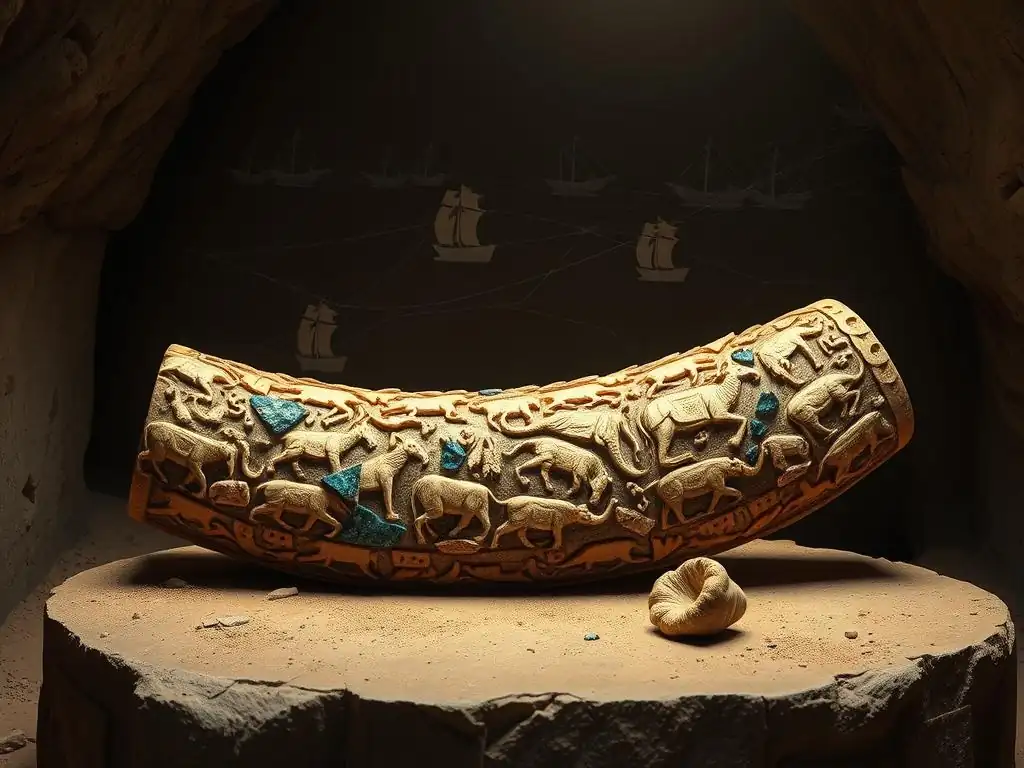
The Red Sea served as the primary artery for Aksumite maritime trade, connecting the port of Adulis to major trading hubs across the ancient world. Aksumite ships regularly sailed north to Roman ports in Egypt, such as Berenice and Myos Hormos, facilitating the exchange of African goods for Roman imports. To the south, routes extended to the coasts of South Arabia, particularly ports like Qana', and further into the Indian Ocean.
Utilizing the predictable monsoon winds, Aksumite merchants extended their reach across the Indian Ocean. During the southwest monsoon (summer), ships could sail eastward to ports in India, such as Barygaza (modern Bharuch) and Muziris (modern Kodungallur), and potentially as far as Sri Lanka. The northeast monsoon (winter) then facilitated the return journey. This mastery of maritime navigation and understanding of monsoon patterns was crucial for sustaining these long-distance Aksumite trade routes.
Evidence of Aksumite Ships and Navigation Techniques
While no complete Aksumite shipwrecks have been archaeologically recovered, indirect evidence suggests sophisticated shipbuilding and navigation capabilities. Rock art found in the region and textual descriptions, such as those by the 6th-century CE Byzantine merchant Cosmas Indicopleustes, depict Aksumite vessels. These likely employed stitched plank construction, a common and durable shipbuilding technique in the Red Sea and Indian Ocean, known for its flexibility in rough seas.
The regularity and volume of Aksumite trade with distant lands, as evidenced by archaeological finds, imply a profound knowledge of celestial navigation, prevailing currents, and especially the seasonal monsoon wind patterns. Aksumite mariners would have possessed the expertise to undertake long-distance voyages safely and efficiently, demonstrating a highly developed maritime culture essential for maintaining their extensive Aksumite trade routes.
Overland Trade Routes: Linking Aksum to the African Interior
Beyond its maritime connections, Aksum maintained vital overland trade routes that extended deep into the African interior. These routes were crucial for sourcing the raw materials that formed the backbone of Aksum's export economy, primarily gold and ivory. One significant route likely followed the Tekeze River valley westward, connecting the Aksumite heartland to the gold-rich regions of the Ethiopian plateau and further towards the Nile Valley.
Caravans, typically comprising donkeys and potentially camels, traversed these routes, bringing valuable commodities from the interior to Aksum and then to Adulis for export. In return, imported goods from the Red Sea and beyond were distributed throughout the Aksumite kingdom and to its immediate neighbors. These overland connections were as essential as the maritime ones for a comprehensive Aksumite trade routes analysis, demonstrating the kingdom's ability to integrate diverse economic zones.
Exchange Networks: Partners and Competitors in Aksumite Trade
Trade Relations with the Roman Empire and Byzantine Empire
Aksum maintained extensive and highly lucrative trade relations with the Roman Empire, and later its successor, the Byzantine Empire. Aksum served as a vital intermediary, channeling luxury goods from the African interior and the Indian Ocean, such as ivory, gold, and exotic animals, to the Roman world. This strategic position provided Aksum with significant economic leverage and contributed substantially to its prosperity.
Archaeological finds, including the widespread presence of Roman and Byzantine coinage, amphorae, and fine pottery at Aksumite sites, vividly illustrate the depth of this commercial exchange. In return for its exports, Aksum received a wide array of Roman goods, including wine, olive oil, glass, and manufactured luxury items. This enduring relationship evolved over centuries, with Aksum maintaining strong ties even as the Roman Empire transitioned into the Byzantine period, underscoring its importance in any Aksumite trade routes analysis.
The Impact of Roman Trade on Aksumite Society and Economy
The wealth generated from its extensive trade with the Roman and Byzantine Empires profoundly impacted Aksumite society and economy. The influx of Roman currency and luxury goods fueled Aksum's economic prosperity, enabling the kingdom to finance monumental construction projects, such as the famous stelae and palaces at Aksum. This economic surplus also supported a complex administrative structure and a sophisticated urban center.
Culturally, the sustained interaction with the Roman world led to the adoption of certain technologies, artistic styles, and, most significantly, the eventual conversion of the Aksumite elite to Christianity in the 4th century CE under King Ezana. This religious shift, facilitated by strong Mediterranean connections, further integrated Aksum into the broader Christian world, demonstrating the multifaceted influence of its robust Aksumite trade routes.
Trade Relations with South Arabia and the Arabian Peninsula
Aksum had long-standing and complex trade relations with the kingdoms of South Arabia, particularly Saba' and Himyar. These relationships predated the rise of Aksum and continued throughout its prominence, involving both commercial exchange and periods of political influence or conflict. The Arabian Peninsula was a crucial source of frankincense and myrrh, highly prized commodities that Aksum either controlled or facilitated their trade.
Archaeological evidence of these interactions includes the presence of Aksumite pottery in South Arabian sites and, conversely, South Arabian inscriptions and cultural elements found in Aksum. The exchange extended beyond goods to cultural ideas, influencing the development of the Ge'ez script, which has roots in South Arabian epigraphy. This deep historical and commercial connection highlights the importance of the Arabian segment in any Aksumite trade routes analysis.
Cultural and Economic Exchange Between Aksum and Arabia
The trade relations between Aksum and the Arabian Peninsula fostered significant cultural and economic exchange. Economically, Aksum provided access to vital African resources like gold and ivory, while South Arabia offered its renowned aromatics and served as a crucial link to broader trade networks extending towards the Mediterranean and India. This interdependence created a dynamic economic zone across the Red Sea.
Culturally, the interaction led to the transmission of architectural styles, writing systems, and religious concepts. For instance, the distinctive Aksumite architecture, particularly its monumental stelae and multi-story palaces, shows influences that resonate with South Arabian building traditions. The linguistic and epigraphic connections, evident in the evolution of the Ge'ez script, further underscore the profound and long-lasting cultural impact of these sustained Aksumite trade routes.
Trade Relations with India and the Indian Ocean World
Aksum's commercial reach extended far beyond the Red Sea into the Indian Ocean, establishing direct trade links with various parts of India and potentially Sri Lanka. This long-distance commerce was primarily facilitated by the predictable monsoon winds, which enabled efficient seasonal voyages. Aksumite merchants either sailed directly to Indian ports or engaged in trade via intermediaries in South Arabia.
The exchange involved Indian textiles, spices (like pepper, cinnamon), precious stones, and possibly iron, in return for Aksumite ivory, gold, and other African products. While archaeological evidence of Indian imports is less prolific than Roman goods, the Periplus of the Erythraean Sea explicitly mentions Aksum's engagement with Indian markets. This connection firmly integrates Aksum into the wider Indian Ocean economy, making it a crucial component of a global Aksumite trade routes analysis.
The Role of Monsoons in Facilitating Aksumite Trade with India
The monsoon wind system was a critical natural phenomenon that underpinned Aksumite trade with India and the broader Indian Ocean world. The southwest monsoon, blowing from approximately April to October, allowed ships to sail eastward from the Red Sea and the Arabian Peninsula directly to the coasts of India. Conversely, the northeast monsoon, occurring from November to March, provided favorable winds for the return journey.
This predictable seasonal wind pattern enabled ancient mariners to undertake long-distance voyages with relative safety and efficiency. The Aksumites' mastery of these wind patterns meant that trade with India could be a regular and economically viable enterprise, overcoming the challenges of vast ocean distances. The monsoons were thus an indispensable factor in shaping and sustaining the extensive Aksumite trade routes across the Indian Ocean.
The Decline of Aksumite Trade: Factors and Consequences
Environmental Changes and their Impact on Aksumite Agriculture
Archaeological and paleoclimatological evidence suggests that environmental changes, such as increased aridity or shifts in rainfall patterns, may have impacted the Aksumite kingdom from the 6th or 7th centuries CE onwards. Prolonged droughts or less predictable agricultural seasons could have led to reduced crop yields and diminished livestock, placing significant strain on the kingdom's food supply and overall resource base.
A decline in agricultural productivity would directly affect the population's ability to sustain itself and reduce the surplus goods available for trade. This environmental stress could have weakened the Aksumite economy from within, making it more vulnerable to external pressures and contributing to a gradual decline in the volume and reach of Aksumite trade routes.
Political Instability and its Effect on Trade Networks
The later centuries of Aksum's power saw increasing political instability, both internally and externally, which significantly impacted its trade networks. Internal strife, possibly related to succession disputes or regional rebellions, could have disrupted the secure flow of goods along overland routes to Adulis. Externally, the rise of the Sasanian Empire in Persia and its expansion into the Red Sea region posed a direct challenge to Aksumite maritime dominance, particularly after the Persian conquest of Yemen in the late 6th century CE.
Furthermore, the rapid expansion of the Islamic caliphates from the 7th century CE onwards fundamentally reshaped the political and economic landscape of the Red Sea and Arabian Peninsula. This new geopolitical reality would have introduced new competitors and shifted traditional alliances, making the established Aksumite trade routes less secure and less profitable, thereby contributing to their eventual decline.
The Rise of New Trade Centers and the Shifting of Trade Routes
A significant factor in the decline of Aksumite trade was the emergence of new trade centers and the subsequent shifting of established trade routes. With the consolidation of Islamic power in the Arabian Peninsula and North Africa, new mercantile hubs like Jeddah and Cairo gained prominence, often developing maritime and overland connections that bypassed Aksum's traditional routes.
As these new centers flourished, the flow of goods and capital began to reorient, diverting valuable trade away from Aksum and its port of Adulis. This meant that Aksum's role as a primary intermediary diminished. The kingdom gradually became more isolated from the major global commercial arteries, leading to a significant reduction in the volume and profitability of Aksumite trade, a critical observation in any Aksumite trade routes analysis.
Conclusion: The Legacy of Aksumite Trade and its Archaeological Record
Summarizing the Archaeological Evidence of Aksumite Trade
The archaeological record provides compelling and multifaceted evidence of the Aksumite Kingdom's profound engagement in extensive trade networks. Excavations at sites like Aksum and Adulis have yielded a wealth of imported artifacts, including Roman amphorae, fine glass, and terra sigillata, alongside Indian beads and South Arabian inscriptions. These finds meticulously trace the origins of goods from the Mediterranean, Arabia, and India, painting a vivid picture of a kingdom deeply integrated into the ancient world's global economy.
Furthermore, the presence of Aksumite coinage, found in distant lands, serves as direct proof of Aksum's economic reach and its role as a sophisticated player in international commerce. Together, these material remains—from port infrastructure to everyday pottery fragments—allow for a detailed Aksumite trade routes analysis, confirming Aksum's status as a major economic power that connected Africa's interior resources with the bustling markets of Rome, Byzantium, and the Indian Ocean world.
Future Directions in Aksumite Trade Research and Excavation.
Despite significant progress, much remains to be uncovered regarding Aksumite trade. Future research directions should focus on less explored regions of the Aksumite kingdom and its hinterlands, particularly along the suspected overland routes to the gold and ivory sources, where archaeological surveys could reveal additional trading posts or resource exploitation sites. The application of advanced technologies, such as remote sensing (Lidar) and drone imagery, could identify new sites or provide more comprehensive data on known ones without extensive excavation.
Furthermore, underwater archaeology at Adulis and other coastal areas holds immense potential for discovering shipwrecks or harbor remains that could offer unprecedented insights into Aksumite shipbuilding and maritime practices. Continued international collaboration, integrating diverse methodologies from material science to environmental studies, will be crucial to refine our Aksumite trade routes analysis and deepen our understanding of this remarkable ancient civilization's economic legacy.
Frequently Asked Questions
### What were the main commodities traded along the Aksumite trade routes?
The Aksumite Kingdom traded in a variety of goods, including ivory, gold, frankincense, and myrrh. They also imported luxury goods like textiles and metalwork.
### What archaeological evidence supports the existence of Aksumite trade routes?
Archaeological sites have revealed imported artifacts like Roman pottery and glass, alongside Aksumite coins found far beyond the kingdom's borders. Port cities also show evidence of extensive maritime trade.
### How did Aksumite port cities facilitate trade with other regions?
Aksumite ports like Adulis served as crucial hubs connecting the kingdom to the Red Sea trade network, facilitating exchanges with Egypt, the Roman Empire, and India. They provided access to maritime routes.
### What role did Aksumite coinage play in facilitating trade?
Aksumite coinage standardized exchange, facilitating both domestic and international trade. The coins' widespread distribution indicates the reach and influence of Aksumite commerce.
### How does the Aksumite trade network analysis help us understand the kingdom's political power?
The analysis of Aksumite trade routes reveals the kingdom's economic strength and political influence. Controlling trade routes allowed Aksum to accumulate wealth and project power across the region.
Okay, here's a final reflection designed to close your article on Aksumite Trade, optimized for the keyword "Aksumite trade routes analysis" and following the structure you requested:
Final Reflection: Echoes of Aksumite Commerce
The exploration of Aksumite trade routes, as evidenced by the artifacts unearthed and the ports identified, reveals more than just ancient commerce; it unveils a sophisticated network of cultural and economic exchange that resonates even today. Understanding the intricacies of Aksumite trade routes provides crucial insights into the interconnectedness of ancient civilizations and the enduring legacy of global trade. The strategic placement of Aksum, its mastery of maritime navigation, and its ability to integrate diverse goods and ideas, offer valuable lessons for navigating the complexities of modern global economies.
The enduring influence of Aksumite trade is palpable in the cultural tapestry of the Horn of Africa and beyond. The meticulous analysis of these trade routes allows us to appreciate the ingenuity and adaptability of the Aksumite people, whose legacy continues to shape regional identities and economic interactions. The past is never dead. It's not even past.
- William Faulkner. This quote encapsulates the profound impact of Aksumite trade, reminding us that the foundations of our present are deeply rooted in the commercial and cultural exchanges of the past.
As we conclude this analysis of Aksumite trade routes, let us reflect on the lessons learned from this ancient kingdom. Consider how the principles of strategic location, efficient resource management, and cultural integration, which propelled Aksum to prominence, can inform our own understanding of global trade and cultural exchange. Embrace the spirit of exploration and interconnectedness that defined the Aksumite era, and strive to build bridges of understanding and collaboration in our own time.
Unearth Your Inner Explorer!
Thank you for diving into the fascinating world of Aksumite trade! We hope you've gained valuable insights into the intricate exchange networks that shaped this ancient kingdom. Now, it's time to take your exploration a step further:
- Embark on your own archaeological adventure by researching local museums with Aksumite artifact collections and plan a visit. This is the most direct way to connect with the material culture discussed.
- Share this article with fellow history enthusiasts and ignite a discussion about the impact of trade on ancient civilizations.
- Delve deeper by exploring academic journals and online databases for even more archaeological findings related to Aksum.
What other ancient trade routes pique your curiosity, and what modern parallels do you see?