The Dynastic Sequence of Tikal: Rulers, Power, and Legacy
🌟 Explore the Tikal Dynasty Timeline Rulers, a detailed chronicle showcasing the rise and fall of ancient Maya leaders. This essential resource…
Read article
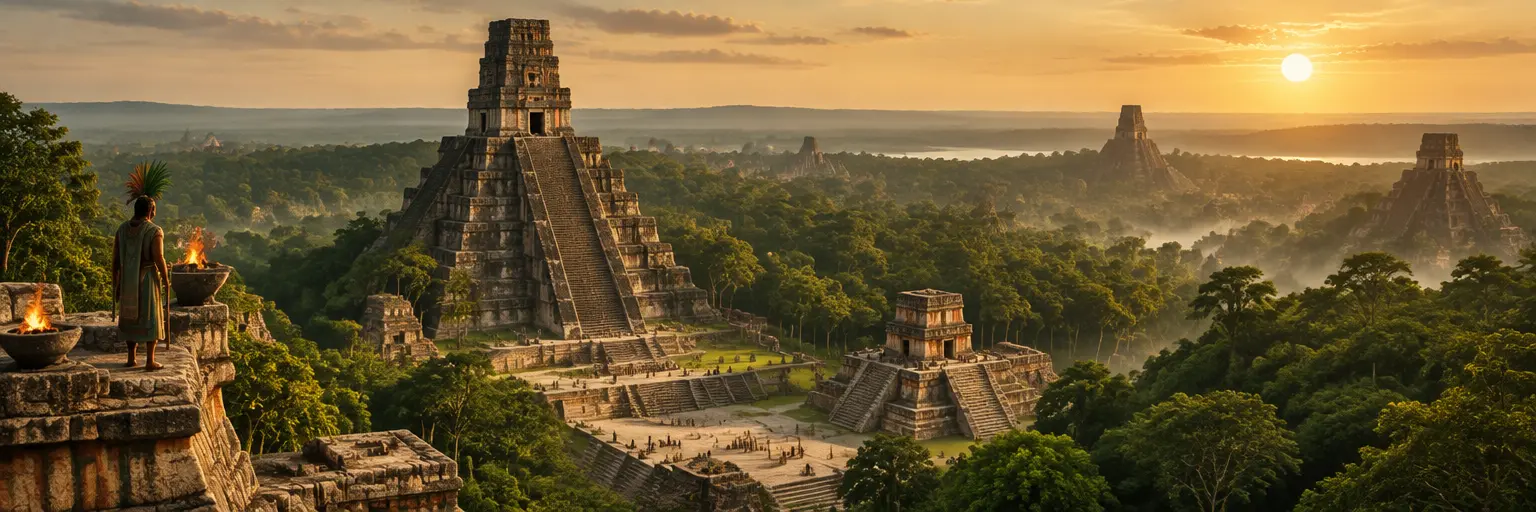
Step into the heart of the ancient Maya world, where towering temple pyramids pierce the jungle canopy and ceremonial plazas echo with centuries of ritual. This digital archive brings you face-to-face with Tikal, the colossal metropolis of Guatemala’s Petén rainforest, alongside other pivotal Maya ceremonial centers like Copán, Palenque, and Calakmul. Uncover the astronomical precision behind their alignments, decode the iconography of stelae and altars, and trace the rise and mysterious collapse of Classic-era dynasties. From acropolis complexes to the sacred ballcourts, our excavation reports, LiDAR-based mapping insights, and artifact analyses reveal how these urban cores functioned as political, spiritual, and scientific hubs. Whether you’re a student of Mesoamerican history, a traveler planning a pilgrimage to these UNESCO World Heritage wonders, or a researcher seeking comparative data, this curated resource connects you to the latest archaeological fieldwork and theoretical interpretations. Explore the hieroglyphic stairways, royal tombs, and the enduring legacy of the Maya calendar—all within a global framework of ancient urbanism.
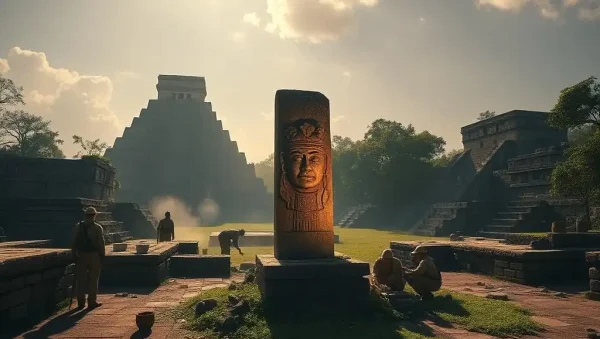
🌟 Explore the Tikal Dynasty Timeline Rulers, a detailed chronicle showcasing the rise and fall of ancient Maya leaders. This essential resource…
Read article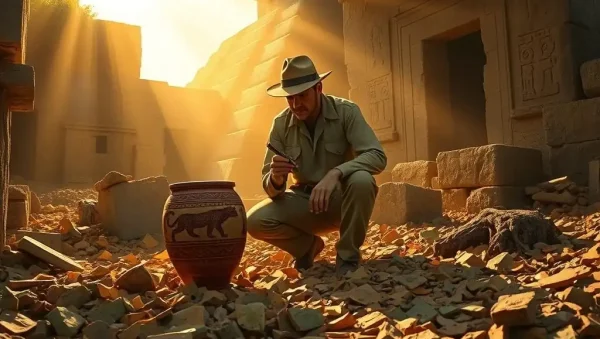
🌟 Explore the Tikal ceramic sequence analysis revealing intricate chronology and cultural connections of this ancient city. This detailed examination enhances our…
Read articleWelcome to ArchaeologyHub.org’s dedicated guide on Mesoamerican Sites: Tikal & Maya Ceremonial Centers, a cornerstone of our global archaeological encyclopedia. Here, we delve into the monumental achievements of the ancient Maya, focusing on their grand ceremonial hubs like Tikal, Calakmul, and Palenque. This subcategory offers a rich repository of excavation histories, architectural analyses, and ritualistic interpretations, designed to serve both enthusiasts and scholars. From soaring limestone temples to intricate hieroglyphic stairways, these sites reveal a complex cosmos woven into stone. Explore timelines, artifact profiles, and the political-religious dynamics that shaped these iconic cities of the Maya lowlands.
At the heart of Tikal lies the Great Plaza, flanked by the Temple of the Great Jaguar and the Temple of the Mask, structures that epitomize Maya ceremonial architecture. Subcategory content focuses on the engineering precision behind these steep pyramids, their astronomical alignments, and the use of corbeled vaults. You’ll discover how these platforms served as stages for public rituals, royal accessions, and ballgame ceremonies, with acoustic properties that amplified chants across the plaza. Our profiles detail recent LiDAR findings that reveal hidden causeways and residential clusters, reshaping understanding of urban sprawl.
Beyond Tikal, this section compares ceremonial centers like Copán and Yaxchilán, highlighting regional variations in temple style and altar carvings. Expect deep dives into stucco facades, carved lintels, and stelae depicting rulers in trance-like states. Each architectural element is decoded for its symbolic meaning, linking building orientation to solar solstices and Venus cycles. This is essential reading for anyone seeking to grasp how Maya cities were cosmic maps, not just political capitals.
The ceremonial core extended beyond stone; it pulsed with vivid, often visceral rituals. This subcategory explores archaeological evidence of royal bloodletting, where rulers pierced their bodies to communicate with ancestors, as depicted on lintels and ceramics. You’ll learn how excavations of elite tombs beneath temples—like the famous Burial 116 in Tikal—reveal jade masks, shell ornaments, and obsidian blades used in offerings. The content interprets the cosmology of the Maya underworld, Xibalba, through these grave goods and their placement relative to cardinal directions.
Moreover, we examine the role of cenotes and artificial pools as liminal spaces for sacrifice and divination, drawing parallels to Chichén Itzá’s Sacred Cenote. Artifact profiles include incense burners with effigies of deities, spiked bloodletters, and miniature metates for grinding hallucinogens. By analyzing residue remains, experts have identified cacao and balché drinks central to ecstatic ceremonies. This section positions ritual not as a side note but as the engine of political legitimation, with every artifact telling a story of power mediated by the supernatural.
Mesoamerican ceremonial centers were also stages for geopolitical drama. This segment focuses on Calakmul, the great rival of Tikal, whose emblem glyph—the Snake Head—symbolized regional dominance. Readers will explore the extensive network of defensive walls and monumental bi-lingual stelae that documented alliances and warfare. The subcategory outlines how ceremonial plazas were redesigned after military victories, with newly captured captives depicted in humiliating postures on carved steps. These updates show that ritual architecture was adaptive, reflecting shifting power balances.
Additionally, we compare the twin pyramid complexes of Tikal—each built to commemorate a K’atun ending—with Calakmul’s massive structure II, one of the largest pyramids in the Maya world. Through excavation reports and epigraphic decipherment, we reconstruct the ceremonial calendar of wars, peace treaties, and royal visits. This section also explores how the Snake Kingdom used satellite ceremonial centers like La Corona and Uxul to project influence, creating a fractal of centers. Expect detailed maps and dynastic timelines that make the political ritual landscape legible.
Unearthing Maya ceremonial centers requires sophisticated archaeological methods, detailed extensively here. From early expeditions by Teobert Maler and Alfred Maudslay to the modern era, we cover breakthroughs in ground-penetrating radar and drone-based photogrammetry. These technologies have uncovered non-invasive insights into buried temples and causeways without disturbing the delicate limestone. The subcategory also explains the use of stratigraphy to date ceremonial renovation phases, plus the ethical debates around repatriation of artifacts like lintels from Yaxchilán to museums overseas.
Recent Lidar airborne surveys have revolutionized the field, detecting 3,000+ structures hidden under jungle canopy around Tikal, including agricultural terraces and defensive walls that indicate a larger ceremonial landscape. Our content walks through the process of excavation permits, conservation ethics, and collaboration with indigenous communities who view these sites as living sacred spaces. You’ll also gain insight into laboratory analyses—isotope studies on bone to detect diet during feasts, and phytolith analysis for plant offerings. This technical angle is ideal for students and armchair archaeologists wanting to understand how knowledge is produced.
Central to understanding these ceremonial centers is the Maya worldview, where every building and plaza aligned to celestial cycles. This section decodes the Long Count calendar, the Tzolk’in (260-day ritual calendar), and the Haab’ (solar calendar), showing how rulers timed ceremonies to cosmic events like solstices and eclipses. Artifacts like the Dresden Codex—though not from Tikal—are used to illustrate astronomical tables, but site-specific altars and inscriptions are our primary texts. We explain how temple doorways framed the sun on equinoxes, casting patterns that mimicked serpents descending stairs.
Moreover, we interpret the iconography of Maize God resurrection cycles, often reenacted in spring ceremonies represented on murals at San Bartolo. For Tikal, the “Tikal–Calakmul war” stelae are examined for celestial omens that justified conflict. This subsection integrates epigraphy, iconography, and archaeoastronomy to show that ceremonial centers were engines for synchronizing human and divine time. Readers will come away with a holistic view of how the Maya perceived history not as linear but as cyclic, with each K’atun ending renewing the world’s sacred order.
Tikal is distinguished by its sheer scale—over 3,000 structures—and its Long Count inscriptions that date its dynastic history precisely. Unlike smaller centers like Palenque, Tikal’s Grand Plaza focuses on massive twin pyramids and acropolis complexes built to project imperial power. Other centers, like Copán, excel in sculptural detail, while Tikal’s strength lies in monumental volume and dual political-religious function.
Most centers were oriented to cardinal directions, with temples aligned to sunrise on equinoxes and solstices. For example, the Temple of the Inscriptions at Palenque is aligned with the winter solstice sunset. At Tikal, building axes correspond to Venus cycles, and stelae often record planetary events. This alignment encapsulated the Maya belief that kings were sky-walkers, bridging celestial and earthly realms.
Yes, visitors can enter the uninhabited jungle areas beyond the main plazas, where unexcavated mounds called “tamples” are visible. Many structures remain under vegetation, yet recent mapping via LiDAR has revealed thousands of mounds still buried. Guided tours occasionally include trails to these inaccessible areas, but access is restricted to protect fragile remains. For deeper exploration, permit-based research expeditions are available.
The most iconic artifacts include the jade mosaic death mask from Burial 116, featuring over 3,000 pieces, and the carved wooden lintels from Temples I and IV depicting Yik’in Chan K’awiil. Obsidian blades and copal incense burners are also common. The “Naranjo Stela 10” and the Altar 5 with its intricate throne scene further illustrate ceremonial life.
They combine textual decipherment of hieroglyphic accounts with residue analysis on ceramics to identify food and drink, plus isotopic signatures in bones for ritual feasting. Experimental archaeology—like recreating cacao drinks or bloodletting tools—helps test hypotheses. Ethnographic analogies with modern Maya communities, who still perform rain ceremonies, provide living links to ancient rituals.







